
Translated material
New Russian style
What does a design with the prefix “state” look like?

Photo: tvzvezda.ru
Each era creates its own unique style, which almost always turns out to be a reflection of the political reality of a particular historical period. In most cases, the authority responsible for creating a single official style of the era becomes the government, which, through style, chooses how to present itself to society. In recent Russian history, the most obvious example is, of course, the style of the Stalin era, which continues to influence us today (through architecture, monuments, urban design, etc.). Some regimes are not so concerned with creating an official style, which is why the 1990s left behind a much less monolithic panorama - but they still left it: such principles as kitsch and chaos turned out to be central to these years.
Since the beginning of the 2000s, Russia has entered a new era associated with the name of Vladimir Putin.
"Putin style"
Although Putin's tenure in power will soon approach Stalin's 29 years, the official style of recent years still seems to elude definitive definitions. Perhaps, with the passage of time, it will become easier for future historians to determine its main features, but we can only observe this very illegible picture in real time. However, no era is truly monolithic, and Vladimir Putin’s Russia has undergone many transformations over the past quarter century. The most recent of these began four years ago, and the country's official style seems to have changed most clearly during that time. However, the reason for these changes was not some deep-seated processes that could be called the “revival” of Russian culture, but such much more banal things as the militarization of public and cultural space, the severance of cultural ties with Western countries and the declarative preference for everything “Russian” (or “Russian”, whoever decides them). In other words, our own, native, domestic, and not “imported” from the West.
The notorious “Putin style,” as has long been noted, is distinguished by its inconsistency:
The Soviet here coexists with the pre-revolutionary, the Russian with the multinational, the long-outdated with the trendy, and so on.
Many are even inclined to see in this the postmodern character of the Russian government, and although there is, perhaps, some part of the truth in this, it cannot be said that this guess fully explains the phenomenon itself: in the end, any modern society has a postmodern character, if we take it on faith that we are still living in a postmodern world. But this is all a space of theoretical conclusions and assessments; now we are more concerned about what has been happening to the “Putin style” in the practical sphere in recent years and what may happen to it in the near future.
“I don’t know how to translate”
Apparently, the aesthetic side of reality is not among the priorities for the current Russian government (this is not the History of the Fatherland), so we decided to seriously take on the category of “style” only last year. Thus, Presidential Adviser on Culture and Art Elena Yampolskaya last spring raised the issue of creating a “new Russian visual style” and headed the corresponding council for its formation at the Rossiya national center (the successor to the main state exhibition of recent years, held at VDNKh). Among the main tasks of Yampolskaya’s council were “countering the excessive Latinization of urban space and transmitting traditional values through visual language.” To some extent, the “fight against Latinization” turned out to be a new idea in this project, and, it should be noted, it became the simplest and fastest to implement: on March 1 of this year, a law came into force obliging the use of only the Russian language in signs, signs, tablets, websites, and so on.
This measure, which in its own way embodied the dreams of Admiral Shishkov and other participants in the “Conversation of Lovers of the Russian Word,” will undoubtedly change the face of Russian everyday life, but there is a suspicion that the ironic attitude of the main Russian poet, expressed in “Eugene Onegin” (“Shishkov, I’m sorry, I don’t know how to translate”), will turn out to be a more typical reaction to this law. However, so far Yampolskaya’s council itself seems to be far from ideal “linguistic purity”, because in the names of all five working groups of which it consists, there is the word “design” that caresses the Russian ear (“Industrial Design”, “Communication Design”), and one of them offers an even more sophisticated design - “Visioning and Concept Design”. But, apparently, this is the case when Pushkin’s “I don’t know how to translate” came to the minds of the council participants.
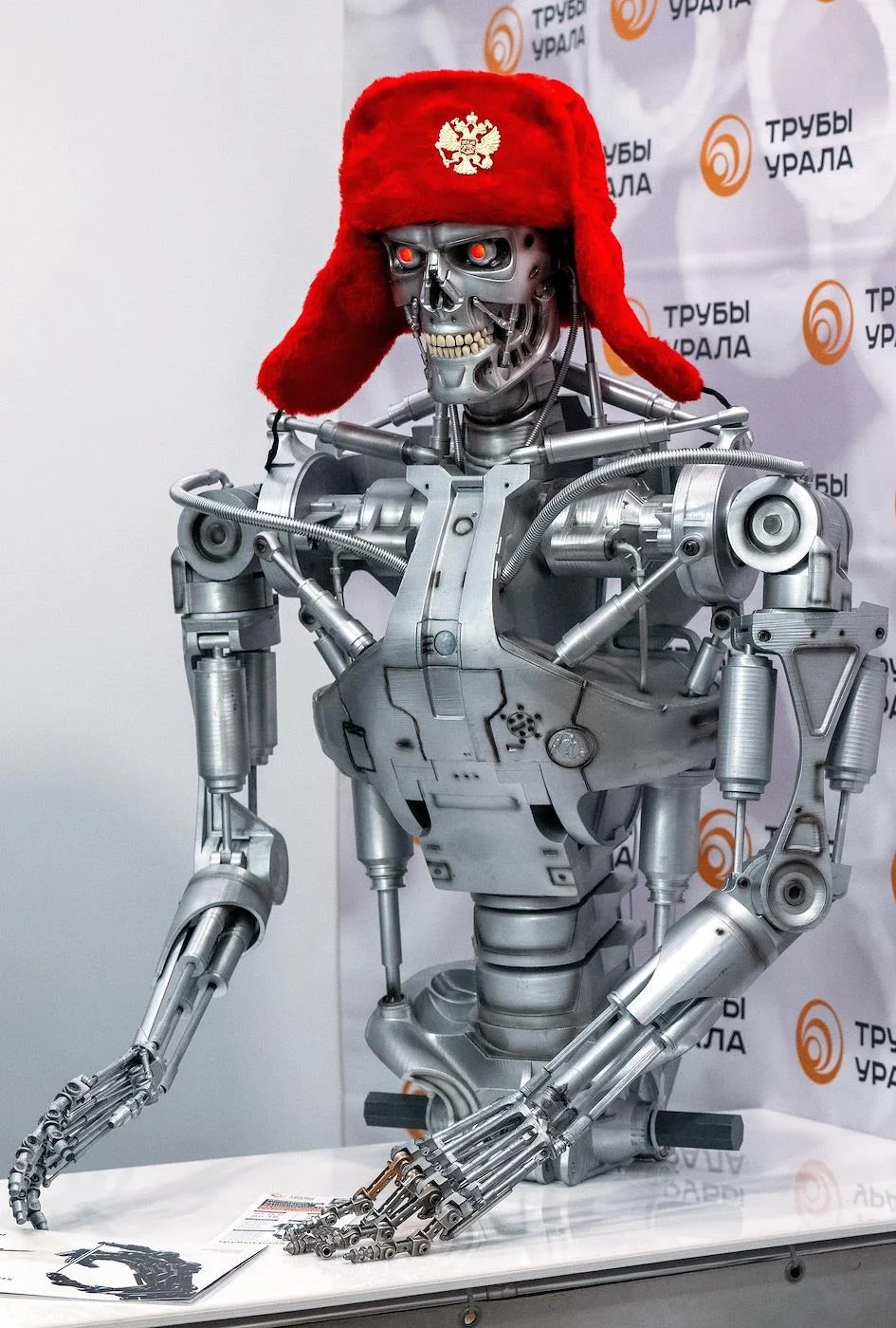
Another primary task of Yampolskaya’s council—“translating traditional values through visual language”—seems, perhaps, more difficult to implement. Loud words about a “new image of Russia”, “a nationally oriented environment with 360-degree coverage” (quote from last year’s Yampolskaya), as always, sound very menacing and pathetic, but there is a feeling that to realize these dreams it will take something more than a ban on the use of Latin and Anglicisms in signs. So far, according to reports from three council meetings, its priorities are “creating a national color palette, a national family of fonts and developing children's playgrounds based on images of folk crafts.” Among the first results is the planned opening of a 600 sq. m children's playground by June 2026. m in the style of Dymkovo toys next to the Tula Kremlin. It seems that this is exactly what Russian children have been waiting for after the Roblox platform was blocked.
Become a government designer in 4 hours
As for successes in the field of “national color palette and national font family”, then, as they say, we’ll wait and see, but we won’t be surprised if suddenly in the near future all signs and names in the country will be forced to switch to one font and color - of course, “national” and “traditional”.
However, not only Yampolskaya’s council, but also other organizations are engaged in various kinds of “design” for modern Russia. For example, the Senezh management workshop, operating under the presidential platform “Russia is a Land of Opportunities,” specializes (among other things) in the so-called “state design.” The Senezh workshop is generally described as a “center for additional education for training managers,” and calls its main task “the development of the country’s national asset—leaders.” One of the main directions of the workshop is the already mentioned “state design”, headed by designer Vyacheslav Pravdzinsky. Before creating the workshop in 2024, he was engaged in the improvement and decoration of Udmurtia for about ten years, working directly with the head of the region, Alexander Brechalov. Pravdzinsky is a long-time and committed statist, advocating design for “an efficient state, where every detail works for the convenience and safety of people.” In his 2024 interview, he even seriously talks about the need to create a Ministry of Design. Apparently, his state design workshop in Senezh is a kind of embryonic project for such a ministry. This is partly evidenced by the news that the workshop’s experts are soon planning to develop an updated strategy for the state design of the Russian Federation until 2030. And anyone interested in the topic can take an online course “design for the state” on the website of the Senezh workshop, which lasts only 4 hours. Probably, anyone can start doing government design if they want.
In general, it may seem that the word “design” for the management workshop “Senezh” plays the same role as the almost homonymous term “dasein” (here-being) for the 20th century German philosopher Martin Heidegger.
“Design thinking”, “experience design”, “design code” and other variations of this word constantly appear in the workshop’s media and social networks, as if trying to instill in readers the idea of the paramount importance of design to our reality.
And, in general, I don’t even want to argue with this, because the appearance and design of things and spaces really have a huge influence in the modern world - but is the state really necessary here?
Of course, the goal of Vyacheslav Pravdzinsky and other figures of this kind is not at all to create something truly new that could radically change the appearance of everyday life (as, say, the pioneers of Soviet design of the 20s of the last century succeeded); The main goal of modern “state designers” is to instill in all of us a simple idea: our state is responsible for everything - from “military special operations” to logos and souvenirs.
But no matter how many words about “traditional values”, “local identity” and “cultural code” are scattered around all sorts of objects that will appear in these years under the guise of “state design”, it is important to remember: there is and never will be anything specifically Russian, traditional or folk in them. Or rather, those authors who previously created projects based on traditions and local identity will continue to do so, regardless of the prefix “state”; those who need this prefix to correspond to the realities of modern Russia will, as before, produce something typical, average and conventionally “traditional”, almost in no way connected with the real traditions and culture of their own country.
Trend for kokoshniks and military style
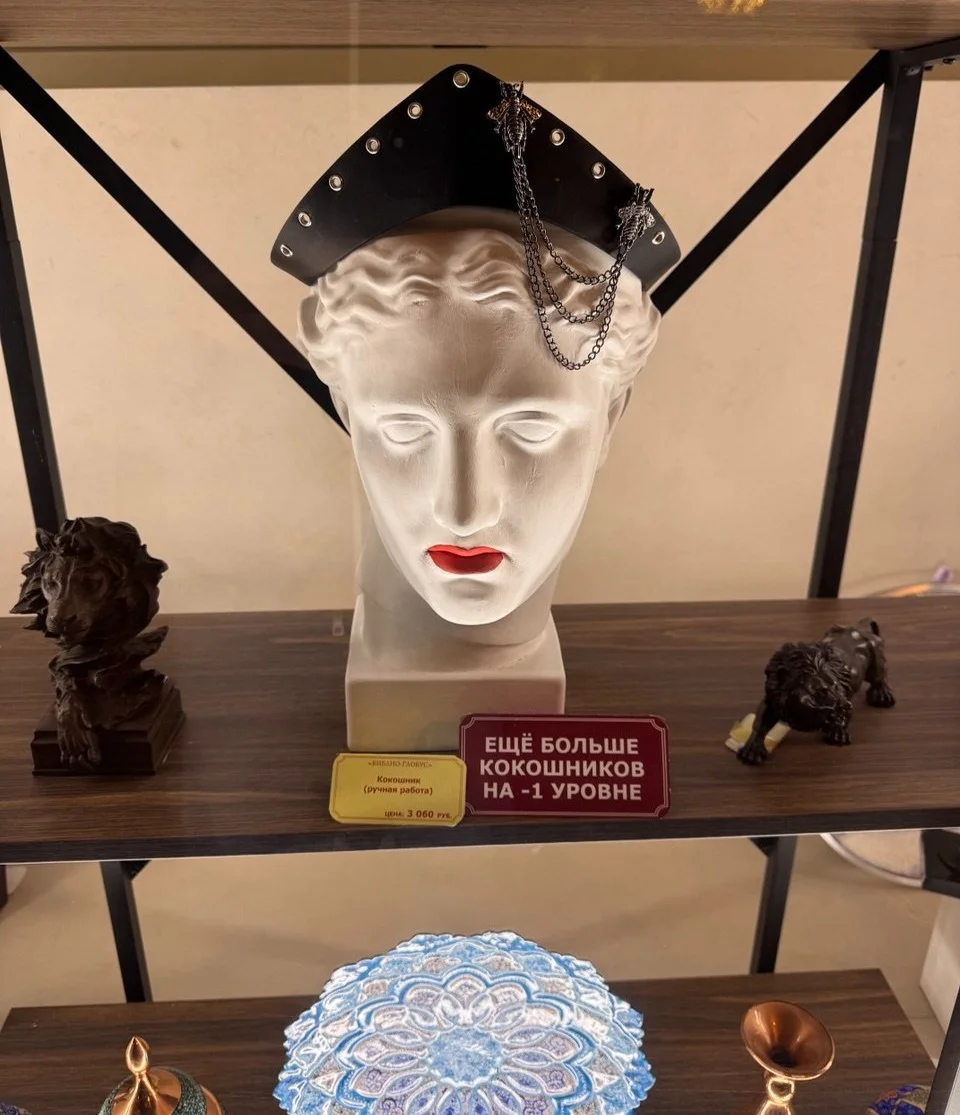
It is curious that one of the most popular phenomena in Russia today, which can be attributed to design, arose almost without any government involvement. This phenomenon is a trend for kokoshniks, which has spread among the generation of twenty-year-olds and younger, largely due to the viral popularity of Nadezhda Kadysheva’s songs on social networks. Moreover, as often happens with youth trends, many rational explanations can be found for this, but none of them will be completely true. And therefore, although Vladimir Putin noted with satisfaction last fall that young girls began to wear kokoshniks to bars, it would be naive to see in this some kind of special patriotism or even a deep connection with their culture. It’s just that at some point in time, to a significant number of young people, this visual and musical set (Kadysheva, kokoshnik, pseudo-Russian folklore) began to seem irrationally attractive (it would be better to say, cool), and even if one could, if desired, see in this a certain connection with the political situation, there is much more random and spontaneous in this phenomenon.
And just as this trend began, it may suddenly fade into oblivion (if it hasn't already). Well, frankly speaking, one kokoshnik does not seem to be enough to fully revive interest in Russian culture.
Urban sculpture has become a much more visible and enduring form of style in modern Russia than design or youth online trends. The connection between public policy and sculpture is very strong historically, therefore, unlike design, no one needs to come up with a special kind of “state sculpture”. Any monumental sculpture intended for urban space cannot be installed without the approval of the authorities. If the installation takes place on private territory, it is obvious that not every figure can be legitimate: for example, numerous monuments to Stalin continue to quietly appear thanks to private initiatives and do not meet any resistance, while the monument to Ataman Krasnov, erected in the mid-2000s in the village of Elanskaya, Rostov region, was dismantled last year after a long-standing campaign against the monument to one of the leaders of the White movement, who fought on the side of the Nazis in World War II.
The installation of a monument for any state is an act of consolidating its ideology and version of history, which is why the demolition of monuments on the territory of Ukraine (from Lenin to Pushkin) is so painfully perceived by the Russian authorities and propaganda. Even less surprising is that in recent years, monuments to the heroes of the Northern Military District have begun to appear in many Russian regions. These monuments look especially strange and inappropriate in rural areas, where there may not be a normal road (as in the Khanty-Mansiysk village of Berezovo), but now there is a standard fiberglass monument costing 5 million rubles. Similar sculptures appeared in the villages of Transbaikalia (Nizhny Tsasuchei, Domna, Krymskoye) - and everywhere these monuments, located thousands of kilometers from the fighting, perform not a memorial (and certainly not an aesthetic), but an exclusively propaganda function: to impose on the population the belief that the whole country is a front.
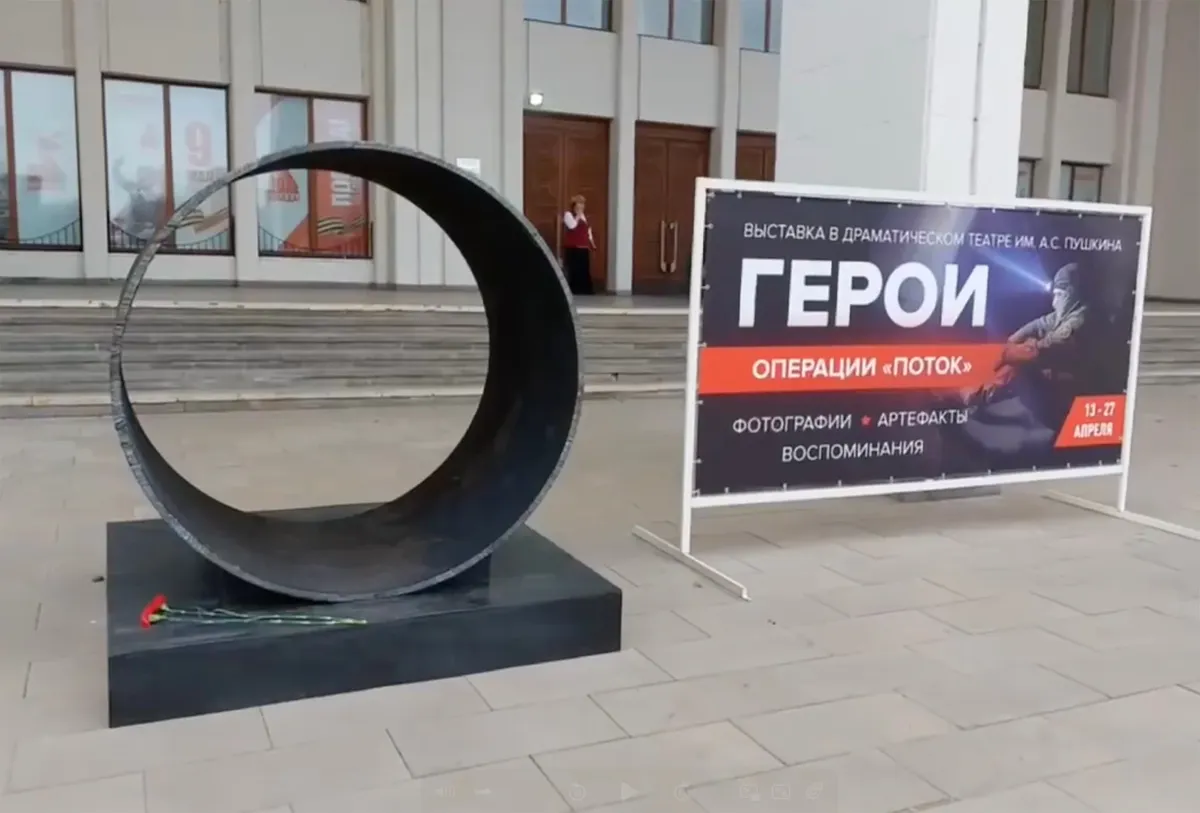
It seems that the overwhelming majority of monuments appearing in recent years in Russia are in one way or another connected with military themes - wars of the past or the modern North Military District. Let us not try to guess how long these monuments will stand, but we note once again that the memory of the current era that will remain for future generations will definitely be associated with the image of war.
And no matter how powerful state design is involved in creating a pleasant visual image of modern Russia, the only clear and consistent image presented by the Putin era to society and history will remain war.
I believe that this conclusion about the style of our era will find its way into the works of future historians.
This material was published in the seventeenth issue of Novaya Gazeta. Magazine". You can buy it in the online store of our partners.