
Translated material
“To Kalach? Well, let's go." How to travel on the Alapaevskaya narrow-gauge railway?
While Sapsan trains run between Moscow and St. Petersburg, some villages can still only be reached by narrow-gauge railways, on trains with wooden benches and a stove in the middle of the carriage. Mikhail Konchits is a connoisseur of this romance - he recently published the book “ Preserved Railways ”. It can be read as travel stories, or as a guidebook. Together with the Alpina Non-Fiction publishing house, we are publishing an excerpt from a book about the Alapaevskaya narrow-gauge railway in the Sverdlovsk region.
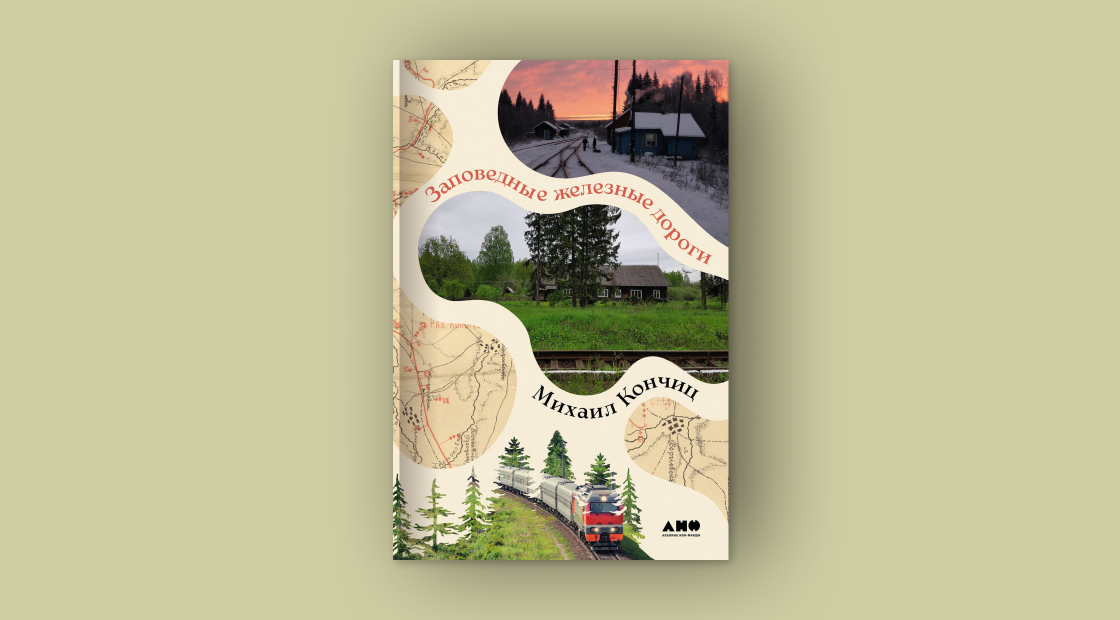
Mikhail Konchits. Reserved railways. Publishing house "Alpina non-fiction", 2026
Narrow gauge dimension
The golden age of the railroad as the dominant high-speed transport lasted only a few decades. But it was trains that first opened up the possibility of transporting thousands of passengers overland - without regard to weather conditions, at speeds higher than walking and even horseback. It's no surprise that many adventurous minds sought new paths and bold solutions, moving away from established engineering standards. There was a constant search for more profitable and comfortable ways to lay railways. After all, memories of times without trains were still fresh in my mind... So who said that the Russian one and a half meter gauge with steel rails on an embankment was the only correct option?
As a result, transport inventions of varying degrees of outlandishness were born. For example, at the dawn of the Soviet timber industry, real cargo monorails began to appear in some places for transporting harvested round timber. But if this is rather an example of the exoticism of the Kulibin sense, then the construction of railways with non-standard gauge and reduced-sized trains was quite common practice. Such lines made it possible to cover the needs of less-busy destinations with much less expensive means. Gradually, three main types of narrow-gauge railways spread across the vast expanses of the Russian Empire:
• 600 mm - for local industrial or military lines;
• 750 mm - both for factory roads and for full-fledged secondary lines up to several hundred kilometers long. This gauge size is very easy to remember, as it is almost half the standard 1520mm wide gauge;
• 1000 (1067) mm on selected industrial lines, tram systems and on Sakhalin Island.
Despite its relatively late appearance (at the end of the 19th century), the 750 mm gauge became standard for narrow-gauge railways throughout the post-Soviet space. Although it could have turned out differently, largely thanks to the efforts of the main “narrow-gauge” engineer of the empire - the famous engineer N.G. Garin-Mikhailovsky. In his writings, he promoted the idea of creating a narrow-gauge network in Siberia:
The only question here is how to build as many roads as possible with the same money. And, more than ever convinced, I say that we need to build a narrow-gauge road into the depths of Siberia - we will not lose anything in carrying capacity and traction power, and we will spend a lot less money.
By narrow gauge, the engineer meant a width of 1000 mm, which was subsequently used on the Krotovka-Sergievsk railway, laid at the request of Garin-Mikhailovsky in the area of his estates in the Samara province. But the meter-long Trans-Siberian Railway did not happen, and Garin-Mikhailovsky’s “personal” narrow-gauge railway was eventually converted to a regular gauge to simplify transportation. The same thing happened with the larger meter railway from Vologda to Arkhangelsk. But the lines with a width of 750 mm did not particularly lay claim to the role of main tracks, and therefore occupied the niche of “feeder” tracks - that is, secondary branches at standard gauge railway stations.
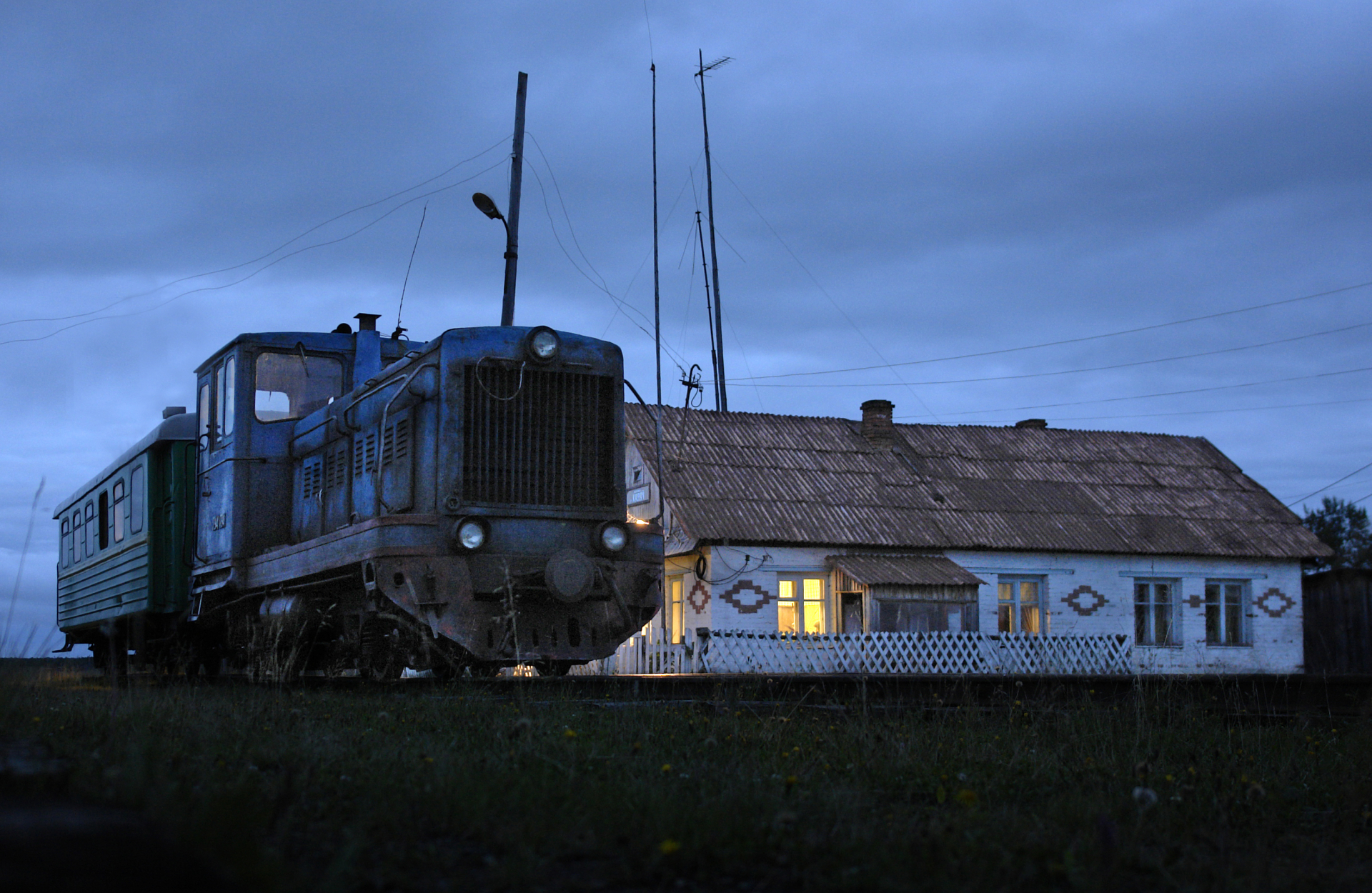
Narrow gauge train before departure to Sankino © Mikhail Konchits. Reserved railways. Publishing house "Alpina non-fiction", 2026
In Europe, narrow gauge lines flourished at the turn of the 19th and 20th centuries, and they largely served as an auxiliary transport framework for relatively sparsely populated areas. Nevertheless, everything here was like on a highway: freight and passenger transportation, schedules and waiting rooms - just smaller and more comfortable. This was, for example, the railway network throughout Bosnia and Herzegovina during the Austro-Hungarian Empire. In the Russian Empire, not many similar lines were built (including due to lower population density), for example, the famous Meshcherskaya highway or the Tula-Likhvinskaya narrow-gauge railway.
The most significant period of development of “half-length” railways occurred in Soviet times and was associated with the industrial development of hard-to-reach territories, mainly in the European part of the country.
Timber industry enterprises! Peat enterprises! Five-year plans! Transportation of sugar beet harvest! Trolleys at brick factories! Plan, cubic meters, tons and mechanization. The threads of rails stretching tens of kilometers deep into forests and swamps fit well into the paradigm of Stakhanov’s results, and the developed engineering industry generously fed enterprises with suitable locomotives, carriages and machines. So, from the stations of the “big” railway, workers’ settlements or ports, more and more small transport arteries grew. Most often, they ended in dead ends at resource procurement sites and were isolated from other narrow-gauge railways, so each road had its own directorate, control room and depot.
Often, along with the next narrow-gauge railway, new workers’ settlements with all the infrastructure appeared on the map, whose existence was completely tied to the train schedule. Sound like a dream? But the life cycle of such settlements often turned out to be shorter than the life of one generation. Already in the late Soviet years, the era of narrow-gauge railways began to decline, and the crises of the post-Soviet era finished off almost all existing roads, with the exception of a few dozen of the most persistent ones. Some of them still carry round timber from the plots or peat from the swamps where, by some miracle, undeveloped logging sites and far-sighted business owners remained. Other narrow-gauge railways exist only thanks to settlements isolated from the mainland, where trains deliver passengers and even food, mail and cargo. It is to one of the most famous narrow-gauge railways of this type that we are going - to the city of Alapaevsk, Sverdlovsk region.
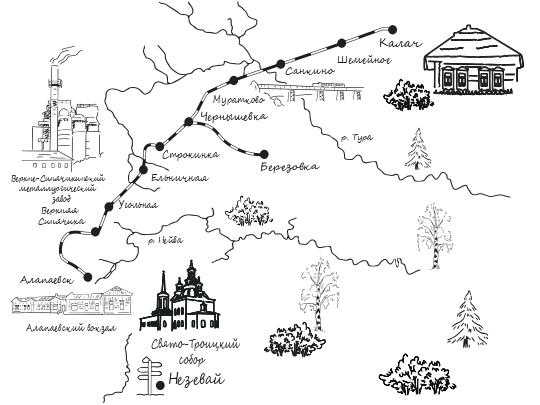
Route along the Alapaevskaya narrow-gauge railway © Mikhail Konchits. Reserved railways. Publishing house "Alpina non-fiction", 2026
What is Alapaevsk and its surroundings
A squat, pre-revolutionary-looking wooden station greets overstaying commuter train passengers from Yekaterinburg. Almost five hours on rails instead of three on the road can easily be justified by the desire to drive past the “Nezevay” stop in the village of the same name. You really want to yawn there, but the first passengers of this railway were not entitled to such luxury - hence, they say, the name came from. “Let’s get out of the cars, don’t linger!”
Immediately behind the station, with its flair of provincial bustle, there is a bridge across the muddy Alapaikha River, which gave the city its name. And a little further away begins an unremarkable quarter with five-story buildings, Pushkin Street and Magnets. What were we doing here? On our first visit, the answer seemed obvious: “We find the famous narrow-gauge railway and go into the wilderness!” But many years later it became clear that Alapaevsk deserves to be something more than just a transfer point from a regular train to a narrow gauge one.
In the language of textbooks, the murky waters of Alapaikha reflected key aspects of the development of the Urals as a supporting region of Russia.
To better understand the context of the place, we move along Pushkin Street to Lenin Street - a trick that can be pulled off in almost any city in provincial Russia. Just south of the center, the street crosses a pond on the Neiva River, an integral part of a typical industrial Ural city. Although the Middle Urals, within which Alapaevsk lies, does not really resemble a mountainous area, very small rivers flow here. During the summer low water period, their water is not enough to supply factories, so thrifty Urals built dams and built cities along the banks of ponds.
Here, on the bend of the Neiva River, behind a colorful fence one can see the well-worn workshops of a metallurgical plant founded back in 1827. And this is far from the “oldest” plant in the area: Susansky and Verkhnesinyachikhinsky appeared in the 18th century! None of them survived to this day, but my first trip to Alapaevsk took place at a time when both the Alapaevsky and Verkhnesinyachikhinsky factories were still working.
The essence of their existence, the citadel of metallurgy and the heart of the smelting processes is, of course, the blast furnace - a place where there is heat, heat and iron melts around the clock. In addition, the blast furnace was the architectural dominant feature of the iron-making colossi. Even the first Ural factories of the 18th century had a blast furnace, and the demolition of the last such structures in the 2010s marked the end of the almost three-hundred-year era of small metallurgical enterprises in the Urals.
In the vicinity of Alapaevsk there were other industries associated with more exotic resources: asbestos, nickel, copper - it was not for nothing that the train passing through the town of Nezevay also stopped at a station with the telling name Samotsvet! And any processing plant was, as a rule, located near the mines and forests that supplied it.
For the convenience of managing all related farming, mountain districts were created in the Urals and Siberia. And if we now move north along Lenin Street, then behind the city center and the railway we will see the stately two-story building of the Alapaevsky Mining District Administration. Thanks to the Tchaikovsky Museum (the composer’s father worked in this office for several years as a manager), the musical spirit now emanates here.
A pond, a factory, Tchaikovsky - everything adds up to a single picture... But where is the narrow-gauge railway? Let's make a U-turn and drive along Lenin again to the metallurgical plant, near the fence of which you can see the skeleton of the former bridge. It was here that the main narrow gauge track of the entire Urals began at the end of the 19th century. Its appearance was a consequence of technological processes and... poor management of forestry. To maintain smelting in a blast furnace, it was necessary to burn a huge amount of fuel, the main source of which until the 1930s was ordinary charcoal - the same one that still travels with us in the trunks of May barbecues. But the restoration of the felled forest at the Alapaevskaya forest dacha did not keep pace with the growth in production volumes, and therefore suitable wood had to be harvested further and further from the plant - tens of kilometers away. Due to the muddy roads, not all of the workpiece made it to the blast furnace.
At that time (1890s), Alapaevsk metallurgy was managed by French managers expatriated from abroad, from whom they expected technological breakthroughs and bringing order to one of the best factories in the entire Urals. The narrow gauge railway deep into the forest dacha became one of these innovations.
In just three decades, the new network has connected together most of the metallurgical enterprises of the Alapaevsk mining district.
It would seem that such a significant railway should have a clearly visible station in the city center, but neither on Lenin Street, nor on Pushkin Street, nor near Revolution Square. If you walk from the latter to the southwest, then in the backyards of the garages you can stumble upon the former building of the main station of the Autonomous Railway. Once upon a time, trains ran from here to the south, west and north of Alapaevsk, but due to the reduction in the scale of transportation, the need for a solid building disappeared by itself, and now we traveled from the city center to the place where we boarded the train on a city pasik.
In our hands are packages with provisions for several days: who knows what could be waiting for us tens of kilometers from the city, where food is transported only by rail? An agonizing anticipation settled in our chests, because we had to set off for the first time along the legendary narrow-gauge railway, and even spend several days away from civilization. But grandiose anticipations were shattered on a platform of concrete slabs near a lonely dead end and a dull fence. Is this really where wonderful, unique journeys begin? It was hard to believe. It looked more like some kind of factory dead end.
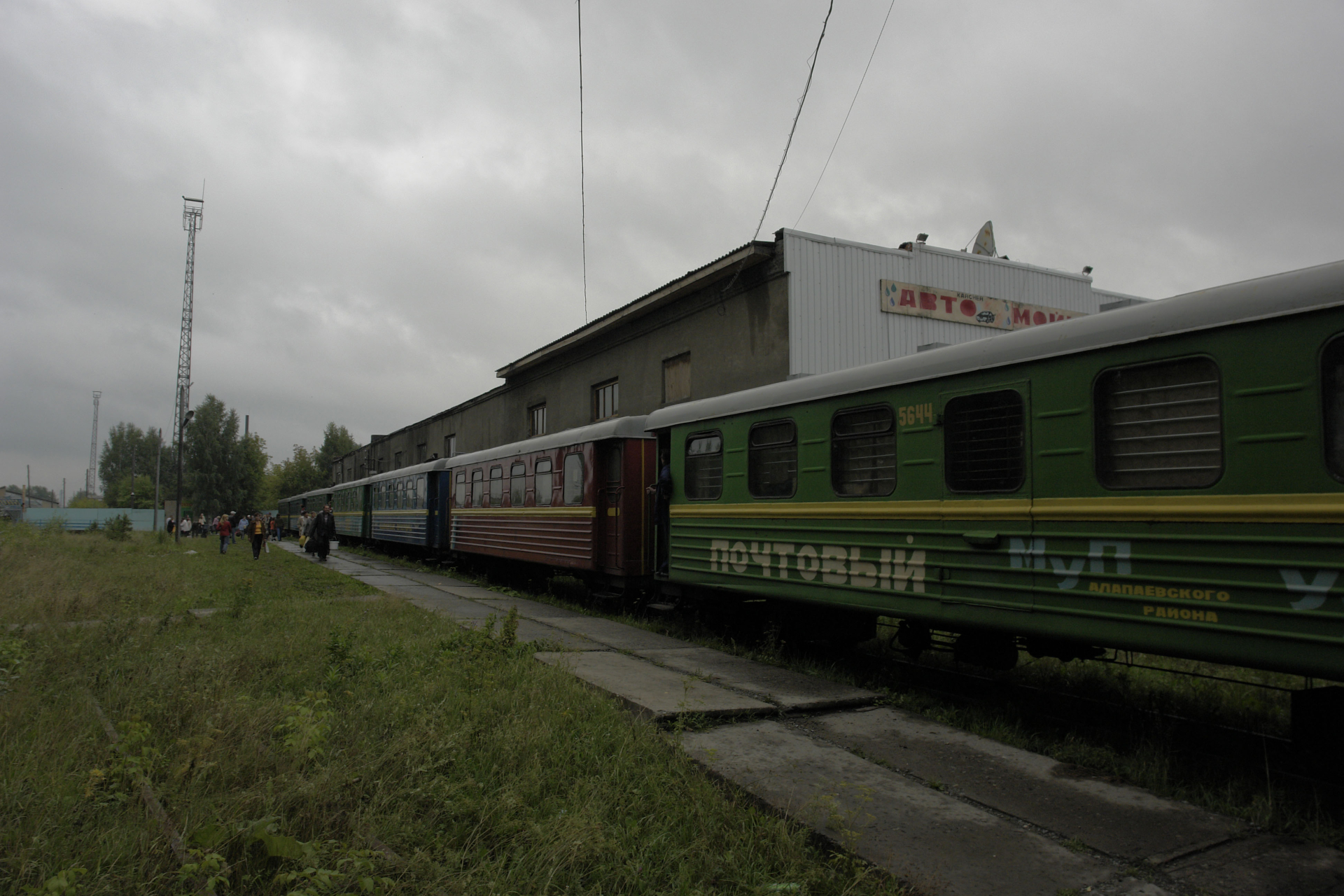
Boarding passenger train No. 1 © Mikhail Konchits. Reserved railways. Publishing house "Alpina non-fiction", 2026
However, nearby was a tempting door, behind which a busy world suddenly opened up: a cramped waiting room, where already an hour before departure, old women laden with bags and wrapped in shawls, hard workers with outstretched caps, and laughing teenagers gathered. A motley line of people stretched towards the main source of attraction - the cash register window, which emitted bright light. For the tremulous moment when our turn approached, we had to be prepared: to know where we were going and in what class. On the train there was an “economy” with wooden seating benches - hard workers obviously went there with two-liter bottles of Zhigulevsky. And we had to get into a narrow-gauge sleeping car that had no analogues, assembled in the local workshops.
Narrow gauge sleeping car
As a rule, passenger flights on domestic narrow-gauge railways last no longer than 3–4 hours and simple seats are quite enough. But the Alapaevskaya Mainline stretches for 150 kilometers, which a narrow-gauge train covers in 8–9 hours, and for such trips it was decided to equip several cars with reserved seat berths. But the dimensions of the carriage do not allow them to be placed across, as on a large railway, so they are stretched along the walls, and the carriage could only accommodate about fifteen people.
We had to ride in such a carriage to the very end of the road - Kalach station. Such a destination increased the interest of others in our company: not only were they clearly not local, but they were also traveling to the very farthest reaches, where rarely anyone would venture of their own free will. But I was incredibly happy, clutching in my hand the treasured cardboard ticket left over from Soviet storerooms (they were replaced with paper ones a few years later). A multi-hour journey into the incredible narrow-gauge world lay ahead!
At a nearby crossing, the flashing red lights above the barrier turned on, and from behind that same gloomy fence the Alapayevsk train began to roll out. Several carriages, shaking off stagnant raindrops from their roofs, swayed cheerfully from side to side. On each of them there was some text: “Use the services of railway transport”, “Alapaevsky open spaces”, “Forest”, “Postal” or simply 001 - any of the red, blue and green cars reflected important theses for the region, forming a cloud of tags. The cloud was hanging over us, and the train had already left... This is how the tracks are arranged - first he needs to get to the Krasnaya II junction station, and from there reverse back to our unsightly dead end. After some time, the crossing would freeze again to allow the now familiar line of tags to approach the platform with a musical creak.
Conductors poured out of the doors, passengers quickly threw their belongings into the carriages and returned to the street to chat with those seeing them off and neighbors before departure. Even frosty winter evenings at the station were filled with a pleasant platform mood, in which smoke from the carriage stoves was combined with steam from heated breath, and the chirping and puffing of the diesel locomotive was combined with the crunch of snow from shuffling feet.
Finally, everyone sat down in the carriages, the conductors showed yellow flags, the locomotive blew a long whistle and crossed the city crossing for the last, third time that evening. We passed the interlacing of tracks of the main station of the Autonomous Railway, where various freight and passenger trains once crossed. Now the windows of the control room looked at little-used tracks, where only occasionally did a train loaded with timber reach it. A few more city lights and buildings behind, and the train went deeper into the forest, which accompanied the passengers for almost the entire five and a half hours of their narrow-gauge journey.
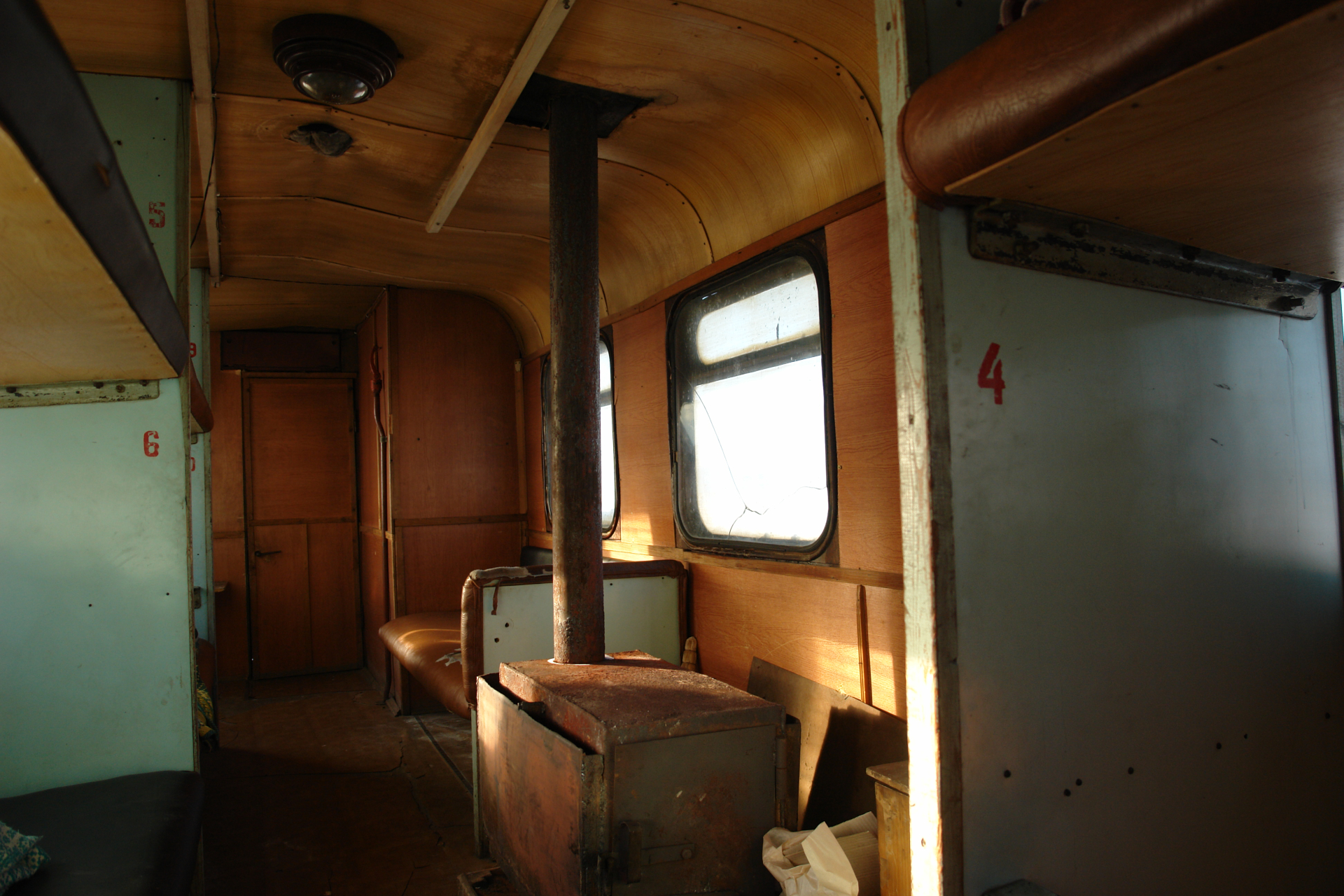
A reserved seat carriage with a stove © Mikhail Konchits. Reserved railways. Publishing house "Alpina non-fiction", 2026
From Alapaevsk to Ugolnaya
If in winter the passengers of the carriage immediately scattered to the shelves in order to indulge in a long-awaited nap, then in the summer the platform conversations continued after the train had departed, accompanied by the rustling of packages with supplies.
The demographic composition of passengers surprisingly closely matched the type of carriage: hard workers and young people were in open-space seats, and families with children, pensioners and tourists were in reserved seat mansions.
I climbed onto the top bunk to enthusiastically contemplate what was happening: both in such an unusual salon and in the window with forest views flashing through it. There was a hot heating pipe running along the wall, where you could warm up on a cool evening. But the sweeping rocking motion of the carriage did not allow me to enter into a calm state: the peculiarities of its chassis and the unevenness of the track gave the trip an adrenaline flavor that was difficult to come to terms with on the top shelf. It seemed that all this comfort was about to fall on its side, or that the shelf would buckle and decisively throw you off.
I wanted to grab something tightly, but there was nothing. All that was left was to squeeze into the shelf.
The former Sovetskaya station flashed past the window as an inconspicuous clearing, from where a few years ago a dead-end line ran to the north-west towards the almost deserted village of Zenkovka. Somewhere halfway to it there was the Mugai tract, to which the very first, historical line of the narrow-gauge railway led. In the midst of these sparsely inhabited forests, charcoal-burning cooperatives were scattered. The basis of such a “factory” was a stove built in a clearing (and in more ancient times, a simple kuren - a wooden frame, lined with turf and earth). “Smoking” took place in it - the transformation of wood into coal in an almost oxygen-free environment. Charcoal burning and charcoal burning have been a special culture of the forest Urals for centuries, and even today you can still find individual private enterprises engaged in the production of charcoal and smoking throughout the entire area.
Suddenly the dense forest parted, and a wide expanse of water was visible outside the window. A few minutes later the train drove out to the outskirts of the village of Verkhnyaya Sinyachikha and stopped at a squat, slightly lopsided wooden station. The first stop is short and rather symbolic - after all, you can get here much faster by road. An abandoned mast with several non-working traffic lights was thrown over the train, as if they had turned away from the tracks out of shame for their lost status.
Once upon a time, railway life here was supported by the metallurgical colossus of Verkhnyaya Sinyachikha, which immediately captured all attention after the train departed. The bright flame above the blast furnace of the metallurgical plant became the focal point both during the day and at dusk - the diesel locomotive reverently circled the vast territory of the enterprise. Then the gaze moved to the opposite side, where flaming slag was pouring out of monumental bucket cars from somewhere above. The light of the molten stream broke the hegemony of the early winter darkness, and I mechanically stuck to the window to gaze longer at the incredible scene. Then suddenly both flames disappeared from sight, giving way to all-consuming blackness.
One day we were standing at the bus stop in Verkhnyaya Sinyachikha, and a frail guy in a jacket as black as factory coal dumps started talking to us. Ivan turned out to be a metallurgist from a factory. He intriguingly described the beauty of the blast furnace, choosing simple provincial epithets. Ivan clearly had special feelings for her, which he tried to convey in a short set of words. Then he offered several times to go with him to the blast furnace the next day: they say there are no fences there - and everyone is their own. We got cold feet and politely declined. And now there is neither a blast furnace nor Ivan with it - and the charm of smelting remains a mirage seen from the train window.
Suddenly the train emerged from the pine-slag void and carefully made its way through the courtyards of a small block of Sinyachikha panels and a hospital. I immediately gave in to tempting thoughts: “Oh, these are the kind of courtyards in Moscow” - and delved into fantasies about transforming the capital in the image and likeness of Verkhnyaya Sinyachikha. With a blast furnace instead of shopping centers, a narrow-gauge train instead of avenues and a large factory pond for evening contemplation.
After all, why is there a Mokhovaya Street in Moscow if there is no swamp, peat mining and the attached narrow-gauge railway?..
Behind these thoughts, we found ourselves at the Ugolnaya station (as a tribute to the good old times of Ugolzhzhenskaya) - the last one within the boundaries of the “Great Land” on the Autonomous Railway. Entire families were unloaded from the carriages for a smoke break. Someone asked to take a photo of themselves and write for the Selskaya Nov magazine. I ignored this request for many years, and now I am writing in this book - which is undoubtedly much better than a magazine! Near the station there was a large plywood production site and Sinyachikha’s second employer after the blast furnace, the Fankom plant. Rare narrow-gauge freight trains with round birch timber and a daytime passenger train from the depths of the Autonomous Railway arrived here. Our letterman seemed to be gaining courage before leaving the world of cars and supermarkets, then he sounded the traditional horn, the flag of the station attendant flashed in the window, and we set off. Finally, the most tempting part of the narrow-gauge railway began!
Ugolnaya - Sankino
Immediately after Sinyachikha, the narrow-gauge railway crossed the broad-gauge line along an overpass. Both railways rushed into a milky fog, in which short trains consisting of a diesel locomotive and a passenger carriage were lost several times a day. Only one of them is simply soulful, but not outstanding, and the other is unique and attractive. A few seconds later, over the flat steel line of the broad gauge towards Sosva, our train found itself in a thicket of forest, the view of which will remain the main visual motif of the entire journey.
The first half hour was spent getting used to the complete absence of lights, buildings and other signs of populated areas. But before I had time to plunge into sleepy dreams, the measured swaying was interrupted by a stop at a lemon-colored wooden station in the village of Yelnichnaya. There were only a few streets that could be seen with a wide view from the station. With the onset of dusk, the last rays of light of the passing day were reflected in the water surface of the village pond. I followed the thin strip of glow with my eyes and listened to the measured monologue of the local owner of the “pioneer” (homemade handcar), when suddenly the peaceful silence was broken by a loud splash. The vague silhouette of a mysterious swimmer gave rise to a debate: otter, muskrat or beaver? This is how the station pond lived most of the day, but with the arrival of the evening train, the lights of the diesel locomotive and sparks from the melted stoves jumping from the car pipes were reflected in it.
After leaving the warm carriage into the frosty Ural air, it was especially valuable to see and smell the smoke from the fire, carefully maintained in the carriages by the conductors. At the same time, there was a vigorous unloading of food and parcels from mail and baggage cars - the main source of supplying the village residents with the benefits of civilization and news from relatives. Finally, at the tail of the train, the diesel locomotive uncoupled the car to the village of Garaninka on one of the branches from the main route. Local boys and the obligatory accompanying dog with a ring tail were frolicking animatedly near the locomotive of the main part of the train. The children insistently suggested that the name of the local authority, Lenya Kopcheny, be remembered and made public. It was not possible to see him, but since then I have been steadily associated with Yelnichnaya with Lenya... And the mythical muskrat from the local pond.
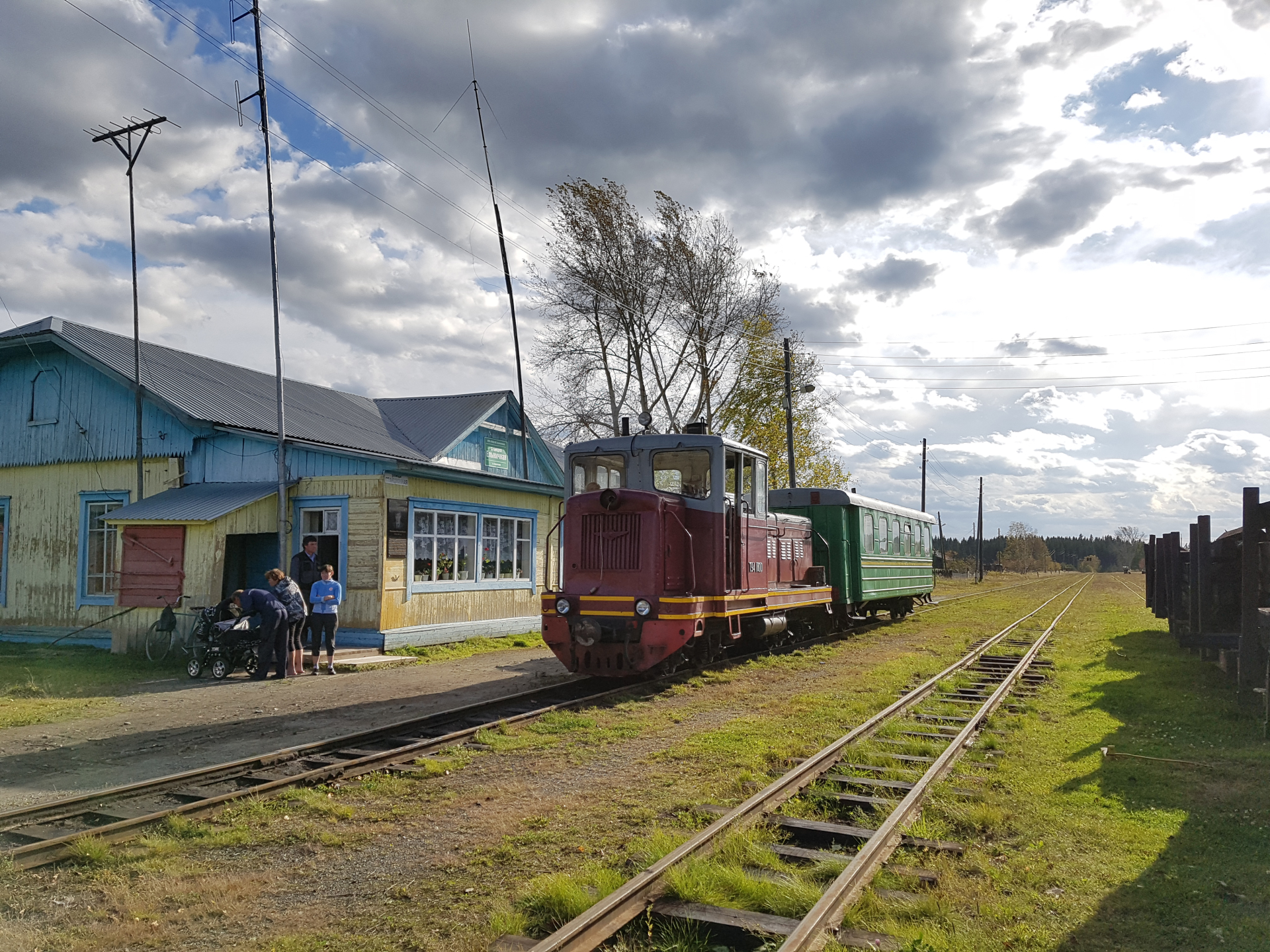
At Elnichnaya station © Mikhail Konchits. Reserved railways. Publishing house "Alpina non-fiction", 2026
A busy station, its own depot, as well as a club, a school, a store and even a local authority (the same Lenya Kopcheny) created the impression of a strong independent village, tied to traffic on a narrow-gauge railway. But this feeling dissipated with a change in the situation: first the side line to Garaninka was closed and dismantled, and then an asphalt road was laid into the village, simultaneously closing the school, which for any village becomes a catalyst for degradation. It turns out that dependence on the narrow-gauge railway, in a sense, preserved the independence of Yelnichnaya, and with the advent of the highway, the village became an obsolete appendage of the regional center. Maybe Lenya Smoked is no longer the same authority as before.
Immediately after departure, we crossed an asphalt road that turned into mud, drove in an arc through the village and again plunged into the invariably soporific forest landscape. But not a single view from the window lived on its own - in our minds, in parallel, there lived expectations, stories read before the trip, and memories and analogies that emerged. For some, music was playing that was carefully selected for the situation; for others, what they saw evoked associations with masterpieces of painting. So even if the hundreds and thousands of birch trees with fir trees hidden in the darkness seemed somehow painfully familiar, the awareness of being in an amazing narrow-gauge carriage, moving away from the usual attributes of life, adorned even the most monotonous landscape. And on the road between Yelnichnaya and Strokinka, willy-nilly, you will remember how on the map the black strip of the railway winds between the Strashnoy and Chisty swamps. The forest was filled with fairy-tale characters: scarecrows on one side of the path and clean people on the other. In such company, the train reached the next stop in half an hour, where it again stopped for a moment in the barely lit village of Strokinka.
Designer Strokinka definitely had a desire to make the village as cozy as possible: several dozen houses on top surround the local river and pond, above which the station is located. Once one of the large logging bases, Strokinka has now become a quiet corner for three dozen residents, most of whom are retired pensioners who have become attached to the place. Unlike Yelnichnaya, there is no asphalt here anymore, or even fresh memories of the school. The products arrive along with one of the residents' handcars. But, unlike more remote villages, power lines reach here and, if nothing is broken, there is constant light in the houses. But if you look from a night train, the rare lights in the windows quickly seem like mirages. Just twenty minutes into the journey, the carriage will freeze again, this time in the middle of absolute darkness, as if it must check the road: am I going there? The mysterious stop turns out to be the Chernyshevka station, which outlived the village of the same name, which left behind only a vast wasteland and vague ruins. This is where the amazing dead-end line to Berezovka begins. We will pause time so that early in the morning we will be at the already familiar Yelnichnaya station.
Berezovskaya artery
A dark March morning soaked in thick twilight. This silent density quickly enveloped the station, alarmed by the arrival of the letter train. Only in one of the windows of the station was there nightlife - one of the villagers kept a sleepless watch and sold us tickets for the train to Berezovka, which appears on the schedule only twice a month. He had to pick up several passengers from a distant village, take them to the city on business and back. This entire journey with departure and return to Yelnichnaya took most of the day.
Even before the first signs of daylight appeared, a passenger train creaked into the station, looking more like a set for a war film. Attached to a green diesel locomotive with noble round shapes was a blue train with small windows at head level. Inside, in the flickering light from the stove in the center of the car, the wall benches and the silhouette of the conductor at the far end were barely visible. Having paid us exactly as much attention as required by the regulations, the laconic carriage driver skillfully climbed onto the bench, plunging the entire cabin back into night mode.
The diesel locomotive gave a long whistle and sharply jerked our magical room, marking the beginning of a gloomy flight to Berezovka. Deprived of softening springs, the former freight car began to clang its wheels and sway vigorously from side to side. There was nothing else left for us
how to follow the example of the conductor who disappeared into a dark corner and sit down on a bench. The heroic shaking made it difficult to sleep, so a tired gaze froze on the hypnotic dance of dim tongues of light emanating from several holes in the stove damper. There a warming fire burned tirelessly, giving this proletarian salon a mystical comfort. The Bacchic chiaroscuro running along the walls was reminiscent of Matisse’s “Dance.”
The train to Berezovka increasingly turned into a journey out of time - either from Jules Verne, or from Kurt Vonnegut.
After some time, the wheels tapped the arrow, drove forward and froze. Then they jerked again and rolled at a much calmer pace. Outside, branches scraped along the walls, intensifying the already macabre sensations of what was happening - this meant that the dead-end line to Berezovka had begun. Once upon a time this was one of the important lines of the Autonomous Railway, leading to one of the charcoal burning establishments, and then to numerous plots. But over the past decades, everything that could have died out in the village has faded, except for the energy of a few of the most persistent residents, for whom our unusual carriage is traveling. It’s finally dawn, and in the end window you can see a bridge over the Kyrtomka River, which leads to one of the rare places that come to life in these forests - the hard-to-reach Kyrtom monastery, where several monks live. Yes, they chose an extremely good place for privacy.
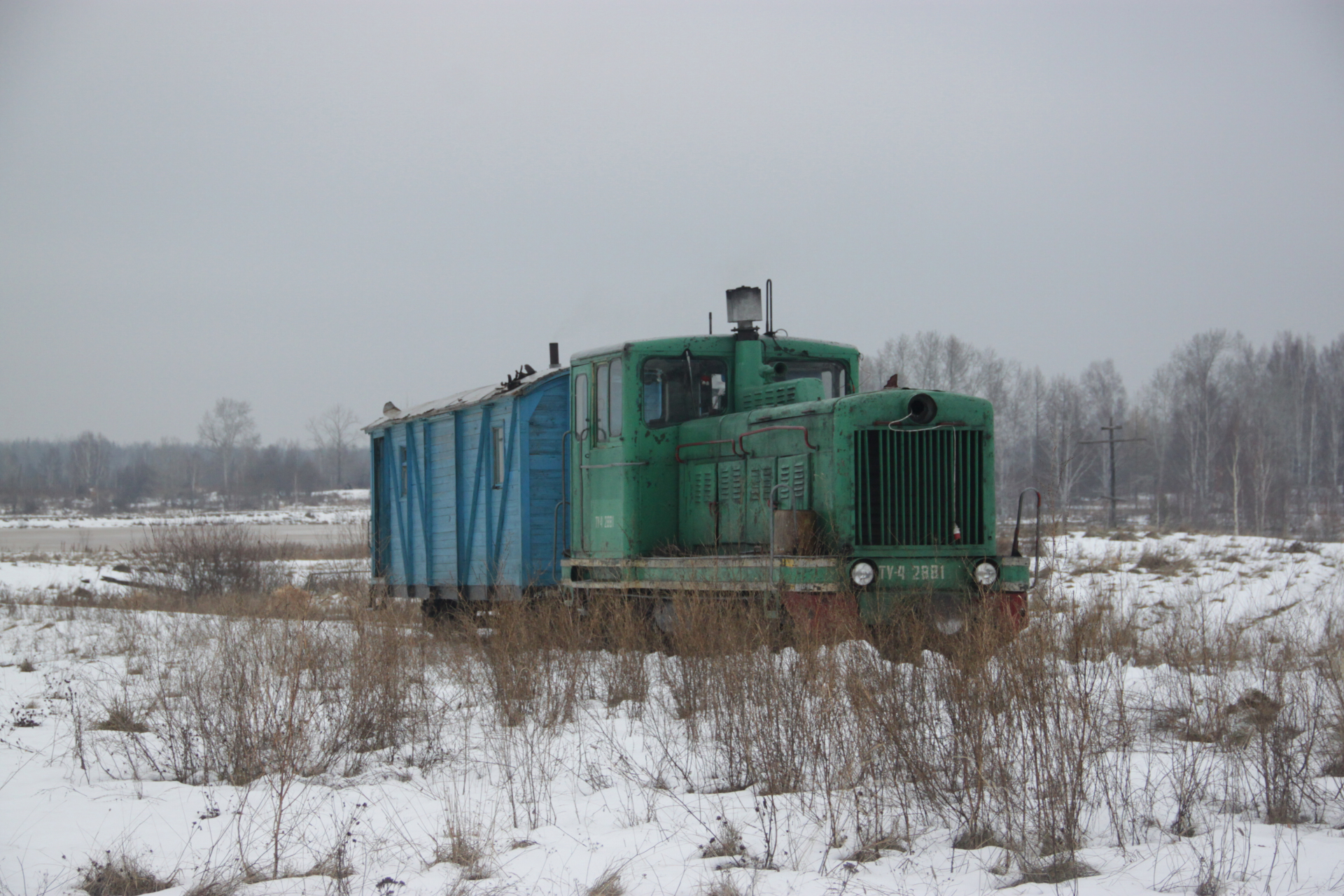
Diesel locomotive with a diesel car in Berezovka © Mikhail Konchits. Reserved railways. Publishing house "Alpina non-fiction", 2026
It's dawn. The sky is covered with gloomy grayness, in which our blue-green composition looks like the most colorful object. Finally he froze at the dead end of the 24-kilometer branch. After many hours of exciting travel, after confinement in the walls of a heated vehicle and sleep interrupted by shaking, going out into the fresh air seemed like landing on another planet.
The ruins of a once prosperous forest village appeared. While the diesel locomotive was making maneuvers in the remains of the station, we marveled at the rickety building of an abandoned bakery and the bouquet of metal snags around. Beyond the bridge over the village pond, sour from the March snow, lay a whole street with the skeletons of stoves in place of houses. Here and there, isolated sheds, latrines and piles of faded household utensils loomed among the dried panicles of reeds. Only at the far ends of the village are there habitable houses with antennas and barking dogs; even in this godforsaken wilderness, people scattered to their own corners, gathering only for the train on a no-man's hillock. I froze at another requiem for homeownership, looking at a rickety wooden toilet with an open door. I remembered the same one in one steppe reserve. An open door meant that the toilet was occupied and the visitor was “admiring the steppe.” The views were truly beautiful, and the wind whistled its tunes in the cracks between the boards. Perhaps here, in Berezovsky, the pattern is the same: someone is admiring the forest expanses.
Meanwhile, snow began to fall in large flakes, and the wind ruffled the tangles of dried tall grass. Suddenly a man with a dog walked by. He greeted and smiled, revealing gaping voids and a pair of silver teeth. Yes, life here is very different from the city... About four people gathered for the departure of the carriage - almost half the village. Among them are our smiling acquaintance and portly women with packages. A conversation immediately started in the carriage, which did not stop all the way to Yelnichnaya. And it’s not surprising: even in Berezovka, cut off from the world, everyone lives as if on a separate island. The blue car becomes the local House of Culture.
The branches are again scraping along the sides of the car, but somehow it’s very quiet. The wood in the stove also crackles, but without Matisse's colors. Everything became kinder, more ordinary, more alive. So we quietly returned to Chernyshevka and stood on a side path.
The driver said that we would have to stand for about fifteen minutes: the train schedule suggests an even more leisurely move. It turns out we were in too much of a hurry. More measured is needed. The surrounding wasteland is flooded with the March sun that suddenly breaks through the clouds. The fresh breeze blows pleasantly. Life is everywhere!
A few years later I’m going to Berezovka again, this time in a Pioneer car. In the middle of the forest we come across the same trolley, on which two policemen are moving. “Will you be fined for exceeding the limit?” - we joke as we drive away.
It turns out that after the train was canceled, residents of the amazing village wrote letters to the president: the bureaucratic procedure involved a visit by officials to survey the population. A few years later, regional millions began to be allocated to repair the line, and eventually the train (with an ordinary seated carriage) began running to Berezovka again. So eight residents of a distant village pulled their only transport line out of oblivion.
To the ends of the world
We returned from the Berezovsky hevshy back to the reserved seat berth. The night train set off from the siding into the wasteland. Once upon a time, side lines left from here - mustaches for hauling timber - not only to Berezovka, but also in other directions. In the Alapaevsk forests they were built in huge quantities; some were dismantled, others grew in their place on plots that had not yet been developed.
Beyond Strokinka we crossed the border of the older part of the Autonomous Railway, which served charcoal burning establishments. Behind it began a line built after the war for the removal of timber. Somewhere in deep darkness we passed the former villages of Oktyabr, Podkur... Places once full of life, but now visited only by lumberjacks and forest animals. It was useless to look for even a single light in the window; the train still rattled its wheels monotonously, and the dim light from the ceiling ran over the figures of the restlessly sleeping passengers. What is a night smoke if not a figment of a sleepless imagination? There is not a soul there, there is only unlimited historical fantasy.
I woke up from a series of shocks: outside the window, a cheerful diesel locomotive was uncoupling and moving a red carriage, from which stove smoke was briskly smoking, onto the adjacent track. We ended up in Muratkovo, the largest village on the Autonomous Railway without constant road traffic. A mobile temple arrived here with our train, which is also the same red carriage. If the narrow-gauge wilderness gives the monks of the Kyrtom Monastery the opportunity to retire, then for the local priest, the railway and a special carriage are the only way to conduct services for residents of nearby villages. Вагон остается на всю ночь, сошедшие пассажиры разбредаются по домам, чтобы утром засветло снова увидеть родные улицы и лесные опушки.
Последние сорок минут беззаботной лежачей жизни в плацкарте мы ехали по тому же маршруту, что и муратковские дети, добирающиеся до ближайшей школы на тепловозе. По начавшейся суете стало ясно, что мы подъехали к конечной станции пассажирского поезда номер один — поселку Санкино. Поезд прибыл на первый путь и замер у освещенного светом лампы здания вокзала, вокруг которого мелькали фигуры встречающих и отъезжающих. Времени на раздумья не было, потому что поезд до конечной станции узкоколейки — Калача — обычно ждет пересаживающихся пассажиров считаные мгновения. Не стоит смотреть на соседей, ведь почти все они остаются в Санкине. Нужно быстро сориентироваться на платформе, пропустить отцепляющийся от алапаевского состава тепловоз и добежать до коротенького состава на втором пути. Однажды зимой мы зазевались и занялись художественным осмыслением ночной жизни станции Санкино — и поезд на Калач ушел. Только каким-то чудом и энергичными круговыми движениями (знак остановки на железной дороге) дежурная по станции выловила для нас заветный состав обратно из темноты. Но в первый раз, летом, мы успели. Забрались в абсолютно темный калачский вагон и на ощупь отыскали лавки вокруг печи-буржуйки в центре салона.
Казалось, что мы погрузились в какой-то обесточенный космический модуль, потерявшийся в неизвестной галактике. Но вдруг из мрака раздался хрипловатый голос кондуктора: «На Калач? Well, let's go."
Вагон дернулся и отправился в кульминационный рейс по космосу алапаевской узкоколейки. Да, на Калач!
Ненадолго в вагоне вспыхнул свет ручного фонарика, вылавливавший считаных пассажиров. Первыми он нашел целующихся в углу вагона подростков. В ответ им донеслась кондукторская мудрость: «Все можно, только осторожно!» Для остальных же проверка ограничилась простым вопросом: «Билеты есть?» — что оставило всякий формализм за бортом. Правда, та же парочка (явно без билетов) вскоре покинула наш уютный уголок; калачский поезд делает быструю остановку на единственном переезде в Санкино, будто бы выполняя роль городского транспорта — на радость местной молодежи.
Чуть позже по глухим отстукам колес стало ясно, что мы въехали на самый могучий мост АУЖД, где поезд пересекает сибирскую реку Туру. Это уже не Средний Урал со скалами по берегам рек и заводскими прудами, а размашистая лесоболотная тайга Сибири, ведь Тура и ее притоки относятся к бассейну Оби. По ее левому берегу раскиданы болота с говорящими названиями Большое и Тундра, между которыми и катился в ночной тишине наш поезд. Ни один звук в вагоне не нарушал монотонного перестука колес. Засыпая, мы свалились на что-то вроде топчана, и 30-километровая дорога до Калача была бесконечно долгой, без остановок и огней, но с тягучими пробуждениями посреди сумрака. Казалось, что тепловоз увозил нас в какое-то трансцендентальное путешествие в новые миры, где трансформируется само наше «я».
Реальностью стал этот прерывистый сон и возникающие в сумраке образы: нечто такое рисовал бы фантасмагорический тандем Дали и Куинджи. Вдруг поезд резко замер, видения растворились, и через мгновение мы с вещами уже стояли на улице. Тепловоз в мгновение ока совершил маневр и уехал обратно в ночную мглу, увозя с собой единственный источник света. В пасмурную ночь мы остались один на один с всепоглощающей темнотой, не ощущая ни пространства, ни времени. В первый мой приезд я был наивно растерян в столь ошеломляющей обстановке, но чудесным образом обнаружил живую душу — работника каптерки Володю, ставшего моим хорошим знакомым. В следующий раз он встретил нас с другом на станции, усадил в мотоцикл «Урал» и увез по морозной ночи, высвечивая дрожащим прожектором прочищенную от снега дорогу. Вскоре мы были уже внутри натопленной избы и почти сразу улеглись спать. Нигде не спится так сладко и крепко, как здесь, в Калаче. На краю света.
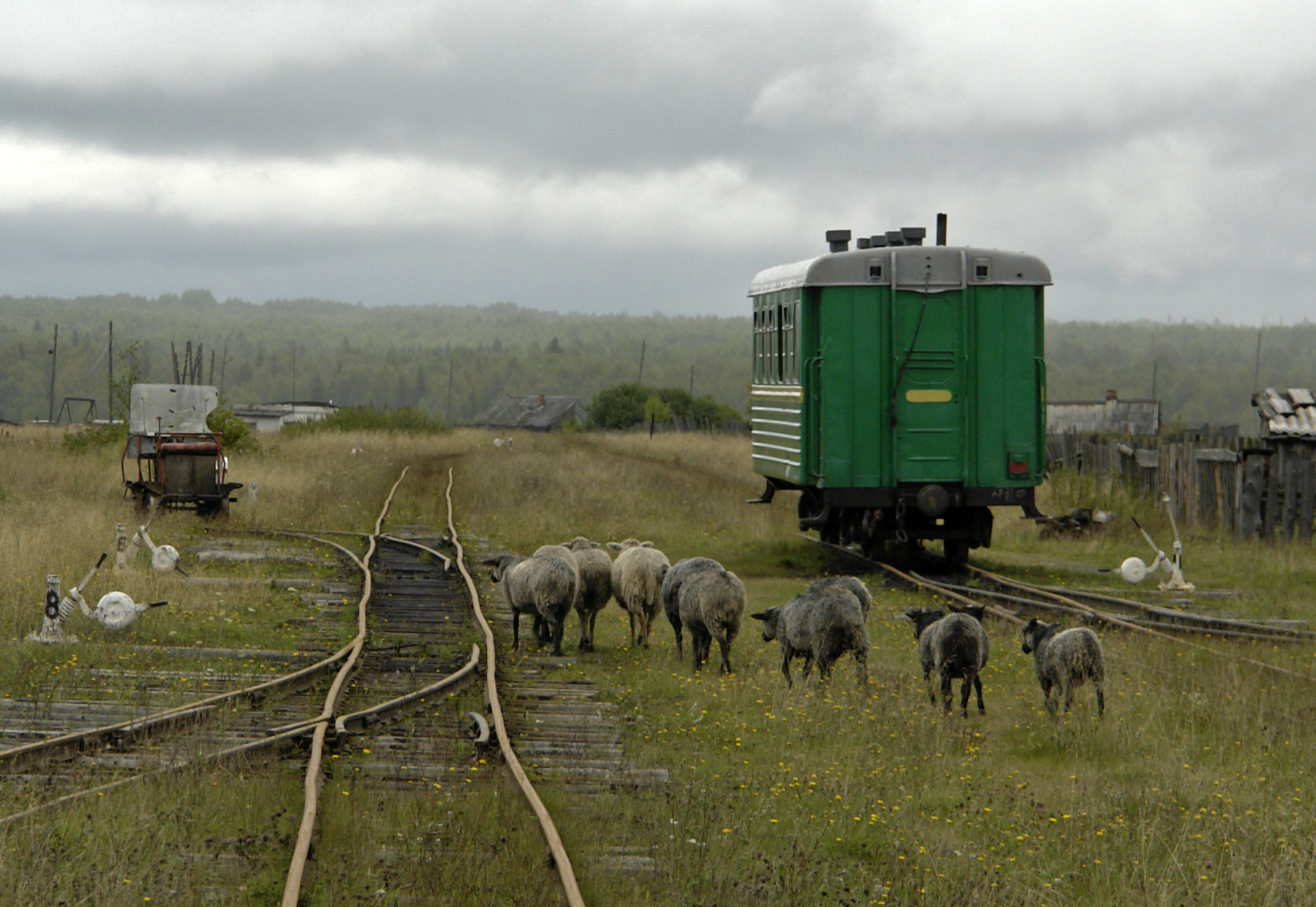
Вагон на станции Калач © Михаил Кончиц. Reserved railways. Publishing house "Alpina non-fiction", 2026
Конец дороги. Начало жизни
Утро в Калаче для меня всегда было поздним, теплым и очень добрым. Ты как будто перерождаешься и снова оказываешься в детстве. Умываешься колодезной водой, потягиваешься у растопленной печи, уплетаешь горячие уральские шанежки и чай с черемуховым пирогом. Разговоры о дороге, о городской и деревенской жизни, как прошла зима или что уродилось летом. В гости заглядывают взъерошенные коты, поднимают хвосты и трутся о ноги. Тело словно прирастает к стулу — так сложно выйти от этого натопленного пространства с пирогами! Однако любопытство берет свое, и в разгар дня ты оказываешься посреди типового уральского двора в одну крышу. Вокруг этой миниатюрной пьяццы — и хозяйский дом, и гостевая пристройка, и хлев с козами, и сарай с техникой, и, конечно, крепкий деревенский туалет. Замкнутое и максимально обжитое пространство двора радикально контрастирует с тем, что мы увидим, выйдя за ворота хозяйства.
Сам Калач, как и несколько других окрестных поселков (а ныне опустевших урочищ), появился в этой необитаемой глуши еще в 1911-м, когда здесь осели вдохновленные столыпинскими реформами переселенцы из Вятки и Пермского края. В отличие от других уральских и сибирских переселенцев из более южных губерний, новые жители Калача не увидели в местной тайге ничего принципиально нового: она мало отличалась от привычных им лесных территорий. Так на центральной улице поселка возникла крепкая двухэтажная изба по вятскому канону, а по соседству — уральские избы с общей крышей над всем хозяйством. Землю начали распахивать, и она стала обеспечивать жителей пропитанием, дополняя щедрые дары леса. По другую сторону речки Янцаевки, выписывающей своим руслом тот самый калач, выросла деревня Чащевитка, которая, как нам объяснили местные, призывает жителей чаще видеться. В 1960-е годы в Калач пришла железная дорога, достигшая здесь своего 150-го километра, и с тех пор местные действительно стали видеться чаще. Линия на этом не останавливалась, а шла еще дальше — в поселок Романовский, теряясь в окрестных делянках.
Калитка за спиной захлопнулась: мы оказались на вытянутой и широкой улице Центральной, спускающейся к шаткому мосту над Янцаевкой. Благополучные дома Калача сосредоточены в дальней части; поднимаясь ближе к станции, начинаешь отчетливо понимать неутешительную судьбу поселка: там стоят десятки заброшенных, покосившихся домов с выцветшей и покрытой лишайником древесиной, заросшими густой травой участками. Вот здесь была школа, а за ней — покинутая улица Школьная; вот бывшая администрация, а вот и почта с кустом черемухи перед ней. Ни детей, ни почтальона — за посылками надо ездить в Санкино. От нескольких сотен жителей и обычной инфраструктуры в Калаче осталось с десяток поселенцев, несколько часов электричества днем и вечером да изредка открывающееся сельпо «Тополек» с хлебом и спичками.
Если и есть на свете квинтэссенция железнодорожного уюта, но в то же время загадочности и недосягаемости, то все это сходится на станции Калач.
Пассажиры прибывают сюда в глубокой темноте (других вариантов нет), а после имеют возможность переосмыслить это же место в тишине светлого дня. В любое время года картина почти неизменна: побеленный кирпичный вокзал с двускатной крышей под деревенскую избу, оставленный на двое суток одинокий зеленый вагон, аккуратный вокзальный туалет с заваленным на бок сараем и несколько белоснежных ручных стрелок с заботливо выведенными черной краской номерами. За станцией в легкой пелене мороси скрываются пустующие пастбища и бескрайний ковер леса, обволакивающий выданное поселку пространство для жизни. Словно созданная волшебником инсталляция, эта сцена не отпускает: то вокруг вагона походишь, то на привокзальной лавочке посидишь, то сходишь в оба конца станции, постоянно оборачиваясь на магическую картину, будто боясь, что этот идиллический мираж в любой момент растворится.
В одну сторону от Калача мы всегда шли до бывшей деревни Шемейное в пяти километрах по линии. Сначала миновали штабеля леса, готовые к погрузке, и корову с теленком, которые не спускали с нас глаз. Затем провожали последнюю стрелку, за которой в лес уходил единственный путь. Пройдя еще несколько сотен метров, мы замирали в том месте, где станция с вагоном уже превращались в едва различимую миниатюру, которой всегда хотелось напоследок полюбоваться еще раз. Вскоре мы достигали железнодорожного переезда с грунтовкой, ведущей к окрестным сенокосам и к мистической Бакарюке — опустевшему поселку в 20 километрах к северо-западу от Калача. Когда-то там была своя узкоколейка и велась активная добыча леса, но в девяностые Бакарюку выселили, а железную дорогу закрыли. На месте бывшей деревни остался жить лишь один человек, выбравший судьбу отшельника, но не где-нибудь, а в родном краю. К нему в гости по зимнику изредка ездят жители Калача. А от старинной деревни Шемейное и вовсе не осталось ни одного дома — там теперь только пустошь да развалины деревянной ограды.
Если же мы шли от станции Калач на восток, то проходили бывшее депо и электростанцию, а с насыпи открывалась панорама задних дворов поселка. Из некоторых к путям шли рельсы для мотодрезин. За хмурым мостом через речку Янцаевку, полную бурой торфяной воды, рельсы АУЖД обрывались напротив деревенского кладбища, население которого в несколько раз превышает число жителей поселка...
Несмотря на мизерное число жителей Калача и Чащевитки, пространство двух деревень с окрестными пастбищами всегда казалось огромным. Оно покрыто однотонными хозяйствами из пепельного дерева, где дома словно прижаты к земле тяжелым свинцовым небом. Все время пребывания на улицах Калача меня не покидало ощущение, что поселок населен призраками, избегающими любого вербального контакта с пришельцами. Лишь принимавшая нас семья окружала заботой и занимала долгой беседой, пока кто-нибудь из гостей гладил улегшихся на руках сонных котов.
После умиротворяюще тихой станции, уныния заброшенных домов и чарующей лесной дали оказаться у натопленной печи, сыто накормленным и за чайными разговорами казалось величайшим чудом на свете. В эти моменты есть только избяной космос и деревенские сумерки за окном, от которых прячешься в теплое одеяло и добрые сны.