
Translated material
Trump's approval rating falls amid war with Iran. Even users of his social network Truth Social criticize the US President
It turns out that Trump’s advisers did not support this conflict either - but they did not dissuade him
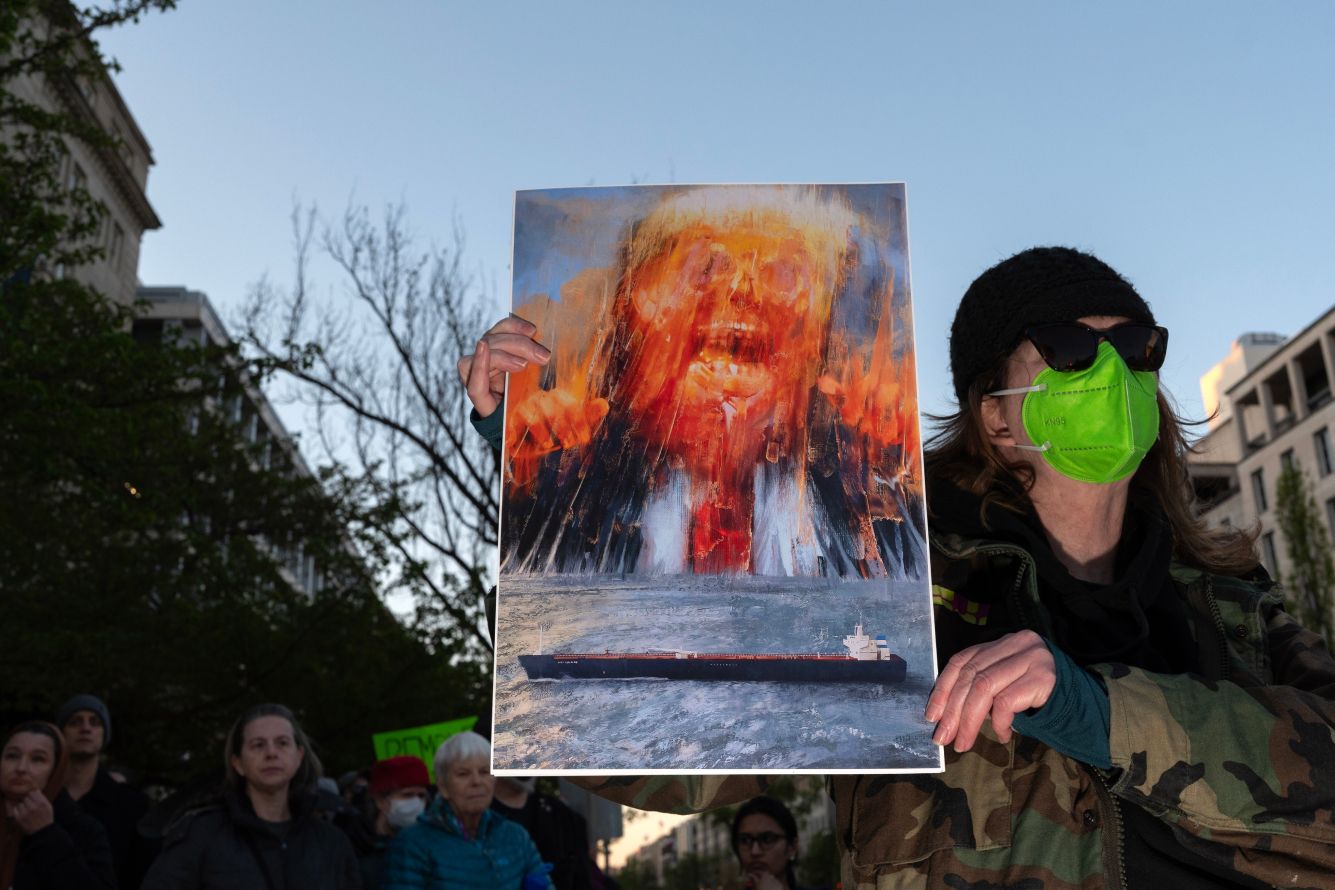
Since the outbreak of the conflict with Iran, Donald Trump's approval ratings have dropped to record lows since the start of his second term. The five-week war, which led to a two-week truce, does not resemble a US triumph: Iran retained its enriched uranium and its theocratic regime, and in addition gained control of the Strait of Hormuz, one of the world's most important oil and gas trade routes. Against this background, as The New York Times noted, Trump is beginning to be criticized even by the most devoted part of his electorate - users of the social network Truth Social. The newspaper also found out that Trump’s close advisers were skeptical about the war with Iran from the very beginning; however, they did not dissuade the US President, relying on his intuition.
The United States declared itself the winner of the war with Iran. But for now it looks the other way around
The US and Israel began air strikes on Iran on February 28. They killed the Supreme Leader, Ayatollah Ali Khamenei, and also attacked the Iranian army and navy. Iran responded by attacking US allies in the Middle East and blocking the Strait of Hormuz, causing a global energy crisis. Trump demanded to open the strait, promising otherwise to strike Iranian power plants, bridges and other critical infrastructure. He threatened the Iranians with “hell” and“the death of civilization.” After which he concluded a two-week truce with them.
The goals of the operation against Iran were formulated vaguely. Explaining why they started this war, Trump and his teamtalked about destroying Iran's nuclear and missile programs, overthrowing the power of the ayatollahs and "freedom for the Iranian people." They were going to achieve this in a maximum of a month and a half and without a ground operation. But after five weeks of war, Iran retained its reserves of enriched uranium and its theocratic regime, showed its ability to harm US allies in the Middle East and, most importantly, began to control the Strait of Hormuz, which was not the case before the war.
“In an attempt to prevent the development of weapons of mass destruction, the United States transferred weapons of mass destruction to Iran,” Ali Vaez, Iran project director at the International Crisis Group , told Reuters. In his opinion, the ability to control the global energy market by blocking the Strait of Hormuz gives the Iranian authorities more powerful leverage than even nuclear weapons could provide.
The truce somewhat calmed the panic in the world oil market, since it assumed the opening of the Strait of Hormuz. However, it is still blocked . The Iranian authorities, who have already declared victory in the war, have not shown any willingness to make concessions to the United States in negotiations. The American authorities, who also talk about themselves as winners, may resume hostilities, but this carries serious political risks for Trump.
The MAGA camp supported Trump in the war with Iran. But it is by no means unanimous
After the outbreak of the US-Israeli war with Iran, many prominent MAGA representatives spoke out against this conflict. Podcast hosts Megyn Kelly and Tucker Carlson said the American people were fooled by Israel. Similar sentiments were expressed by other right-wing commentators such as podcasters Alex Jones and Joe Rogan, ex-Trump adviser Steve Bannon and former congresswoman Marjorie Taylor Greene.
Polls have shown that ordinary US residents are largely against war with Iran. However, the non-media part of the MAGA camp supported her - which is curious, given Trump's campaign promises to stop fighting abroad. According to a mid-March poll, 8% of Democrats, 84% of Republicans overall and 92% of Republicans who support Trump approved of the conflict with Iran.
But even his most loyal voters are divided over the war, a New York Times survey published April 8 found. The newspaper analyzed more than 40 thousand comments under Trump’s posts about the conflict with Iran on his social network Truth Social - and came to the conclusion that Trump’s commentators react to this topic even more negatively than to the Jeffrey Epstein scandal.
This was especially noticeable under a post that Trump published on April 5, the day Western Christian churches celebrated Easter. “Open the damn strait , you crazy bastards, otherwise you will live in hell. You'll see! - Trump wrote , ending the post with the words “Praise be to Allah.” Hundreds of critical reviews appeared under it, and their authors, among other things, expressed disappointment that Trump used foul language on Easter.
Another post that caused a sharply negative reaction was published on April 7. He promised that Iranian civilization would "perish tonight". More than half of the commentators criticized Trump for these words. They received support from both the left (“This is an extremely sick man,” said Democratic Senate Minority Leader Chuck Schumer) and the right (“Not a single bomb fell on America. We cannot destroy an entire civilization. This is evil and crazy,” wrote prominent MAGA supporter Marjorie Taylor Greene).
At the same time, the truce with Iran, which Trump announced shortly after his belligerent post, also did not please commentators at Truth Social. Many of them accused the US President of backing down without receiving anything significant in return.
Many around Trump were also against an attack on Iran. But they didn’t argue with the president
Sources of The New York Times say that the White House was initially skeptical about the idea of a conflict with Iran. According to the publication, on February 11, Israeli Prime Minister Benjamin Netanyahu came to Trump and tried to convince him that now is the best time to attack Iran. The United States and Israel can destroy Iran's missile program and achieve regime change by provoking a popular uprising, Netanyahu argued.
“Sounds good,” responded Trump, who, according to the NYT, has always perceived Iran as a particularly dangerous threat to the United States. “This was not usually said directly, but it always remained in the background: an additional motive was that Iran was plotting to kill Trump as revenge for the killing of General Qassem Soleimani, who was considered in the United States to be one of the key figures behind Iran’s campaign of international terrorism,” the newspaper adds.
However, American intelligence, having assessed Netanyahu’s arguments, came to the conclusion that the goals he described were only partially achievable. The United States and Israel are indeed capable of killing the Iranian Ayatollah and weakening the country's military potential. But causing an uprising and achieving the restoration of a secular regime in Iran is not. CIA Director John Ratcliffe described the regime change scenarios proposed by the Israeli prime minister in one word: “farce.”
Among other members of the Trump administration, only Pentagon chief Pete Hegseth supported the war. Secretary of State Marco Rubio believed that hostilities should be avoided, but did not seriously try to dissuade Trump from them. Chairman of the Joint Chiefs of Staff Dan Cain took a similarly cautious stance. He did not express his opinion directly, but indicated that a conflict with Iran would deplete American weapons stockpiles and lead to a blockage of the Strait of Hormuz. Trump rejected the second argument as unlikely: he believed that the Iranian regime would capitulate quickly.
The main skeptic of the attack on Iran turned out to be Vice President J.D. Vance. He said that this war would be very costly, split the Trump camp, lead to many casualties and cause chaos throughout the Middle East. Vance also believed that the United States had no chance of changing power in Iran: the country’s leadership would be ready to do anything, because its existence would be at stake, noted the US Vice President. But at the last meeting on the topic on February 26, he told Trump: “You know I think this is a bad idea, but if you want to do it, I will support you.”
Other meeting participants avoided open objections. “Everyone relied on the president’s intuition. They watched him make bold decisions, take unimaginable risks and somehow emerge victorious,” writes the NYT. The next day, February 27, Trump ordered the start of an operation against Iran.