
Translated material
Change the unspoken
How methods for studying memory become tools for its reprogramming

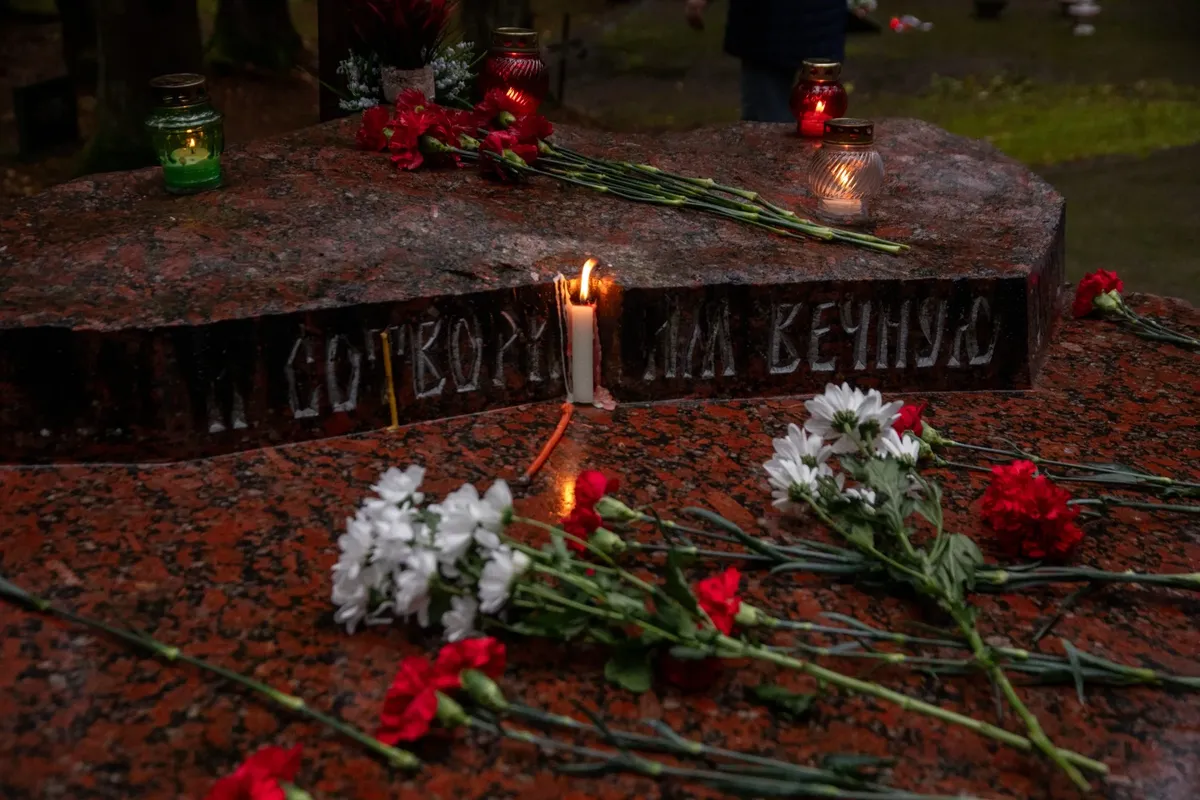
Levashovsky memorial. Photo: Alexey Dushutin / Novaya Gazeta
This publication continues a series of articles by sociologist Alexey Semenov-Troyat on the phenomenon of collective memory. (read part 1 here )
The archives of the Returned Names Memorial Museum contain an unusual folder. On the cover is the inscription: “Family interviews. Project for the restoration of biographies of the repressed." Inside are hundreds of hours of recordings of conversations with descendants of victims of Stalin's repressions. Elderly people talk about their parents, grandfathers, family legends and silent secrets.
The project began as a purely research project. The museum wanted to understand how families pass on memories of traumatic events. How the mechanisms of forgetting and remembering work. Which stories survive and which disappear forever.
Several years have passed. The technique of working with family narratives, developed in “Returned Names,” began to be used for completely different purposes. Political strategists adapted it to “correct historical consciousness” in the regions. What was created to preserve the memory of the victims has turned into a technology for reformatting it.
How did this happen? And why do methods for studying memory so easily turn into methods of influencing it?
Great transformation
The history of science knows many examples of unexpected transformations. Alfred Nobel invented dynamite for construction work - it was used to make weapons. The Internet was created for scientific communication - it has become a field of information wars. Social networks were planned as a way to bring people together - they turned into tools for polarizing society.
But the transformation of methods for studying memory into technologies for its management has a special nature. There is no external “repurposing” of scientific discoveries here. Transformation is inherent in the very logic of the research. Studying memory means understanding the mechanisms of its functioning. Understanding mechanisms means being able to control them.
This is not an accident or malicious intent. This is an inevitability arising from the nature of social cognition.
Anatomy of family memory
Let's take the biographical method - the most humane of all tools for studying collective memory. The researcher comes into the house, sits down at the kitchen table, and turns on the recorder. A leisurely conversation about life begins.
“Tell me about your parents. How did they meet? What do you remember about the war? About the post-war years? How did the family feel about power?”
It seems like a normal conversation. The older generation shares experiences with the younger. The researcher carries out a noble mission: he preserves passing memories for posterity. It captures living history that would otherwise disappear along with its bearers.
In fact, something much more complex is happening.
A researcher studies the anatomy of family memory. Finds out how narratives about the past are formed. Which events in family history are glorified, which are hushed up, which are distorted. According to what laws does a traumatic experience turn into a family legend?
Mark Edel, an American sociologist who studied the family histories of Holocaust survivors, discovered a surprising pattern. The children of genocide victims knew much more about their parents' past than it seemed at first glance. But they knew this not from direct stories, but from hints, omissions, and family rituals. Traumatic memory was transmitted through silence - a special silence filled with meaning.
In Russian families, as Anna Vichkitova’s article “Inherited Silence” shows, a similar mechanism operates. What defines post-Soviet family memory is not transmitted trauma, but untransmitted trauma. Not what was told, but what was not told. Voids and gaps that each generation fills in its own way.
Silence technology
Understanding these mechanisms opens up possibilities for their use. If you know how “inherited silence” works, you can create the types of silence you need. If you understand the logic of family narratives, you can influence their formation.
How does this happen in practice? Through changing the information background in which families exist.
Imagine: a grandfather spent his whole life telling his grandchildren about the war in a certain way. He emphasized the hardships of front-line life, losses, and the cost of victory. But gradually other accents are beginning to dominate the media space. Documentaries focus on heroism and greatness. Books - on the wisdom of command. Public events are on the festive side of Victory.
The grandfather begins to feel the dissonance between his memories and public sentiment. His version of the war seems "wrong", outdated, not even patriotic. Gradually he corrects his stories. Not because his memories have changed, but because the context in which those memories are voiced has changed.
The grandchildren already receive an “updated” version of the family history. On its basis they form their understanding of the past. And when thirty years later they are asked about the war, they sincerely tell the family story, not suspecting that it has been delicately edited.
Family memory is adjusted in real time. At the same time, people do not feel external coercion. It seems to them that they themselves are reconsidering their attitude towards the past in the light of new knowledge.
Reverse engineering of meanings
An even more sophisticated technology is the evolution of content analysis. A method created to understand the mechanisms of propaganda has turned into a tool for creating it.
During World War II, American linguist Harold Lasswell studied Nazi rhetoric. He wanted to understand how enemy propaganda worked. What words, images, emotional techniques does the Goebbels machine use to influence consciousness. Analyzed texts, counted the frequency of concepts, measured the emotional content of statements.
Lasswell created a detailed map of Nazi discourse. He showed how manipulations with consciousness are formed through manipulations with language. His work helped the Allies create effective counter-propaganda.
But what worked against the Nazis turned out to be applicable for any purpose. Understanding the mechanisms of influence automatically turns into technology of influence. The research method becomes a method of application.
Modern content analysis in the field of historical memory works as reverse engineering of public consciousness. The process consists of several stages, each of which seamlessly transforms learning into management.
- Stage one: diagnosis . Researchers analyze thousands of texts, from academic articles to online comments. Reveal dominant images of the past. Their prevalence, emotional coloring, and connections with each other are measured. They create an accurate map of the semantic landscape.
Is Stalin a tyrant or an effective leader in the public consciousness? Repression - a tragedy or a necessary measure? Collectivization—a modernization breakthrough or violence against the peasantry? Each of these representations has its own “geography” in the information space, its own intensity, its own reference points.
Stage two: modeling . Based on the diagnostics, a model of the information system is created. Points of maximum impact are identified - where small changes in the presentation of information can lead to significant shifts in public opinion. Weak links in existing narratives and opportunities for strengthening or replacing them are identified.
Stage three: planning . A strategy for gradually changing the semantic balance is being developed. Not through a direct attack on existing ideas - that would provoke resistance. And through the creation of alternative accents, new contexts, additional meanings.
Stage four: implementation . Systematic impact on the information environment. Changing the “background” discourse through publications, films, educational programs, public events. Creating new information occasions that naturally shift public attention in the right direction.
Stealth effect
The most insidious thing about this technology is its absolute invisibility for those whom it affects. People don't feel forced. They do not feel external pressure. It seems to them that they themselves are reconsidering their attitude towards the past under the influence of new facts and arguments.
Nobody forces you to think differently. The information environment in which thinking occurs is simply gradually changing. If earlier, when talking about collectivization, the media emphasized dispossession and hunger, and now they emphasize the modernization of the countryside and the growth of agricultural production - people naturally come to new conclusions.
However, the factual basis may remain the same. It is not the information that changes, but its presentation. Not the facts, but their interpretation. Not content, but context.
The soft power of normalization
The third tool of transformation - comparative analysis - has become a technology for international influence on the memory policy of individual countries.
The logic seems impeccably objective. We study the experience of different countries in working with the traumatic past. Germany and denazification. France and the Algerian War. Spain and the legacy of Francoism. South Africa and apartheid. We create typologies of successful and unsuccessful approaches. We identify patterns and best practices.
But there is no neutral comparison. Any typology inevitably creates a hierarchy. Some models begin to be perceived as “correct”, others as “wrong”. A global standard for a “mature” attitude towards the past is being formed.
Germany, with its repentance for Nazi crimes, becomes a standard. The countries of Eastern Europe with their glorification of anti-communist resistance are an example of “correct” de-Sovietization. Russia with the cult of the Great Victory is an example of being “stuck” in imperial fantasies.
Academic typology turns into a political tool. A “civilized” attitude towards the past becomes a condition for membership in international organizations, receiving economic assistance, and recognition in the international arena.
Countries find themselves under pressure from international opinion. They have to adjust their memory policy to external standards - or endure reputational costs.
Thermodynamics of transformation
Each of the methods of studying memory, turning into an instrument of influence, changes the thermodynamic parameters of the social system.
The biographical method, transforming into a technology for correcting family narratives, raises the temperature of the system - people begin to more actively discuss family history. But at the same time it can reduce its volume - if family stories are unified under the influence of general standards of “correct” memory.
Content analysis, turning into reverse engineering of consciousness, allows you to accurately regulate the pressure in the system. Strengthen or weaken the conflict of discussions about the past. Create zones of consensus and zones of tension exactly where it is needed.
Comparative analysis, having become a tool of soft power, works primarily with the volume of the system - it expands or contracts the range of acceptable interpretations of the past. Creates the boundaries of “normality” in historical discourse.
Understanding thermodynamic effects turns the study of memory into memory engineering. Social science becomes social technology. Diagnostics is transformed into therapy.
The case of Maria Stepanova
Russian writer Maria Stepanova in the novel “In Memory of Memory. Romance" described her own experience of restoring family history. Her family, like many other Russian families, suffered from an “inherited silence.” Information about ancestors was fragmentary, contradictory, and often unreliable.
Stepanova tried to fill the gaps in family memory. I studied archives, compared documents, and restored contexts. But the deeper I dug, the more voids I discovered. Family history was not so much lost as deliberately erased.
Then she resorted to an unusual method.
I began to creatively reconstruct what was lost. She used imagination, empathy, and artistic intuition to recreate what could not be documented.
The result is a hybrid narrative - partly based on facts, partly on assumptions, partly on fiction. This was no longer family history in the strict sense of the word, but it was not pure literature either. Something in between - an attempt to create a coherent memory where it objectively did not exist.
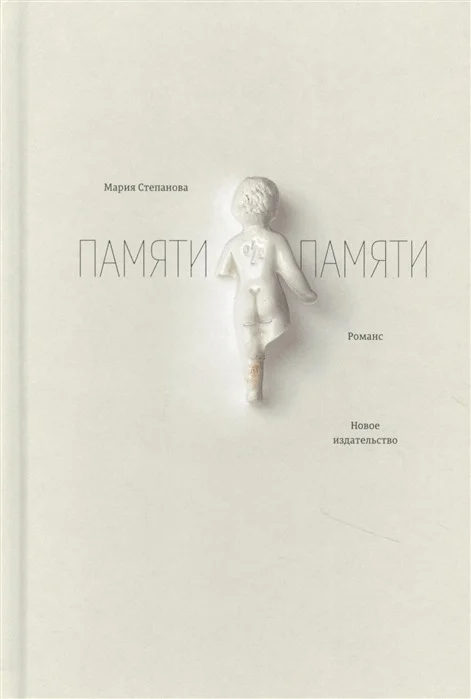
Stepanova's experience illustrates an important pattern. When traditional ways of transmitting memory are destroyed, people are forced to invent new ones. Hybrid forms emerge—half documentary, half fiction. Half individual, half collective.
These forms are especially susceptible to external influences. Since they are based not only on facts, but also on interpretations, they can be easily adjusted by changing the interpretive context.
The ethics of transformation
The transformation of research methods into methods of influence raises thorny ethical questions for memory researchers.
Is it possible to study family narratives, knowing that this knowledge will be used to correct them? Is it ethical to analyze the mechanisms of formation of historical consciousness, understanding that the analysis will become the basis for its programming? Is it right to compare national models of work with the past, recognizing that comparison will turn into a tool of political pressure?
Some researchers suggest refusing to study “dangerous” topics. Impose a moratorium on research, the results of which can be used for manipulation. Focus on “neutral” stories that have no political implications.
But such an approach would mean the capitulation of science to politics. Refusal to study the most important and painful issues of public life. Voluntary self-limitation of knowledge for the sake of a dubious guarantee of non-use of knowledge for harm.
Other researchers choose the path of maximum openness. They publish not only the results, but also the methods of their research. Explain to the public how technologies for studying and managing memory work. They transform citizens from objects of influence into subjects capable of recognizing this influence and resisting it.
Democratization of knowledge
The third way is to democratize the process of studying memory itself. Transforming citizens into co-researchers of their own collective memory.
If people understand how family narratives work, they can consciously participate in shaping them. If they know the mechanisms of content analysis, they can critically analyze the information impact. If they understand the logic of comparative research, they can resist attempts to impose other people's standards.
The monopoly of professional researchers on the study of memory is being destroyed. Crowdsourcing projects to collect family histories are emerging. Civil initiatives to analyze media discourse. Social movements for the right to alternative interpretations of the past.
Knowledge about the mechanisms of functioning of collective memory ceases to be the privilege of a narrow circle of specialists. Becomes public domain. An instrument not of subjugation, but of liberation.
The inevitability of transformation
The transformation of study methods into methods of influence is inevitable. It is inherent in the very nature of social cognition. Understanding the functioning mechanisms of society automatically creates opportunities to manage these mechanisms.
But the direction in which these opportunities are used depends on us. Knowledge can serve to subjugate or liberate. Technology can be a tool of control or a tool of emancipation.
The transformation of diagnosis into therapy is unstoppable. The question is what kind of therapy do we want to do - treating society from critical thinking or treating society from manipulation of consciousness.
In the next part of our investigation, we will see how a fundamentally new phenomenon is born from the arsenal of transformed methods - the scenario of memory politics. How disparate techniques of influence are combined into a single dramatic structure, transforming the management of collective memory from a chaotic process into an exact science.