Translated material
Colonial Spring
“You wait the same, you are silent the same, you live the same” - letters from Antonina Favorskaya about a system where everyone is leveled to the same state

Antonina Favorskaya. Photo: Sofya Sandurskaya / TASS
Letters from places of detention rarely come with any “news” in the usual sense. These are rather testimonies not so much about events, but about the very “fabric of life” inside the prison system, where a person is gradually reduced to a “unit of accounting.” When it became known that the journalists convicted in the FBK* case were being transferred, Novaya sent them letters to the colonies. We previously published Artem Krieger's answer. Today we are publishing letters from SotaVision** journalist Antonina Favorskaya. In addition to them, Sergei Karelin and Konstantin Gabov were convicted in the case. All four received 5.5 years of general imprisonment for journalism.
Antonina found herself under arrest in March 2024: first, ten days for “resisting the police” after filming at the Borisov cemetery, then a criminal case, after which she was not released. The investigation considered her professional activity to be participation in an “extremist community.” Favorskaya covered the trials in the case of Alexei Navalny, including sessions held via video link with the colony in the village of Kharp in the Arctic Circle, where he was serving a sentence in the case of “organizing an extremist community.”
The day before the death of the politician, it was Favorskaya who filmed his speech at a meeting of the Vladimir Regional Court. These shots became the last video recording of Navalny during his lifetime.
In February it became known that Tonya was transferred to the Kostroma colony. Now, as she herself calls it, she is right in the “colonial empire.” Her letters to our editors are not only about everyday life, although they are about that too: about endless queues, a bedside table instead of a table, forced marches with trunks that make up your entire former life, and about the rules governing literally every movement. But more importantly, about something else.
About how the differences between “political” and “ordinary” prisoners are erased in one space. About how a person learns to survive without personal space and finds it within himself. About a strange, almost stubborn ability to notice beauty: in the March sky above the barbed wire, in the birches behind the fence, in the sunlight that “reaches” a stool in the detachment. And how, amidst the noise, swearing and discipline, something resembling order, or at least meaning, emerges. These letters are about life reduced to a minimum, and about an attempt not to give this minimum.
Kravtsova (Favorskaya) Antonina Yurievna, born in 1989
FKU IK-3 Federal Penitentiary Service of Russia in the Kostroma Region
So that my answers are not lost in the “FSIN universe”, I will send them in parts. The stage passed surprisingly quickly compared to what prisoners experience when they are sent to Perm or Novosibirsk to await “finishing” (a decision after an appeal against a sentence). Just four days with stops in Yaroslavl. All this is tolerable, and I simply have no right to complain, knowing what stage Alexey Gorinov and Alexey Liptser were at. Knowing what Nina Slobodchikova went through when she was transported from Moscow to the Novosibirsk penal colony. Knowing how prisoners were transported during the Gulag.
The most difficult thing for me was not the trips in the paddy wagon and Stolypin (I am mentally prepared for them), but the forced marches under escort, gawking citizens, and the barking of dogs with all the trunks and bags that I had to carry on myself like a camel at the pace of a waltz.
Without looking back and without stopping. What he couldn’t take was left on the platform, and it was lucky if someone from among the other prisoners helped carry things. But you can only count on yourself. And I advise all those who are facing a stage not to repeat my “exploits” and take as much as you can convey at one time on your own. I could not say goodbye to many documents on criminal and administrative cases, to 16 books, notebooks, filled with lectures and poems of famous poets, to my favorite letters, photographs and lyrics, to my drawings and diaries. With everything that makes up my life, so I carried this “life” on myself, as if I were Schwarzenegger. And then half of it was taken away. So my “hard life” remained in the storage room.
02/28/2026
* * *
Spring. I look out the window without bars at the barbed wire fences, drops are pouring from the roof, an indifferent plane is flying in the bright Kostroma blue sky. The March cat gracefully walks along a water pipe, jumps into the snow and tiptoes along the “sewing factory” where prisoners work. At this moment, Zhenya Berkovich is smiling at someone in the smoking room, and the sun’s rays reach me, sitting on a stool in the squad, and embrace me with their warmth - I’m finally breathing in spring!
I have been in the colonial empire for a month now. In that new life, where prisoners of all stripes and weights are kept together. You drink coffee, sleep, wash side by side with murderers, drug dealers, thieves convicted of corruption, fraud, terrorism, extremism, “fakes” and espionage... But none of this matters. Behind your back, gossip flows like an endless song about who said what to whom, stood in the wrong place, or put it in the wrong place.
A colony is a place of total equalization. Young, old, economic, violent, political. Here you do the same exercises at 6.15 in the morning, you stand in the same way on the parade ground in a green peacoat for inspection, you wait in line in the cafeteria the same way, where you remain silent in the same way, you rush into the shower, to the sink, to the toilet, to the table, to the chair in front of the TV in the same way. Equally listening to the obscene trills of the old-timers.
The main thing is what distinguishes you in this stream of endless identical actions of mechanical running from the trunk to the bedside table, from the bedside table to the table, from the detachment to the parade ground, from the parade ground to the dining room and back. This is your inner world.
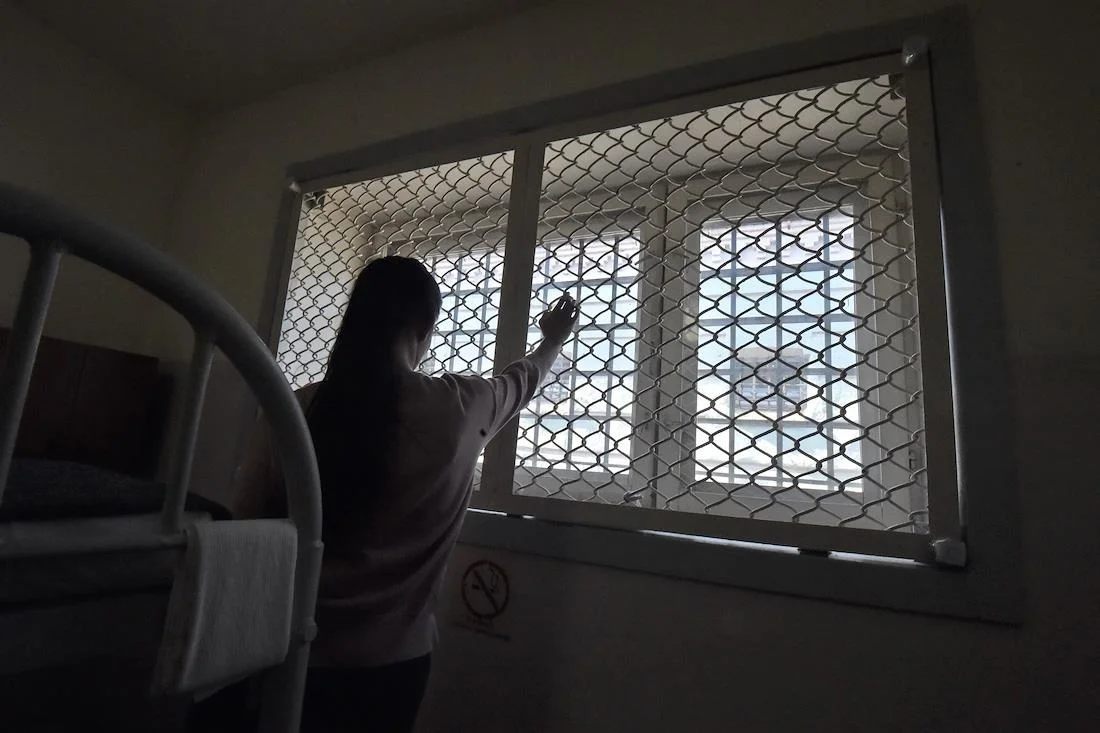
And you discover a new prison zeng in this abode of endless domestic chaos and inconvenience, where you share one shower, four toilets, six sinks and two refrigerators with a green mass of prisoners approaching a hundred, and you say to yourself: “Everything is normal. I can handle it."
People walking along the squad in Brownian motion acquire a logical structure, and behind the atmosphere of running madness you see how a new galaxy is born from stars, planets, space debris and comets, where everything is connected to each other by the global meaning of existence.
Everyone who is thrown from quarantine into the detachment experiences their own personal internal hell, getting used to the unceasing flow of people, conversations, swearing, and queues. And you either sooner or later adapt to life in an anthill, where there is no personal space except your inner world, or... there is no other option. Everything is calm in the madhouse.
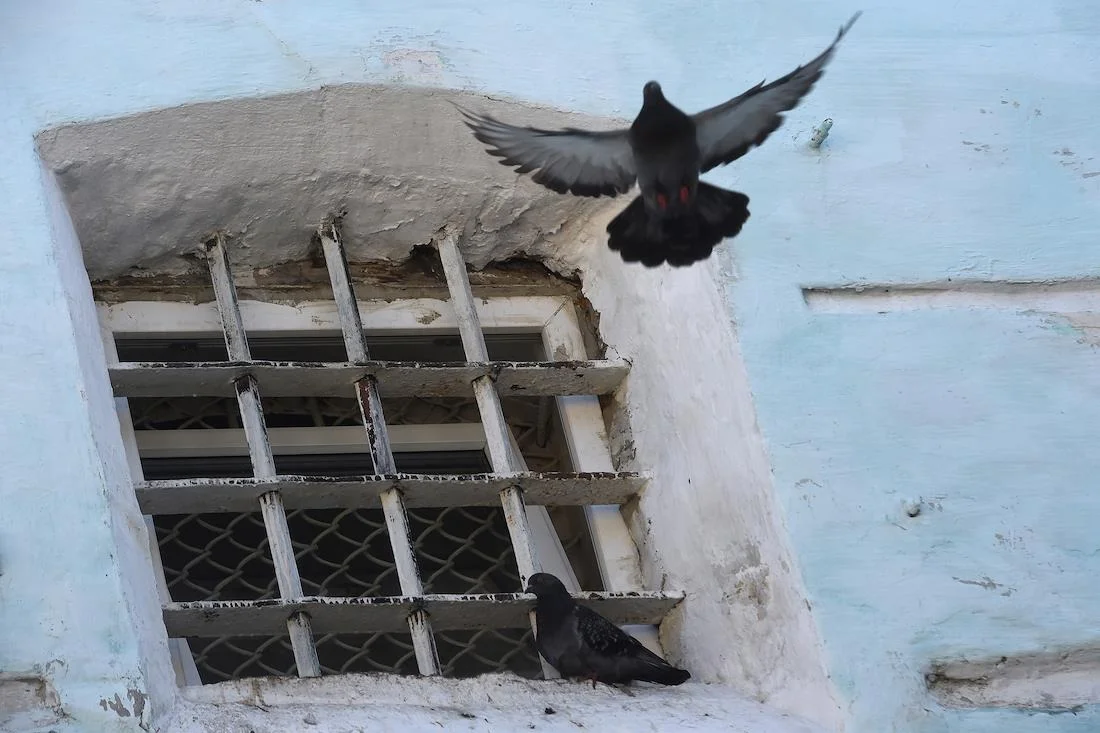
Carefully made beds at six in the morning beckon with their virgin smoothness, but you can’t sit or sleep on them until bedtime at 10 p.m. I sit on my stool, and the bedside table replaces my table. In the corner of the room, the prisoners are discussing how someone didn’t clean the toilet after themselves. Outside the window, bare birch trees motionlessly look at me and wink cheerfully. They say that those who have been sitting here for more than 10 years know every tree in the forest that surrounds the colony, and say hello to each of them, blissfully smoking during a break from work. Maybe it’s time for me to give names to these winking birch trees?
The snow is melting. The sun is blinding. Olya Menshikh and Nadezhda Fedorovna slowly walk along the squads, carefully stepping on the icy slurry. I'll go for a walk too. Spring.
03/12/2026
* * *
There is still snow, but the sun is already warming so much that I tanned as if in the Maldives. The heart of our colony is the parade ground, where we line up at least five times a day: to exercise, to eat, and to be counted like chickens. In front of the parade ground is the most important place in the colony - the dining room. There is a large yellow sign hanging on it, on which the main motivational motto of our correctional institution is written in white letters in Times New Roman font: “Only desire and work will lead you to success!” At 6.15 we stand for morning exercises in the rays of the rising sun, seagulls, pigeons, herons and peregrine falcons fly above our heads.
Every day, while doing exercises on the parade ground in a pea coat and a non-stretch prison uniform to Igor Nikolaev’s song “Taxi,” I look at this yellow sign, and the phrase involuntarily comes to mind: “Work makes you free.”
Around the parade ground there are two-story detachment houses built in the 60s. Near the church there is a small war memorial with a star in the colors of the St. George ribbon and gray plaques: “Victims of Nazism”, “Home Front Workers”, “Partisan Movement” and others. But what I like most is “Prisoners of a Concentration Camp.”
Like one big silent caterpillar we walk in formation through all this surrealism. And three times a day, from the parade ground, in a slow column, all the detachments simultaneously enter the dining room... As if for a wake. In complete mournful silence, we must go into the dining room (even if you don’t want to eat, you must go to the dining room). In mournful silence, hang up your pea coats, silently in the crush without crushing your neighbor, and also silently, in mournful silence, stand in line for seating. Having taken our official food of the gods, we, again in silence, must have time to eat it within 5-10 minutes, until we are commanded to go out in one word, like dogs: “Seventh!.. Fifth!... Third!” (depending on the squad number). After leaving quarantine, you are in the hierarchy and with your intelligence you are the last one in the seating line, which means you have the shortest time to eat. If someone dared to talk in the dining room, the shout would sound: “Attention!” or “Shut your mouth!” At the same time, the seating arrangement stops, and if everyone has already eaten, then the prisoners sit at the tables until dead silence reigns in the dining room, catharsis occurs, or maybe a deus ex mahina (God ex machina) appears.
Pushing and trying to pull out in the locker room, silently swearing, your peacoat, already thrown off to the floor, you must get dressed again in silence and quickly leave the dining room on the parade ground, line up and walk in a line of five people to our avenue, where the squad houses are located. There you can already relax and walk freely.
After eating, we usually take walks in all groups and interest groups through the concrete, mud and puddles of spring. But the main thing is the spiritual company, and not this environment.
At this time, in the detachments, they wash, wash, and clean in swearing and queues.
Fun fact #1 : Plastic knives are not allowed here. An ordinary human knife, secured with a lock to a pipe in a “chaikhona” (a small room for tea drinking, where there are three tables, several refrigerators and drawers), is issued only for a limited time and only to one detachment (at the time of writing the letter, we have 164 people in our detachment). Personally, I cut cheese and sausage with a plastic spoon, and this is a separate aesthetic “pleasure”.
Interesting fact #2 : in the fight for the sink, after washing your belongings, you have to hang them in the cold in a hangar outside or on a couple of small floor dryers in the break room, bought by other prisoners. These dryers are always busy and overcrowded. Let me remind you that there are 164 of us. Hanging washed clothes on a bed, stool or radiator is a report. That's why I hardly wash anything. Or I put on semi-wet clothes. And I walk like a merman.
Fun Fact #3 : Our awesome uniform is green. But now there is a new fashion - they are slowly releasing them in burgundy color. I was lucky and am the proud owner of couture burgundy pants. Both green and burgundy clothes are made mainly of synthetics, which makes all the skin itchy out of habit (on the tag of my burgundy pants the composition is as follows: polyester 60%, cotton 40%). But the main thing is that in the cold the prisoner’s uniform does not warm, and in the heat it does not breathe and heats up. “Beauty” requires sacrifice.
Interesting fact No. 4 : according to clause 41 of the PVR of the penal system, only a limited number of items can be kept in the nightstand. For finding other items such as hand cream or a sock - a report. You must keep all your things in a limited-sized trunk, which is located in the “baulnaya” - a separate room with multi-story sections, like in a storage room at a provincial train station or in an IKEA warehouse. To take hand cream, you must go to this “bag room” (one for the whole squad) and rummage through the bag, standing acrobatically on the ladder, waiting for the moment when you will not prevent anyone from approaching the bags from below, above and on the sides. And so with every thing. Once again it is better not to take anything and not use anything. And be free like a bird in the sky. Or homeless.
Interesting fact No. 5 : things are not so easy with trunks either. You can't just put down your sock or hand cream and leave. For all the things in your trunk must be accurately described. If during the search they find items that you forgot to include in the inventory, then write - it’s gone. This thing will be confiscated and a report will be written out. The same song with the food in the refrigerator. All products are marked with the date of opening and your full name. In case of delay, everything will go to waste. This is such a funny bag: you receive a parcel and sit for half a day, rewriting everything, sorting it, describing it and stuffing it into your bottomless bag and refrigerator. But this also has its advantage: Russian prison is the best place for those who have OCD ( obsessive-compulsive disorder - Ed. ). Come to us and your frustration will go away!
Interesting fact No. 6 : milk, butter and eggs are provided only as part of the diet to patients with AIDS, HIV and other diseases. The rest of the “healthy” ones should be content with milk or condensed milk in the morning porridge on which it is cooked. Or buy milk at the store. If they can. For example, “catching” cottage cheese in a FSIN stall is quite a quest. If you go to the store, hang yourself with rabbit feet, clovers and other spells. You might get lucky!
Interesting fact No. 7 : washing is done in the bathhouse - a large shower room, which is located in a separate building. You can go there on a schedule twice a week for 15 minutes. But in order to finally “wash up”, the detachment has two more showers for 164 people, which can be used from 17.00 to 21.30 (the work shift arrives at 19.00, and one must take into account that they really want to wash themselves after a working day). I’m not a big fan of Soviet queues, so I get spa treatments no more than twice a week. But there are also those who live and swim in these queues every day.
Fun fact #8 : You can't use a hairdryer. You should also not walk around with your hair down. After washing your hair, put your hair in a bun or braid. And walk around with wet hair all day. Otherwise, report. If you have hair like Rapunzel, wait for summer. Or go for a GI Jane hairstyle.
Fun fact #9 : The squad TV is in the break room. In it, prisoners write letters and appeals, read books, draw, and all to the joyful sounds of the zombie box. We don't have a remote control. The program for our re-education is determined from above - by our big brother. And most often I write letters to the sound of propaganda from Muz-TV and TV series from TNT. But sometimes they turn on a movie for us in the evenings. However, there is one small nuance: the film ends later than we have to leave the break room, so we figure out the ending ourselves. Such an opportunity for creativity and imagination!
This endless mouse bustle, similar to life in a crowded Moscow metro during rush hour, also has its advantages - this is a wonderful sky, under which I did not walk for almost two years of living in a pre-trial detention center. In the evening, a gray moon and “pearl spits” appear over the colony - large bright stars that touchingly blink at all of us - little people on a small planet. And standing at the evening inspection, I often think that compared to the universe, all this prison life of everyday hell with queues, swearing, rules, trunks, obscenities is just decay.
Above our heads is eternity and infinity. Calmness and limitless power of our dreams. And the unbearable lightness of being... It’s that simple.
04/01/2026