
Translated material
Back to the flags
Sport, which, according to the rules, should remain outside of politics, is increasingly turning out to be a space where political meanings are inevitable.

Photo: Arina Antonova/TASS
At the end of March, at one of the stages of the Rhythmic Gymnastics World Cup in Bulgaria, 15-year-old Russian Sofia Ilteryakova, who performed in a neutral status, did not turn to the flags during the award ceremony and the performance of the Ukrainian anthem. Ukraine filed a protest with the International Gymnastics Federation. The trial is ongoing. But this is not just one special case: sport, which, according to the rules, should remain outside of politics, is increasingly turning out to be a space where political meanings become inevitable.
What happened in Bulgaria? Fifteen-year-old Ilteryakova, a debutant at such major competitions, became a silver medalist in the hoop competition. At the awards ceremony, gymnasts stand facing the judges and with their backs to the scoreboard. On it, while the anthem of the winning country is being played, the flags of all three countries whose representatives were among the top three winners are displayed. At this time, the winners must turn to the flags. Two gymnasts, Ukrainian Taisiya Onofriychuk and Italian Sofia Raffaelli, turned around, and Sofia Ilteryakova remained facing the judges. This incident attracted enormous attention from the press and was widely discussed in society. In social networks and comments on news in the media, you can find a huge range of opinions - from “well done, girl, she proved that the Russian girl will fight until the last teenager” and “there is no Russian flag there - there is no point in turning to a white rag” to “if you have a neutral status, then be neutral.” Political scientist Vladimir Pastukhov* considered this case evidence of brainwashing of the new generation. In short, sport is becoming increasingly difficult to separate from social and political expectations.
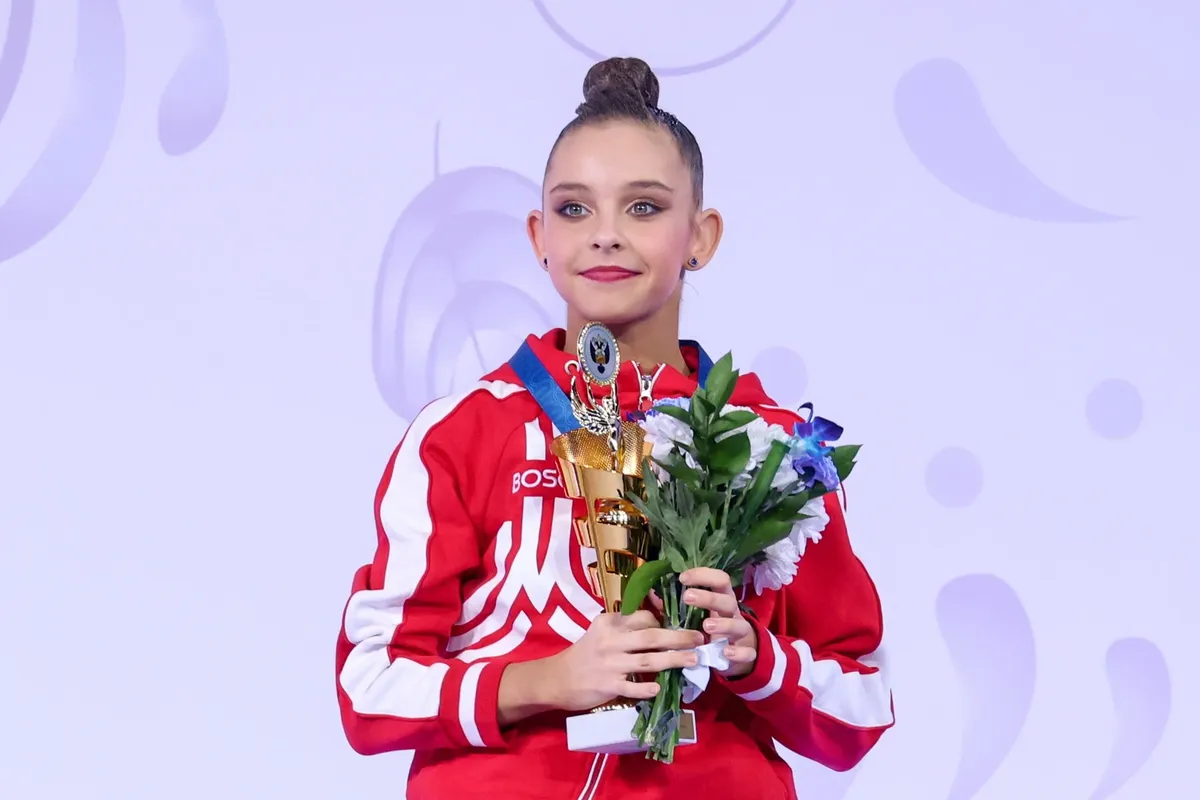
The talented Ukrainian gymnast Taisiya Onofriychuk, in whose honor the anthem was played at this award, posted a video of the incident on her TikTok account and wrote that the Ukrainian Gymnastics Federation regards Ilteryakova’s act as an act of hostility and demands that her neutral status be resolved. In response, social networks began to recall and discuss other episodes, including last year’s award ceremony at the World Cup in Sofia, where, judging by the photographs, Taisiya Onofriychuk herself stood with her back to the flags.
Now a screenshot of an explanation is being circulated on Telegram channels, which is attributed to Taisiya Onofriychuk herself: she explains this episode by the fact that she did not notice the moment of the ceremony and did not understand that she needed to turn around.
The head coach of the Russian national team, Tatyana Sergaeva, explains Sofia Ilteryakova’s behavior in exactly the same way: yesterday’s junior was at such a big international competition for the first time and was simply confused. At domestic competitions in Russia, athletes do not turn their backs to the judges when the anthem is played.
The International Gymnastics Federation accepted the protest for consideration, but has not yet decided anything.
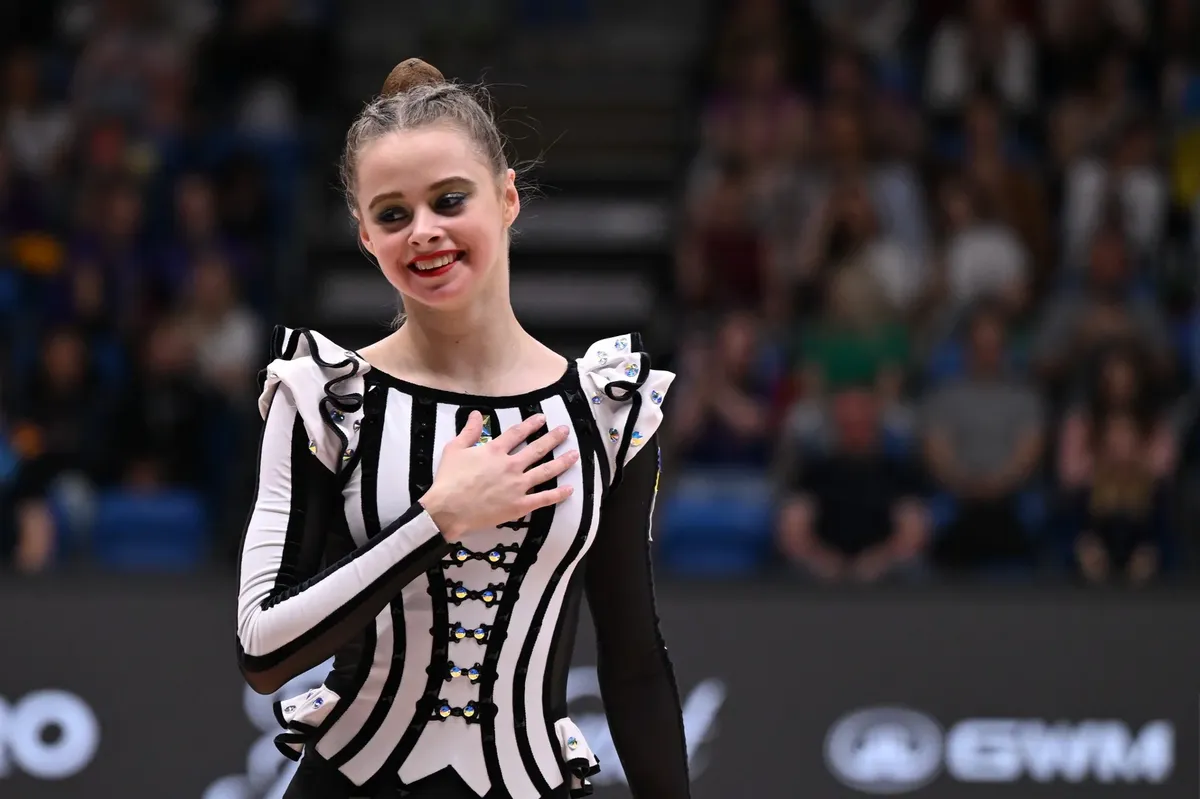
There is outrage on social media. Fans write: “Sonya did everything right,” Taisia Onofriychuk recalls numerous cases of refusal to greet and take pictures with rivals from Russia and Belarus (for example, in 2025 - with the former Muscovite Vera Tugolukova, who plays for the Cyprus team, and Anastasia Salos from Belarus, competing under a neutral flag; this year - with the “neutral” Alina Gornosko from Belarus).
Refusal to be photographed and leaving the pedestal can be interpreted as a violation of ceremonial regulations or as demonstrative distancing, depending on the context and the reaction of the organizers.
The organizers of the competition in Sofia are also accused of violating the regulations: the anthems should be played without words, since the texts may glorify specific nations over others, but the Ukrainian anthem was sounded with words.
However, the situation with refusal to take photographs is rather typical at competitions with the participation of Ukrainian and Russian athletes.
Sport Express states :
“Ukrainian officials have been demanding that their athletes avoid taking pictures together with Russians for several years now. Those who do not comply with this rule are subject to bullying.”
By the way, Ukrainian athletes were also accused of turning their backs to the flag: in mid-March of this year, at the European Youth Freestyle Wrestling Championship, Ukrainian Arthur Kostyuk, who took third place, stepped off the pedestal and turned away from the flags when the Russian anthem was played; The Russian Wrestling Federation filed a protest. Vice-President of the FSBR Georgy Bryusov noted that “according to the internal instructions of the UWW [United World of Wrestling], by analogy with other international sports federations, in the event of a victory of Russian athletes, Ukrainians are allowed to leave the pedestal,” however, by turning away, Kostyuk showed disrespect for the flags of the countries, including his own.
The story of Ukrainian saber fencer Olga Kharlan, who refused to shake hands with Russian athlete Anna Smirnova at the World Championships in Milan, caused a lot of noise in 2023. Kharlan put her saber forward, not allowing Smirnova to approach for a handshake, and then left, and Smirnova waited another hour for the judges' verdict. Harlan was disqualified, but the disqualification was subsequently suspended, and after this incident the International Fencing Federation decided to allow the post-match handshake to be replaced by a greeting from a distance.
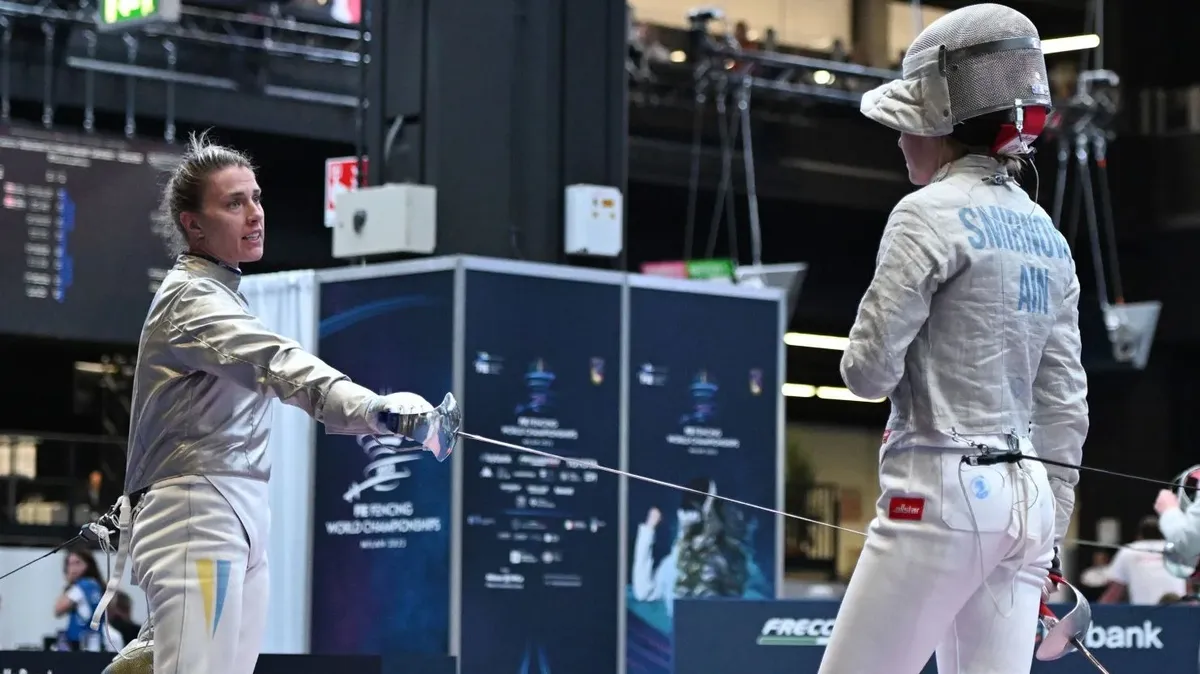
Before the 2024 Olympics, the National Olympic Committee of Ukraine agreed with international sports federations and received permission not to welcome Russian athletes, even those competing in a neutral status, and not to shake their hands.
However, all this is only part of the process taking place in modern sports, and the tense relations between the Ukrainian, Russian and Belarusian teams are only the part of the iceberg visible to us.
Those who watch the Olympic Games even occasionally could not help but remember the recent major scandals involving the disqualification of athletes for expressing a political position.
And this is not only the latest case with the disqualification of the Ukrainian skeleton athlete Vladislav Geraskevich at the Olympic Games in Milan in February of this year. Geraskevich wanted to perform at the Olympics wearing a helmet with portraits of deceased Ukrainian athletes; The International Olympic Committee did not allow this, citing a provision in the Olympic Charter that prohibits any political, religious or racial propaganda in Olympic venues and venues. The IOC reported that they suggested that Geraskevich wear a helmet during the preliminary races and demonstrate it after the race in the communication area with journalists, and also reminded him of the right to express his grief on social networks, at press conferences and interviews. Geraskevich did not compromise and was disqualified; IOC President Kirsty Coventry told reporters about this in tears.
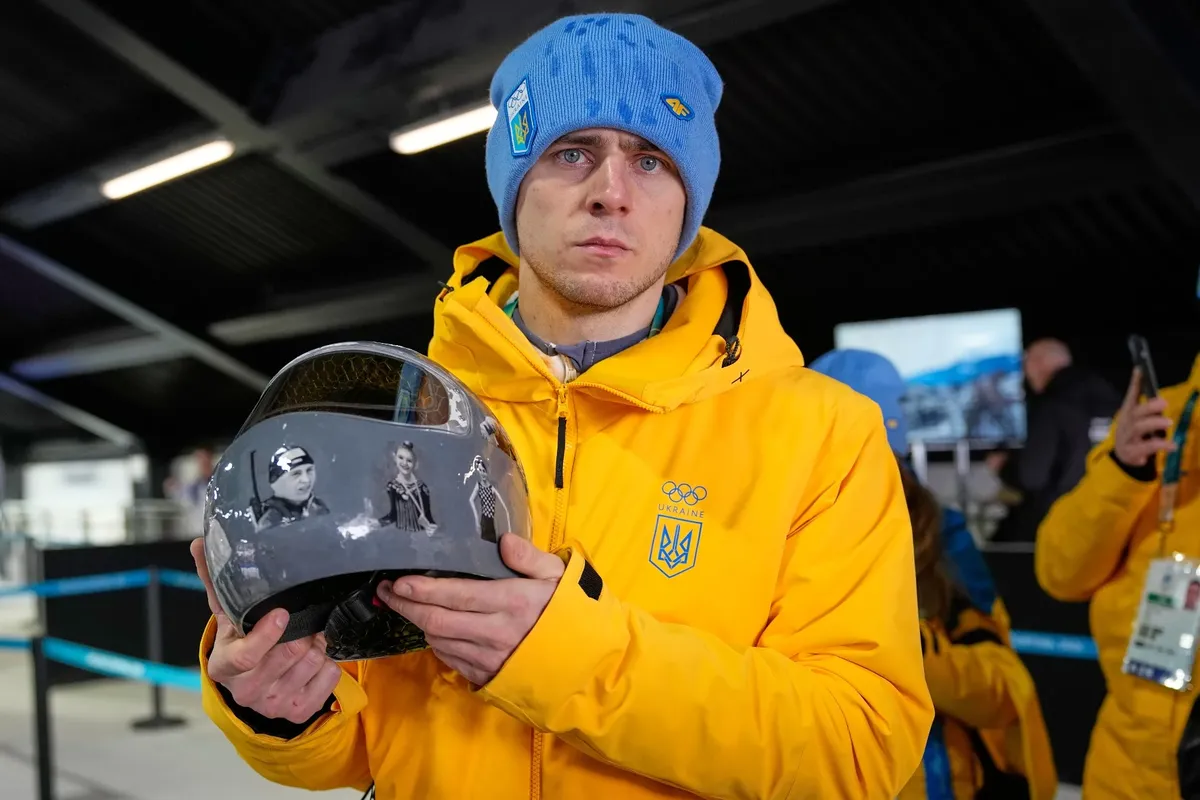
The situation gave rise to a lot of controversy about where the border lies between a memorial gesture and a political gesture. Now Geraskevich’s lawyers are preparing to file a lawsuit against the International Olympic Committee.
In 2024, at the Olympic Games in Paris, Afghan breakdance competitor Manizha Talash, who competed for the refugee team, was disqualified . During the preliminary qualifying battle, she performed in a cape with the inscription “Free Afghan Women.”
In 2021, the International Judo Federation disqualified Algerian athlete Fethi Nourin for 10 years : he withdrew from the Tokyo Olympics so as not to fight the Israeli athlete. “I don’t want to get my hands dirty,” said the judoka. Here the political action was to refuse the fight as such.
All of these cases fall under the same IOC Rule 50, which prohibits “any demonstration or propaganda.” The rule describes in some detail what, where and when it is possible and not possible. For example, you can express your position (in a form that is not offensive to others) before and after starts, at press conferences, etc., but it is strictly forbidden during a speech, award ceremony, introduction of another team, or the performance of the anthem.
You cannot unfurl posters and shout slogans, and writing on clothes is not allowed. Refusal of a fight or refusal of a ceremony can also be interpreted as political statements.
There are more and more violations every year, because the very concept of “political” is expanding. Previously, political statements in sports were considered rare and obvious gestures. For example, at the 1968 Olympics, two black American track and field athletes raised their fists during the medal ceremony as a symbol of solidarity with black Americans, and in 2016, American football player Colin Kaepernick refused to stand during the American anthem to protest police brutality against black people.
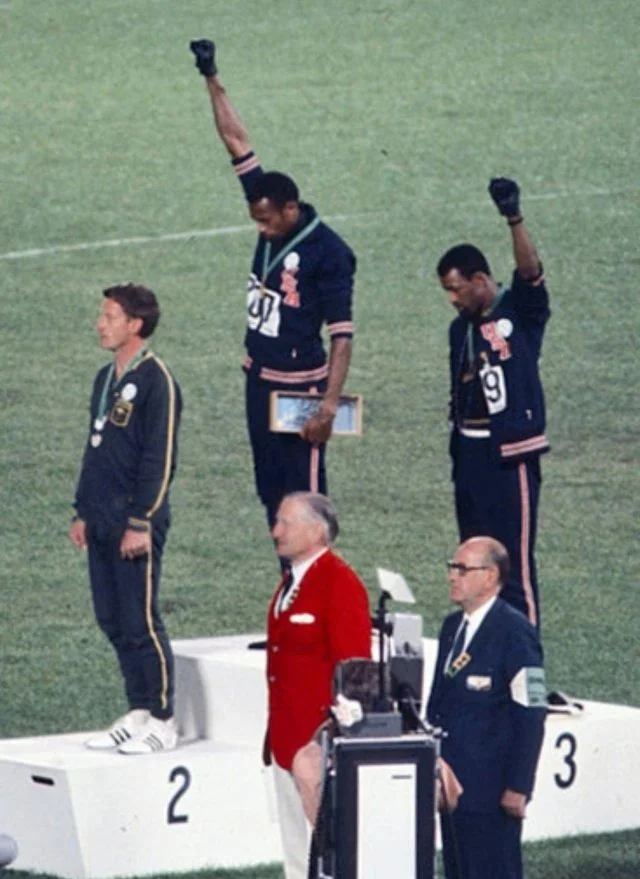
But today the boundaries of political expression have noticeably blurred. Not only a demonstrative gesture can be considered political, but also refusing a handshake, leaving a ceremony or refusing a fight. In this logic, not only the action, but also its absence, becomes significant, not only the gesture, but also the “non-gesture” (Sofia Ilteryakova did not “turn away from the flag”, but did not turn towards it - for reasons that are not yet known for certain).
The problem is not only that the list of prohibited actions is expanding. The problem is that the same behavior is read differently in different cases - as an accident, a mistake, or as a political statement.
The same action can be interpreted as neutral (Taisia Onofriychuk in 2025) and as politically hostile (Sofia Ilteryakova in 2026). At the 37th international tournament of the Grand Prix series in rhythmic gymnastics in Thiais, France, which took place in early April, none of the three winners (Maria Borisova, Russia, in neutral status, Alina Gornosko, Belarus, in neutral status, Akmaral Erekesheva, Kazakhstan) turned to the scoreboard with flags, which was also behind them, and this did not seem to make an impression on anyone present.
In the event of serious international conflicts, an athlete finds himself in a difficult position both when he agrees to participate in a ceremony together with an athlete from a hostile country (he is subject to the wrath of fans in his homeland), and when he refuses (this is fraught with punishments up to and including disqualification).
The main problem in this case is not the gesture itself (or its absence), but its interpretation: not only the word, but also silence becomes a position.
Tennis player from Belarus Aryna Sabalenka, at that time the second racket of the world, at the Wimbledon tournament in 2023, refused to answer questions about politics, citing the fact that they had a bad effect on her mental health, and even invited journalists to contact the organizers to get copies of her previous answers to political questions (before that, at the Roland Garros tournament, she received so many political questions that for some time she completely refused to communicate with journalists).
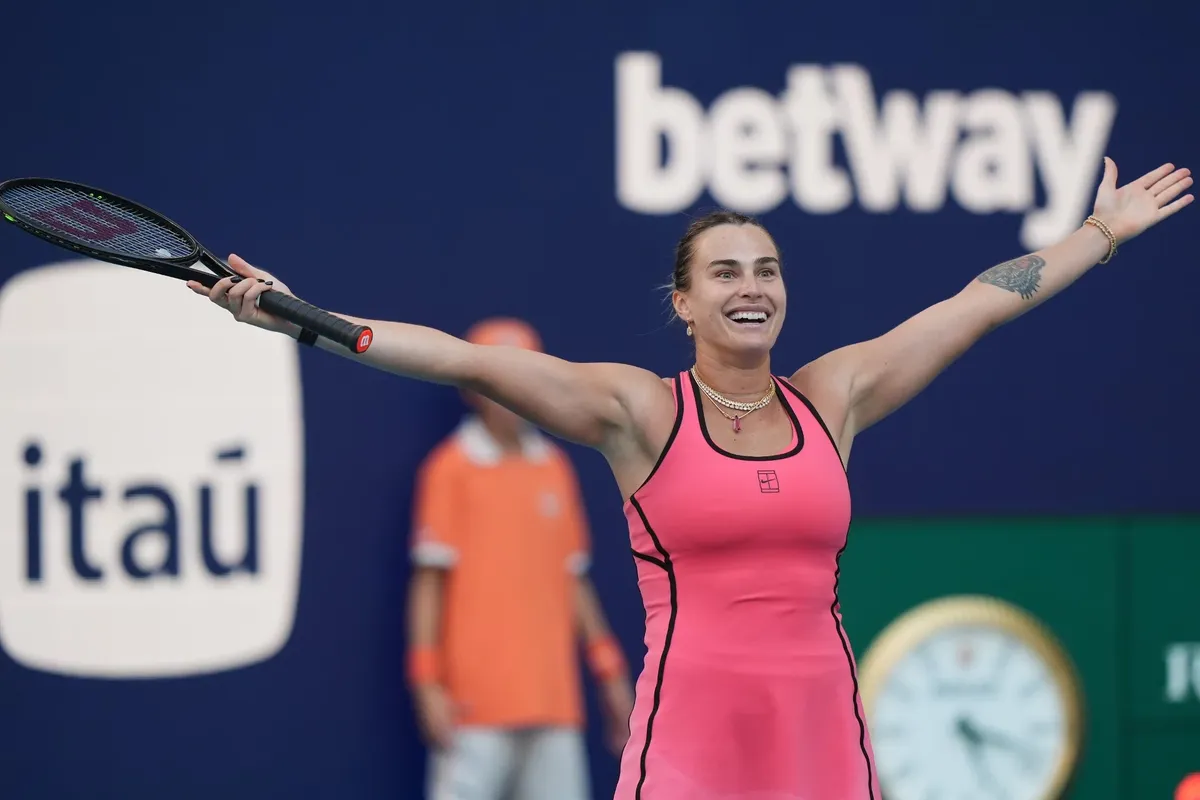
The athlete in this situation turns out to be vulnerable: society in the country and the international community require him to have a clearly expressed political position, and sports regulations clearly require neutrality. So there is practically no space left for safe behavior. The same Arina Sabalenka, even after her opening victory at Roland Garros, answered reporters like this:
“As for the situation in Ukraine, I have said many, many times: no one in this world - neither Russian nor Belarusian athletes - supports what is happening. Nobody. How can we support this? Normal people would never do this. Why should we shout about this? It's like 1+1. If we could do something, we would do it. But, unfortunately, this is not in our power.”
However, they continued to ask her about the same things, as if expecting a clearly formulated position from the athlete.
In 2022, FIFA banned rainbow symbols and captain's armbands with the inscription OneLove at the World Cup in Qatar, out of respect for the country's traditional values. The teams were threatened with sporting sanctions; as a result, the teams themselves refused the armbands. However, the ban on symbols for fans and journalists was lifted under strong public pressure. Is it politics or not politics?
The attention of the whole world is focused on the athlete on the international stage. He must meet the expectations of the public: not only win, but also make the right statements, from their point of view, and draw attention to important social issues.
For an athlete, this is a platform from which to address a huge global audience. For national federations it is a way to express the position of the country.
This is inevitable because we are human and live in a human society. But sport, originally conceived as free from human wars and conflicts, divisions and discrimination, turned out to be free from all this only in the dreams of Pierre de Coubertin. I love rhythmic gymnastics for the precision and beauty of movement, for discipline, for flight, for the feeling of a world where movement and results are important. But today this illusion no longer works. Sport increasingly finds itself not outside human conflicts, but within them. And it seems that it is no longer possible to avoid this. Any behavior of an athlete is already a statement.
It’s a pity that I can’t say: “Oh sport, you are the world!”