
Translated material
"The windows are broken, there is no medicine." Hospitals have nothing to treat the wounded
Six new military hospitals are planned to open in 2026 in Russia, said the head of the Ministry of Defense Andrei Belousov. The same number of new institutions, according to him, were opened last year. Before the war, according to various sources , the Medical Service of the RF Armed Forces included 140 military hospitals and 240 military clinics.
The announced expansion of the hospital network looks like an attempt to compensate for the sharply increased wartime workload. However, the effectiveness of these measures depends not only and not so much on the number of beds, but on the supply of medical personnel, medicines and the overall quality of medical care in the local area. Meanwhile, wounded and maimed soldiers told Siberia.Realities about the “disgusting conditions” in regional hospitals, the lack of medical staff and the lack of treatment.
“I caught pneumonia already in the hospital”
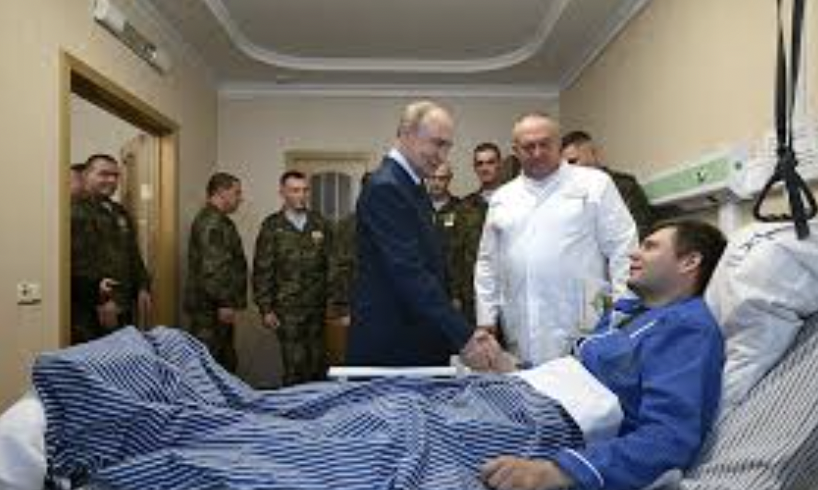
Stories periodically appear in Russian propaganda media about President Vladimir Putin or some other high-ranking official visiting the Central Military Clinical Hospital in Moscow. Comfortable rooms, smiling patients in good pajamas, and modern equipment then appear in the frame.
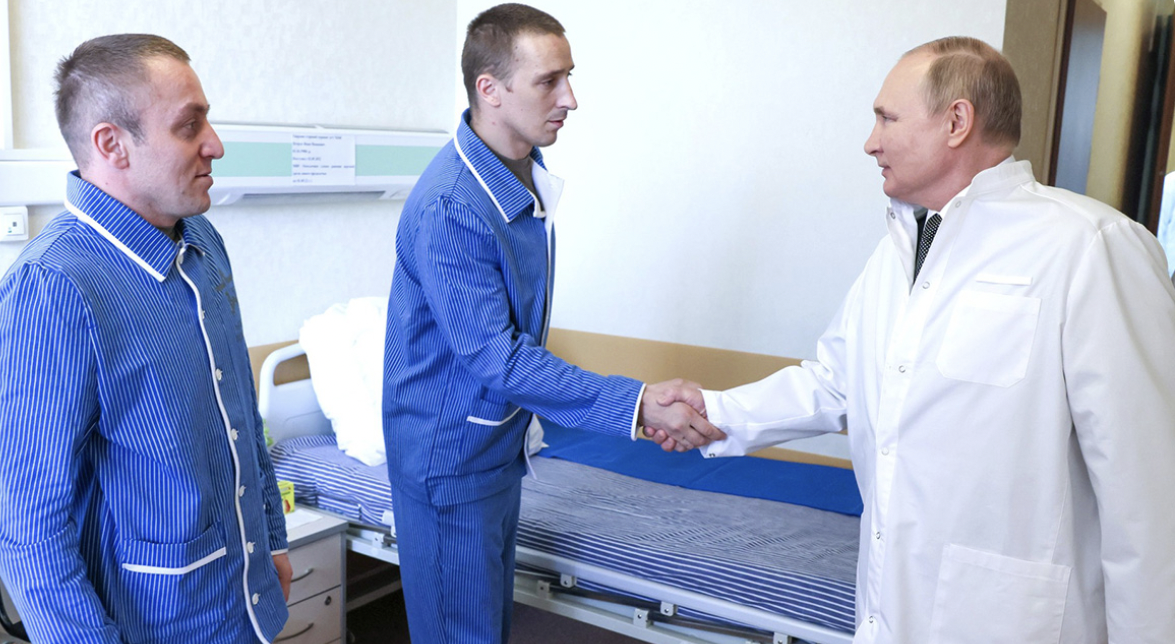
Kremlin officials do not appear in regional hospitals and the federal Russian media do not cover what is happening there.
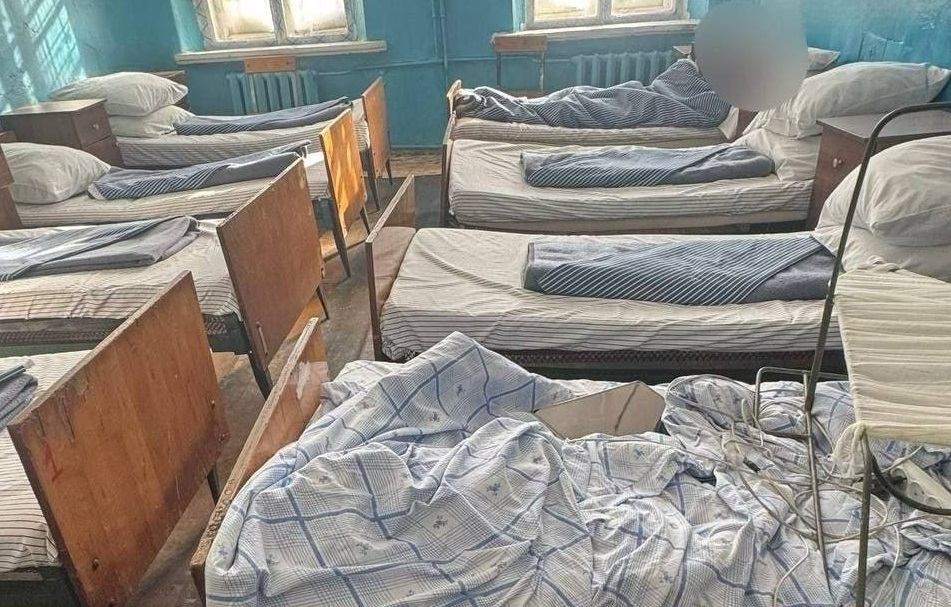
34-year-old Alexander (the editors do not name the names of the interlocutors for reasons of their safety - SR. ) lies in military hospital No. 439 in the coastal city of Ussuriysk with shrapnel wounds.
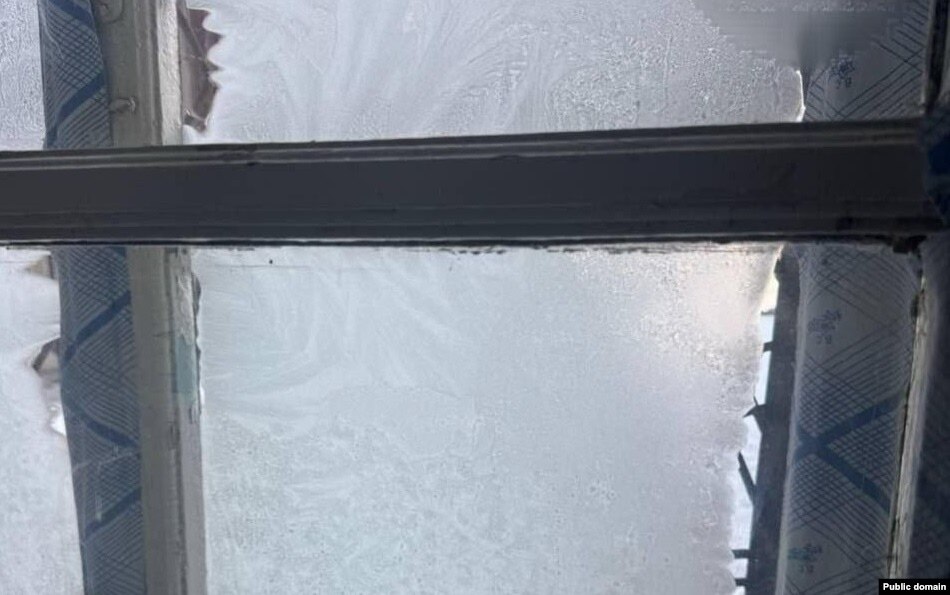
“I’ve been here since February – the wind has been blowing through the broken windows, and it’s still blowing. Instead of operating on my wounds, they froze me so much that I contracted pneumonia. It’s almost zero outside now, but a month ago it was minus 15 here. The roommate’s sister filed complaints with the military prosecutor’s office and the Ministry of Health. No use.
He was mobilized for the war almost four years ago from the capital of Primorye. In the first assault he was seriously wounded.
“I paid and they kept me in rear positions. Now it doesn’t matter whether you pay or not, they cheat everyone. In the first assault, a shrapnel tore my leg so badly that the doctor there in the field hospital said: you will walk with crutches. I have come to terms with it. But somehow the leg can be saved. And I'm really rotting here. I’ll have to undergo amputation soon,” says Alexander. – I constantly have a fever. I just recovered from pneumonia and fell ill again. The temperature in the room, even now, at zero temperature outside the window, does not rise above 10 degrees. We sleep in our clothes. At the top. Otherwise you won't sleep.
After the relatives of one of the wounded contacted the Ministry of Defense hotline, the caretaker of the institution entered the hospital rooms.
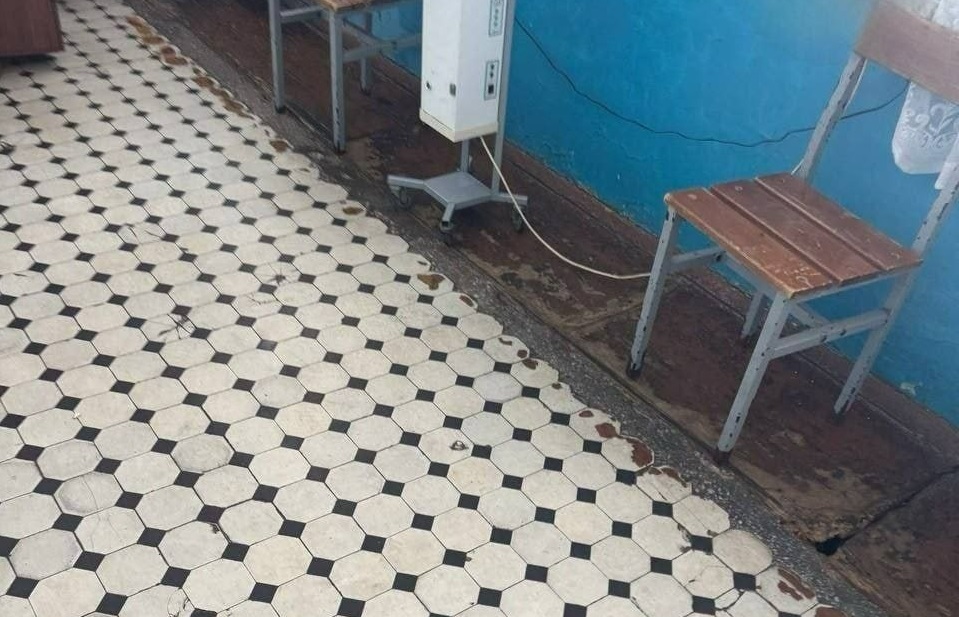
“He pulled the thermometers out of the rooms so that we couldn’t take photos and note what kind of dumbass there was.” Floors with cracks, old beds with torn linens,” says Alexander.
In a similar condition, according to the wounded with whom Sibir.Realii managed to talk, the hospital on Lenin, 172 in the capital of the neighboring Amur region Blagoveshchensk.
– The batteries don’t heat up at all; now the cold is around 10 degrees. We go into the staff room or some kind of office - there are potbelly stoves. Before this, I was kept in a field hospital near Donetsk, it was really warmer and cleaner there! - Vladimir , who signed a contract from the colony, is indignant. “It’s unsanitary here, there aren’t enough sisters.” One of us delivers pills for the whole day and that’s it. Dressings are not done every day, as required, but twice a week. There are not enough staff, so they say.
The shortage of medical personnel in both military hospitals and civilian medical institutions in Russia is officially recognized. State Duma Speaker Vyacheslav Volodin said that the shortage of medical personnel in Russia reaches 80%, especially outside large cities. The head of the Ministry of Health, Mikhail Murashko, reported that the country lacks 23.3 thousand doctors, and the shortage of paramedical personnel is 63.5 thousand people.
Interlocutors of Siberia.Realities also talk about a shortage of even basic consumables in hospitals.
“The sisters themselves admit that there aren’t enough bandages to change so often.” Bandages! There isn’t even enough hydrogen peroxide, not to mention normal antiseptics like chlorhexidine. I’d better keep quiet about how they feed me. I’ve never seen such a grunt even in prison. We send walking guys for the "Doshiki" to the last ones. We’ve already been taken off pay, but we weren’t paid for the injury—you can’t get away with it,” says contract soldier Vladimir.
According to him, sometimes humanitarian aid comes to the hospital with men's underpants, pants and shirts. But hospital staff are afraid to ask volunteers for medications.
“They’re afraid that the bosses will hit them in the face.” Even when relatives write complaints, they all shake. But what do they have to do with it? - says the former contract soldier, but admits that he himself did not personally write a complaint. – I want to be discharged [from the service] as soon as possible. The main thing is not to return it back. And if I start to get excited, I’ll be on crutches and they’ll rush me into the assault.
"They tear off the bloody bandages to dry them"
Rostov volunteers constantly announce collections for linen, medicine, syringes, bandages, medical solutions and even brilliant green for the wounded of the largest district military hospital. It is also often necessary to collect clothing for the wounded:
“Many arrive here without clothes or in scraps of uniform - under life-support systems. And if they are destined to survive, then they end up literally naked in hospital beds. In this form, they are transported further for treatment,” writes the telegram channel “Help to the Rostov Hospital.”
Well-known Rostov blogger Sergei Bogatyrev wrote a year ago that the hospital lacks basic things: water for the wounded, additional food for those who arrive at the transit hospital after the official dinner is already over. He admitted that he had to raise funds for teapots, boilers, clothes, slippers for the wounded, and even water.
“Volunteers deliver all this here. The military is well aware of the blatant disgrace and therefore very quickly responded to the “Naked Heroes” campaign to collect help for the wounded. But this is not normal,” writes the blogger.
In response, the head of the hospital, Valery Kokoev, stated that “the supply has been established” and asked the volunteers “not to interfere.”
- It’s simple. Two years have passed, nothing has changed, and he asks volunteers not to help! – the mother of the wounded soldier Olga is indignant. “My son has already been there twice.” And twice I wore everything from panties and slippers to syringes, analgesics and bandages! They also peel off the blood-dried bandages to dry them. There is nothing to wet it with, they say! He stood like this during the dressing changes. I ended up purchasing for the whole ward, not just my son. The only elevator there is constantly breaking down. Drinking water tanks are constantly empty. That is, even from the infectious diseases department (infectious diseases department), whether you want it or not, you have to go out and get yourself something to drink.
Olga asks not to indicate the name and position of her mobilized son. Now they are preparing medical documents, hoping to get him decommissioned from service for medical reasons - he has shrapnel wounds in both legs.
"Cynical level of corruption"
Military hospitals are financed in Russia from the budget of the Ministry of Defense. The size of this funding is not announced separately; the data is “spread out” within the entire military budget (in 2025 it amounted to 16 trillion rubles, approximately 8% of Russia’s GDP, more than 40% of all budget expenditures).
The Ministry of Health is responsible for supplying civilian medical institutions, and the Main Military Medical Directorate (GVMU) of the Ministry of Defense is responsible for supplying military medical institutions. This is how regional authorities usually explain the fact that they cannot, even in cases of urgent need, send additional doctors and medicine to regional military hospitals.
For example, when residents of Belgorod, after the offensive of the Armed Forces of Ukraine, complained about an overcrowded clinic in which it was impossible to wait for an appointment with a surgeon, the regional governor, Vyacheslav Gladkov, said that he could not send additional doctors there, since the clinic was a military one and was subordinate to the Ministry of Defense.
At the same time, experts believe that the financing and supply of military hospitals does not reach the final recipients, especially in the regions.
– Firstly, there is a monstrous, cynical level of corruption in the Russian army. That is, money or medicine, or both, are stolen and concealed for the purpose of sale to the same military, since they are “rich” and receive payments for injuries and salaries. Secondly, there are problems with certain types of medicines in Russia, as they are difficult to procure due to sanctions and the collapse of international trade with Russia. And this problem concerns not only the army, says military expert, sociologist Nikolai Mitrokhin .
The monthly salary of a doctor in a combat zone starts from 210,000 rubles, to which allowances are added. Paramedics and nurses – from 190,000 rubles. If a doctor or nurse enters into a contract, they receive all payments due to participants in the so-called “SVO”, including federal and regional payments, amounting to more than 2 million rubles. While doctors in war earn hundreds of thousands, their colleagues in stationary hospitals in the rear remain on standard military salaries, which are several times lower. According to the website "GorodRabot.ru", the average salary of a doctor in Russia, as of December 2025, is 81,271 rubles, a nurse - 72,123, a paramedic - 58,691. According to experts, this dispersion in income can also explain the shortage of doctors and medical staff in the rear.
"The windows are broken, there is no medicine." Hospitals have nothing to treat the wounded