
Translated material
Ending Lives
The murder of a teacher by a very difficult student: general negligence or a black hole in the education system

Farewell ceremony for teacher Olesya Baguta in the village of Dobryanka, Perm Territory. Photo: Stringer / NEWS.ru / TASS
Attacks by teenagers on schools, fellow students and teachers have been particularly frequent since the beginning of this year. The most recent one - in Dobryanka, Perm Territory - led to the death of a teacher. Now the whole society is asking whether it could have been prevented.
"Strange"
On April 7, a 17-year-old schoolboy attacked his class teacher Olesya Baguta with a knife on the porch of Dobryansk school No. 5. This happened around 8 a.m.: the teacher came early and was doing exercises with the younger students.
The attacker surrendered to the police, admitted his guilt, and during interrogation explained that the teacher had “spread rot” on him.
For now, it is generally accepted that the reason for the attack was the teenager’s denial of admission to the State Examination: Olesya Baguta taught Russian language and literature, in which the guy did not have time, and, apparently, she decided to deny admission to the state certification.
It is known that the student stayed in the second year more than once and studied according to a simplified program .
The teenager’s state lawyer, Elena Balueva, explained to the press the essence of the long-term conflict between a student and a teacher as follows: “The teacher told him for a long time that he would never receive a certificate. <…> That he is worthless, that he will never have anything good in his life. Apparently it’s boiling.” In addition, the lawyer said that, according to the teenager’s mother,
“He was often tormented by headaches - it was because of them that the guy could not study. It often happened that he went straight to bed after school. The student was treated in Perm for a long time and at some point he stopped doing well in his studies, so he and his mother decided to stay for re-education.”
According to the press, the attacker is from a complete and prosperous family: father, mother, older brother. Neighbors confirmed to regional journalists that he had health problems: “Denis’s mother ( the name of a minor cannot be indicated by law; the journalist called him Denis in this material. - I.L. ) shared that he had some kind of illness since childhood - because of this, he studied poorly and had a bad memory. Two years ago she took him to hospitals. Denis’s mother told her neighbor that he was being treated, and after a while she said that “everything is fine with him.”
However, the mother of one of the students from school No. 5 said that the guy grew up in a dysfunctional family, was registered with a psychiatrist, everyone complained about him, but the school did not take any measures.
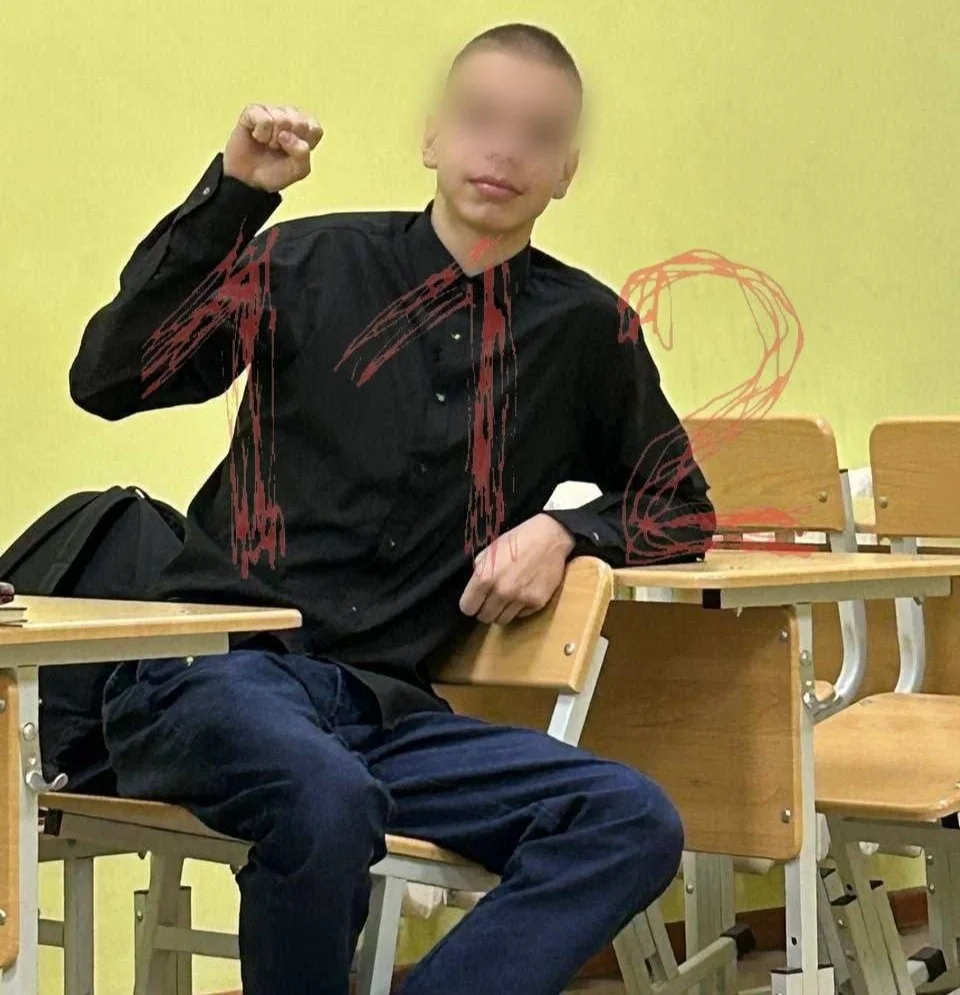
Pupils at the school told the press that he " was not a bully, but rather a little out of his mind "; “ often missed lessons, was rude to teachers and could behave inappropriately ”; “ he hit his head against the wall and shouted obscenities at the teachers, he could fall under the desk right in class ”; “ I could lie down on the floor right in class, holding my head ”; “he approached the guys and could start a conversation with rude obscenities out of the blue”; “ I walked around and yelled at the whole school just “A-a-a,” and this could happen every day ”; “a month ago I got into a fight with a boy after they told him he was a fool”; “threatened to stab his classmate and, in her words, “did not communicate with anyone, provoked conflicts: he would cut off a girl’s hair, or he would get into a fight.”
One of the classmates mentioned that two weeks ago the guy “ talked about threatening to attack the head teacher or teacher with a knife , but his peers did not take it seriously.”
Conflict
His conflict with his class teacher apparently developed over quite a long time: the lawyer talks about this. However, colleagues remember the teacher with love and respect, and talk about her ability to find the key to every student, even the most difficult one. Olesya Baguta was the winner of the “Teacher of the Year - 2018” competition , an experienced teacher (she worked at the school for 29 years) and a hereditary teacher: her mother worked as a school director in the same Dobryanka.
The husband of the deceased teacher, Alexander, told reporters : “She always had the best students, she loved everyone, <...>.
He was the only one who was different: insults, incorrect information on social networks... He spread slander, for example, that she is a drug addict.”
Olesya Baguta twice filed statements with the police demanding protection from slander and insults. “They called him in and interrogated him. He said: “I won’t do this again, sorry.” This is where everything somehow came to a head,” Alexander recalls. - Everything has calmed down. She already told me that there are no problems with him. But at the same time, he was an underachieving student and skipped classes.”
“She didn’t forgive him, but that’s where it all stopped,” said the teacher’s husband. He also remembered that the student met Olesya Petrovna near her house, but without aggression. The guy was registered with the police.
In the school report, which was read out at the trial during the arrest, it was noted that the student can show aggression and has “obsessive hand movements”; however, when working one-on-one with a teacher, he calms down.
On April 8, a trial took place, sending the teenager to a pre-trial detention center for two months, despite the fact that his mother asked for house arrest. State lawyer Elena Balueva told the press that the client refuses to communicate with her, does not want a lawyer, but is cooperating with the investigation.
She said the guy “looks like a lost teenager”: “He understands that he has done terrible things, he is ready to be punished, he wants to be punished.”
At the court hearing, as a correspondent of the portal 59.ru reports , the teenager did not understand the point when he was asked the standard question whether he wanted to be disqualified from the court. The meeting had to be suspended so that the lawyer could explain the meaning. While the meeting was going on, “the guy sat with his head down and his hands around it.” According to the journalist, “in general it’s difficult for him to sit in one place. He either holds his head in his hands, or lies on them, or presses himself against the glass. Lawyer Elena Balueva asked the teenager if he really wanted to go into hiding, and the guy answered in the affirmative. Then the public defender turned to the judge, saying that the teenager was embarrassed by the presence of the media. The prosecutor asked to continue the hearing without journalists.”
Area of responsibility
Now this is a reason for everyone to talk about their cherished dreams. For example, that the murder suspect probably visited some extremist sites. Or - that there is no benefit from this inclusion of yours, and the sick should be kept separate from the healthy. Or that the school should have the right to get rid of unruly bullies. Or that school security needs to be strengthened. Or that a teacher should have government protection from students. Or about the growth of aggression and anxiety in Russian society in general and among Russian children in particular. Who is in pain?
In the Dobryansk case, everyone saw that things were bad. That the student is clearly disadvantaged. One media outlet even published (albeit with a blurred face) a photograph apparently taken by a classmate, where the guy was lying on the floor, covering his head with his hands.
He threatened to kill, but this was ignored.
He kept watch over the teacher at her house and insulted her on social networks. It doesn't happen very often that a teacher files a police report against his student twice. But in all these cases, everything was released on the brakes.
As a result, as they say now, “a tragedy occurred” - as if everything happened suddenly and unpredictably.
But the danger was obvious - but it did not become anyone’s area of responsibility.
Judging by what we already know about the attacker, at the age of 17 he had difficulty finishing the 9th grade, stayed early for the second year, his problematic behavior was obvious to those around him, as was his tendency to aggression (by the way, he was involved in boxing). Apparently, the guy had serious medical problems (the diagnosis was not disclosed, and thank God: it is not the diagnosis that kills, it is the person who kills).
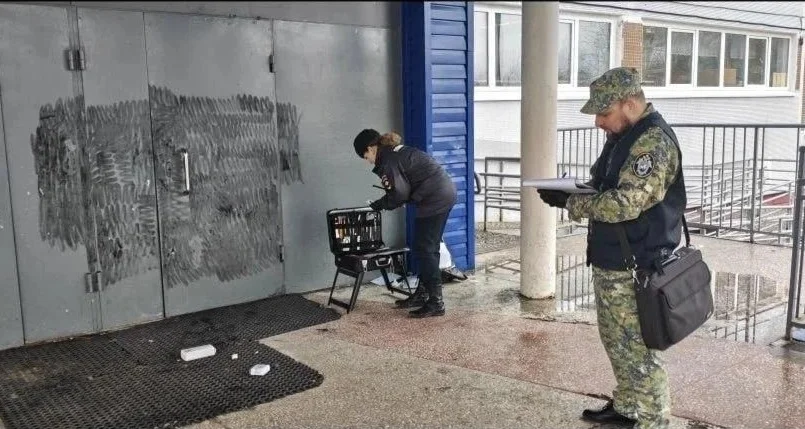
They were known about them at home, they were known about them at school, there was even a simplified program - that is, they probably discussed methods of medical, psychological and pedagogical support at school, as it should be done in difficult cases.
It is now unknown how accessible and regular medical care was for this particular student in his particular city of Dobryanka, Perm Territory, with a population of 28 thousand people. Probably the same as in most small towns in Russia.
It is unknown what specific actions the police took, where the teenager was registered, and what the benefit of the “preventive conversations” was.
Clearly, the systems that were supposed to work together—school, medical, law enforcement—didn't work. Because they don't know how to work together. The school sees problematic behavior, but refers it to doctors.
Medicine cures, but is not responsible for safety. Law enforcement detects threats but does not intervene until a crime occurs. Between these zones there is a void - and it is in it that the danger grows.
Despite the long-declared inclusion, it is still not guaranteed in any way: even in the capital’s schools they are still trying to squeeze out a problem student as quickly as possible, to get rid of him by any means necessary. Yes, he can get a lighter program - but in modern Russian conditions no one will ever finance the school’s assistance to the extent that he needs it: classes with a psychologist, special education teacher, sometimes with a neuropsychologist or speech therapist, and teachers do not always understand how to work with a student who lies down on the floor and covers his head with his hands. And how will he then pass the OGE?
This is where many teachers break down: they seem to understand everything, how to teach, what to teach, they are successful in their profession and love their job. But a student appears who is incomprehensible (yes, I also get confused when a seventh-grader crawls under the table during class and sits there). It is not only incomprehensible, it is often unpleasant. And the words “with this attitude, you won’t pass the exam” come out of teachers’ lips more and more often.
I once administered a forum for parents of hyperactive children. We then unexpectedly found out that the worst teachers who cope with such children are honored teachers with thirty years of experience - not yet old, already established professionals who are loved by their students and respected by their colleagues - those same “strict but fair” ones whom their students remember for a long time and with love. But a restless child, with sudden mood swings, with an attitude of “I don’t like, don’t want and won’t” already formed over the years of rejection, with a feeling of his own failure - and already ready to respond with aggression to an inhospitable world - such a student for such a teacher turns out to be a serious challenge to his indisputable professionalism. I don’t want to cast any shadow on the memory of my tragically deceased colleague; I know nothing about her relationship with her student, except for what is written in the press.
And the press says:
“He is an inadequate person, but his wife [the deceased teacher] was not afraid of him. She said he was safe and cowardly.” "She didn't forgive him."
“For a long time I told him that he would never receive a certificate. <…> That he is worthless, that he will never have anything good in his life. It's boiling, apparently. He simply saw no other way out for himself.”
No trajectory
Based on what is known today, it can be assumed (at least from the mentions of a “lightened/simplified program” and “one-on-one classes”) that this guy could have a disability status (disabled health), and he studied according to an adapted basic educational program - special conditions are provided for it, and even a different exam - not the OGE, but the GVE (state final exam). Or there was no status, and the school dragged on as best it could - on individual agreements and the personal enthusiasm of teachers. At the same time, teachers have little access to help in working with “corrective” students—or they don’t know very well where to turn for it. The teacher is actually left “one on one” with a student whose problems he does not understand and does not know how to work with them, but he must do something.
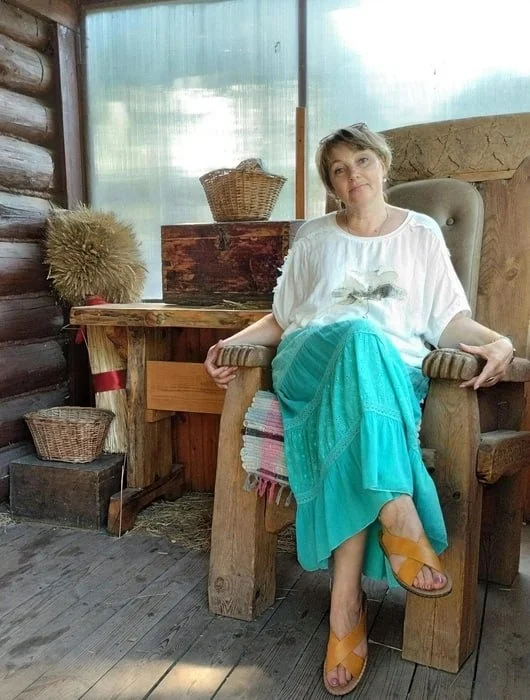
Formally, a student who is not certified for the 9th grade can be retained for the second year. But you can’t keep repeating the second year forever, and the school begins to put pressure on the family: something needs to be decided.
And it's difficult to decide. There aren't many opportunities here. Transfer to a special school (where, depending on the type, you can get a certificate of learning or a certificate) or go to college, but there you need a certificate, or switch to family education - but then the family must have the resources to competently build a program.
In Russia, it seems, there is no clear educational trajectory for a person who cannot complete the ninth grade at the age of 17. He can probably leave school with a certificate stating that he attended the 9th grade course, but for the holder of the certificate there is no educational route, there is only a set of coincidences: evening schools, short educational programs through the employment service, but all this depends on what is available at the place of residence.
“Let him go to work”? - but employers don’t really need him either: he doesn’t know how to do anything. There is no direct “school-to-profession” route with essential support for such cases in the education system.
Therefore, most often such a student simply gets stuck in the school system.
Formally he studies, but in reality he fails. He cannot graduate, there may be nowhere to transfer, his parents themselves do not have the means to hire him tutors and the necessary specialists, nor the ability to replace them. And it turns out that, almost on the verge of adulthood, a person is neither studying nor removed from the system, and no one really knows what to do with him. The school cannot let him out and cannot help him.
This is a systemic gap for which there is currently no solution.
And if you look for solutions in the area of “he was probably a member of extremist groups,” you can go completely in the wrong direction.
In addition, there is serious pressure on a student: you have to finish school. At least nine classes.
In our country, news appears every year about graduates who committed suicide when they failed the Unified State Exam or did not receive admission to it. For them, this is the Last Judgment, at which they were told that they were good for nothing, they were stamped “marriage” on their foreheads and thrown into outer darkness, where there was weeping and gnashing of teeth.
What if you are not admitted at 17 years old and in the 9th grade? This is a dead end, this is a disaster. But some in this impasse turn aggression on themselves, while others turn on the one they consider the culprit.
The right of the strong
But this, of course, is not the only reason. The hopeless situation with such a “stuck” student irritates everyone. And few of us know how to cope with irritation. Some write nasty things on social networks (this guy also tried this), others go to beat someone (he also tried this: fellow practitioners said that he started a fight when someone called him a fool). For him, aggression is the first, habitual reaction. For him, apparently, the strong are right: it was not for nothing that he not only threatened to kill his classmate, but also frightened her with his older brother: he’ll come and give you a hard time! However, the rule of the strong rules not only in Dobryanka.
Nobody ever teaches children what to do when everything pisses you off, how to cope with your anger. On the contrary, we only teach “give back.” And, to be honest, no one teaches adults either, even if such an adult is already beginning to give up. If he kills someone, then come. Then we'll put you in jail.
We have “no person, no problem.” There is no problem for a school when it gets rid of a difficult student. But for this difficult student—perhaps with cognitive difficulties—the problem was centered on a specific teacher. No teacher - no problem.
And tension in society is growing, mutual irritation, anxiety, and aggression are also growing. And attacks on schools are becoming more frequent.
Scientists who have studied cases where minors attacked schools, fellow students and teachers say that there are almost always warning signs: a student discusses weapons, talks about his intentions. But in the Dobryansk case they did not pay attention to them, they did not perceive them as a threat. Maybe because the line between “joke” and “seriously” is so blurred - everything can turn out to be a joke, a prank, a fake. Or because we have become so accustomed to aggression that it has ceased to be perceived as something out of the ordinary.
But if threatening to stab someone is not considered a reason for a reaction, then what is considered? The teacher found herself without protection when she needed it more than others, when she asked for this protection. But she was left with a difficult and systemically insoluble situation face to face - this is what usually happens to teachers when they are faced with something that goes beyond the boundaries of pedagogy. And the teenager was left without qualified help from specialists.
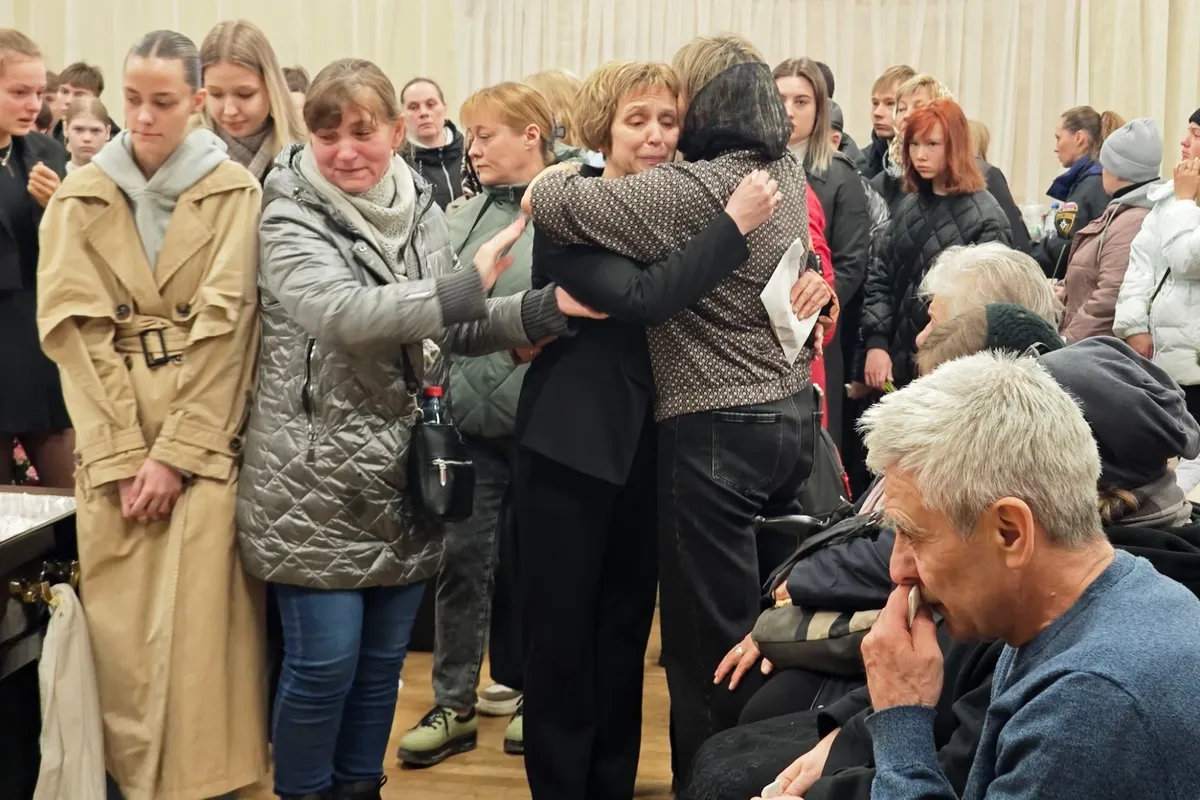
Now the school administration is accused of negligence. The school is undergoing an inspection. They will check medical, psychological and pedagogical support and the work of the private security company. They will certainly talk, as usual, about the limits of metal detectors and increased control. They will become even more diligent in monitoring students’ social networks (messengers have already been banned, the job is done).
But the frames do not ring with the intent to kill. In general, the frame is not always placed at the entrance to the school yard, and you can lie in wait outside the frame.
No formal measure can replace real support for a person whose school failure is slowly ripening into severe social maladjustment. No amount of monitoring of social networks will help when no one is responsible for the competent work and coordination of the efforts of those services that should help a student with problems. When hatred has already matured in a person, it is too late to engage in prevention.
But how to prevent hatred in today's schools?