
Translated material
Landing space: why did the anthropologist, director and artist collect rocket debris in the forest?
What do people look for in the forests of northern Russia? Some are mushrooms and cloudberries, others are abandoned villages, and still others are stages of Soviet rockets. In the 1990s, collecting space metal was commonplace for some residents of the Arkhangelsk region and the Komi Republic. This is the subject of the artistic and research project “Falling Fields” by Makar Tereshin, Igor Elukov and Polina Timofeeva. We asked them about their experiences working in metal mining crews and how scientific research meets art.
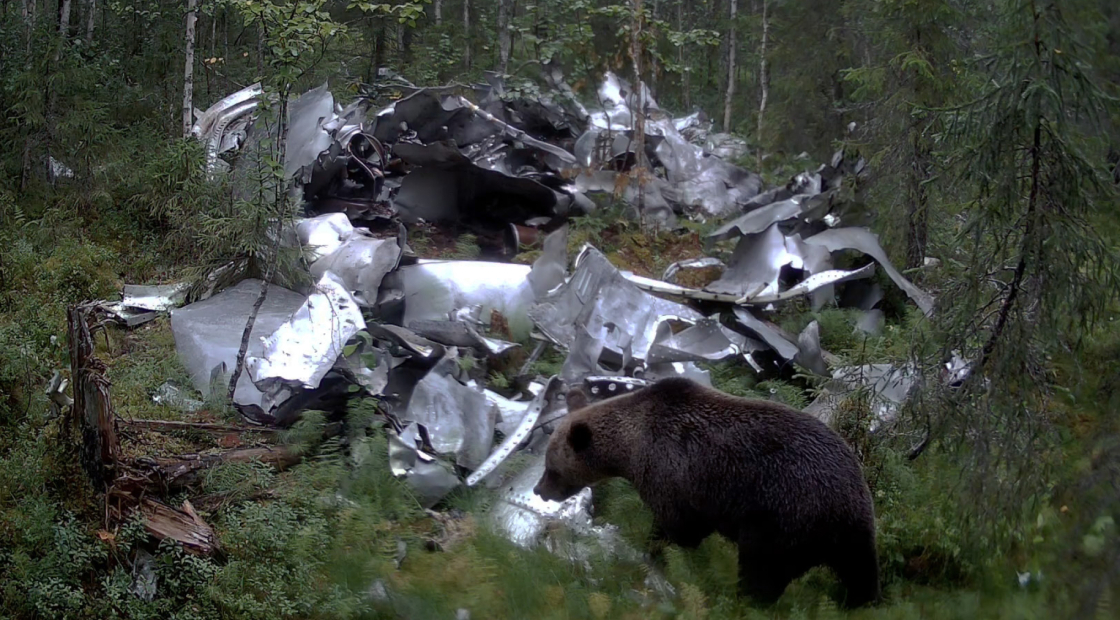
A bear on the wreckage of the Soyuz launch vehicle. Komi Republic, 2024 © Falling Fields
“In the Woods”: A director, an artist and an anthropologist once met... The mix is not the most obvious. How did you find each other and realize that you could work together?
Makar Tereshin, anthropologist: I sometimes came to the North for my own interests. And when you come to a village, you need to sleep somewhere, so usually you spend the first hour or two on the street, getting to know people. You say: “Hello, I came from St. Petersburg, I’m a student, I have nowhere to sleep.” And so one day I found myself in a village on the Peza River, in Aunt Igor’s house. She said: “Oh, yes, when we saw you, we thought: tall, skinny, with a camera - just like our nephew.” I’m a bit of a shy person, so I didn’t write to Igor: “Hey, hi, your aunt told me about you.” But since we are both in St. Petersburg and move in the same environment, give or take, at some point we met.
Igor Elukov, director: Polina and I are husband and wife and have been working together for a long time. We discussed a project about metal for many years, and Polina got excited about it.
Polina Timofeeva, artist: At that time, we also didn’t really understand how everything would work out and how the roles would be distributed within the project.
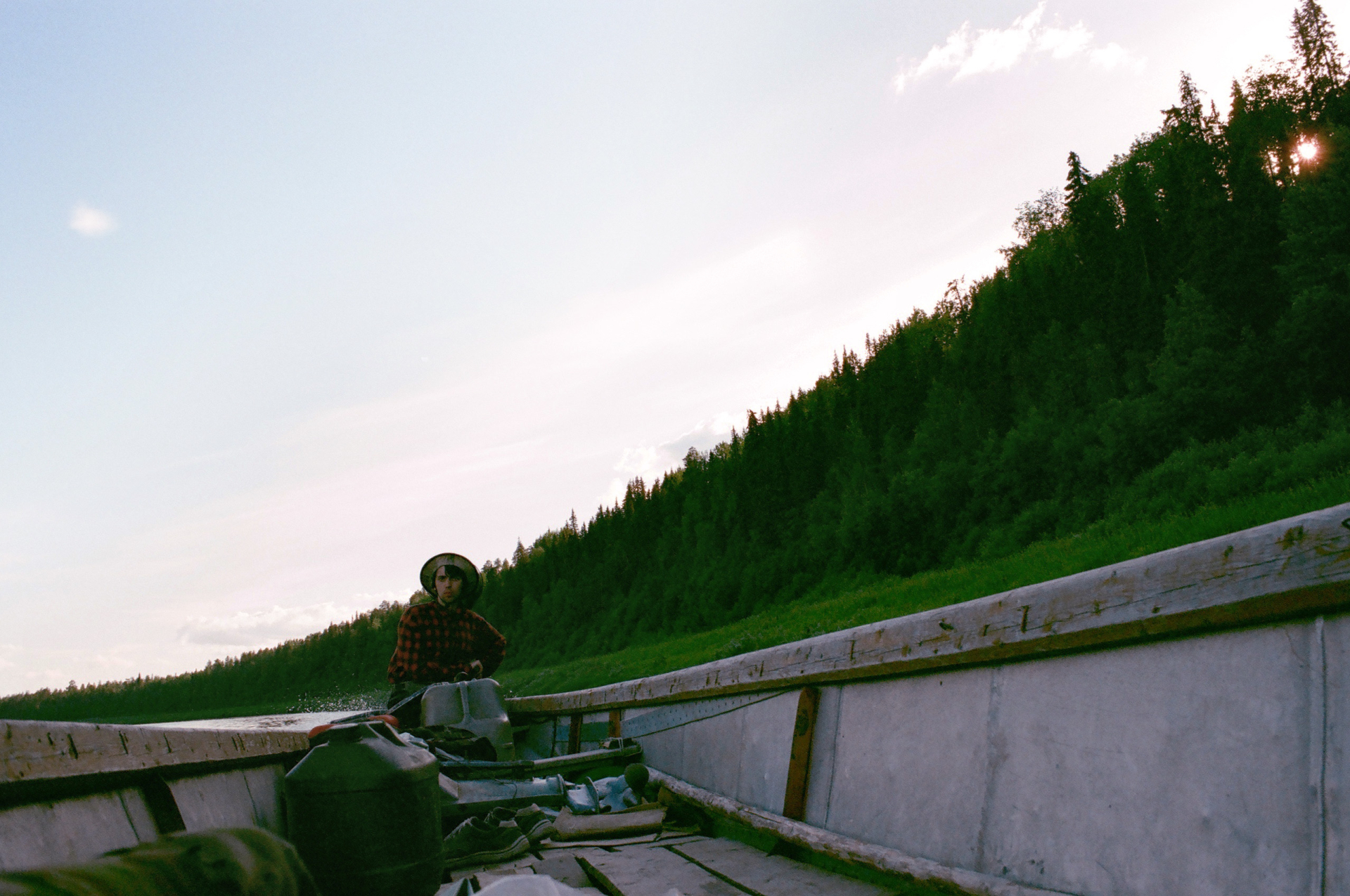
Makar Tereshin at the helm of a boat made from a rocket fragment. Arkhangelsk region, 2019 © Falling fields
Makar Tereshin: It turns out that we were simultaneously working on ideas regarding rocket and space history. I did field research, and the guys went to relatives and they had their own artistic experiments. Then my interest shifted towards Baikonur, but there was still a lot of material from the North. All this was in limbo, and it was important to me that something could happen with it further. And so Igor, Polina and I started talking about this topic, around 2022.
Polina Timofeeva: It seems even earlier. I remember how we went to the Mytninsky baths.
Makar Tereshin: I was thinking whether to mention this or not. Actually, yes, we agreed on the bathhouse. We went to the bathhouse and that's it...
“In the Woods”: Of course, the bathhouse is the main space for networking. That is, even before you started working on Falling Fields, each of you was separately working on your own projects, but they already overlapped in topic?
Makar: Since 2017, I have been publishing my things about falling fields. In 2017, I went to the North just for a ride and heard about the Plesetsk cosmodrome, about a village next to which rocket parts were falling*. I went there just to shoot as a photographer, in such a boring format. Then I became interested in it as a story, as a phenomenon. There are traditional themes associated with the North: folklore, wooden architecture... Of course, this also attracted me, but I wanted to approach this region somehow differently. The space theme provided just such an opportunity, without delving into the archaic, to look at the life of northern villages from a different angle.
Why do rocket debris fall near villages?
When a spacecraft is launched into orbit, parts of the launch vehicle must separate and fall off. For this purpose, special areas are selected, which are called areas or fall fields. Several such areas were identified in the taiga, in the Mezen River basin in the Arkhangelsk region and the Komi Republic: parts of rockets launched from the Plesetsk cosmodrome fall there.
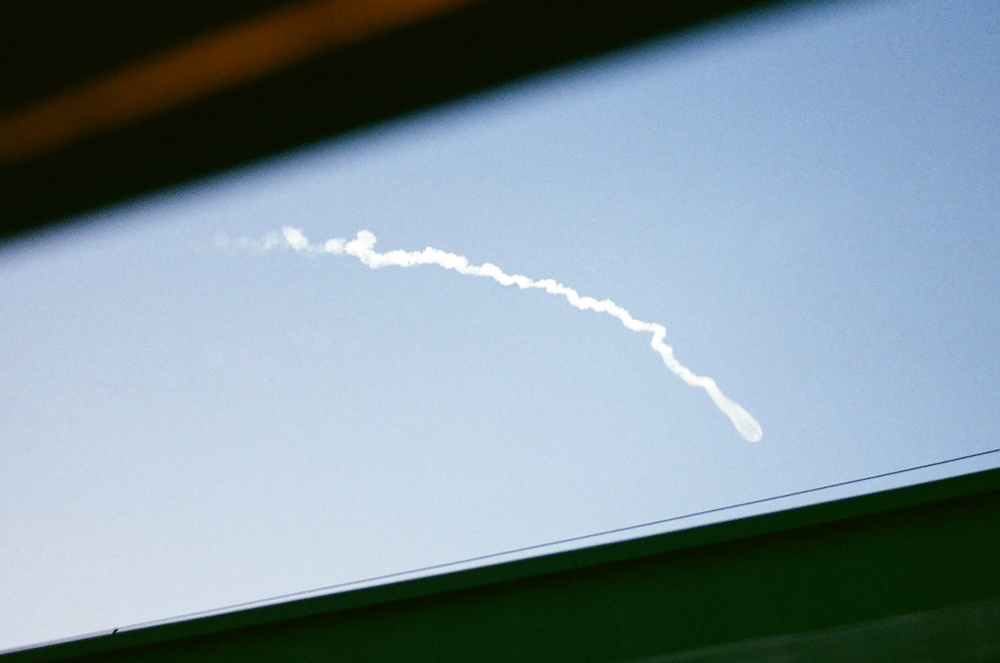
The first stages of the Soyuz launch vehicle are disconnected after launch from the Plesetsk cosmodrome. Arkhangelsk region, 2018 © Falling fields
“In the Woods”: In the film you used video from the archive of Sergei Konnikov, nicknamed Chechen. Makar, can you tell us more about him?
Makar: I started working with hunters whose lands were on the border of the fall areas. I started communicating and going out into the forest together. At some point, I went to a team preparing missiles*. Chechen worked in one of these official large brigades, quite well known in the area. It turned out that they recorded their work on video, as a report that materials were being prepared, missiles were being removed, forests were being cleared. These recordings ended up in my archive, but I didn’t know how to continue working with them. Then I decided to socialize my materials. And working together with the guys somehow brought more meaning into my practice, and in general it became much more interesting.
Why did the residents of the surrounding villages collect the remains of the rockets?
During Perestroika and after the collapse of the USSR, residents of Mezen villages began to actively remove missile parts from the forest. There were official and unofficial brigades. The metal was sold or used in everyday life. By the end of the 2000s, the collection almost stopped: there were fewer launches at the cosmodrome, and the old stages were running out. At the same time, society began to talk more often about the dangers of heptyl, the toxic fuel that powered some of the rockets launched from Plesetsk. Studies have appeared linking heptyl with cancer.
“In the Woods”: Don’t you know if Chechen is alive and well now? Do you keep in touch?
Makar: He is deceased. He passed away in 2023. Literally when we definitely decided that we were making a film. At some point I corresponded with him, and then we weren’t in touch for a long time... In general, one of his close comrades said that he was no longer there.
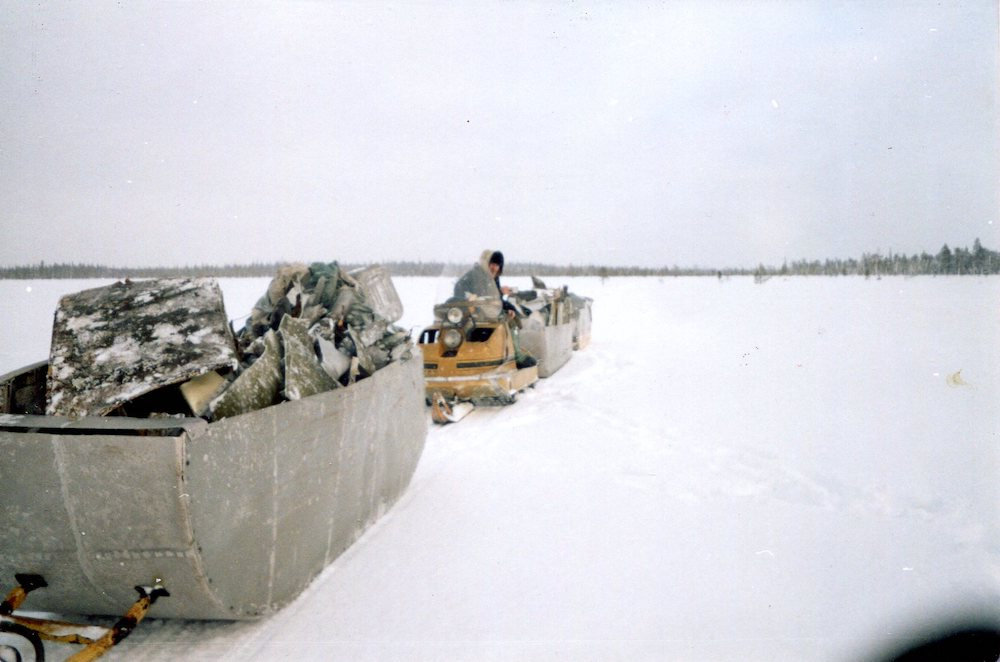
A team of metal procurers removes debris from a launch vehicle on a sled made of rocket metal. Arkhangelsk region, 2000s © Falling fields
“In the Woods”: Igor, Polina, when did Makar show you these video reports? How soon did you figure out what to do with them?
Igor: By that time, Polya and I had already started working on this story from the staged photography side, testing the waters. When Makar showed the video archive, I screamed with joy. It was not clear how exactly to work with him, but it was clear that something definitely needed to be done. In addition to the direct continuation of the theme, there was another important quality in this archive that I, as an artist, dreamed of working with for a long time - this is the specific Russian language, bright and expressive, as Chechen speaks. Well, the very specificity of shooting with a hand-held camera, its randomness, roughness and freedom. In November, Makar showed the material, and in December the script was already completely written...
Makar: In general, all the material there - the language, the sense of place, the manner of narration - conveys what seems important to me, as an anthropologist. Often we try to speak for other people, we try to imagine the human world. And here there is a man, he has a camera, he has charisma, he has his own perception of the world. And in his imagery, his look, there is already a special value that we want to preserve.
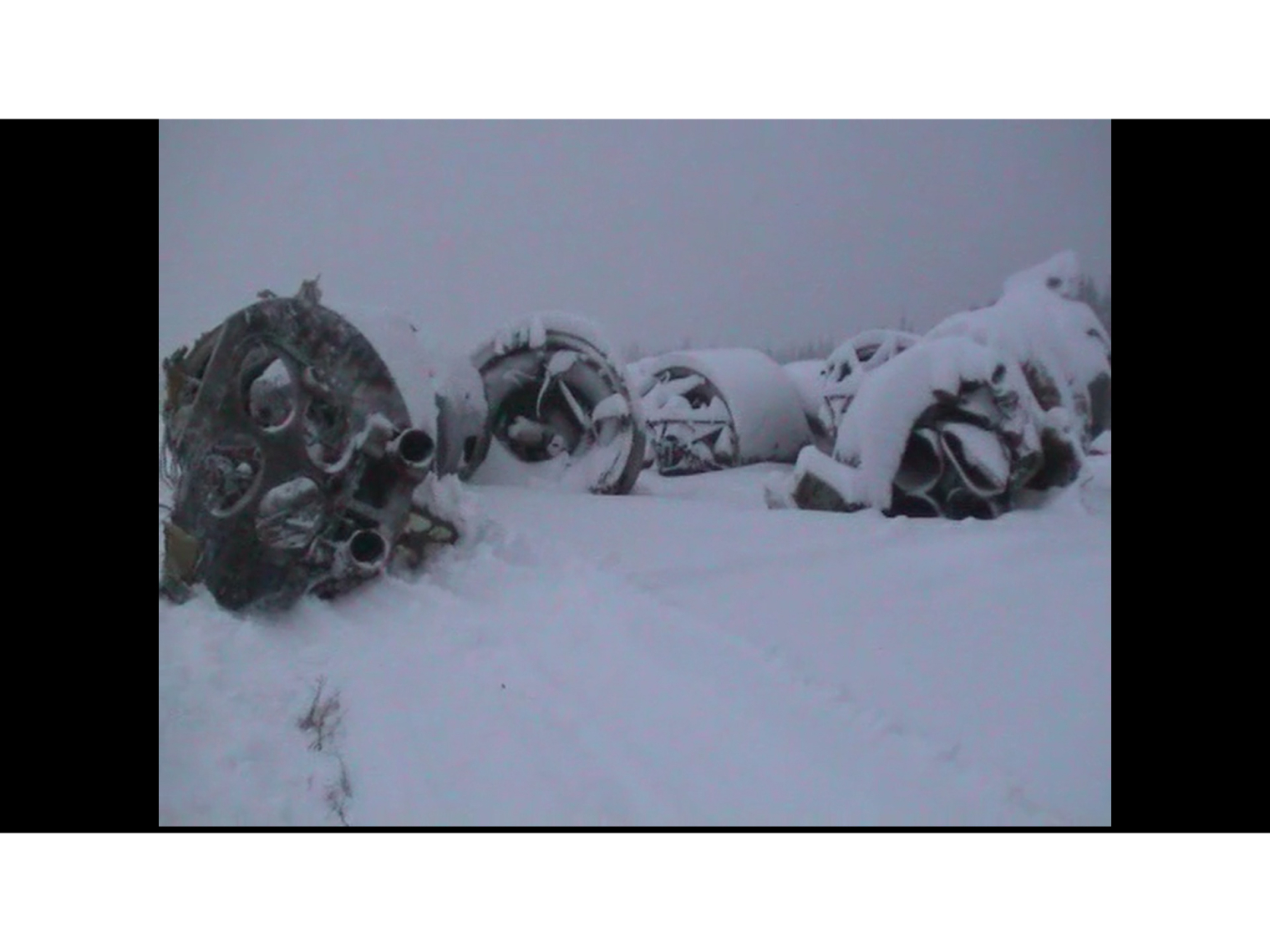
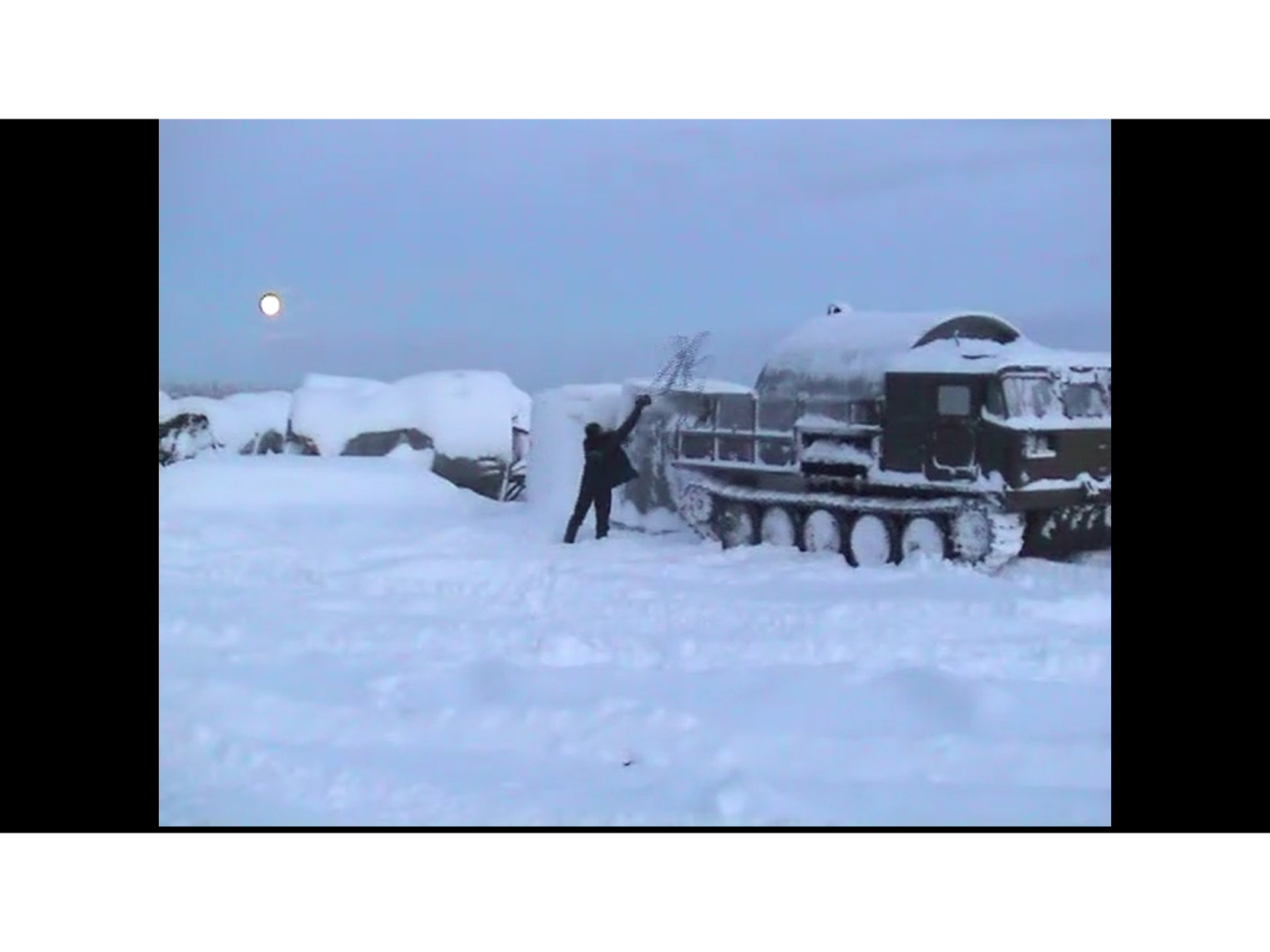
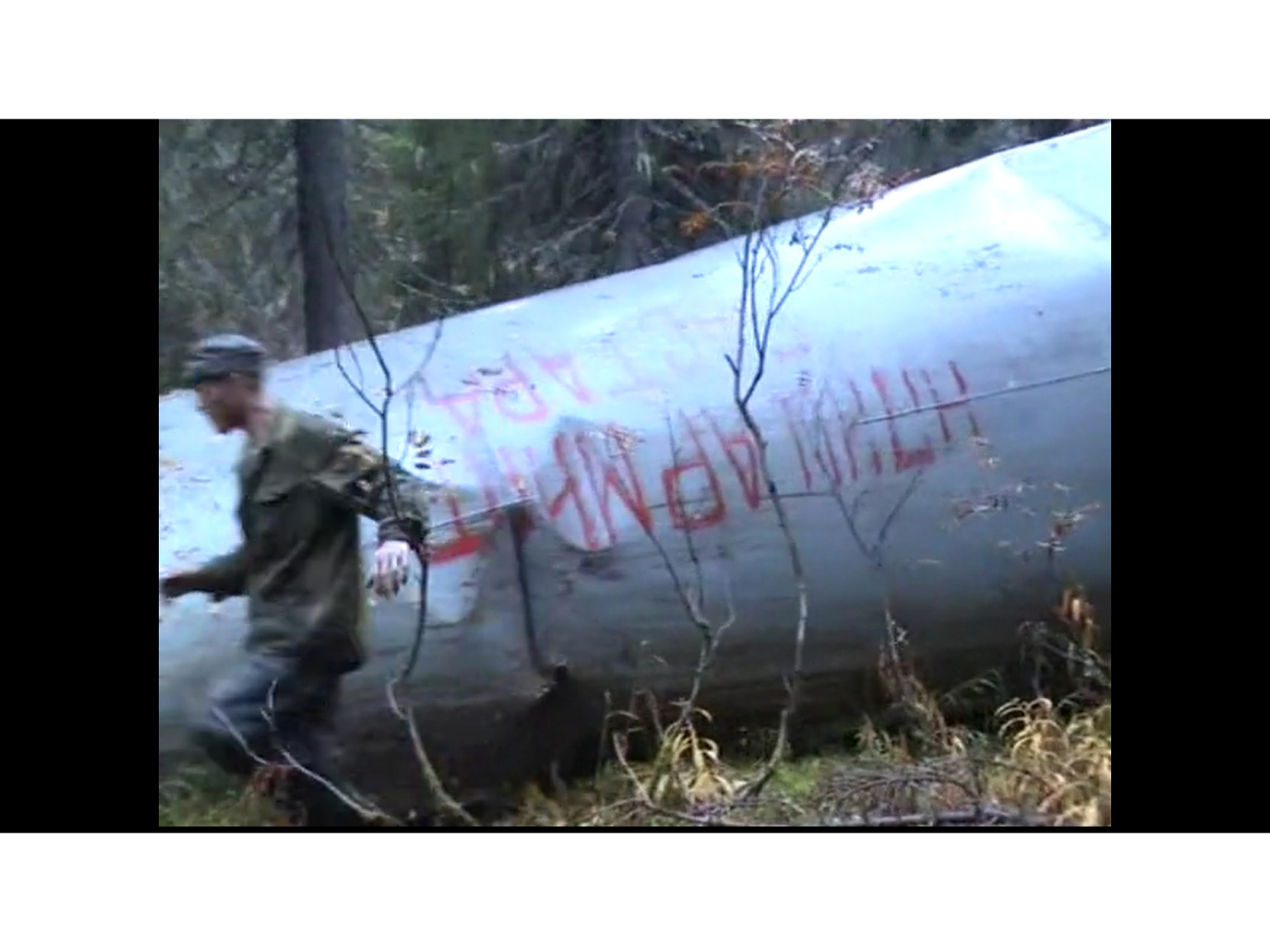
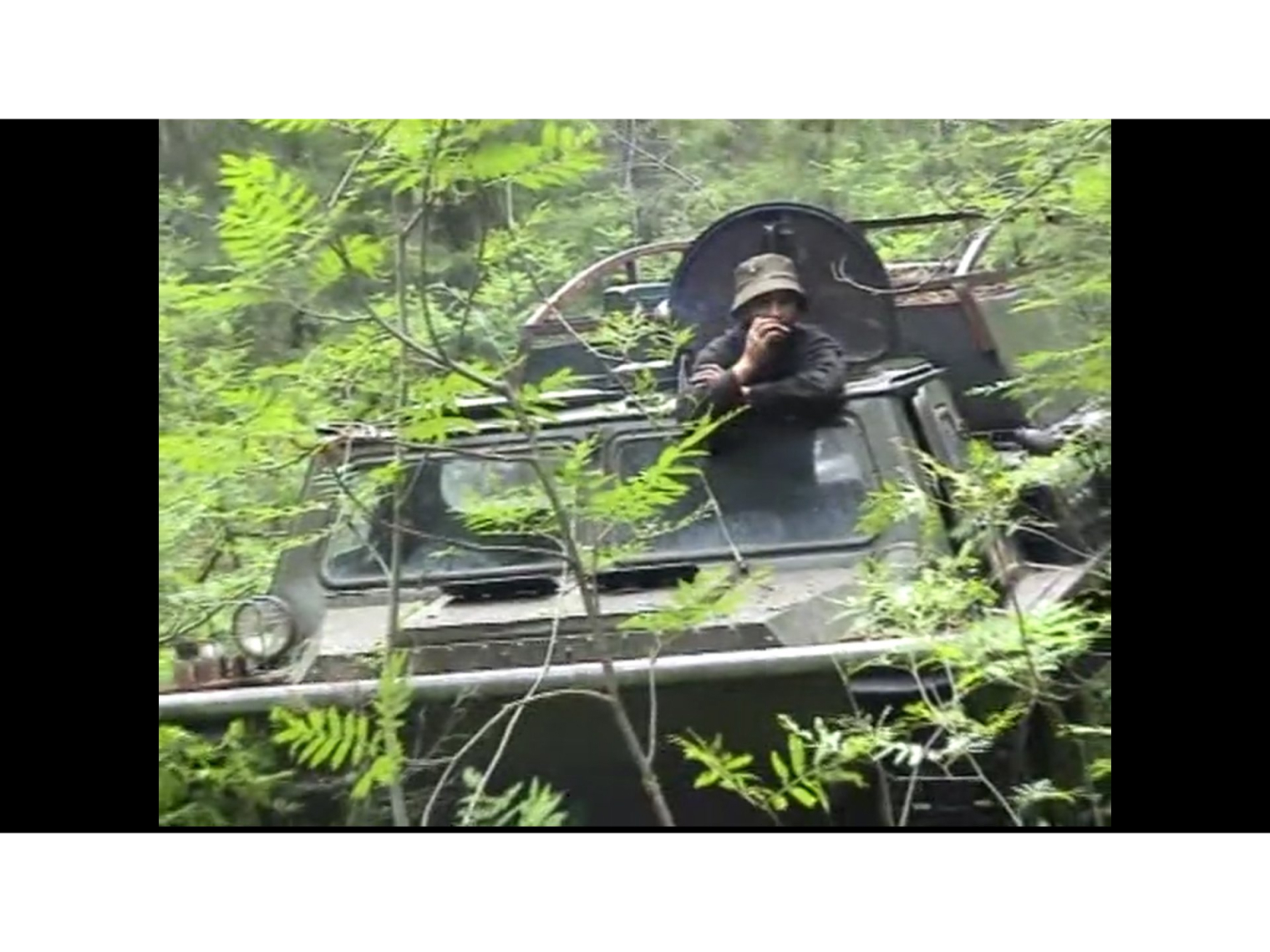
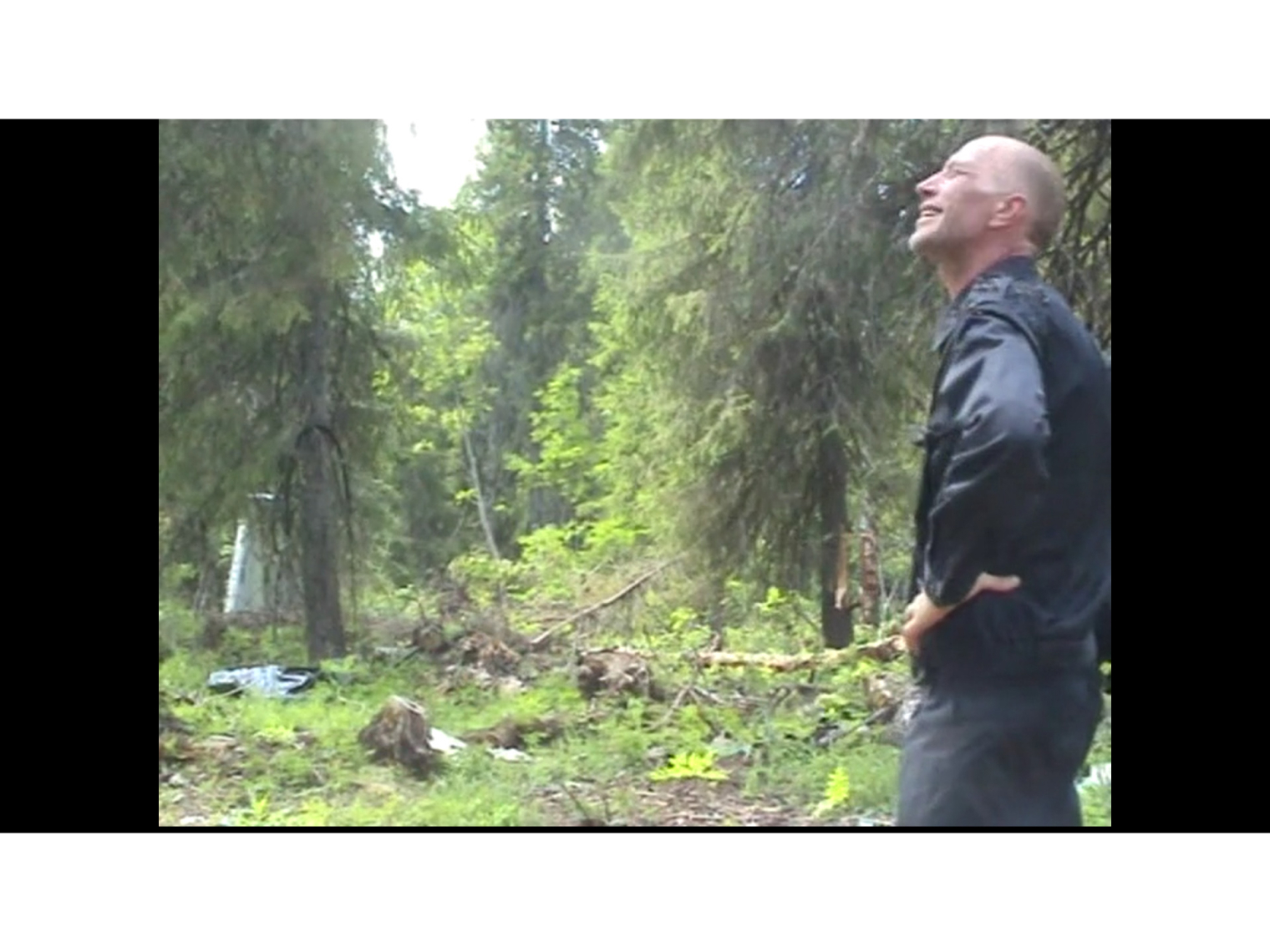
Igor: This applies to all parts of the work*. We try not to interfere with the material, but to let the material speak for itself. For example, in addition to film, we work with metal and create sculptures*. We try not to force any form on it, but simply follow its natural ways of cohesion and arrangement. It's the same in photography. We shoot with camera traps, build a scene and just leave it. Then what happens is what happens. And in this there is the joy of discovery, the joy of the unknown.
More information about the Falling Fields project
In addition to the documentary film, the “Falling Fields” project includes a photographic story from three different parts: an archive, staged photographs and footage from camera traps - cameras that are installed in nature to observe animals. For the series with camera traps, the authors created objects from pieces of rockets in the forest. Another part of the project is video art and sculptures made from found metal.
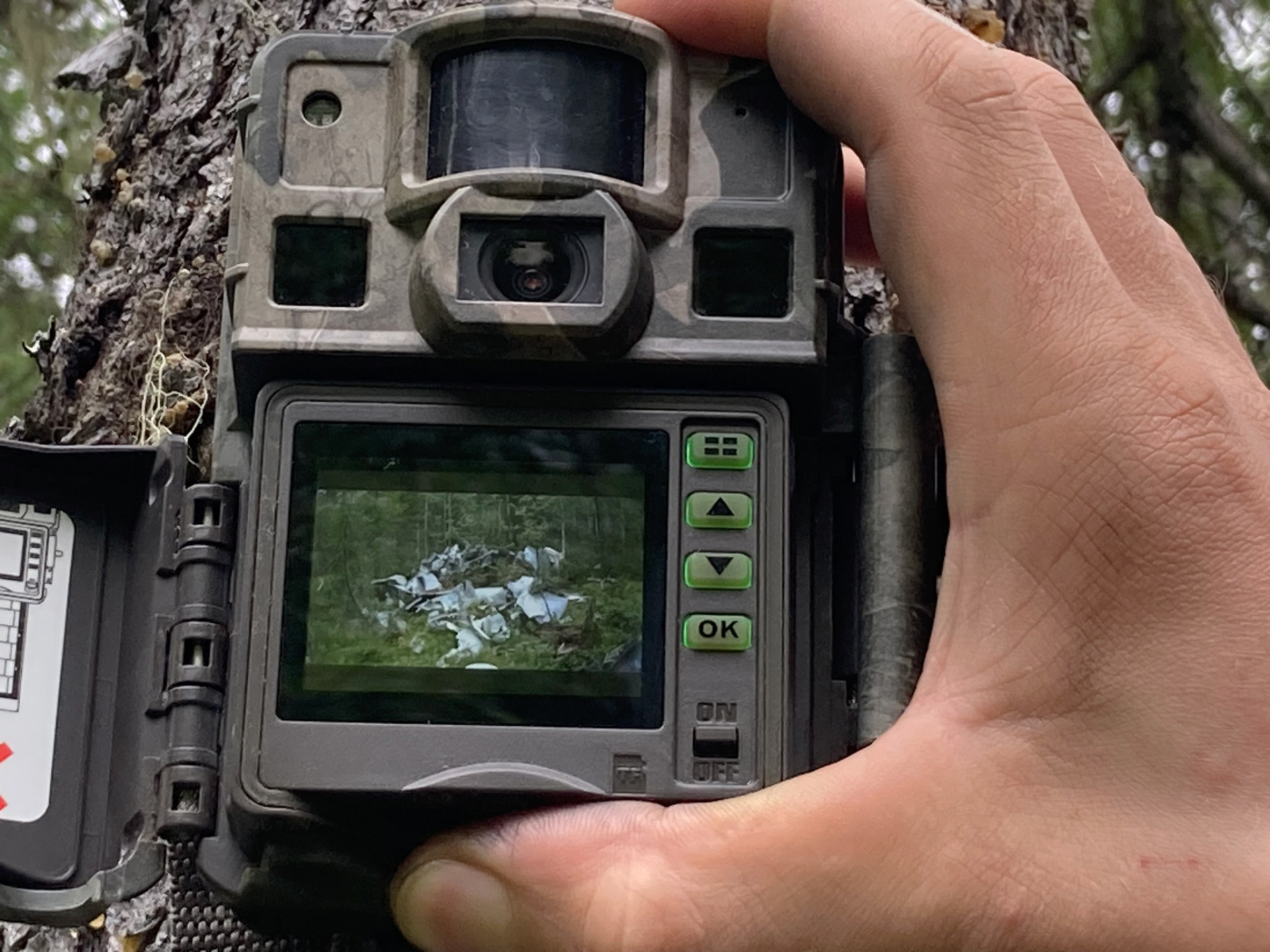
Installation of a camera trap. Komi Republic, 2024 © Falling Fields
“In the Woods”: Are you not afraid to work with this metal? Still, some rockets ran on heptyl, a toxic fuel?
Igor: The most common question about metal is whether it is radioactive. People often think that the very act of going into space makes everything radioactive. To be fair, the first stage separates without crossing the Karman line*. As for heptyl, we are working with small fragments of Soyuz spacecraft - they fly on kerosene and liquid oxygen. The risks here are like any expedition into the forest or along the river, and they have nothing to do with the metal itself. Unless my pants tear on sharp edges every time.
The Karman line is an altitude above sea level, which is conventionally accepted as the boundary between the Earth’s atmosphere and space.
Makar: Yes, Igor is right. In the work itself you hardly come across rockets where heptyl was used. Basically these are all kerosene "Soyuz". Plus, locals who work with metal distinguish between gray “kerosene stoves” and white “heptyl stoves”. The Soyuz are mostly painted grey, and the Cyclones are white. But yes, many are still concerned about the issue of ecology, the toxicity of rocket fuel or radiation, who knows how.
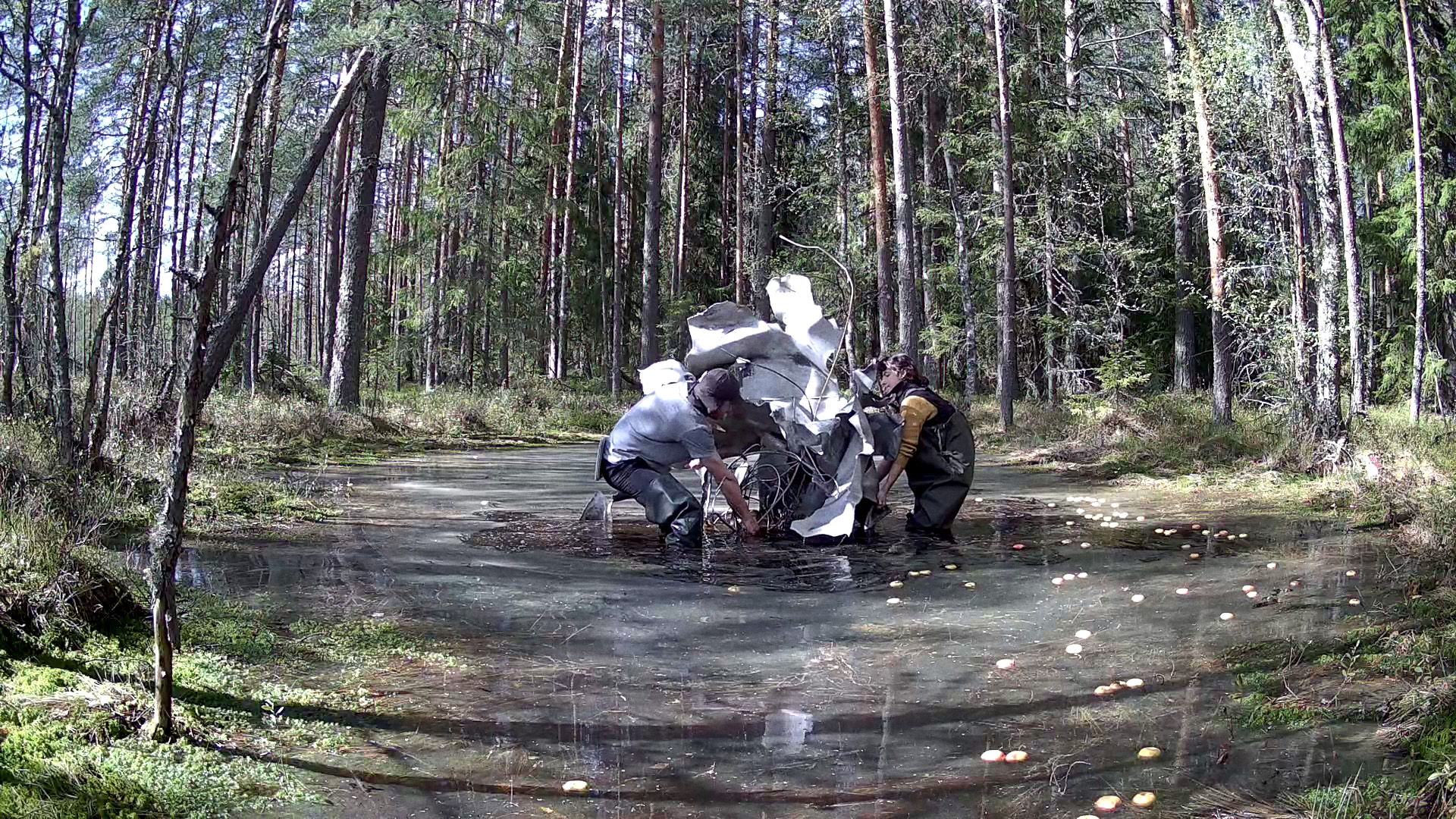
Installation of the object in the field laboratory. Leningrad region, 2025 © Falling fields
“In the Woods”: Let’s talk about the photo project in more detail. How did you choose places for camera traps and how did it turn out that the animals behave photogenic and cinematically?
Igor: First we looked for places where metal remained. Here Makar's old contacts helped. This is quite a long journey: it took a couple of days to get to a distant village and from there another 100 kilometers up the river. I thought we would camp there for a few days and make objects. But in the end, we used everything almost exactly as it was, changing it quite a bit, just so that it would fit into the frame compositionally.
Polina: Finalizing the form.
Igor: Yes, yes, we slightly modified the shape of the metal pile and set up a trap. And that's it, they left.
Polina: We thought that none of the animals would come.
Igor: There were no traces there. Since I am more or less familiar with the forest, I understand that it is necessary to place it on the paths or near the river where animals walk. Our place was deep in the forest. But it turns out there were bears walking there. They interacted with metal, played with it. One bear slept on this metal for a whole month and made himself a bed there. And then he found the camera and rolled it off the tree.
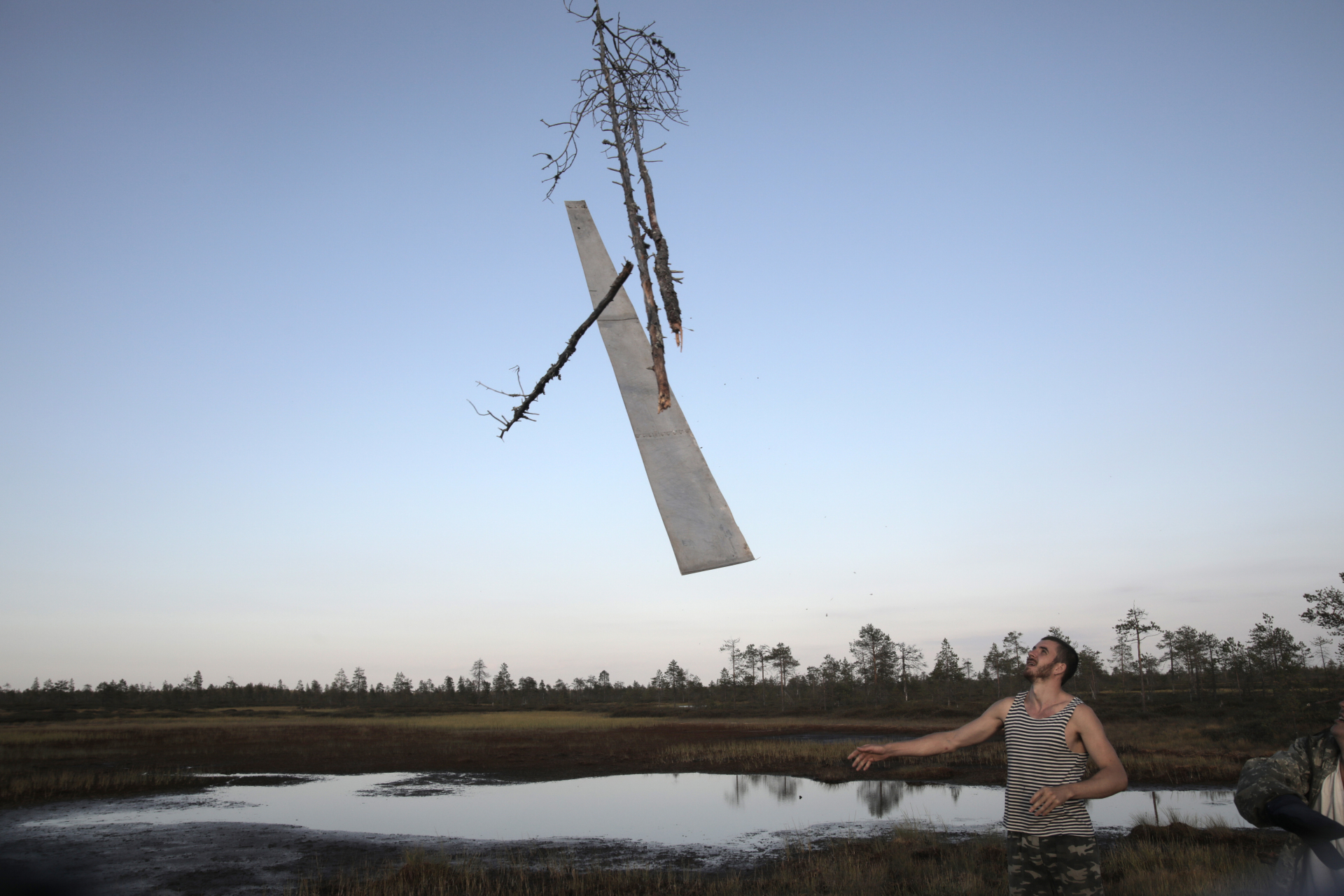
Backstage from the shooting of staged photography. Arkhangelsk region, 2022 © Falling fields
Polina: Then we developed this method in the nearby forests, when we removed some of the metal. If the first time there were heaps of metal that we refined, now we ourselves created objects and built them into the environment. In addition to animals, the change of seasons is also important in this cycle: how the space changes around the object, how it interacts and changes the object itself. Animals: hares, foxes, their lives became so active around these objects.
Igor: And the fact that the metal has now moved to the city workshop is a logical development of the work. There we understood everything, but when you understand how something works, it’s no longer interesting to do it.
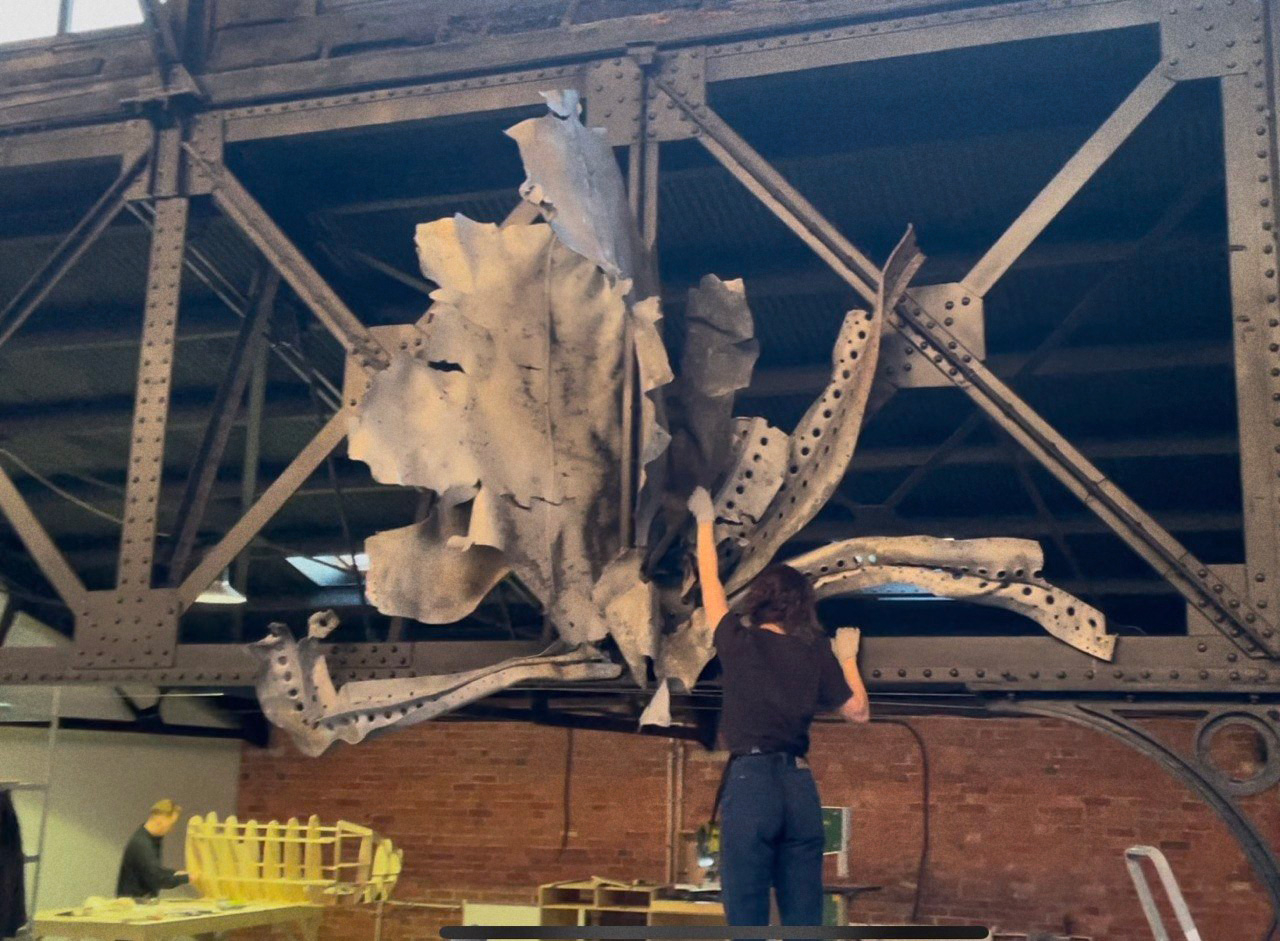
Creating an object in the workshop. St. Petersburg, 2025 © Falling Fields
Polina: It was interesting to find out how the material would interact with the architecture. We made an object for a former railway station. There was a synthesis of material with architecture, and then the object began to develop on its own. And I, in fact, am not close to the form in which it has developed. But his will is sometimes stronger than ours. The metal itself guides you, and sometimes you give in, and sometimes you resist, trying to correct this direction. And this moment of resistance seems to me the most important. Our task is not to impose familiar forms, but to find something new that will give rise to an independent image. And at the same time, we do not change it structurally in any way. These pieces are like a construction set; they fold up differently all the time.
Igor: It's like working with a film. We, too, essentially don’t change anything: our task is simply to find the right combination, the right sequence. In this sense, working on a film is like a documentary sculpture.
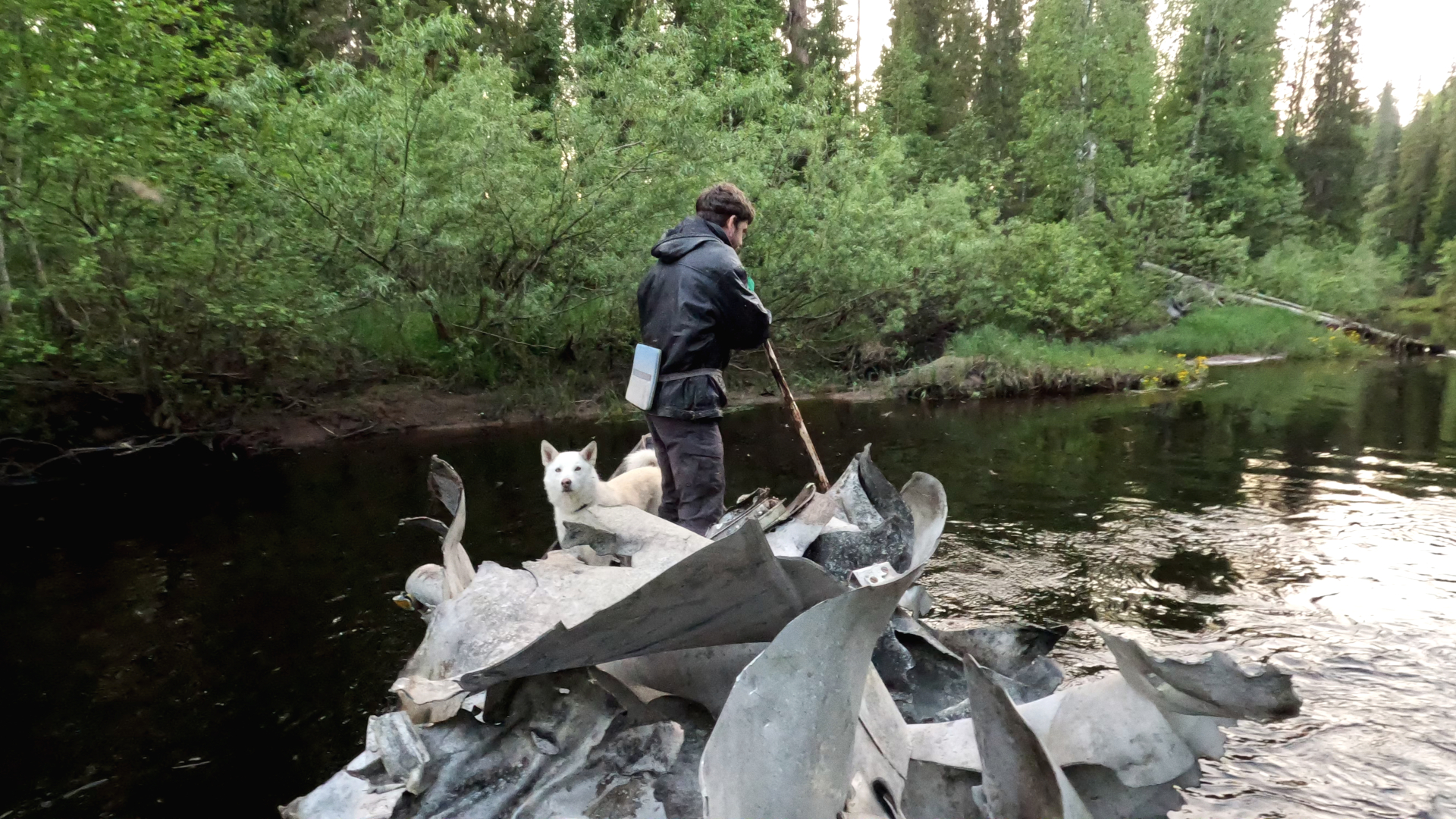
Photo from the expedition. Transportation of metal. Komi Republic, 2025 © Falling Fields
Polina: There is metal that can be used in everyday life. We took a mangled one, with a torn edge, of bizarre shapes. For men it's rubbish, but for us it's what we need. We needed the most worthless in terms of function.
Igor: You can’t find almost anything useful there anymore. Sometimes men there collect some pipes, but in general, what is left in the forests cannot be used in any way. Therefore, by and large, we are finishing the work that they have been doing since the 90s: we are cleaning up the remnants, remaking them into something new. We continue the tradition of recycling, including my family's tradition. This is our kind of recycling.
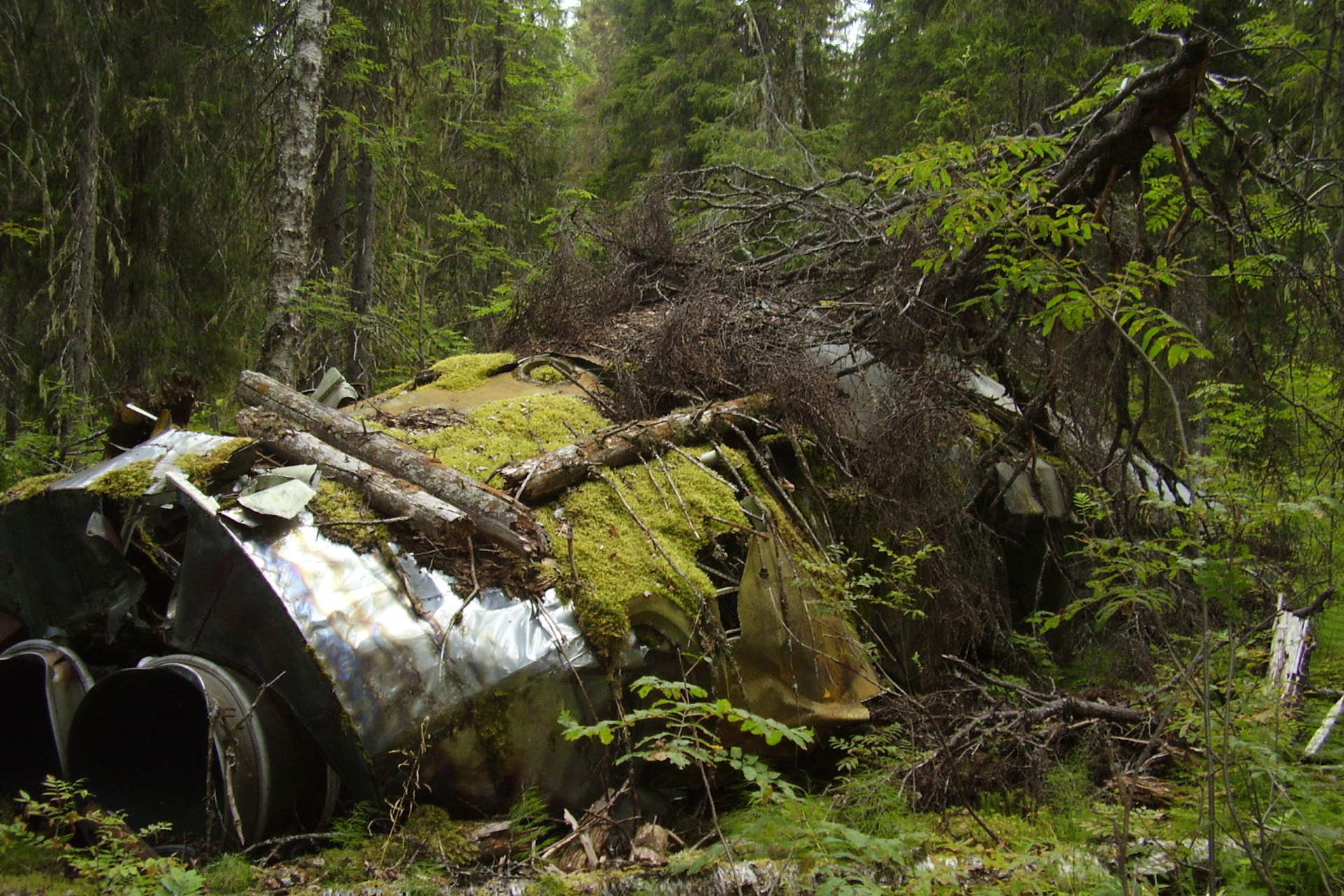
The Soyuz level that fell in the late 1980s. Komi Republic, 2005. Photo by Sergei Konnikov © Falling Fields
“In the Forests”: A quick question about working in the fields: all these hunters, seekers, did they and do make contact easily?
Polina: Igor is local. And we are not white-handed, but what we don’t know how to do, we are ready to learn.
Igor: I don’t remember there being any problems. We constantly run into some cool guys. When you work and when you show honest interest, people feel that it is sincere. Well, the locals perceive it differently - for them there are no additional meanings with which we load many things. There’s just “Oh, some guys have arrived, they’re interested in something, they seem pretty good,” and you get a lot of support just because you’re doing this strange story. On the other hand, the very topic of the falling fields is close to all of them - it is part of their story, and they want it to be told.
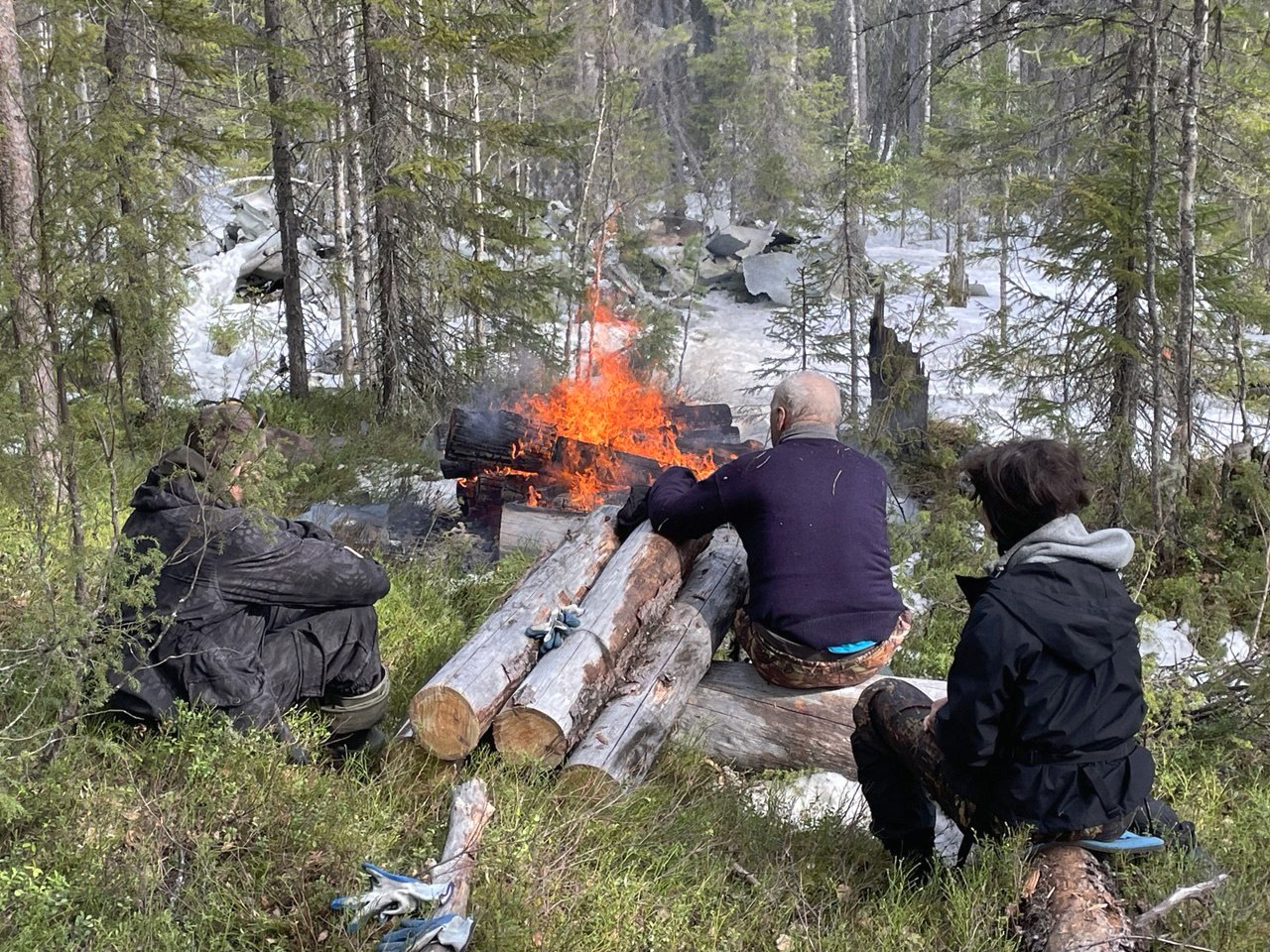
Photo from the expedition. A halt next to the remains of the Soyuz rocket upper stage. Komi Republic, 2024 © Falling Fields
“In the Woods”: Could you work like Chechen and his colleagues ?
Polina: In part, we did the same work as Chechen, only on a smaller scale. If he lived in the forests for a total of about a year, then we lived for about a month.
Makar: I actually worked with these teams. We wandered through the forests, getting rockets.
“In the Woods”: What is the most unusual and non-obvious format for using rocket metal that you have come across?
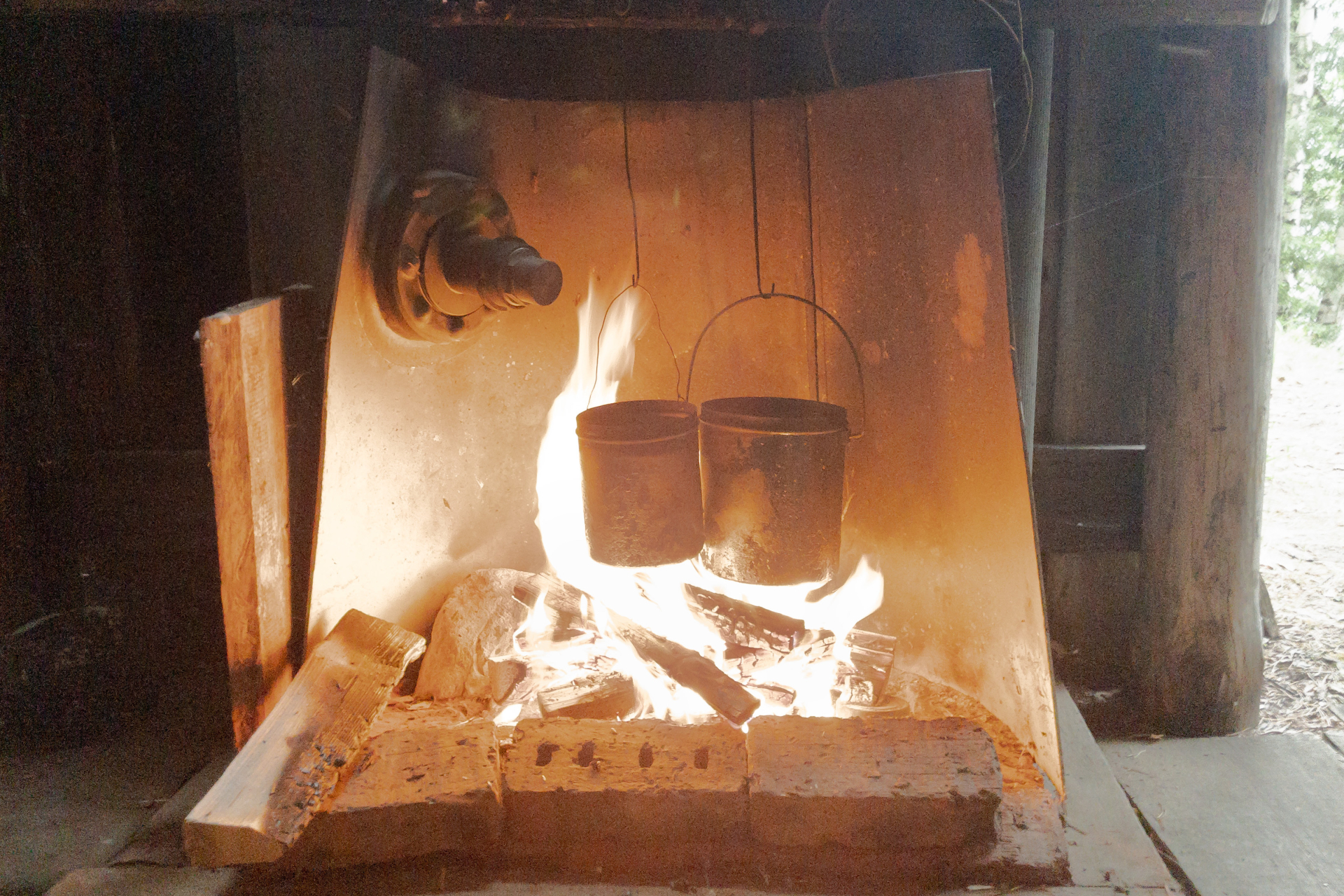
Polina: I was told that pipes are used for moonshine stills, and I was very surprised. But then I saw these tubes and thought: “It would be a sin not to do this with these tubes.” What can we say about boats? When you sail on this boat*, you think: “Well, of course, what else can they be made of?”
What kind of boats are made from rockets?
On Mezen, punt boats made of cosmic metal are common. They are called rockets. They largely inherited the design features of local wooden boats.
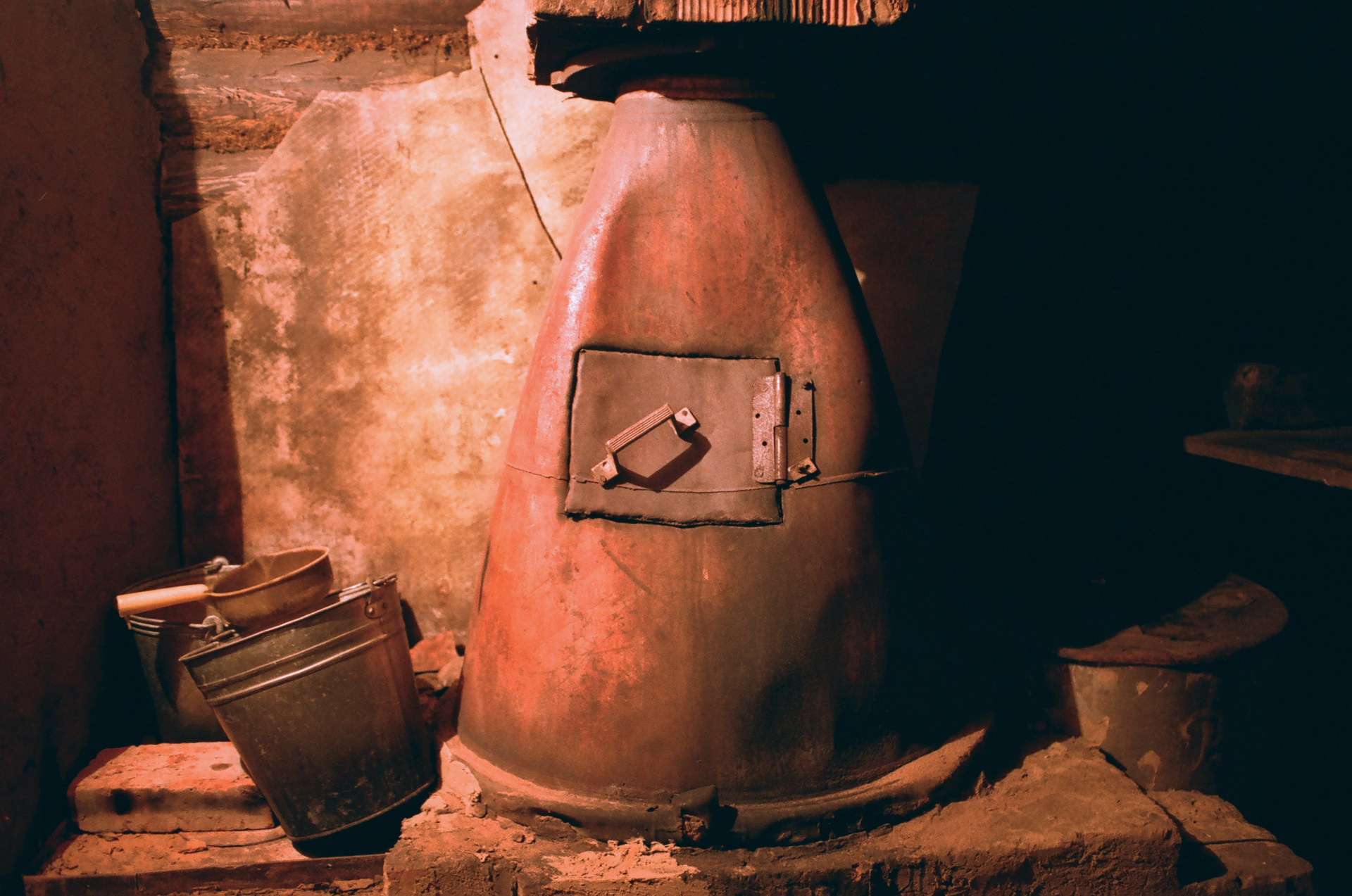
Makar: I had experience [controlling a rocket boat - Approx. ed]. They found a ride for me: a man was returning to his village up the river, and at some point I had to get behind the wheel. We have had such a shift change. And the river is quite complex, winding and shallow, especially since I’m a city boy, I won’t make it up. So I learned to control this rocket on the fly. It was a painful process. In one house where I stayed, the owners had a rocket engine installed on the stove in the bathhouse. Well, and more prosaic ones: fences for graves, pots in the restroom.
“In the Woods”: You started with the fact that there is such a stereotypical image of the “Russian North”, and you are clearly interested and working with a completely different layer. How much has the project changed you and your attitude towards the legacy of space on Earth?
Igor: There are established images of space, the Russian North, but this is not entirely relevant to our work.
Makar: Our story is very mundane. We're about as close to space as many people we work with...
Igor: Like to the moon.
Makar: Like to the moon. And further. It’s just important for us to reduce the big phenomenon of space exploration to specific stories and bring it down to earth as much as possible. This can be done by telling stories like in a movie. That is, to show how the great idea of space flight here and now boils down to the fact that men make a living in a swamp. And they have their own perspective on all these things. We create our own imagery, our own language of description. Even if they are connected with space, with the North, we are still trying to choose some kind of image that would correspond exactly to what we are working with, and not work on a big abstract idea.
“In the Woods”: Do you, for example, have a request to work with rocketry engineers? Well, in general, what are your future projects and prospects?
Polina: [We want to work] with museums.
Igor: Except with museums, yes. It would be interesting to create your own exhibition in some kind of dialogue with, for example, space museums.
Makar: Or even with the ethnographic museum.
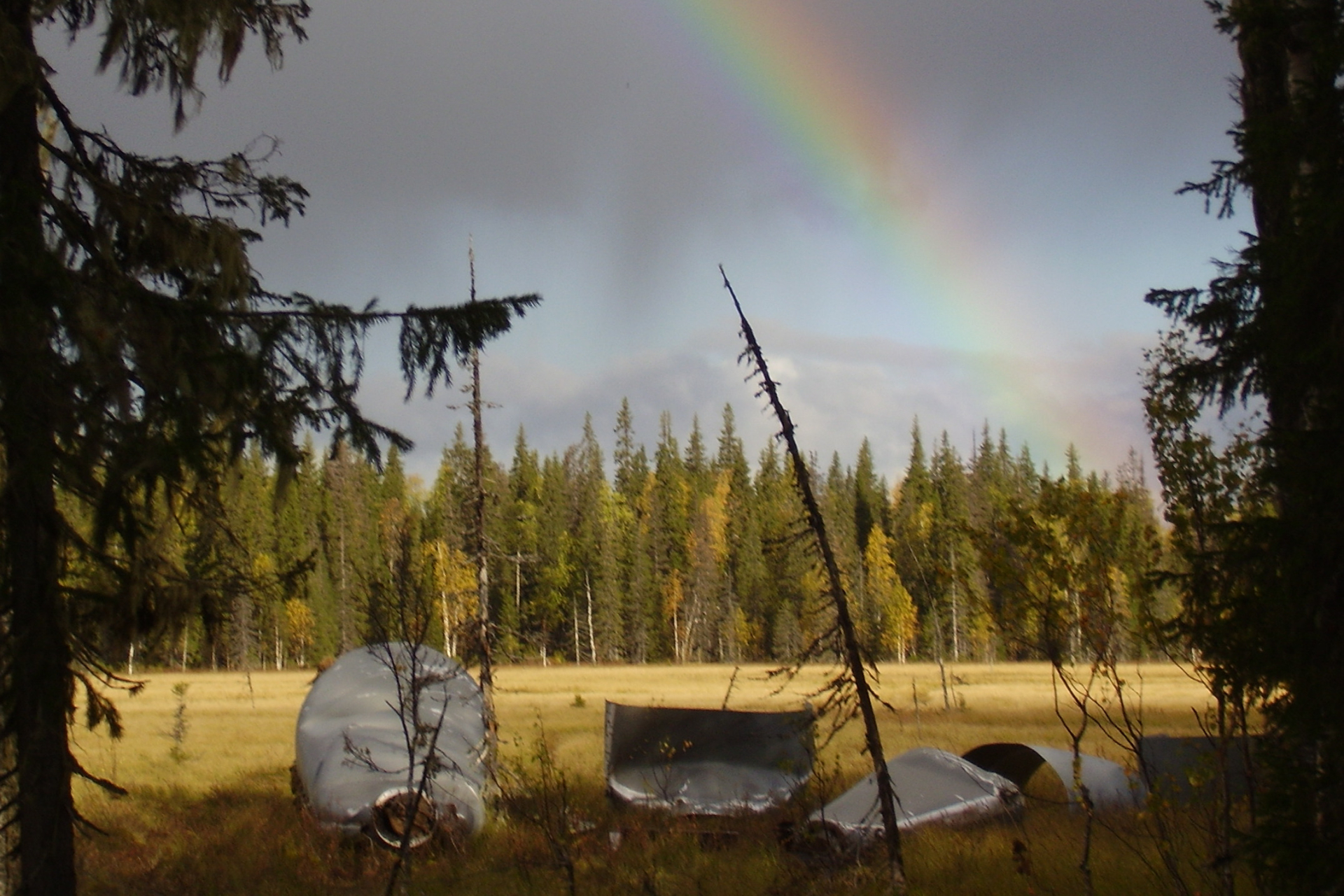
Soyuz scraps prepared for transportation. Photo by Sergei Konnikov. Arkhangelsk region, 2006 © Falling fields
Igor: But as for other people, it seems to me that there are enough of us. You know, it’s like a city: when 500-700 thousand people live in it, it’s still a city. And when there are more people, it’s something else, without borders. Like Moscow, it is spreading somewhere, this is already something incomprehensible. It's the same with our work. There are three of us for now, we hold it in our hands. If you expand this too much, the story kind of starts to slip away. And it is very important for me that I understand what is happening. And people are important for history, but for our artistic practices they are always outside the brackets. We have this division: Polina and I are less anthropocentric, and Makar is more responsible for people.
Polina: Because expeditions, relationships - all this does not directly affect the result of our work: the objects, the photographs. The person is, as it were, excluded from there.
Makar: And here, on the contrary, I jump in and say: “No, nothing would be possible...”
Polina: It’s important here, for example, if we’re doing an exhibition, that it creates its own separate image. So that a person does not have additional knowledge, so that there is room for speculation and interpretation. Artistic images live on their own. For example, the sculpture is already self-sufficient; there is no need for any additional story about what kind of metal it is and how it appeared here.
Igor: This is our task: to show from different angles, from different authors. A complete image is achieved precisely due to this. This is reminiscent of Rashomon Gate*. The same story told by different people sounds different, but only in this combination is integrity born.
"The Rashomon Gate" is a short story by Japanese writer Ryunosuke Akutagawa.
Polina: Due to this synthesis, depth occurs. Everyone has their own view, and together they complement each other.