
Translated material
The Russian Orthodox Church continues to take away icons from museums. Why does Patriarch Kirill need this? And are ancient icons really “stronger” than modern ones?
Let's look into the issue with Ksenia Luchenko, author of the channel “Orthodoxy and Zombies”
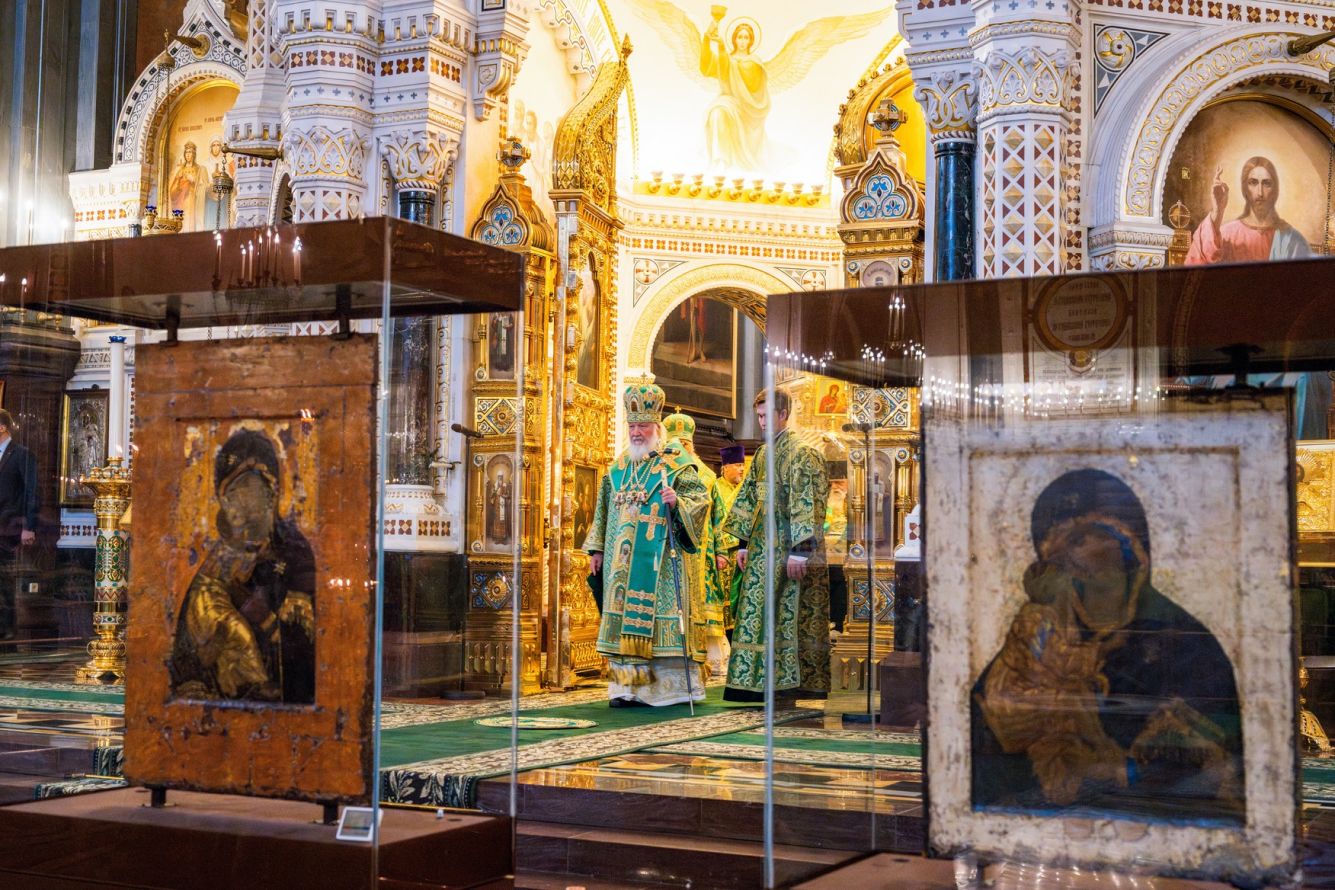
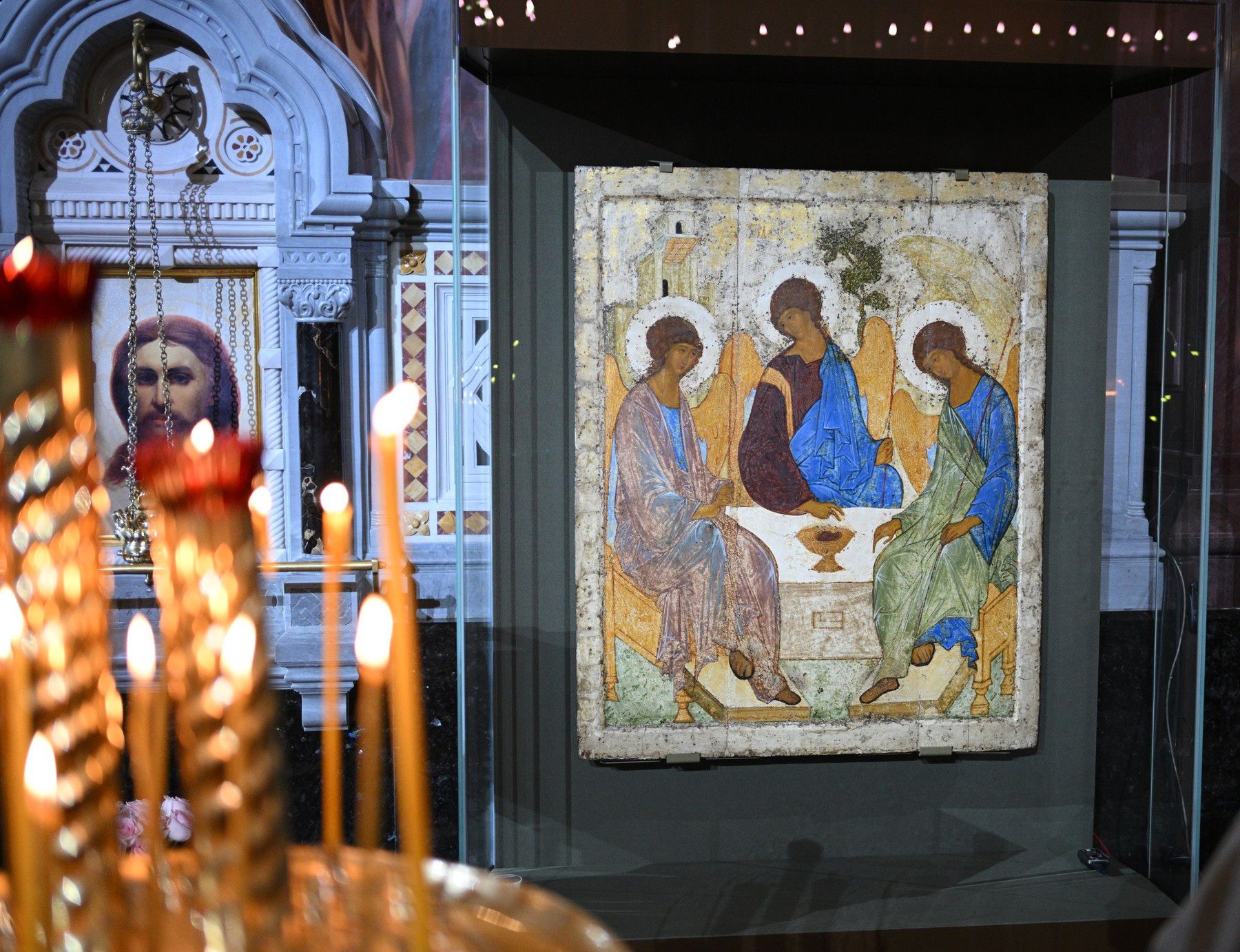
On April 3, on the eve of Orthodox Easter, the Tretyakov Gallery donated the Vladimir and Don icons of the Mother of God - masterpieces of Byzantine and Old Russian art - to the Russian Orthodox Church. Now they are exhibited in the Cathedral of Christ the Savior. Patriarch Kirill stated that the decision to transfer the icons was made by Vladimir Putin. These are not the first museum exhibits donated to the church in recent years: in 2023, the Tretyakov Gallery gave the “Trinity” by Andrei Rublev to the church, and the Hermitage gave the silver shrine of Alexander Nevsky . This practice is criticized in the museum community because the church cannot provide proper conditions for fragile ancient monuments. Journalist Ksenia Luchenko, author of the telegram channel “Orthodoxy and Zombies” and the book “With Good Intentions: The Russian Orthodox Church and Power from Gorbachev to Putin,” explains why the Russian Orthodox Church needed ancient masterpieces, why the church authorities are indifferent to the fate of the monuments - and why, from a theological point of view, ancient and revered icons are no different from new ones.
Listen to the audio version of this text on Radio Medusa
Did icons begin to be taken away from the church and transferred to museums only after the revolution?
Not really. For church objects, including valuable, revered icons, museums have long been created at churches - sacristies, ancient repositories. So the idea of museum storage of icons historically did not displease the church at all. This confrontation arose later, in the 20th century.
At the same time, no one recognized the artistic value of icons for many centuries. They were updated , recorded, and removed for salaries . This changed only in the second half of the 19th century, when the concept of cultural heritage appeared and researchers became interested in Russian icon painting. The church cooperated with them, in any case, did not interfere with the transfer of icons to restorers and even invited them: the same “Trinity” by Andrei Rublev was first revealed back in 1904 at the invitation of the governor of the Trinity-Sergius Lavra. It’s just that at that time they didn’t really understand how to restore or how to handle icons in general, so they returned it to the iconostasis, and it darkened again.
However, many icons actually ended up in museums after the revolution, during and as a result of the campaign to confiscate church values: the Bolsheviks used these values, among other things, for atheistic propaganda . Most likely, the museumification of church heritage would have continued without the revolution; it’s another matter that it would have proceeded naturally, with the consent of the church.
The Russian Orthodox Church has always wanted to return what was taken away after the revolution - or is this a trend in recent years?
There was no talk about icons - although, for example, the church always wanted to return churches and monasteries. But under Soviet rule this was practically impossible. Tensions between state and church never disappeared, although relations between them sometimes softened, and in the late USSR the status quo finally emerged as the episcopate learned to work with both the KGB and the Council for Religious Affairs .
Even in the 1980s, when the state itself initiated the celebration of the millennium of the Baptism of Rus' and began returning property to the church, there was still no talk of museum icons. There were already conversations among the church community that it would be possible to return them, but these conversations did not come from the church authorities.
Among the most valuable icons returned to the church in the post-Soviet period was the Bogolyubsk Icon of the Mother of God: in 1992, the Vladimir-Suzdal Museum-Reserve transferred it to the Princess Monastery . At that time, few people in the church understood that ancient masterpieces required special storage conditions, and the icon fell into terrible condition. In the end she was saved , but at the cost of great effort. Art historians and restorers still remember this story.
As for the Vladimir Icon of the Mother of God, in 1993, during the conflict between Boris Yeltsin and the Supreme Council, Patriarch Alexy II asked the Tretyakov Gallery to take it to the Yelokhov Cathedral . The Patriarch feared a civil war and called for prayers in front of the shrine - however, he had no intention of taking it away from the museum for good in order to strengthen his own power.
Later, the church and museum community found a compromise for the Vladimir Icon: it was moved to the restored Church of St. Nicholas in Tolmachi at the museum. This temple has a dual status - it is simultaneously considered an exhibition hall of the Tretyakov Gallery and it maintains the climate necessary for the preservation of fragile masterpieces.
Why does the church seek to return icons today?
In my opinion, this is a manifestation of power. Patriarch Kirill wants to show: the church gets everything it wants, since the state considers it as a political force. Mystical considerations do not play any role here: the patriarch still has a theological education and he understands perfectly well that one can just as well pray in front of a list of icons.
From a theological point of view, there really is no difference what to pray for - the Rublev icon or its paper reproduction? Are there no “prayed” icons?
There really is no difference. There is a dogma on the veneration of icons, adopted at the VII Ecumenical Council , even before the division of churches - that is, it is recognized by both Orthodox and Catholics. This dogma emerged as a result of many years of discussions between icon worshipers and iconoclasts.
The Church teaches that it is not the image that is venerated, but the prototype; in other words, people do not pray to the board, no matter how perfect the image on it may be, [but pray to those depicted on the icon]. The image only helps to reveal the prototype. The same “Trinity,” for example, is a complex theological statement: Andrei Rublev figuratively describes the Christian dogma of the triune God.
But there is nothing wrong with the word “prayed” in itself - it’s just more likely connected with the emotional experience of the person praying, with the value of authenticity and continuity. A temple that has not been closed for many centuries and where dozens of generations have prayed, an icon that you recognize—both of these can help you achieve the necessary prayerful concentration. Some, on the contrary, find it more comfortable to pray in a church painted by modern icon painters.
Why was iconoclasm eventually recognized as a heresy?
The Church chose a middle path, without radicalism - it allowed the veneration of icons, but condemned the magical practices associated with them. Iconoclasm arose in part from these practices that developed in Byzantium - when believers, for example, tried to heal themselves with paint scraped from icons, to the horror of the educated church elite. Iconoclasts were also influenced by other Abrahamic religions , Judaism and the recently emerged Islam, where it is forbidden to depict God.
Nevertheless, the church eventually came to the conclusion that the icons were its property and should not be abandoned. Icon painting and church music are man’s offerings to God, attempts to get closer to him. After all, Christianity is based on the idea of incarnation: God became a man precisely in order to build a bridge between himself and us.
Is belief in miraculous icons “official” Christianity or rather popular Christianity? Does the Russian Orthodox Church recognize their existence?
Admits. But even in this case, you pray not to the icon, but to the one who is depicted on it. That is, a miracle occurs through prayers addressed to the Mother of God or to a saint in front of a specific image. Pilgrims who go to the miraculous icon of the Mother of God, in reality, of course, go to the Mother of God herself.
How does the Russian Orthodox Church generally treat museums of religious art and secular researchers of icon painting? Does the Church want all collections of icon paintings to end up in churches sooner or later?
The Church is heterogeneous: the patriarch and his entourage, the highest level of church authority, fundamentalists and the Orthodox intelligentsia have different opinions on this matter. In general, there is no institutional confrontation between the church and the museum community - just as the church does not have a negative attitude towards the professions of art historian, restorer, or artist. In addition, among these specialists there are many Orthodox people: for example, among the parishioners of the Church of St. Nicholas in Tolmachi there are employees of the Tretyakov Gallery.
Another thing is how Patriarch Kirill is trying to present it today. He believes that he is restoring justice after many years of Soviet rule. The Patriarch has repeatedly emphasized: today in Russia there is an Orthodox president and, by returning property, the church thereby proves his, the president’s, greatness.
At the same time, the patriarch forgets that it was art historians and restorers who at one time saved icons, convincing the Bolsheviks that they were national property. There was a whole generation of art enthusiasts who in the 1950s and 1960s traveled around Russia in search of icons, taking them out of crumbling churches in trucks and carts. In the Andrei Rublev Museum, these finds have become an important part of the collection.
Are there any other specific icons, objects or buildings that the Russian Orthodox Church especially wants to return, but cannot yet?
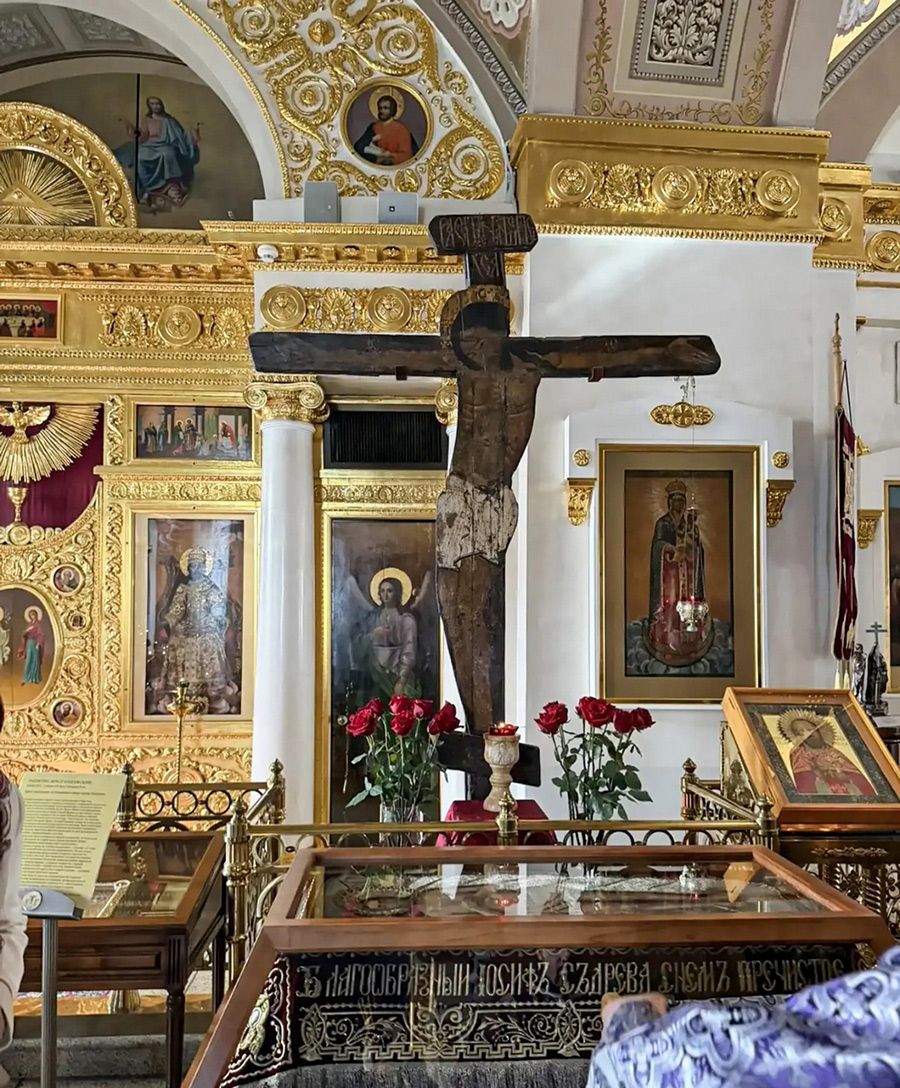
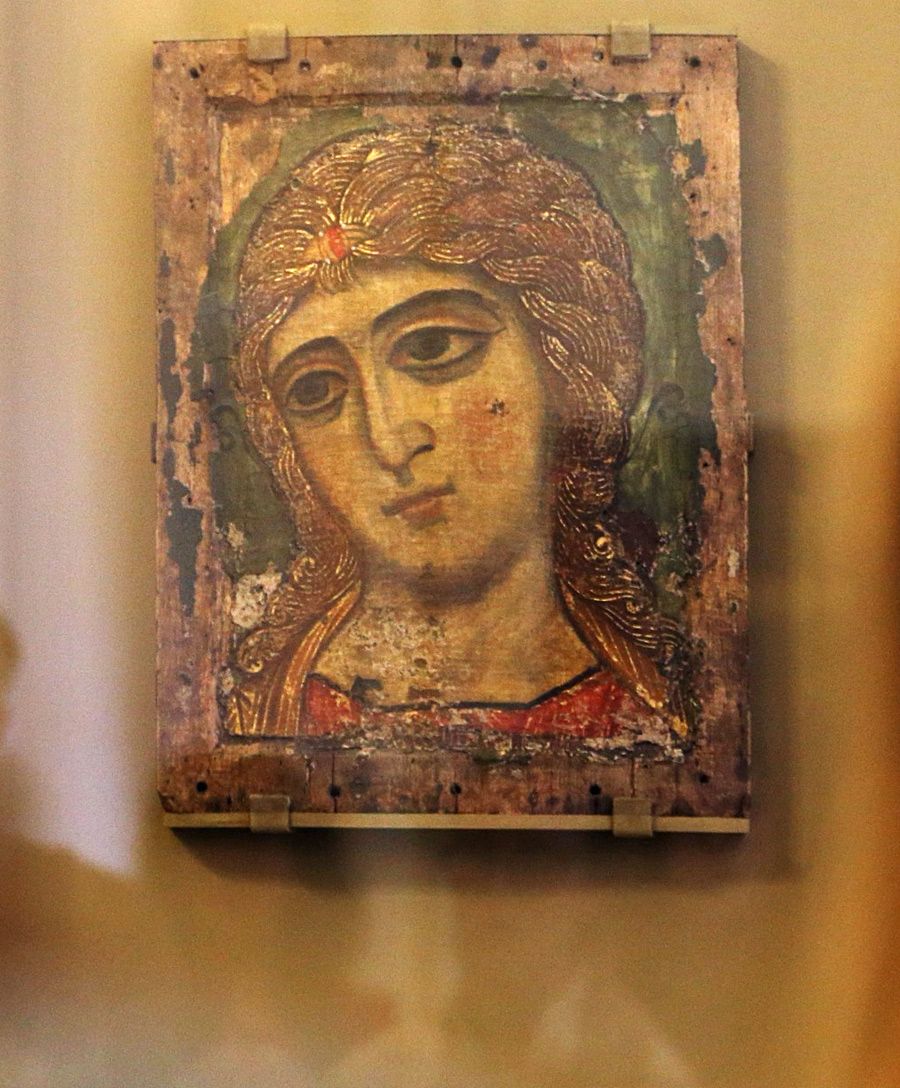
Many say that “at risk” is the Dmitrov cross , which is kept in the same Church of St. Nicholas in Tolmachi. According to my information, after the Tretyakov Gallery it will be the turn of the Russian Museum, where there is, in particular, the “Angel of Golden Hair,” a Novgorod icon of the 12th century, significant primarily as a monument of art. Sooner or later the church may demand it too.
The Vladimir Icon of the Mother of God was already in the church, even if it was part of a museum , why did it need to be “returned”? Is this really a matter of legal ownership?
In fact, legal ownership has not changed. The icon cannot be removed from the state collection; there is no legislative loophole for this: the “Trinity”, Vladimir and Don icons remain in the Tretyakov collection, the museum leases them to the church.
In the case of the Vladimir Icon, this really makes no sense - it was already in the church, and today access to it has even decreased, because before all visitors to the museum saw it, but now you need to make a special trip to the Cathedral of Christ the Savior. That is, the missionary meaning has been somewhat lost. Generations of people have thought about Christianity after seeing icons in the museum - after all, the atmosphere there is more ascetic and more conducive to concentration than in the ornate Cathedral of Christ the Savior.
Does the Russian Orthodox Church really not understand that medieval icons are very fragile and can perish without the necessary care? Or do they not care?
It's hard to say. Maybe they really don't care. Or they expect that the museum staff will serve them, [that is, they will continue to monitor the condition of the icon after it has been moved]. After all, museums continue to be responsible for these icons, even if employees do not have access to them and the church does not comply with their recommendations. If the icon dies, most likely, the church authorities will not blame themselves - they will either explain it as an oversight by museum specialists, or consider that it was the Lord who ordered it this way.
More texts about the fate of monuments and more can be found in the “Raft” telegram channel. Every day, Meduza editors Sofya Vorobyova and Anton Khitrov talk about the most interesting cultural events. For example, last week “Raft” wrote about the restoration of the Shukhov Tower in Moscow, Anna Wintour’s meeting with Meryl Streep on the cover of Vogue and Oksimiron’s dubious new video . Subscribe - together we will escape the storm.
Author: Ksenia Luchenko. Recorded by Anton Khitrov