
Translated material
Iranian knot. What's next?
Assessments of the prospects for the US-Israeli military campaign by political experts from Israel

Photo: Zuma/TASS
Roman Yanushevsky
editor-in-chief of the Channel 9 website (Israel)
Is everything gone? Or is everything ahead?
The overnight truce with Iran - rather than a major escalation - caught many by surprise. I started writing this text several times, but the situation is so dynamic that I can’t keep up with all the turns. Then I will try to outline the most important things.
Throughout April 9, the United States and Israel launched powerful strikes throughout Iran, attacking strategic infrastructure and transport arteries. In anticipation of the expiration of the ultimatum, the regime rounded up state employees, and they created a human chain around Iranian power plants to prevent American strikes.
The situation turned out differently. After midnight, reports of negotiations began to arrive. Then, at about half past one in the morning, Israeli time, Trump's post blew everything up. He announced a bilateral ceasefire, subject to the immediate Iranian unblocking of the Strait of Hormuz and the cessation of all attacks in the region.
And then “bipolar” began, capable of confusing anyone. Iran first declared victory, saying Trump had begged them to agree to a ceasefire and agreed to all their terms. Then the American president, the minister of defense and the chief of general staff ( as per the author. - Ed. ) announced the victory of the United States and said that it was the Iranians who begged them to cease fire.
Iranian missilemen intermittently fired at Israel and the Gulf countries until almost four o'clock in the morning. Thus immediately violating the agreement. In the morning, Iranian attacks on the UAE, Bahrain and Kuwait continued. So, the ceasefire looks strange.
At the same time, the parties began to argue through the media: does the ceasefire apply to Lebanon - no, it does not, and if it does not apply, then we will leave the negotiations.
Hezbollah issued an ultimatum to Israel - to cease fire and leave Lebanese territory by 14.00. Half an hour after it expired, the Israeli Air Force gave a harsh response, carrying out the largest attack on the group’s headquarters since the beginning of the war, making it clear to the group that it was too early for it to bury itself.
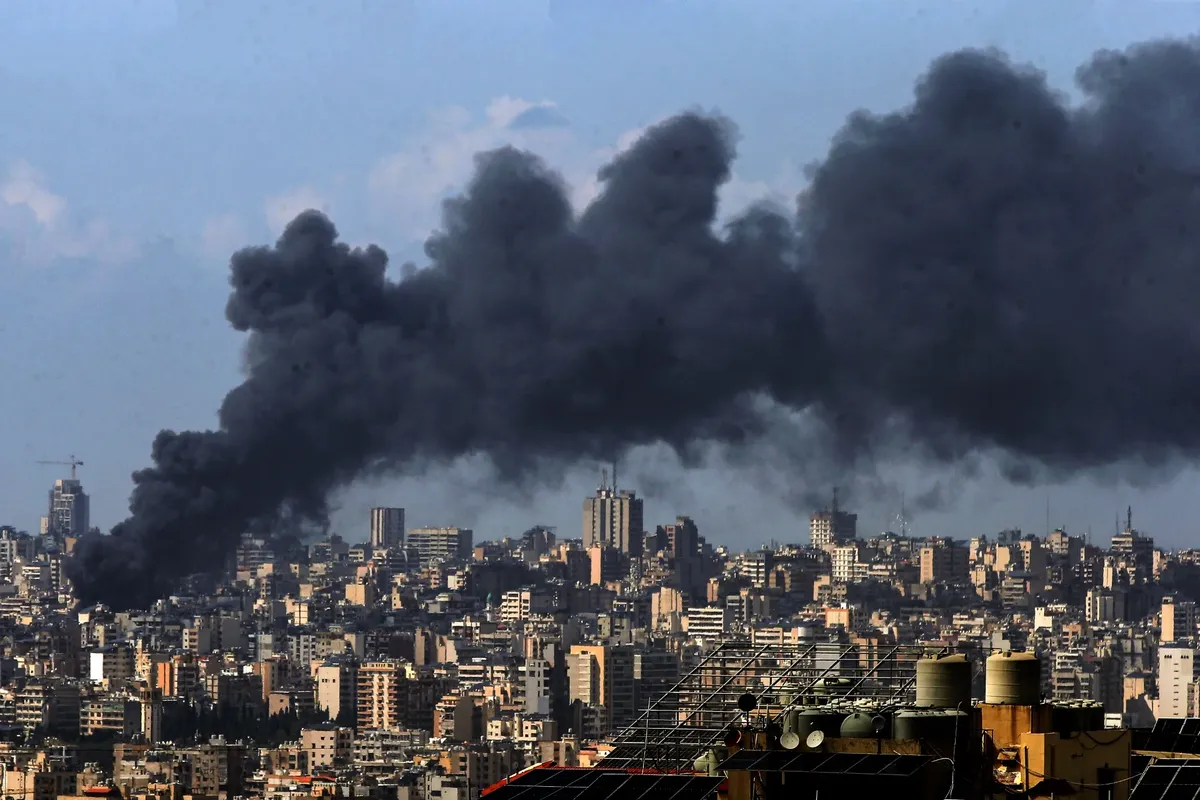
As of press time, the Strait of Hormuz had not been unblocked. But it may be unblocked on the eve of negotiations in Islamabad, if they begin. This is the key condition that interests Trump. Without it, the agreement is meaningless.
The fuss that is happening suggests that everything is too raw and far-fetched. The negotiating positions of the parties are so far from each other that combining them is an unrealistic task. And neither side is ready to give in.
Iran is trying to renegotiate the war by acting as if it had won, despite suffering heavy military damage. The lifting of sanctions, reparations from the United States for damage suffered, a monopoly on the Strait of Hormuz, uranium enrichment on its territory - none of these points are acceptable to the United States and its allies. Therefore, the current agreement in its crooked and lopsided form is doomed from the very beginning.
I don't see the White House accepting such terms. This is erasing all the military successes of the US Army and encouraging the Islamic Republic. Against this background, the inspired IRGC begins to grapple and further tighten its already unacceptable demands.
There is also an internal American legal issue. The President of the United States cannot fight for more than two months without Congressional approval. Two-thirds of the deadline has been used, but the need to significantly expand the conflict looms ahead. The remaining three weeks cannot be completed. But if these are, as it were, different conflicts separated in time, then it’s a different matter - everything is reset.
What's next?
Let me remind you that everything that is happening is not because of the end of the war, but because of just two weeks of ceasefire. This is the time to bring up the third aircraft carrier group, replenish supplies of missiles and ammunition, and clarify intelligence data.
Lower oil prices to ease criticism of the White House. And all this against the backdrop of a relaxed and self-satisfied opponent. Negotiations - if they begin - will quickly show that there is nothing to talk about. But time will be gained. If in doubt, monitor the movements of the US Army in the region, if any.
Pessimistic sentiments are spreading in Israel - they say that Trump has “dumped” us. Let's take our time. The story is not over yet.
Ksenia Svetlova
orientalist, ex-Knesset member
The military operation against Iran was not really thought through
The key question was not whether it was worth going to war against the Islamic Republic of Iran. Was it worth starting hostilities when the war was planned by the United States and Israel in this way? The criticism cannot be directed only at Israel or only at the United States, because this was joint planning. Therefore, we are, of course, talking about two players.
When starting a war, you should know with what result, plus or minus, you will end it. If in the end we are not talking about achieving the main goals of the war, but about the Strait of Hormuz, which, as we know, was open before the outbreak of hostilities, then it turns out that the outcome of the war is very far from what was planned.
Initially there were several points that caused concern. For example, the absence of an international or at least regional coalition.
Trump did not bother to inform NATO allies of his plans.
The US is still a member of NATO, and even if the alliance is not directly involved, it should have at least been consulted. If he expected them to act with him on Hormuz, then it was necessary to enlist their support and create a coalition.
Ideally, as broad as Operation Desert Storm in 1991, or at least as wide as in 2003, when George W. Bush decided to invade Iraq and overthrow the regime of Saddam Hussein.
Now there was no coalition. Two countries that decided everything among themselves and then simply invited everyone else to participate in it, when it was already too late to adjust anything.
The Iranians' closure of the Strait of Hormuz in the event of an attack on them was obvious. This came up in every scenario of war games, war games that are being developed in military structures and research institutes. This is the most powerful weapon Iran has.
Iran had practically no air force, so every time Trump talks about the destruction of Iran's air force, it makes experts grin. Iran also understood perfectly well that it did not have a navy.
But there is this lever - the Strait of Hormuz. It is very difficult to protect shipping there, and everyone knows it. Therefore, it seems to me that for many years not a single American president agreed to this scenario. Serious complications due to the closure of the Strait of Hormuz were obvious. As a result, the United States ceased fire, and the strait was effectively closed.
This has a very negative impact on the international economy, and no matter what Trump says about not caring, oil prices around the world are high. Fuel prices have also increased in the United States.
As for slogans about regime change. A regime like Iran's, which has been preparing for this battle for 47 years, is not being changed by air strikes, and no ground operation was planned.
Even before the war, I provided data on how they used to prepare for ground operations in the Persian Gulf. 1.2 million soldiers took part in the liberation of little Kuwait. The coalition, which emerged in 2003, numbered 850 thousand soldiers. Iraq is four times smaller than Iran and was much weaker then.
This important point was not thought through. Hence the American confusion about what to do next when the regime is not overthrown and Hormuz is closed.
Overthrowing a regime is a difficult task, even if carried out on the ground. Nothing is guaranteed, you don’t know who will come to power and what will happen in the country, since there is no alternative. I don’t consider the son of the deposed Shah an alternative. The fact that his name was repeated regularly in Iran is because there was simply no one else. But that doesn't mean he's an option.
It was expected that demonstrators were about to take to the streets, but such things cannot be predicted. You can't know in advance whether they will come out or not. And if they come out, they will not be immediately defeated, as before. This is how all Iranian uprisings ended.
The regime may have been weakened, but it is not in a state of collapse or destroyed. As a result, we received an even more extremist government.
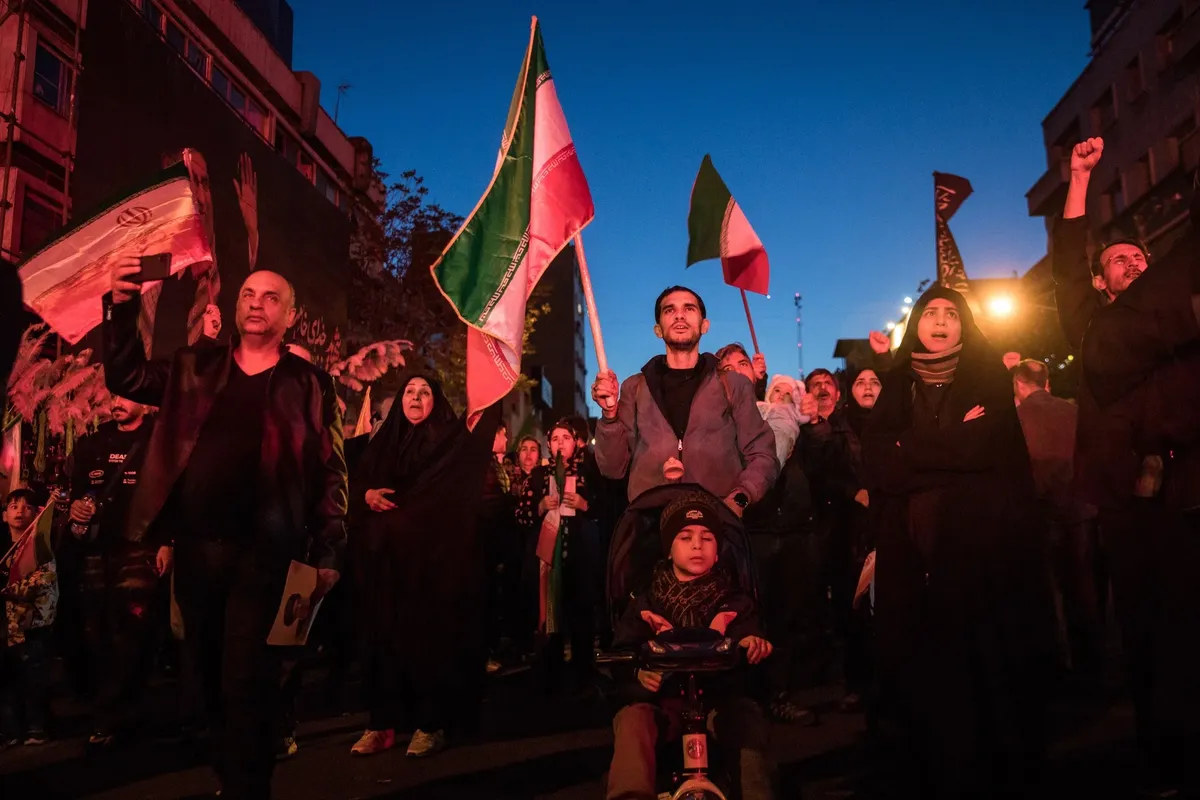
In general, Iran is a terrorist state. It uses terrorist methods and wages an asymmetrical war, which is why it is so difficult to defeat it. Just like the United States was unable to defeat the Taliban in Afghanistan. Just as Israel has not yet been able to completely defeat Hamas, which is clinging to its weapons in Gaza. Just like the story with Hezbollah in Lebanon. This does not mean that military options should not be considered. But they shouldn't be the only ones.
And another key issue is the nuclear dossier. Yes, Israel is very concerned about the Iranian ballistic program and the support of proxies in the region, but the existence of a nuclear program in Iran is an existential issue for Israel. If the Iranians still have uranium reserves, they will still have the ability to enrich it. Even if it is illegal and the entire international community opposes it. They have a certain number of centrifuges.
There are other ways to get your hands on a nuclear bomb. For example, buy it from someone - from the same North Korea. Thus, the threat remains, and the Iranian regime will continue to threaten not only Israel, but also neighboring Arab countries even more than before.
There is a widespread belief in the Israeli establishment that any strike against Iran is better than none. I believe this is a fundamental mistake.
Because if it suffers a painful but not fatal blow, it means that the situation is likely to get worse and Iran will become even more dangerous. Especially if after some time it crosses the red line and becomes a nuclear state.