
Translated material
The "dark horse" defeated Orban. The opposition won the elections in Hungary
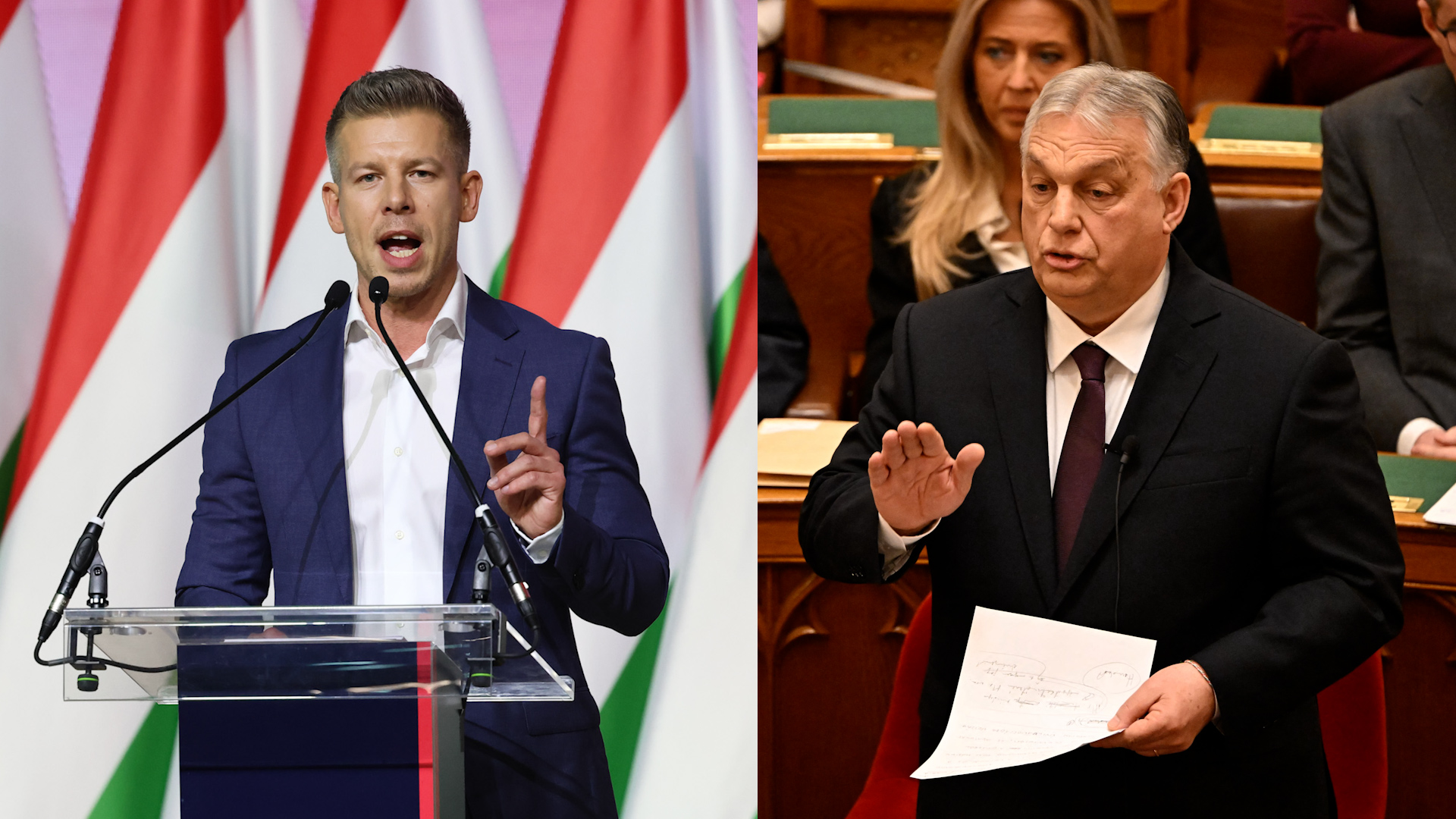
On April 12, the opposition party Tisza, led by Peter Magyar, confidently won the parliamentary elections in Hungary, who, apparently, will form the next government of the country. Viktor Orban, the current Prime Minister and leader of the Fidesz party that has ruled for 16 years, will resign, reports the Russian Service of Radio Liberty .
Based on the results of counting most of the ballots, according to party lists, the opposition received 53 percent of the votes, the ruling party - 37 percent. In single-member constituencies, Tisza's advantage looks overwhelming. The party will probably be able to win more than 133 parliamentary seats, which would mean a constitutional majority.
Viktor Orban congratulated Peter Magyar on his victory over the phone. The defeated prime minister then gave a very short (about 4 minutes) speech to his supporters, thanking them for their support.
On the eve of the vote, we have compiled a small “guide” to the Hungarian elections - in the form of the most important questions related to this topic and the answers to them.
Why are these elections important not only for Hungary?
Although Hungary is relatively small (9.5 million inhabitants) and not the most economically powerful country in the European Union (GDP per capita there was 76% of the EU average in 2025, this is 23rd place out of 27 countries), its political role is noticeably higher than its real “weight”. The reason is the specific role played on the European and world political stage by 62-year-old Prime Minister Viktor Orban.
He is considered one of the most Eurosceptic and pro-Kremlin leaders of the EU countries. Budapest, whose relations with Kiev are extremely tense (see below for more details), has repeatedly blocked EU aid decisions for Ukraine - including the recent large package of 90 billion euros. Hungary, unlike most European countries, did not provide military assistance to Ukraine after the start of the full-scale Russian invasion, although it provided humanitarian support and accepted tens of thousands of Ukrainian refugees.
The long-term conflict with Brussels and at the same time close contacts with the Donald Trump administration have made Orban an important figure against the backdrop of noticeably deteriorating relations between the United States and European allies. On the eve of the elections, US Vice President JD Vance came to Hungary to support Orban.
The Hungarian Prime Minister is considered one of the leaders of European national populists. His Fidesz party co-founded the group in 2024 "Patriots for Europe" in the European Parliament , uniting representatives of several nationalist and right-wing parties.
What is Orbán's policy?
The European Union has repeatedly sharply criticized the government of Viktor Orban for violating democratic norms. The former head of the European Commission , Jean-Claude Juncker, even coined the nickname “Victator” for Orban. Brussels' reproaches concerned, for example, judicial reform, the persecution of opposition media and a number of repressive laws reminiscent of Russian ones - in particular, on “foreign agents” and the ban on “LGBT propaganda”. The Hungarian Prime Minister himself considers himself an ideologist of “illiberal democracy” and a supporter of “traditional Christian values.” His critics claim that behind these beautiful words lies the “mafia state” built by Orbán.
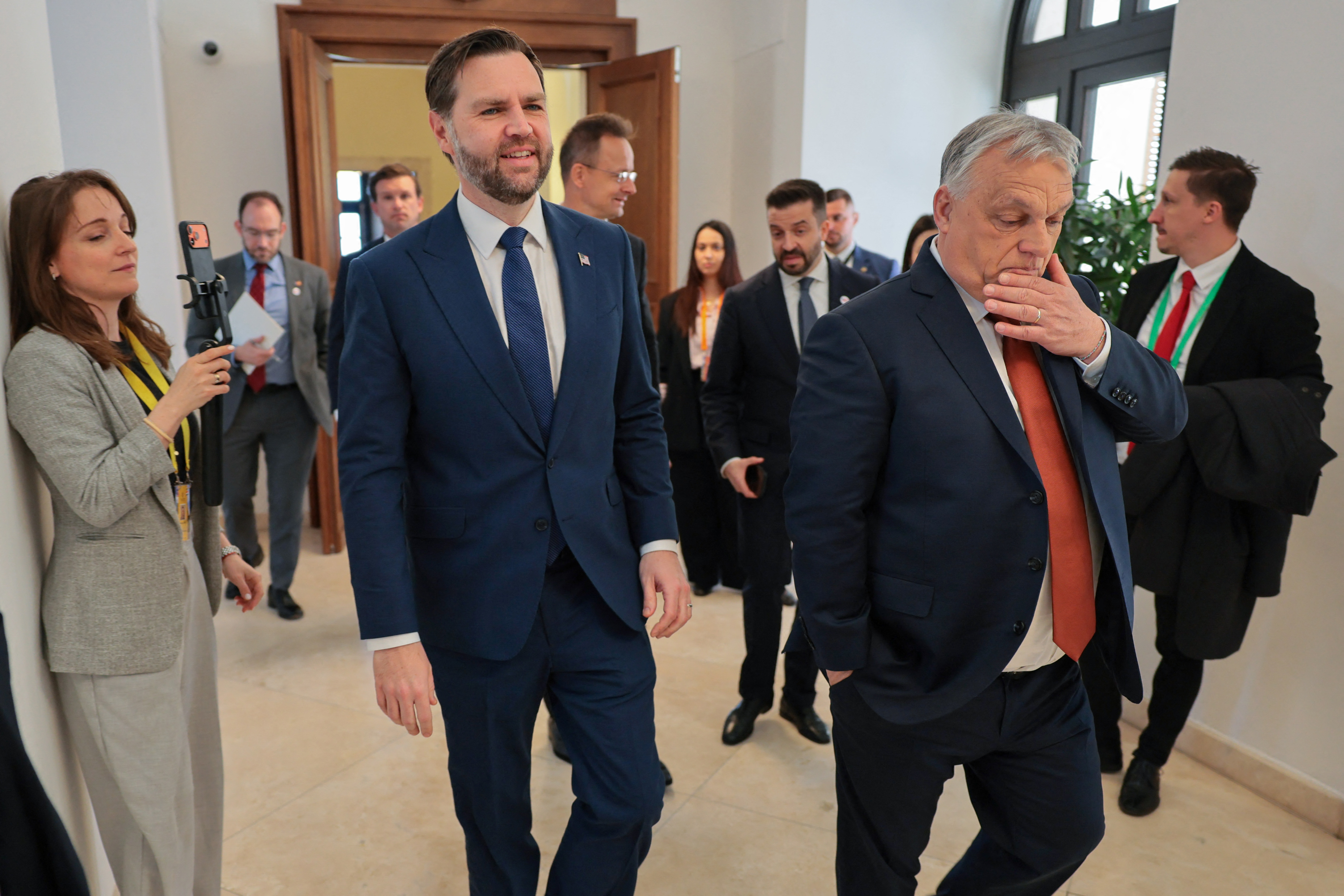
“The political corporation has captured the state apparatus, the economy and even the oligarchs themselves,” explains Hungarian political scientist Balint Magyar in an interview with Radio Liberty. – The political elite, through state institutions, subjugates business. Decision-making is transferred from the ministries to the informal court of the main patron. There are ministers and people without any positions, but with enormous influence... The fortune of the Orban clan is estimated at about 2% of the GDP of all of Hungary. And going lower, to the mayors of the villages, we see the same corruption, just on a smaller scale.”
The fortune of the Orbán clan is estimated at about 2% of the GDP of all of Hungary
Nevertheless, Orban has his own “nuclear” electorate, which has saved him many times already. It is dominated by older people, residents of small towns and villages, and less educated and prosperous social groups. Fidesz gained their trust thanks to its conservatism, strict migration policies, especially during the 2015 European crisis , and a number of social support measures that the Orbán cabinet implemented in the 2010s.
Recently, however, the standard of living of most Hungarians has been falling, thousands of young and educated people are leaving the country in search of work, and the situation in the education and health care systems is deteriorating. All this led to a decline in the popularity of the ruling party unprecedented in 16 years.
Who is Peter Magyar?
The main rival of the Fidesz party in these elections was the opposition party Tisza (full name - Party of Respect and Freedom) led by 45-year-old Peter Magyar. In the past, Magyar was a member of the ruling party, worked as a lawyer, and served for some time in the Hungarian mission to the EU. Coming from a family no stranger to politics (his grandmother's brother Ferenc Mádl was president of Hungary from 2000–2005), Magyar married Judit Varga , who became justice minister under Orbán.
At the beginning of 2024, when they were already divorced, a political scandal broke out in Hungary (you can read about its details here ), as a result of which Varga, along with the country's president Katalin Nowak, was forced to resign. For Peter Magyar, this became the reason for a sharp speech against the system. He said that "those who are really responsible are hiding behind women's skirts" and made a series of revelations and criticism of people in Orbán's inner circle. This is how his rapid political career began: already in June 2024, in the elections to the European Parliament, about 30% of Hungarian voters voted for the Tisza party, of which Magyar became the leader (44% for Fidesz).
Magyar remains a “dark horse” in many ways. We don't know much about him
The new politician sensed and successfully used the discontent accumulated in society. In addition, the diligence and energy noted even by his opponents benefited Magyar: during the pre-election period, he often speaks at 3-5 rallies a day. The emphasis is on the province, a significant part of whose inhabitants, according to polls, the Tisza party managed to win over to its side.
Magyar, like Orban, is a talented populist and a good tactician. Knowing that liberal and leftist ideas are not very popular among many Hungarians, he speaks in the spirit of "enlightened patriotism", criticizing the corruption of the Fidesz party, emphasizing social problems, promising reconciliation with Brussels, but on terms acceptable to Budapest. At the same time, Magyar avoids topics that could potentially split his electorate, such as the issue of the rights of the LGBT community.
How notes Hungarian political scientist Gabor Györi , Magyar “in many ways remains a dark horse. We don’t know that much about him.” Paradoxically, this brings popularity to the party leader Tisa, explains sociologist Veronika Kövesdi , author of the book “The Peter Magyar Phenomenon”. "Everyone can see in him what they want. A hero who stood up against the system, or, on the contrary, a sinner seeking to atone for his sins; an ordinary guy like you, or a dynamic and still young professional; a caring father of two sons - or a handsome guy with young girlfriends... All this can be seen in Magyar, and it all looks believable."
Orban – for Russia, Magyar – for Ukraine?
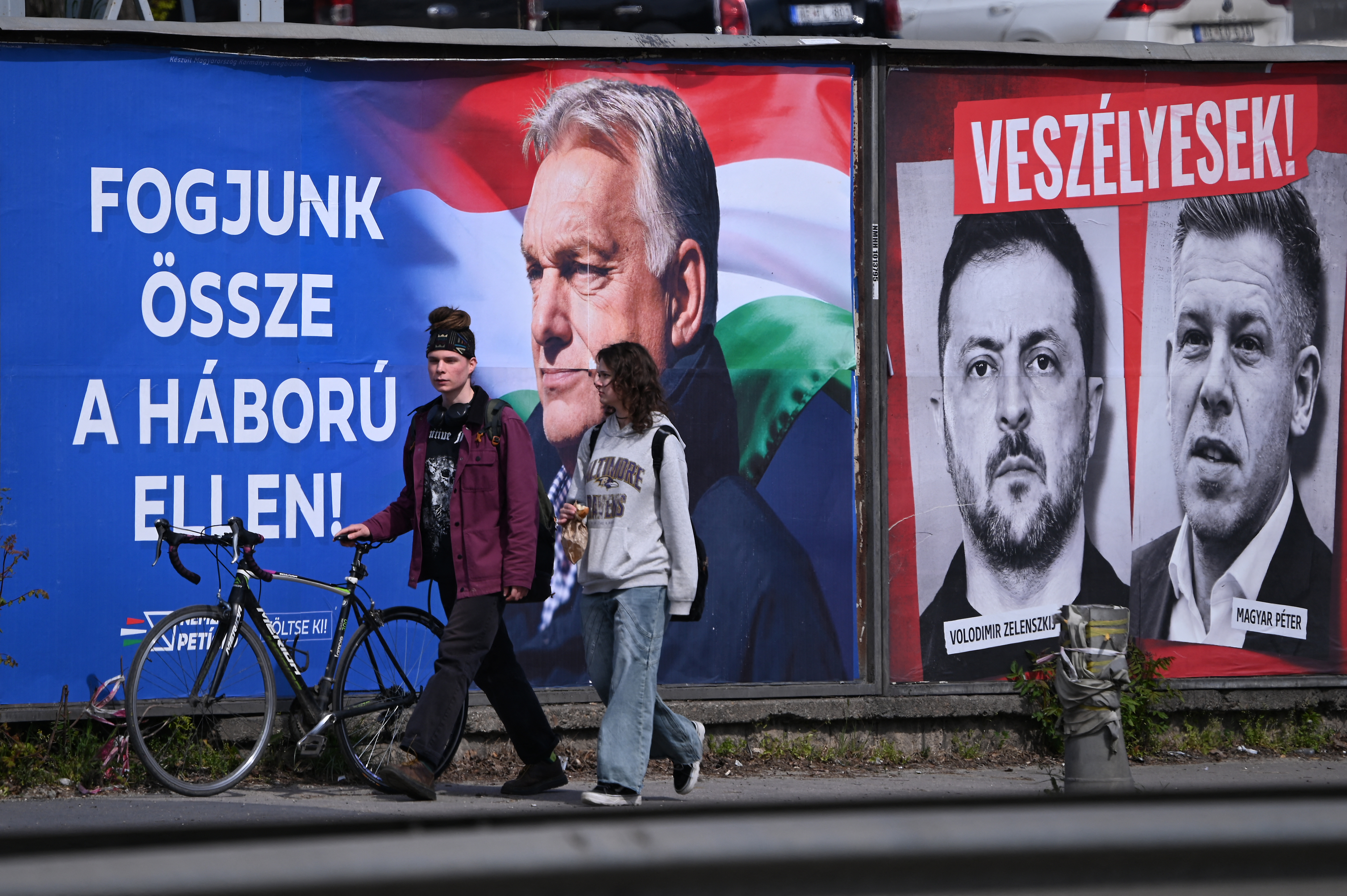
Both politicians would probably answer that they are for Hungary and, perhaps, would not be lying - it’s just that Orban and Magyar understand the interests of their country differently. But Russia's war against Ukraine was indeed an important theme of the election campaign.
The pro-Russian sympathies of the Hungarian prime minister are widely known. During the four years of the full-scale invasion, Orbán has repeatedly stated that Ukraine is unable to win the war , that its fate is to “remain a buffer state between Russia and NATO” and that this war is “alien” for Hungary. All these theses were repeated many times in the election campaign of the Fidesz party.
A “gift” for the opposition, however, was the scandal surrounding Hungarian Foreign Minister Peter Szijjártó . He, as journalists found out, conveyed to his Russian colleague Sergei Lavrov the contents of confidential negotiations between European politicians.
The Orban government, in turn, detained two cars from the Ukrainian Oschadbank in Budapest , in which more than 40 million dollars and 35 million euros in cash and 9 kilograms of gold bars were found. The passengers were seven Ukrainian citizens who were traveling from Austria to their country. Ukraine explained the presence of valuables by their transportation from an Austrian bank to a Ukrainian bank. The detainees were soon released, but the confiscated valuables remained in Hungary. Ukrainian Foreign Minister Andriy Sibiga called it “state racketeering.”
Anti-Ukrainian sentiments, which Fidesz actively promotes, are largely explained by the long-standing business ties of the Hungarian government with Moscow. Their symbol was the multibillion-dollar (and opaque) contract signed by Hungary with Rosatom for the construction of new reactors at the Paks nuclear power plant. Viktor Orban secured an exception for his country from the EU embargo on Russian oil supplies. After these supplies through the Druzhba oil pipeline running through Ukraine were interrupted , the Hungarian prime minister further increased the degree of criticism towards Kiev. More than 90% of the oil and gas consumed by the Hungarian economy is still imported from Russia.
At rallies of the Tisza party, the slogan “Russians - go home!” is often heard.
Peter Magyar once traveled to Kyiv, where he laid flowers at the memorial to those killed in the war with Russia. He considers Ukraine’s struggle against Russian aggression to be fair, but does not declare that if his party wins, Budapest will immediately begin military supplies to Kyiv. As on many other issues, Magyar is quite cautious here, but compared to Orban, his position looks pro-Ukrainian. At rallies of the Tisza party, the slogan “Russians - go home!” was often heard, reminiscent of both the Hungarian uprising of 1956 and the time of the fall of the pro-Soviet regime in the late 1980s.
This happened after Magyar “greeted” a correspondent from one of the Russian pro-Kremlin publications who came to his rally:
How did the voting go?
According to pre-election polls, Fidesz was noticeably behind Tisza. However, much depended on the activity of Tisza voters: the lower the turnout, the higher would be the chances of Fidesz, whose electorate goes to the ballot box in a disciplined manner. As a result, long lines formed at polling stations on Sunday. Turnout, according to official figures, approached an unprecedented 80%.
🇭🇺 | Average of independent and opposition aligned pollsters:🔵TISZA 50.7%🟠Fidesz 38.2%🟢MH 5.3%⚪️MKKP 2.7%🔷DK 2.7%Margin: 🔵TISZA+12.5 pic.twitter.com/UpkD2q7Rcx
— 231elections (@231elections) April 5, 2026
In Hungary, 93 members of parliament are elected according to national party lists, another 106 are elected in single-member constituencies in one round (the candidate who receives a simple majority of votes wins). At the same time, the electoral districts are cut in such a way that a disproportionate number of deputies are elected in the provinces where Fidesz clearly dominated until recently. (The capital, Budapest, and the city of Szeged in southern Hungary are traditionally considered bastions of the opposition). However, as we see, this did not prevent Tisza from reversing the trend that had developed over the past decade and a half, when the opposition was “Budapest-centric,” while Orban’s supporters collected an overwhelming majority of votes in medium-sized and small towns and in rural areas.
Over the years of his rule, Viktor Orban has granted citizenship to hundreds of thousands of ethnic Hungarians living in countries neighboring Hungary - in territories separated more than a hundred years ago from the then Kingdom of Hungary under the terms of the Peace of Trianon . These people overwhelmingly became loyal voters of the Fidesz party. There are also several seats in parliament reserved for national minorities (for example, German and Roma/Gypsies) - these are usually also occupied by people associated with the ruling party.
Political scientists Peter Techet and Sebastian Schaeffer from the think tank IDM write in an article on the Hungarian elections that in order to break the semi-authoritarian system created by Orban, if the Tisza party wins, a number of changes to the constitution will be required. To do this, you need to have two-thirds of the seats in parliament (Orban’s supporters previously had such a majority, based on the results of the 2022 elections).
The far-right Our Motherland party also entered the Hungarian parliament – it has, according to preliminary data, about 6 percent of the votes.
What was happening in Hungary was closely followed in Washington, Moscow, Brussels and Kyiv. Here is how the head of the European Commission , Ursula von der Leyen, reacted to the news of the opposition’s victory:
Hungary has chosen Europe.Europe has always chosen Hungary.A country reclaims its European path.The Union grows stronger.Magyarország Európát választotta. Europa mindig Magyarországot választotta. Egy ország visszatér az európai útjára. Az Unió erősebbé válik.
— Ursula von der Leyen (@vonderleyen) April 12, 2026
Hungary chose Europe.
Europe has always chosen Hungary.
The country is returning to its European path.
The union is becoming stronger .
 Caucasus.Realities application for your smartphone Install
  Caucasus.Realities on Telegram Read