
Translated material
Severodonetsk: what is happening there and how they live today
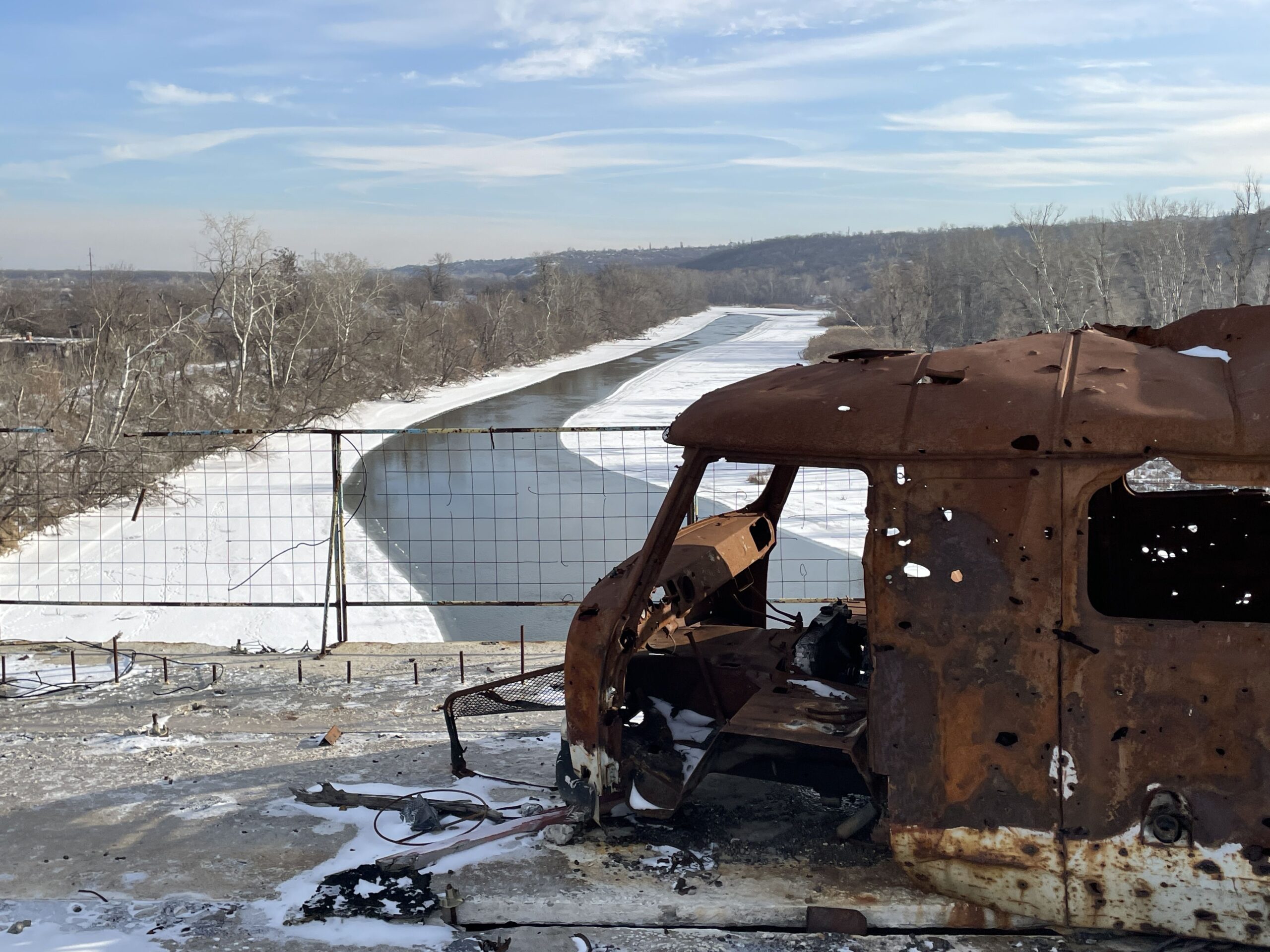
Travel halfway across Europe to end up in your hometown without communication or help
Severodonetsk is the former capital of the Lugansk region of Ukraine. Now it is a dilapidated city, which the Russian Armed Forces took by storm in June 2022. There is no communication in the city, it is cut off from the outside world, but those who evacuated during active fighting still return to it. The Cherta correspondent went to Severodonetsk to find out why they are returning there and why those who had the opportunity to move to Europe or at least safer regions remain to live there. How the city lives and what kind of stop there is, why some Severodonetsk residents who supported the invasion want to return to Ukraine and how those who have long wanted to die survive - read in our report.Roundabouts from Europe
“I really wanted the Russians to come on May 9,” says one-legged Lidiya Arkhipovna on crutches, accepting humanitarian aid.
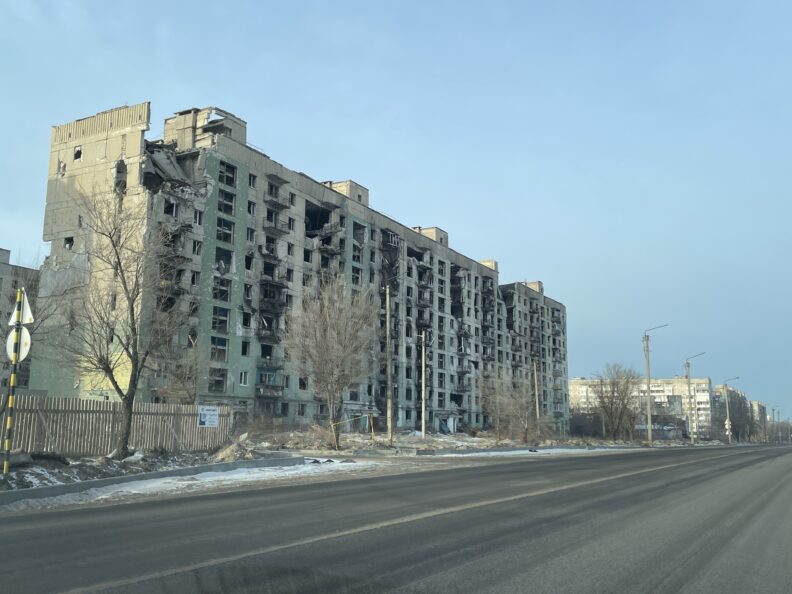
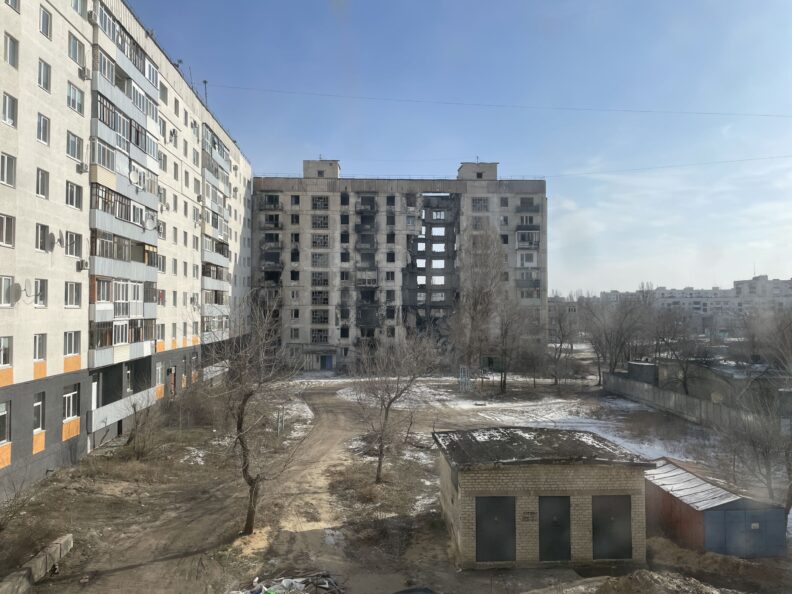
When she walks around the apartment, the wooden floor creaks loudly. There is always gas burning in her kitchen - there is no heating, and the window, although new, is not properly secured and there is a strong draft from it. Outside the window is a non-residential nine-story building with an entrance that collapsed during shelling.
The Russian army began the assault on Severodonetsk on March 5, 2022, and captured the city on June 25. Lidia Arkhipovna, then still 70 years old and on two legs, went several times to meet the Russians, hearing the roar of tank engines. Despite the fact that the tanks turned out to be Ukrainian, she shouted to her neighbors “the Russians are coming.” They ran away, and she laughed.
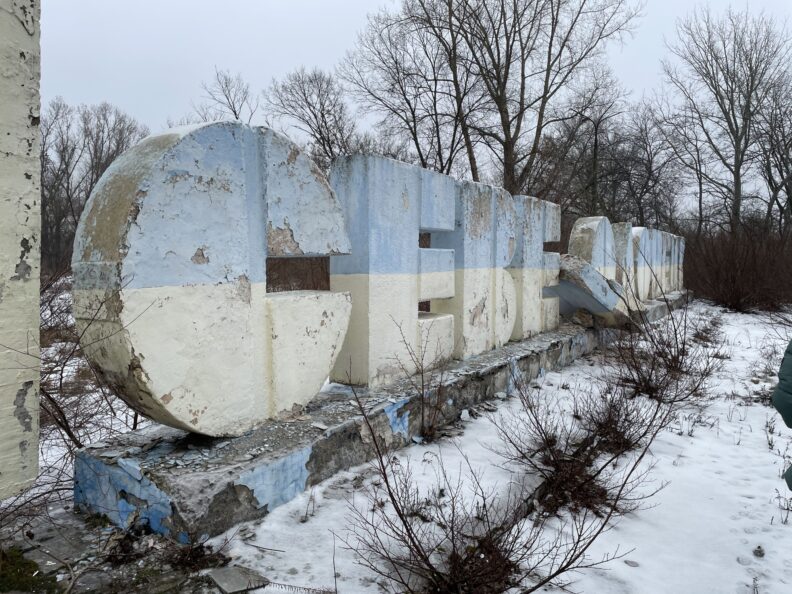
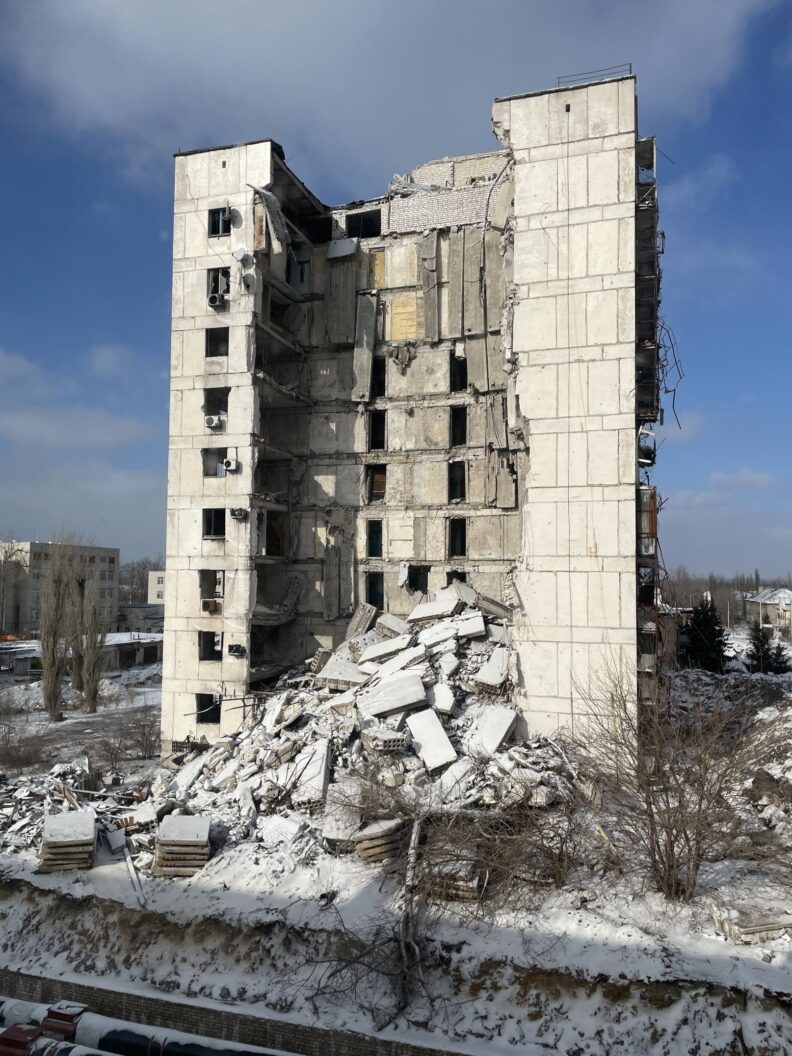
During the siege of the city, several acquaintances of Lydia Arkhipovna died, and she herself was wounded in the leg. Due to heavy shelling, she could not be evacuated for a long time; her leg had to be amputated.
After several weeks in Ukrainian hospitals, the woman left for Poland, and from there “through the outskirts and with the help of volunteers” to Russia - and again to her native Severodonetsk, where the Russian government she was waiting for had already been established.
Around Lydia Arkhipovna’s house there is dug up earth, fenced with an orange mesh metal fence. There are even new pipes there, although they have already rusted. A pensioner has to stay in a small room all the time - it’s easier to heat it with a heater. There is also a non-stop TV.
“When they built this house, they specially made a bomb shelter. It had uniforms: protective raincoats, gas masks,” she says about her five-story building.
Gas masks and chemical protection were provided because the largest chemical enterprise in Ukraine, Azot, was located in Severodonetsk. It produced ammonia, methanol, acetic acid and more.
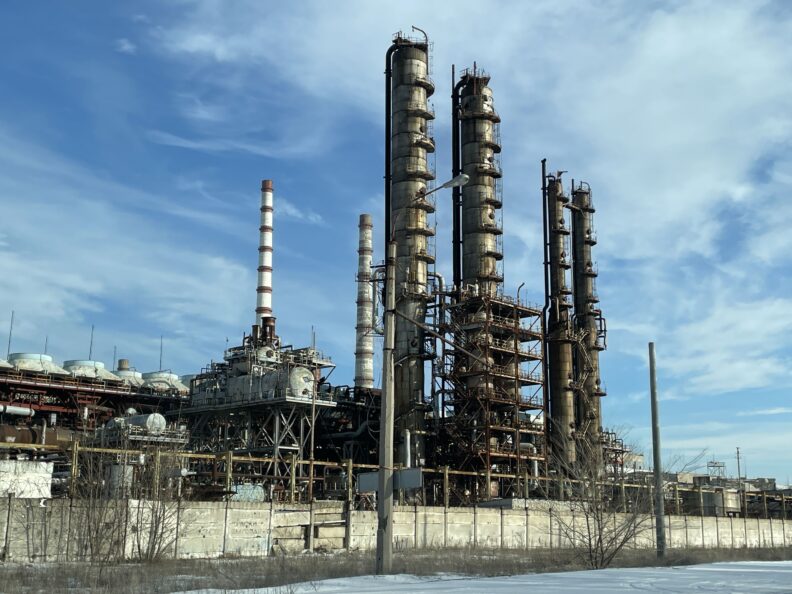
For some time, Severodonetsk was one of the fastest-growing cities of the Ukrainian SSR and subsequently Ukraine: several scientific enterprises, fiberglass and polymer factories, hospitals expanded, especially maternity wards, and the population grew. After 2014 and the surrender of Lugansk to the separatists, Severodonetsk became the capital of the Ukrainian Lugansk region.
Now there are not even social services in the city, and the state helps pensioners and the poor with minimal pensions and benefits. The average income of an unemployed elderly person with a disability is 12-18 thousand rubles per month. The bulk of the funds are spent on medicine (about eight thousand); many are forced to take food from volunteers.
“What is this war for? Everyone's refrigerators are the size of a man, did they live in a shitty state? There was enough money. I still have enough, only four years ago I bought more clothes,” says Alena Petrovna, a native of the Moscow region, sitting near the shell-pierced wall of her apartment on the ninth floor.
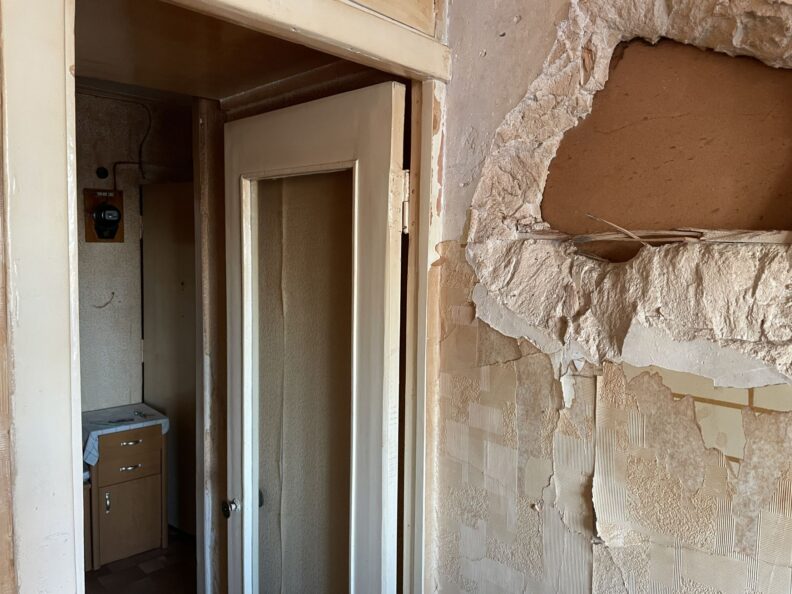
She moved to Severodonetsk during the USSR. After demobilization from the army, my father was entitled to an apartment in any corner of the Union, except for the capitals of the republics. Alena Petrovna's parents died long ago. The brother and sister left, but she remained in this apartment.
She could not leave the city on her own during the war, and no one was waiting for her to go anywhere.
“I’m holding on to the handle to get up to the second step, but I don’t have the strength. But I was always mobile, my work was non-sedentary. I loved to travel: resorts, went on the Golden Ring, excursions. And what didn’t Vladimir Vladimirovich like about us?” - Alena Petrovna laments.
In her house on Vilesova Street there is no elevator, because of this she cannot leave the apartment - she will not go back up. He asks her to go buy some cigarettes and gives her money for two blocks.
The city is like a mockery
The necessary cigarettes are sold only in two places in the city: the Matryoshka supermarkets on the main avenues, Gvardeysky and Khimikov. In the residential part of the city there is still some life, movement and sounds, although the general landscape of the city is devastation. In many houses, windows are broken, there are no doors in the entrances, sometimes even steps, everything around has been excavated. But there was still no repair.
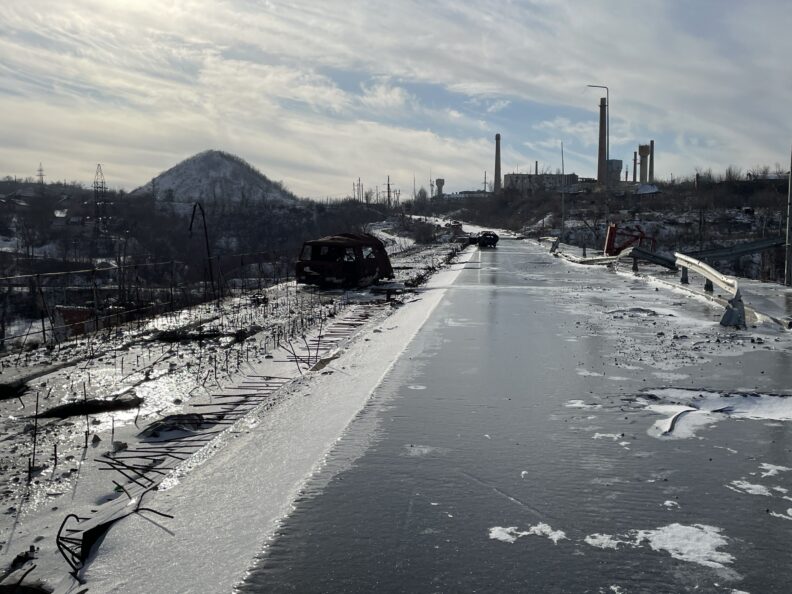
Contractors change one after another, but no one completely restores the houses, and often they only make things worse: they cut off radiators and windows for replacement, but do not install new ones. Some people don’t have water in their apartment, others don’t have floors. However, on the way out of the city towards Lugansk you can even find completely restored houses. But the closer you get to the Azot plant, the sadder the picture: the roofs are nothing but skeletons, the windows are black from burning, there are broken gray bricks around the houses and no sounds. The entrance to the plant is blocked with barbed wire. Nothing says anything about the fact that the plant will ever start operating again, except Russian propaganda .
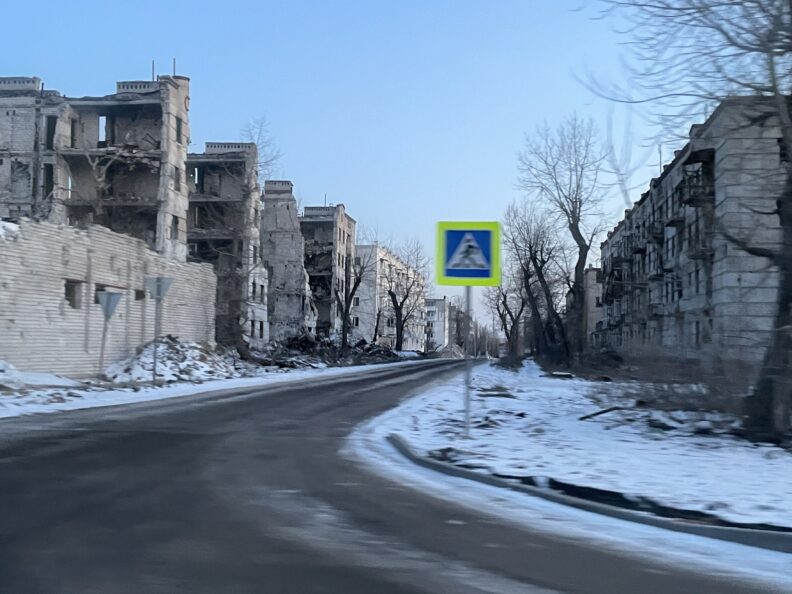
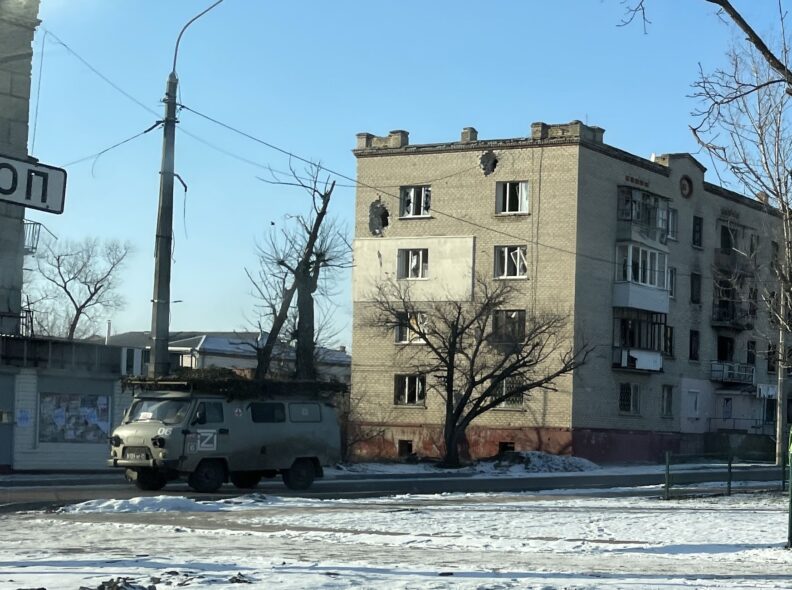
What is happening in Severodonetsk was an unpleasant surprise for those who believed the statements of Russian officials and the media. Several local residents, in a conversation with Chertaya, suggested that someone in the leadership of the “LPR” specifically wants to maintain such living conditions in the city, due to the fact that it remained Ukrainian until the year 22.
“They told me that someone there [in Lugansk] is offended by the people of Severodonetsk. Well, after 2014. The city was dragged back and forth because of this “Nitrogen”. Some will come, then others, they say, we did not support the “LPR”. But it’s not the power that changes, but one bandits to another,” says a man with gray stubble named Alexander.
He and his friend Ivan are representatives of working Severodonetsk, they have at least some work. They are well over 40; you can hardly find young people aged 25-35 in the city. Everyone here is either pensioners or very young people who, at the beginning of hostilities, were dependent on their parents and could not go anywhere. Despite the shortage of working-age population and personnel in government bodies, local residents are reluctant to be hired.
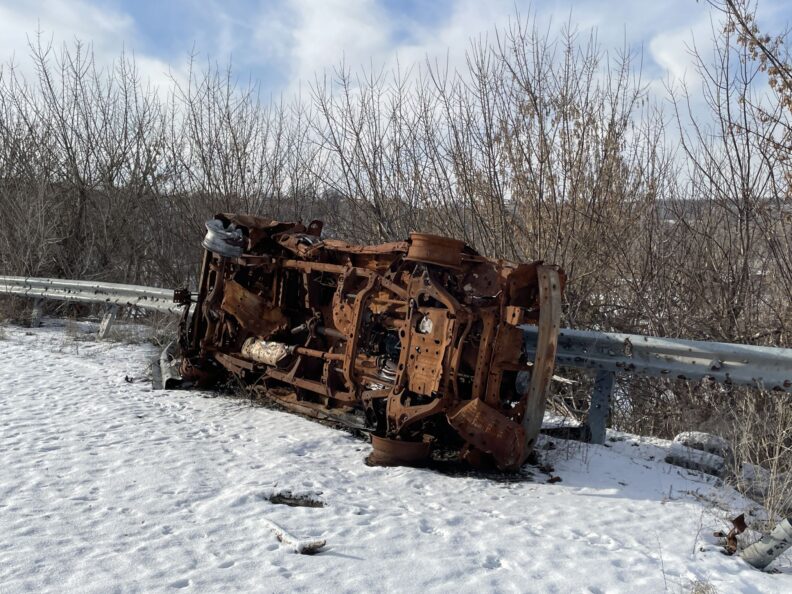
“There are three people in the criminal investigation department,” says Ivan, who was left with almost no hair at the age of fifty. — My colleague, he’s about 40 years old, was probably trying to get a job in the police here, at least just on duty. He is a pensioner of the Ukrainian police - they didn’t take him. They said it’s not good for health reasons, although he’s quite normal.”
Ivan himself is engaged in the transportation of goods, helping people send and receive large parcels from neighboring regions: Rostov region, Krasnodar region, “DPR”.
His friend Alexander notes that the situation in the city is like a mockery: there is no communication, almost no police and doctors. The lack of communication cannot be explained even by concerns about security, as in Russia: “I climb out onto the roof of my nine-story building, and there I have a network, and Kyivstar.” Any drone can easily use it.”
Giving up life
In addition to his main job, Ivan takes care of his elderly neighbors; their rickety house is located on Lesnaya Street. There is a large and loud dog in the yard, which he locks up when social workers or volunteers arrive. There are flies, bedbugs and cockroaches in the house.
Just outside the door to a stuffy room where gas is burning all the time, an indifferent woman sits with an unlit cigarette. There are glasses on her eyes, a lilac cape on her shoulders over a white nightie. This is Natalya Polozova, the mistress of the house, the wife of her immobilized husband and the mother of two dead children. She doesn't say hello and hardly answers questions. Ivan talks about what she needs. He buys groceries, does a little cleaning, feeds the dog and cat, and takes out the night buckets.
To the right of the table and Natalia is a small room with a TV. Above him on the shelf is a large portrait of a girl with white bows and in a school uniform - 2003, first grade. Next to it is a full-length photo of the same girl with a shorter boy, her brother.
In the opposite corner from this composition, a man on the sofa coughs weakly and wheezing. He looks in such a way that a rarely appropriate, but still visually accurate comparison with prisoners of Nazi concentration camps suggests itself. His name is Gennady, he refuses to eat and wants to die.
According to Ivan, the couple gave up and did not want to live since they learned about the death of their children from bombing at the very beginning of the big war. There were even suicide attempts. Today they don't care what happens around them. Natalya still eats at least a little, but feeding Gennady at least half of the yogurt is a big problem. Not only does he not want to, but he also has difficulty swallowing - the fluid accumulated in his lungs causes a constant cough, but does not cough up. Today I manage to give him some fermented baked milk.
"War reveals people"
For those who have hope that life will get better, it is dashed by bureaucracy. And not about her integrity, but about her negligence.
Almost blind former welder Alexey only relies on friends, since recently instead of 14 thousand he received a pension of 4. “I used to live beautifully, I had everything. I worked at a hydroelectric power station, worked all over Ukraine. And now, when the war began, I gave all my savings to my wife, even if it was his ex, yes, but she took the children away from here. Now they live in Europe and I am calm for them,” says Alexey.
Meanwhile, in Severodonetsk prices are at the level of the capital of a large region, although the choice is not nearly as rich. Demand is provided by the military with high salaries, and local residents have to adapt.
There is no heating in Alexey’s house; the gas was cut off by the Ministry of Emergency Situations. Now he and his comrades gather in an apartment where it is warmer and drink, despite the prohibition law in the city. They stick to each other, figure out who they can trust, and fight with the authorities together: for some reason, many are not paid their salaries and pensions.
As they say in Severodonetsk, reacting to each other’s stories, “war reveals people.” This applies to actions. Friends of the same welder Alexei or Ivan, who takes care of the Polozov family, “revealed” themselves as caring and kind. In other situations, pettiness and greed are revealed.
Svetlana lives in an unfinished apartment building on Kurchatova Street. She returned to it when she heard that the building had begun to be restored. But the next contractor abandoned the renovation, and she literally lives in a concrete box. The woman asks volunteers to collect technical water and gives out a dozen five-liter cans. This amount is enough for her for a week: to wash her hands, dishes, floors, and also to wash herself. At the same time, the neighbors have running water, but they refuse to share the meters with the pensioner. Svetlana uses 200 liters of water per month, which at local rates is about 8 rubles.
It could have been worse. They could fight for water.
“Here in the area they were ready to kill for water. I almost got beaten up in line. A local pensioner swung at me like that when I was approaching a barrel of water... I told him: “dial, I’ll wait.” Ten minutes pass and we arrive. One’s head was blown off, another’s arm was torn off…” recalls the period of acute water shortage during shelling, welder Alexey.
His wife’s apartment was robbed when she and her children left for Europe. This is not an isolated case. Not knowing how long the war would last, looting flourished in the city: they grabbed from each other everything that could be useful in everyday life and for exchange. The same furniture could be stolen simply to make fires.
The one-legged Lydia Arkhipovna, who was waiting for the Russians to arrive, lost almost all of her things in her apartment, even the pillows. Now her home looks only half lived-in. Before the war, she started renovations: she wanted to change the floors, renew and insulate the walls. All her building materials were stolen while she was in Ukraine and Europe; only one chipboard remained. She asks the volunteers for at least one more pillow.
In the yard of Alena Petrovna from Vilesova Street there were conflicts when someone irrationally used scarce products, such as sausage. On May 9, 2022, he and his neighbors were just sharing one stick among everyone: they were roasting it over a fire, and everyone got two pieces. The pensioner recalls how one of the guests at this feast fed one piece to the dog.
“Not me, but another neighbor tells her, Tanya, how can this be? And she told her: “I dispose of my share as I want. At this point I already said: “We’ll fucking shoot and catch more pigeons, we don’t know what awaits us ahead.” Thank God, then some humanitarian aid came, we could cook stew with buckwheat over a fire.”
The period of acute deficit ended when the new government became generous with a “one-time payment” of 10 thousand rubles. As Alena Petrovna jokes, this is enough for 20 kilograms of sausages.
Food in the city is still difficult - with low pensions, a significant part of which is spent on medicines, canned food and cereals become unavailable. Therefore, humanitarian food kits and field kitchens are relevant. One of these is on the corner of the Cathedral of the Nativity of Christ, perhaps the most majestic and at the same time entire building in Severodonetsk. Food is being cooked in cauldrons, some kind of vegetable soup. There are clothes and various household items on the ground and in bags in the tent.
“Not everyone has gas, not everyone has water. Then, there are a lot of elderly people. Cooking is creativity, it’s not like pouring boiling water over noodles. Here you need to do everything right, so that it’s rich in fat and full of vegetables. They won’t do this to themselves at home,” explains the chef.
Not far from this kitchen, in a house on Gagarin Street, lives blind 70-year-old Uncle Vasya. In his apartment, he continually gathers both categories of those “who were exposed by the war.” Some come, borrow money from him and do not return the money, others broke the windows, but he lets everyone in because he is lonely, and at least there is some company. But, of course, there are also caring people - one neighbor helps him prepare food, because Uncle Vasya can’t even get to the field kitchen, another friend runs to the store for all sorts of little things like smoking and kvass.
On his window there is a small hissing radio, there is some kind of Radio Russia program on it. Uncle Vasya prefers it because it is the only radio that, in addition to the time, tells him what day it is.
“I drove home like contraband”
Valentina Semyonovna lives in a high-rise building on Gvardeysky Prospekt, where renovation of the facade was recently completed. Under the walls of the house you can still see beige paint on the asphalt, dripping from the installers' cradles.
“I understand everything perfectly, but when I start speaking, half of the words are lost somewhere,” she explains her leisurely manner of speech after the shell shock.
Her apartment looks very decent, even modern: a floor-length sliding mirror wardrobe, not new, but clean closets, however, all the doors hang crookedly - they were loosened after flying into the neighboring entrances. From shelling in the spring of 2022, Valentina Semyonovna first hid in a nearby school building, but then returned to the apartment and lived in it for another ten days.
“I had nothing, just a flashlight. I prayed that it wouldn't go out. Now I remember and think, what did I eat then? It seems like I still had boiled potatoes,” she recalls.
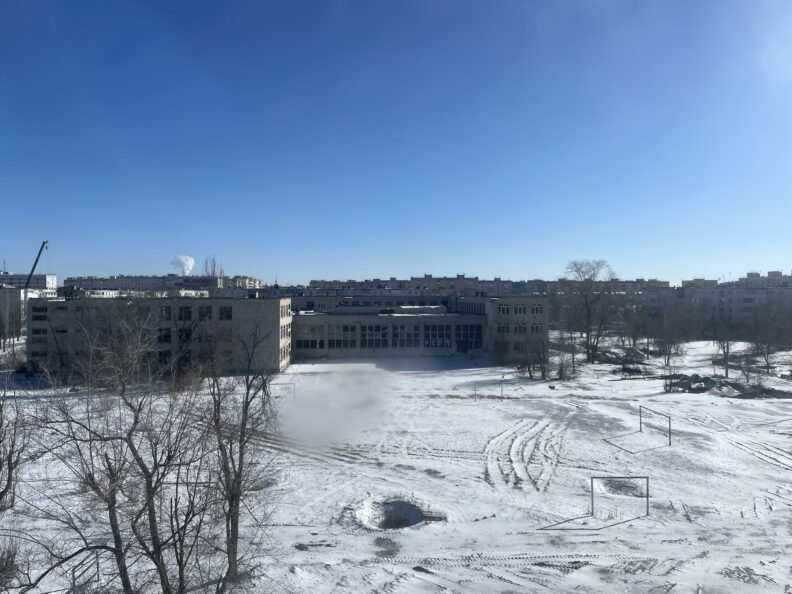
While the pensioner was sitting in the apartment, shots were fired at the windows several times, and fragments of shells that exploded nearby flew in. After the collapse of the neighboring entrances and the fire that started, Valentina Ivanovna could have died in the apartment. The neighbors who ran in did not dare to drag her down several floors of stairs, and even in the smoke. But in the end, rescuers got to her.
She was first evacuated to the Dnieper, then the pensioner left for Europe. According to her, she traveled around Europe “like contraband” - hiding in the trunk. I decided to return because I could not get the Ukrainian authorities to pay my pension. The woman worked at the Azot chemical plant for 38 years.
“An American woman helped me out,” recalls Valentina Ivanovna and moves on to the topic of friendship between peoples. “Everyone will make peace: the Americans, us, and, God willing, the Ukrainians. I want everyone to make peace after this scare.”
Suddenly she begins to cry: “Laura from the Times newspaper (which Times, of which there are many, she cannot remember) came up to me and started asking questions. I told her that I wouldn’t say anything for myself, but tell me, why my homeland, at that time Ukraine, has not been paying me a pension for six months?”
Laura helped with money, connected her with another refugee from Mariupol, introduced and negotiated with people who eventually arranged a “transfer” to Severodonetsk.
While Valentina Ivanovna was away, her apartment was robbed, all her warm clothes were taken, including blankets, rugs and bed linen, dishes and a kettle were also taken out, in general, “everything that was used.”
“I don’t know what’s inside him”
Considering the age profile of the residents of Severodonetsk, children are what keeps many afloat and sane. Even the nurse Marina, who helps in the house of the Polozovs who do not want to live further, remains cheerful, receiving news from her sons.
“I have one son in Ukraine, hiding from mobilization. The second one is in Moscow,” she says. In Severodonetsk she has a vegetable garden and works part-time as a nurse in several houses.
While she is taking out the dirty diapers, Gennady becomes very ill, he stops coughing and only wheezes. Marina decides to stay the night, which Gennady no longer lived to see.
On the way to the funeral service bureau, she tells how Natalya howled, how she lay in bed with her husband, trying to hear his breathing.
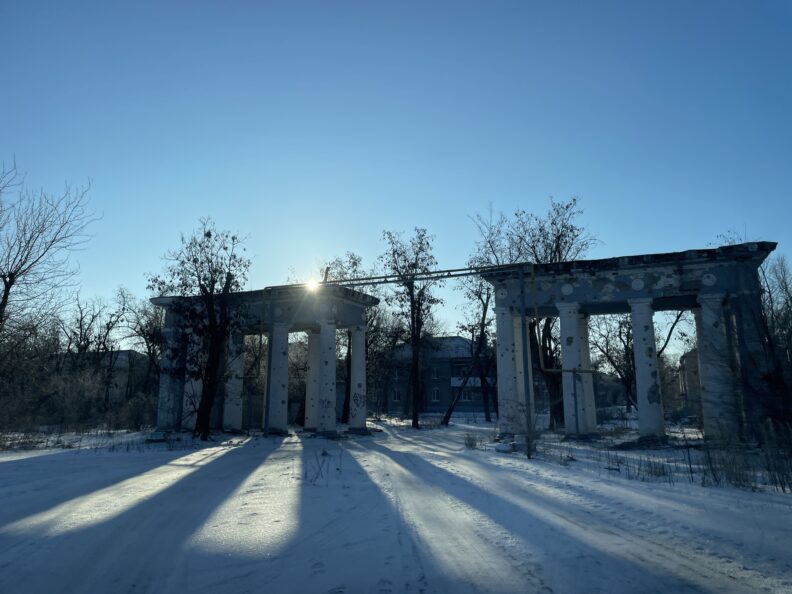
The very next day they tell us about Pyotr Evgenievich, who sent his son away from the war and for a better life in Germany. I didn’t go myself, I was afraid of becoming a burden, but in Severodonetsk the house is decent - two floors, a vegetable garden, a good plot, everything is familiar and they speak Russian.
“My son didn’t make it to Germany. We don't know what happened there. Died Peter lost everything. He said that he wanted to die and let himself go. I told him: move, do something, but I don’t know what he has inside,” explains his neighbor Alexander.
It was not possible to find Peter right away, even though the address was correct. The house looked intact, but all the furniture was covered with tablecloths and rags, it was very cold and dusty, there was no light. It is difficult to heat such premises, so Peter moved to the barn. In the loosely locked dressing room there is a massive door, behind it hangs a woolen blanket. There is a gas stove burning inside, all four burners. Nothing fits inside except a stove and a small square table. The light on the bare wiring is on, but dimly, the corners of the room are already very dark. Behind the doorway is the room in which the pensioner lives. Two old sofas opposite each other. On one the man is sleeping, on the second there are things piled up.
It is not possible to enter the room immediately. The smell instantly makes you want to vomit. You have to run out into the fresh air and come back only wearing three medical masks. This helps a little.
On Pyotr Evgenievich’s bedside stool there is half a can of soup and half a glass of water. He himself practically does not speak. After explaining who came in and why, the volunteers invite him to go to the hospital. He says that his legs are shackled and he cannot get up, although, according to his neighbors, he was walking four days ago.
Lifting the blanket and changing the diaper is also a challenge. Some of the man's bedsores had dried heavily to the sheets because he was lying on one side. He is in pain, he screams when he needs to move his legs, when they try to put him on the bed.
A couple of neighbors help carry Peter to the car on a blanket. The ambulance promised to arrive in eight hours, so he had to be taken to the hospital in the personal transport of caring Severodonetsk residents.
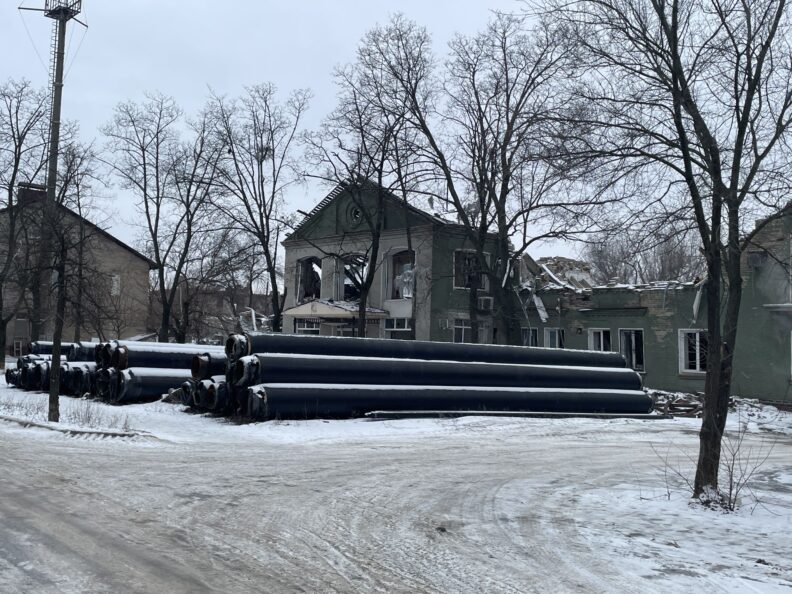
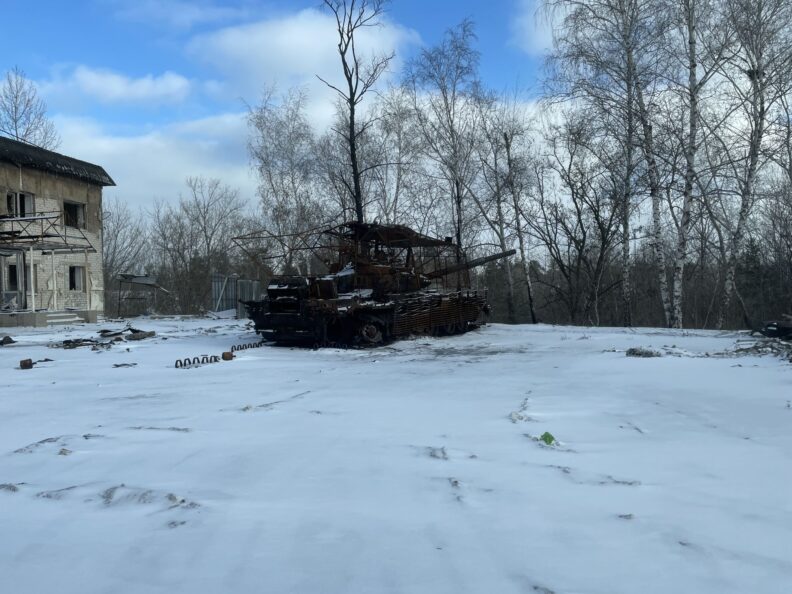
The road to the only civilian hospital runs through a literally scorched area - the Khimik stadium. Among the stone two-story buildings, not a single one is intact; the park near the stadium is empty and has almost become a forest of broken trees.
Pyotr Evgenievich is not welcome at the hospital.
“Are you going to bring all the city homeless people here for me? — asks a surgeon of about 40 years old, the only one in the entire institution, “I have 26 patients who do not have injections.”
The surgeon really stitches up - operation after operation, or rather, amputation after amputation. Three hours later, after tests and examination, he summarizes that Evgenievich will live, but probably not for very long.
“And remember, in this city they are left without treatment. The mainland doesn’t need them, they are left here to die.”