
Translated material
How we are given grace
“Grazia” by Paolo Sorrentino, the opening film of the Venice Film Festival, is coming to Russian screens

Still from the film “Grazia”. Source: kino-teatr.ru
Paolo Sorrentino, after the lush baroque of his last paintings, in particular the not too impressive aesthetic “Partenope,” returns to himself. Towards a focused meditative narrative, essential existential questions inscribed in human history. He offers us a sensory immersion in the “higher world” of those burdened with power, terribly far from the people. But it turns out that this is just a reason to think about a person in general. At the same time, he does not forget his trademark hazy humor, which erases all the pathos of reflections on the frailty of life and the equality of all “God’s servants at the finish line.”
His favorite actor is 66-year-old Tony Servillo, practically the director’s alter ego; through his voice and frozen gaze, the director’s thoughts are best conveyed to the screen. This time he plays Mariano de Santis, the President of the Italian Republic, devoted to his country and experiencing the last months of his reign. He continues to be respected for his honesty, his ability to maintain a distance from “power” and at the same time demonstrate a restrained democracy (unlike his election rival, an extremist right-wing candidate). He is a former judge and is well versed in the intricacies of jurisprudence.
Achievements included writing a 2,000-page code of laws. One of those adherents of the letter of constitutional law and the law with whom one cannot agree. For this intractability and clumsiness, even he was nicknamed “reinforced concrete slab.” He is also a widower, missing his wife.
In the last months of his reign, he will have to make three significant decisions: whether to pardon two people convicted of murder - a woman who killed her husband, who beat her with impunity, and a village teacher who sent his wife lost to dementia to the next world. And also sign a bill, warmly supported by his beloved daughter and adviser, legalizing euthanasia. The lawyer daughter Dorothea (Anna Ferzetti) is irritated by this lingering doubt. Mariano painfully tries to reconcile his faith with the learned legal thoroughness and the demands of a changing world. Perhaps he is the last civil servant trying to balance issues of conscience and state expediency so thoroughly.
Execution cannot be pardoned. If you don’t sign, he is a tormentor of those suffering in dungeons; if you sign, he is an accomplice in their crime. Justice or mercy?
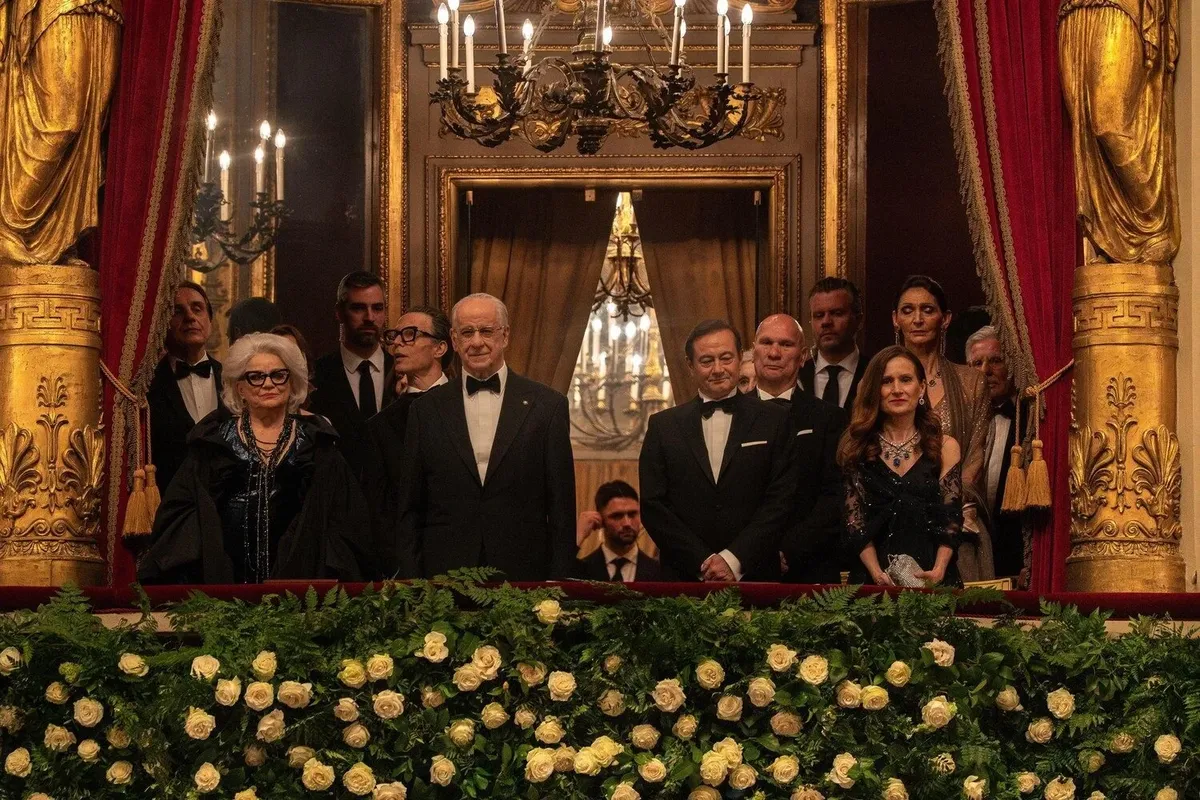
He seemed to be suspended in weightlessness. Like the astronaut he is now watching. This is the quiet climax of the picture. The “reinforced concrete” president is trying to touch through the screen a weightless tear that has flown from the eyes of an astronaut orbiting the earth. Equally cosmically lonely...
His unexpected interest in hip-hop, entangled relationships with his adult children, and close relationship with his personal bodyguard Labaro (Orlando Cinque), who gives him illicit cigarettes. Private life is reflected in public life. Surreal, comedic touches pierce through the closed ball of the closed “palace world”, letting air into it.
He himself is a passing character, testifying that “the horizon is approaching,” the end of his term of office heralds the end of life.
But Mariano's peace is only a dream. All his “last decisions” lie in the field of ethics and morality. Therefore, doubt and indecision turn into a process of internal search for forgiveness, sympathy, grace - a healing power “intended for salvation, transformation of the soul.” Doubt as the inner work of the soul.
Unlike Sorrentino’s previous films about elderly politicians, “Loro” and “Amazing,” “Grace” is not a political movie; the main force here is not sarcasm aimed at the immorality of power, which corrupts, but melancholy and philosophy. Everything is subordinated to the end-to-end melody of existential loneliness of the third age. But Sorrentino quotes himself ironically. The film features the President's lonely evening walk through the streets of his beloved Rome, surrounded by security, which recalls Andreotti's similar walk in The Marvelous.
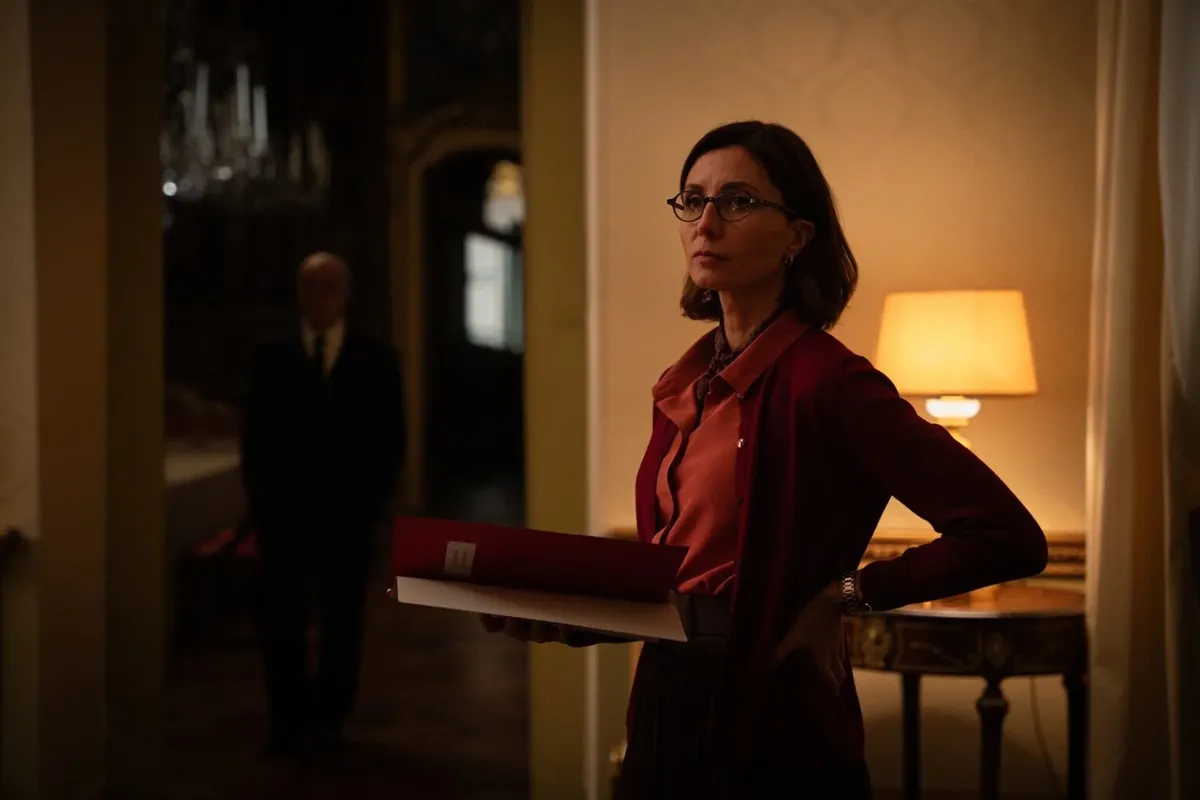
What can a person control, even at the very top—neither his own pain nor that of others. And was he the master of his life, if he really doesn’t know anything about the person closest to him - his deceased wife?
Therefore, the key question for “Grace” is the philosophical question “Who is the master of our days?” ( Who owns our days? ).
A question that refers to the biblical tradition (prayers for God's guidance), to the problem of free will. All of the president’s “latest decisions” are deeply interconnected. Reflecting on the legalization of euthanasia and pardoning murderers, he asks himself: does a person have the right to control life and death? Or is this the exclusive right of a higher power?
These six months before leaving the palace are his personal Purgatory. The past is a burden and the future is empty. A most interesting dialogue (in the spirit of “The Young Pope”) between the president and the dark-skinned pontiff on a motorcycle in a white cassock. About the law on death and about freedom - in old age. Including from the burden of power.
The image is built in a combination of strict geometry and soft dark painting, sculptural symbolic mise-en-scène (among them: the mysterious and brooding president alone on the bridge over Rome or on the balcony of the palace). The cameraman is Daria D'Antonio, with whom Sorrentino filmed “Partenope” and “The Hand of God.”
Tony Servillo, the star of The Great Beauty, is in the right place here. She and her director-friend (this is their seventh collaboration) created this most complex role together from the very beginning: a minimum of external manifestations (unlike Andreotti in “Amazing” or “Berlusconi” in “Loro”).
The ability to maintain quiet amazement in relationships with the fast flow of life, the entire depth of sadness and suffering is conveyed only by a glance or a smile. For this role he was awarded the Volpi Cup for Best Actor.
“Grace” is a statement that is both humble and grandiose. But I would like to know whether Sorrentino has heard about Tyutchev and his epoch-making poems, which, it seems, he “filmed”: “We are not given the opportunity to predict, / How our word will respond, - / And we are given sympathy, / As grace is given to us.”