
Translated material
"My conscience will be my guide"
How 12 thousand Norwegian teachers defeated fascism

Vidkun Quisling. Photo: Wikipedia
18+. THIS MATERIAL (INFORMATION) IS PRODUCED, DISTRIBUTED AND (OR) SENT BY FOREIGN AGENT ZAGORIE DENIS ROMANOVICH OR CONCERNES THE ACTIVITIES OF FOREIGN AGENT ZAGORIE DENIS ROMANOVICH.
Humanity Test
In the early morning of March 20, 1942, a knock on the door woke up Haakon Holmboe, a teacher at the cathedral school in the city of Hamara, located in the occupied part of Norway. The local police are on the doorstep, they tell him to pack his things and prepare to leave.
Just under two years ago, Hitler's troops invaded Norway, crushing conventional armed resistance in a matter of months. Since then, more than 300,000 German soldiers have been stationed in the country. Their mission is to protect 1,200 km of coastline and ensure the transport of iron ore from Swedish mines to the northern Norwegian port of Narvik. At the same time, the puppet government led by Nazi collaborator Vidkun Quisling is diligently trying to turn Norway into a German satellite.
Haakon's arrest is part of that effort. He is one of 1,100 Norwegian teachers who will be arrested by the Quisling government in the coming days. They would soon be deported to prisons and various labor camps, where many would be subjected to torture, starvation, and hard labor. At least one of them will die.
The arrested teachers were not accused of preparing explosions or transmitting codes to the allies. They were part of a large group of Norwegian teachers (from 8 to 11 thousand) who refused to join the Nazi teachers' union and cripple the souls of children with propaganda. Each personally sent a letter of refusal by mail, none of them hid their name.
In the history of World War II, this event stands apart. While tanks thundered on the battlefields, a “battle for conscience” unfolded in Norwegian schools. This was a unique case when the professional solidarity of an entire class turned out to be stronger than the repressive apparatus.
Eleven thousand teachers decided that it was better to be on a boxcar bound for Arctic Kirkenes than to include at least one chapter on the “new order” in the school curriculum and betray those who sit at their desks.
This was their main lesson - even the “smallest” person becomes an insurmountable barrier to tyranny if his “no” is based on the truth and the support of colleagues.
Dictatorship against school
On April 9, 1940, German ships invaded Norwegian territorial waters. The resistance provided in the first hours allowed King Haakon VII, members of the government and deputies of the Storting to leave the capital in time.
Against this backdrop, the leader of the small Norwegian party Nashunal Samling (NS), Vidkun Quisling, decided to take advantage of the situation and take power into his own hands. On the evening of April 9, he seized the state radio studio and declared himself the new Prime Minister of Norway.
However, he was not very popular with the Norwegians. So much so that already on April 15 the Germans forced Quisling to resign. However, after unsuccessful attempts by the Nazis to create a “legitimate” Norwegian government, Quisling was appointed Minister-President of Norway in 1942.
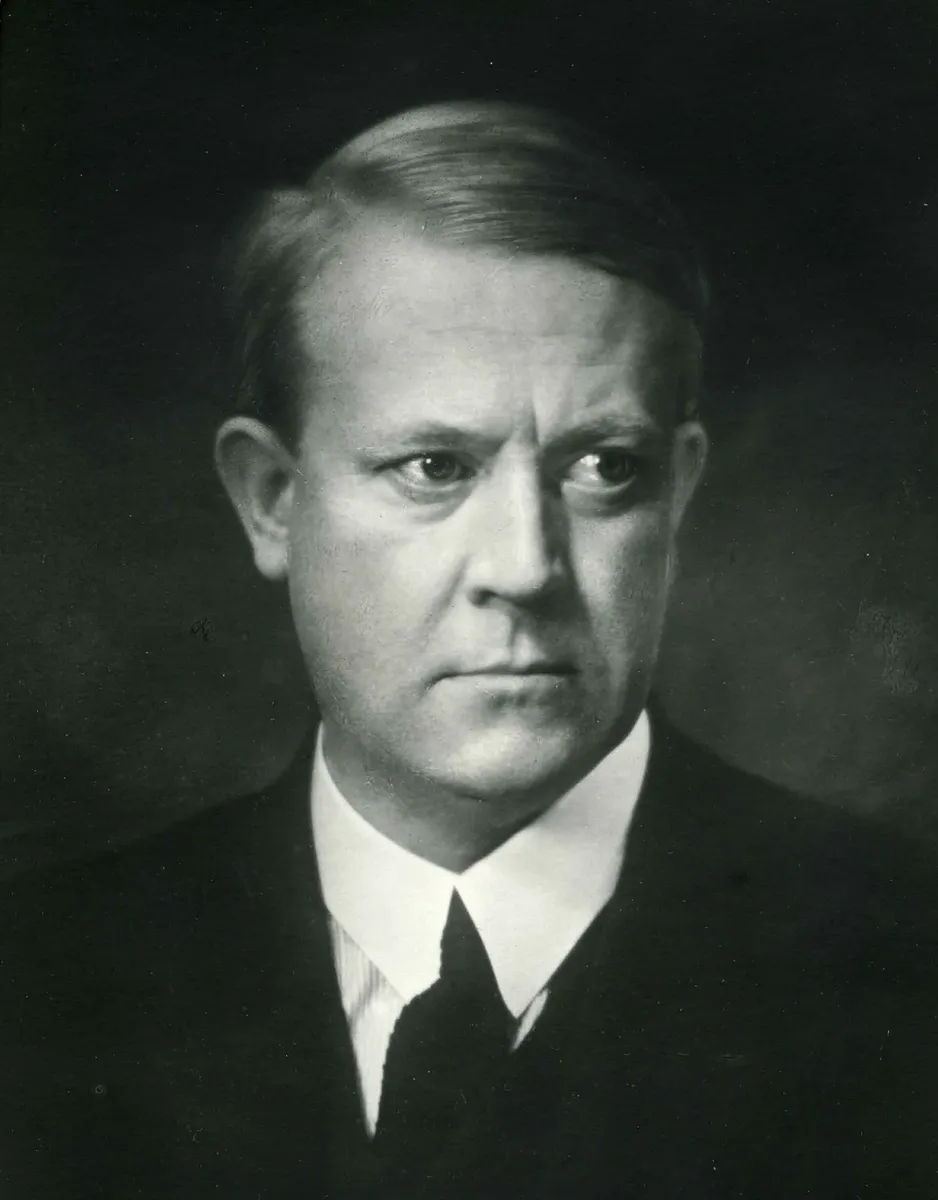
And although his power was decorative and completely dependent on the will of the German Reich Commissioner Joseph Terboven, Quisling’s ambitions were truly totalitarian: he dreamed of creating a “corporate state”, where every citizen would be just a part of the fascist machine. The key link in the “remelting” of Norwegian society was to be the school.
Just four days after the inauguration, on February 5, 1942, two decrees were issued that effectively declared war on the Norwegian school.
The first was the Law on the “Norwegian Teachers' Union,” an organization controlled by the party, membership in which was declared mandatory for all 14 thousand teachers in the country.
The second is the National Youth Service Act (NSUF), an actual attempt to create a Norwegian clone of the Hitler Youth. According to this law, all teenagers between the ages of 10 and 18 were required to undergo ideological drill and physical training under the supervision of Quisling party functionaries.
The Quisling government made little secret of the fact that teachers must transform from mentors into “political soldiers” who, through an extensive network of schools, would transmit the values of Nazism to the most remote corners of the country, reaching every family.
Quisling understood: in order to reformat the nation, it is necessary to capture the consciousness of children, turning education into a conveyor belt for the production of loyal subjects.
However, the Quisling government did not take into account the main thing - the Norwegian teachers themselves.
“The struggle for the school began from the moment the Germans set foot on Norwegian soil. They took everything they wanted, regardless of laws and rights. They behaved like vandals when they entered, trampled, hammered nails into the newly repaired brick walls, destroyed everything, even if they only stayed for a few days at the school,” this is how Corey Norum described the beginning of the German occupation of the Vedas in the 1946 book Kirkenesferda.
According to Ved Norum, it was sad to see school premises used as barracks for enemy soldiers and school property destroyed by vandals, but, according to him, this did not cause bitter hatred.
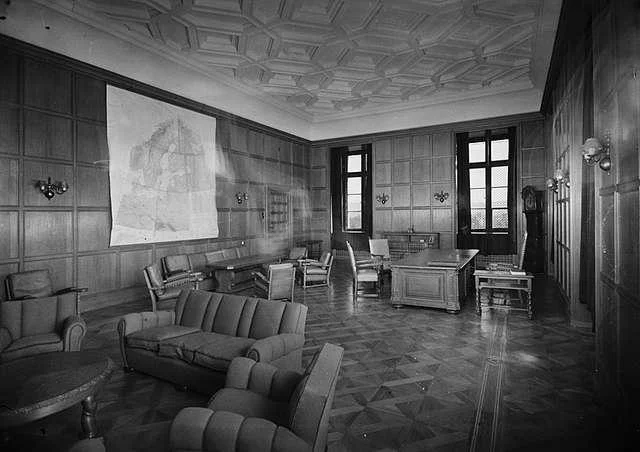
However, everything changed the moment the German invaders wanted to influence the internal life of the school. “We already knew about what had happened in the last seven years in Germany, and we all realized that now it was about Norwegian children. It was a real poisoning of society, which led to disastrous results in Germany over several years, and it had to be prevented at all costs,” recalls Norum.
Leaders of the future resistance, such as the historian Einar Højgaard, managed to work in Germany in the 1930s, where they observed first-hand the process of duping young people. Therefore, when in February 1941 the order came to take the children to an exhibition about the Hitler Youth, the teachers refused. The Ministry of Education threatened layoffs, but this caused a backlash and only united teachers.
They realized that the new laws were not just a bureaucratic formality, but an attempt to destroy the very essence of the teaching vocation. For teachers, this became the moment of truth: either become accomplices in a crime against the future, or enter into open conflict with the state machine, having nothing in their hands except their own word and solidarity.
Four points
Einar Højgaard was one of those who drove the resistance. In 1935, he worked at the University of Hamburg and observed with his own eyes how Nazism was grinding the German education system, turning universities into barracks and teachers into trainers.
Returning to Norway, he brought with him not only scientific works, but also a clear understanding: this ideology cannot be agreed upon, it can only be refused. Højgaard was one of those who formulated the famous “Four Points” - an ethical code that became the foundation of the Norwegian pedagogical front:
Total Refusal of Membership: Any demand to join a Nazi-controlled union or sign a declaration of loyalty to the Quisling Party must be rejected.
Intellectual Purity: Any attempts to introduce Nazi propaganda into lessons are nipped in the bud.
Rejection of incompetent authority: teachers answer only to professional bodies, not to party appointees.
Child protection: refusal to cooperate with NSUF youth services and hand over student lists to the Nazis.
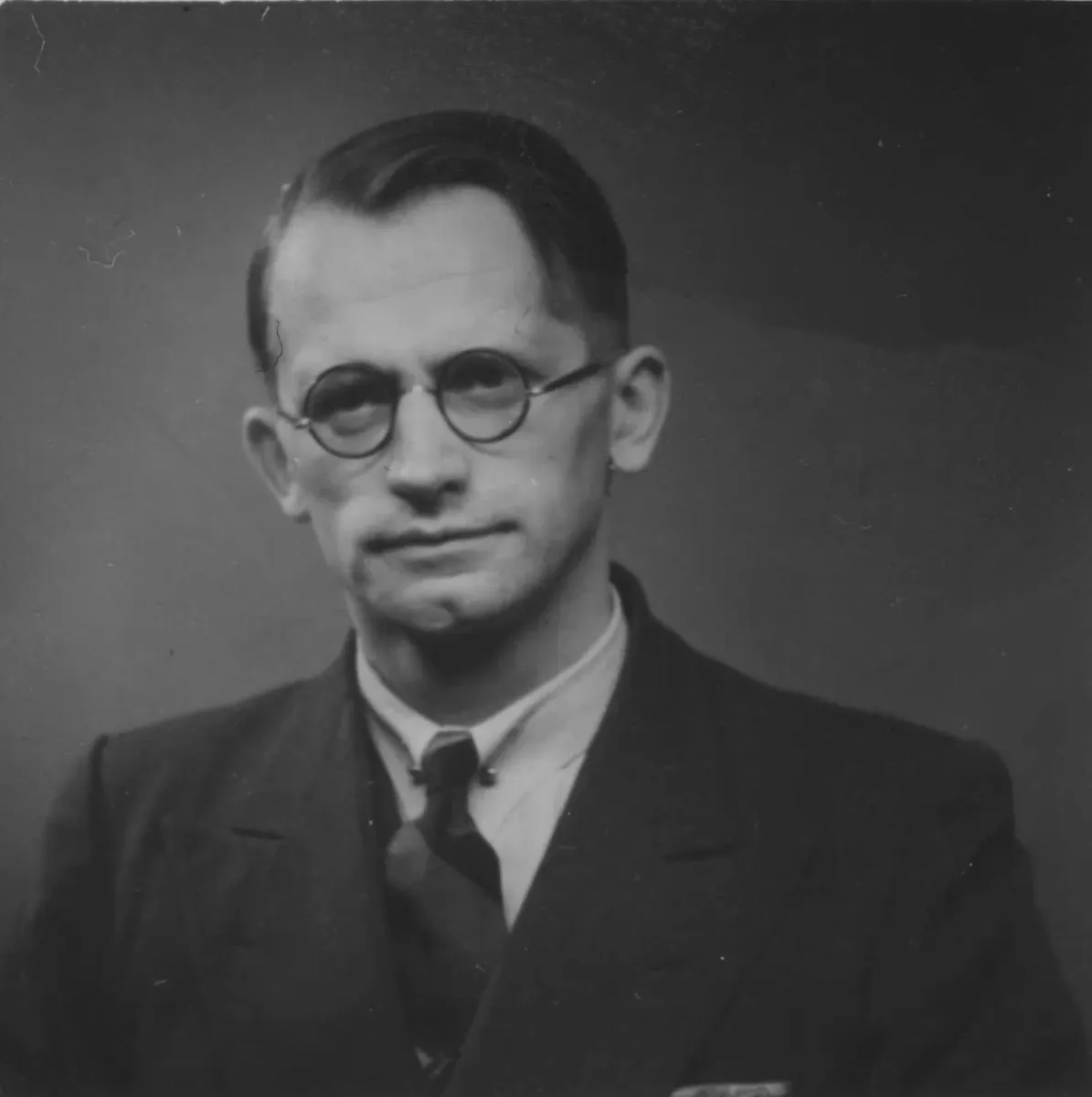
Højgaard understood that a teacher is not just a transmitter of knowledge, but the last line of defense between a child and a lie. In those days, all over the country, teachers in whispers or in secret letters conveyed to their students the words that became the “Teacher's Promise”:
“I will not teach you anything that I do not believe is true. My guide, as before, will be my conscience.”
The tragedy of Højgard himself became the high point of this confrontation. In October 1943, while trying to escape to Sweden, he was captured at the border. He was brutally tortured in the Gestapo dungeons at Victoria Terrass. Højgard, who knew almost all the leaders of the underground, understood that his will had limits.
The historian’s close friend Harald Schjelderup later recalled Einar’s words before his arrest: “I am afraid of physical pain.” To avoid becoming a traitor to his own will, on November 25, 1943, Høygaard jumped out of the third floor window of the Gestapo building during interrogation.
After his death, a letter addressed to his wife and four children was found in his sock (the youngest daughter was born after his arrest). This was not a fit of despair - it was the calculation of a man who remained true to his “points” to the last. He left so that others could live. His death was not just a tragedy for Norwegian teachers, but a testament: a profession is worth dying for, but it is never worth lying.
Thousands of letters
In mid-February 1942, the Norwegian postal service encountered an anomaly: thousands of identical letters began to arrive at the Ministry of Education and Church Affairs. This was not an anonymous mailing - each letter was signed by a real name, and included a home address and place of work. Under occupation conditions, when any sideways glance towards a Wehrmacht soldier was subject to arrest, this was an act of transcendent civil courage.
The text, secretly distributed by the underground Coordination Committee (KK) under the leadership of the historian Magnus Jensen and his colleagues, was extremely laconic and legally verified: “I declare that I cannot take part in the education of the youth of Norway in accordance with the principles established for the National Unity Youth Service (NSUF), since this is contrary to my conscience.”
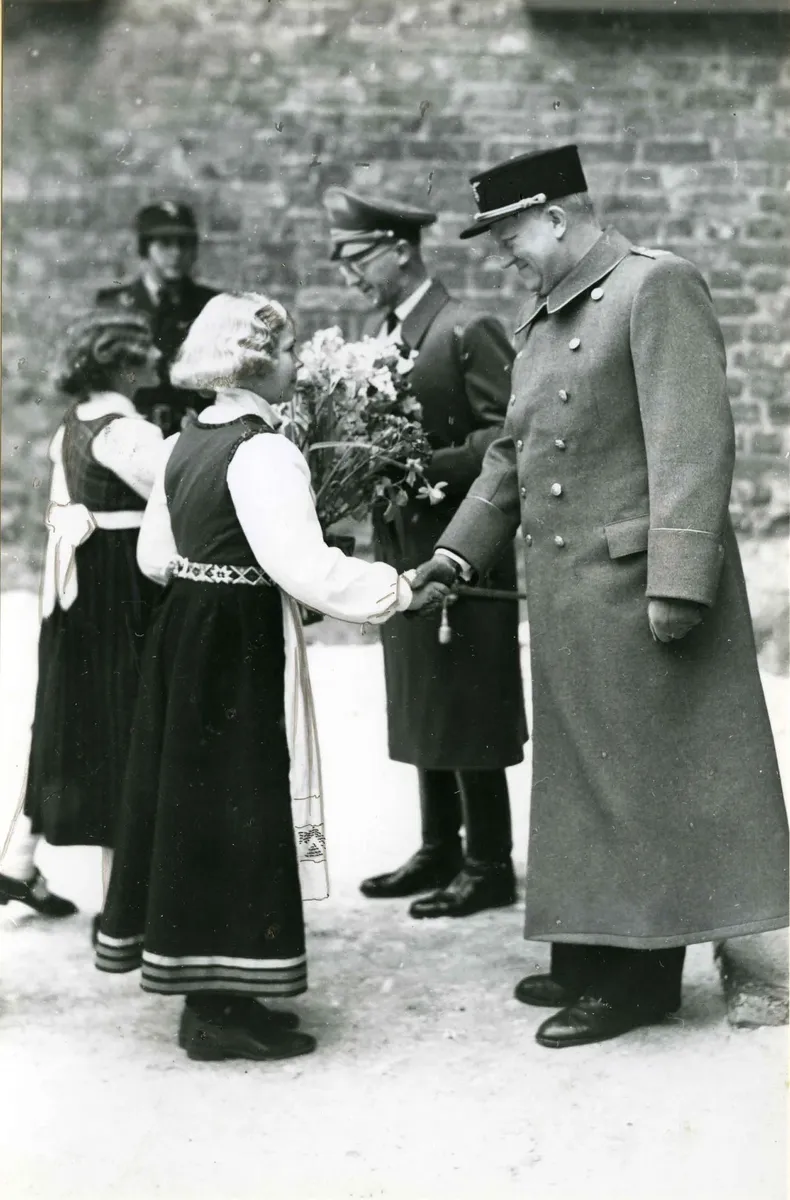
By February 20, from 11,000 to 12,000 teachers had sent such letters, and there were about 14,000 in total. They were not hiding. They openly told the state: “You can own our bodies, but not our beliefs.” Quisling was furious. He declared that every teacher who protested was automatically considered "voluntarily dismissed" and ordered schools to be closed for a month under the pretext of a "fuel holiday."
Parental front
The regime's hope that teachers would remain isolated failed, and parents entered the fray. Here, the initiators of the resistance were the sisters Helga and Osta Stene, who organized the “Parents' Front”. The result stunned the occupiers: between 200,000 and 300,000 letters from parents from all over Norway poured into the ministry.
Their message was even harsher: “I do not want my child to participate in the NS Youth League, as its principles are contrary to my conscience.”
Teachers, risking their freedom, continued to give lessons in secret - in private apartments, churches and basements. As one of the participants in the events later recalled: “We taught the children history and mathematics while the Gestapo was looking for us in empty schoolyards.”
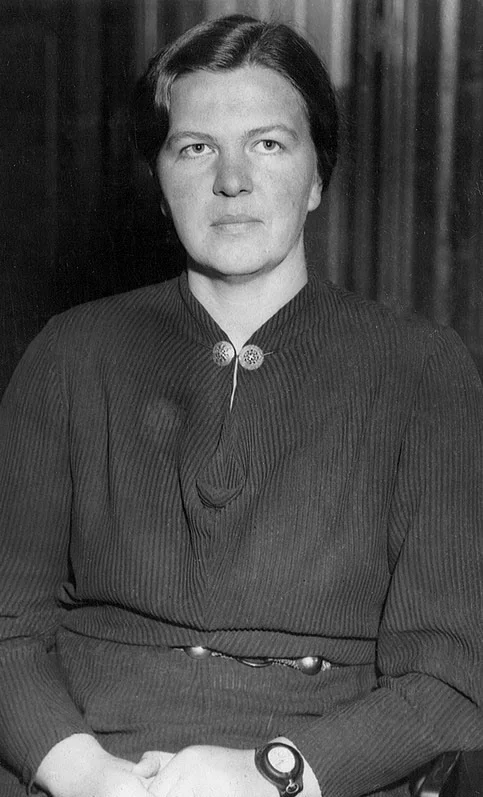
The regime was trapped. The school system was paralyzed, and the attempt to replace the “rebels” with loyal personnel failed - there were only about 1,200 teachers throughout the country who continued to work. Not all of them supported the government; some simply did not offer active resistance. This was the first time in occupied Europe that civil society not only went underground, but openly and en masse rejected the identity imposed on it.
The path to the Arctic: “penalty gymnastics”
Having failed to break the teachers with paper threats, the regime turned to direct violence. On March 20, 1942, roundups began across the country: 1,100 male teachers were separated from their families and sent to distribution camps. In some places, teachers were literally dragged out of bed, and in others (as, for example, in Hønefoss) they were given time to prepare. For the Nazis, this was not just punishment, but an attempt at “re-education” through humiliation.
The main testing ground for psychological breakdown was the Jorstadmoen camp. Teachers were transported here for 14 hours in open coal cars without food or water. Here, professors and rural teachers were forced to go through “penal gymnastics” - a sophisticated system of torture. Elderly people were forced to march for hours at a fast pace or crawl on their stomachs through icy mud and melted snow with their hands behind their backs. As a form of bullying, SS guards ordered teachers to move snow from place to place with table forks or sweep the parade ground with toothbrushes.
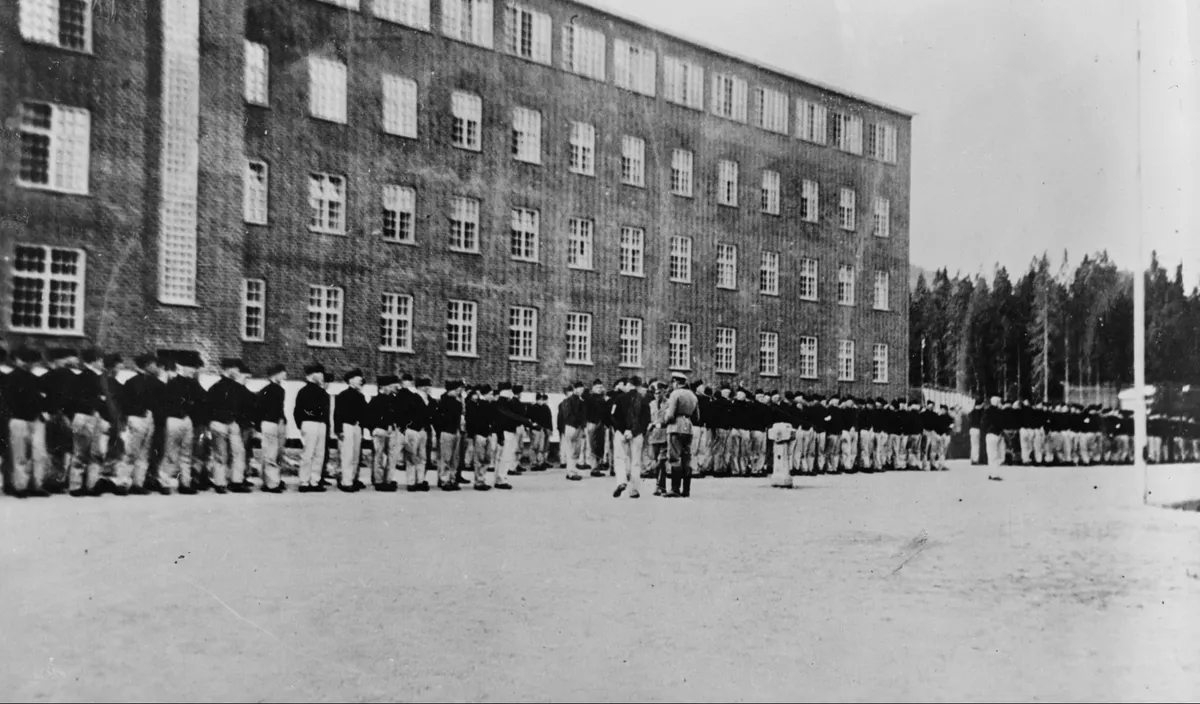
When this did not help - only about 30 people out of a thousand agreed to show loyalty to the regime (most of them were seriously ill) - Reich Commissioner Terboven ordered the most stubborn to be sent to the Far North.
In mid-April, 500 teachers were loaded onto the old coastal steamer Skjerstad. The ship, built in 1904, was certified to carry 250 passengers, but the Nazis crammed twice that number onto it. This voyage to Kirkenes through the stormy Arctic lasted seventeen days. People slept in the holds on bare iron, suffocating from lack of air and suffering from seasickness.
One of the prisoners, Edward Brakstad, later wrote in his memoirs: “We must remember the great task we have here... doing something for a cause that we believe is right. Our lives are no less valuable than the lives of soldiers at the front.”
Cardboard tents
Kirkenes met the teachers with polar cold and hard labor. They were housed in the Elvenes camp, where housing consisted of barracks and tents made of pressed cardboard. Each tent housed 22 people. Teacher Johan Helle wrote home with bitter irony in September 1942, when frost had already struck in the Arctic: “It becomes delightfully cool at night in the cardboard tents.”
Here the Norwegian intelligentsia encountered someone else's tragedy. The teachers were used to unload German warships in the port, side by side with Soviet prisoners of war. In Finnmark at that time there were more than 10 thousand captured Red Army soldiers living in inhumane conditions. Teachers shared their last crumbs of food with Russian soldiers, seeing them as victims of totalitarian madness.
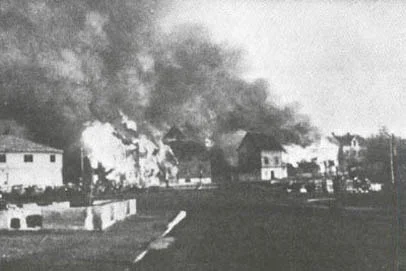
The work was deadly dangerous. On May 6, 1942, teacher Olav Hole died in the port while unloading a ship. Many others were left disabled by frostbite and exhaustion. But even under these conditions, the teachers did not stop being teachers: in the evenings, in cardboard tents, they organized choirs and gave each other lectures on astronomy, history and philology, in order to prevent the humanity in themselves from turning into camp dust.
The collapse of "New Norway"
By the summer of 1942, Vidkun Quisling's New Norway project had reached a dead end. His ambitious plan to create a “corporate state”, where every citizen would be built into the fascist vertical, crashed against the blank wall of the teacher’s “no”. The regime faced what in sociology is called paralysis of the system.
The teachers' victory was ensured by three factors that the dictatorship failed to calculate.
First, the all-out strike meant that thousands of Norwegian mothers were forced to leave their jobs to look after their children after schools closed. This displeased the German Reich Commissioner Joseph Terboven: Quisling's ideological fantasies should not have interfered with production.
Secondly, professional solidarity turned out to be absolute. There were only about 1,200 teachers in the entire country who continued to work, but many of them faced an icy boycott from students and colleagues. There was no one and no one to teach.
Thirdly, German intervention. Terboven finally lost confidence in Quisling as a leader. In September 1942, Berlin actually deprived Quisling of the right to direct political initiatives, obliging him to coordinate every step with the German administration. The “corporate state” was buried by the Germans themselves for the sake of maintaining stability in the occupied zone.
“You ruined everything for me!”
The regime began to retreat. Already in May 1942, the Ministry of Education made a humiliating concession by declaring the Nazi teachers' union "non-political." This was an attempt to save face by essentially admitting defeat: compulsory teaching of Nazi doctrine was abolished.
The return of teachers from Arctic captivity was a triumphal procession. In August and September, the sick and elderly were sent home. Finally, on November 4, 1942, the last groups of teachers left Kirkenes. Despite their poor health and the torture they had endured, they returned to their classes as winners.
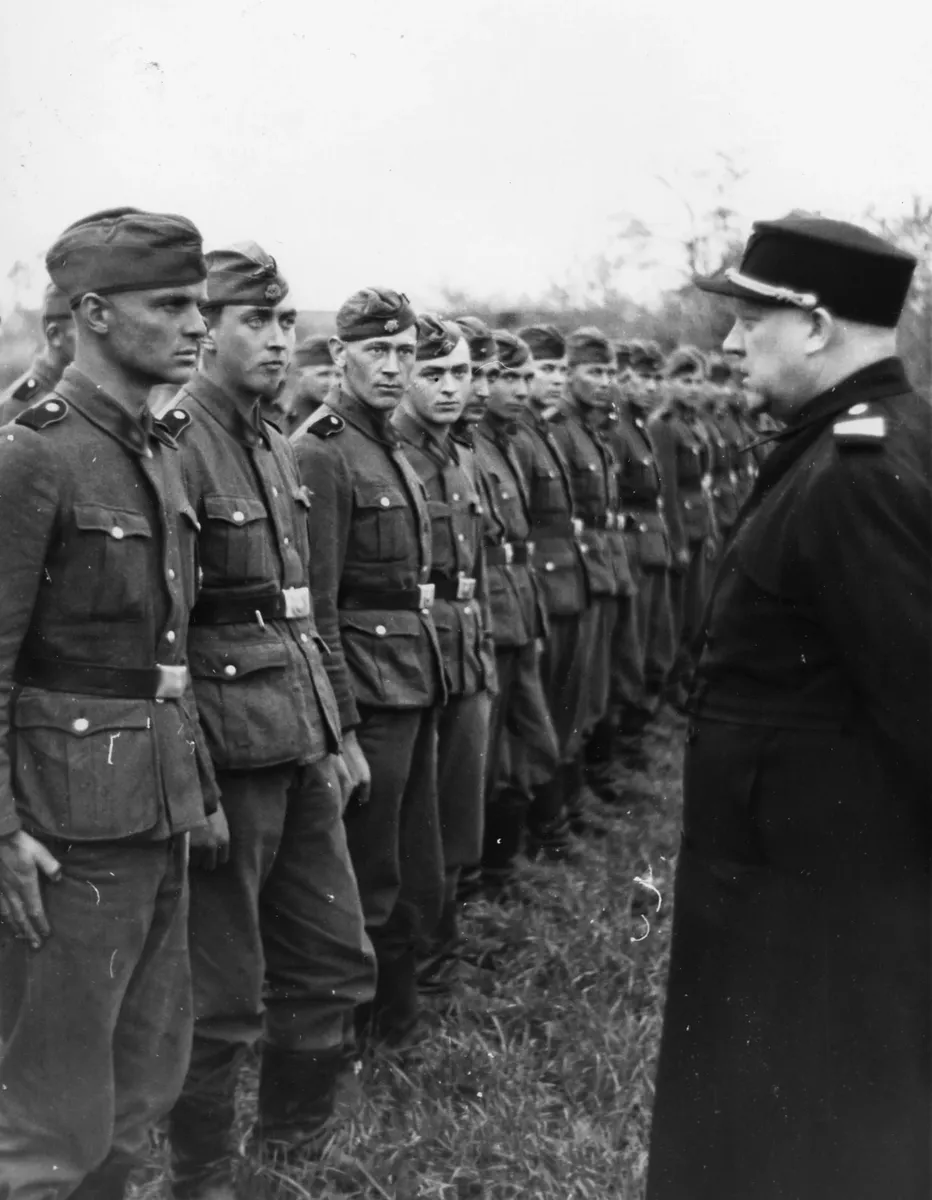
As the teachers said, during a speech in one of the schools, Vidkun Quisling, without hiding his impotent anger, shouted a phrase that would forever go down in history: “You, teachers, destroyed everything for me! You ruined everything for me!”
He was right. Teachers, who had no other weapon than their conscience, defended not only school programs, but also national identity. With their exam in the Arctic, they proved that civil courage can stop even the most well-oiled machine of violence.
Memory Library
In 1952, a new library building was opened in Kirkenes, a city that was practically wiped off the face of the earth during the war and lay in ruins for a long time. Teachers throughout Norway raised money for its construction for several years. This was not just a humanitarian project, but a collective gesture of gratitude to local residents who, at personal risk, transferred food and warm clothing to prisoners in cardboard tents. This monument of stone and books has become a living symbol that gratitude and culture are stronger than barbed wire.
The experience of 1942 changed the DNA of Norwegian education forever. Thanks to the “teachers’ war,” the country has established the idea that a teacher is not an official or an “executor of the state’s will,” but, above all, an autonomous defender of democratic values and liberal freedoms in the classroom.
In 2017, the leader of Norway's national teachers' union called the events "the proudest moment in the history of the profession," emphasizing that it was the capacity for ethical reflection and unwavering unity that saved the education system from collapse.
The history of the Norwegian resistance reminds us: any totalitarian ideology is powerless against the truth if the professional community chooses solidarity instead of fear. Teachers sent into the Arctic ice taught the world the most important lesson: school is the last line of defense for humanity. And if this milestone is not passed by those who stand at the board, tyranny has no chance to take over the future.