
Translated material
Consolation fee
The ROC Executive Committee will compensate financial losses to potential winners of the 2026 Olympics who were unable to participate.

Photo: Petr Kovalev / TASS
The main person in Russian sports, minister and head of the Russian Olympic Committee Mikhail Degtyarev, was brief: “We decided to provide monetary incentives to all Olympians who were unable to go to the Olympic Games due to a treacherous political decision.” Well, not all, but 116 people from among the winners and medalists, as well as participants in the Games in Beijing 2022 (and, possibly, in Pyeongchang 2018) have already been selected.
Here, the reformer and almost revolutionary Degtyarev did not invent anything, simply repeating the scheme developed before the 2024 Olympics in Paris: those current Russian Olympians who initially could not apply for neutral status and who were unable to obtain it were ordered to be rewarded in accordance with their status: champions should be given 500 each, silver medalists 350 each, bronze medalists 250 each, and simply participants 150 thousand rubles each. Then 245 people received compensation for forced non-participation in the amount of over 200 million rubles. Today, the costs, due to the fact that the Winter Olympics are significantly smaller in scale than the summer ones, will be lower, but the point is not in the size of the consolation prize money, but in the essence of the approach, which raised questions both then and now.
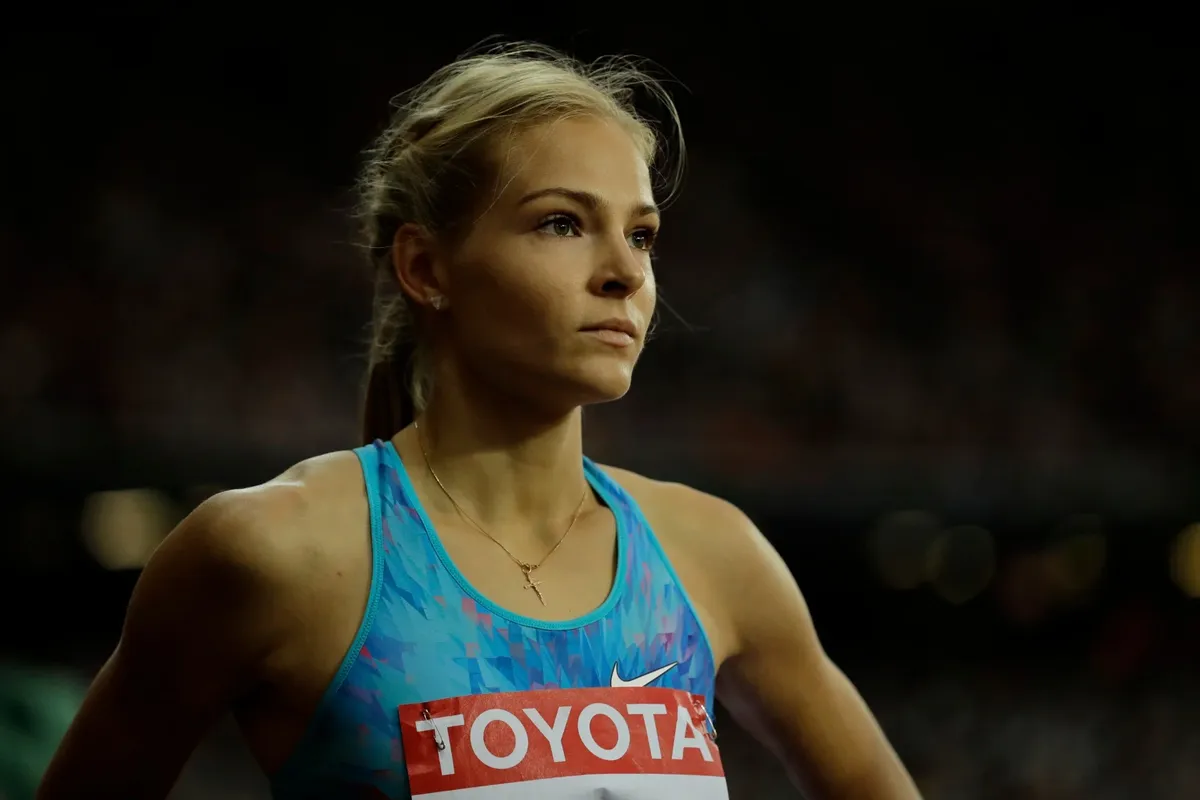
In fact, the tradition of rewarding non-participation dates back exactly ten years - from the moment all Russian track and field athletes were not allowed into the Rio 2016 Olympics, with the exception of Daria Klishina, which was the beginning of a large doping sanctions saga on the part of international sports organizations. A clear compensation mechanism has not yet been developed, and, as subsequent years have shown, it is almost impossible to develop one. Decisions were made on a case-by-case basis, until in the late fall of 2023 they adopted a unified scheme for rewarding the offended and oppressed, the same one that ranged from 150 to 500 thousand.
An important clarification: this consolation and incentive money has no relation to the so-called basic prize money for real and not virtual participants. For Russian Olympians and Paralympians, until this year, the base was “champion” 4 million, 2.5 for silver medalists, 1.7 million rubles for holders of bronze awards.
Today it is planned to increase these numbers, the order now is 5, 3, 2 million. But the problem is that we don’t have Olympic champions after 2022 due to the fact that only a few make it to the Games, and even then in a neutral status.
By the way, regarding the neutrals, back in the winter of 2024 it was said that they could not claim compensation, since they decided to perform without the flag and anthem under humiliating conditions, withdrew from state support and chose a risky path. The neutral status did not imply any government payments to the Russians making their way to the podium, due to which the Parisian silver tennis pair Mirra Andreeva-Diana Schneider and their staff were paid prize money only after a special decision.
It seems that the only Russian silver medalist of the 2026 Games, ski mountaineer Nikita Filippov, will receive his 3 million in the same way. But nothing, he has already been rewarded with an apartment in Petropavlovsk-Kamchatsky, as well as a “Rocket” watch, an Olympic bear mascot doll and other gifts, like all Russian neutral participants of the 2026 Games at a meeting with the head of the ROC. Still, there is progress - after the 2024 Games, participants were not accepted at this level, tablets and phones were not presented on behalf of the state.
But these are all the little joys of real participants, for whom they tried to somehow compensate for the moral and physical costs, and here - about the forced virtual participants who were selected by OCD. The selection method, despite its apparent simplicity - to encourage those Olympians who continue their careers and theoretically could participate in the next Games - reveals obvious weaknesses.
Firstly, not all of the participants in the previous Olympics remain candidates for the trip and show results worthy of new participation.
Secondly, with this system, real members of the national team who do not have Olympic merits are left out - those who missed the previous Games either due to age, or because of injury, or because of strong competition, but who achieved optimal shape for these particular Games.
Thirdly, it is completely unclear what to do, for example, with hockey players - it is clear that they are the least in need of financial assistance, but there are different cases, sometimes an extra penny will not hurt this category.
So, there are quite a lot of current winners and medalists of Pyeongchang 2018 and Beijing 2022, about thirty people, but the point is that almost none of them, even in a neutral status, would have made it to Milan - and not because team sports would remain under sanctions for the longest time, but because, purely theoretically, the Russian team, overwhelmingly composed of NHL players, would have gone to the 26 Games. And the most offended in this case are the same superstars Alexander Ovechkin and Evgeni Malkin, who lost the opportunity to compete for Olympic gold for the last time. Regardless of the criteria used to estimate the cost of their non-participation, it will be the same as for the participants of the Sochi 2014 Games, in the amount of 150 thousand rubles.
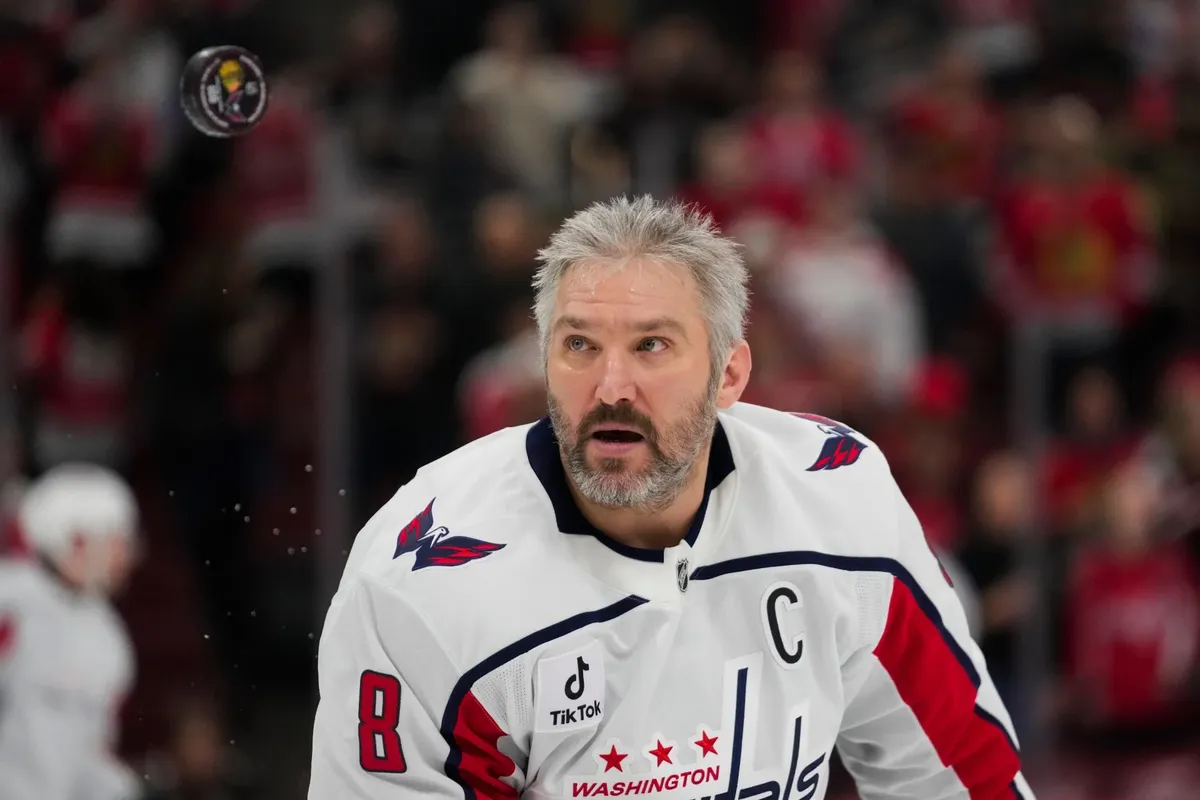
It sounds anecdotal. As for everything else, according to the official position, “this will show that the country values the work and achievements of its athletes, regardless of external circumstances... Payments can become additional motivation for athletes to continue their careers and prepare for new starts.”
For 150 thousand, and even for 500, if you take into account the costs of preparation and just living, you won’t get much, it’s more of a propaganda campaign, but what we have is what we have.
Not everyone has the opportunity, like the phenomenon Alexander Bolshunov, to receive more than two million for past services. For those Olympic candidates who do not fit into the scheme at all, the most popular earnings are at domestic competitions, as well as at competitions “with an international context.”
The experience of rewarding non-participation, even if forced, is a strange experience, as is its implementation, at least in relation to the winners and prize-winners: they have already received their prize money, and considerable ones, and paying additional bonuses for this is not very logical, unless one assumes that the state will not become poorer from these expenses. It is clear that sports officials are looking for different ways to keep high-achievement sports at the level, the financial incentive here is perhaps the most important, but you won’t be able to survive on it alone, and it is clear that you should not expect a triumphant return of Russian sports to the international arena.
It is also clear that the specific distribution of funds for non-participation, which initially suffers from a one-sided approach, will add nervousness to the sports community, which has already been under stress for the fifth year. And the immediate prospects, despite the assurances of the same Mikhail Degtyarev, are far from rosy - even if the Russian Olympic Committee is restored to its rights, there will be no open arms, and the highway towards Los Angeles 2028 will not open.
This means that it is too early to archive the “order on payments for non-participation.” It will also come in handy.