
Translated material
Whitelists for survivors
Claims from patients with diabetes may result in a class action lawsuit against the Russian Ministry of Health

Photo: ITAR-TASS
In Russia, more than 6 million adults and over 65 thousand children are registered with a diagnosis of diabetes mellitus. This data is provided by Health Minister Murashko. However, experts say the real number is much higher. The same amount can be added to the above figures if we take into account the scale of latent forms of the disease - representatives of the Ministry of Health also talk about this. The annual increase in the number of diabetics is almost 15%. In addition, the disease itself “gets younger.” Let’s say that type 2 diabetes affects people under 30–40 years of age. And by 2030, every tenth person on the planet will suffer from diabetes. The disease will be among the ten most common causes of death.
What they give you take it
Officials of the Ministry of Health contradict themselves - this is briefly about their attitude towards patients with diabetes mellitus (DM). For example, they are denied vital medical supplies under flimsy pretexts. And this is only a small part of that bureaucratic “activity”, which somehow loosely correlates with common sense and health.
“How our process is organized,” says Yulia, a representative of the patient community of patients with diabetes. — There is Federal Law No. 323, according to which medical care is provided on the basis of medical standards and clinical recommendations (CR). They require all diabetics to measure blood glucose, which is impossible without disposable lancets. And in 2020, continuous blood glucose monitoring (CBM) systems were introduced into the Kyrgyz Republic and standards. There is a government decree according to which patients with diabetes have the right to be provided with diagnostic tools, even if they are not disabled. The government also approves a list of medical products that are issued to people with disabilities free of charge ( applications for adding new names to it are sent, among other things, by public organizations. - O.P. ). We have been submitting an application to the Ministry of Health for four years now.
— What exactly is included in it?
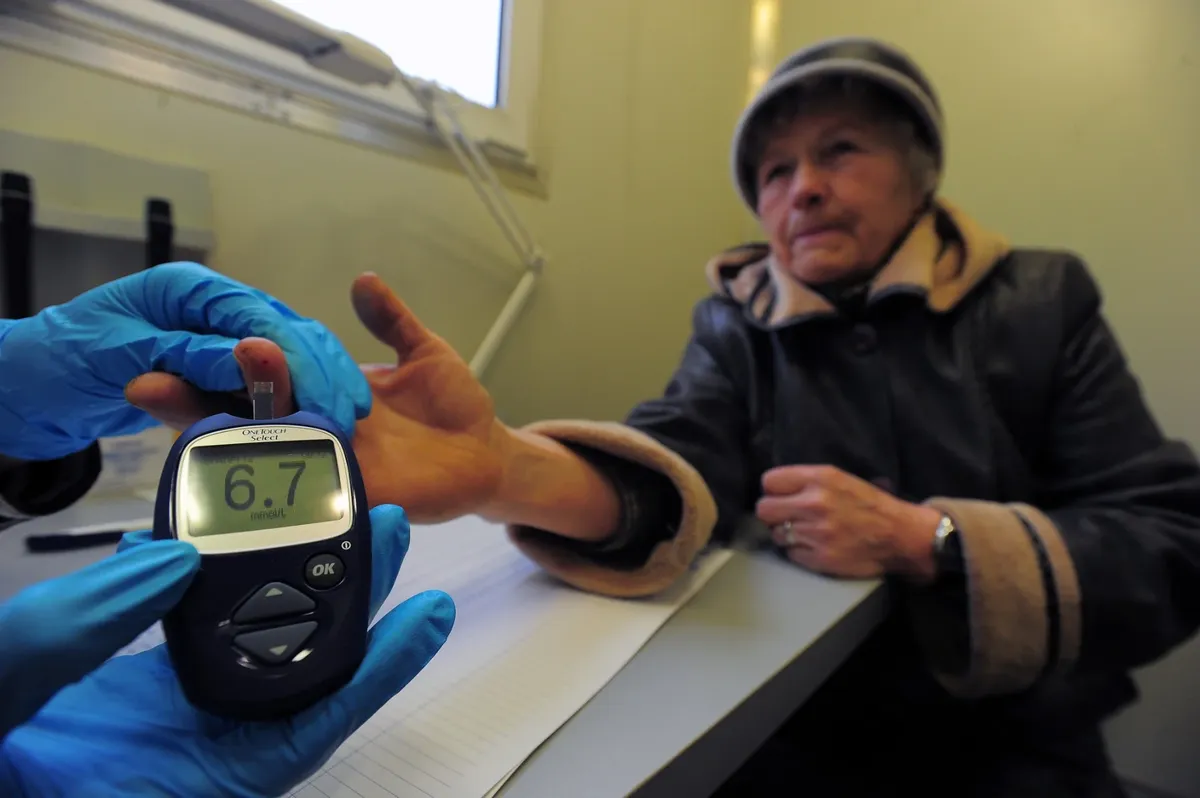
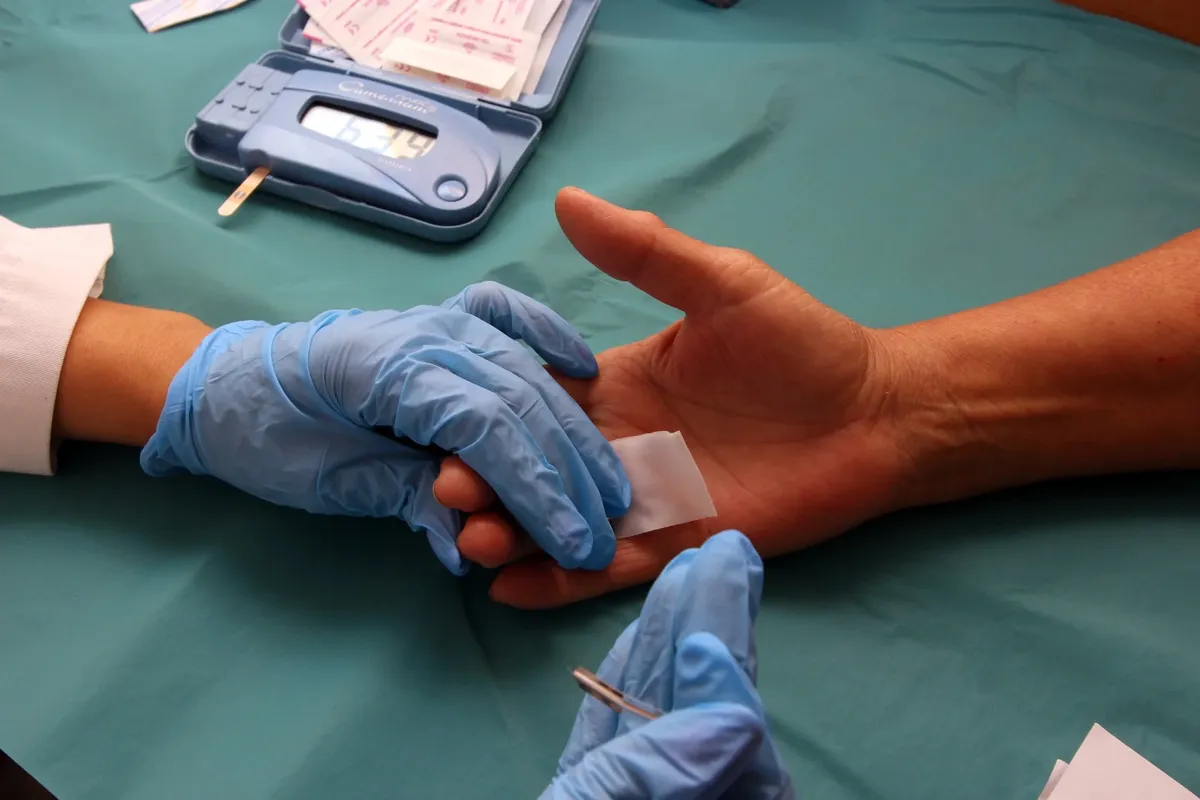
— Pumps on a patch, syringe pens, LMWH systems and lancets. A glucometer is usually provided free of charge. But this is a whole system. It requires test strips and a lancet. Test strips are included in the list, but the disposable needle lancet, which needs to be changed to get a drop of blood, is not. They are only in some regional lists. And people go to court; a huge practice has already developed. All trials regarding lancets are on the side of the patients - it is clear that they are necessary. We can’t get a blood test service right now because we don’t have anything to prick our finger with.
You also need a pen in 0.5 increments, which is vital for children. We have been adding it to this list for four years, and they refuse. Last year, as part of import substitution, we registered a wireless pump. But it has a code that is not included in the state guarantee program, and it cannot be purchased.
We are submitting an application to add the pump to the list - and within the allocated quotas. No money is required for this, people just need a more modern device. The Ministry of Health refuses with the words: “not to contribute, because there is no Russian manufacturer.”
Now people are forced to purchase pumps on their own.
— How much does such a pump cost?
— About 100 thousand rubles. The state can provide it free of charge, you just need to add the appropriate code to the list. It’s too extreme to refuse with the wording “there is no Russian manufacturer,” when such a requirement does not exist. The wording contradicts the resolution to which the officials themselves refer! They also conducted the commission in two years at once. And they must annually and no later than two months from the date of filing the application ( in the minutes of the meeting the wording “do not include” appears against each name. - O.P. ).
— It turns out that the doctor today, for reasons beyond his control, cannot prescribe the necessary treatment?
— So we have a massive outflow of endocrinologists who are dragged around the courts, the investigative committee and the prosecutor’s office! The bottom line is this: this powerful group called the “Ministry of Health Commission for Forming a List of Medical Products,” in violation of the current legislation, did not bring medical standards and the Kyrgyz Republic into line with the list of medical products that should be given to patients free of charge as part of a set of social services. The problem of providing adult patients with LMWH systems could be solved by including them in the federal program “Combating Diabetes Mellitus.”
- Aren't they turned on?
- No! In 2021-2022 there was a huge protest movement by parents of children with diabetes. After which a federal program appeared, which included children. Last year, pregnant women were also included in it - they receive the systems for free. But the adults were not brought in. We now actually have discrimination based on age. According to the standard, 33% of adults should be provided with free LMWH. But they provide the minimum, hence the huge number of appeals to the courts. In fact, federal law is being violated. The Ministry of Health should have brought the standards and regulations into compliance with the list of medical devices back in 2021. The state itself has approved the standards and does not comply with them - this causes a wild number of lawsuits.
Last year (you can write, this is information from official sources) under the “Combating Diabetes Mellitus” program, a billion unused money was returned. With this billion, it was possible to provide 12,500 adult patients with monitoring systems. But they simply did not use federal money and returned it to the budget. Our requirement is to include adult patients in the program.
The story with the syringe pen for administering insulin is practically an illustration of the joke “there is no harp - take a tambourine.” The only difference is that in our realities they don’t offer so much as leave no choice.
More precisely, it is done by a medical commission that decides to give or not to give.
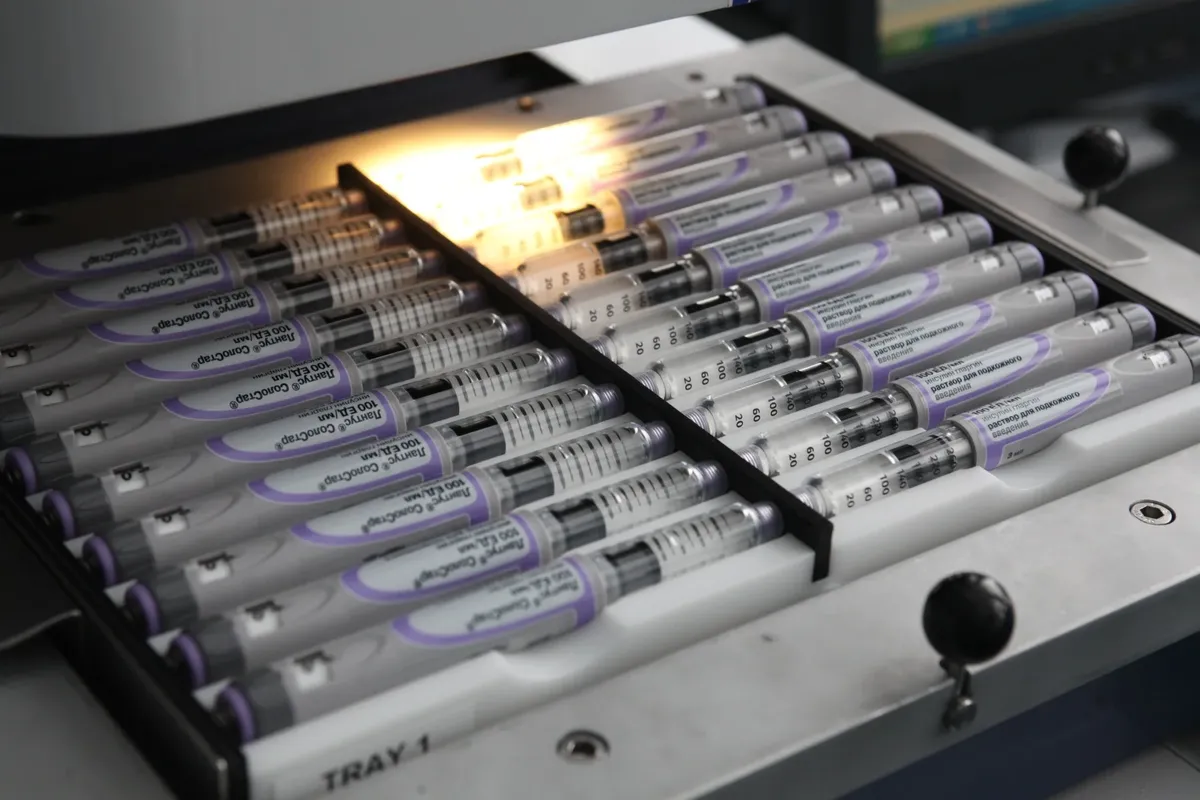
“Consumable materials (in this case, a syringe pen) can only be obtained through a medical commission,” says Lyudmila Bauer, executive director of the Diabetes Foundation. — Let’s say I need a step of 0.5 ( a step is the dose of the drug . — O.P. ). But all the syringe pens that we are given have a step of 1 unit. That is, I can enter 1, 2, 3 units and so on. But for me, one is a lot, you need 0.5. There is such a pen. But I need to prove to the medical commission that I need insulin and I need exactly that much.
— How does proof work in practice?
— Letters are being sent from the diabetes community. And the commission is already deciding whether to accept it for consideration or not. If the medical product or medicine you need is not included in the compulsory medical insurance, but you have proven its necessity, then the commission is already figuring out how to give you this product or medicine.
— Why invent something if the need for the drug is obvious?
— The commission is not so easy and simple. For example, the question may arise: why is a pen with 1 unit increments not suitable for you? Everyone is happy with it, but you are not. By the way, until 2022, we easily gave children pens in increments of 0.5 for free. They were even in the offices of pediatric endocrinologists. Now there is no such thing. Now you have to stay in the hospital and prove that this dosage is right for you.
- What's the problem?
- In money, of course. A pen with 1 unit increments is cheaper than a pen with 0.5 unit increments. It is also necessary to produce cartridges separately for it. And so far we have only established the production of disposable pens. We tried to produce reusable ones, but they are only suitable for specific insulin.
And prove, and justify, and knock out...
The opinions of organizations located in countries unfriendly to us cannot, of course, be taken into account. But both the UN and WHO already consider diabetes mellitus as a global non-infectious epidemic. Other experts classify what is happening as a pandemic. Russian health officials are using more cautious rhetoric: the situation only threatens to develop into an epidemic.
At the same time, local, but extremely serious problems greatly fuel it. When it comes to vital things, people with diabetes have to knock out, prove, justify, complain, demand...
At the end of last year, the All-Russian Organization of Parents of Disabled Children, through deputies, appealed to the Ministry of Digital Development of the Russian Federation and asked to include medical applications for monitoring blood glucose in the “white list” of the Internet. People had to explain the obvious connections: frequent mobile Internet outages do not allow parents to monitor the child’s condition in real time. Need I say what consequences these shutdowns can have for an insulin-dependent patient, especially if this is a child with unformed self-control? If there were connection failures, more than 20 applications stopped working, and a real threat was created to the lives and health of children, and within the walls of institutions with access to Wi-Fi.
Parents asked to resolve the issue promptly. The officials responded that it was necessary to discuss it with specialists and relevant departments. It would seem, what is there to discuss here?! It turned out that there is no regulatory act with clear criteria for inclusion in the “white list”. Making a decision without a legalized algorithm is a difficult action for an official.
Last October, the Moscow Diabetes Association (MDA) also sent an appeal - only to the capital’s Department of Health. And it concerned all the same LMWH systems and violations of the rights of patients over 18 years of age. A familiar motif.
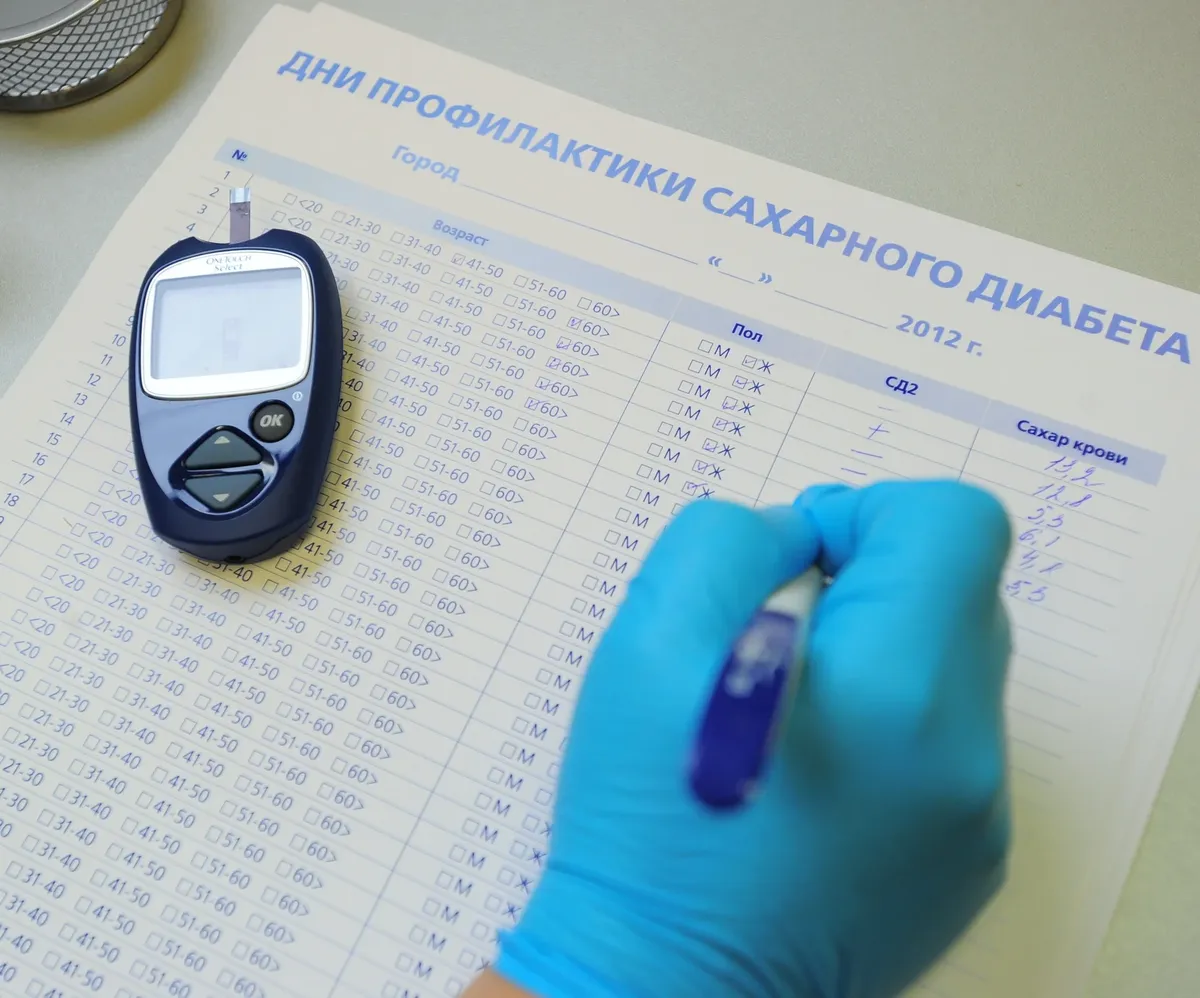
Representatives of the association announced an increase in refusals to issue systems. More than 7 thousand patients with diabetes, who were previously given them according to indications, faced a refusal or delay in conducting a medical commission (it is she who makes the decision). Even those people who were approved for individual purchases for 2025 have not received the system since the second quarter.
Members of the association reported this in a letter to the department. And what was the answer? And officials said that not a single case has been recorded of refusal to conduct a medical commission to a patient if he objectively needs to be prescribed LUMG (it is not clear, however, why a commission is needed if a person objectively needs it). The agency is also unaware of situations in which a patient with a prescribed system was not provided with it at the expense of the budget.
But if the official does not know, this does not mean that such facts do not exist. One very revealing line from the response sent (it is posted on the website of the All-Russian Patients' Union) is worth quoting verbatim: “The procedure for preferential provision of systems for continuous glucose monitoring to adult patients with diabetes is currently not regulated by regulatory documents.” It’s true: don’t just hand out equipment like that, outside the approved order.
However, representatives of the diabetic community went further and sent similar appeals to the department of the Investigative Committee and the department of Roszdravnadzor in Moscow and the region, as well as to the Moscow City Duma. One of the complaints stated that the patient, a disabled person of the 1st group, did not receive sensors for the SIMG for a year. The medical institution ignored complaints about the deterioration of the condition and refused to conduct a medical commission. At this stage in September last year, the chairman of the Investigative Committee, Bastrykin, had already become involved in the case, instructing him to “understand and report.”
Continuing the topic, we decided to find out how things are going nationwide. In September 2025, the Diabetes Life Association conducted an All-Russian survey that included more than two thousand respondents from 79 regions of the Russian Federation.
“Data for children with type 1 diabetes mellitus (T1DM) is as follows: 84.3% receive systems for free, 12.6% purchase them on their own,” says Andrey Kovalev, executive director of the association. — The situation with adult patients is fundamentally different: 9.3% receive it for free, 56.2% are forced to buy sensors at their own expense, 30.7% would like to use it, but do not have access. Thus, the federal project actually covers only a children's audience. The vast majority of adult patients remain outside the budgetary provision of SNMG (this is what the previous expert spoke about).
A separate problem is the quality of the sensors provided. In government procurement, the supplier with the lowest price wins, and predominantly Chinese-made systems enter the market (15 such systems are certified in Russia). The survey records a high level of quality complaints.”
Another survey indicator also indicates the systemic nature of the problem: only 29% of patients reported that the doctor regularly reviews monitoring data and discusses them at the appointment. A third of respondents indicated that the doctor does not use this information at all. As for the federal project “Fighting Diabetes Mellitus,” the situation with it is completely ambiguous. It was planned to spend 30 billion on the project by 2025. But, according to experts, for full-fledged work, many times more is needed - from 100 billion rubles. and above.
Insulin in syringes, a glucometer with test strips, consumables for injections - an adult with T1DM needs all this on an ongoing basis and in the proper volume. The complete checklist of “things that a diabetic must have in his bag” has up to 15 items.
— Which part of the required list is provided free of charge? - I ask Lyudmila Bauer.
— Do you mean, do I receive everything I need as part of compulsory medical insurance?
- Yes.
“Our parents, especially those from remote areas, are faced with the fact that their child gets sick, is admitted to the hospital, comes out, but doesn’t have insulin with them. It takes a month or two until they see an endocrinologist, are prescribed insulin and receive a group. And of course, at this time they themselves buy a glucometer, test strips, and insulin. Although, according to the rules, the patient must be given the drug upon leaving the hospital. There are problems. But otherwise, children are provided with almost everything.
With adults the situation is much worse. The provision was always not very good. And nothing has changed in recent years. If you need something within the framework of current legislation, you go and get it. If you don't knock it out, you'll only get what they give you.
— What are they guaranteed to give?
— They give insulin without knocking it out and can give you test strips. But the question is volumes.
“I’ll assume that both will be given a minimum.”
- Certainly.
— And this won’t cover the need?
- No.
Where does the money go?
No drug or technique can completely cure type 1 diabetes today. And this means that a person learns to live with it. Three mandatory points come to the fore: insulin therapy, constant monitoring of blood sugar and a lifestyle that allows you to manage the disease. How does the state help cope with these tasks? We turn again to the survey from Diabetes Life.
“Almost a third of patients experience serious interruptions in the supply of medicines, and only every eighth receives medications strictly on time,” states Andrey Kovalev. “It is important to understand the nature of these failures.
As a rule, we are not talking about a lack of funding, but about inconsistency in the chain “regional Ministry of Health - pharmacy chain.” The purchase has been completed, the drugs are in stock, but they reach the specific pharmacy with a delay.
Patients are forced to refill prescriptions, knock on doorsteps, and in some cases buy medications on their own while waiting for “theirs.”
This is also confirmed by the answers to the question about barriers to the care system. Among all the problems mentioned, interruptions in medicines and consumables are in first place: 68.5% of respondents called them the main barrier, 58.9% pointed to the lack of endocrinologists, 52.9% noted the inaccessibility of modern technologies (sensors, pumps), 26.4% named the remoteness of specialized centers.
The situation with routine diagnostics is also noteworthy: 30.4% of respondents reported that over the past year they had not undergone routine examinations to identify complications of diabetes. Finally, the availability of an endocrinologist remains an acute problem: only 30.3% of patients get an appointment within a week, and another 13.7% cannot make an appointment at all.”
Due to problems with the provision of medicines and consumables, the life expectancy of Russians with diabetes, according to the National Medical Research Center of Endocrinology, has decreased by 1–2 years over the past 10 years.
“The money allocated for healthcare is enormous,” says Alexander Saversky, president of the League of Patients. — 7 trillion is spent by the state alone, not counting what the Ministry of Defense spends on healthcare. The citizens themselves spend the same amount. This, I repeat, is a lot of money. Therefore, the question of where they go and how they are spent is now very serious.”

It should be noted that with statistics everything is extremely ambiguous. The numbers are mentioned, but they are, as it were, conditional. Something always remains behind the scenes - “we write two, three in our mind.” For example: it is well known that in practice there are much more people in need of modern glucose-lowering drugs than indicated in official statistics.
We are talking about a million people. Now there is simply no money to provide medications for such a number of patients in the country.
“The real problem is the availability of new drugs for those who really need them,” explains Andrey Kovalev. — Many of them are expensive and imported. For example, the original “dapagliflozin” (Forciga) is at the center of a patent dispute with its domestic analogue. Until this issue is resolved, some patients with direct indications do not receive full therapy. Therefore, the point is not that “statistics underestimate the need,” but that the appointment system and the provision system are sometimes out of sync.”
Unhealthy suggestion for proper nutrition
Among the reasons provoking an increase in the number of patients with diabetes, experts name physical inactivity, late diagnosis, obesity, and metabolic syndrome as a consequence. It would seem that the doctor and the patient should work together with this. However, for some reason, the topic includes Roszdravnadzor, the Investigative Committee, the courts, the Control Directorate of the President of the Russian Federation, the Ministry of Digital Development and other departments, not all of which are about health.
Dietary habits are increasingly being identified as key factors provoking the development of diabetes. So what happens? The country was literally flooded overnight with specialists correcting our diet and kilograms. People learned that there is such a science - “nutritionology”. And their eating behavior began to deteriorate rapidly? Something in this chain of cause and effect does not fit together. And why is all the responsibility shifted to the consumer? We eat what we can buy. If we are talking about mass-segment stores, we choose exactly from the assortment that is offered to us. This, of course, does not negate the reasonableness of the choice. And even of two evils, you can choose the lesser.
But we are definitely not able to reduce the amount of the same sugar in the modern product line. What remains? Raw food diet straight from the garden in a remote village, not disfigured by the delights of civilization? Gastronomic asceticism? Patronage of a nutritionist 24/7?
Let's turn to practice and consider school meals as an example. By definition, it cannot pose a threat. On the contrary: it should be an example of a balanced and healthy diet. But in reality, school food is not always and not entirely about nutrition (proper nutrition).
Muscovite Alexey is a doctor, father of three children. The youngest (11 years old) began to have weight problems and rapidly gained more than 10 kilos above normal.
“The summer spent in the village with my grandmother was not in vain,” says Alexey. — We went to an endocrinologist, took tests - fortunately, everything turned out to be fine. But we are at risk, and the problem is nutrition. I can control dinner and food on weekends, but there is also a school where, as part of some program, they feed for free.
- What's wrong with this diet?
- Bread, dumplings, dough, nuggets, French fries, more dough...
- About fries - are you serious?
- Yes, absolutely. I also have a daughter in college, and they also provide free meals. So she regularly asks for money for lunches because she doesn’t want to eat the same potatoes.
— Are there vegetables in your diet?
— They do occur, but not to the extent that is needed. At the same time, they recently installed a vending machine, and it contains chips, chocolate, chemical gummies, and soda.
- But you can bring your own food.
- Can. But how do you imagine this? Is a teenager somewhere in a corner eating from a homemade bowl, and everyone around is showing miracles of understanding? I don’t want to make my own child a victim of bullying.
To be honest, I can’t imagine how you can protect a teenager who is away from home from a lot of temptations that, while not being useful, remain tasty. And this problem is far from childish. Over 5 years, the overall incidence of obesity in Russians has increased by 52%. This was discussed at the National Health 2025 congress. Every year, more than half a million people are diagnosed with obesity.
Almost a quarter of the country's adult population is at risk. These are the numbers the Ministry of Health operates.
According to the Lancet, Russia is one of the eight countries where more than half of the world's population lives with overweight and obesity. On average, we eat almost 2.5 times more sugar than normal.
“I’ll give only one, but very illustrative example,” says Anastasia V., an endocrinologist with 20 years of experience. - Remember, a couple of decades ago there was simply a massive clouding - a fashion for all kinds of fresh juices and smoothies. Literally everyone started drinking them - from young girls to adult men. And in restaurants, and in shopping centers, and at home. Now imagine: a 250-gram glass of orange juice is 3-4 oranges. You are unlikely to eat so many fruits at one time. But you can easily drink a glass of juice. Even more raw materials are used for carrots. And I’ll ask again: will you eat four carrots at a time?
- But cream is also added to carrot juice.
- Of course they add! It is generally accepted that this way it is better absorbed. But the sugar doesn’t leave the carrots anywhere. I'm not even talking about exotic fruits. Consumption of such fresh juices every day becomes a time bomb.
Or take a trip to the cinema: it’s hard to imagine that there was once no popcorn and cola machines. Today it is a must-see attribute. Any honest technologist working in the food industry will tell you that today’s almost any product contains more sugar than those produced according to GOST. And now products can be produced according to technical specifications (TU). And don’t forget about flavor enhancers, sweeteners, preservatives, various E-additives... So eating habits are formed not only by us.
It is no coincidence that a bill was introduced to the State Duma, which (if adopted) will oblige compliance with GOST standards in the production of food products. Currently, mandatory standards apply only to a limited list of products.
We will provide you with stress
The connection between eating behavior and emotional background is the most direct. Eating problems with, say, sweets is an algorithm familiar to many. As for stress, in this part there is someone to work with the population. Reasons from above are provided by a continuous stream - from censorship and blocking to ridiculous bans and crazy initiatives. It has become common to attribute almost everything to stress. Among the causes of almost any illness, it will certainly be listed.
And stress is a truly powerful catalyst. Alexander Saversky specifies the general formulation in relation to our topic. “In general, I wanted to say that the government itself is to blame for this, as you say, epidemic. This is due to the measures that were taken during Covid (hence the stress). Then a special operation and huge uncertainty about the future were added. Artificial intelligence has begun to replace many professions today. People, of course, are shocked, because it is not clear who needs them here and why. We thought that creative professions would survive - nothing like that. The AI sings, dances, and does whatever it wants. Do you understand, right? This is simply a critical situation for humanity.
Of course, it’s difficult to blame the government for this part. But with regard to anti-Covid measures - quite. People then sat at home, they were treated rudely and cynically. Plus, there is reason to think that the effects of vaccines have a negative impact.
Clinical studies on them, let me remind you, were never completed in Russia. Well, at least on Sputnik. This set of negative, even inadequate measures has led to what is happening to people now. Roughly speaking, this is society’s reaction to the Covid measures taken by the government. It is possible to get out of this state only by the state’s sincere concern for people. But now, unfortunately, we do not see this sincerity. People increasingly do not trust the state.”
Our other interlocutor, Yulia, argues in the same vein. She believes that a systemic violation of the rights of hundreds of thousands of citizens to health protection, guaranteed by Art. 41 of the Constitution of the Russian Federation, leads to severe social tension. And this is not a private opinion at all, but a consolidated one. Let me remind you that the expert represents the position of the patients.
“Massive refusals to provide vital diagnostic systems, a blatant contradiction between legally approved standards of treatment and the actual practice of their non-implementation by the state creates a powerful protest potential among young people - active socially significant groups of the population. Without immediate action, we may face an avalanche-like rise in social discontent. If the problem is not resolved, the patient community will be forced to file a lawsuit against the Ministry of Health. Let them wait for us."