
Translated material
Putin's consuls
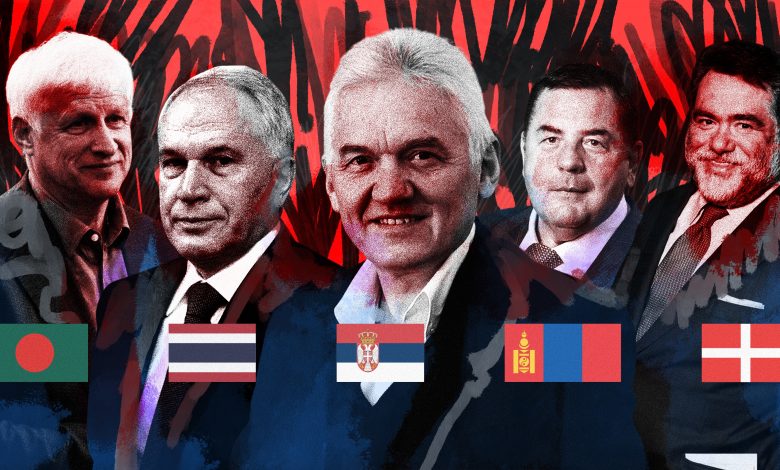
Russian authorities have been hunting for “foreign influence” for years. But there is an institution that, by definition, works in the interests of foreign countries - honorary consuls of foreign countries. In the Northwestern District, these positions are occupied by people from the top league of Russian business and politics - from Putin’s friends to former officials. “Chronicles.Media” tells who from Putin’s entourage really represents foreign interests.
At the beginning of the year, 118 honorary consuls were accredited in Russia, representing almost 70 countries, including the partially recognized Abkhazia, as well as the Sovereign Order of Malta. The Russian authorities classify 18 countries from this list as so-called “unfriendly”. Moreover, the majority of honorary consuls are not foreigners, but Russians representing other states.
What is an honorary consulate
Honorary consuls must provide protection to citizens of the country they represent, organize visa assistance, and develop cultural and economic ties. All this without opening a full-fledged representative office.
The status of honorary consul is regulated by the Vienna Convention on Consular Relations, adopted in the 1960s. It establishes basic guarantees for consular posts and their officials. The document guarantees the protection of premises, the inviolability of documents, as well as a special procedure for the protection of consular representatives themselves.
In practice, in the Russian system, the status of an honorary consul often does not provide real diplomatic powers, but prestige, additional connections and opportunities for lobbying interests - both within Russia and in the country it represents.
To begin work, the honorary consul must receive not only a mandate from a foreign state, but also the consent of the host country - the so-called exequatur. That is, every honorary consul working in Russia has received direct approval of not only foreign, but also Russian authorities for his activities. This is also why the institution of honorary consuls in Russia has long raised questions.
In Russia, this practice does not look like a necessary diplomatic mechanism, but like a closed system of status appointments for the elite, one way or another close to power. These positions are not given to professional diplomats, but to entrepreneurs, former officials, and people from the political and business elites. And in the case of the North-West, there are also figures directly or indirectly associated with Vladimir Putin.
St. Petersburg is the capital of honorary consuls
In the Northwestern Federal District (NWFD) there are honorary consulates of 41 countries, of which 8 represent states called “unfriendly” by the Russian authorities. Most of the offices of honorary consulates in the Northwestern Federal District are located in St. Petersburg - 38. It is here that especially many people associated with President Putin are concentrated.
Among them are many acquaintances of Vladimir Putin from pre-presidential times. Billionaire Yuri Kovalchuk speaks on behalf of Thailand, the former head of the RFU and current adviser to the Minister of Sports Sergei Fursenko lobbies the interests of Bangladesh, St. Petersburg businessman Taimuraz Bolloev, close to Putin, lobby for Brazil, Putin’s sparring partner in sambo Vasily Shestakov lobby for Mongolia. Georgy Fokin, the nephew of Yuri Kovalchuk, who represents the Dominican Republic, also works here.
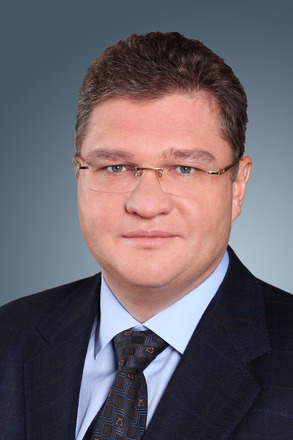
Mikhail Kusnirovich, Honorary Consul of the Sovereign Order of Malta, also fits into this circle. He is known as the founder of the Bosco di Ciliegi brand and the manager of the Moscow GUM, which was leased to him for 49 years without bidding. In 2012 and 2018, Kusnirovich was Vladimir Putin’s confidant in the presidential elections, but in 2020 he received Italian citizenship. And in 2022, he also received Swiss tax resident status.
Another interesting, albeit little-known character is Roman Iliev, the nephew of one of the richest Russian entrepreneurs, Zarakh Iliev, a business partner of God Nisanov and Ilgam Ragimov, a classmate of Vladimir Putin. Roman Iliev is the honorary consul of Chad, not only in St. Petersburg and the Leningrad region, but also in Belarus.
Another businessman close to Putin, billionaire Gennady Timchenko, deserves special interest. He is the honorary consul general of Serbia in Russia. However, in addition to Russian, Timchenko has Finnish citizenship.
A representative of the Finnish Ministry of Foreign Affairs did not directly answer a question from Chronicles.Media about the attitude towards a diplomatic position of a Finnish citizen who is under sanctions for supporting the war against Ukraine. But he confirmed that sanctions against Gennady Timchenko remain in force, and his accounts in the EU are frozen.
Consulate as status and protection
In many cases, an honorary consulate looks like a status add-on over an already existing business. Often honorary consulates are located at the same addresses as the commercial structures of the consuls themselves.
Thus, the honorary consulate of Angola in St. Petersburg is located on Shpalernaya Street, 36 - at the same address where the former State Research and Design Institute of the Basic Chemical Industry is located. One of its leaders and owners after privatization, Viktor Budny, also heads the honorary consulate of Angola.
The honorary consulate of Thailand in St. Petersburg is located on Bolshoi Prospekt of Vasilievsky Island, 9/6 - the companies of Putin’s friend, billionaire Yuri Kovalchuk, are also located there.
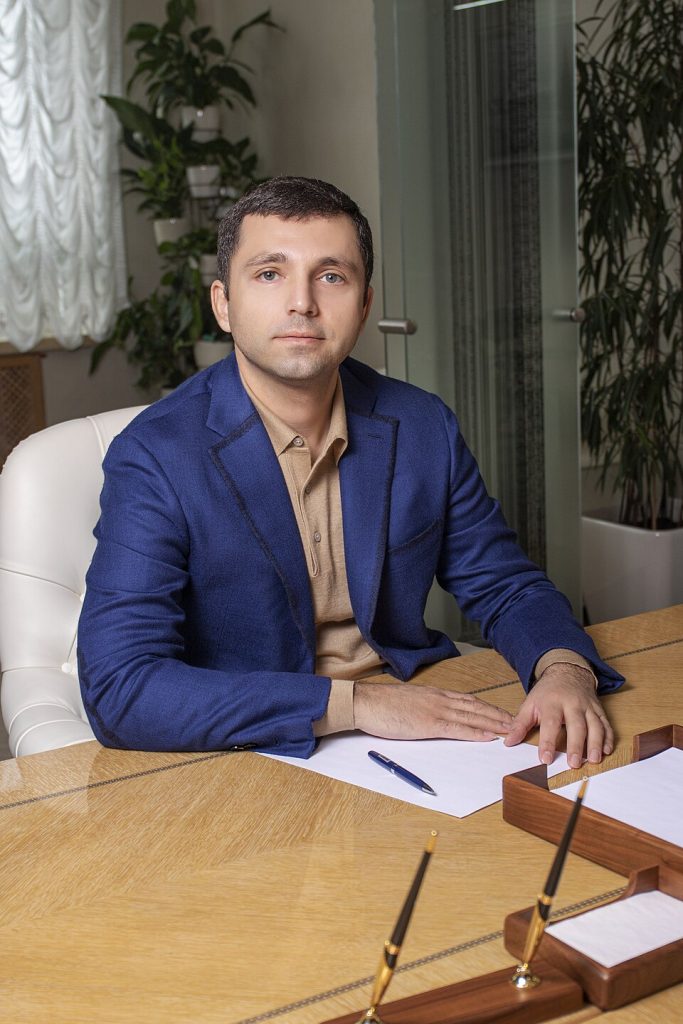
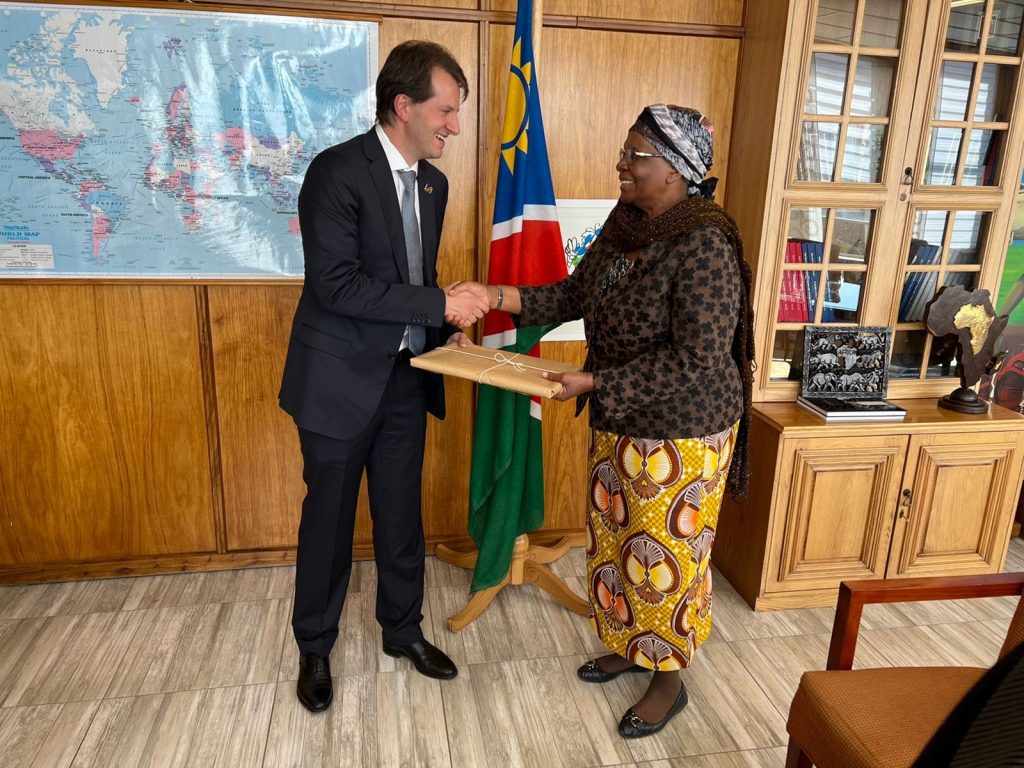
The honorary consulate of Namibia in St. Petersburg operates on the same principle: it is located on Dinamovskaya Street, 2 - at the same address where the companies of the honorary consul Albert Beineshev are registered.
In addition to its status, the honorary consulate, based on the provisions of the Vienna Convention, has a certain immunity. For example, it is the responsibility of the receiving State to protect the premises from intrusion and damage. In Russian realities, along with honorary consulates, close business also has such protection, at least symbolically.
Over the years, honorary consuls in Russia were also former Minister of Education Andrei Fursenko, representing Bangladesh, conductor Valery Gergiev, representing Luxembourg, Putin’s classmate Viktor Khmarin, representing Seychelles, as well as oligarchs Alexei Mordashov and Vladimir Yevtushenkov, who also represented Luxembourg in different regions of Russia.
Statesmen
There are also consuls who are closely associated with large state or near-state structures. So Igor Maksimtsev, representing Chile, works as the rector of the St. Petersburg University of Economics, and more recently has also been a member of the board of directors of Gazprom.
Namibia is represented in Russia by the son-in-law of the deputy head of the embassy in the Northwestern Federal District, Lyubov Sovershaeva, Albert Beineshev. He is a major businessman who, together with his wife Svetlana, earns billions from government contracts. In addition, Beineshev and his wife received Montenegrin citizenship in September 2022 for investing in the local economy.
Former vice-governor of St. Petersburg Alexander Vakhmistrov is the honorary consul of Ethiopia. Vakhmistrov was the head of administration of Valentina Matvienko during her work at Smolny, and later he worked as one of the leaders of the LSR development group. In 2017, he became an adviser to the chairman of Bank St. Petersburg, of which Vladimir Putin is still a minority shareholder.
Honorary Consul of Greece Vladimir Shcherbakov is a former deputy prime minister of the last Soviet government. Honorary Consul of Guinea Sergei Girdin is a major IT entrepreneur who was associated with the beneficiaries of the “Moldavian Laundromat,” a scheme to withdraw hundreds of millions of dollars from Moldova.
Outside Putin's circle
Even if we take out the people from Putin’s inner circle, there are still many notable figures among the honorary consuls of the north-west.
Zimbabwe in northwestern Russia is represented by Honorary Consul Nikolai Sobolev, who heads the interregional public organization Academy of National Security. In the late 90s, she often hit the front pages of the media due to her connections with the entourage of State Duma Speaker Gennady Seleznev, illegal financing of the Communist Party of the Russian Federation and the murder of politician Galina Starovoitova.
Honorary Consul of Mexico Andrey Kuznetsov is the director of the Keystone group of companies operating in the field of sea, rail and road freight transportation. Chronicles.Media has already written about this group, talking about connections with the Gazprom Neft - Bitumen Materials company and the supply of bitumen to the European Union in circumvention of sanctions.
Sergey Alekseev, representing the Philippines, and Sergey Voronkov, honorary consul of Ecuador, are associated with the exhibition infrastructure of St. Petersburg. At different times, they managed the Lenexpo complex and structures associated with Expoforum, the site of the St. Petersburg International Economic Forum.
Honorary Consul of Syria Mlaz Ghazi is the son of a former counselor at the Syrian Embassy in Russia. In St. Petersburg he was known as the owner of a chain of burger joints. In December 2024, when power in Syria passed from the Assad family to the opposition, he did not remove the homemade flag of the victorious opponents of the regime from the building of the honorary consulate.
Foreign agents of influence
For more than a decade, Putin’s authorities have been looking for “foreign agents” in Russia—those who allegedly receive money from abroad for political activities or are subject to foreign influence. Using these formulations, it turns out that Putin’s friends, who became honorary consuls, could be called foreign agents. They are all engaged in lobbying the interests of foreign states and are simply subject to their influence by virtue of their position.
Russian legislation on “foreign agents” has exceptions for diplomatic workers who cannot be granted such status. But this exception applies only to foreign citizens working in Russia. But not rich Russians who have received the status of honorary consuls of other states and are actually under their influence.
Despite international personal sanctions against a number of honorary consuls working in Russia, these people have consular status in accordance with the Vienna Convention. This allows them to maintain contact with the elites of not only the states they represent, but also to actively use their status at the international level in general.
In all the countries whose honorary consuls are Putin’s entourage, the Kremlin has its own interests. Thus, in Serbia, the Kremlin needs to support pro-Russian sentiments and in every possible way slow down integration into the EU and especially into NATO. In Bangladesh, Rostat is building the Rooppur nuclear power plant, and the country itself is a representative of the so-called Global South, whose support Russia has been trying to enlist in recent years as a counterweight to the United States. Brazil is a member of BRICS, a key international structure for Moscow. In African countries, Putin's friends can lobby for Russian companies' access to rich natural resources.
Therefore, the status of honorary consul in Russian realities is a marker of trust on the part of Putin personally, since random people, as Chronicles.Media found out, do not occupy such a position.
Mikhail Mikhnevich, Maxim Privin