
Translated material
Zhvanetsky Ice Arena
Alexey Mishin turned 85 on March 8
In football and hockey, all sorts of organizations love to rank the best players and coaches of all time. In figure skating they rarely indulge in such things. However, the masters of the toothed skate with a heel also have their own Hall of Fame, where the most worthy are admitted annually. In this list of 148 people, our country is represented by 22 people. But there are only three Soviet mentors actively continuing their sports path. And one of them, of course, is Alexey Mishin.
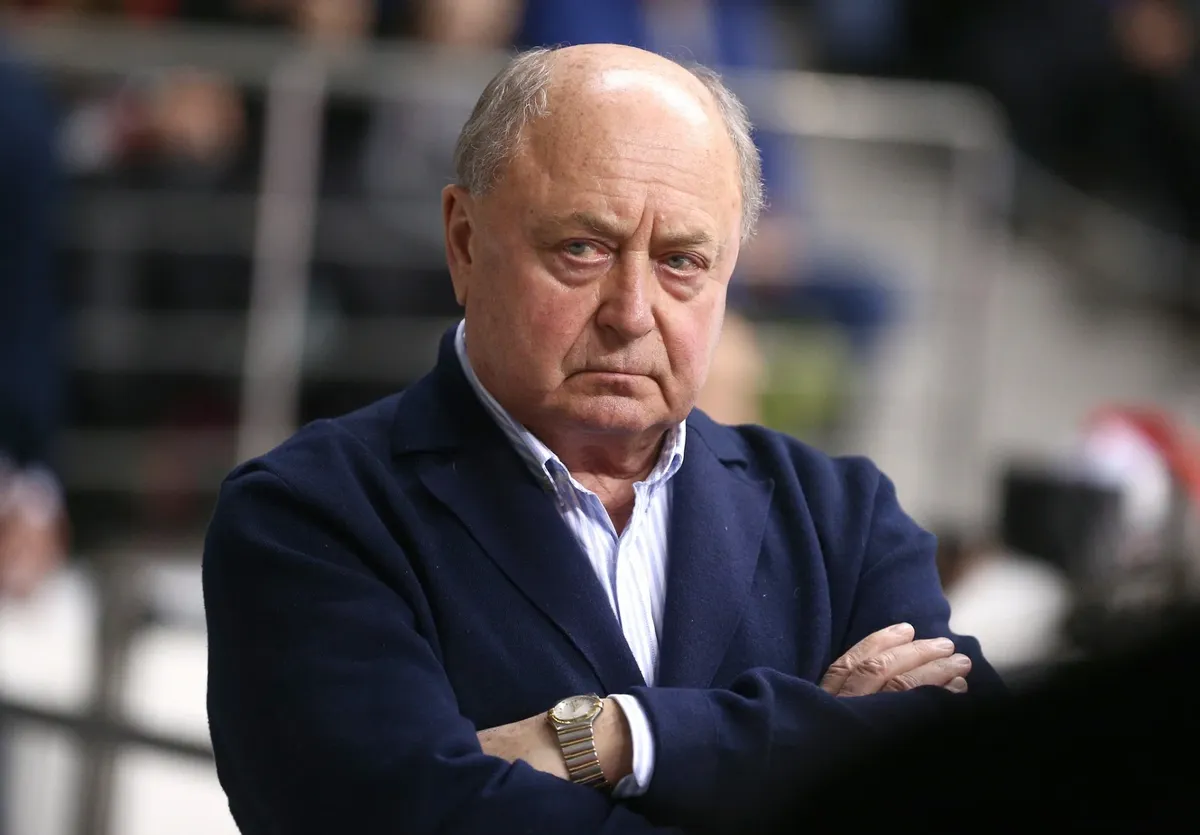
I haven’t checked it specifically, but I’m sure that few people practice at such an advanced age, even abroad. And we’re not just talking about the sparkling air sport. But Alexey Nikolaevich, who still puts on skates during training, cheated time. He simply deceived him: he is doing what he loves. With all my might. And certainly with jokes and jokes. Many journalists compared Mishin with Zhvanetsky. They are really similar. And not only externally. One humored as it should, and the other trained as it should. Bold and colossal.
At the same time, the future master, born in Sevastopol, according to whose methods almost all current tutors work, almost did not speak until he was three years old. And the reason for this is the forced famine that he experienced during the Great Patriotic War. Mom poured a bowl of soup for the two of them with their sister, and the eldest Lyudmila divided a piece of sugar - the main delicacy - into several parts...
By the way, it was thanks to her that he started skating. However, skates is even a strong word. Having received a scholarship, her sister gave Lesha “snow boots”, which he tied to felt boots and, clinging to a dump truck, cut through the snowdrift potholes of Leningrad, where the family of naval school teachers moved after the victory from Tbilisi. This is how the tireless mentor recalled this in his book “What the Ice is Silent About”: “At the corner of Ruzovskaya and Zagorodny Prospekt there was a house of officers of the former Semenovsky regiment, which guarded the Tsarskoye Selo railway. There was a room in it where the five of us lived - mom, dad, grandmother and me and my sister. At this corner trucks were turning from Zagorodny Prospekt; Ruzovskaya Street itself was not cleaned at that time and was all trampled down and packed with snow. We made hooks out of pokers, tied a rope, and when the truck turned onto a slippery street, we clung to it in groups of three or four, performing the so-called “Dutch steps.” Yes, yes, my first acquaintance with arcs and sliding took place on Ruzovskaya Street. This continued until one day one of the drivers got tired of it: he stopped abruptly, and we, by inertia, drove forward. Without thinking twice, he grabbed me by the skates and shook out all the desire to skate like that out of me on the road. After that, my street figure skating universities ended. And I started playing sports in a less extreme way.”
The naughty boy reached the real section at the Palace of Pioneers only in the eighth grade, amazing everyone with his ballet stretching and jumping ability: in flight, he could almost reach the basketball hoop with his foot.
And if the fearless gutta-percha kid had fallen into the hands of the wonderful Maya Belenkaya earlier, he would probably have become cooler than Ulrich Salchow. Nevertheless, the matured boy, not having the necessary basic training, nevertheless fulfilled the standard of a candidate for master in 1964, but he never managed to reach the podium of the USSR Championship. However, it was Mishin who would soon derive a simple and precise figurative formula: “if you can’t act alone, become a couple; doesn’t work out in pairs - go dancing; If you don’t dance, go train; if you don’t come out to teach, sit down to judge; If you couldn’t evaluate, manage.” And Alexey Nikolaevich really showed himself in pairs skating.
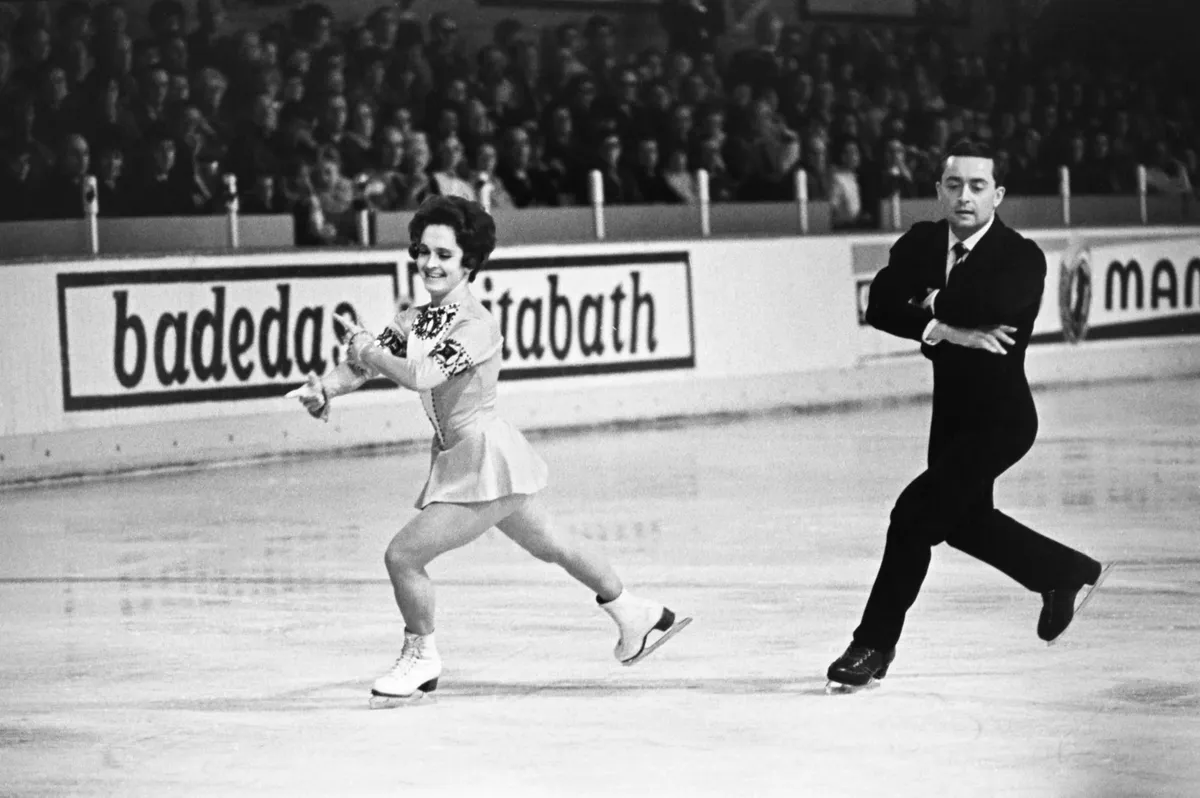
Having teamed up with Tamara Moskvina (also a former, but more experienced singles skater who competed before him with Alexander Gavrilov), he sharply went up the hill. Together with her. Yes, their duet was inferior to the then leaders in artistry and charm, purity of lines and refinement of movements. But due to the number of difficult jumps, their programs looked cheerful and daring. For example, more than half a century ago, Tamara and Alexey were the only ones who performed a double Lutz. In 1967, at the Union Championship, they reached the second place. And in Swedish Westeros, unexpectedly for many, they became vice-champions of Europe 1968, losing only to the unsurpassed Lyudmila Belousova and Oleg Protopopov. Experienced fans remember very well how at the award ceremony the intellectual Mishin comically glided next to the charming Toma in a knitted sweater, trousers and civilian boots, since he had time to change clothes, not hoping for medals. Unfortunately, things won’t go well for Igor Moskvin’s team at the Grenoble Olympics (in the short routine, the partner missed a jump, and in the free time, Alexey touched the ice with his hand). But a year later, at the continental forum in Garmisch-Partenkirchen, they would take bronze, and at the planetary rally in Colorado Springs 1969, they would famously turn silver, only failing to cope with the rising stars - Irina Rodnina and Alexei Ulanov.
But at the USSR Championship in Leningrad, a bright, unlike anyone else couple (see “Gypsy Girl” performed by them) will defeat both the inimitable Belousova and Protopopov, and the brilliant Rodnina and Ulanov. And after international starts he will decide to go overboard. Moskvina, as she herself said, needed to defend her dissertation and have children. And Mishin, who was very worried that he had not reached the old world and world golden heights (although fighting on equal terms with the above-mentioned teammates on the national team is already a feat), immediately set off on a coaching voyage. (He has retained his friendship with his divine companion Tamara Nikolaevna, who, by the way, at 84 is also on a combat post, to this day.)
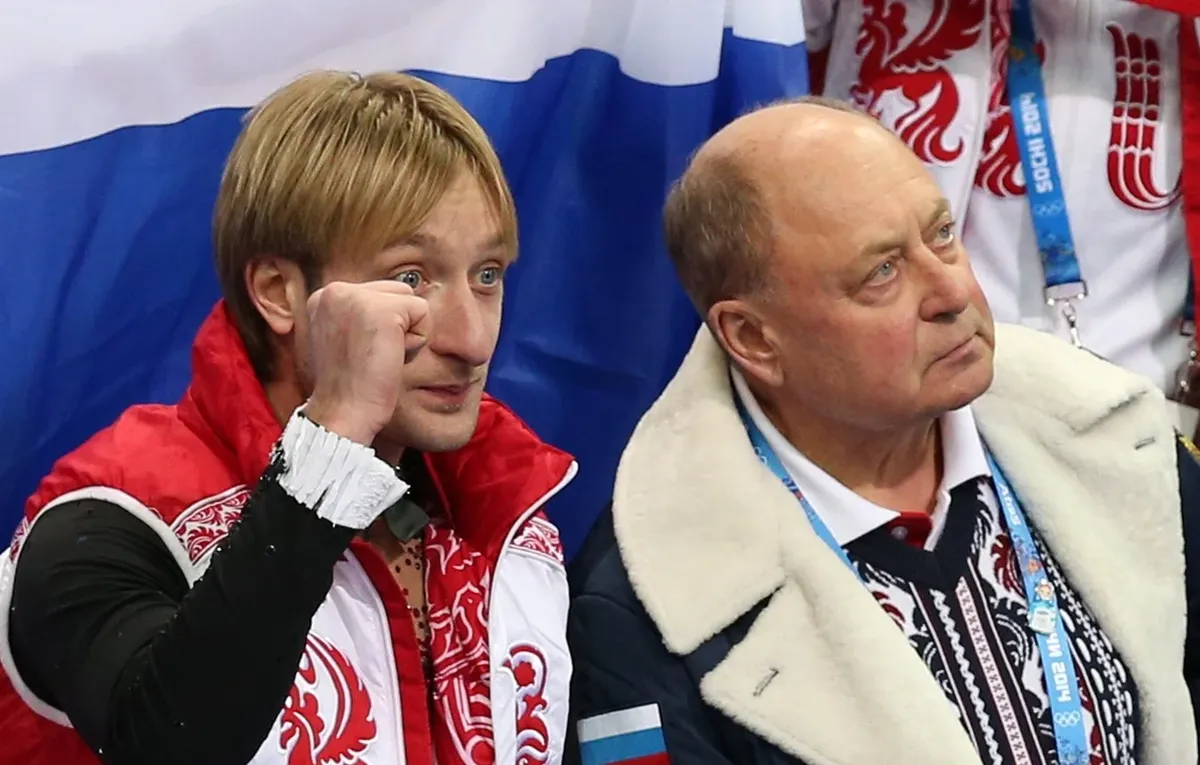
... Having graduated from LETI (Faculty of Automation and Computer Engineering), an electrical engineer will approach the study of the figure issue from a scientific point of view and combine mechanics and aesthetics on ice. Moreover, his dad will help him with this, which Mishin always talked about with particular warmth: “Even during singles skating, my father and I tried to delve into the details of performing various elements of figure skating and, of course, the main ones - jumps. We purchased an 8 mm “Sport” movie camera, which was a primitive point-and-shoot camera with a huge flashlight battery. Dad filmed my performances, I filmed the performances of others. Then they developed the films themselves, edited them, watched, analyzed and thought. Dad explained to me the basic laws of theoretical mechanics. Thus, by the time I finished my sports career, I was already ready for a new life for myself.” Then Mishin fixed the “cold” sheepskin coats on the Neva, which had switchable lenses. And having saved up money, he bought a Japanese model and a viewing table on which, by manually rotating the film, it was possible to slowly scroll through the frames. This extraordinary film library (one of the largest in the world), coupled with an incredible thirst for knowledge, allowed him to develop his own system with exclusive exercises.
The leader will invent the famous “beeping” vest, which helps to rotate correctly (it gives a sound signal if the hands are placed correctly on the body when performing an element); a lounge for safe mastering of jumps and a special simulator that increases the speed of rotation. They will laugh at these outlandish “things” for a long time, and today, without these original “discs” and “fishing rods on ropes,” it is difficult to imagine the activities of virtuosos from all corners of the globe.
...The young coach Mishin, whose student Yuri Ovchinnikov jumped to the top line of the union podium in 1975, was immediately disliked by the party “suits”. And instead of accreditation for the Olympics in Innsbruck, the good revolutionary was given the label “not allowed to travel abroad.” “They concocted a secret letter against me, and the KGB decided that I was unreliable. We were deceived, of course. Three years later, the chairman of the USSR Sports Committee, Sergei Pavlov, and the first secretary of the Leningrad regional committee, Boris Aristov, lifted the curses from me, but I had swallowed the communist jelly,” this is how Alexei Nikolaevich, who continued to write dissertations at night and work on the ice during the day, explained the “bandwagon” with his characteristic irony.
He steadfastly endured the ban on the printing of his books and other supreme “sanctions” (he was not allowed on television, was not shown on screens during competitions, and his name was not mentioned in reports) and will soon create a real factory of champions at Yubileiny. By the way, his large-scale work “Biomechanics of Figure Skaters’ Movements,” composed during the years of his suspension, is still studied in specialized institutes. And, of course, not only in Russia. (It’s no joke: two-time Olympic king Japanese Yuzuru Hanyu followed the recommendations from this tome.)
Wise as a snake and nimble as a perpetual motion machine, Mishin always followed his line and never adjusted to anyone.
and he didn’t hide his monolithic philosophy: “When a mentor claims that the main thing is the embodiment of music on ice, then this, excuse me, is baby babble on the lawn. You need to make sure that the program is technically flawless so that the athlete can defeat everyone.” And, you see, not a single coach in the world has and, I am convinced, will not have such a number of top-class figure skaters who would win so many precious circles at the largest tournaments. Just count the awards of Alexei Urmanov and Evgeni Plushenko. And Alexey Yagudin tried on the world and European crowns for the first time thanks to the tactics of the St. Petersburg dinosaur, and only then went to the capital to see Tarasova.
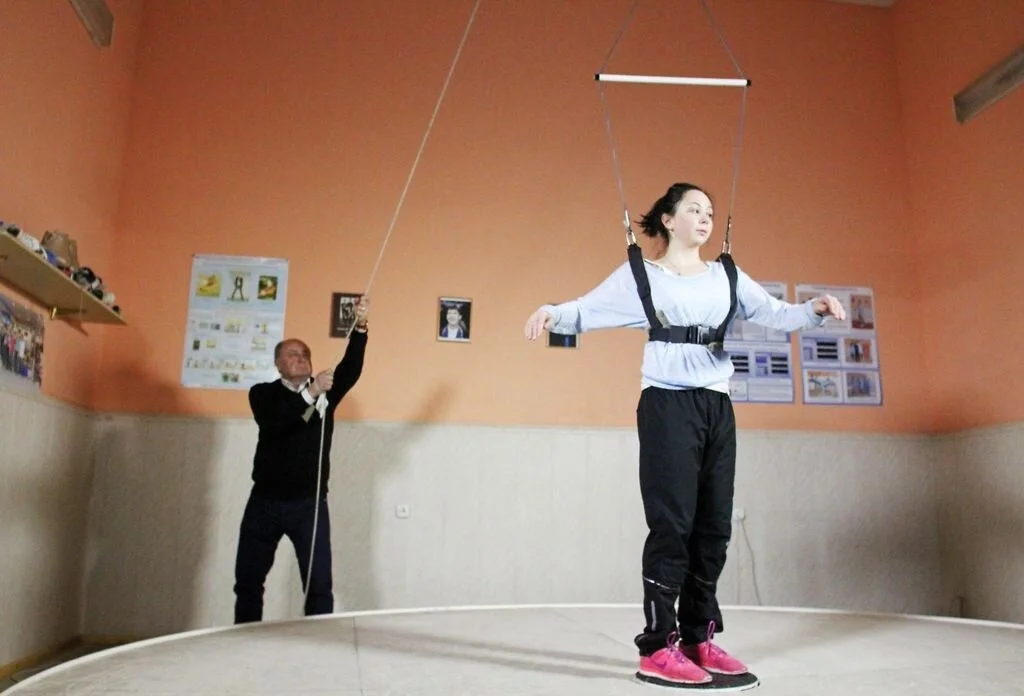
By the way, the confrontation between Tatyana Anatolyevna and Mishin in the 2000s captured the whole country. And how damn charming and sweet it was compared to the wild Internet showdowns of the new generation. “Mishin, of course, is a professor, but professors also make mistakes...” Tarasova once noted in an interview with Novaya. Alexey Nikolaevich, like the Cheshire Cat, preferred to break into a smile in response. In general, he rarely entered into controversy behind the scenes, trying to play on the ice and in the open. Although he also stood up for his students and could show off, as they say, on the verge of a foul. I remember how, after a stage of the 2002 Grand Prix series at Luzhniki, he said to the young journalists surrounding Zhenya Plushenko, who for the first time in the history of figure skating performed the “quadruple toe loop - triple toe loop - triple loop” cascade: “Don’t tear off my handsome man’s genitals, otherwise you will have no one to praise...” And then they praised Plushenko for a very long time. And there was a reason for it: a ten-time national champion, a two-time Olympic champion (don’t forget about two more silvers), a three-time winner of world championships and a four-time triumphant of the Grand Prix finals, winner of seven gold medals at the European forum. And all this with Mishin. For 20 years.
But personally, something else amazes and delights me even more about the lively and bright sensei: he quietly replaced the father of some “cadets.” Replaced from the bottom of my heart. Listen to Alexey Yagudin: “I grew up without a dad, and Alexey Nikolaevich had a certain influence on me in terms of male education. He knew how to take care: buy a suit, give something as a gift. We had no money at all. And he will bring some food and help financially...” The schoolboy Plushenko, who came from Volgograd, also had no money at all. And together with their mother, they lived with everything ready in the Mishins’ apartment, which turned into a kind of boarding school. And the coach and his family lived in a dacha in Solnechny... If anyone doesn’t know, his wife, Tatyana Mishina (nee Oleneva), is also an honored coach of the USSR and Russia and his faithful comrade-in-arms in ice affairs. Not without her help, he revealed the individuality of each chick and taught him to soar smoothly above the rainbow and land elegantly.
Moreover, he managed to find a winning approach to the skaters. Who can you compare the gentle kitty with - the 2019 European champion Sofya Samodurova? Do you remember how the daring Empress Elizaveta Tuktamysheva, together with the maestro, more than once performed miracles in various arenas? In 2015, she returned Russia's gold leadership in women's skating and always gave battle to gymnasium students Eteri Tutberidze. And on the wizard’s 80th birthday, wearing a signature cap, she gave him Euro 2021 silver. On this anniversary, his student Evgeny Semenenko won silver in the final of the Russian Grand Prix, and the spectators strewn the Chelyabinsk ice with teddy bears in honor of the coach.
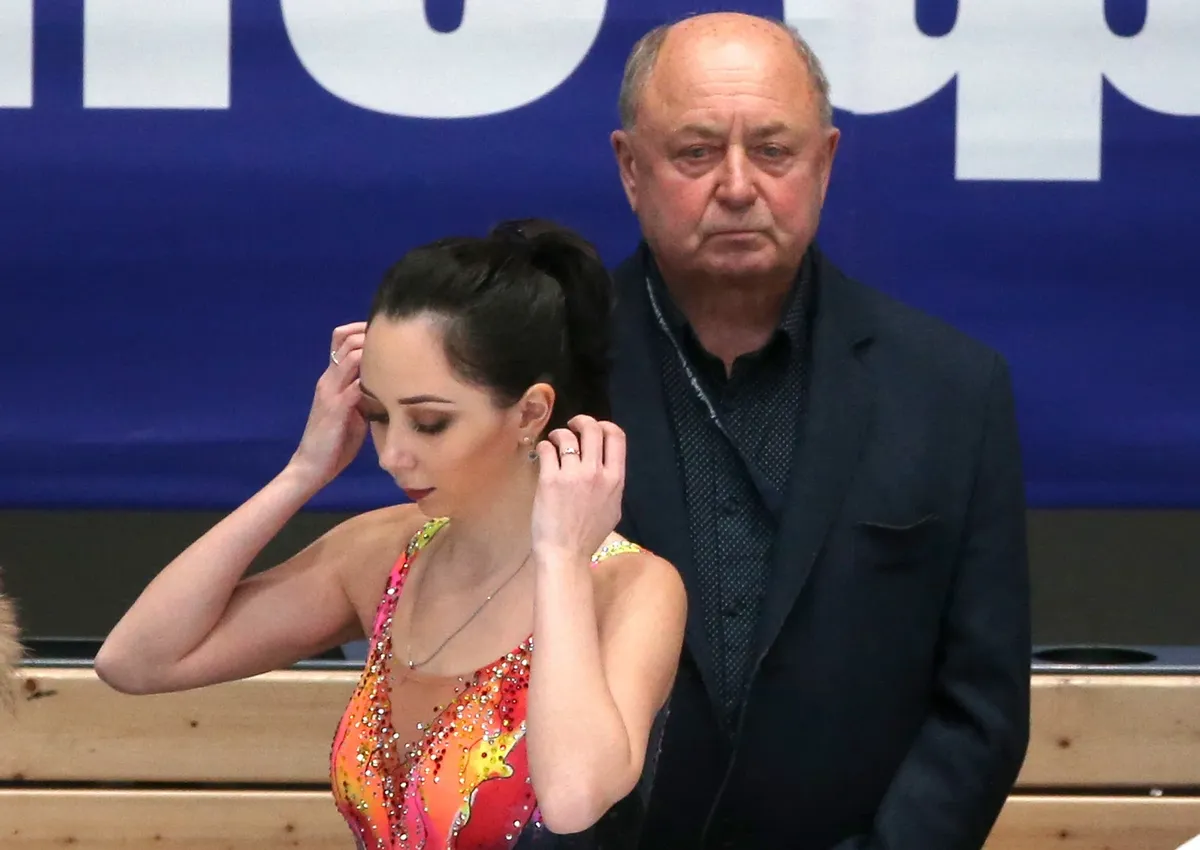
And another important point: artists rarely run away from Mishin in search of a better life. On the contrary, it is often to him, demanding, but restrained and unperturbed even over the side in moments of truth, that those who, for various reasons, have lost themselves, turn for practical advice. Alexey Nikolaevich quickly revived and transformed the phenomenal Italian Carolina Costner, one of the most popular figure skaters of the 21st century. American Brady Tennell came to him for an internship, and she was amazed that during training, “Mishin never swears, but calmly makes the right remark.” He, I would add, like a great surgeon, sees the problem with the naked eye and carefully eliminates it, delicately forcing the little man on skates to move forward and upward. At the same time, I repeat, his author’s ideas (choreographic and musical) are borrowed without regard. The professor himself (he was awarded this title in 1990 at NSU named after P.F. Lesgaft) once shared an interesting story: “Once a figure skater from the USA attended my seminar in Germany, and after training she came up and asked: “But you also work according to the Mishin system?”
Moreover, his flagship system turns former students into coaches. Equally thoughtful and attentive to detail. For example, the 1994 Olympic champion Alexey Urmanov at the 2026 Milan Games led Mikhail Shaidorov to a golden victory, and Oleg Tataurov trained the 2025 Russian champion Vladislav Dikidzhi. Arthur Gachinsky, who has reached the planetary and continental podiums, successfully trains juniors. Liza Tuktamysheva and Sofya Samodurova, as well as bronze medalist of the World and European Championships Mikhail Kolyada, are starting their teaching career. And Evgeni Plushenko, as you know, has his own school...
“What is the secret of Misha’s success?” - experts ask. And it’s simple: a gardener and cook (his pilaf is a work of art), a passionate fisherman who respects the Russian bathhouse, collects wall clocks and is not envious of the successes of others, still loves slippery challenges and experiments and does not lose his good spirits and sense of humor.
“When my mother gave birth to me on March 8, she said: this is my gift to all women in the world,” the legendary guru jokes seriously and assures that “if training is a joy, the result will be inevitable.”
This material was published in the seventeenth issue of Novaya Gazeta. Magazine". You can buy it in the online store of our partners.