
Translated material
Plausibility Factory
How to maintain peace in the era of effective lies and why fact-checking should become a public service

Photo: Dmitry Dukhanin / Kommersant
When Tim Berners-Lee invented the Web, the network was conceived as an open, decentralized system where everyone could not only read but also write, where knowledge was interconnected, and access to it did not require permissions and did not depend on anyone's will. Over the course of three decades, this idea has changed beyond recognition.
In the developed world, the Web has become subordinated to the logic of platforms: attention has become a commodity, algorithms have become intermediaries between humans and reality, and data has become raw material for a global industry. In authoritarian systems, the transformation has gone even further: the Internet has turned into a controlled environment where access to information is metered, and the Network itself is increasingly becoming an instrument of control and propaganda. But behind this conversation about freedom and architecture, another problem arose, less noticeable, but more fundamental. It is not about the structure of the Network, but about how we perceive reality through it. The main question became: “Can we understand how much of this can be believed at all?” This is not just a change of wording. This is a tectonic shift: we have moved from a crisis of scarcity to a crisis of validity. The new crisis of the Internet is a crisis of verifiability of reality.
From excess information to excess credibility
The Internet has long been perceived as a space of redundant information. The key challenge was noise: there is too much of it, you need to be able to filter, sift out the unnecessary, find the grain in the chaff.
Today, not only the density of noise has changed, its very nature has changed. Fake no longer looks like fake. It can be stylistically impeccable, visually accurate, emotionally compelling. Its production has become fast, cheap and virtually unlimited - from text to video to eyewitness accounts. The main problem is that lies have learned to wear the costume of truth, often better than truth itself.
In the new environment, the winner is not the one who tells the truth, but the one whose version of reality “posts” faster, will be brighter, angrier and better tailored to the algorithms.
What works better?
This is where the second actor in the drama comes into play—the platforms. Their algorithms are not optimized for accuracy. They don't care whether it's truth or fiction. They are optimized for engagement, they enhance what works best. And simple explanations of complex things, conflicts, extreme positions, visually strong content work best - regardless of its accuracy.
The truth is not prohibited in this system, it is simply less competitive.
But the most profound shift occurs not at the level of technology, but at the level of human perception.
When a person is constantly faced with contradictory versions of events, when some people call the same video irrefutable evidence, while others call it a clever fake, when any fact can be disputed by referring to “fake” or “ordered”, something terrible happens.
Basic trust is eroded. Not to a specific source, but to the very possibility of establishing the truth. A state arises that philosophers would call epistemological apathy: “You still won’t understand anything, everyone has their own truth.”
This is a fundamentally new situation.
Previously, propaganda sought to convince; today it increasingly seeks to destroy the very idea of verifiable reality. And if there is no truth, then why fight?
Why truth loses
If you try to describe what is happening in one phrase, it will sound like this: lies have become cheap, fast and technologically advanced, but the truth remains as expensive and slow.
This new equation rewrote the balance of power in public space.
Until recently, creating a convincing lie required resources comparable to running a small factory. We needed editorial offices, printing houses, recording studios, film crews, special effects, and time. The lie was either a product of the state machine (expensive propaganda) or the result of a serious media operation with budget and staff.
Today this factory fits in a backpack: a laptop, access to the Internet and the ability to work with neural networks. Generative models have learned to stamp what was previously considered an essential sign of authenticity. Coherent text in any style? Please. An "on-scene" photo that never happened? Easily. The voice of a man uttering words that he has never spoken in his life? Synthesized in minutes. Video of a politician “confessing” to monstrous things? Already a reality that makes the viewer's hair stand on end.
We have entered an era where a proof can be generated as easily as a statement itself. And this breaks the usual logic of trust. Previously, we had a simple heuristic: if there is a photo or video, it means it happened. Now their origin can always be disputed.
In the spring of 2023, an image of the “explosion at the Pentagon” spread across social networks: believable, stylistically impeccable, with a “news” presentation. Aggregators managed to pick it up, and financial markets reacted with a decline for a short time. Later it turned out : the image was generated.
We have lost our anchor of reality.
The truth is always late
The second problem is speed.
According to an MIT study, false information spreads online much faster than true information, in some cases up to six times.
Professionally “packaged” lies work especially well: the more it catches attention, the faster the algorithms accelerate it further, turning the spread into a self-exciting, viral process.
Verification, on the other hand, is structured differently; it takes time: find the original source, compare data, receive comments, check the context, and ensure authenticity.
As a result, a monstrous asymmetry arises: a lie appears instantly, but the truth always catches up and comes when an opinion has already been formed.
In 2022, at the height of the Russian-Ukrainian conflict, a video appeared in which Vladimir Zelensky allegedly calls on the Ukrainian military to lay down their arms. The video was quickly exposed , but the very fact of its appearance showed: even a crude fake can instantly enter the information flow and start working - before the check is turned on.
It is known that refutations are read ten times less often than sensational stories, and they are rarely published on the front pages.
Fragments instead of the whole
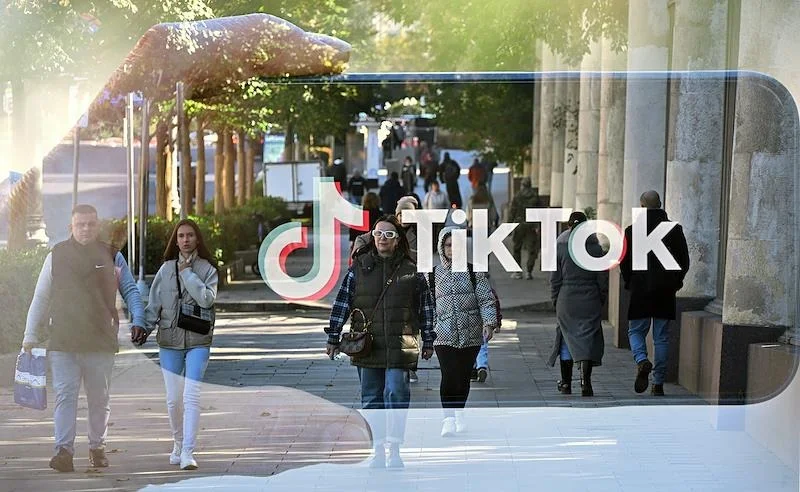
The third critical problem is the disappearance of context. Modern content lives in the form of Reels, Shorts and TikTok, that is, fragments: these are pieces taken out of interviews, short videos, trimmed quotes.
From these fragments you can assemble almost anything:
change the meaning without changing the words;
create conflict where there was none;
turn the particular into the general.
It's like reading a book in which someone has randomly rearranged the pages, cut out chapters, and swapped the titles. Formally, the text is “native”, nothing new has been invented, but the meaning has changed.
Case in point: the scene at the 2022 Oscars where Will Smith punched Chris Rock. A short fragment of the moment of the strike went viral on social networks, and for millions of viewers it looked like a sudden, unprovoked aggression. Later, more complete versions appeared - with a joke, a reaction and subsequent words. Depending on the length of the video, the assessment of what was happening changed, from “rudeness and unacceptable violence” to “an emotional but legal reaction to a gross insult.” Nothing was faked, but the reality turned out to be different, depending on which piece the viewer saw.
Manipulation becomes personal
Previously, propaganda worked “in areas”: one message for everyone: the newspaper was published in a single circulation, leaflets were printed in the same text, radio and TV broadcast the same report for everyone.
Now it works for each individual, welcome to the era of microtargeting! Algorithms know almost everything about you: what interests you, amuses or annoys you, what you are afraid of, what conspiracy theories you already tend to believe in, what images make you trust.
And the presentation is adjusted to this individual portrait.
Different people give different explanations for the same event, framed in different emotional packages. For a conservative - one version, for a liberal - another, for a skeptic - a third, “exposing” both previous ones.
As a result, two people can live in neighboring houses, but see two completely incompatible pictures of the world. And each of these pictures will look logical to them, supported by facts and shared by “normal people”. Because algorithms have created their own personal information cocoon for everyone.
The scale of this mechanism first became apparent in 2018, when it was revealed that Cambridge Analytica was using the data of tens of millions of Facebook users* for political microtargeting - tailoring different messages to each person's psychological profile.
That's how it was. In 2018, journalistic investigations revealed that Cambridge Analytica had access to the data of tens of millions of Facebook users.
Psychological profiles were built based on likes, subscriptions and online behavior: level of anxiety, risk appetite, political preferences. Next, the message setup began. Users were shown different political advertisements - not just by age or region, but by personal psychological characteristics. Some saw videos that increased fear and a sense of threat, others saw appeals to tradition, and others saw “rational” arguments and revelations. Different groups received different versions of the same reality and did not know that another existed.
The "plausible noise" effect
But perhaps the main effect is achieved not by individual fakes and single stuffing, but by their number. When there are too many false, distorted, half-true messages, a person stops checking - not because he is lazy or doesn’t care, but because it is physically impossible to check.
This is how a new form of psychological defense is born - informational indifference. A person stops believing in anything at all, he shrugs his shoulders and says: “Everyone lies,” “You can’t make out anything,” “Everyone has their own truth.”
And this state is the target state for manipulators - people stop believing in the very possibility of truth, and in this fog almost anything can be smuggled through.
Critical Thinking as Infrastructure
The history of technology is always the story of its dual use and the inevitable arms race. Enrico Fermi, starting a chain reaction, dreamed of a source of inexhaustible energy for Humanity, but as a side effect we got Hiroshima. The creators of the Internet also saw before them a “web” of knowledge, and not a network for total surveillance and manipulation of consciousness.
Artificial intelligence is the climax of this drama. He is able to strengthen science, education and medicine, and at the same time industrialize lies, fakes and fabrications of reality.
The scale of what is happening is difficult to overestimate. The largest technology companies are already investing hundreds of billions of dollars a year in artificial intelligence infrastructure - in data centers, chips, energy. Just four players—Open AI, Amazon, Google, and Meta**—are on track to achieve combined capital expenditures of more than half a trillion dollars annually in the coming years. For scale: China's military budget is estimated at $245-300 billion, Russia's - about $140-150 billion annually.
That is, the investments of technology companies in computing infrastructure for AI already exceed the defense costs of the world's largest military powers, with the difference that we are not talking about distributed multi-million armies and military bases, but about the concentration of resources at one point: computing power.
History has no precedent for private companies to concentrate such power in their hands. This is no longer just a market or another investment cycle that will subside in a couple of years. This is a struggle for the right to have the infrastructure on which human thought itself will be collected and processed.
Artificial intelligence is no longer a product that can be bought in a box or received from the cloud. It is becoming a medium as pervasive as electricity or the Internet.
Only if electricity powers light bulbs, and the Internet connects knowledge, will the new environment nourish meanings and connect them into pictures of the world. Who will control this environment and who will write its basic protocols?
Against this background, calls for personal vigilance begin to sound almost mocking. Demanding that a person “just be more careful” and “check his sources” means turning a blind eye to the true scale of what is happening.
The man found himself face to face with a system that has almost endless resources and absolute patience. With a system capable of producing believable content at assembly-line speed, which also knows about him what he may not be aware of about himself: fears, repressed desires, ready-made triggers. And under this psychological profile she builds an endless tape - a perfectly adjusted stream in which truth and lies are mixed so as not to cause rejection. And if something does cause a reaction - anger, delight, horror - the algorithm immediately corrects the signal and consolidates the effect.
This is a conceptually unequal battle, a game in which the opponent has the right to change the rules during the game and full access to your cards.
Imagine if they told us: from now on, everyone is responsible for their own protection from the epidemic. Wash your hands, wear masks, stay away from people who are sick, and hospitals, vaccines and sanitary controls are overkill. This sounds absurd because we know that personal hygiene only works within the general health care system.
The same thing happens in the information environment. Personal attentiveness is necessary, but in itself it is helpless without public institutions of verification, laws, independent fact-checking infrastructure, without new educational standards that teach not just to perceive, but to perceive critically .
Critical thinking must become part of public hygiene.
And this means the inevitable conclusion: a clean information environment, like a clean environment or medicine, costs money. Society has long paid taxes for safety and health. Now he will have to admit that resistance to disinformation also comes at a price.
Because the price of refusal is much higher: destroyed trust, radicalization, controllability by mass consciousness.
Four instruments
When you look at the problem at scale, society has four basic tools.
1. Education: literacy as immunity
This is not about the “Safe Internet” elective for show. We are talking about a new basic literacy, as mandatory as the ability to write and count once was.
A person of the 21st century must be able to:
distinguish a fact from its interpretation (news from a column);
separate the original source from the retelling (even if the retelling is louder);
see the difference between the original and a synthetic fake;
recognize manipulation under the guise of care or anger.
Lack of skills to work with information becomes the same vulnerability as illiteracy in the past.
2. Transparency of platforms: “reality shapers” should not be black boxes
Today, algorithms form a picture of the world for billions of people, but at the same time they themselves remain a “black box”: their logic is a trade secret, not subject to public audit.
In the long term, these are colossal risks. And it’s not about officials assigning what to show to whom. We're talking about something else:
explainability: why is the algorithm configured this way?
reporting: what systemic risks (polarization, radicalization) does it create?
Access: Researchers and auditors should have access and the right to study the impact of platforms without being constrained by the “know-how” label.
This is not about controlling the content, but about the hygiene of the environment in which it circulates.
3. Mass fact-checking: ambulance instead of autopsy
Classic fact-checking, which editorial staff do, is a piecemeal, slow, and therefore expensive task. While a fact checker checks one news story, the fake factory will throw out a thousand new ones.
This means that verification must change scale and become a built-in function of the digital environment.
As we wrote above, any technology can be used both for harm and for good. Yes, artificial intelligence today is churning out convincing lies at an unprecedented rate. But the same speed, the same cognitive power, the same instant access to millions of sources can work on the side of truth. It’s just that until now she really used this resource less often - she didn’t have the same budget and order.
Imagine: automatic initial verification right in the browser; signal “this video is questionable” in the messenger; instant examination of the received document. All this is not fantasy, but a matter of channeling resources.
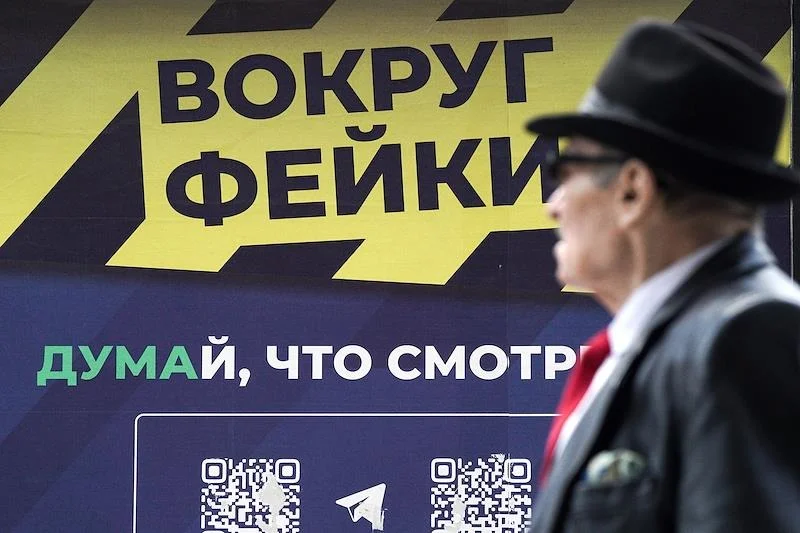
Fact-checking must catch up with lies in speed and scale. And to do this, it will have to become automated, widespread and accessible to everyone - like communications or an ambulance. And we already have all the tools to do this.
4. Origin of content: passport for the file
The last, deepest layer is the return to reality through traces.
In the analog world, a thing had an origin: you could ask where it was made, what the composition was, quality control, how it got there. In the digital world, information is most often anonymous—no history, no passport, no responsible sources.
Modern technologies make it possible to restore this transparency. Provenance markers: who created the file, whether it was edited, whether artificial intelligence was used. This is not a guarantee of truth, but an opportunity to check the path. If a file cannot answer these questions, then you should trust it with great caution.
This is not a utopia. These are the minimum requirements for the reality in which we agree to live.
Northern Europe: how to build public immunity
One of the most consistent responses today comes from the Nordic countries, which view disinformation not as an “Internet problem,” but as a factor in social sustainability, and respond to it with a whole system of measures.
In the Northern European model, media literacy begins not with campaigns against fake news, but with school. Finland is one of the most significant examples. Here, media literacy is enshrined at the level of public policy and coordinated by a separate public institution, the National Audiovisual Institute (KAVI).
The National Media Literacy Policy, adopted by the Ministry of Education and Culture, is based on a simple idea: these skills should be accessible to everyone and built into the education system, rather than being left to the initiative of individual teachers.
In Norway they went even further - there critical thinking is directly enshrined in educational standards. The student is required to do more than just memorize and retell the paragraph.
He must be able to analyze the source, understand whose point of view it is and why it is this way, compare different positions and - scary to say! - participate in public discussion. That is, the school prepares not the consumer of information, but its researcher.
Sweden, always attentive to democratic procedures, has in recent years added AI literacy to media literacy. The government officially instructs relevant agencies to develop these skills throughout the country - already in the context of election protection and public dialogue.
Northerners are not building a system of prohibitions, but are developing collective immunity: the ability to work with information is considered not as an additional skill, but as a new basic literacy. And while the rest of the world is torn between censorship and permissiveness, they simply teach their children to ask the right question: “How do I know this and why should I believe it?”
The second level is not the content, but the environment in which it is distributed. The Nordic countries operate here in conjunction with pan-European regulations, primarily the Digital Services Act. This approach does not require the state to determine what is true, but it does impose obligations on platforms:
reveal the principles of operation of algorithms;
assess systemic risks;
give researchers access to data;
and be responsible for the distribution architecture.
At the national level, this framework is complemented by institutions.
Denmark, for example, has created a separate coordinator for the implementation of DSA, integrated into the digital management system. In Sweden, countering disinformation is considered part of civil defense. A special agency - Psychological Defense Agency - is engaged in identifying and resisting external information influences, including working with authorities and society during periods of increased risk, for example, during elections.
The important principle here is that it is not opinion that is regulated, but the infrastructure for its dissemination.
Fact-checking: from craft to system
The third level is information verification.
Local institutions remain critically important. Faktabaari (“Factobus”) has been operating successfully in Finland for a long time. The name was chosen with intention: it is not a pulpit of truth, but rather a mobile workshop that comes to where help is needed. Faktabaari has been combining classic fact checking with educational work for many years, and in 2024-2025 it released a separate AI Guide for Teachers - a guide for teachers on artificial intelligence, and a whole package of materials for schools.
In Norway, Faktisk.no has grown into an independent platform created in collaboration with six major competing media, and its educational division Tenk (“Think”) has been working at the intersection of fact-checking and school since 2019.
In Sweden, fact-checking is becoming increasingly institutionalized around journalistic and research centers like Fojo/SweFactCheck, and in 2026 the Valkollen 2026 project was launched there to support newsrooms with verification, analysis of disinformation and detection of AI manipulation before elections.
But the structure of the task itself pushes us to the next step. You can check local political fakes in Helsinki, Stockholm or Oslo.
But the tools for primary verification - searching for duplicates, comparison with existing checks, recognition of synthetics, general archives of fact checks, signals for platforms - are more logical to build at the level of the entire European and platform infrastructure.
This is exactly what the EU is moving towards by creating a pan-European verification infrastructure: the European Digital Media Observatory (EDMO), a coalition of researchers, fact checkers and universities that collects and analyzes cases of disinformation across Europe, creates common verification databases and studies how platforms work.
In parallel, the Code of Practice on Disinformation operates - a voluntary, but actually mandatory set of rules for large platforms, which requires them to be transparent, combat fakes and cooperate with fact checkers. It is now built into a stronger legal framework, the Digital Services Act (DSA), a European law that forces large platforms to consider the risks of disinformation and report on how they deal with them.
In 2025, the European Commission went even further and launched a separate program to support the European Network of Fact-Checkers, a network of independent organizations working according to common standards. This is an important signal: individual editorial offices and national initiatives are no longer sufficient for large-scale verification of information. We need common tools, common bases and coordination at the level of the entire digital environment.
The Origin of Content and the Economics of Truth
The fourth level is the most difficult.
It is no longer just about verifying information, but about understanding its origin and who pays for its creation.
The Nordic agenda has increased attention to content transparency and trust in the digital environment, including the development of AI literacy and discussions of labeling mechanisms and information provenance.
The logic here is clear: if we can see where the content came from and how it was created, it is easier for us to trust it. But labeling can show the origin of information, but does not create it, much less guarantee its reliability. And this raises a deeper question: if truth becomes infrastructure, who pays for its production?
Producing truth cannot be cheap. Journalists need to be paid, investigations require time and travel; fact checkers need access to databases and experts, and AI tools require payment for developers, calculations and data. School media literacy programs require teachers, manuals, and hours on the schedule. All this costs money—and a lot of it.
At the same time, the production of lies, as we have already seen, is rapidly becoming cheaper and easier. The result is an economic asymmetry that begins to determine which version of reality scales faster.
Australia provided one of the first systemic answers. In 2021, it passed the News Media Bargaining Code, a law that forced large digital platforms to negotiate with news media and pay for the use of their content. In fact, for the first time, the state directly intervened in the economics of the digital environment, establishing a simple principle: if platforms make money from distributing information, they must share the income with those who produce it.
In 2025, Australia proposed the next step - the News Bargaining Incentive model, which should encourage platforms not to evade agreements, for example, by simply removing news from the feed, but, on the contrary, to systematically participate in the financing of quality content. This is an attempt to reinforce the principle that reliable information is a public resource and its production requires sustainable funding.
Northern Europe is still stronger in building the “immunity” of society through education, institutions and trust, Australia is stronger in trying to redistribute digital rent. And together these approaches outline a possible model for the future.
Instead of a conclusion: so that a person remains a person
The world is changing at such a speed that yesterday's dystopias no longer seem like entertaining literature. Until recently, works such as “The Matrix” or Pelevin’s books about the substitution of reality, the manipulation of consciousness and the world of simulacra seemed hyperbole, an intellectual provocation, a warning for growth.
Today this metaphor has become a living environment. People increasingly live not in a general reality, but in a personally selected bubble. He sees not the world, but its algorithmic projection through the prism of his own fears, desires and prejudices. This is why we are so scared: we begin to feel that we are losing not just landmarks, but the very ground under our feet.
Hence the temptation for the most radical answers: Ban. Disable. Stop. Cancel.
The Luddism of the 21st century is already here - from calls to freeze the development of the most powerful AI systems to an almost religious demand to simply turn off the Internet, as if the forces that operate through it will disappear along with the Network.
Such calls today are heard not only on the periphery: in 2025, more than 700 signatories of an open letter demanded a ban on the development of superintelligence, and recently one of the pro-government ideologists called for turning off the Internet in Russia altogether for the spring and summer so that people could “live a real human life.”
But history knows something else too well: societies that try to save themselves by refusing progress do not preserve themselves - they simply lag behind. They do not cancel the future, but give it to others.
The choice is different: either new technologies will reassemble a person spontaneously - in the interests of the market, power, propaganda and machine optimization, or a person himself will reassemble institutions, rules and culture so that technology remains a human tool, and does not become a new environment of subordination.
In this sense, today the phrase from “The Leopard” by Giuseppe Tomasi di Lampedusa rings especially true: “Se vogliamo che tutto rimanga com’è, bisogna che tutto cambi” - “If we want everything to remain as it is, everything needs to change.” The paradox of our time is that radical changes are now needed not to destroy the human world, but to preserve it.
For a person to remain a person - not a function of an algorithm, not an object of manipulation, not a consumer of synthetic illusions, but a rational, free, educated being, capable of compassion, doubt and independent judgment - we will have to change a lot.
Rebuild the school. Reassemble media. Reassemble the relationship between the state, platforms and society. Rebuild the trust architecture itself.
And it is possible to recognize a difficult thing: in the 21st century, the struggle is no longer just for freedom of speech, access to information and truth. She stands for a person’s right not to lose touch with reality, and along with it not to lose oneself.