
Translated material
The Insider: The Second Service of the FSB is responsible for the doping program in Russian sports
It was its employees who tried to poison Navalny, and now they also oversee the Russian Internet
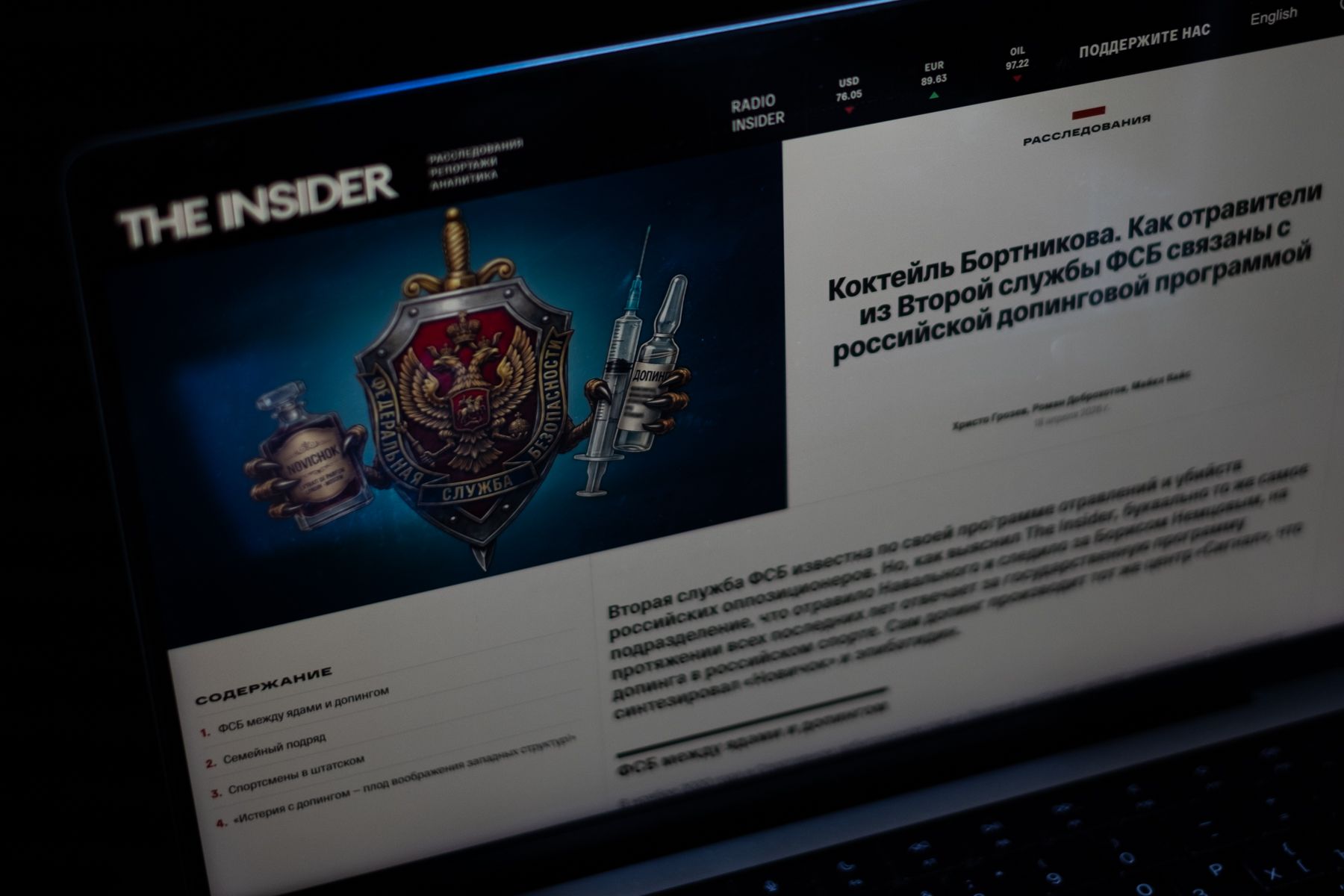
The second service of the FSB (Service for the Protection of the Constitutional Order and Combating Terrorism), whose employees were involved in the poisoning of oppositionists Alexei Navalny and Vladimir Kara-Murza , is responsible for the doping program in Russian sports, The Insider found out.
In particular, as the publication learned, Dmitry Kovalev, who in the summer of 2020 acted as a forensic expert of the Russian Anti-Doping Agency (RUSADA) at the Court of Arbitration for Sport in Lausanne, where the suspension of Russian athletes from competitions due to doping was considered, is a colonel of the Second Service of the FSB.
In those days when Kovalev gave evidence to the Court of Arbitration for Sport, The Insider writes, he was constantly on the phone with Major General Vladimir Bogdanov, a key figure in the Center for Special Technologies (NII-2 FSB). Bogdanov at this time coordinated the poisoning of Navalny.
According to The Insider, the “doping project” has been carried out since 2015 by the Signal Scientific Center, which is de facto under the operational control of Bogdanov. The publication writes that they decided to create doping in Signal after Grigory Rodchenkov publicly spoke about the doping program in Russian sports.
Grigory Rodchenkov, who told the world about the state program to replace samples of Russian athletes during the 2014 Winter Olympics, wrote the book “Doping. Prohibited pages." This is at the same time an auto-fiction, a production novel, a detective investigation, and a consistent debunking of the myth of “pure sport,” but also the life story of Rodchenkov himself. Order “Dope. Forbidden Pages" or you can buy other books from our publishing house at ours using this link .
A source familiar with the internal workings of the Signal center said that although the synthesis of poisons and the production of doping were in no way related programs, all projects “involved the same scientists using the same equipment.”
Kovalev, writes The Insider, is the common-law husband of Veronica Loginova, the new director general of the Russian Anti-Doping Agency (RUSADA). In February 2026, a World Anti-Doping Agency (WADA) whistleblower accused Loginova of personally participating in the tampering of doping samples at the 2014 Sochi Olympics. Loginova herself called these statements “fantasies” and threatened to sue for libel.
Employees of the Second Service, notes The Insider, are officially part of the leadership of the Russian Olympic Committee. For example, Nikolai Varfolomeev, an employee of the Second Service, is the Chairman’s Security Advisor, and Rodion Plitukhin, who worked in the Second Service, served as Secretary General of the Russian Olympic Committee (ROC) in 2022–2024.
The second service of the FSB, The Bell reported on April 16, now also oversees the Russian Internet. According to one of the publication’s sources, in the summer of 2025, a meeting took place between the head of the Second Service, Alexei Sedov, and Vladimir Putin. At it, Sedov promised the president “to restore order on the Internet - and received carte blanche.”
Meduza can be read even during lockdowns. Our site will open without VPN and dancing with tambourines using this magic link (save it!) or using a browser plugin ( how to install it ). But the most reliable way is to read Meduza in the app: download it, and we’ll be in touch no matter what happens.
It was the Second Service, according to The Bell’s interlocutors, that promoted blocking calls on WhatsApp and Telegram in August, and is now struggling with means to bypass the blocking.
In particular, a source in the payment services market told The Bell, at the request of the Second Service of the FSB, checks were carried out in some large payment services. They were asked if they process user payments for VPN services. Representatives of the Second Service now “go everywhere, they decide everything,” said one of the publication’s interlocutors.