
Translated material
"Scatter my ashes over the Amur"
Tatyana Frolova - about her friend, artist Andrei Akuzin, who committed suicide in a pre-trial detention center
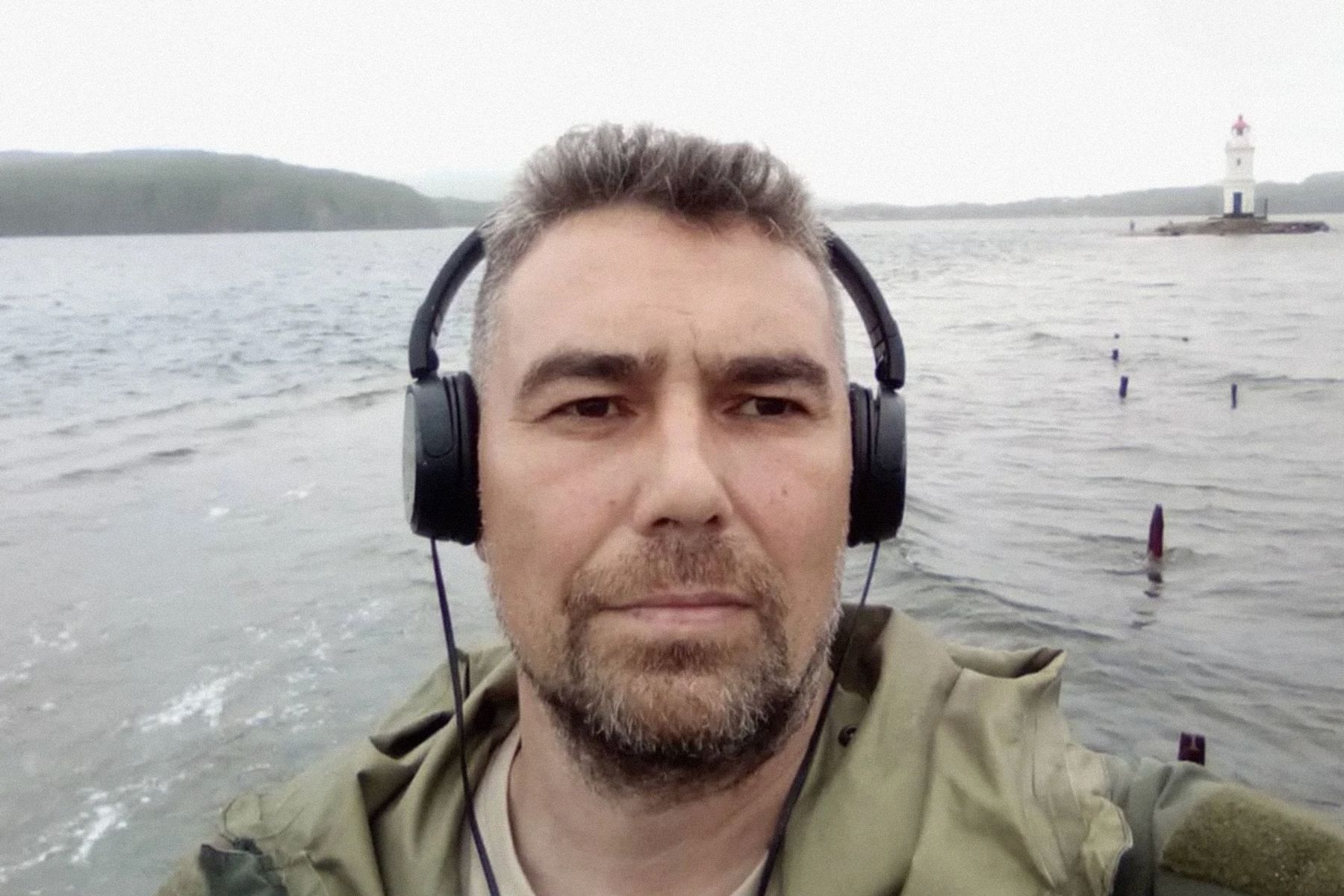
On April 10, theater director Tatyana Frolova spoke on her Facebook about the death of her friend, artist Andrei Akuzin. He hanged himself in pre-trial detention center No. 3 of Komsomolsk-on-Amur. Akuzin was arrested on April 2 for a certain comment on social networks; “Mediazona” wrote that, according to one of the telegram bots that analyzes the user’s public comments, the artist was interested in the Artpodgotovka movement, which is banned in Russia. Very little is known about Akuzin. He was 53 years old and had been painting since at least the 1990s, but had rarely exhibited or shown them online. Meduza asked Frolova about the artist’s life, work and views.
- How did you meet?
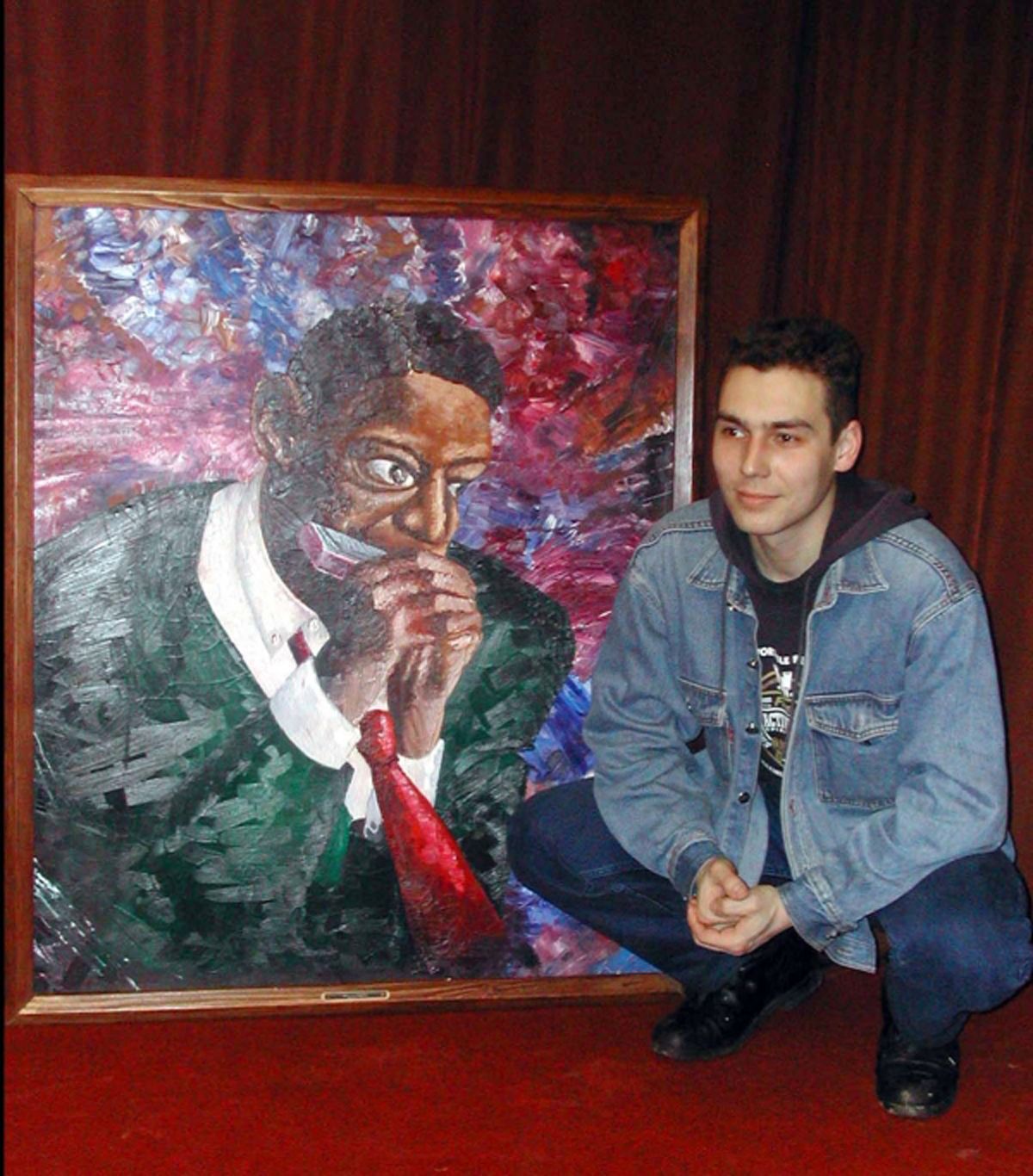
“It was an incredible time when everything was possible. In 1998, the KnAM theater, which I direct, for the first time organized an international festival of contemporary art especially for [French theater critic] Jean-Pierre Thibaud. At that time he was the Moscow correspondent of Libération, he came across our booklet, and he saw the names of playwrights who were not staged in Moscow: Heiner Müller , Friedrich Dürrenmatt , Jean-Paul Sartre. I asked the townspeople to help, fill the festival with art - whoever can do what. Various artists responded, including Andrey, who brought a painting of Louis Armstrong.
Since then we have been friends. We worked at the theater at night, until six in the morning. He came and knocked. Andrey was like a child. He was happy about everything and said: “Let’s create some kind of movement.” Helped mount exhibitions. When he started working as a designer in an office, he printed promotional materials for us for free or negotiated discounts. Then for some time he got a job at the Drama Theater as a production designer, but not for long, he didn’t like it there. So he left the theater and [in July 2021] founded his own design bureau, Haku.
— Did Andrey study painting somewhere?
- No, he was self-taught, and there was such beauty and charm in that. He painted in oils. He loved butter and jazz. But he didn’t consider himself an artist. If he liked the work, he hung it on the wall, but he never gave the paintings as gifts, like other artists, and certainly did not sell them. Actually, I gave up on this. I just wanted to live my little life like grass.
He saw nothing [of art]. I visited St. Petersburg last year for the first time. Peter made such an impression on him - he kept sending me voicemails and photographs. Can you imagine what he would say about France? But he didn’t know any artists, he just took paints. His son inherited this - at three and four years old he could draw simply amazingly.
I always think why I made theater in this confinement, in the forest. There was a craving for beauty. There wasn't as much variety as here. You had to create things yourself in order to breathe. I think he has the same story.
Unfortunately, I have very few photographs of his work. I didn’t even think that I needed to photograph everything. This is Andrey, Andryukha. He's shouting something again. He says it’s impossible to live.
— The report you shared shows his work “A Little Bit of Zen.” What was his history with Zen Buddhism?
— Yes, yes, we also organized that exhibition. He was interested in Buddhism, we all were. We learned to meditate in order to put our thoughts in order and not act on the first impulse. Andrey just needed this. But he quickly abandoned it, he didn’t want to waste time on meditation, he wanted to do something. I couldn't bring myself to sit up and breathe. I said: “We need to meditate.” “Yes, yes,” he answered, “we must.” You are capable, but I am not capable.”
— Did he participate in any exhibitions other than those that you organized in the late nineties?
- I think not. He would write to me. He showed nothing in galleries or on the Internet. I think he realized that painting would not bring him money. If you consider yourself an artist, it means you are trying on some kind of destiny. They don’t know you, you have to fuss and promote. We, the Far Easterners, have given up on this. For Moscow we were nobody, both he and I.
“But he continued to write.”
- Of course, it was like air. You do something anyway, and it gives you a little meaning. In this horror, in this everyday life that kills. Another thing is that when you are depressed, painting is very difficult. He's been drinking lately, but I can't throw a stone at him. He was a thin-skinned man.
— How did Andrei’s political views change?
— In the 2000s, Andrei watched our political performances and said: “What are you talking about, Tanya, we live well. So I started working in the bureau.” But gradually his eyes opened. In 2011, we went together to a [protest] rally for the first time, and he was taken into police custody.
Since then, he was very interested in politics, read Eduard Limonov, and began to drift somewhere to the right. We didn't talk about painting - always either music or politics. He then went crazy and shouted that everyone should be hanged from poles. But over time, he became disillusioned with politics and became busy with his own little life. He said that Russia, they say, is like this, you can’t raise it.
I said: “Let’s get out of there quickly, no matter where, let’s do something.” He answered: “No, Tanyush, where I was born, that’s where I want to die. Scatter my ashes over the Amur." He was a forest man, loved the taiga, could not live without it. He was cremated - they will probably fulfill his wish.
The day before his arrest, he wished me a happy birthday. He said that he dreamed that the KnAM theater was taking him out of Russia in a suitcase. I told him that I’ve been feeling anxious these last few days, and it’s not clear why. He replied that he too - “it’s really hurting.” It was as if we both felt that in a few days he would be gone.
He was taken on the morning of April 2. I don’t know how they came: they knocked down the door or he opened it for them himself. Some person wrote to me from an unknown number: “Very bad news, Andrei Akuzin was taken.” Then another wrote: “Andrey hanged himself in a pre-trial detention center.” That's all.
[After his arrest] his contact was still online on Telegram. I didn't write to him.
It seems to me that they were watching him - just like us, our theater. He believed that he had a case. I think he had no doubt that if they took him away, he would do it [commit suicide], because he knew very well what was going on in prisons. I suspect [in the pre-trial detention center] he was persuaded [to sign a contract] for the SVO . He hated this war, and when he swore when he was drunk, he could say something for 17 years. He was a wonderful, rebellious person, like Pavel Kushnir .
Interviewed by Anton Khitrov