
Translated material
Three sentences a day
The conveyor of political cases no longer requires debugging: increasing deadlines, cases of “high treason”, fines for emojis and pictures - everything is automated

Photo: Olesya Chepurchenko / TASS
In recent years, human rights activists have recorded the acceleration of the repressive machine: if in the first year of the special operation, politically motivated sentences were handed down approximately once a day, then by 2025 this rhythm has tripled - to three decisions daily. The total number of such cases has more than doubled during this time: from 488 verdicts in 2022 to over 1.1 thousand in 2025. At the same time, the punishments become harsher: in more than half of the cases, the courts impose imprisonment, including sentences in absentia. The trend continues in 2026: in less than four months, 198 sentences have already been pronounced, and most of them are also related to real terms. These figures turn political processes from an exception into everyday judicial practice, and you will find more details about the specific cases behind these statistics in the next issue of the Chronicle of Current Repressions.
Treason
The 2nd Western District Military Court sentenced 35-year-old Kostroma resident Alexei Larionov to 20 years in prison under articles of treason (Article 275 of the Criminal Code) and participation in the activities of a terrorist organization (Article 205.5 of the Criminal Code), Rossiyskaya Gazeta writes with reference to the FSB.
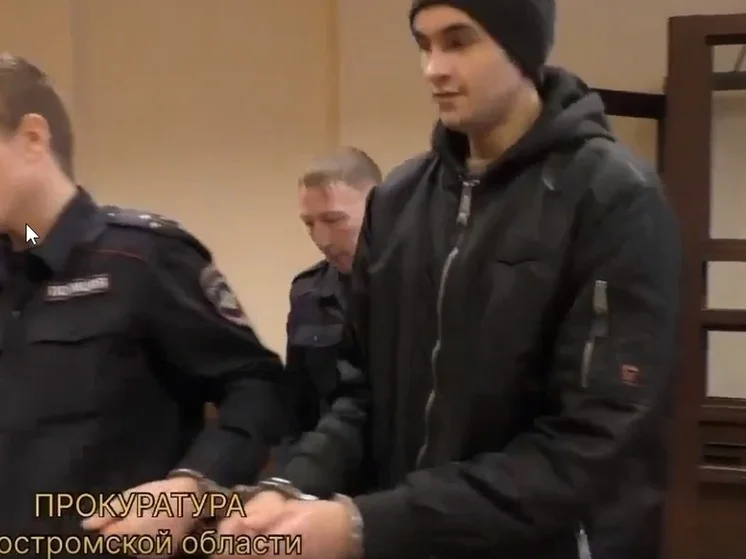
According to investigators, Larionov joined “the Ukrainian terrorist organization” in early 2025 and carried out “various tasks” under the pseudonym Suetologist. The last task was to prepare a resume and then apply for a job at a defense company. Larionov did not have time to complete this; he was detained by security forces.
The FSB also released a video of the man’s arrest. Judging by the footage, he worked as a Gazelle driver. In court, the prosecutor quoted the words of the 19th century literary critic Vissarion Belinsky: “Whoever does not belong to his fatherland does not belong to humanity.” He added that in the context of a special operation, “the meaning of these words is more relevant than ever.”
* * *
The Irkutsk Regional Court sentenced software engineer Vadim Nekrashchuk to 13 years in a maximum security colony and a fine of 268 thousand rubles in a treason case, reported People of Baikal*.

According to security officials, Nekrashchuk allegedly photographed the military unit’s checkpoint and sent its geolocation to an alleged Ukrainian intelligence officer. The programmer was detained in March 2025. According to him, he allegedly spent two days in the FSB department with a black opaque mask on his head, and at night Nekrashchuk, as he claims, was handcuffed on his hands and feet.
“Then the investigator allegedly offered a choice: go to a pre-trial detention center or agree to participate in the state protection program and move to a safe house. Nekrashchuk chose the second option and, according to him, was there until June 23, 2025 - more than 3.5 months,” wrote Sotavision*.
Meanwhile, FSB officers gained access to Nekrashchuk’s technology, after which the equivalent of 150 thousand rubles disappeared from his crypto wallet. Later, the programmer was nevertheless taken into custody. At the same time, the military prosecutor's office admitted the fact of theft, but did not initiate a criminal case.
* * *
In Chita, a freelance correspondent for Radio Liberty** was detained in a case of treason due to cooperation with the Security Service of Ukraine (SBU), and reported to the FSB.
According to investigators, the man wanted to help the Ukrainian side, for which he joined the SBU-controlled Telegram community. In it, he, as the intelligence service writes, conveyed information “regarding the information resources of a local print publication” covering the SVO, as well as data about a critical infrastructure facility for organizing “malicious computer influences.”
According to the FSB, this data was used by Ukrainian intelligence services to carry out “computer attacks,” which “temporarily made it difficult for regional authorities to perform their duties.” After this, the man was detained by security forces and his home was searched. According to the FSB, “computer and communication equipment” were found confirming the suspect’s actions. The court sent the man to a pre-trial detention center.
Earlier, the Chita.ru publication wrote about the detention of a journalist under the same article of treason. The journalists did not give the man’s full name, calling him Alexander A. The publication stated that he worked as a correspondent for Kasparov*.Ru and published a report in MBKh Media from a rally of supporters of the shaman Alexander Gabyshev in Chita.
* * *
The Krasnodar Regional Court made a decision in the case of a 63-year-old resident of Novorossiysk, sentencing her to 13 years in a general regime colony on charges of treason. Additionally, the court established a year of restriction of freedom after serving the main term.
According to investigators, the motive for the woman’s actions was the desire to emigrate to the United States. It is alleged that in this context she allegedly came into contact with an organization that the Russian authorities consider to be controlled by the Ukrainian special services and classify as terrorist.
The investigation insists: while working as a cook on a floating crane, the woman allegedly collected information about the location of Black Sea Fleet ships and air defense facilities. The transfer of this data was allegedly carried out through the Telegram messenger to certain “curators”.
The FSB reported her detention in June 2025. According to the data announced by the security forces and the court, it was about information relating to military facilities in Sochi, Novorossiysk and Sevastopol.
After the arrest, the woman stated that she had been in contact with a man named Maxim, whom she considered to be a representative of the Ukrainian special services, and received money for this.
Answering questions from the investigation, she also claimed that she did not perceive the transfer of such information as something serious.
For a comment - in a pre-trial detention center
Journalist and former producer of Russian television channels , Kapitolina Averina, became a defendant in a criminal case on public calls for terrorism. Since February 2026, she has been in pre-trial detention center No. 1 in the Kaluga region.

According to media reports, the detention took place on February 5 in Ivangorod, near the border with Estonia, where Averina came to visit her 71-year-old mother. Security forces, according to eyewitnesses, burst into the apartment wearing masks: they immediately confiscated the journalist’s phone, after which they presented a resolution to initiate a case. The reason, allegedly, was comments on the Internet with harsh statements. Already on February 13, Averina’s name appeared on the Rosfinmonitoring list of terrorists and extremists.
In May 2023, near the village of Rabotino in the Zaporozhye region, Averina’s common-law husband, Ukrainian Armed Forces serviceman Yuriy Stratiy, died. They had known each other for more than two decades. After the start of the Northern Military District, he went to the front. “It broke her,” said a family friend.
Discredit
The Ordzhonikidze District Court of Ufa fined three students from local institutions 30 thousand rubles under a protocol on “discrediting” the army (Article 20.3.3 of the Administrative Code).
According to the protocol, the students recorded a video in the dormitory with statements that “discredit” the Russian Armed Forces. The video was subsequently published in one of the public Telegram channels. The court release states that the students admitted guilt and repented.
Earlier, the Kirovsky District Court of Ufa fined an 18-year-old local college student who applied for a rally against lockdowns on April 12 for 30 thousand rubles. She “found material on the TikTok social network,” because of which a protocol was drawn up to “discredit” the army.
* * *
The Stary Oskol City Court of the Belgorod Region imposed a fine of 30 thousand rubles on a local resident under a protocol on “discrediting” the army for a conflict with a member of the SVO.
The quarrel occurred on February 1 over “a dog living in the entrance of a multi-storey building,” the woman said. When she and the military man met on the landing between floors, the resident allegedly wished him death.
The woman herself did not admit that she had said exactly the phrase imputed to her, but only: “Bandera!” and “Get out of here!” The police in the report referred to the versions of neighbors and the wife of the SVO participant. According to the man, obscene statements have been made about him before. The employee of the Ministry of Internal Affairs, who was in charge of the protocol, also indicated to the court that the military man’s neighbor “is characterized negatively and is the instigator of scandals with neighbors.”
* * *
The Soviet district court of Rostov-on-Don fined Sergei Korovainy 30 thousand rubles under the protocol of “discrediting” the army for a comment and a poop emoji under a video with a military vehicle from a chat at home, Mediazona discovered*.
The Rostovite himself did not admit his guilt. At the trial, he said that he put a reaction with an emoji to “express a negative attitude” towards the person who sent the video, because such videos are “forbidden to be posted.”
According to the publication, an administrative case was opened against Korovayny after a denunciation by one of the residents.
"LGBT*** Propaganda"
Judicial district No. 123 of the Ryazan district of Moscow imposed a fine of 100 thousand rubles under the protocol on “LGBT propaganda” (Part 3 of Article 6.21 of the Administrative Code) in relation to Moscow student Yaroslava Avdeeva , Mediazona noted. The administrative protocol against Avdeeva was drawn up after “a check on the received appeal,” the resolution on the offense says.
A report was issued against Avdeeva because of two videos published on her Telegram channel, which have already been deleted. The first video “depicts a mutual kiss involving two female persons,” under which the student left a comment. In the second video, “two female individuals are found with one of the individuals touching the other’s face with her tongue.” At the trial, Avdeeva partially admitted her guilt, since she “did not know that such videos were prohibited from being posted,” the resolution states.
"Extremist symbols"
The Derbent City Court fined a local resident two thousand rubles for a link to Rils on Instagram****, posted in the status of his WhatsApp**** account. The protocol was drawn up under the administrative article on the propaganda of extremist symbols (Article 20.3 of the Administrative Code). According to the resolution, the link was discovered by a police officer “during monitoring” on March 5. The protocol was drawn up three days later.
The court found that a link to Instagram indicating the logo of the social network can be considered a demonstration of extremist symbols. The man admitted his guilt at the meeting.
* * *
The Central District Court of Tyumen imposed a fine of 1,000 rubles on a girl against whom a report was drawn up for demonstrating extremist LGBT symbols.
A report was drawn up against her because of a publication with two girls kissing and a signature on an unnamed social network. “An important circumstance was the use of images of the rainbow flag in hashtags and video file titles,” the court added. The girl admitted guilt during the hearing.
"False denunciation"
The Kuibyshevsky court of Irkutsk sentenced a 30-year-old citizen of Tajikistan to two and a half years in a maximum security colony under the article of knowingly false denunciation accusing a person of committing a serious crime (Part 3 of Article 306 of the Criminal Code).
According to investigators, the convict “on the basis of personal hostility” wanted to prosecute the employees of pre-trial detention center No. 1 in Irkutsk under the article of abuse of power.
To do this, while in the cell, he “caused himself bodily harm in the form of a bruise on the lower eyelid of his left eye” and “ss
After this, the court release states, he wrote a statement about the beating addressed to the acting head of pre-trial detention center No. 1. He made a similar statement to the department of the Investigative Committee for the Kuybyshevsky district. According to the court, an inspection was carried out, as a result of which the Federal Penitentiary Service “found no confirmation” of the man’s complaints. During the hearing on false denunciation, he fully admitted his guilt, the release says. Taking into account his previous convictions, the citizen of Tajikistan was sentenced to three years in a maximum security colony and a fine of 14,215 rubles 16 kopecks.
Judicial publicity - under RKN claim
The Roskomnadzor departments for the Irkutsk region and Yakutia filed lawsuits against the editor-in-chief of the Legal Information Agency (website judicial decisions.rf) Pavel Netupsky . Representatives of the department demand that it be prohibited from publishing information about participants in trials without their consent, Lenizdat.ru reports .

The claims are being considered by the Sverdlovsk District Court of Irkutsk and the Supreme Court of Yakutia. In November 2025, the Aldansky District Court of Yakutia granted the claim of Roskomnadzor, but it was considered without the participation of the defendant, so the appellate instance began to review the case.
According to Lenizdat.ru, Roskomnadzor departments demand that Netupsky be prohibited from publishing any information about a person without his consent, “even if we are talking about information from an open court decision.”
The publication reports that representatives of the department refer to the law “On the Protection of Personal Data” and consider them to include information about crimes committed by a person.
The website judicial decisions.rf publishes texts of court decisions that have entered into legal force. In 2016, Roskomnadzor issued a warning to the agency due to the publication of personal data of participants in legal proceedings. The department reported that the site also published people’s data “in excess.” Netupsky then explained that on the agency’s website the decisions are given verbatim - in the form in which they are posted on the websites of the courts themselves.