
Translated material
German certificate
What was it about this country that pushed it out of the ranks of moderate Europeans and inspired it to commit bloody murder?

Photo: archive
I went to Germany with one secret thought, with one thing - but what one! - a question that occupied me during the years of double existence, when I, as a spy in my own country, hid from everyone my most cherished affairs and most valuable knowledge. It was a time of absolute, one hundred percent hopelessness, from which there could be no way out for the next hundred years. I didn’t do nonsense, I didn’t catch small fish: in history I was only interested in the basic patterns, in the structure of life I wanted to understand only the most important thing. In those years, my head was like a locked safe in which evil spirits had settled: inexplicable facts walked around on their own, wildly stamping and dancing, delusional ideas whistling in spirals, grinning crooked questions that knew about themselves that there was no answer to them, countless historical people rustled and rustled like a forest, about whose words and deeds I knew from the hundreds of books I devoured. Madness was slowly rising on the horizon.
I knew that all this unstoppable, unstoppable stirring of the spirits of history in my head, which does not subside even at night, would sooner or later move me from my place, and I would float into delirium, from Aldan to Yamal, throughout Russian geography. The future seemed to me bright, clear and absolutely empty of meaning - insane. I thought that, perhaps, having gone to the end of the path of an underground historian who does not write any works, but only researches and explores, having exhausted all the books in libraries (well, they must ever run out?), realizing the insoluble riddles that history poses, having grown old, dejected, despairing, etc. etc., one fine day I will leave the house as an unshaven old man and disappear, I will become a wanderer.
I met the prototype of my future one night under the gaze of a blackamoor with sideburns on the square named after him on his birthday. All day long they read poetry and had conversations here; by nightfall, only the most inveterate debaters and philosophers remained in the empty square. In the center of the circle stood a lanky man, crowned with a shabby felt hat. He was wearing a gray jacket without buttons, under the jacket was a white shirt with embroidery on the collar, and on his feet were size 44 yellow sandals. In his hand he held a cloth bag containing empty bottles (his day's catch). The conversation in the circle - Russia, the Union, Chaadaev, the West, Berdyaev, Solovyov, communism - boiled and swirled under the attentive gaze of the spies walking in a circle around us with the measured gait of clockwork figures. With a humble look from the height of his height, observing the toes of his yellow sandals, the wanderer talked about how he worked in Kazakhstan at a uranium mine, traveled as a conductor on trains throughout the Union, in the desire for warmth he reached Uzbekistan - and everywhere he tirelessly read books that came to his hand. In the red corner of a uranium mine, at night he read the entirety of Lenin (fourth edition), in the village he studied the Mesyatseslov, in Samarkand he studied the samizdat Berdyaev, given to him in Moscow by the professor for whom he polished the floors... And he made a slight circular movement with his long leg, showing how to polish.
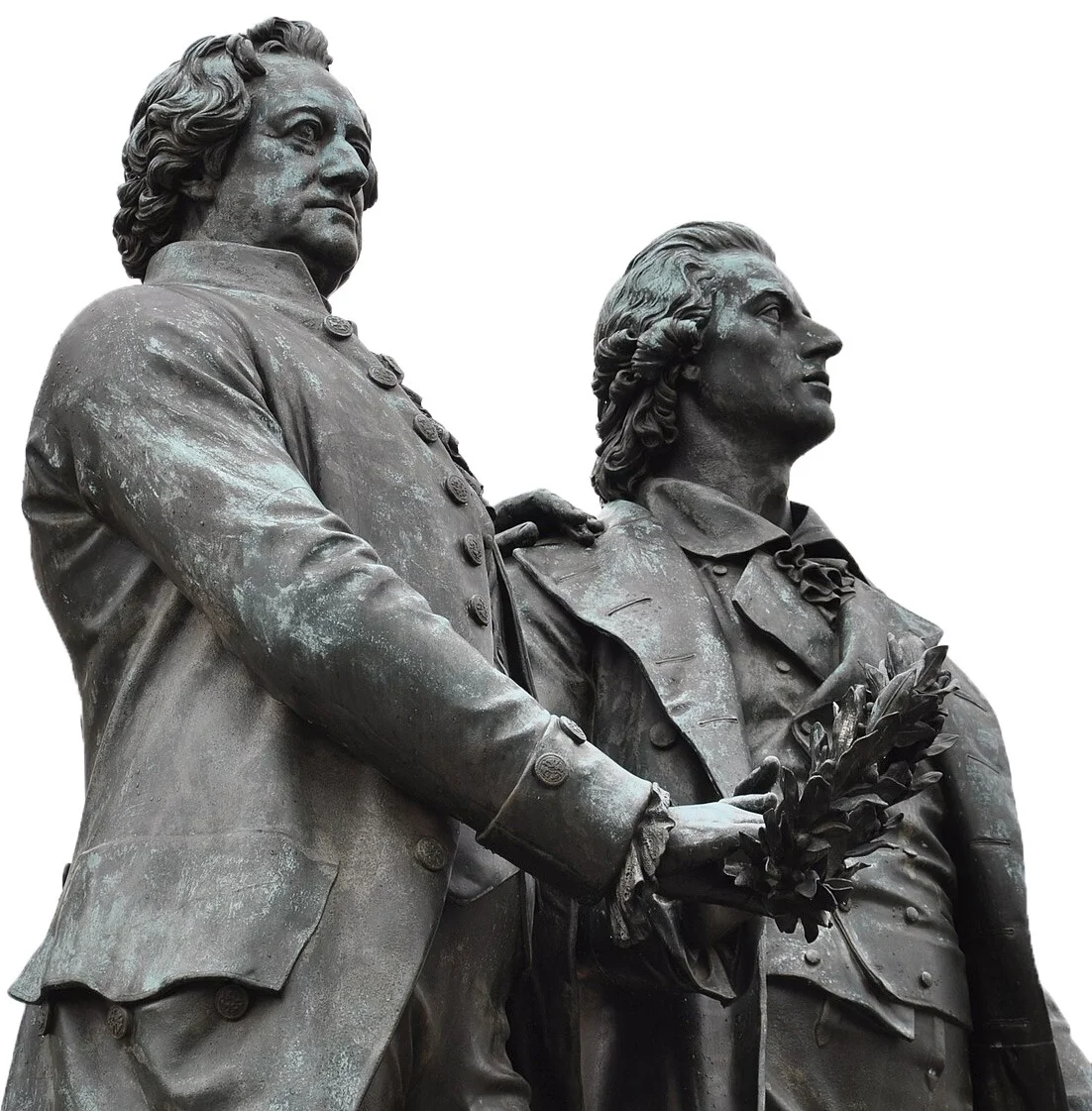
So, I was going to Germany, or rather, to the GDR - a country whose existence not everyone remembers now. The official purpose of my trip is of no importance and is not worthy of mention. The real purpose is worth talking about. In the global historical project that I was building in my head, Germany occupied a special place. What did it mean next to the Prussian officer dryly clicking his heels: Jawohl, Herr Oberst! - frail Frenchman Jean with a mustache, relaxingly drinking absinthe in an evening cafe on the Champs-Elysees? What did the island Englishmen, busy sorting out relations with vegetarian Indians, and the rationally boring Americans, sitting on the other side of the ocean and busy inventing hamburgers, mean next to the marching, fervently toe-tugging Teutons? What was (is?) about this country that pushed it out of the ranks of moderate Europeans and pushed it into a bloody game?
It was, of course, not about knowledge that can be gleaned from books (books about Germany, as well as books by German writers and historians - from Luther to Borchert, from Mommsen to Delbrück - I read enough). But by that time I, a professional reader who walked through the catalog halls of libraries like others walk along the boulevard, had already lost my primordial dream of understanding the world with the help of books.
Books don't explain anything. They give knowledge, but not understanding; they pile up facts, information, concepts, versions, theories, but they do not shed light.
Books are just rows and columns of words, just a bloodless something that was once life, dried people and battles, a herbarium of humanity.
Yes, by that time I was disappointed in books. I read them all my life, from childhood, with unflagging interest, with terrible speed, I always had them with me - in the subway, on a commuter train, under the table at a lecture at the institute, I absorbed millions of words a month and had already reached such a stage that I almost did not need any other food. I could go days without food (a bottle of kefir and a pack of cookies was enough for me), but I couldn’t go even half an hour without a book. This went on for a long time. But then, after a while, without stopping reading in the same, binge-watching way, I saw myself from the outside: a lanky, long-haired madman with his face always lowered down into an open book... I realized myself as a book idiot. My eyes forgot how to look around, they didn’t need the sky, the sun, the trees - they longed to rest on the page and furiously slide along the lines. My brain was no longer capable of independent existence - it had to chew on what others had written every minute. I didn’t need people, they seemed to me creatures devoid of logic of presentation, chaotic, without such convenient chapters and paragraphs.
I continued to read, but something new now appeared in my attitude towards books: contempt and a little bitterness, as if they had promised me something and deceived me. Now I despised books for their powerlessness to explain to me what I wanted to understand, for their deceptive essence that leads away from the goal, for their narcotic nature, for their weakness. And in fact, there is not much difference between reading ten books and reading a hundred. In any case, you need to find something else that lies outside the books, you need to open not only your eyes, but also some secret organ hiding in your chest - and then the ordinary scene of life will suddenly be transformed for a moment, illuminated by a blue flash falling from the sky, and a fleeting picture will be imprinted on your consciousness like a coin in warm wax, and everything will become clear. (Mehr Licht! - said Goethe, dying, who wrote so many different - rhymed, unrhymed - words during his long life. Mehr Licht! There is more such light...)
Thousands of the smartest people over the last thousand years have written thousands of the smartest books in which they explained and interpreted everything - and all this did not change anything for the Teuton, stamping his step on the Nuremberg paving stones.
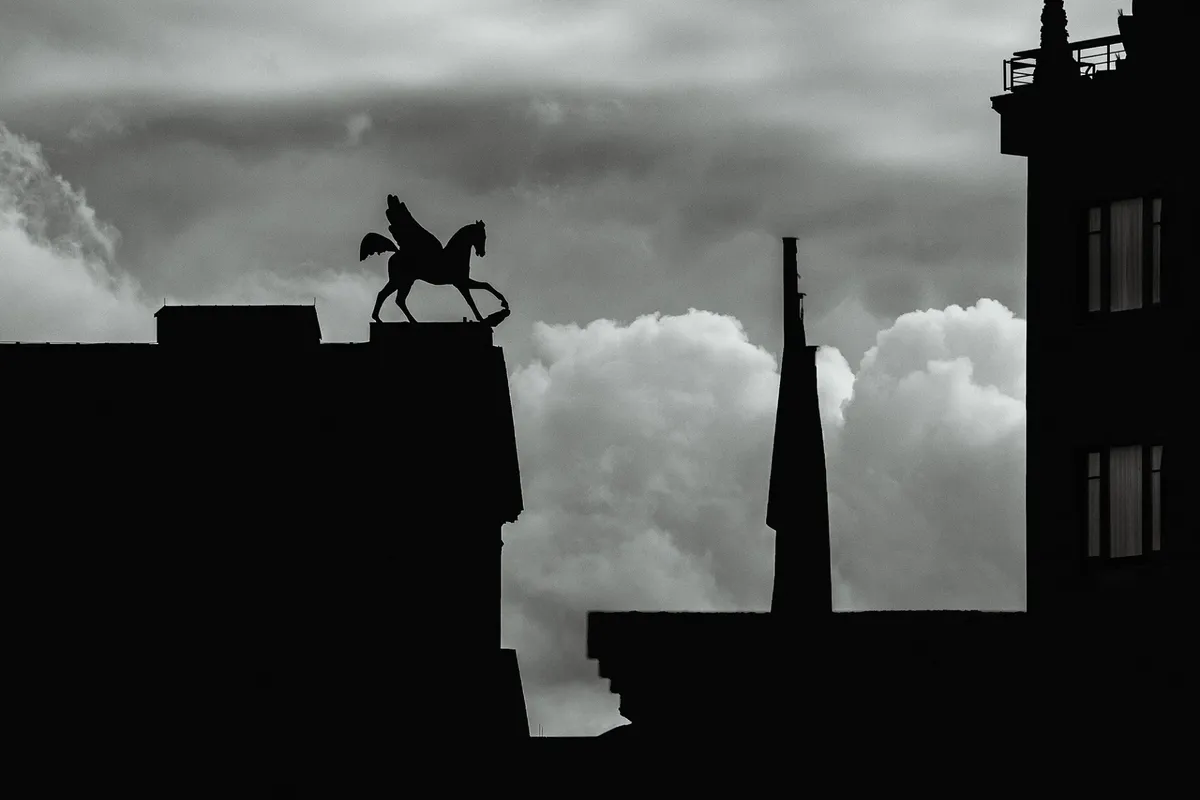
In my childhood cosmogony, Germany was an invisible planet rotating in a dark orbit far beyond the borders of our bright Soviet world. I learned the language of this planet, but had no desire to go to it. Germany was real, like some kind of Jupiter. But what is Jupiter? A word denoting something incomprehensible in the terrible distance, something that, by general agreement, has the shape of a powdery white ball with a ring intended for unknown purposes... Germany (like other Western countries) was expelled into the region of cosmic darkness, where it remained, busy with its own affairs (inciting war, revanchism, persecution of honest people, slandering us - the newspapers that eight-year-old me wrote about this I read it, standing for a long time on Tverskoy Boulevard in front of glass shop windows, to read the beginning of the article, I had to throw my head back).
In the yard, the boys explained to me that the swastika is formed from the four capital letters of four German surnames - Hitler, Goebbels, Himmler, Goering.
My father taught me German. I was a big-eared boy in a cowboy shirt, short blue pants, and brown stockings. I sat next to the sofa on a folding chair made of wooden slats, the slats dug into my butt, I had to change seats every now and then, on my knees was an open huge book in a yellow cover with worn corners - “Gulliver in the Land of Lilliputians” in German. I had to read and translate it. Father was lying on the sofa - majestic, like a statue. He had a high forehead, a wide belly, legs in blue sweatpants, feet in black socks covered with thongs. I was a midget next to him. "I don't understand!" - “Read!” - “I don’t know this word!” - I whined like a mosquito, in sweet sadomasochistic languor, tormenting both myself and my father, whining, although I knew all the words perfectly. - “Read!” I did not want to read and distorted my language in pronouncing stupid words and sounds, suitable only for teasing.
German for me was pagan gibberish (ist gekommen, springen hoch!), in which the freaks on Jupiter spoke. Russian was part of my sunny, beautiful world, the melodious sound of my great Motherland, in which everything is arranged so fairly and in which everyone is so happy. Any ancient Egyptian priest would envy my worldview: I believed that the birds of the world, pigeons, are found only in our peaceful homeland, while in Germany, a war-mongering country, eagles walk along the cobblestones of squares, loudly knocking their claws. Black smoke, pouring thickly from a vat of asphalt on Pokrovka, where the pavement was being repaired, rose into our clear blue sky and then flew away to Germany. There,
in Germany, in clouds of black smoke, pouring in from our country, pale, poorly dressed people (ordinary Germans) walk along narrow medieval alleys. They have dejected faces. Their life is not easy - capitalism, what can you do...
As soon as they try to talk to each other, sounds come out of them that make them grimace. And they rush over the squares covered with a greasy stench, under the gaze of the yellow-eyed eagle overseers, terrible words - either barking, or croaking, or bleating: Ge-Kommen! Ge-Ge-Ben! Ge-Gan-Gen! Ge-Hessen! Paragraph!
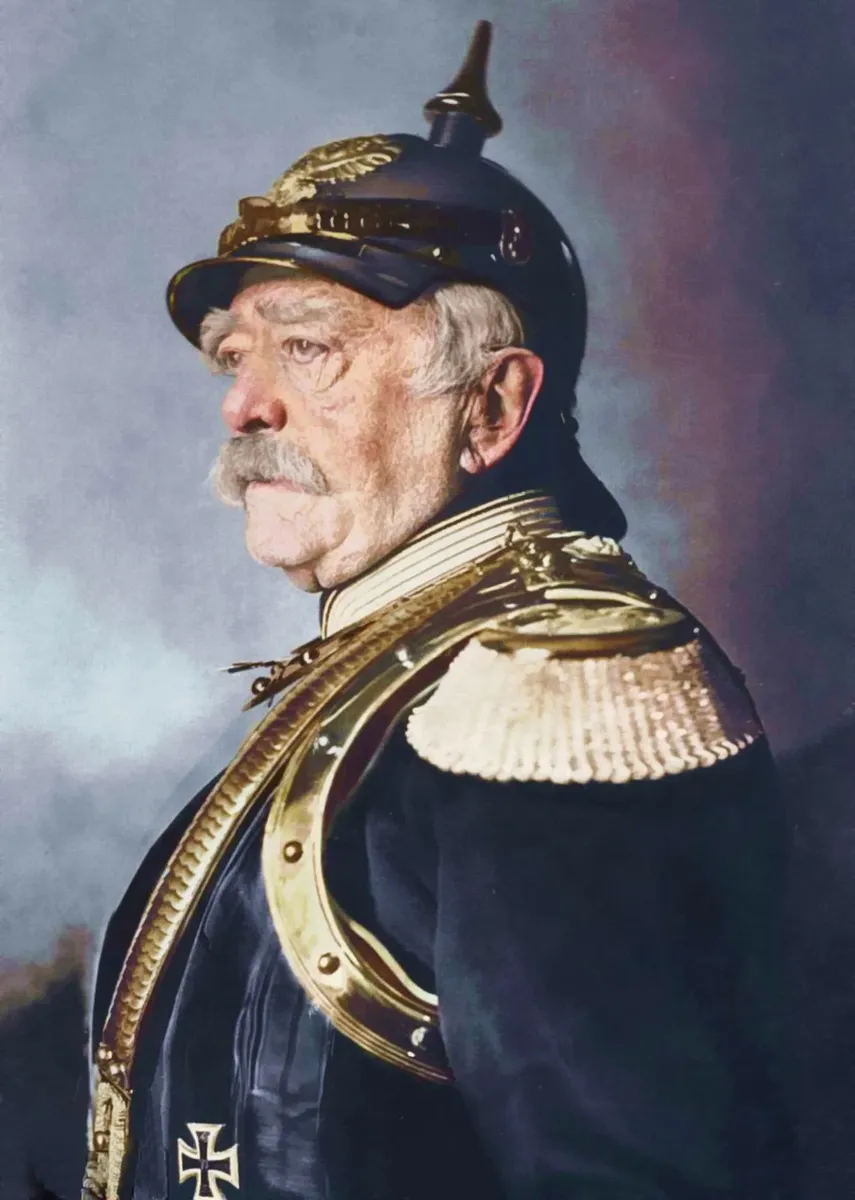
Fat Bismarck with three chins and an iron helmet looked towards the East. Below, untertans were running along the same narrow medieval streets, and Drang nach Osten grew in their narrow heads. I have already left childhood, I read, I read. Life was certainly secondary for me, and literature was primary. From the clay and dirt of small and stupid events, from miraculously preserved facts, from a few words told by some old man, historians with enlightened faces - Plutarch, Academician Tarle, the honorable Roman Mommsen - sculpted a history that was incomparably grander than the nonsense and tinsel that they picked up in the trash heaps. History and literature are the art of deception, the art of creating something out of nothing. The historian and writer is a fakir and an illusionist: he fools heads, he waves his black cloak, he makes the audience look into the void and see there a castle with towers, with flags on the towers... Such a Germany stood before me: an illusory Germany, through which Frederick’s officers walked in blue uniforms, with white curls, with narrow faces and cold gray eyes, the country of high feather beds and pillows, the country of half-timbered houses, the country of Jean-Paul, writing his ornate nonsense, sitting in the kitchen, in a cap with a tassel, in front of a mug of coffee - the twenty-eighth of the day; the country of good steel, fat Krupp, of course, smoking cigars with a gold rim; a country as gloomy as a Gothic novel, in which ghosts howl and ghouls drink blood - German ghosts, however, with their passion for order, certainly march in columns, and German ghouls drink blood only at those hours and only in the quantity appointed by their leader, a schizoid corporal, on whose right hand sits the red-haired drowned Barbarossa, and on his left (who is on the left?) - the syphilitic Nietzsche, who cannot do three push-ups from the floor, but mutters about the strength of the Ubermensch.
The school where I studied was, in a strange way, a fragment of this ideal Germany, although it was located in the center of Moscow. It was a school with extended teaching of German, which I had to study for eight years in a row. This language was indifferent to me, like all other subjects. I mumbled nonsense. There were rules at school that would have greatly pleased a German sergeant-at-arms: before letting us into class, the head teacher carefully examined the backs of our heads to see if we had our hair cut short enough. Stand up. Sit down. On the second floor in the corridor there were white plaster busts of ancient philosophers, old men with bearded faces: classicism, lifelessness, discipline. It was necessary to read the texts and retell them. Why, to whom? Just as I once agonized over German gibberish on a chair next to my father, mastering the page assigned to me, so now I agonized over a gray textbook, mastering the next page of text about Thälmann the pioneer and almetal with altpaper. “Er! Err! Er-ry-ry! You got it, ry!” - Leaning towards me in a fit of rage, the German teacher shouted at me, burring terribly, stuffing this sound deep into her throat, dangling it there like a potion. I had to repeat, I had to stick some stupid “tsu” and “ab” at the end of the phrase, I had to drag around a whole armful of some plus-quam!-perfects like a sad donkey. The language of Marx, the language of Engels, the language of Goethe! (But Frederick the Great did not like this language and never mastered all these “dem” and “das”, “deren” and “dessen” - his dislike for the country in which he lived, his dislike for German and for the Germans, whom he considered stupid creatures, awakened in me my initial sympathy for the king. I immediately began to read about him ...)
We drove around the GDR country in a gray Trabant, the car radio was on from morning to evening, and every hour the song of the season by Depeche Mode was repeated - Never Let Me Down Again. Traveling with me were two companions, two blond German Bursch from the corresponding Abteilung. Both were well-fed, had thick white necks and round Komsomol ruffles, as well as honest eyes of people without a second bottom. In the evenings at the hotels where we stayed, they probably wrote down in the appropriate report form all the words and expressions that the Soviet genosse allowed himself, but this did not stop them from treating me in a comradely way and having long conversations with me along the way in the car, of which after three minutes I did not remember a word. The conversations were as sterile as the burshi themselves. So, we were racing in a small, nimble Trabant through Thuringia, a country of green fields and blue forests, the trunks of German trees flashed by, each of which was numbered with white paint, the red roofs of half-timbered buildings and white peaked churches flashed past... Malerish! You're painting! (I agreed with the Burshes with false delight).
One day I went into their room for some reason before going to bed. In the middle of it, on the carpet, there was an already dismantled wide double bed, the window was covered with a heavy blue curtain, and on the table there was a night light under a pink lampshade. Both genossen - short-haired, pleasant blondes - walked around the room in identical pajamas with white and pink stripes.
We passed through five or six small towns a day. At first I still remembered the names, but then the names lost their meaning for me. It was all the same clean town, multiplied a hundred times. I glanced over the apple orchards, along the stone stairs leading to ancient mansions, on the pediments of which half-worn numbers were visible, over small cemeteries where tombstones enjoyed the shade of old linden trees, over peasant houses standing alone in the fields with thick white walls... and all this under the energetic muttering of the announcer, followed by music. The country flew past me through the window, picturesque and indifferent, smooth as glass - boredom and melancholy thickened in me, anxiety grew.
The insight that I have already spoken about and which I was waiting for came, as always, suddenly, when I had already stopped counting the churches and estates in which retired Frederick’s officers once lived out their lives. In yet another town, I stood in front of another house and looked at the garden in front of it. It was an ordinary German garden, of which I have seen dozens and did not pay much attention to them, indifferent to the successes of German gardening. But this time, a different vision suddenly began to work. The whole of it was four steps long and three wide, and every millimeter of this garden was processed dozens of times: weeded, dug up, fertilized, weeded again, dug up again... As a result, the piece of land represented the highest form of order: there was nothing random in it. Neat pink phloxes, a row of orange hyacinths, behind them a bush of thorny yellow roses on strong thick stems, which, to my surprise, did not smell as if the gardener had sterilized them. And this lack of scent in roses was also part of the tiny German ecumene.
I stood by the garden, stupidly looking from the phlox to the roses. It was a clear, sunny, great day. Gradually, in some strange way, I began to feel what was going on in the head of the person who created this kindergarten. Sadik was a medium who broadcast to me pictures of someone else’s life.
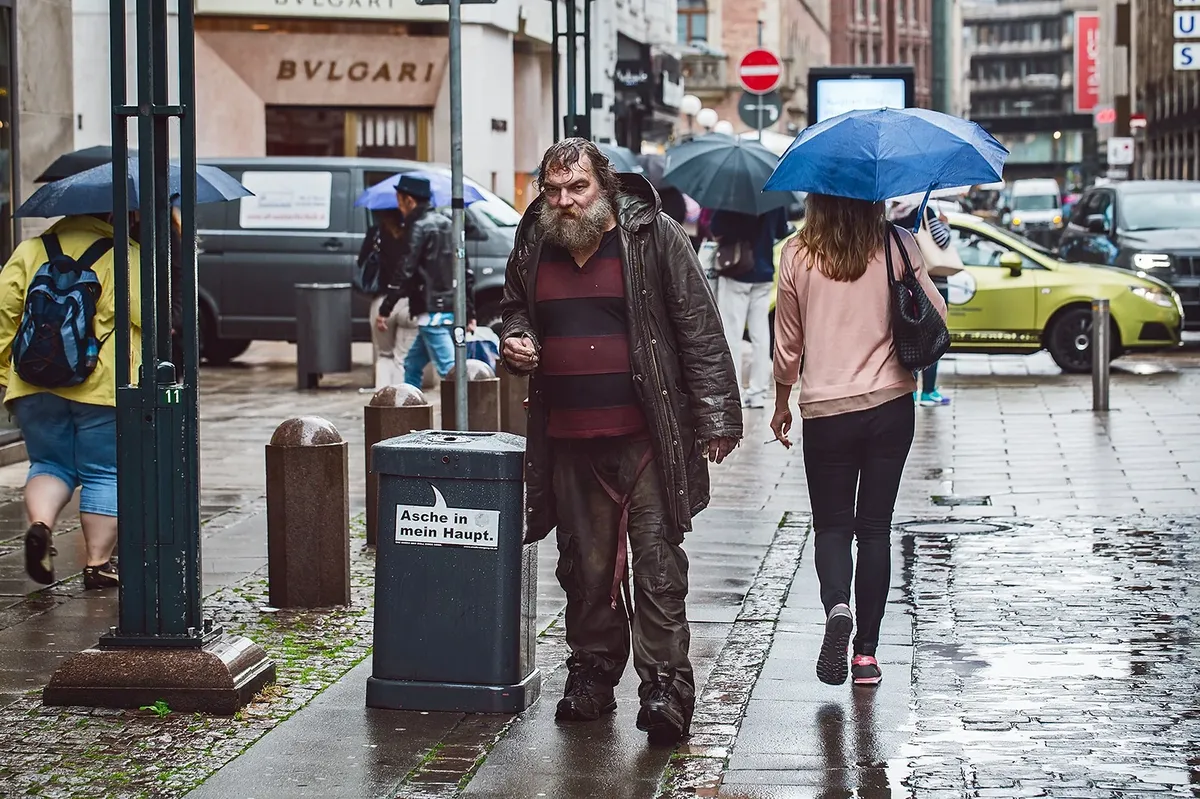
Through reality, half-hidden by flowers, a serious, clean-shaven German face of a middle-aged man, with gray eyes under light, faded eyebrows, looked at me. He was wearing an apron. A modest elderly German. Something clicked, and I suddenly found myself inside him, inside his head, inside his brain, drawn into squares, inside his neat, meager thoughts. Now I looked at the world with his gray, unsmiling eyes, from under his frowning eyebrows. Sadik was the personification of the cramped space that reigned in his head. I began to feel sick: either in reality, or from my vision, a sharp, distinct smell of cheap green soap reached me, which he - I, it was me! — he washed his rough hands with flat, wide nails under which dirt had clogged. Four steps by three... he put so much work into this piece of land and never went beyond its borders.
I suddenly understood what Lebensraum Hitler was shouting about for the German people in his speeches. His discussions about Lebensraum seemed to me like political demagoguery. After all, Germany (I thought) is a large, spacious country... he just needed a justification for aggression. But now I understood what the corporal was squealing about. He screamed, in his scream giving vent to the madness that had accumulated in the soul of the owner of the kindergarten, screamed, freeing him from his shackles, screamed, breaking through the boundaries of cramped German existence with his scream, these three steps by four! His scream and his hysteria were a way to break out of this constriction (not only of the earth, but also of the mind).
Late in the evening, already in the dark, we entered Weimar. The Buchenwald furnaces rested for the fortieth year in a row. On a green meadow not far from the city, I saw a cow, looking pastorally into the distance.
Genossen - apparently to please me - chose the Russischer Hof out of all the hotels in the city. We had to wait a long time for dinner - no one was in a hurry in a provincial town - but when dinner finally appeared on the old-fashioned wooden table of the restaurant, it turned out that it was worth the wait: the luxurious cutlet was gracefully surrounded with champignons, the potatoes, just removed from the frying pan, glistened oilily. Add to this dark beer, sweetish, thick, in tall mugs with the hotel's coat of arms, with heavy silver lids that had to be lowered after taking a sip. The Genossen were especially sweet that evening at the Russischer Hof Hotel - I remember their large white hands grasping their mugs, their moist, talking lips, but - again! - I don’t remember a word of what they said.
Dinner dragged on and I left the hotel at eleven o'clock. Even in Moscow, I dreamed of how I would find Goethe’s house and reverently enter it... I found Goethe’s house easily. At this hour it was, naturally, already closed. It was a long house with windows along the front, in which there was nothing remarkable. The summer evening ended, night came. A black, warm sky with stars hung over the town. There was a narrow alley running along the house, with a lantern burning in the middle of it. I stood at the end of the alley and watched a woman walk along it. Noticing me, she quickened her steps. It was strange, it surprised me. I stood in the dark, looking at the silent windows of Goethe’s house, at the frightened retreating female figure, at the only lantern in this hole... and felt how pompous and absurd my past thoughts about the center of Europe were. This black alley, like a pipe, these potholes and crooked asphalt, this woman frightened by a night meeting - all this was a province, a deep province.
There was silence over the great city of Weimar—the silence of a hole.
I walked down the alley past the lantern and went out into the square. Not a soul. On the opposite edge of the square, in which there was neither beauty nor even grandeur, Kneipe glowed with a dim light. Red neon letters announced the name with pompous solemnity: Bei Paul. For some time I contemplated this lopsided Kneipe, for some reason standing in front of the Olympian’s house. Perhaps it stood here during the years when he lived here. He approached the window of his house - this one, third from the left, in a brown frame - and with an arrogant expression on his thoroughbred face looked at the pub, which undoubtedly offended his sense of beauty with its stupid appearance. I walked slowly across the square.
It was not yet midnight, but Weimar was already asleep. I heard the wind rustling with a strange, alien sound in the trees of a nearby park.
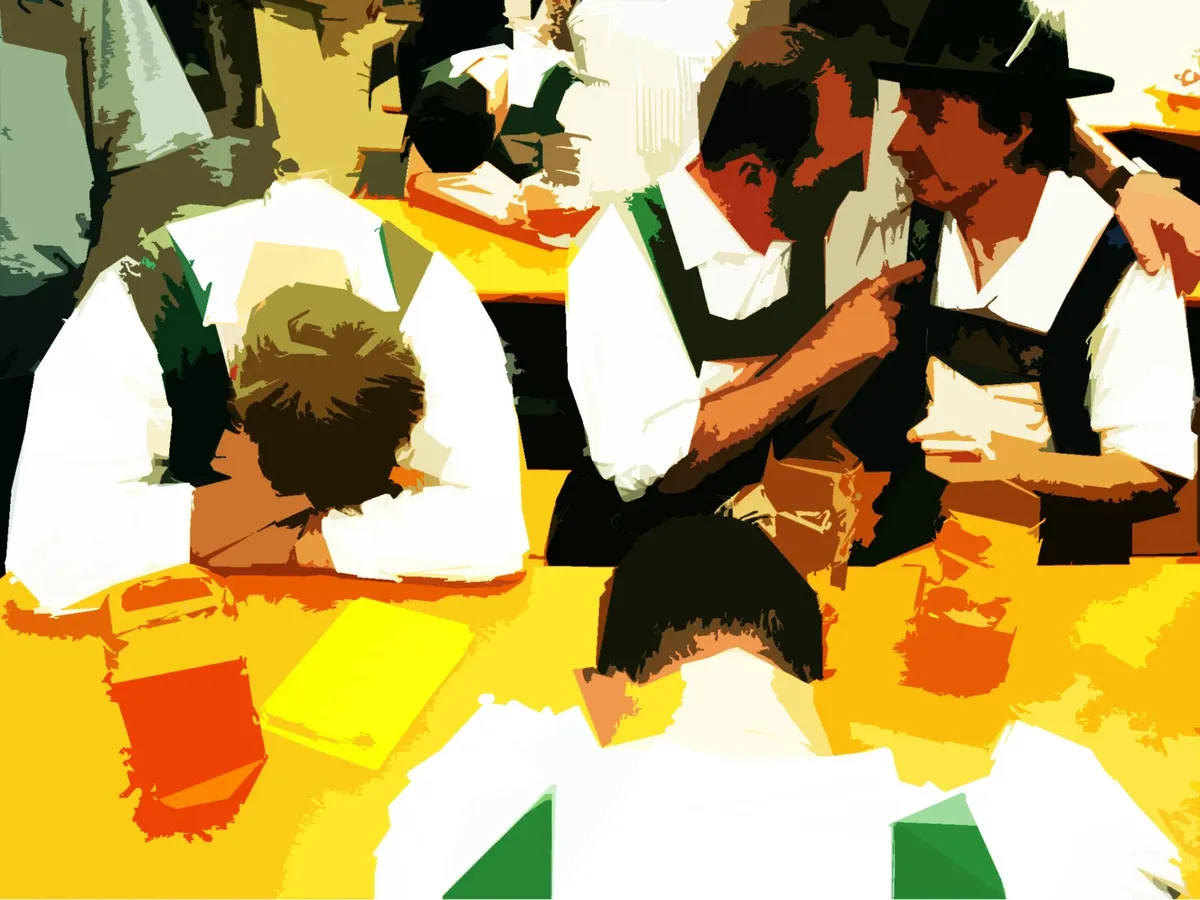
I pushed the peeling white door and entered. Three red, cheerful faces turned towards me. Two drunks were sitting at a table with a plastic top, the third - the owner - stood behind the counter in a small, cramped room. Right there, in the corner, empty bottle boxes were piled up. All three were dressed in something shabby: the owner was wearing a blue sleeveless vest trimmed with mangy fur, one of the drunks was wearing a wrinkled jacket, the other was wearing a shirt with short sleeves. They looked at me and immediately forgot about me. They didn't need me and weren't interested in me. I did not understand their speech: they spoke some other German. Their mouths opened in smiles, they laughed. The beer stood in front of them.
Suddenly I felt how small, unremarkable, unprepossessing everything was here: a square, a pub, an alley, a town, a street lamp... This discovery simply shocked me. I stood on the threshold and didn’t know what to do. Order a beer? Stay here until morning? Get into an argument with them, risking getting hit on the head with a bottle in front of Goethe himself? Quietly clean up? The center of Europe, the great Weimar, the place where the Olympian lived, the holy place of Germany turned out to be a crooked square with potholes, with a dark alley, with a single lantern. Goethe's house was nothing - just a long house with a long row of windows. And these three red-faced Teutonic drunks opposite...
“Lord,” I thought in bewilderment, still standing on the threshold, “how small, boring, unremarkable, bad everything they have here... And how dare they? »
This material was published in the seventeenth issue of Novaya Gazeta. Magazine". You can buy it in the online store of our partners.