
Translated material
Legionnaire back and forth
Starting next season, a new format for the limit on foreigners will come into effect in our football. Who needs this and who will benefit from it?
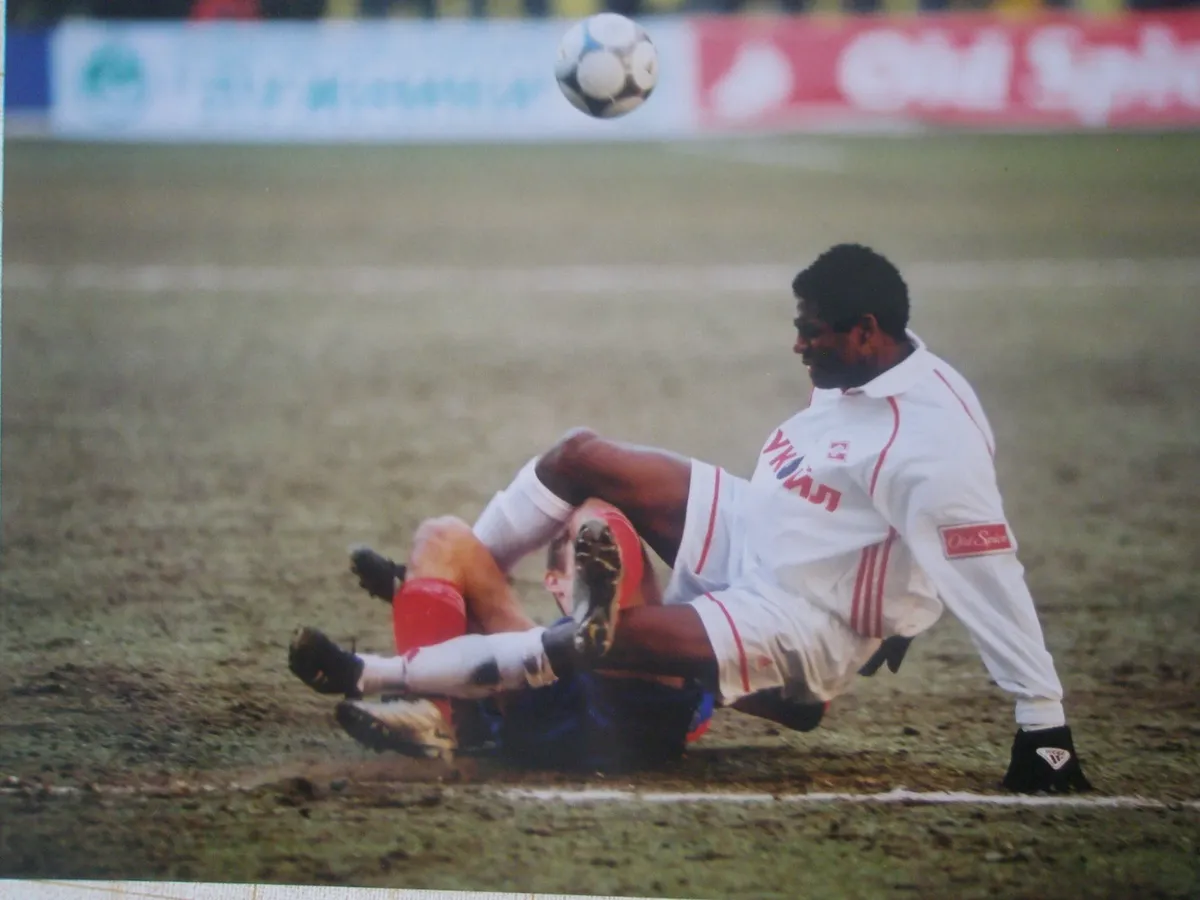
So, in the upcoming national championship, which will begin in July, Premier League clubs will be able to field 7 foreign players, and in the general application they will be allowed to keep 12 citizens with passports of other countries. Now, if anyone has forgotten, 8 foreign players have the right to be on the pitch at the same time, and no more than 13 should be on the team’s payroll.
In the future, officials are going to tighten the limit even more every year: that is, in the 2027/2028 season, the formula will supposedly change to “6+11”, and then to “5+10”. It is clear that people far from football are neither hot nor cold from such news. And fans are already arguing about who will benefit from this situation. But we'll get to the specifics a little later. For now, let’s just remember what the domestic limit actually is, where, excuse me, it came from, and how (and under whose influence) it has been modified over the course of two decades.
No matter how funny it may sound, formally the notorious limit in our country has a history of more than a century. In fact, it was introduced in 1912. Then the All-Russian Football Union, which organized the unified championship (then still an empire), just in case, limited the number of Englishmen in the teams, strongly recommending “using no more than three British comrades.” However, the dominance of the islanders in the pre-revolutionary groups was not observed...
Well, in the USSR for a long time there was no longer any “border” restriction, but for well-known reasons Western magicians could not get into our championship. And they weren't needed. In 1945, Dynamo Moscow punished the founders of football in their homeland without any old-world helpers. Dynamo Kyiv and Tbilisi won the Cup Winners' Cup on their own (and the Kyivians even twice). The USSR national team won the first European Cup, took gold at two Olympics...
However, in 1989, officials from the Federation officially allowed two guest performers to be included in the application. And in the same year, the Bulgarian Tenyo Minchev ended up in “Wings of the Soviets”, who played in the second league, through an exchange (Kuibyshev and Stara Zagora were then sister cities). In 39 meetings, the 35-year-old defender scored twice. And he rightfully earned the title of the first football legionnaire in the USSR. And “Pamir” from Dushanbe (through friendship with Africa) a little later sheltered natives of Zambia: Pearson Mwanza, Derby Makinka and Wisdom Chansu. But they didn’t bother to help the club (each had three fights). But the experienced “railroad workers” will certainly resurrect the memory of the American Dale Mulholland, who arrived in the spring of 1990 at Lokomotiv, which was then number one in the league. And he has something to brag about: the 26-year-old midfielder will score one goal in six matches and a wedding with a Russian girl, Ekaterina, with whom he will live for six years...
In “Kairat” (also before the collapse of the USSR), the North Koreans Kim Myung Din, Lee Chang Ho and Yong Gwan Min managed to play briefly (but did not notice anything useful).
Serious (in terms of the game) recruits from far abroad will appear in our top division already in the Russian period. I remember very well the Syrian forward Assafa Al-Khalifa, who scored in every third match for the Sochi Zhemchuzhina in 1994 (he returned to his homeland only because the club did not always fulfill its financial obligations to him). Of course, our first Brazilian swallows Luiz Andre Da Silva and Mario dos Santos Junior, who arrived at Lokomotiv Nizhny Novgorod in 1995, attracted people to the stands not so much with their dribbling (they, semi-professional beach players, were of little use in potato fields), but simply with their unusual skin color.
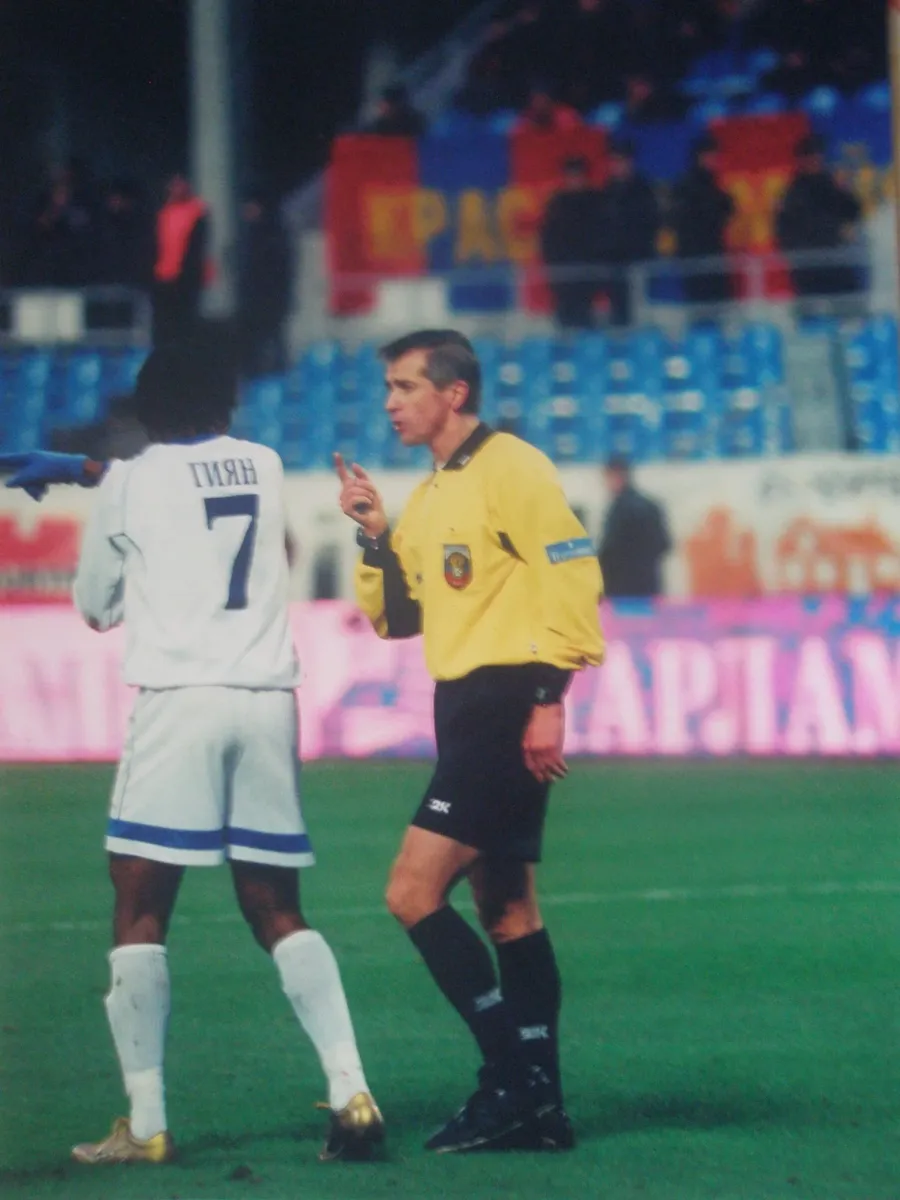
But their compatriot - Leandro Samaroni - will have time to leave his mark in eight years in CSKA, and in Torpedo, and in Spartak, and in Arsenal, and in Krylya Sovetov, and in Rubin, and in Terek... The Nigerian defender Augustine Eguavon played back for Torpedo for the entire 1997 season (and quite passably). And his fellow countryman, wooden forward Lucky Izibor, will stay at Dynamo for almost 36 months. The Brazilian Louis Robson, who scored for the red-and-whites even in the Champions League, will stay even longer at Spartak (from 1997 to 2001).
But there were few people like Robson. And in 2001 there were plenty of people like Izibor: every fifth football player included in the roster of our elite clubs was a foreign mercenary.
And in 2002, after the Russian national team screwed up at the World Cup in Japan and South Korea, the coaches started talking about introducing a “barrier”, since, according to Valery Gazzaev, there was “nowhere to get quality fighters for the national team.”
But talking doesn’t mean doing it. In 2003, Torpedo-Metallurg included 11 people who did not have Russian citizenship in the match against Zenit...
The limit was somehow approved in 2004, according to the “6+5” scheme, but with an idiotic clause: foreigners who played 10 matches for their national team in two years are not considered foreign players. But the wording “two years” somehow disappeared imperceptibly. And in August 2005, Dynamo Moscow, led by the Brazilian Ivo Wortman, sent six Portuguese, a Serb, a Nigerian, a Brazilian, a Greek and a Latvian to battle with FC Moscow... And the high authorities, realizing their mistake, soon recorded the following option: “7+4” without any notes. It was then, by the way, that CSKA President Evgeny Giner, commenting on limit passions, uttered a sacramental phrase: “Even if the simultaneous presence of foreign players on the field is reduced to three, this will not affect our club. We, as a wealthy club, will simply buy up all the best Russian football players..."
However, the dominance of foreign players continued to affect the national team: in 2006, the country’s main team did not go to the 2006 World Cup in Germany. And on the direct line, even Vladimir Putin drew attention to the problem associated with strangers in spats: “There are a lot of foreigners. This stifles the growth of talented and young players. We need to limit it somehow..."
But there was still no significant tightening. We only went back a step. And the “6+5” scheme lasted for quite a long time. And in 2012, less than a month before the start of the new championship, a softening or comeback to the “7+4” formula occurred again. Moreover, this “reform” was pushed through at a time when the RFU did not have a president (Sergei Fursenko resigned, and Evgeniy Giner’s comrades decided on the important issue without him). In September 2012, Nikolai Tolstykh headed the football office, but even he, an iron and unbending truth teller, was unable to restore the previous settings.
And a couple of years later the swing started again. And at the very top. Many have already forgotten that the law on legionnaires was signed by Vladimir Putin. Yes, no special revolution happened, but, according to that order, all powers to regulate limits were in the hands of the Ministry of Sports. And in the summer of 2015 they returned to the “6+5” scheme, simultaneously recognizing as foreign players all those who cannot play for the Russian national team. It would seem that the optimal option at that time (our clubs then competed in European cups, and without the masters from overseas it would have been impossible to fight with the best of the best). But then they started doing weird things again. And the restrictions on the field almost disappeared, and the limit literally flowed into the general application...
I won’t list all the perturbations in detail, but the point is that at the moment 8 foreigners have the right to be on the field at the same time, and in total the club’s application can include a damn dozen players from abroad. But next season, as mentioned above, the formula will change to “7+12”. And football people from different floors argue and are indignant. We also philosophize.
The main question is: why are we changing the rules of the game again? Here is the answer from Sports Minister Mikhail Dyagterev: “We have a historic chance to restore and strengthen the domestic football school by redistributing funds to children’s and youth sports, increase the demand for Russian players, create motivation for clubs to look for talent, invest time and money in them, and not rely on ready-made foreign players.” In words, everything is correct. But a second question immediately arises: why do our teams need any foreign players now, if we only play the ball within the country? And here a tangle of “intrigues” begins to swirl.
In the first second, the thought arises: there is a reason to abandon legionnaires altogether. So that they don’t interfere with or take away jobs from locals (and, by the way, all dollars and euros will remain in the country)…
But the thing is that today’s Borki and Vovka, Sashka and Dimka, on their own and without the participation of Johns and Pierres, will not play any stronger. That is, there must be competition, which is created by foreigners. Even second-rate, considering our “class”.
Moreover, this competition has another important aspect. Don't forget the fact that today football players play not for a jar of jam and a bag of cookies, but for crazy money. And if, for example, there is no limit at all, then all players get more or less what they deserve. More precisely, this: guys with Russian passports are not rewarded through the roof for their clumsy antics and jumping. And with a limit, it turns out that what is needed first is not football players, but passport officers. Well, you understand: even an average forward, who has a passport with a double-headed eagle in his pocket, becomes several times more expensive at once. Both he and his salary are becoming more expensive. If you don’t believe me, ask the agents who are already rubbing their hands with joy.
However, the trouble is not that the people’s money will again be cut up by scoundrels in this case, but that the level of our football will not improve. Because the young midfielder Ivan, who will grab fabulous fees not for the fact that he skillfully takes free kicks, but for the fact that he has the right document, will most likely simply stop in his development.
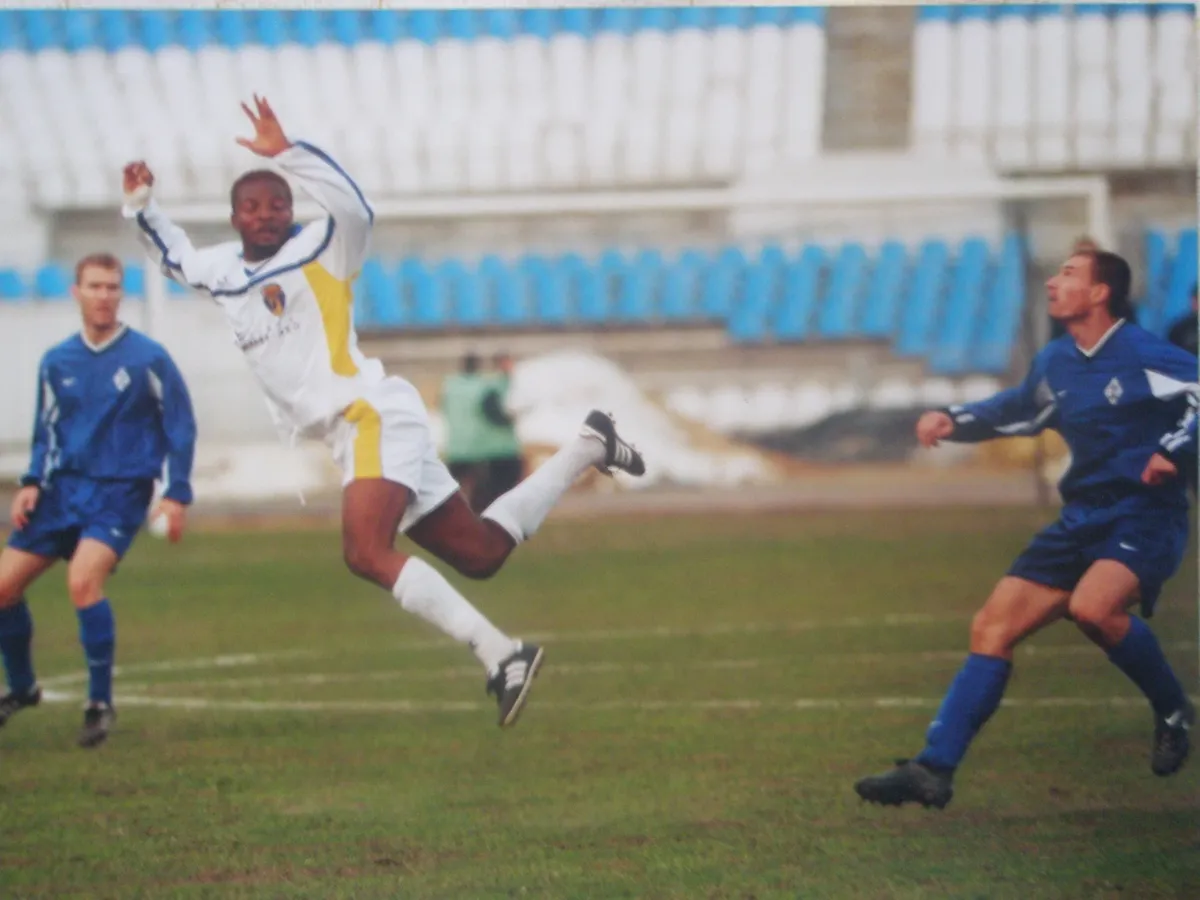
So what should we do then? Let’s listen to the honorary president of the RFU, Vyacheslav Koloskov: “I don’t understand why there are 12 foreign players in the application of the RPL clubs, if only seven can appear on the field. I would make a limit of 10 people in the application and 7 on the field. It’s better to put our player from the academy on the reserve list. I have always been a supporter of a limit, but a reasonable and gradual one. We need to see how the new limit will affect the level of play in the league. There is no need to set the final goal and reduce the number of foreigners in the application and on the field every year.” Hello? Undoubtedly. (Let me remind you again: in the 2027/2028 season they are going to change the formula to “6+11”, and then to “5+10”.)
But the most important word in Koloskov’s quote is academy. To really develop our football, we need to develop academies. And to develop academies, we need coaches. And in order to have high-quality coaches who would work with children from dusk to dawn, all the necessary conditions must be created. Build boarding schools and fields (and not only in Moscow, but on the periphery). And pay appropriate salaries to coaches. Because the development of football begins at school.
But raising your own is hard and tedious. It’s easier to buy a bunch of Africans for budget funds, cut up a bunch of millions of euros... And then, “waking up”, declare: we’re firing foreign players, we’re raising our football.
But in reality, the cut is approaching again. Only from the “other side”. And we have already experienced this more than once (and not only on sports fields). As they say, changing the places of the terms does not change the amount in the pockets of everyone involved in Russian football. Just as our football, in general, has not changed.
And coach Leonid Slutsky is right, who once aptly noted: “Russia is a non-football country...” And it’s not a matter of the limit...