
Translated material
The “Moscow” church chooses Ukraine
The Ukrainian Orthodox Church, which has served as the “soft power” of the “Russian world” for decades, has received a chance for recognition from the Zelensky administration

Photo: Anna Marchenko / TASS
The contours of the confessional map of post-war Ukraine are already emerging. The UOC, which until 2022 was part of the Moscow Patriarchate and was controlled from Russia, but after the start of the Northern Military District took a pro-Ukrainian patriotic position, received the approval of Kyiv, although it lost the Kiev-Pechersk Lavra. For the Russian Orthodox Church, the point of no return has been passed: Moscow will no longer be able to “return Ukraine” under its omophorion.
Church NEP according to Budanov
General Kirill Budanov, who was appointed head of the office of the President of Ukraine at the beginning of this year, made an unexpected statement on the eve of Orthodox Easter. Speaking at a congress of local and regional authorities in Kyiv, he called the use of mentioning the Moscow Patriarchate when referring to the Ukrainian Orthodox Church (UOC) manipulation.
Until May 2022, this denomination was indeed part of the Moscow Patriarchate, but since then its leadership and ordinary clergy have made gigantic efforts to distance themselves from Moscow, strengthen their Ukrainian identity and turn into an autocephalous (still de facto, not de jure) church.
According to Budanov, forceful methods in the sphere of religion do not work, and religious denominations in Ukraine are separated from the state. This rhetoric marks a significant turn from the previous confessional policy of the Ukrainian authorities, which viewed the UOC as a vestige of the “Russian world,” to the gradual acceptance of “new realities.”
It took the leadership of the former “Moscow” church almost four years to prove their loyalty to Ukraine in wartime conditions and turn that page of their history. The process of returning the UOC to the socio-political field of Ukraine will be long and difficult, but it is irreversible.
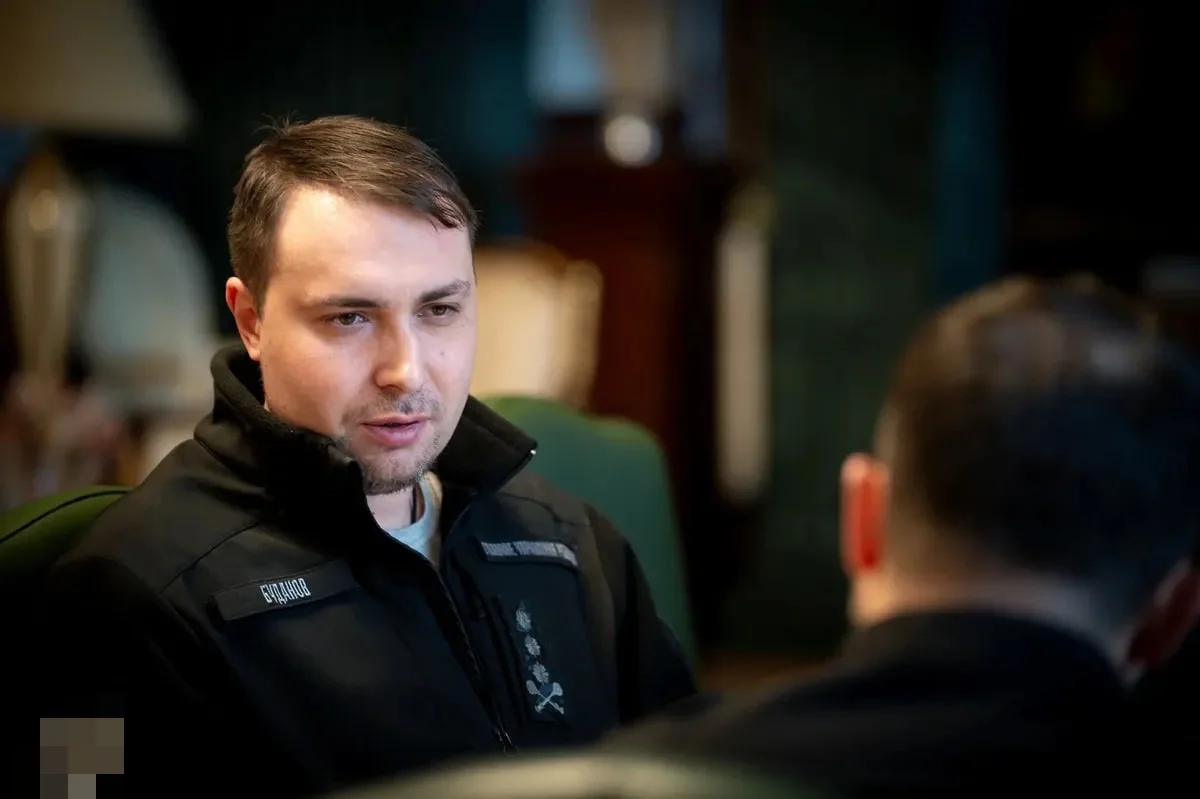
Budanov calls for “giving time” to the UOC so that it can finally strengthen itself in its new identity. This cannot but cause concern in Moscow, where the topic of “persecution of canonical Orthodoxy” in Ukraine was actively used to determine the goals of the Council of Military Districts, including at the highest level.
The weight of Budanov’s position on the church issue is given by the fact that for many years he himself has belonged to the Orthodox Church of Ukraine (OCU) - the second largest denomination in the country, which in 2018 received Tomos - canonical autocephaly from the Patriarchate of Constantinople. In Moscow, the OCU is considered “schismatic,” and Patriarch Kirill even went to the extent of breaking off communication with Constantinople as a sign of protest against Ukrainian autocephaly.
Fork
The pro-Ukrainian vector of the UOC was outlined on February 24, 2022 by its primate, Metropolitan Onuphry (Berezovsky), a graduate of the Trinity Lavra of St. Sergius, who had a reputation as a “Muscovophile.” In connection with the beginning of the Northern Military District, Onuphry called on the flock to “be courageous and show love for their Motherland and each other,” expressing “support for our soldiers who stand guard and protect and defend our land and our people.” He officially asked the President of the Russian Federation, with whom he had met more than once and from whom he received high awards, “to immediately stop ***. The Ukrainian and Russian peoples emerged from the Dnieper baptismal font (...).
On May 27, 2022, at his residence in the Kiev Feofanievsky Monastery, Onuphrius held a council of the UOC, which adopted a resolution that radically changed the status of this church.
What was canonically legitimized was what had been happening spontaneously in the UOC from the very first day of the Northern Military District - the refusal to subordinate to the Moscow Patriarchate, the commemoration of Patriarch Kirill and the participation of Ukrainian representatives in the work of the bodies of the Russian Orthodox Church.
At the Feofanievsky Council, the UOC assumed even more independence than its main confessional competitor, the OCU, has: it independently brews the holy myrrh (necessary for the baptism of people and the consecration of churches) and opens parishes abroad. True, the council did not dare to exclude clause 1.1 from the church charter, which contained a reference to the letter of the Patriarch of Moscow in 1990, which limits the independence of the UOC. This clause subsequently gave the State Service of Ukraine for Ethnopolitics and Freedom of Conscience (GESS) the basis for filing lawsuits to deprive the governing bodies of the UOC, canonically associated with the “center on the territory of the aggressor state,” as legal entities .
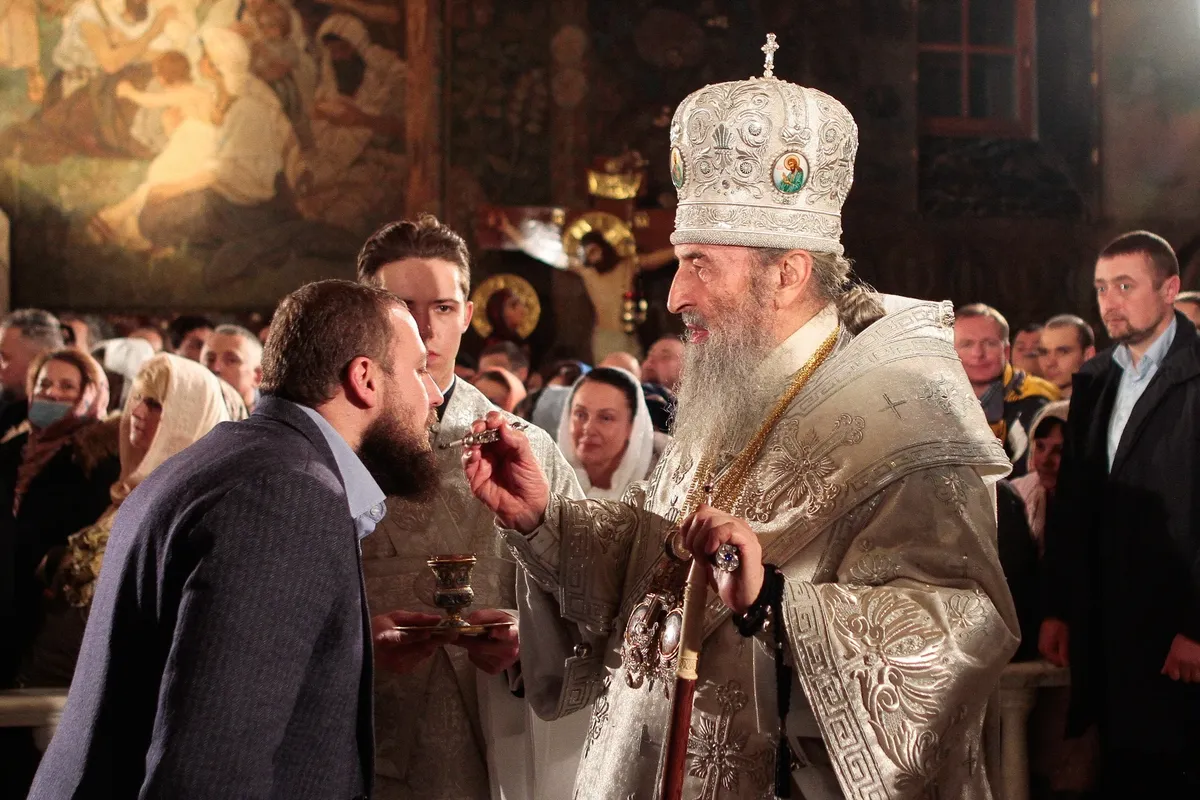
Over these four-plus years, Onuphry’s relationship with the Ukrainian state has not been easy. After a relatively peaceful period of summer - autumn 2022, a sharp escalation occurred in November - after a song about the “awakening of Mother Russia” was performed in the temple of the Kiev Pechersk Lavra. A criminal case was opened on this fact, the monastery’s abbot, Metropolitan Pavel (Lebid), known in Ukraine as “Pasha-Mercedes”, was placed under arrest , the national museum-reserve terminated the contract for the use of the monastery with the UOC, all of whose institutions moved out of its territory. Now the OCU serves in the Lavra’s churches (with the exception of one), but the brethren of the UOC still live in the residential buildings.
Last year, Ukrainian journalists discovered a Russian passport and real estate in Onuphry’s possession, and a scan of the passport was published in his Telegram channel by Onuphry’s brother, Metropolitan Leonid (Gorbachev), who lives in Krasnodar.
The presence of Russian citizenship in such a significant figure is interpreted by the Ukrainian authorities as a violation of the constitutional principle of “single citizenship”, so Onufriy was deprived of Ukrainian citizenship, and he found himself in a “gray zone”, formally having no legal basis for living in Ukraine.
Metropolitans of the UOC Mark (Petrovtsy), Meletiy (Egorenko), Jonathan (Eletskikh) and Irenei (Seredniy), who were deprived of Ukrainian citizenship for the same reason, are in the same position. Jonathan, by the way, was handed over to Russia by Ukraine as part of an exchange of prisoners of war. However, there were no “organizational conclusions” in the form of forced deportation or even a ban on holding leadership positions for UOC hierarchs deprived of citizenship.
Many bishops of the UOC, who had a reputation as ideological supporters of the “Russian world,” seeing what was happening, switched to patriotic Ukrainian positions—in Moscow they even began to be classified as “Ukronazis.” The Orthodox consciousness cannot find an explanation for the fact that the supreme shepherd, who calls himself the great lord and father of the Ukrainian flock, during all these terrible years did not squeeze out a word of sympathy for the Orthodox people of Ukraine, showing complete indifference to the destruction of shrines such as the Transfiguration Cathedral of Odessa, which Kirill himself consecrated. The rector of the Kyiv Theological Academy of the UOC, Archbishop Sylvester (Stoychev), called the doctrine of the “Russian world,” which became the ideological basis of the North-West Church, the “author’s project” of Patriarch Kirill.
The point of no return has been passed
Now it is not customary to remember this, but in 2019, Vladimir Zelensky came to power with a peacekeeping program, criticizing the policies of Petro Poroshenko, including “on the religious front.” Then he called the Tomos of autocephaly of the OCU a “thermos” (he later apologized), implying that autocephaly was a political project. Therefore, the UOC (then still the UOC-MP) counted on strengthening its positions.
After the start of the SVO, several priests and bishops of the UOC-MP sided with the Armed Forces of the Russian Federation, some of them left for Russia, and some are imprisoned under articles of collaboration. After the incident in the Kiev Pechersk Lavra and the scandal with the Russian citizenship of the hierarchs of the UOC, the Verkhovna Rada adopted the law “On the protection of the constitutional order in the sphere of activities of religious organizations.” The law contains a reference to PACE resolution No. 2540 of April 17, 2024, where the “neo-imperialist ideology of the Russian World” is criticized, and Patriarch Kirill and hierarchs who agree with him are held responsible for “abuse of religion.”
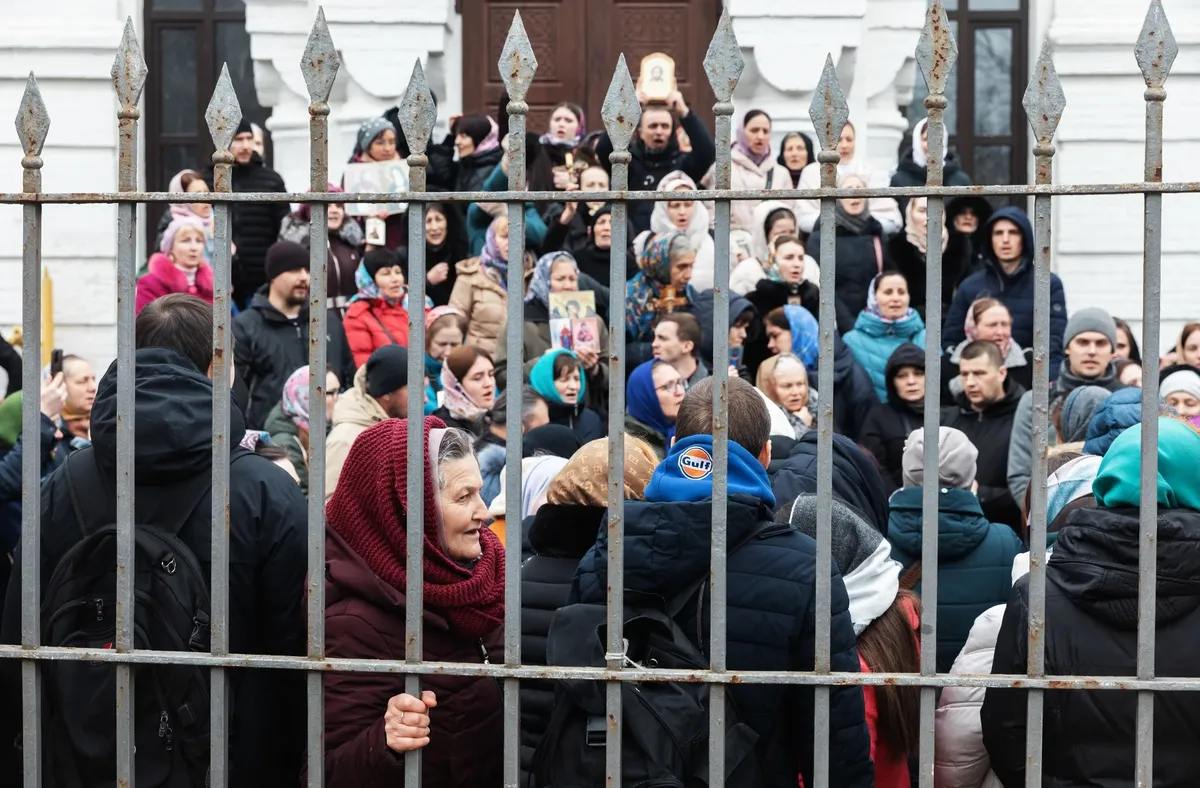
Fulfilling the law, GESS filed a lawsuit in September last year for the liquidation of the Kyiv Metropolis of the UOC, since a special religious examination, also provided for by the law, revealed signs of affiliation of this metropolis with the Moscow Patriarchate. The archdiocese filed a counterclaim, and the case stalled. At a March press conference in Kyiv, the head of the GESS, Professor Viktor Yelensky, said that the metropolis of the UOC had attracted foreign lawyers, who were coordinated by Robert Amsterdam, presumably at the expense of the main sponsor of this church, billionaire Vadim Novinsky, who received the rank of protodeacon in it. The court is drowned in procedural details, so the matter will not come to consideration of the claim on the merits soon.
At the same time, the sanctions that the Ukrainian authorities imposed on the most “pro-Moscow” hierarchs are being softened. An indicator of a change in vector was the decision in the case of the abbot of the Svyatogorsk Lavra (Donetsk region), Metropolitan Arseny (Yakovenko), who since April 2024 had been in a pre-trial detention center on suspicion of committing a crime under Part 2 of Art. 114-2 of the Criminal Code of Ukraine (dissemination of information about the movement, movement or location of the Armed Forces of Ukraine if it is possible to identify them on the ground). For some reason, the hierarch spoke at a sermon, which was broadcast live on YouTube, about the coordinates of Ukrainian checkpoints in the vicinity of Svyatogorsk, which is located not far from the front line. At the end of February, Arseny was released from pre-trial detention center under house arrest.
The above-mentioned Metropolitan Pavel is under house arrest (but in a milder form - without wearing an electronic bracelet). Pavel was placed in a pre-trial detention center for three weeks, but was released on bail of approximately 900 thousand dollars.
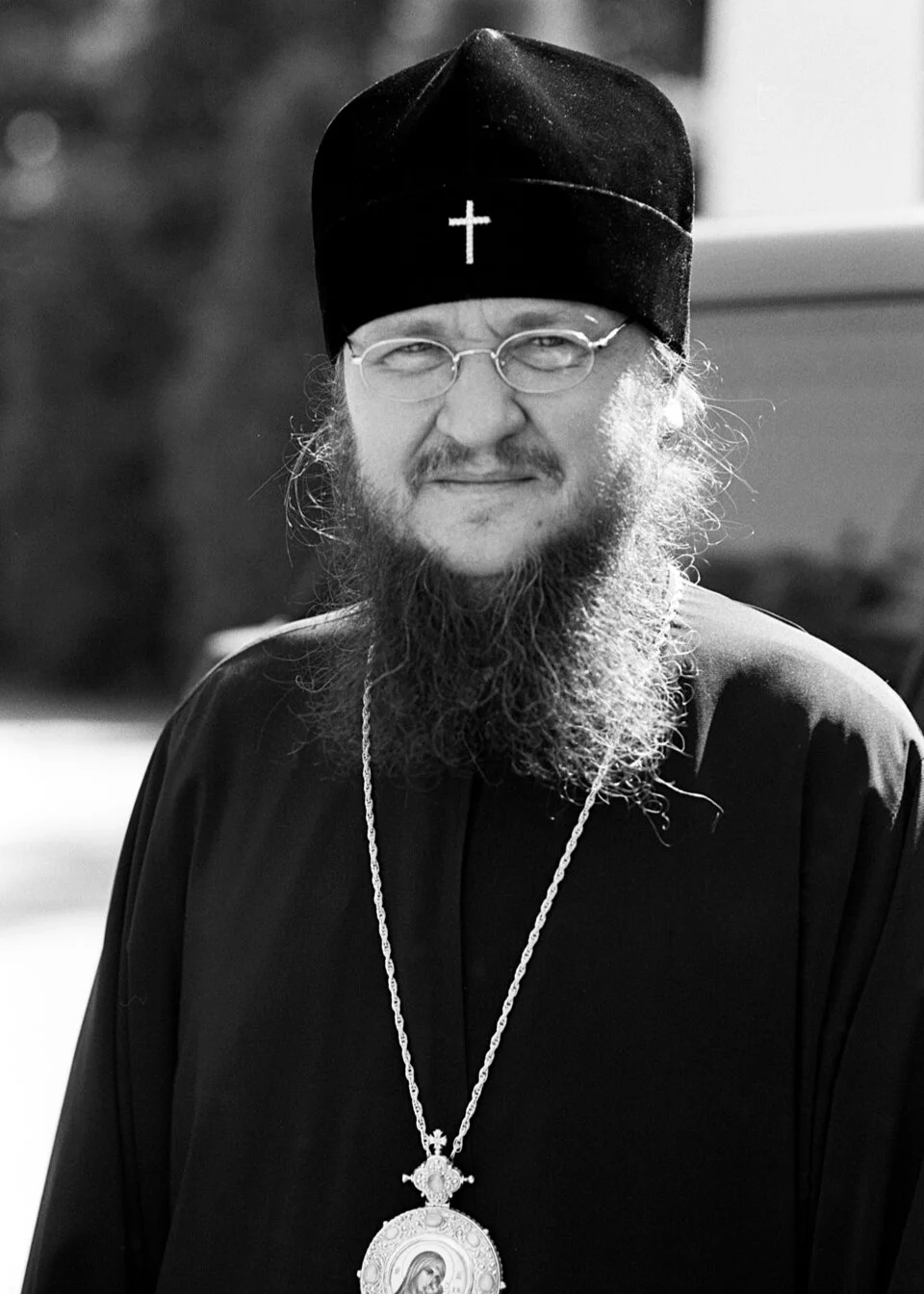
The role of the informal ideologist of the pro-Moscow party in the episcopate of the UOC has now been taken over by Metropolitan Feodosius (Snigirev) of Cherkassy, who this Easter spoke about the persecution of canonical Orthodoxy to the Serbian church portal. Despite a number of criminal cases brought against him, Feodosius was released from house arrest, and a “personal undertaking” was chosen as a preventive measure, an analogue of a written undertaking not to leave. The comparative small number of “persecuted” hierarchs and clergy of the UOC suggests that their position within this church is perceived as marginal, and the change in preventive measures indicates a softening of the confessional policy of the Kyiv authorities.
Recently, in an interview with the liberal Serbian publication Vreme, the rector of the Kiev Theological Academy of the UOC, Archbishop Sylvester, outlined a strategy for the further development of his church within the framework of the “Away from Moscow” course. He is aware of the risk of self-isolation of the former structure of the Moscow Patriarchate in Ukraine if, having moved away from the Russian Orthodox Church, it does not begin to draw closer to other local churches, first of all, with the main antipode of Moscow in world Orthodoxy, Constantinople. “Our church could well begin an ecclesiastical-diplomatic dialogue with the Church of Constantinople,” says Sylvester, “so that we can at least learn to hear and understand each other, and begin to find a way out of the impasse.”
In any development of events and in any option for completing the SVO, the archbishop does not see the possibility of returning the UOC to the Moscow Patriarchate - “the point of no return has been passed.”
...A chain of fatal miscalculations practically deprived the Kremlin of the social base that it still had in Ukraine until 2022. This also applies to the church. The break of the UOC with the Moscow Patriarchate, its transition to patriotic positions and the gradual recognition of these facts by the political leadership in Kyiv does not leave the Moscow Patriarchate any hope of restoring its jurisdiction over Ukraine after the cessation of hostilities.