
Translated material
Security at the cost of freedom. The US Surveillance Dilemma
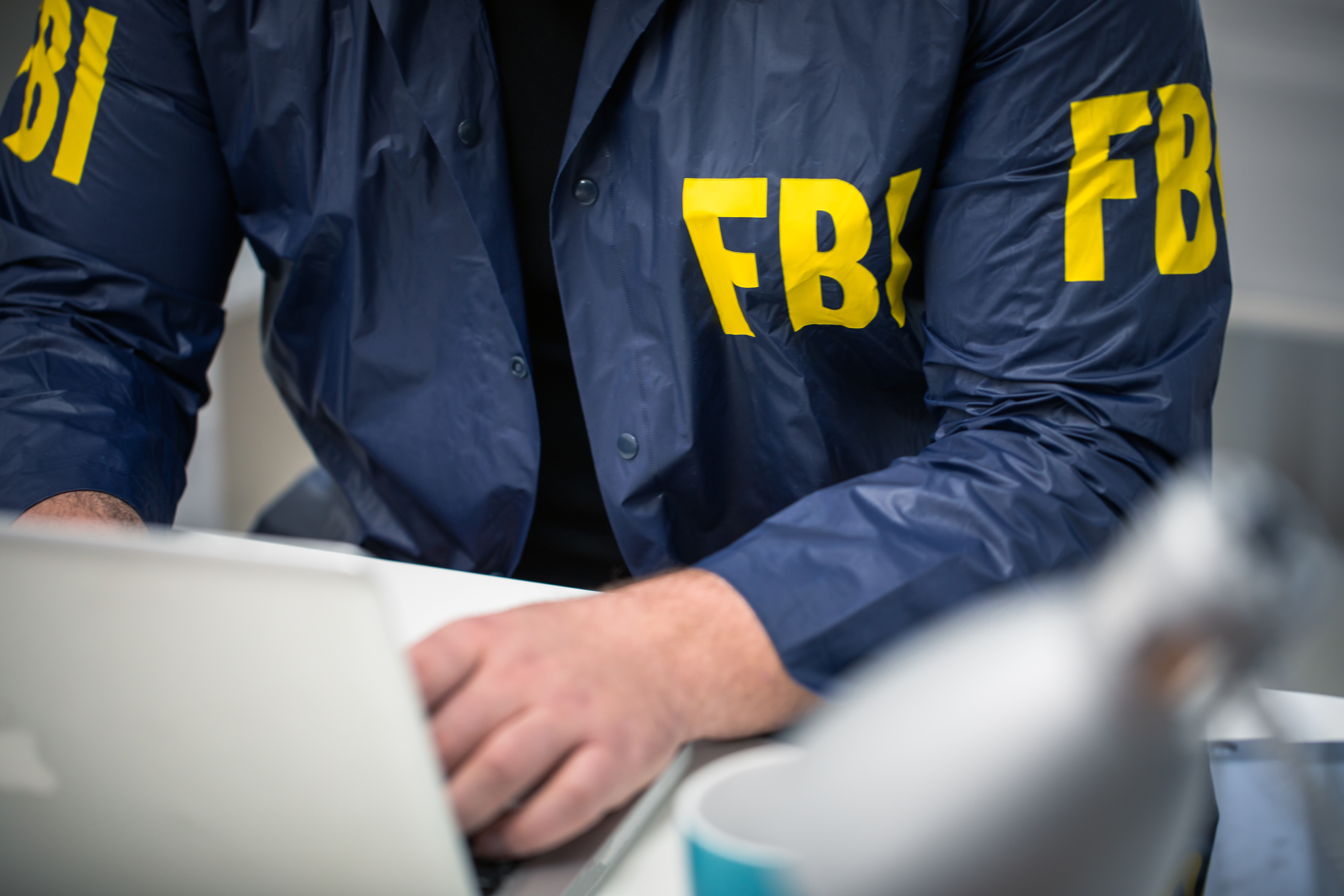
The lower house of the US Congress was unable to extend a key national security law. The majority faction, the Republicans, was prevented from doing so by dissidents within its own ranks.
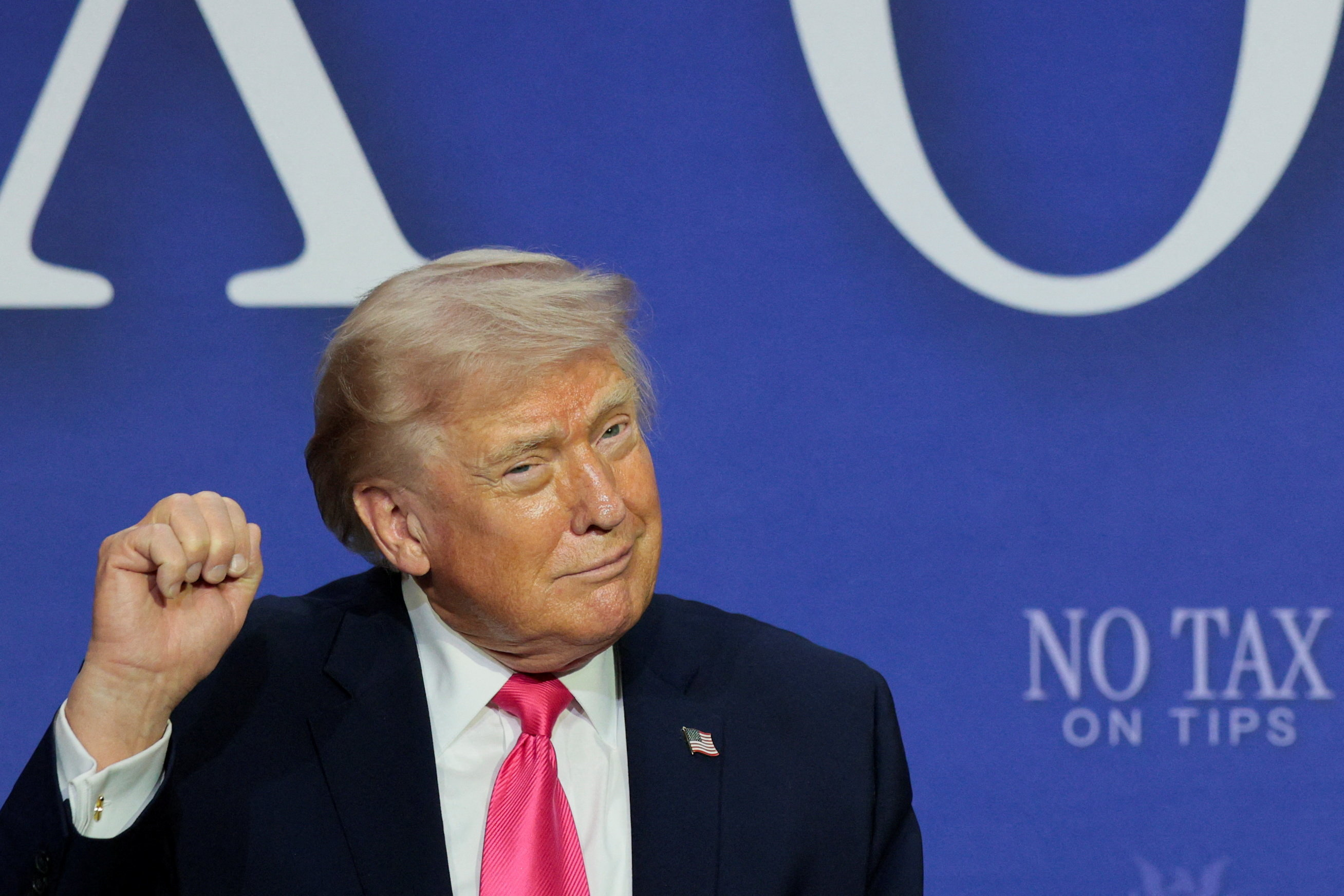
Just two years ago, Donald Trump was a vocal opponent of FISA, the Foreign Intelligence Surveillance Act. “Kill FISA,” he urged legislators on his blog in April 2024, when the next deadline for extending the law approached, “it was illegally used against me and many others. They spied on my campaign headquarters!” His position was exactly the same in 2018. But now he says something else :
Although certain provisions of FISA were unfortunately illegally used against me in the disgraceful "witch hunt" and attack by the Democrats as part of the "Russia, Russia, Russia" scam, and may be used against me in the future, I am willing to risk sacrificing my Rights and Privileges as a Citizen for the sake of our Great Armed Forces and our Country!
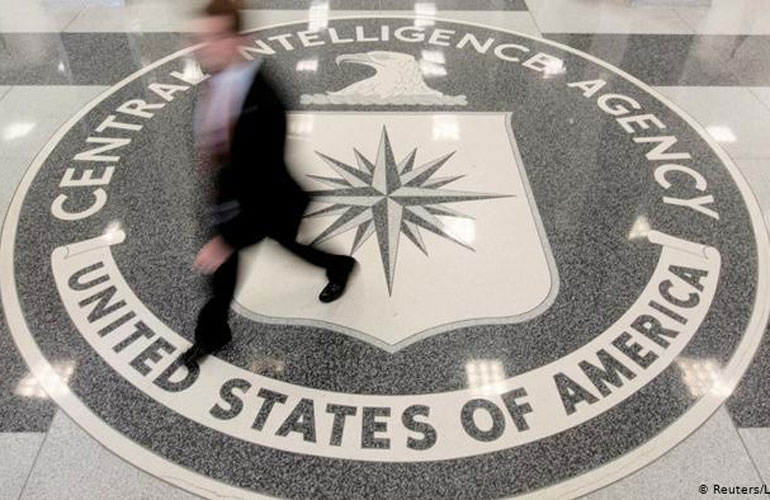
The FISA Act, introduced in Congress by Senator Ted Kennedy and signed into law by President Jimmy Carter, was passed in 1978. It was the result of a massive Senate investigation led by Democratic Senator Frank Church, which in turn was the result of an exposé in the New York Times by Pulitzer Prize winner Seymour Hersh in December 1974. Among other things, it talked about CIA surveillance of activists of the American anti-war movement. The National Security Act of 1947 prohibits the CIA from operating in the United States.
1975 was the worst year in management history. CIA Director William Colby testified to lawmakers several times a week. It was then that Senator Church called the CIA a rogue elephant - a wild elephant that had strayed from the herd. Intelligence work was completely paralyzed.
FISA brought under the control of select committees of both houses of Congress the covert surveillance of foreign organizations and individuals on US soil and established a special Foreign Intelligence Surveillance Court (FISC), which authorizes the surveillance of US citizens suspected of espionage. In this case, the court order must be received no later than 72 hours after the start of observation. The court operates behind closed doors, its procedure is simplified, and the standard of evidence is lower than in a court of general jurisdiction.
Violation of the law is punishable by a fine of $10,000 or five years in prison, or both. On the other hand, a US citizen whose rights were violated as a result of improper implementation of the law has the right to demand compensation in the amount of at least 10 thousand dollars or 100 dollars for each day of violation.
Since 1978, the law has undergone numerous amendments. The most significant of them is the USA Patriot Act. It was introduced into Congress less than a week after the September 11, 2001 terrorist attacks. In the nervous atmosphere characteristic of those days, it was passed by both houses almost without debate or amendment. Already on October 26, the law was signed by President Bush and came into force. "Patriot USA" equated spies with terrorists who do not necessarily act in the interests of a foreign government.
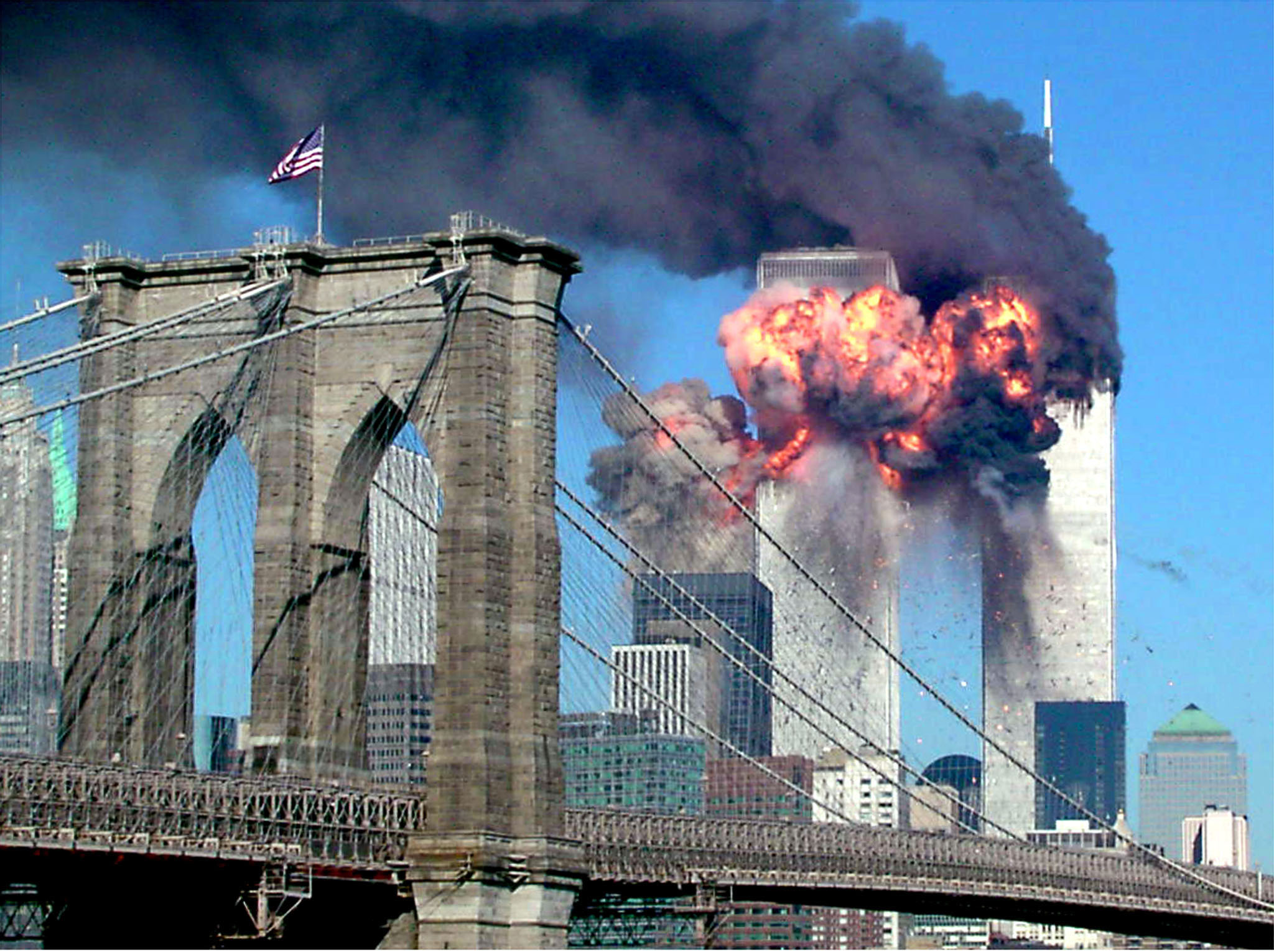
It was then that human rights activists remembered the phrase of Benjamin Franklin: “Those who are willing to give up essential freedom to gain a little temporary security deserve neither freedom nor security.” As is often the case with aphorisms, it was said on a completely different occasion, but in the new political realities it acquired a new meaning. It was repeated endlessly.
An important change that the Bush administration took particular credit for was that the amendment "broke down the wall" between the CIA and the FBI. The FBI, whose functions include counterintelligence, is a law enforcement agency that operates on the basis of judicial warrants. The CIA did not require warrants, but information obtained by intelligence could not be used as a basis for arrest, search or covert surveillance. It was this wall that the USA Patriot Act broke, and at the same time made it much easier for the FBI to communicate with the court. FBI agents then even came to libraries to study readers' forms.
In December 2005, a new scandal broke about illegal wiretapping. It turns out that shortly after 9/11, President Bush authorized electronic surveillance of US citizens without judicial warrants by the National Security Agency. The program had a beautiful name: Stellar Wind.
I then came to one of the Washington research centers for a discussion about state secrets and journalism. It involved former CIA Director James Woolsey . I asked to speak and addressed him:
In my opinion, the problem is that no one tries on the audition program for themselves. But I did it and I see that I am an ideal subject for listening. I call abroad every day, use keywords like the word "jihad", my library form is simply terrible. Is there a legal way to find out if my phones are being tapped? And how can I get rid of surveillance?
Wolsey replied:
I have no confidential information about the program, but if it matches the descriptions, you should not be afraid of using keywords. You shouldn't get in trouble unless you're talking to a friend who's in al-Qaeda. In this case, you may be under surveillance. In all other cases, at least if the program works as reported, I don't think you have any cause for concern.
You shouldn't get in trouble if you don't talk to a friend who's in al-Qaeda.
But my colleague, Newsweek investigative journalist Michael Isikoff , supported me:
You can talk to a distant relative without having the slightest idea that he is connected to al-Qaeda, and that connection is that he was once seen with a man who authorities suspect is dating someone from al-Qaeda - and now the US government is tapping the entire family's phones.
As we have seen, President Trump also considers himself a victim of illegal surveillance. Indeed, in 2016, the FBI, under the leadership of James Comey, conducted surveillance of two minor Trump campaign employees using FISA warrants. This operation, whimsically called Crossfire Hurricane, began with the purpose of checking the dossier of Christopher Steele , who accused Trump of collusion with Russia, and was carried out, as it later turned out , with “gross incompetence and negligence.” In addition, the FBI used "raw, unanalyzed and unconfirmed intelligence" to launch a full-scale investigation when only pre-investigation was required. This was not enough to bring charges against the director of the bureau himself, so they tried to convict him under another article - for giving false testimony to Congress. However, the court decided to dismiss the case.
After the Starwind story, a new amendment appeared in FISA, adopted in the summer of 2008 - section 702. It legalized surveillance without a warrant. Its leading departments operate on the basis of annual certifications approved by the special court mentioned above. Yes, it would be difficult for them to obtain warrants, because surveillance is carried out by analyzing large amounts of data (performed, presumably, by artificial intelligence) received either from Internet providers or by connecting to backbone networks. Moreover, providers do not have the right to refuse to fulfill a request: for every day of delay, they face a fine of 250 thousand dollars.
The law prohibits targeted surveillance of US citizens, as well as “reverse targeted surveillance,” that is, when foreigners are monitored in order to collect information about Americans. However, when foreigners under surveillance communicate with Americans, information about those Americans is “randomly collected” and stored in intelligence databases. There is a "backdoor search" procedure that can be used to obtain this information without a court order.
Section 702 has a limited duration. In 2023, when the next extension was voted on, a proposal to require intelligence agencies to obtain a court order for such searches was rejected in the House of Representatives by a majority of just one vote. Opponents of the requirement argued that warrant requests would take too long to process in situations involving urgent national security threats. Then-FBI Director Christopher Wray said this meant a "de facto ban" on the use of this intelligence tool.
Intelligence agencies always think that the more powers they have, the more effective they are. But practice says otherwise. According to a Foreign Intelligence Surveillance Court report declassified in 2023, the FBI misused its warrantless search authority more than 278,000 times during 2021; These actions included crime victims, suspected participants in the January 6, 2021 riots in Washington, individuals arrested during Black Lives Matter protests, and donors to congressional candidates.
In 2023, Section 702 was only extended for four months, until April 19, 2024. It was in connection with the new extension that Donald Trump called for “killing FISA.” Congress nevertheless extended the section, but only for two years - with the expectation that the next debate on the extension would take place under Trump. The amendment requiring "backdoor search" warrants failed to pass: the vote ended in a draw - 212:212. In this case, the dividing line did not lie along party lines: 126 Democrats voted against the amendment and only 86 Republicans. The Biden administration lobbied hard for the amendment to be rejected and called its passage a “reckless policy decision.” The conservative wing of the Republican faction voted for the amendment, while Republican Speaker Michael Johnson voted against it, although, as an ordinary member of Congress, he spoke in favor of it. Progressive Democrats voted for the amendment along with far-right Republicans.
Now it's time to renew Section 702 again. It expires on April 20th.
Our Military Patriots are in dire need of FISA Section 702
Why did Trump reverse his position? It is difficult to judge this from his blog texts, and he did not make statements on camera on this issue. "Our Military Patriots desperately need Section 702 of FISA and it is one of the reasons for the COLOSSAL successes we have had on the battlefield. I have spoken with many representatives of our Military. According to them, FISA is necessary to protect our Troops abroad, as well as our people here at home, from the threat of Foreign Terrorist Attacks," he writes in one of his posts, demanding that Congress vote to extend the "clean" then there are no amendments to the law. "The fact is, whether you like FISA or not, it is terribly important to our Military," he adds in another.
Probably, it simply did not occur to the president to doubt the loyalty of his party members: it is one thing to vote against a decision that Joe Biden supports, and quite another thing to vote against the opinion of one’s own leader. But the ultra-conservatives, united in the Freedom Caucus, did not change their position. Moreover, their leader Andy Biggs from Arizona introduced his own bill banning extrajudicial surveillance. “For too long, the federal government has used loopholes in surveillance laws to circumvent the Constitution and surveil Americans without a judicial warrant,” he said . “The Fourth Amendment is crystal clear: the government must obtain a warrant before searching the communications or personal records of U.S. citizens. My bill would restore these fundamental protections and ensure that federal agencies cannot evade constitutional restrictions by purchasing Americans' private information from data brokers.” (It turns out they do this too.) And again the voting ended with a score of 212:212!
The White House became concerned about the problem too late. On Tuesday, the president invited congressional Republicans who oppose a “clean” extension to talk. He urged lawmakers to agree to an 18-month extension of FISA. Andy Biggs did not receive an invitation. On Tuesday, CIA Director John Ratcliffe held several briefings for dissenters.
As a result, the only thing Speaker Johnson could achieve was to extend Section 702 until April 30. The voting took place late at night from Thursday to Friday. On the same day, the Senate voted for a 10-day extension.
The situation is critical. The Administration cannot allow Section 702 to simply lapse. But she has little opportunity to convince the opponents of the current editorial board from among her fellow party members. Of course, the president can deprive recalcitrant congressmen of his support in the upcoming congressional elections this year. But they must have weighed their chances well.
Security at the cost of freedom. The US Surveillance Dilemma