
Translated material
Why could blocking lead to a split among elites in Russia? And what is Putin’s role here?
Tatiana Stanovaya argues (Carnegie Politika)
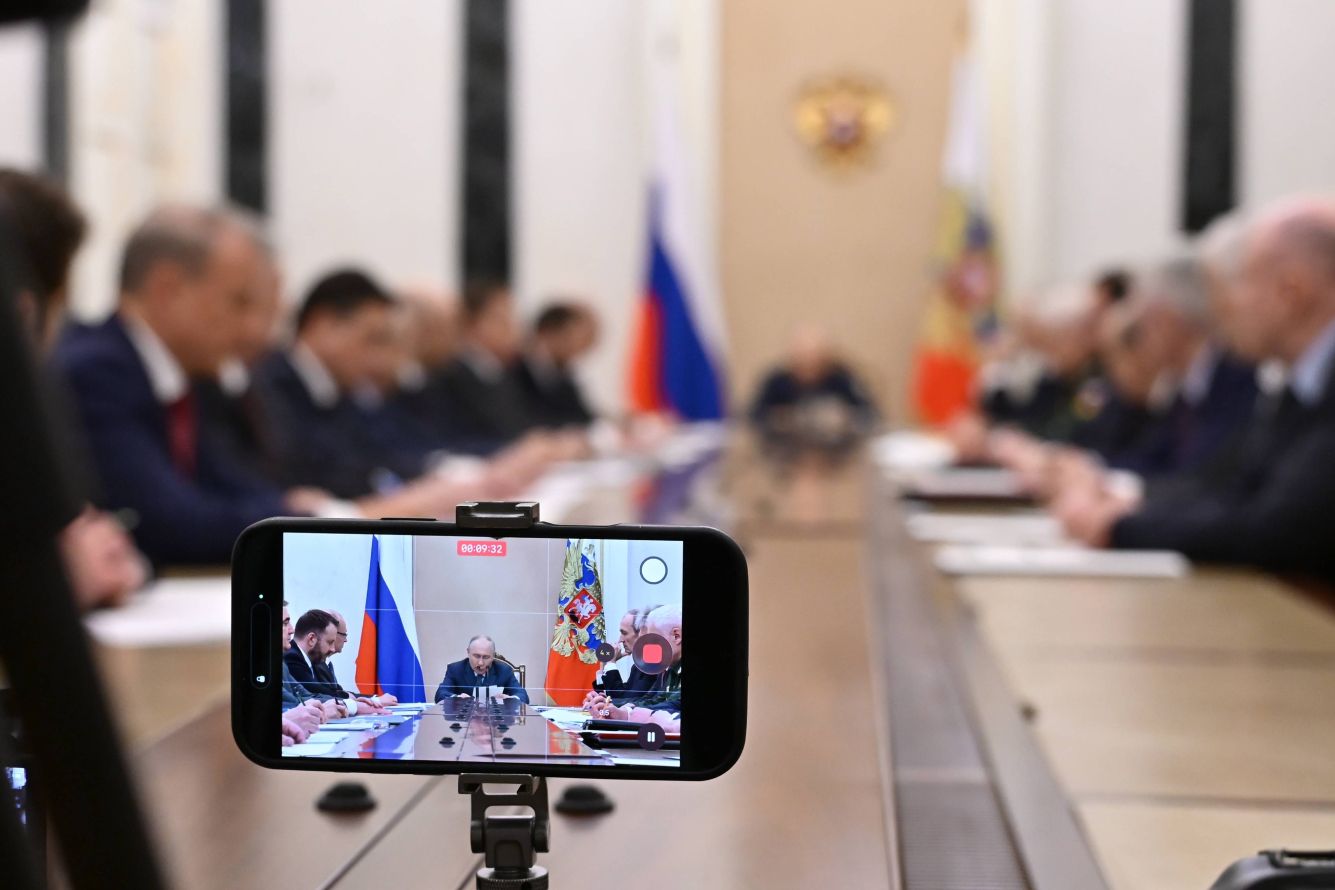
After the start of active blocking and the fight against VPN services, even those who had never done this before began to criticize the Russian authorities. And many, for the first time since the start of the great war between Russia and Ukraine, thought about emigrating. Senior fellow at the Carnegie Berlin Center for Russian and Eurasian Studies and political scientist Tatyana Stanovaya believes that for the first time in the last four years, the Russian regime is on the verge of an internal split. Technocrats and the country's political elite are clearly dissatisfied with the blocking of everything and everyone on the Internet, for which the FSB is responsible . What this could lead to - Tatyana Stanovaya discusses in the text for the Carnegie Politika project. Meduza publishes it in its entirety.
The collapse of the usual
There are indeed many reasons to suspect that the Russian regime has large-scale problems. Yes, everyone in Russia has long accepted that the number of bans is steadily increasing. But in recent weeks, new restrictions have been introduced so quickly that people do not have time to adapt to them. Moreover, they increasingly concern everyone’s daily life.
For 20 years, Russian society has become accustomed to effective digitalization: although in some places it resembles a digital Gulag, a huge number of services and goods can be obtained quickly and with high quality. Even military bans did not particularly affect this area: blocked Facebook and Twitter were never particularly popular, Instagram continued to be used via VPN, and they moved from WhatsApp to Telegram.
And suddenly the familiar digital world began to collapse in a matter of weeks. First, there were prolonged interruptions in the operation of the mobile Internet, then Telegram was blocked, forcing everyone into the MAX messenger, and now VPNs have also come under attack. TV began to talk about the virtues of digital detox and real communication, but it does not seem that such rhetoric is understood by the deeply digitalized Russian society.
What all this means from the point of view of political consequences, few people understand even within the government, because the policy of tightening the digital screws is being implemented in peculiar conditions. The initiative comes from the FSB, it has no political support, and the executors, as a rule, are themselves critical of the new bans. And above all this is Vladimir Putin, who understands little about this, but blesses without going into details too much.
As a result, the policy of forced Internet bans faces cautious sabotage at lower levels of government, outright criticism even from loyalists and causes grumbling from business , sometimes turning into panic . General discontent is further fueled by regular and large-scale failures, when what was just yesterday the simplest action, such as paying with a bank card, suddenly turns out to be impossible.
Who is really to blame there still needs to be figured out , but for the average Russian the picture is sad: the Internet does not work, videos are not sent, it is impossible to make calls, the VPN constantly falls off, you can’t pay anything with a card, you can’t withdraw money. The glitches are eliminated, but the fear remains.
At the same time, public discontent began to grow just a few months before the Duma elections. And the point here is not whether the authorities will be able to win, they will. It’s about how to conduct voting smoothly and without failures in conditions when you don’t control the narrative, and the tools for implementing painful decisions are in the hands of the security forces.
Of course, the curators of domestic policy are both financially and politically interested in promoting MAX. But the same curators are accustomed to the autonomy of Telegram, to its developed information networks and rules of the game built over the years. Almost all electoral and information communication takes place there.
MAX, on the other hand, is absolutely transparent to the intelligence services, as is all the information and political activity that occurs there, often intertwined with commercial interests. Therefore, the use of the state messenger for representatives of the authorities themselves means not just coordinating their work with the FSB, which is a common thing, but a sharp increase in their own vulnerability to the intelligence services.
Safety at the sacrifice of safety
The fact that the security forces are gradually taking over domestic politics is not a new phenomenon. But the internal political bloc led by Sergei Kiriyenko is responsible for the elections, and not the Second Service of the FSB. And there, despite all the hostility towards foreign Internet services, they are clearly irritated by the way the intelligence services are fighting them.
Domestic policy makers are stressed by unpredictability and a reduction in their ability to influence developments. Decisions that shape attitudes towards authorities are now made bypassing them. And that's not to mention the vagueness of Putin's military plans in Ukraine and his diplomatic maneuvers, which adds even more uncertainty.
How to prepare for elections when another unexpected disruption could turn the mood in society tomorrow or when it is unclear whether voting will take place in conditions of peace or war. In such circumstances, the focus inevitably shifts towards administrative coercion, where issues of ideology and narrative lose all meaning. This means that the influence of domestic policy curators is decreasing.
The war gave the security forces new opportunities to push through decisions that were convenient for them under the pretext of security, understood in the broadest sense. But the further, the more this course is implemented to the detriment of more private and specific security. Protection of the abstract security of the state occurs at the expense of reducing the security of residents of front-line regions, business, and bureaucracy.
The lives of those who do not receive a shelling alert on Telegram in time, the interests of the military experiencing communication problems, and small businesses unable to survive without advertising and sales on the Internetare sacrificed to digital control. Even the issue of holding albeit unfree, but convincing elections - which seems to be directly related to the survival of the regime - turns out to be secondary compared to the task of establishing complete control over the Internet.
All this creates a paradoxical situation when not only society, but also certain parts of the government begin to feel more in danger due to the fact that the state is continuously expanding control to counter future threats. After several years of war, there is no counterweight to the FSB left in the system, and Putin’s role is evolving somewhere towards connivance.
The president’s public comments leave no doubt that the FSB received the green light from him for new bans, but the same comments reveal how far the president is from this area, does not understand its nuances and does not want to delve into them.
Nevertheless, the situation is not rosy for the FSB itself either. The Russian regime, despite all the dominance of the security forces, institutionally still retains its pre-war form. Quite influential technocrats remained in it, largely shaping economic policy, large corporations remained, on which the filling of the budget depends, and an internal political bloc remained, which stepped beyond the borders of Russia thanks to the absorption of the legacy of Dmitry Kozak. And the course towards total digital control is being implemented without their approval and against their wishes.
Here the question arises - who will win? The current situation is pushing the FSB to take tougher actions. The very resistance of the elite provokes an even harsher response from the security forces, forcing them to redouble their efforts to rebuild the system for themselves. The response to public objections from loyalists would be new repression.
And then the question is whether this, in turn, will cause even greater intra-elite resistance, and if so, will the security officers cope with it? Adding to the uncertainty of the answer is the growing thought of old Putin, who neither knows how to make peace nor how to win a war, no longer understands much of what is really happening in the country, and does not want to interfere in the work of “professionals.”
Putin's advantage was his strength. Nobody needs him to be weak, including the security forces. This means that the struggle for a new structure for warring Russia is entering an active phase.
What else to read on Carnegie Politika:
- From the hall to the stage. Why Russia is transferring drones and intelligence to Iran
- Mythology level MAX. How conspiracy theories obscured real threats from the state messenger
- The dispute between pragmatists. How far will the split in the Russian government go due to the blocking of Telegram?
Carnegie Politics