
Translated material
In Tomsk, for the second day, the police have been preventing people from filming the site of the demolition of a memorial to victims of repression. It was dismantled due to the “threat of garage collapse”
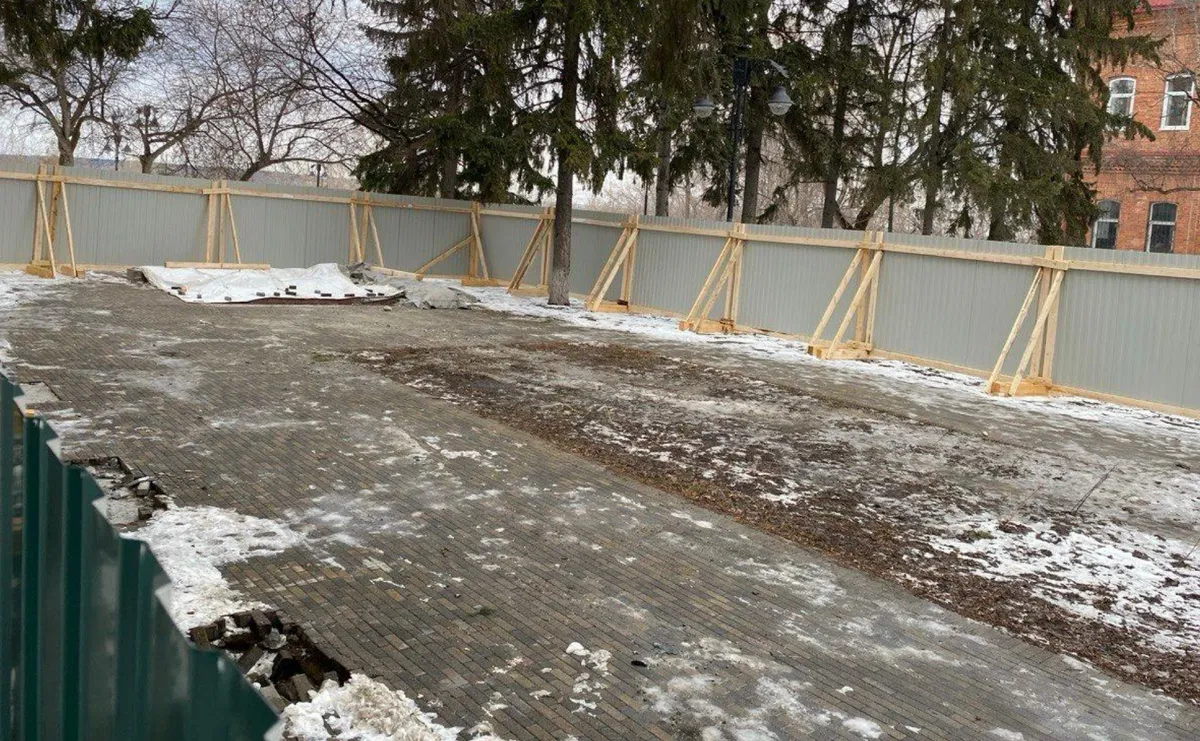
In Tomsk, residents and journalists are prohibited from filming the place where the memorial in the Square in memory of the victims of political repression was demolished on the night from Saturday to Sunday. According to Siberian Express, the police refer to “anti-landslide work.”
The demolition became known on the morning of April 19. The night before, the area was blocked off; special equipment and police were working in the park. The “Stone of Sorrow” and other memorial signs, including those dedicated to repressed peoples, were dismantled.
At the same time, eyewitnesses reported that they were literally broken by tractors. All this happened in the city center, next to the NKVD Investigation Prison museum.
The Tomsk City Hall issued a post about restricting access to the park due to the “probability of a garage collapse” on the slope of the ravine near the Novo-Sobornaya Square stop. Officials wrote that after an appeal from a resident of Tomsk, they “promptly” assembled an emergency commission, after which it was decided to “remove the monuments for storage.” After 20 minutes this post was deleted.
According to “7x7”*, the security forces even then prohibited taking photographs of the square, asked to delete the photographs and copied the passport details of eyewitnesses.
On Monday, April 20, the pressure continued. As Siberian Express writes, one of the local residents’ phone was taken away and the video was deleted:
“I started filming, I became interested, I wanted to show my wife at home. They ran up to me and said: “FSB of Russia, give me the phone.” They took the phone, started looking at it, looking at telegrams, saying: “Who told you to film here?”
- he said.
- A square in memory of victims of political repression appeared on this site in 1992. Previously, there was an inner courtyard of the NKVD prison, where, presumably, executed and deceased prisoners were buried. In the late 1980s, during excavations, pits similar to mass graves were found.
*Russian authorities consider him a “foreign agent”