
Translated material
Stop valve
The capital of Armenia lives in a state of chronic public emergency: the water supply system in the city is catastrophically worn out

Due to daily accidents, residents of Armenia are left without water. Sometimes for a day. Photo by the author
The water supply network of Yerevan, which is 29 years older than Rome, seems to have decided to match the venerable age of the city. The Soviet legacy haunts the Armenian capital: the pipes are rotting, half of the water goes into the ground, but no one is responsible for this.
By the greatness of the god Khaldi - the supreme god of the Urartians - King Argishti the First in 782 BC. e. founded the fortified city of Erebuni - present-day Yerevan. “I built this impregnable fortress... the land was deserted, there I did great things.” After 28 centuries, “great things” turned out to be that there is not enough ordinary water in Yerevan. Seda Gagriyan lives in Erebuni, an area famous for its hot summers and chronic water shortages. Last summer, her child got an intestinal infection and spent a week in the hospital. “Shutdowns are not so bad. When the water is of poor quality, this is a disaster. It tastes bitter and looks cloudy. Now I buy drinking water in the store, and for cooking I freeze tap water in the freezer in advance,” says Seda. The woman says that until summer the water in Erebuni comes from the Garni reservoir - cold, soft, tasty. But in the summer, when consumption increases, the Veolia Djur company explains that it is necessary to mix artesian water from the Ararat region with water from the Garni reservoir.
Scandal for an hour
The water supply system in Armenia is managed by Veolia Djur, a subsidiary of the French company Veolia, one of the world's largest operators in the field of water and utilities. The company serves Yerevan, 45 other cities and 334 villages. Since 2017, Veolia Djur has become the sole operator of the country's water infrastructure under a 15-year contract with the government. It is responsible for operating the infrastructure, modernizing it, supplying water to consumers and taking measures aimed at reducing losses of drinking water.
In February, Veolia Djur announced the transition to a 17-hour water supply from May to September. Yerevan residents were warned that water would be turned off at night from midnight to seven in the morning, and in a number of rural areas the water supply was planned to be reduced to several hours a day. The company explains the reasons for this decision in the standard way: an increase in the number of consumers, weather conditions, deterioration of infrastructure, and a decrease in water sources by approximately 24%.
Understandably, the decision caused a wave of indignation. “The regular shutdown of water in all regions of Armenia is a shame,” said opposition deputy from the Hayastan faction Garnik Danielyan. According to him, the problem is not seasonal demand, but ineffective management, deteriorating networks and incorrect budget priorities. Meanwhile, residents began writing on social networks that a number of administrative districts have been living according to the water supply schedule for many years.
The authorities responded quickly. In a matter of hours, Minister of Territorial Administration and Infrastructure David Khudatyan called the new schedule problematic and said that “the government has suspended its implementation.” Yerevan Mayor Tigran Avinyan confirmed that “a new regime will not be introduced yet.” Veolia Djur also retreated, announcing a revision of the schedule together with the Water Committee and the Public Utilities Regulatory Commission (PSRC).
Many associate the authorities' prompt intervention with the upcoming parliamentary elections and the ruling party's reluctance to lose votes.
“How could a problem that had accumulated over the years be solved by instant government intervention? Isn’t this manipulation?” — asks the same deputy Danielyan.
Soviet legacy: rusty pipes, leaks, finances
Meanwhile, the Water Committee talks about existing reserves to improve the drinking water supply schedule. According to the head of the committee, Aramazd Galamkaryan, the system has potential - additional investments and new sources of water. Galamkaryan recalled that Veolia Djur, according to the contract, is not obliged to provide round-the-clock water supply: “The company must strive for this, and these indicators are growing. The norm for Yerevan is 23 hours, and at the moment, on an annual basis, it already reaches 23.12 hours.”
Water losses in the network, he said, have been reduced from 80 to 45–50%, and this is the result of the operator’s work in recent years. Over two years, the government and Veolia Djur invested about 22 billion drams in infrastructure. But this did not solve the problem: Galamkaryan admitted that in a number of areas of Yerevan, especially during the peak summer heat, there will still be outages, but not more than 3-4 hours, and only at night to fill the tanks.
In fact, half of the water literally goes into the ground on its way to the consumer. Galamkarian presents the reduction in water loss as a success - it was 80% of the loss, now it is 45-50%.
But even these figures are high by European standards. According to the European Federation of National Water Associations EurEau, the average water loss rate in Europe is about 25%.
Advisor to the Mayor of Yerevan Kamo Areyan explains the loss of water to the deplorable state of the network. According to him, the water pipelines from Soviet times are long overdue for a major overhaul, but so far they are only being patched up. “They fix it in one place, but it breaks down in another,” he describes a simple scheme.
According to the Yerevan City Hall, in the capital, water is distributed among consumers through 418 km of pipelines, a 1,431 km long distribution system and 192.9 thousand cubic meters of reservoirs. Since 2025, the Water Committee will modernize 118 km of networks in four administrative districts of the capital. Another 91.6 km are planned to be repaired in seven districts in 2026.
Over the 15 years of the contract, Veolia Djur is obliged to invest 45 billion drams. According to the former head of PSRC Garegin Bagramyan, to replace worn-out networks and modernize the entire system, “this is a drop in the bucket.” Yerevan Mayor Tigran Avinyan admitted that the water supply system is in a deplorable state: “It is so rusty that everything you touch falls apart.” According to him, an additional 10 billion drams per year is needed to solve the problem.
This amount is approximately double what Veolia Djur is obligated to spend on the entire contract in a year. The mayor of the capital, apparently, himself understands that the contract with the company was signed not in favor of the city.
The city is being built - the pipes are rotting
PSRC head Mesrop Mesropyan, in turn, during a briefing with journalists, said that the state handed over a physically worn-out system to Veolia Djur, and that is why the problem cannot be solved without government investments.
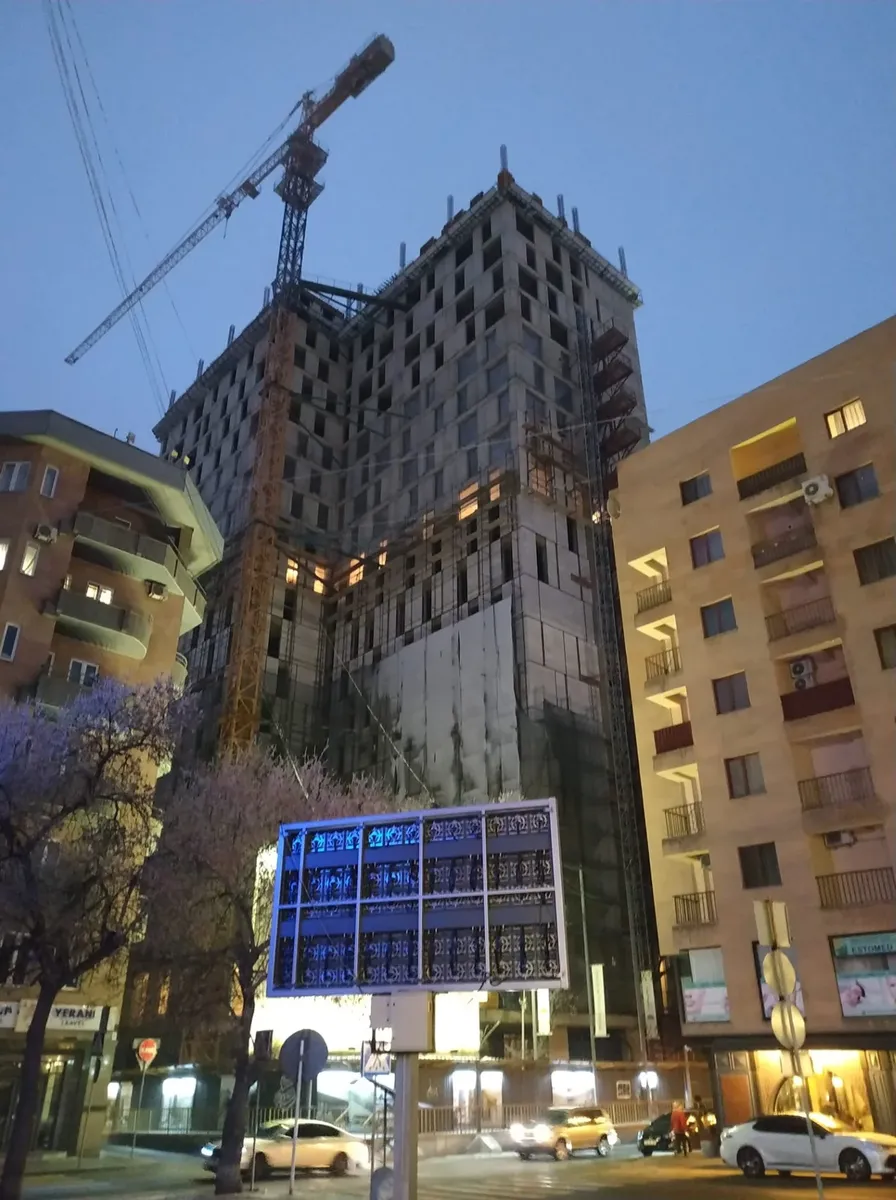
But the situation is further aggravated by dense buildings in Yerevan. According to Mesropyan, hundreds of apartment buildings have appeared in the capital in recent years. “The number of consumers has grown sharply, but there are no more water pipes, as well as the volume of water,” he noted.
Architect Arto Marcos, who is currently building a multi-story building in the center of Yerevan, is familiar with the problem firsthand. In his own area, the Nork massif, the water has been cut off every night from midnight to 7 am for several years now. He says that developers partially solve the infrastructure problem themselves by building reservoirs for each complex. Separate lines from water sources supplying the city will already be laid to them. Old networks, he said, cannot withstand the additional load.
Arto Marcos emphasizes the problem of water scarcity. According to him, Yerevan is fed from 13 sources, in some areas - from artesian wells. However, groundwater levels have dropped sharply today. If earlier in the Ararat Valley they reached water at a depth of 1–2 meters, now they are drilling to 40 meters. This is due to increased consumption - irrigation, artificial reservoirs, swimming pools, etc.
In Yerevan itself, in addition to the water park, a huge volume of water is absorbed by many private swimming pools. And in the summer, when there is a drought, the shortage becomes critical.
Meanwhile, the city municipality, within the framework of the Green City program, has set a goal to provide Yerevan with an efficient water supply with minimal losses by 2030. But ecologists of the NPO “Ecolur”, having studied the new general plan of Yerevan, came to different conclusions. They revealed a number of facts according to which the demand for water in the capital will only grow - from the current 254.6 thousand cubic meters per day to 330.9 thousand. “At the same time, the climate is changing, water resources are declining, and the master plan does not contain any specific measures to reduce water loss in the network. Already today, there is a shortage of water in the capital - only 44% of the population is provided with round-the-clock water supply, and to cover demand, the operating company mixes drinking water with artesian water,” the report says.
It is also noted that out of 13 sources of drinking water, only two have confirmed operational reserves. Seven out of 25 daily regulation tanks are either in emergency condition or not working at all.
The city is growing, new neighborhoods are multiplying, water is becoming scarcer, and summer is coming. The state nods to Veolia Djur, which points to the Soviet heritage and development, and developers continue to build for themselves with the permission of the same mayor’s office. The water cycle - only with losses along the way.
Armine Martirosyan