
Translated material
The ancient gods leave the screen
How cinema creates an attractive image of Scandinavian paganism - a “natural” alternative to Christianity

Still from the movie “Vikings Valhalla”
The movie creates an attractive image of Scandinavian paganism - a “natural” alternative to Christianity, which has become fashionable not only in the West, but also in Russia (and Natalya Poklonskaya is its prophet). What is the main message of the most popular films and TV series about the religion of Odin?
Pagan Vikings are a recognizable and, to a certain extent, fashionable trend in modern mass culture. A surge of interest in this tradition occurred at the beginning of the 21st century - largely thanks to the series “Vikings” and “The Last Kingdom”, the games The Elder Scrolls V: Skyrim; For Honor; Assassin's Creed Valhalla, the "Viking metal" style and literature of varying quality increasing every year. The Viking religion (Odinism, Asatru) is actively studied by religious scholars and adherents of the “Northern Tradition”, as they prefer to call themselves in Russia, try to practice.
The public ambassador of this trend was Natalya Poklonskaya (in paganism - Radveda) - a former prosecutor of Crimea, a princess and spiritual child of the now convicted elder Sergius Romanov, a State Duma deputy and ambassador to Cape Verde, and now a modest adviser to Prosecutor General Gutsan. Poklonskaya knows how to shock the public, stirring up interest in her ideas, which she again successfully did in early April in a two-hour interview with Ksenia Sobchak. Poklonskaya explained her departure from Christianity with the desire to be free, and called paganism “a philosophy of life.” “I got there,” says Poklonskaya, “because paganism preserves secret knowledge and “deifies nature.”
In the context of the reputational crisis of the Russian Orthodox Church, more and more Russians, including those directly involved in the SVO, are becoming interested in this form of “alternative” religiosity, which causes serious concern in the Moscow Patriarchate. Novaya devoted its research to this. The theme of religion and, in particular, the clash of paganism with Christianity has become central to most modern films and TV series about the Vikings.
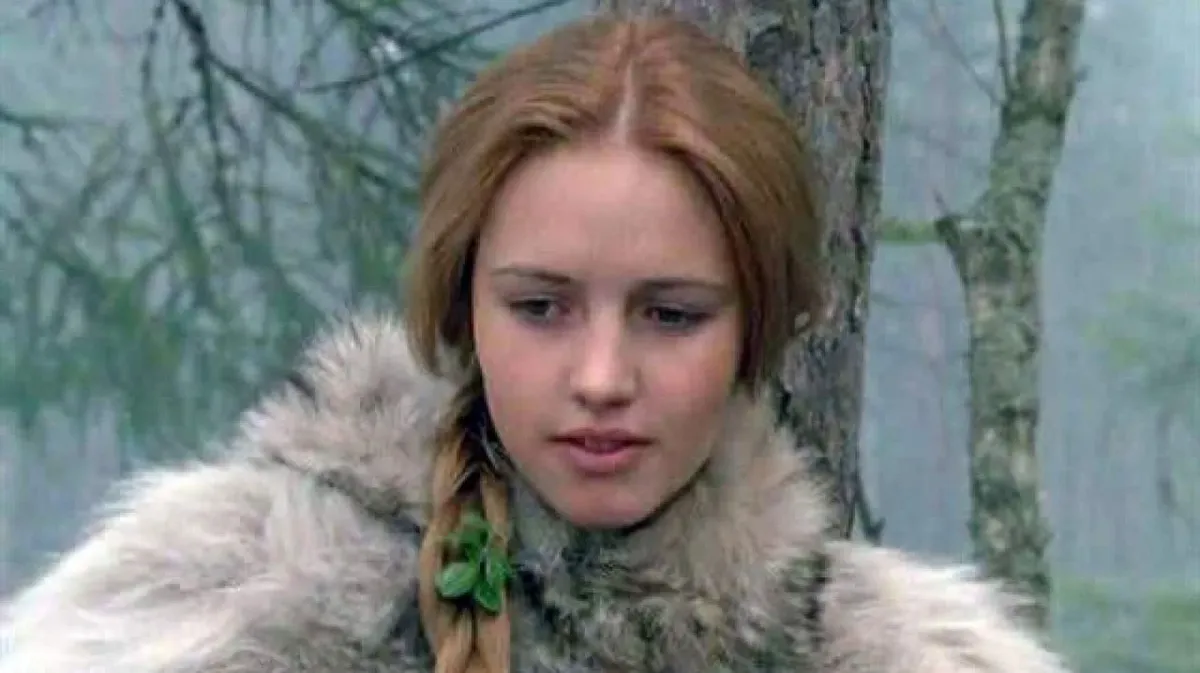
It’s worth starting a retrospective of such films with the 1985 Soviet-Norwegian film, directed by Stanislav Rostotsky, “And Trees Grow on the Stones” - a cult epic saga among domestic neo-pagans (for example, in the “House of Ash” community). This is a film adaptation of the first part of Yuri Vronsky’s novel “The Wanderings of Kuksha from the Domovichs” - the story of a simple Slavic boy stolen from the embrace of the birch tree Gardarika by harsh Vikings. In the film, stunning landscapes of the Norwegian fjords are intertwined with a love drama. But for neo-pagans it is valuable for its edifying and detailed myth of the birth, initiation and ascension of the Hero - detailed instructions on how to achieve an anthropological ideal alternative to the Christian one. It is surprising that a film that evokes a keen interest in ancient spiritual practices, set in the 9th century, was able to be made under Soviet rule.
Four years later, in 1989, former members of the British comic group Monty Python Terry Jones and John Cleese made the comedy Erik the Viking, offering a satirical interpretation of Norse mythology. On the eve of Ragnarok (the Scandinavian end of the world), a young Viking Erik falls in love with Helga, whom he accidentally kills during another conquest. Having experienced catharsis, Eric goes to the legendary country of Hai Brasil (“isles of the blessed” in Irish mythology), where he plans to find the horn of the Thunderer, blowing which can awaken the gods and “cancel” the end of the world. Eric is being plotted by Loki, the blacksmith's assistant, who will be prevented by the unscheduled end of Ragnarok from producing weapons and profiting from it. However, the comedy has a happy ending.
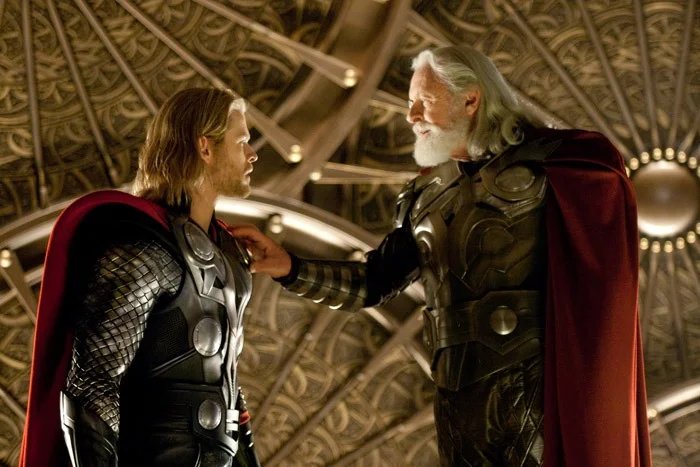
Three films of the Thor franchise (2011–2017) about the Scandinavian god of thunder and lightning, saving the world in modern America, were filmed in the format of comic book adaptations from the monopolist and trendsetter of the genre Marvel. This is Scandinavian mythology in a fantasy wrapper, stuffed with Hollywood narratives. The most striking thing about the trilogy is the special effects. The first part of Thor is a cute fantasy for middle school children in a typical American spirit: the god of thunder saves the world, inspired by his love for an earthly woman. In pure Hollywood style, all sorts of rabble are scurrying back and forth across the Bifrost bridge-portal to all corners of the universe, God Odin is constantly about to die, but returns every time...
Much more serious is the cult Canadian-Irish series “Vikings” (2013–2020), filmed by British director Michael Hirst. Professional critics wrote tons of reviews about it. Most often, the series is criticized for its excessive idealization of the Vikings, among whom in reality there were many bloodthirsty rapists and thugs. The main character, Ragnar Lothbrok (the literal translation of the name is “Defender of the Fur Pants Fortress”), despite his evil character, captivates the viewer. Religious themes are one of the main themes in the series, which detail Scandinavian rituals (including sacrifices in Uppsala) and Lodbrok's fluctuations between loyalty to Odin and interest in Christianity. His friendship with the monk Æthelstan is a metaphor for the collision of these two worlds.
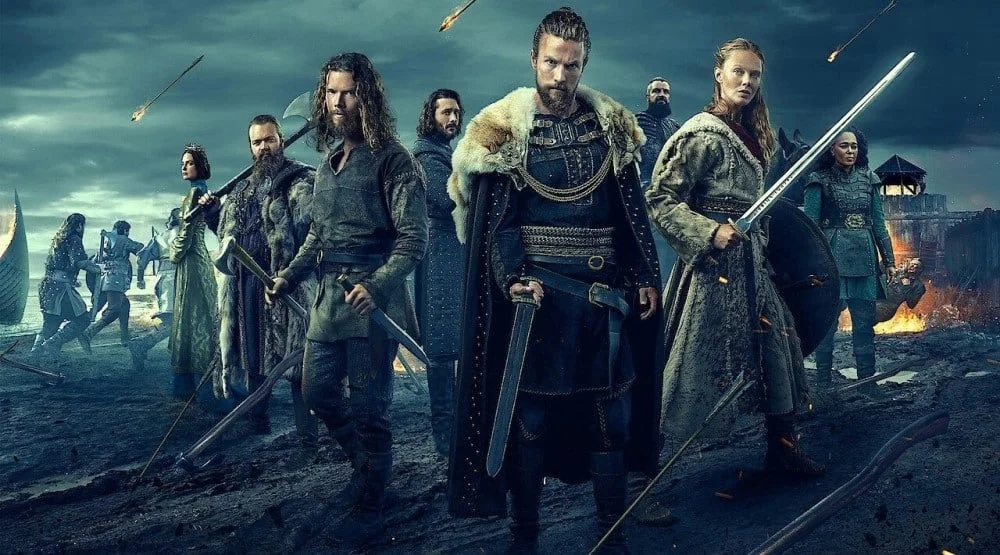
A spinoff of the original series, Vikings: Valhalla ( 2022–2024), takes place 100 years after the events of the Vikings series. Scandinavia is already split: some Vikings have become zealous Christians, while others desperately cling to the “old gods.” The conflict between these groups within one people is the main driver of the plot.
The cult series “American Gods” (2017–2021), a film adaptation of the novel of the same name by the brilliant Neil Gaiman, made its contribution to the formation of the myth. One of the main characters of the series is Odin himself (played by Ian McShane), who led with his assistant the Shadow of the Moons not only Ragnarok (Armageddon) itself, but some kind of epochal, final battle between the “army” of various “ethnic” gods who arrived in the New World along with emigrants and the gods of the “new world”.
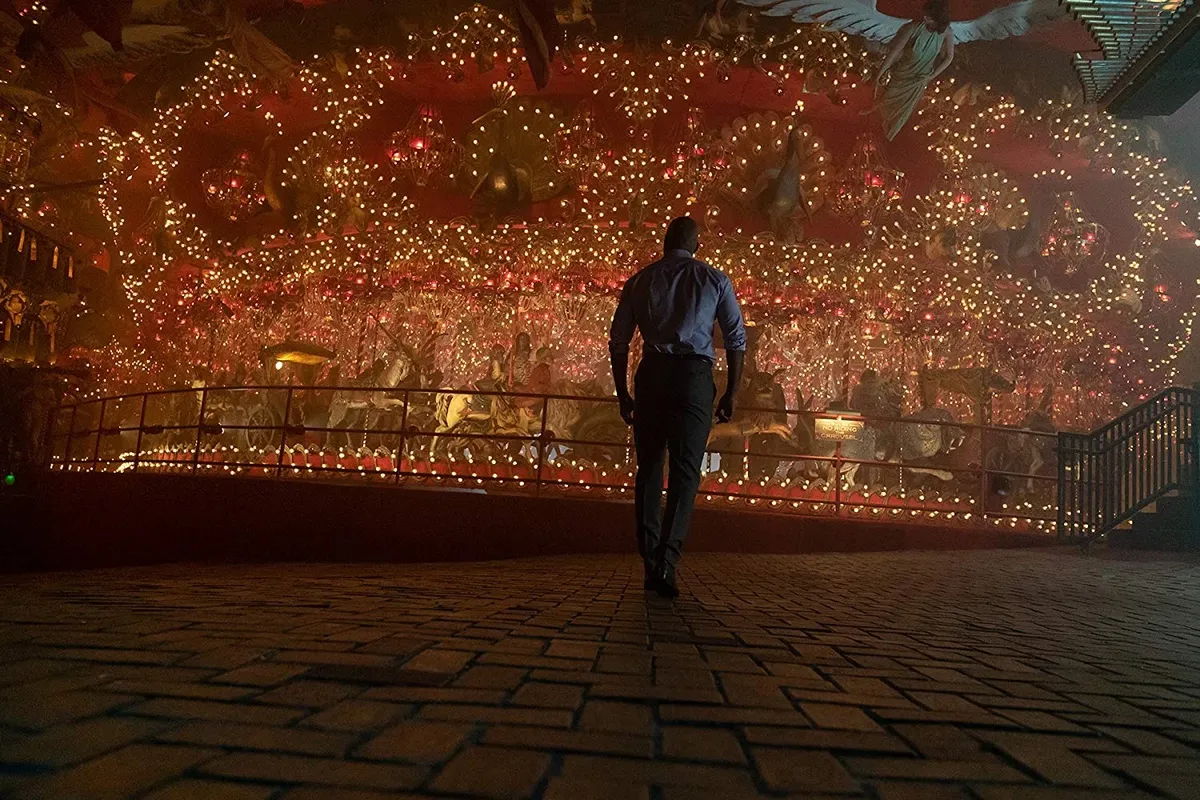
The same battle is the subject of the film “Valhalla: Ragnarok”, shot in 2019 based on the comic book by Peter Madsen and directed by Fenar Ahmad, who is clearly not of northern origin. The gods themselves, Thor and Loki, wander into the hut of poor northerners during a night storm. Thor here is brutally far from the Hollywood golden-haired Chris Hemsworth from the Thor franchise described above, and Loki is played by the hot brunette Dulfi Al-Jabouri. For the misdeed of the young Viking Tjalfi, who, at the instigation of the cunning Loki, broke one of the bones of the sacred goat Thor during a feast, the main character and his young sister Röskva are taken into slavery by the unfriendly gods in their Valhalla. There, the gods, sad and clearly distraught due to apocalyptic events, lament the approach of Ragnarok. Meanwhile, brother and sister, dissatisfied with the contemptuous attitude of the gods, decide to run away in the company of a foolish troll, but end up with the giants, and the gods are forced to free them. The film has a lot of beautiful landscapes and textured characters, but Valhalla, the habitat of the gods, is very unattractive, reminiscent of Plato’s cave, poorly lit by poor torches.
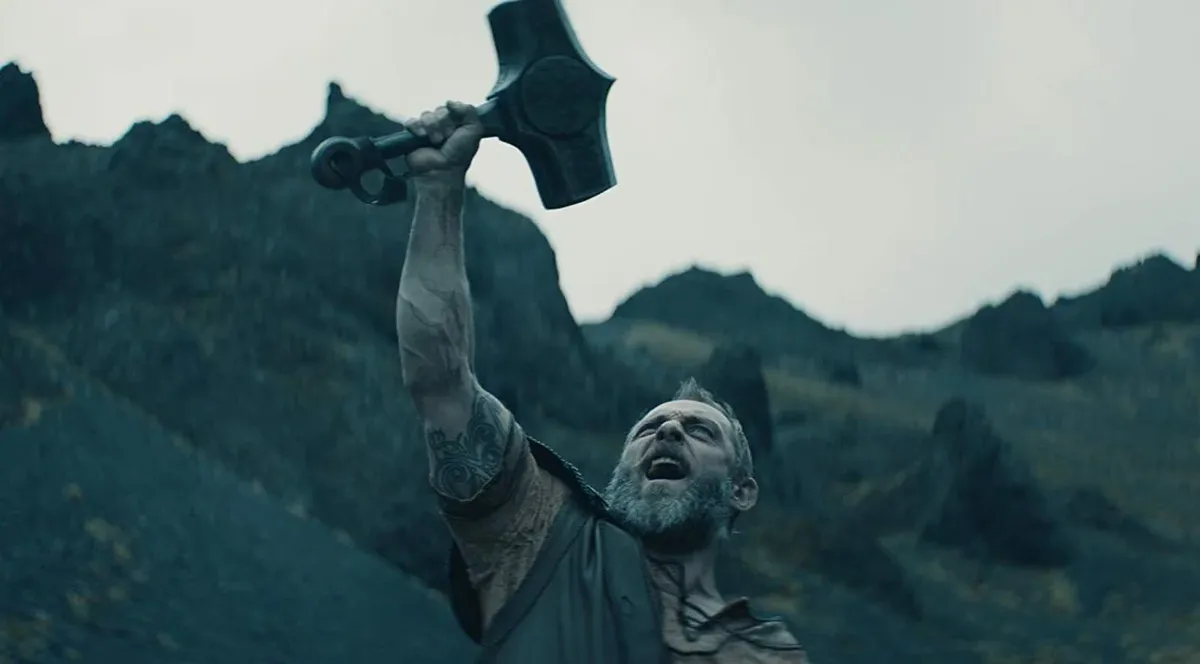
The Norwegian series “Aliens from the Past” (2019–2022) is positioned as “science fiction” and “crime drama”. But it looks more like a historical and even religious drama - the mass movement and mixing of people from the Stone Age, the Viking Age and the 19th century that underlies the plot clearly does not fit into any science fiction model. And the collision of inhabitants of different eras with the modern world, as it were, actualizes the conflict of Scandinavian paganism with victorious Christianity.
The series begins with the fact that living people float up in a certain Norwegian reservoir, and after a long investigation it turns out that these are... Vikings of the 11th century. “Emigrant” Alfhildra, who was a warrior woman in her era, gets a job with the police and becomes the partner of detective Lars. As part of her job, she investigates suspicious stories of the deaths of other “time migrants.” Alfhildra and her partner Urd discover the leader of the rebels - opponents of the new Christian world order, Thorir the Dog, the killer of King Olaf the Fat (in the Christian version - Olaf the Saint, the baptizer of the Scandinavians). The confrontation between “migrants” and modern people is aggravated by the promotion of the principles of tolerance among newcomers - multiculturalism, national, gender and religious diversity, which outrages some medieval Christians even more than pagans.
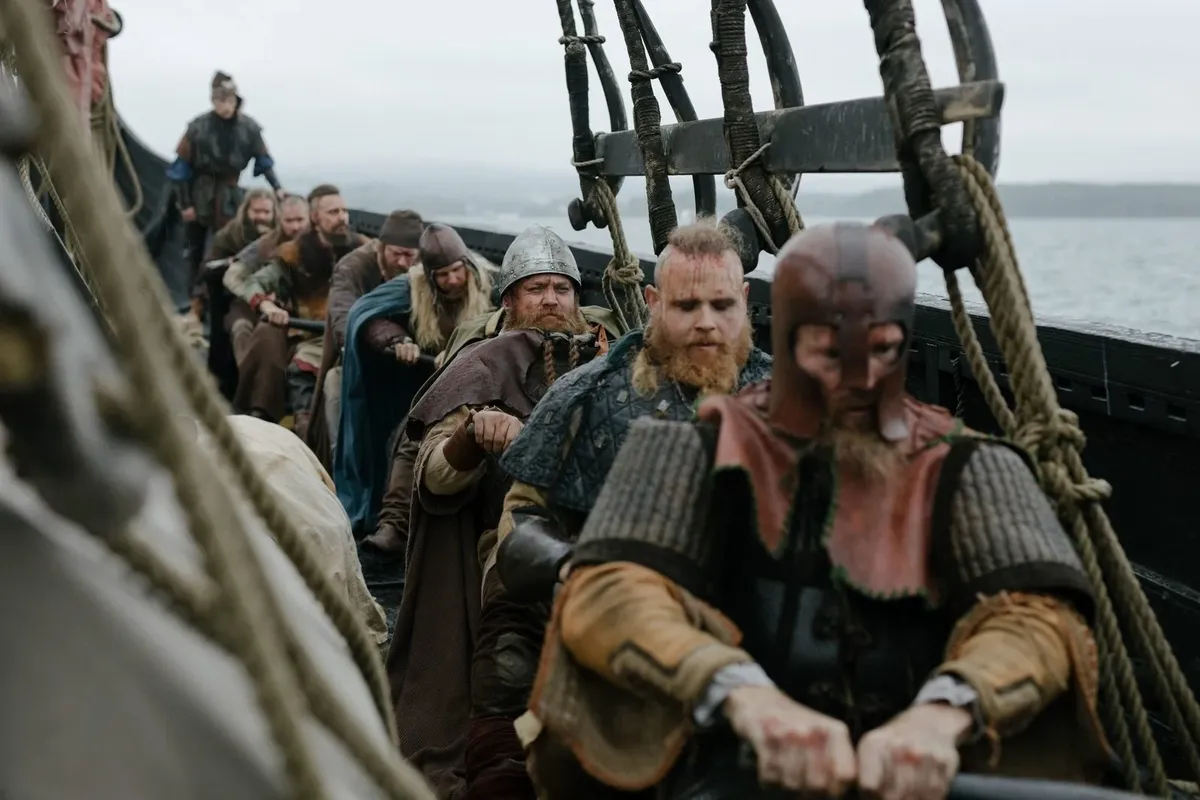
The religious confrontation between the characters in the series is growing: pagans set fire to and desecrate Christian churches, and Christian fanatics are trying to kill Thorir the Dog to take revenge on him for the murder of Olaf the Saint. The first season ends with the appearance of Olaf Haraldsson himself, aka Fat, Saint and Baptist, who is solemnly greeted by Lars' daughter's friend Ingrid, presenting the king with the newly dug up relics - his sword and pectoral cross.
In the second season, the creators of the series increased their creativity, starting with the search for Jack the Ripper in 19th-century London, from where two “migrants” arrive in Oslo under the guise of MI-6 secret agents. At the same time, in order to “restore genetic identity,” King Olaf steals the skull of his own son, Magnus the Good, from the tomb. The movie Olaf does not give the impression of an Equal-to-the-Apostles ruler filled with Christian virtues; on the contrary, he is a stern, cruel and ambitious northerner. The result of the second season is logical: Olaf, who dies in a car accident, with the help of mad scientist John Roberts, creates a parallel reality, turning Norway into a totalitarian Christian state, and the warrior Alfhildr will have to correct what he has done wrong. The ideological thread is obvious - the opposition of “cruel” Christianity to the “positive” religion of Odin.
The 2020 fantasy drama God of Thunder , produced with support from the Norwegian government, is about the modern-day reincarnation of Thor. An American of Norwegian origin, Eric, comes to the homeland of his ancestors, drawn by an inner call, and strange events begin to happen to him. First, in Eric’s presence, a farm along with its people burns down, then a hooligan boy dies at his hands, a police station is charred, and finally, the American Embassy helicopter falls into a lake and drowns. Only psychologist Christine treats him with understanding and respect, which gradually develops into romantic feelings. When dozens of blocks - rune stones and Thor's hammer - are found in the basement of a burnt farm, and Christine is accidentally killed by foolish Americans, Eric, who turns out to be Thor, becomes enraged and burns the entire area, and then disappears.
...Despite the variety of genres and plots, modern cinema about Scandinavian paganism clearly has some kind of common basis. This is not just romantic nostalgia and “reconstruction”.
The affirmation of human freedom through equality in his relations with the gods is proposed as a “healthy” alternative to Christianity, the advent of which in northern Europe is tended to be interpreted negatively by popular culture.
Without crossing, if possible, the boundaries of political correctness, but postulating: “The new generation chooses Odin.” Or his son Thor.
Gideon Young, Alexander Soldatov