Date
Author
Материал Федя Отрощенко Иллюстрации София Хананашвили
Source
Preserved copy
Translated material
“We’re sitting well.” Why are there searches and detentions at the largest Russian publishing house?
Yesterday, April 21, Evgeny Kapyev, the head of the largest Russian publishing house Eksmo, as well as several other top managers of the company were detained and taken to the Investigative Committee. This is related to the “publishers case,” when in May 2025 a criminal case was opened against employees of Popcorn Books and Individuum for organizing the activities of an extremist organization and participating in it.
Demagogue editor Fedya Otroshchenko talks about what Russian publishers want and fear, and what explains the searches and detentions.
Strange news: “In Moscow, searches were carried out at the management of the Eksmo publishing house, and general director Evgeny Kapiev was detained.” The REN TV channel, which was the first to write about this yesterday, indicated in its post that the publishing house “has developed a scheme for distributing LGBT literature among minors.” What kind of scheme this is, of course, no one specifies. Apparently, this scheme is called book printing, it just seems very free.
This news is strange not because there is repression in the Russian book market. If you follow the news closely, you have probably noticed that administrative and criminal cases, outright censorship, denunciations, detentions and searches, cancellations of events, etc. have become an integral part of the modern literary process.
Since the beginning of the war, the book market in Russia began to change radically. In October 2022, a package of bills on a complete ban on “LGBT propaganda” was introduced to the State Duma. Today it seems like a joke - just a ban on LGBT propaganda, but then it meant that all books had to be reviewed from a new angle. In July 2025, the Supreme Court of Russia declared a certain “International Satanist Movement” an extremist organization and banned it, and therefore the entire metal community (as if there are no books about it in Russian!). From September 1, 2025, “foreign agents” were forbidden to educate: you probably saw that the very books of Nikita Smagin, Anton Dolin and other “foreign agents” for some reason disappeared from Russian publishing houses, and are now being republished in emigrants: some were warmed up by Meduza, others decided to sell themselves... And on March 1, 2026, amendments to the law banning propaganda came into force in Russia drugs. It is now prohibited to mention drugs in the media, books, music and films without special labeling; it must accompany all works published in Russia after August 1, 1990. You may have seen the news yesterday that even a biographical book about the life and work of Vladimir Vysotsky, written by the wonderful philologist Vladimir Novikov, and three books about Mikhail Bulgakov (including a biography from the ZhZL series) will be labeled in accordance with the law banning “drug propaganda.”
The point here is not that the new laws concern homosexuals, foreign agents, Satanists and drug addicts (although, frankly, the company is not bad, I want to hang out like that!), the other thing is important - with all these restrictions it has become almost impossible to stay within the law. The state specifically makes book production a semi-legal or illegal process. The small independent bookstore sells hundreds of books. And someone should re-read all of this every time to be sure that there is not a single Satanist, gay or drug addict there.
The strange thing about yesterday’s news, of course, is not the fact of the arrest - go and surprise it in April 2026. The figure of Evgeny Kapyev, general director of the Eksmo publishing house, is striking. Let me remind you that the Eksmo-AST group is, in general, a monopolist on the modern book market. Systematically, since the 1990s, they have squeezed the entire existing literary landscape under their control, remaining the main and almost the only major player. The rest are independent small, essentially publishing houses, which cannot be compared with Eksmo in terms of circulation, volume, salaries, etc.
It’s difficult to say that Eksmo-AST is a completely pro-government group. Sometimes they even allow themselves something freethinking. For example, in 2023, Eksmo bought 51% of the publishing house Popcorn Books: this was after clouds began to gather around Popcorn - in 2022, Summer in a Pioneer Tie was released. Moreover, Popcorn Books “ has entered into an agreement on non-interference in editorial policies.” And then she didn’t refuse, on the contrary, they completely helped and continue to help their employees from the publishing houses Individuum and Popcorn Books, who were attacked in the “publishers case” last year. But “Eksmo-AST” remain not heroes of our time, not devotees, but functionaries completely integrated into the system. About the founder and president of Eksmo-AST, Oleg Novikov, in yesterday’s text of Novaya Gazeta Europe, dedicated to the new repressions, the technical director of the Freedom Letters publishing house and the author of the telegram channel “Words and Money” Vladimir Kharitonov said : “Novikov’s position... was this: “I’m doing business. Don’t touch us, we’re just doing business. We print different books.” for different audiences and we are not going to engage in any censorship...” It is important that Novikov always knew how to find friends in power who could somehow dampen the impact of the regime. He tried to publish a variety of books, just publish them and make money from it. Well, apparently there was some problem with this policy.”
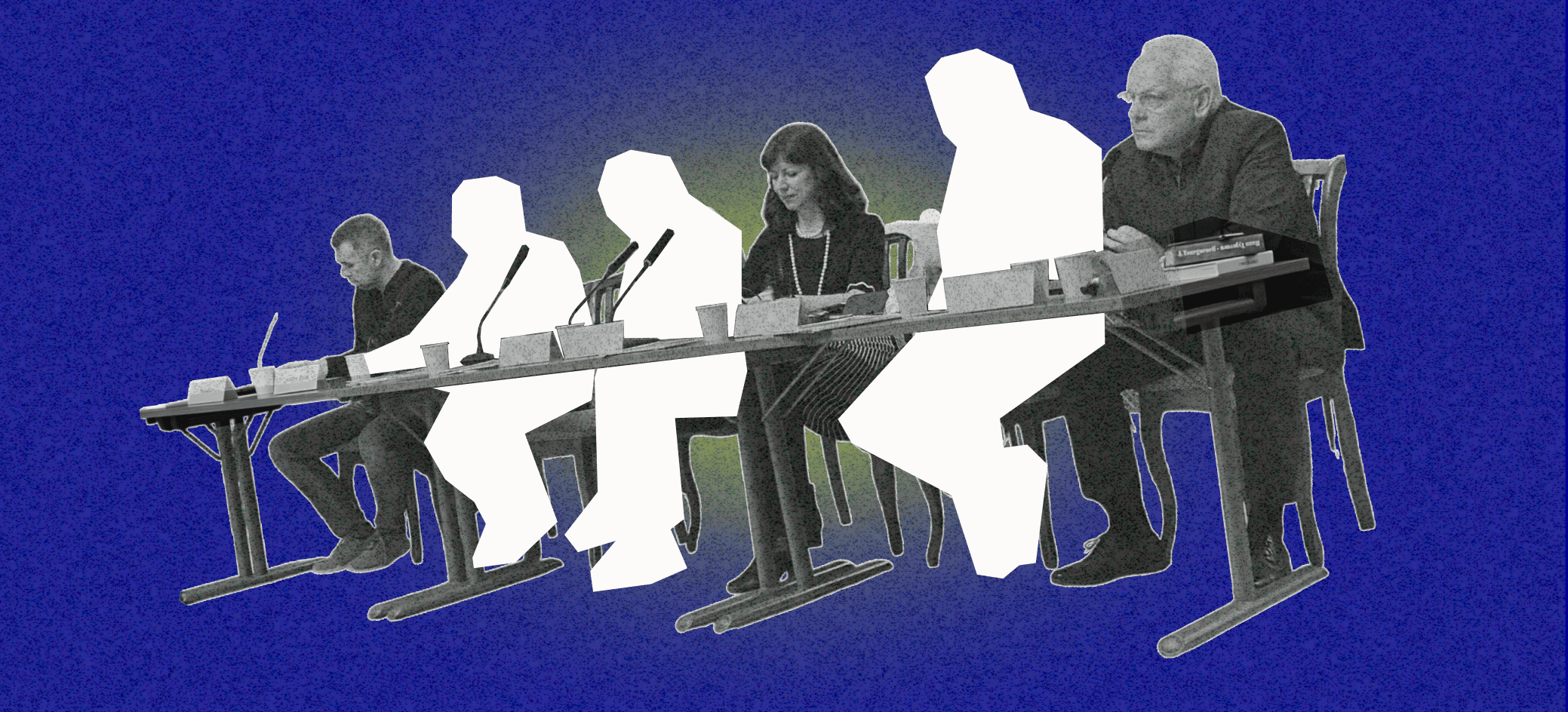
The system built by the authorities is devoid of logic and meaning. This is, of course, inconvenient for business. That is why, for example, Oleg Novikov, Evgeny Kapiev, and the head of the Russian Book Union Sergei Stepashin spoke at a meeting of the Organizing Committee for the Support of Literature, Book Publishing and Reading in Russia in early April. Vladimir Medinsky, among others, participated there, and was moderated by the Chairman of the Russian Historical Society and Director of the Foreign Intelligence Service of the Russian Federation Sergei Naryshkin. As Feminist Anti-War Resistance writes , “Novikov stated that more than 50% of books from libraries are under threat of confiscation due to connections with “foreign agents” and “undesirable organizations.” According to him, if the legislation is literally implemented, all books created with the participation of “undesirable organizations” and “foreign agents” will have to be confiscated - even if they simply wrote the annotation or made the layout.” His words were echoed by the general director of Eksmo, Evgeniy Kapiev, who said that “now claims to the content of literature can be based on ‘any regional examinations,’ which means that administrative cases on the same work can be initiated in parallel in different regions.” All together they agreed that it was necessary to “give the expert center at the RKS state accreditation, which will give it the status of a “single window” for the legal analysis of books.” That is, the monopolists gathered and asked for the go-ahead to create a single censorship committee so that they could decide for themselves what is good and what is bad.
And the reason is generally clear. More recently, Evgeniy Kapiev wrote in his Telegram channel: “The AI has determined that Dragunsky is subject to a ban under the drug propaganda law. Because of “Drag” (spelling and punctuation preserved). The publisher complained that all this had to be cleaned out by hand. In the comments, he clarified that in this case we are talking about Viktor Dragunsky, the author of Deniskin’s Stories. Later he wrote about “IIshka” in more detail: “Yesterday, many were excited by the post about the mistakes of AIshki when analyzing books for compliance with the law. There are really a lot of them and everything has to be double-checked “manually” and this is a colossal job. In this particular case, the error came from the AI of one of the partners. Large retail players also check everything on their own, since if there is a violation, claims will be brought against them as well...” In a word, it is obvious that the capabilities of publishing houses do not keep up with the laws that are introduced from year to year. So the desire to create a single censorship committee that could say, “These guys have good books, even if they mention drugs, let them sell them quietly,” is quite natural. However, less than two weeks after speaking to Medinsky and Naryshkin, Kapyev was detained along with other leaders of the Eksmo-AST group.
You can come up with different reasons why it’s all happening this way, how it relates to the “publishers’ business,” what share the state wants to squeeze out of the book market. But one thing is important: there is no real system that would suit the authorities. The main system in which it is convenient for her to exist is chaos. On the same day, when the general director of Russia’s largest publishing house is taken away for interrogation because he is suspected of “developing a scheme to distribute LGBT literature among minors,” the Chairman of the Investigative Committee, Alexander Bastrykin, orders the books of the writer Grigory Oster, the author of “Bad Advice,” to be checked “for content that is questionable from a pedagogical point of view.”
In the comments to Vladimir Kharitonov’s post with news about Eksmo, one reader wrote: “Now you understand ’37. A week ago we sat together at the Non-fic section, Kapiev said the most sensible and relatively bold things. For some reason I noticed his summer crocodile boots and thought they fit well (for now).”