
Translated material
Atlantic storm. Will NATO survive 2026?
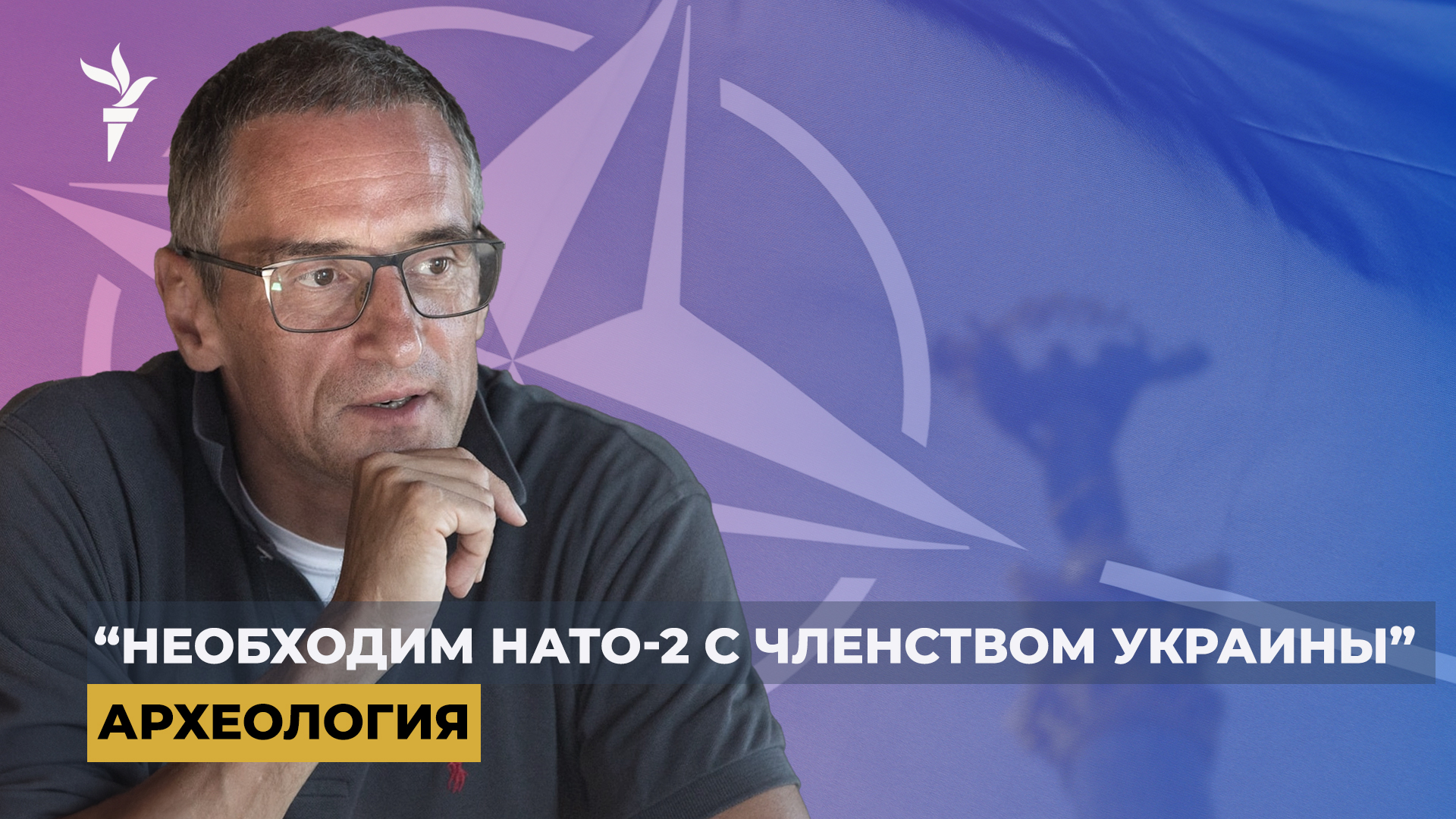
Sergei Medvedev's interlocutors - Arkady Moshes and Yuri Fedorov
2026 was a year of difficult trials for NATO. First, Donald Trump's intention to seize Greenland, then the US operation in Iran, in which NATO allies refused to participate, seriously undermined Atlantic unity. Will the US leave NATO? Is Europe ready for possible Russian aggression? And could Ukraine suddenly turn out to be NATO's savior? Sergei Medvedev discusses these issues with the head of Russian programs at the Finnish Institute of International Relations , Arkady Moshes , and military expert Yuri Fedorov.
Sergei Medvedev: It seems that what we have been witnessing over the past year, since Di Vance’s speech in Munich in February 2025, is an unprecedented attack by the American administration on the unity of Europe. From this speech to the last elections in Hungary, when the anti-European candidate Viktor Orban was supported. Is this something new, this US approach?
Arkady Moshes : Even during President Trump’s first term, nothing like this happened. It is now obvious that Trump first tried to force Europe to pay for NATO, for American participation in Ukrainian affairs, for whatever. It seemed that he was practicing his purely business approach, that everything in the world was about money.
we need to prove to the Europeans that they can’t cope without the Americans
And now it is moving into the next stage, when money is not needed, and nothing is needed, but you just need to prove to the Europeans that they cannot cope without the Americans. The main reason at the moment is his dissatisfaction with what he believes is the geopolitical behavior of the Europeans, their refusal to join the United States and help the United States in what the United States is doing, and Europe does not formulate its interest in the same way. Today we see the transition of this situation to another stage. It's new, it's dramatic. I will not say that there is a hundred percent probability, but it is quite high, that NATO in the form in which it has existed not even since 1949, but at least in recent decades, will no longer exist.
Sergei Medvedev: Does Trump want to save NATO? Are these attempts to force Europe to pay more or to join American coalitions? Or does he absolutely not need this organization, like other elements of the liberal world order after World War II?
Arkady Moshes: I think he does not understand the usefulness of NATO for the United States as a whole, and does not understand the usefulness of NATO from the point of view of his internal political alignments, from the point of view of what his electorate expects from him. It seems to him that abandoning NATO is very easy, that it will be popular, that he will be able to sell this step to his voters. This is not the only issue where Trump’s ideas are very superficial, but they are the basis of American policy, which is increasingly beginning to resemble a bull in a china shop.
Sergei Medvedev : I will play Trump's lawyer. Perhaps there is truth in his words? Europe really rode on the American budget, on American troops for decades. And should Europe be forced to pay more?
Arkady Moshes: This was the first stage, what he came with, and I saw the logic in it. Indeed, Europe rode on American security guarantees and received a largely peace dividend.
Europeans have switched to perceiving the world through rose-colored glasses, cooperation, friendship
Although Europe itself may not think so. She simply believed that the period of world history in which military force was one of the two main factors in the existence of states was over. Europeans have moved to perceiving the world exclusively through rose-colored glasses, cooperation, friendship, and so on. They did not understand why they should spend money, and the Americans did not understand why Europe did not understand this. That is, when Trump laid this logic on the table a year ago, it was understandable and explainable. He wanted to make them pay. They agreed, at least formally, to pay more. The increase in defense spending is planned primarily in such a key European country as Germany. Instead of continuing and agreeing on the terms under which the service would be provided and paid for, he went ahead and decided to destroy the entire system. I think this is a big mistake for America. America, of course, has other allies, not only in Europe. But it does not have such a large number of allies and friends that it could afford to waste Europe, including European resources.
Sergei Medvedev: What other American allies are there that you can rely on now, in the context of the war in Iran?
Arkady Moshes: There is Israel, there are several Arab states that, to a large extent, in terms of security, understand the need to focus on America, to be together with America. But for 20, if not 30 years, America has been seeing the Pacific region as its main problem, not the Atlantic.
The Pacific Ocean becomes the main point
And there are relations with the allies... I would not want to be in the place of the Prime Minister of Japan, at whose address there are jokes mentioning the word Pearl Harbor. But, nevertheless, Japanese-American military cooperation is developing. It's the same with South Koreans. There is no talk of canceling the security guarantee to Taiwan. Australia and New Zealand are being drawn into some new formats of military-political cooperation, one might say, alliance. The Pacific Ocean is becoming the main point of application, which makes, to a certain extent, more logical the abandonment of the commitment to Europe.
Sergei Medvedev: What does it mean to reduce obligations in Europe? Trump believes that he can actually leave Europe and leave it to its own devices. Which partly corresponds to Putin’s grand strategy: America’s withdrawal to the Pacific basin or even to the American continent. Europe remains alone with Russia.
Arkady Moshes: I will say more. This is not something that is consistent with Putin's strategy, it is somewhat consistent with the strategic vision that has taken root in America among both Democrats and Republicans. During Obama we saw something similar.
Trump follows the policies of other presidents
Since the Bush era, since the war in Afghanistan and to a lesser extent the second war in Iraq, American resources have been withdrawn from Europe and either used in those conflicts or repurposed for use in the Pacific theater. In this, Trump, to a certain extent, continues the policy that the Americans have already pursued. I don’t know exactly what America’s military presence in Europe is today; it is said to be several tens of thousands of people. At one time, we were talking about a contingent of three hundred thousand, about huge stored reserves. They have not been in Europe for a long time. Trump is following the policies of other presidents. But they wanted to preserve transatlantic unity as a matter of political resource, and they were willing to invest a lot to achieve this. Trump doesn't want to do this. In my opinion, he really wants to run away. But this is Trump. He may change his mind tomorrow.
Sergei Medvedev: Can NATO afford to abandon the American component? Or is this the key thing, the American Command Control Communications and Intelligence, the entire communication and command scheme? America can't be taken out of NATO now?
Arkady Moshes: Not at the moment. Very difficult. It seems to me that there are two scenarios. One scenario, unfortunately, is more realistic. It lies in the fact that America is leaving NATO, and NATO is slowly beginning to die.
It's a matter of mobilizing Europe's resources
There was such an organization, the Western European Union , created even before NATO. In the 50s and 60s, within NATO, it played a certain role in the European theater. Not much, but she played some kind of game. She lived to see large-scale reforms in the European Union and finally died in the early 2010s. So NATO can do the same: that something will be done without the Americans, it will slowly die in the process. But there is another scenario. I won’t assess the likelihood, but quite serious conversations are being held in this direction. This is a matter of mobilizing Europe's resources. If Europe mobilizes resources, primarily financial, and takes an appropriate political position that it is ready and understands the need to do much more than it has done so far, and then from this position send a delegation to Washington to talk, either with Trump or with his successor. That is, to offer something...
Sergei Medvedev: Mobilization within NATO or within the framework of the common foreign defense policy of the European Union?
Arkady Moshes: I think that this will be done within the framework of NATO. Because there is Canada, there is Great Britain. That is, within NATO. It's a formal thing, a roof. But if she actually learns to do something relatively quickly and comes to America with it, especially after Trump, it is possible that something will work out.
Without a conscript army, it’s difficult to look convincing
Europe's problem is not even money or defense technology. The problem is people. In countries that have abandoned the conscription army, it is almost impossible to start it again. And without a conscript army, without the ability to train reserves, it is difficult to look convincing. In the last week, the Germans first announced that supposedly all men of military age leaving the country for more than three months would have to register. Then they said it was a mistake. It is possible that this was the same test balloon. But if you don’t have people ready to serve, who can be called up, if God forbid, it will be impossible to build any serious defense in today’s conditions.
Sergei Medvedev: Regarding European potential. Nuclear forces, British, French, completely sovereign? Or are they integrated into the NATO structure?
Arkady Moshes : I mean, do these countries provide nuclear guarantees to other countries at the moment? I don't think so. There is not only a question of political provision of guarantees, but of what will be meant by this. When the Americans talked about the principles of the “two keys” of deploying tactical or substrategic nuclear weapons in Europe, corresponding exercises were held. Holland, Belgium, Great Britain looked at what would happen in a war if they had to attach, so to speak, an American bomb to a Dutch plane. This was all worked out in due time.
began to sound like a nuclear exchange between New York and Riga.
Now, in my opinion, no. I’ve never heard of this with the French or the British. And the second thing, even more serious, is the issue of the creditworthiness of these guarantees. In the 60s and 70s these things were discussed. There was always a question, even during the Cold War, about the reliability of American guarantees. And the conclusion has always been that if God forbid it comes to an exchange of nuclear strikes, we don’t really want to get destroyed New York in exchange for destroyed Bonn. At the beginning of NATO expansion from the late 90s, this escalated because it began to sound like a nuclear exchange between New York and Riga. Despite all the doubts, no one wanted to translate the picture. And if the French and British offer the same guarantees, I think there will be much less faith in these guarantees. And this is also a problem.
Sergei Medvedev: I would like to talk about the unexpected competence of Ukraine, which is opening up for Western military analysts, for NATO. And for the Gulf countries, when joint exercises are held with NATO, and Ukraine turns out to be much more effective, it can provide invaluable advice and supply drones to the Gulf countries in the context of a war with Iran. Who is more important to whom now? NATO for Ukraine or Ukraine for NATO?
Yuriy Fedorov: If we talk about the situation today, then Ukraine, in my opinion, is a more important factor and circumstance for NATO than vice versa. The world has entered an era of wars of a new type, where the old strategic and tactical methods, respectively, and weapons, are gradually losing their significance. I can’t say that we have completely lost it, but certain trends are observed. We are talking about the massive use of drones, unmanned aerial vehicles, or sea surface aircraft. Both underwater devices of this kind and land-based ones are gradually appearing.
So-called kill zones, death zones, have emerged
There is something that military theorists and practitioners have been talking about over the past two years. So-called kill zones, death zones, emerged in relation to the war in Ukraine. Latest reports indicate that it is approximately 15-20 kilometers. This means that assault groups of Russian troops that must approach the fortifications of the Ukrainian side or part of the territory controlled by the armed forces must walk on foot, carrying weapons and ammunition, over a distance of 15-20 kilometers. What condition will they be in if they do? Drones of the Ukrainian Armed Forces are constantly hovering over them, identifying them, monitoring them, and destroying them. There are statistics that approximately 80% of losses, or even more, for advancing troops occur in this zone, and not where direct clashes already begin.
Sergei Medvedev: In fact, a new type of military action is emerging, which Iran is demonstrating against the superior military power of America and Israel. As Ukraine shows, is this a distributed, networked, semi-guerrilla war using small means?
Yuri Fedorov: Apparently, some combination of everything. This is not a guerrilla war in the full sense, but also not a classic war of the type that was fought not only in the middle of the last century, but also the war that the United States waged in coalition with its allies against Iraq, or against Vietnam, or in Korea. The history of wars shows that one type of war is replaced by another. Accordingly, tactical techniques change, weapons change, etc. Ukraine has experience of such a war, but NATO countries, Western states and the United States do not.
the strategic role of Ukraine emerges in the emerging situation on the European continent
The experience of the Ukrainian armed forces allows them to act more effectively, which is manifested in joint exercises. This is the first. The second circumstance, which is no less important, is that in the event of a war between Russia and Europe or Europe with Russia, the strategic position of Ukraine can play a decisive role if the armed forces of Ukraine are of such a size and equipment that will allow them to seriously influence the armed forces of Russia. If we imagine that a war begins somewhere in the Baltic region, and the 400,000 or 700,000 armed forces of Ukraine hang over the southwestern flank of Russian troops for about 1,500 kilometers, most likely there will not be enough troops, forces and means to fight a war on two fronts. This gives rise to the strategic role of Ukraine in the emerging situation on the European continent, which, among other things, is characterized by a serious weakening of the role of the United States in the defense of Europe. This weakening has already been recorded.
Sergei Medvedev: I understand that it sounds a little fantastic, but could it turn out that Ukraine will replace America and give new meaning to the existence of NATO? Will NATO receive a flexible, combat-ready force on the European continent ready to fight Russia?
Yuriy Fedorov: I would pose the question a little differently. NATO, the North Atlantic Treaty Organization, was created in very specific conditions in the late 40s and was formed in the 50s, when the task of this organization was to contain Soviet aggression on the European continent.
Today, a hypothetical war between Russia and Europe will have a much smaller geographical scale
Roughly speaking, if the war had started in Europe in the second half of the last century, it would have practically engulfed Central Europe, and then could have spread (plans for organizing the Warsaw Pact were published after 1991 in a number of countries). And southern Europe, because part of the troops of the Warsaw Pact countries had to move towards Austria and then Italy. Although it is not very clear how they would have passed through the Alpine passes, repeating the path of Suvorov. Nevertheless, there were such plans. NATO is an organization that embraced almost all combat-ready European states to prevent a major European war. Today, a hypothetical war between Russia and Europe will have a much smaller geographical scale. It is unlikely that it will affect Italy, Portugal, Spain, or France. It is difficult to predict anything, but it is clear that the main theater of war could be the Baltic countries, Poland, possibly the Czech Republic, Slovakia and Finland, the northern countries. They and Germany, as the center of gravity of a group of countries, as a military-economic basis, can become the center of a new geopolitical and military-strategic structure of the European continent.
Sergei Medvedev: Could we see NATO-2 in the coming years, from those countries that you mentioned: the north, the Baltics, Poland, Ukraine, and Germany as a logistics and political center?
Yuriy Fedorov: I think this is due to the trend that emerged after February 2022. The idea of some kind of coalition parallel to NATO, or within NATO, in addition to NATO, inevitably arises. Not only Germany, but also Great Britain can play a certain role in this coalition. There are structures that already exist, for example the so-called Joint Expeditionary Force , which includes the Nordic countries, the Netherlands, the Baltic countries and the UK. They were created as possible projection forces into areas of local conflicts outside of Europe. But now this organization is getting a second life and is, perhaps, one of the prototypes of a new military structure.
For this organization to be able to contain Russia, Ukraine is an absolutely necessary element
And in order for this organization to contain Russia, Ukraine is an absolutely necessary element. A draft of some kind of peace agreement between Ukraine and Russia, which was developed by the Europeans and Ukraine, was published. It said that in peacetime, the armed forces of Ukraine could have a strength of 800 or 700 thousand. The most powerful forces in Europe, Turkish, are about 400 thousand. And keeping 800 thousand under arms in peacetime is possible only with the help of, if not all of Europe, then several developed European states. Ukraine itself will not cope with such a task. If such figures are quoted with the participation of the leaders of European countries, it means that the Armed Forces of Ukraine, having experience in combat operations and equipped with new weapons designed to fight modern-type wars, can be the main armed force of this potential coalition. The main armed force during the Cold War was the Bundeswehr, 400,000 strong, plus 300,000 American troops in Europe. The main part was in Germany and nearby. This role can be played by the Ukrainian armed forces.
Atlantic storm. Will NATO survive 2026?
Share
Share
-


Sergey Medvedev
Presenter of the "Archaeology" program, head of the "Archaeology" project