
Translated material
"1917 awaits us"
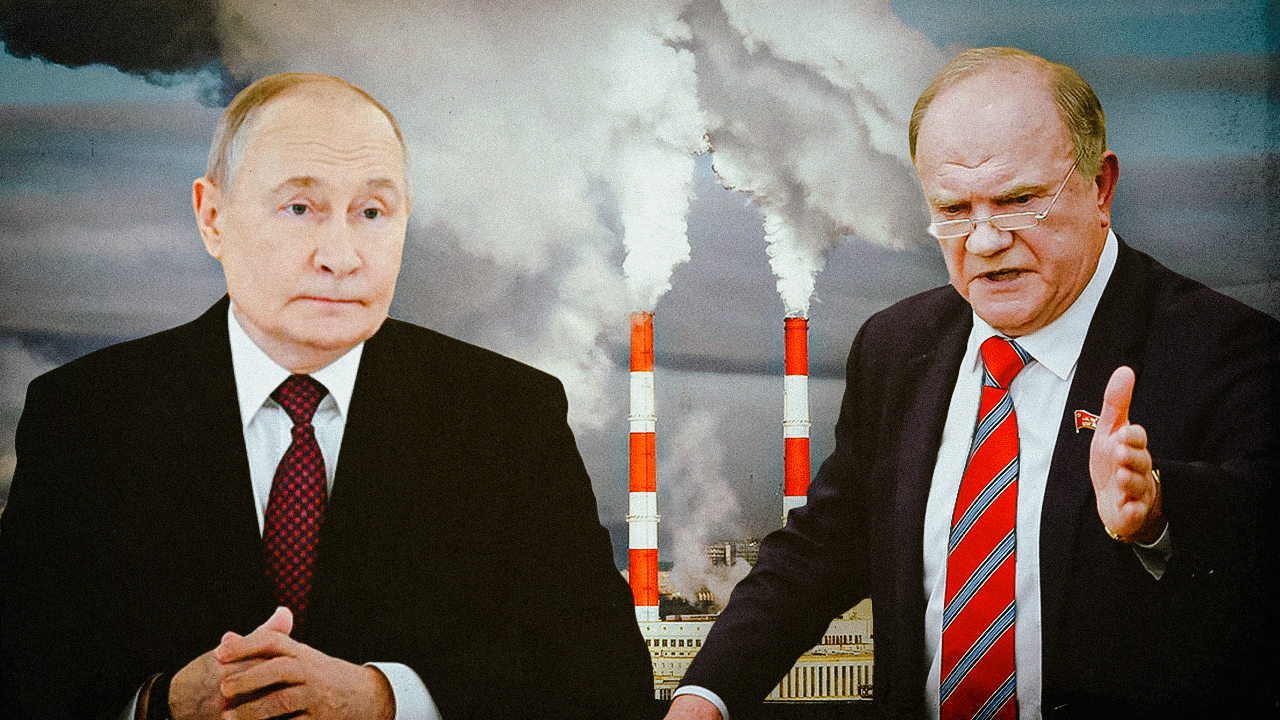
The head of the Communist Party of the Russian Federation, Gennady Zyuganov, believes that Russia is in danger of repeating the situation of 1917 because of the economy that has “sank to the bottom”: “We told you ten times that the economy will inevitably fail. The entire first quarter has sunk to the bottom. If you urgently do not take financial, economic and other measures, then in the fall what happened in 1917 will await us. We have no right to repeat this.” Swedish intelligence reports that real inflation in Russia has already reached 15%, which is almost three times higher than the official figure from Rosstat of 5.87% as of the end of March.
Minister of Economic Development Maxim Reshetnikov also speaks of a significant deterioration in the economic situation in the country. Business feels this most acutely, according to Reshetnikov. The debt of entrepreneurs to suppliers and counterparties is growing. At the end of January, the volume of overdue debts, according to Rosstat, reached 8.2 trillion rubles. The biggest problems are in the manufacturing and trade industries. Among industrial enterprises – petroleum product producers. Reasons: decline in GDP, reduction in demand and increased taxes.
Over the past year, the number of tax debtors among enterprises with revenues of 2 billion rubles has increased 1.5 times, as calculated in the Aktion Accounting reference system. Most debtors are in trade and construction. This is an alarming signal, says leading researcher at the Gaidar Institute Ilya Sokolov : “The crisis in the economy is gaining momentum and has already reached large businesses, which have much greater financial stability than small and medium-sized enterprises.”
Last week, Vladimir Putin also spoke about problems in the economy, but again remembered the war and said that all of Russia should work “for the sake of the front” just as during World War II.
How to “patch the hole” in the budget and why should Putin fight if there are not enough oil revenues and it is impossible to raise money from business? We discuss it in the program “Facing the Event” with economist Vladislav Zhukovsky .
Important importers of foreign goods will be able to defer payment of VAT for several months, Vladimir Putin signed such a decree on April 20. The Federation of Russian Restaurateurs asked the state to organize the same experiment for public catering, writes Kommersant. It may seem that two percent in taxes is an overblown problem. But an Alfa Bank expert notes that this is one of the reasons why Russian companies do not pay each other. Business non-payments have exceeded a record 8 trillion rubles, Rosstat records. A week earlier, Finance Minister Anton Siluanov reported: “The budget deficit in the country is due to the fact that at the beginning of the year the state gave advances to companies so that they could pay off their debts.” But the money is spent and the debts are growing. Details are in our story:
by Radio Liberty Text copied width px height px The URL has been copied to your clipboard
No media source currently available
Minister Siluanov, speaking about the increase in the budget deficit after a meeting with Putin, said: companies were given money in advance so that they could cover their debts. But non-payments are growing. Why is this happening ? Vladislav Zhukovsky comments:
– Siluanov puts a good face on a bad game. By March last year, the budget deficit reached almost 2 trillion rubles. Now this is already 4 trillion 600 billion rubles, 2.5 times more than a year ago. But then Siluanov said that we have a new scheme for financing the state defense order, the production of tanks, shells, drones, the war is going on, so we advance these payments, everything will level out at the end of the year. A year has passed, and again they say that supposedly the advance payment has gone through, this is the first year. Last year we ended up with a budget deficit of 5 trillion 600 billion rubles, a hole five times larger than originally promised.
This year everything is going according to the same pattern with an even worse situation.
If we add the deficit of the pension fund, social and medical fund, trillion 200 billion rubles, and the hole in the regional budgets, which amounted to almost one and a half trillion, then it turns out that the total hole in the budget system last year amounted to 8 trillion 300 billion rubles. This year everything follows the same pattern with an even worse situation. Last year, at least in nominal terms, taking into account the growth of the money supply and the pumping of unsecured money, the economy, at least in Rosstat reports, was slightly in the black, about a percent. Now the economy has collapsed, is collapsing. 2.1% January, 1.5% February. Freight transportation, the most important macroeconomic indicator showing real material output, fell for the fourth year in a row. That year 5.5%, January-March - another 3.5%. That is, the economy is collapsing, which means there will be no investment, no jobs, no profits. Profits, according to Rosstat, fell by 30% earlier this year, a record collapse since the start of the war with Ukraine. That is, there will be a shortage here too. There is no longer a wage race; enterprises, even the military-industrial complex, have no money to pay for people to go to military enterprises. There is a hole in the total budget system of far more than 12 trillion rubles. Will increased oil prices help due to the war with Iran, due to the fact that URALS has risen in price from forty to 100-120 dollars at the moment? This will give a trillion rubles, 2 trillion.
Taxes are raised, demand is falling, activity is declining, the investment crisis is growing, total consumption in the economy is falling
In any case, the hole will be larger than last year. When we compare the figures for January of this year with January of last year, we see that year-on-year expenses are growing by 17%, according to the Ministry of Finance, despite the fact that last year there were supposedly advanced advances, and the year before, and budget system revenues are falling. Minus 45% for oil and gas revenues, almost doubling, and total revenues of the budget system are falling by 8%. Taxes are raised, demand is falling, activity is declining, the investment crisis is growing, and total consumption in the economy is falling. It is clear that the Ministry of Finance is trying to calm everyone down. Siluanov was asked by the former first deputy chairman of the Central Bank of Russia, now the head of the supervisory board of the Moscow Exchange. He says: “Listen, you already have some kind of terrifying budget deficit. We don’t understand where you will find the money, because you yourself say that borrowing at 14.5% is very expensive, the market capacity is small, no one gives loans, neither China nor abroad, we can’t get money anywhere.” Accordingly, what? Or raise taxes again, but the economy is already half-dead, there is no one to pay taxes, there is already a record collapse in economic activity, recession, stagnation. Or a printing press.
military spending is already financed only by the printing press
And Siluanov reassures: “No, don’t call it a frightening deficit. We control everything, everything is according to plan.” Well, then they will say again that something went a little off schedule, so the Central Bank will have to print trillions of rubles again. On Tuesday, 4.5 trillion was printed by Nabiullina, repo operations. The Central Bank creates an unsecured money supply, buys federal loan bonds, government debt from the balance sheet of bankers, and with this printed money credits the budget deficit. These transactions are growing, 4.5 trillion now. At the beginning of the year it was 3-3.5 trillion, last year 1.5-2 trillion, a year ago less than a trillion. That is, military spending is already financed only by the printing press. This is accelerating inflation, rising prices, this is unsecured money.
– “Novaya Gazeta Europe” notes several more factors: the share of overdue car loans, retail loans, the pace of liquidation of companies with tax debtors has accelerated, and investments in construction are falling. But, as The Bell reports, Putin, following a meeting with economists last week, wants the economy to grow.
- There can be no growth. Siluanov and Nabiullina understand this. They understand perfectly well what Putin is doing. He understands that it is impossible to talk more about a soft, controlled landing. A year ago I said that there would be no recession, crisis, or stagnation (at the St. Petersburg Economic Forum). Gave commands for the government to develop a magical concept of accelerating economic growth to the world average.
Economists warned that this budget, the forecast for the current year, is a fairy tale. The budget for this year is unfulfillable.
And he shrugs off responsibility: war and sanctions cannot be to blame for the plight of the economy, for the collapse of production, industry, for the investment crisis, for the acceleration of inflation, for the collapse of budget revenues. He tells officials: “Why is the economic situation worse than the forecasts of the Central Bank, the Ministry of Finance and the government?” But all economists warned that this budget, this forecast for the current year, is a fairy tale. The budget for this year is unfulfillable. The deficit will not be 3.8 trillion, but 8-10 trillion. There will be no economic growth of 1.3%. There will be a decline in many sectors of the civilian economy. Production of furniture, clothing, drinks – minus 10, minus 15, minus 20%. The production of cars, special equipment, trucks, and agricultural machinery falls by 30%. And Putin abdicates responsibility. Like, he’s been saying for a year, speed up the economy, but you can’t speed it up. This means it’s time to prepare for the resignation of the government. It might be necessary to fire Siluanov, Reshetnikov, and Nabiullina. But they can't do anything. They are at war, Putin demands to raise taxes in order to find money to finance military expenses. They raise taxes, knowing full well that this will further kill economic growth and drive the economy into recession and a decline in production. Taxes have been raised, businesses are curtailing production. Housing and communal services tariffs are raised by 10, 15, 20%. This also accelerates inflation. Drone strikes on factories, refineries, and oil infrastructure provoke an increase in prices for fuel, gasoline, and diesel. This is also inflation. As a result, Nabiullina cannot reduce the key rate. This means that loans are expensive, working capital is expensive, and the crisis of non-payments is growing. That is, companies’ demand is collapsing, there is a loss in foreign markets, and there is an investment crisis within the country, demand among the population is falling. People are switching to a survival model, going to discount stores, and cannot even go to Pyaterochka and Perekrestok. Taxes are raised, recycling fees are raised, housing and communal services tariffs are rising, VAT taxes on property are growing. After six months of such dynamics, we may well see a reshuffle in the cabinet in the fall, and Putin will say that it is not my fault, it is not the war’s fault, this government has not coped with its tasks.
Forbes notes that over the year the number of tax debtors has increased by one and a half times. We have prepared a story about this:
– Vladimir Putin, by his decree, introduces an experiment that allows some importers not to pay VAT. Catering representatives want the same thing. Can we believe in the success of such measures ? Economist Vladislav Zhukovsky answers:
“This means that this is an emergency measure that was passed by the State Duma. The economic bloc, the Ministry of Economy, the Ministry of Finance may have conveyed the information that money is needed in the budget, it is necessary to close the hole of 4-6 trillion rubles for January-March. But business will simply slow down, we need to give someone a reprieve. Now all industry unions, restaurateurs, hoteliers, trade, have run to lobbyists, through various corridors, to the government, to the Kremlin, to negotiate deferments. That is, this is corruption, some kind of kickbacks, who will agree with whom, so that Putin signs another decree, so that his trusted representatives report to him that cafes, restaurants, transport, logistics, and service companies will close, and a wave of unemployment, socio-economic discontent will begin, and there are elections ahead in September to the State Duma, accordingly, the Kremlin does not need such problems.
this is an emergency measure that was passed by the State Duma
They first took a stupid measure to strangle small businesses when that year they signed an increase in the introduction of VAT for small businesses with a turnover of more than 20 million rubles. They were told that this would end in disaster. “No, we figured everything out.” As a result, Putin now issues such decrees. But the crisis of non-payments will intensify. The Center for Macroeconomic Analysis and Short-Term Forecasting, headed by the brother of the Minister of Defense Belousov, published a forecast of the situation in the economy. They called the risks of a recession before the end of this year as high, and the risk of a banking crisis as high, almost inevitable. Moreover, the credit crisis has already materialized, according to their assessment. This means there is a huge hole in the banks' balance sheets. And many cannot pay high interest, 14-15% per annum on deposits, on deposits held by the population, 67 trillion. Even according to official data from the Central Bank, more than 10% of loans issued in the economy are no longer paid or serviced. There are officially more than 15 trillion rubles of bad debts that are in arrears. Moreover, the Central Bank demands that bankers disguise this. There was a circular at the end of last year, where the Central Bank demanded from bankers that they meet halfway to all companies, individual entrepreneurs, the self-employed, and firms that cannot pay. For banks to restructure loans, issue new loans, repaying non-payments on previously taken out debts.
There is a hole in the economy of 10-15% of GDP. These are cash gaps, non-payments, lack of money, budget deficits.
Let's do the math now. In the budget system at the federal level, the regions, plus the pension fund, social funds, medical funds, there is a hole of more than 10 trillion. Plus a lot of companies with debts, the coal industry with losses, according to government estimates, at 600 billion rubles this year. Metallurgists are experiencing losses, developers are falling, restaurants, hotels are all closing due to falling demand from the population, due to high taxes. If we count all this, plus the bankers, there are holes in the balance sheets, the amount comes out to either 20 or 30 trillion rubles. There is a hole in the economy of 10-15% of GDP. These are cash gaps, non-payments, lack of money, budget deficits. How to save it? Apparently, the only hope is for the Central Bank, for the printing press, that through REPO operations, through Lombard lists, securities, federal loan bonds, regional securities, securities of state corporations such as Russian Railways, Aeroflot, Rosneft, Lukoil, the Central Bank will increase emissions throughout the year. Already 4.5 trillion, according to official data from the Central Bank, every week through a seven-day repo operation. This is a constant supply of doping to the economy. And without this, the economy is no longer sustainable. Without this, the settlement system will stop, a financial crisis will begin, then a full-fledged banking crisis, depositors will flee from banks, and deposits will have to be frozen with strict measures. Therefore, the Central Bank and the economic bloc are trying to delay this, but Putin demands the continuation of the war and an increase in military spending. And they understand that inflation is growing, the price of fuel, taxes, and monopoly tariffs are rising, but there is nowhere to get money, the economy has no markets. They are lost in Europe, in the West, in South Korea, in Japan. I think it is for this reason that Putin has now spoken, which requires an explanation. And Zyuganov’s statements in the State Duma that Russia is on the eve of a revolution, a pre-revolutionary situation is emerging. They feel that all layers of society are dissatisfied, everyone is dissatisfied.