
Translated material
“The word of freedom is never the last”
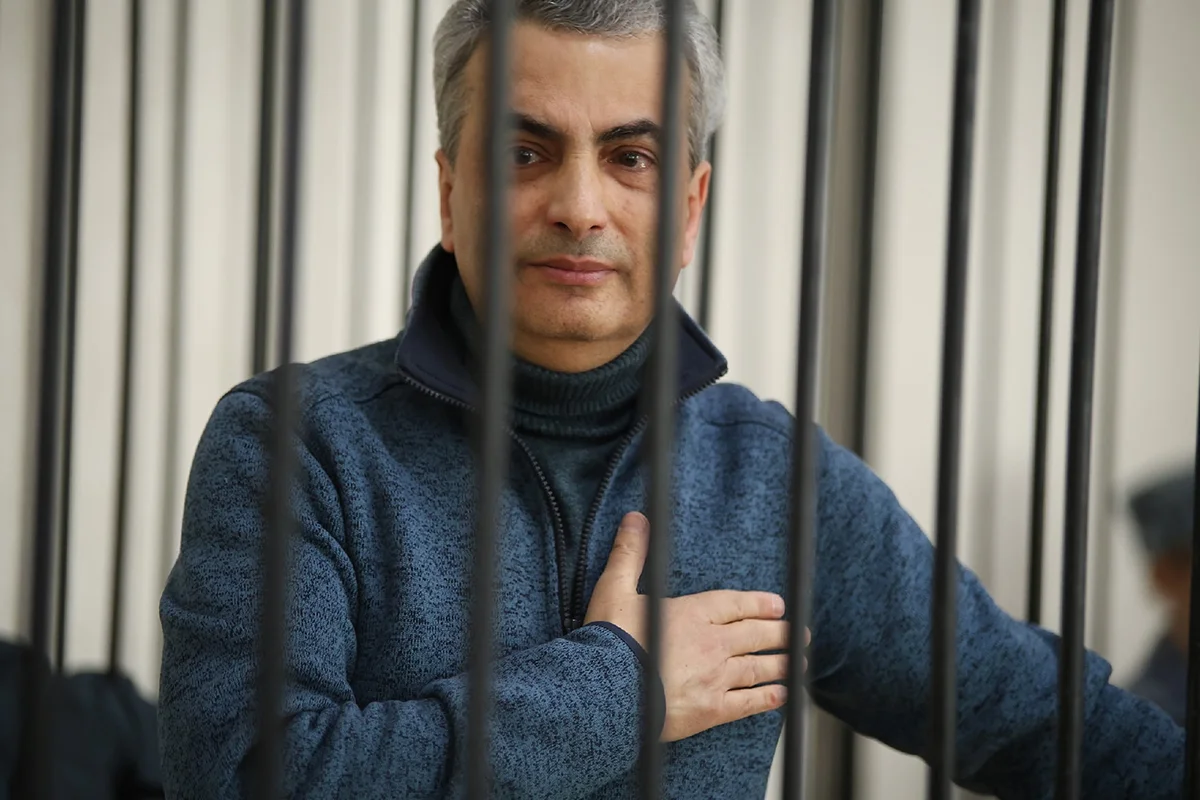
On April 22, 2026, the Pskov City Court considered the appeal against the verdict of the deputy chairman of the Yabloko party Lev Shlosberg* and upheld the decision
Judge Irina Vasilyeva, with an appeal ruling, confirmed the decision of the magistrate's court of November 5, according to which the politician was found guilty and sentenced to 420 hours of compulsory labor.
The basis for the accusation was the storage of five other people’s videos in the “Video” section on a personal page on VKontakte. This is the first such case in Russian judicial practice. Less than half an hour passed between Lev Shlosberg’s last word and the announcement of the resolution. The accused and his defenders will appeal this decision to the cassation court. We publish without abbreviations Lev Shlosberg’s last word in court.
18+. THIS MATERIAL (INFORMATION) IS PRODUCED, DISTRIBUTED AND (OR) SENT BY FOREIGN AGENT SHLOSBERG LEV MARKOVITCH OR CONCERNES THE ACTIVITIES OF FOREIGN AGENT SHLOSBERG LEV MARKOVITCH.
Your Honor!
All those present in this room were brought together in one place by the Federal Law “On control over the activities of persons under foreign influence” No. 255-FZ, adopted on July 14, 2022 and since then repeatedly amended - always in the direction of tightening.
Today this law is one of the most repressive laws in Russia, which, for people included in the register of the Ministry of Justice, abolishes the effect of the second chapter of the Russian Constitution, “Rights and freedoms of man and citizen.”
The law states that a “foreign agent” is understood as a person who has received support and (or) is under foreign influence in other forms and carries out activities, the types of which are established by the same law (Part 1 of Article 1 of the law).
In this law, foreign influence is understood as “the provision of support by a foreign source to a person and (or) exerting influence on a person, including through coercion, persuasion and (or) other means” (Part 1 of Article 2 of the law).
The law understands such support as “the provision of funds and (or) other property to a person by a foreign source, as well as the provision to a person by a foreign source of organizational, methodological, scientific and technical assistance, assistance in other forms” (Part 2 of Article 2 of the law).
Among the 10 types of foreign sources listed in the law, the last, 10th paragraph indicates “persons under the influence of foreign sources.”
The ring has closed.
In order to be included in the “register of “foreign agents”, it is enough to publicly communicate with a person included in the “register of “foreign agents”.
What you do practically no longer matters, because this law recognizes any human action in public space that concerns personal or public interests as political activity.
This law establishes that political activity is carried out in the following forms (part 5 of article 4 of the law):
participation in the organization and conduct of public events in the form of meetings, rallies, demonstrations, processions or pickets or in various combinations of these forms, organization and conduct of public debates, discussions, speeches;
participation in activities aimed at obtaining a certain result in elections, referendums, in monitoring the conduct of elections, referendums, the formation of election commissions, referendum commissions, in the activities of political parties;
public appeals to public authorities, their officials, as well as other actions influencing the activities of these bodies and persons, including those aimed at adopting, amending, repealing laws or other regulatory legal acts;
dissemination, including using modern information technologies, of opinions about the decisions made by public authorities and the policies they pursue;
formation of socio-political views and beliefs, including through conducting public opinion polls and publishing their results or conducting other sociological research;
involvement of citizens, including minors, in the activities specified in paragraphs 1–5 of this part;
financing the activities specified in paragraphs 1–6 of this part.
“Foreign influence” in Russia now spreads through airborne droplets and a handshake.
Today, any citizen of Russia who, for some political or personal reasons, turns out to be disliked by the Russian authorities, or even by an individual official, or simply an influential person within the government, can be included in the “register of “foreign agents” today.

Governors, deputies, senators, business competitors, propagandists, officials of various stripes, and serial informers are standing in line at the Ministry of Justice with a demand to include this or that person in the “register of “foreign agents.”
I am sure that when the circumstances of the inclusion of hundreds, and perhaps thousands of people in the “register of “foreign agents”” are revealed (now they are carefully hidden), we will see a picture of monstrous corruption - both political and, most likely, economic.
Receive from the Ministry of Justice in full the so-called. the case of a “foreign agent” is impossible even in court - the Ministry of Justice refuses to present these documents to the court either.
“Perhaps we should also take you around the offices?” - an official representing the Ministry of Justice asked me at the court hearing.
We don't need to go to other people's offices. When we walk through these offices, it will mean that politics has changed in the country, state power has changed, the rights and freedoms of man and citizen have been restored, rights and freedoms have been returned to the entire society, justice has triumphed, law has been revived, the Constitution has been revived, and the state serves the interests of citizens.
There is no doubt that this will happen.
In the atmosphere of unfreedom in our country, even today there are people who publicly ask questions that are fundamental for society and the state.
On December 10, 2025, at a meeting between President Vladimir Putin and members of the Russian Presidential Council for Human Rights, director Alexander Sokurov, a member of this council, said, addressing President Vladimir Putin:
“Every week we look with alarm at who is again a “foreign agent.” These definitions are terrifying, my compatriots who are suddenly “foreign agents” are terrifying. I understand that there is such a political category. Well, they just named it, somehow indicated the amount of some claims against the person, and that’s it: and it went on and on, and then - fate. And it’s not clear what to do next with this. In my opinion, this is a wrong decision, this is a decision that humiliates a person, a citizen, and does not allow him to develop and continue to exist. It’s just absolutely obvious to me.”
Vladimir Putin responded to Alexander Sokurov:
“I know your position on this law on “foreign agents,” but we didn’t come up with it, it was done in the USA in the 40s of the last century. We didn’t come up with this idea; there, violating this law can lead to imprisonment, but we don’t have that. In fact, we have one most important thing - show your sources of funding. Well, what's so scary here? It seems to me that there is nothing particularly scary here. Although we have addressed this topic many times. Nobody should go crazy either, this is completely obvious. Here you are also right, there is no need to swing this “sword” left and right, everything should be very balanced, neat and without any violations.”
Vladimir Putin told Alexander Sokurov that in Russia a “foreign agent” does not face imprisonment for violating the law on “foreign agents.” This is not so: under Article 330.1 of the Criminal Code of the Russian Federation you can get up to two years in prison. But besides this, the situation has gone significantly further.
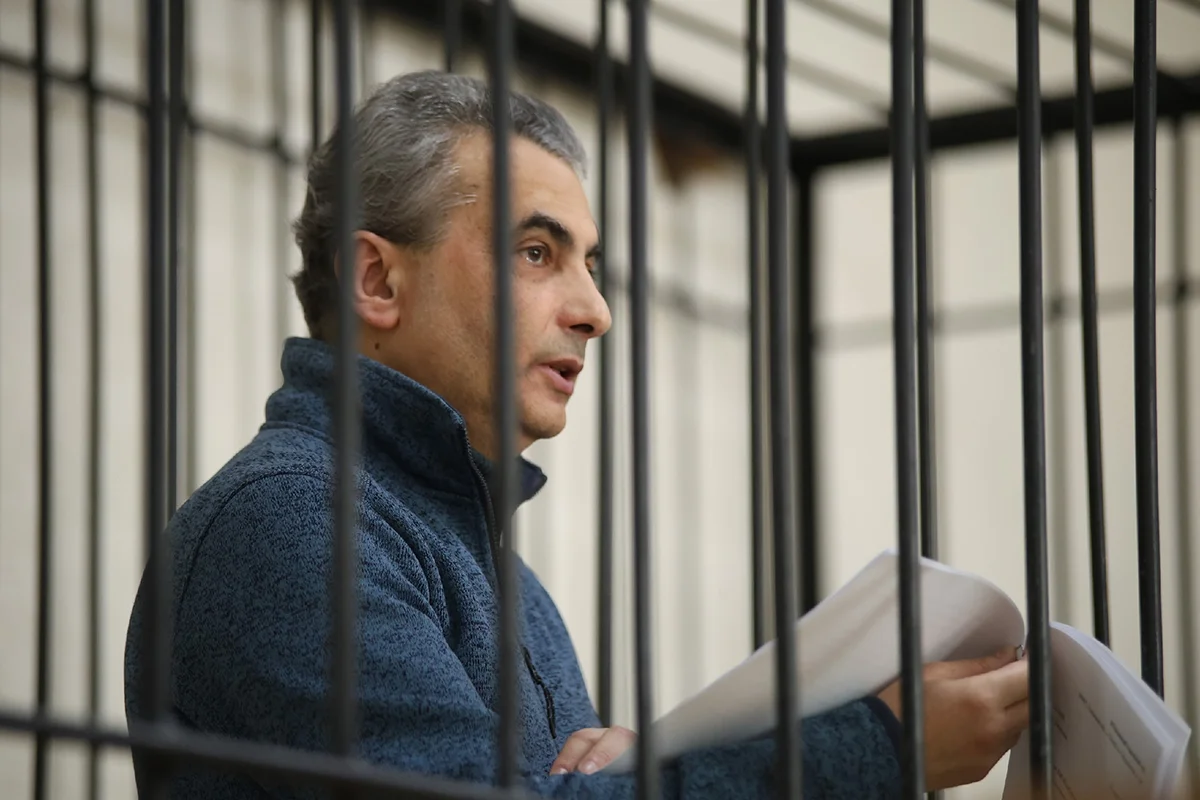
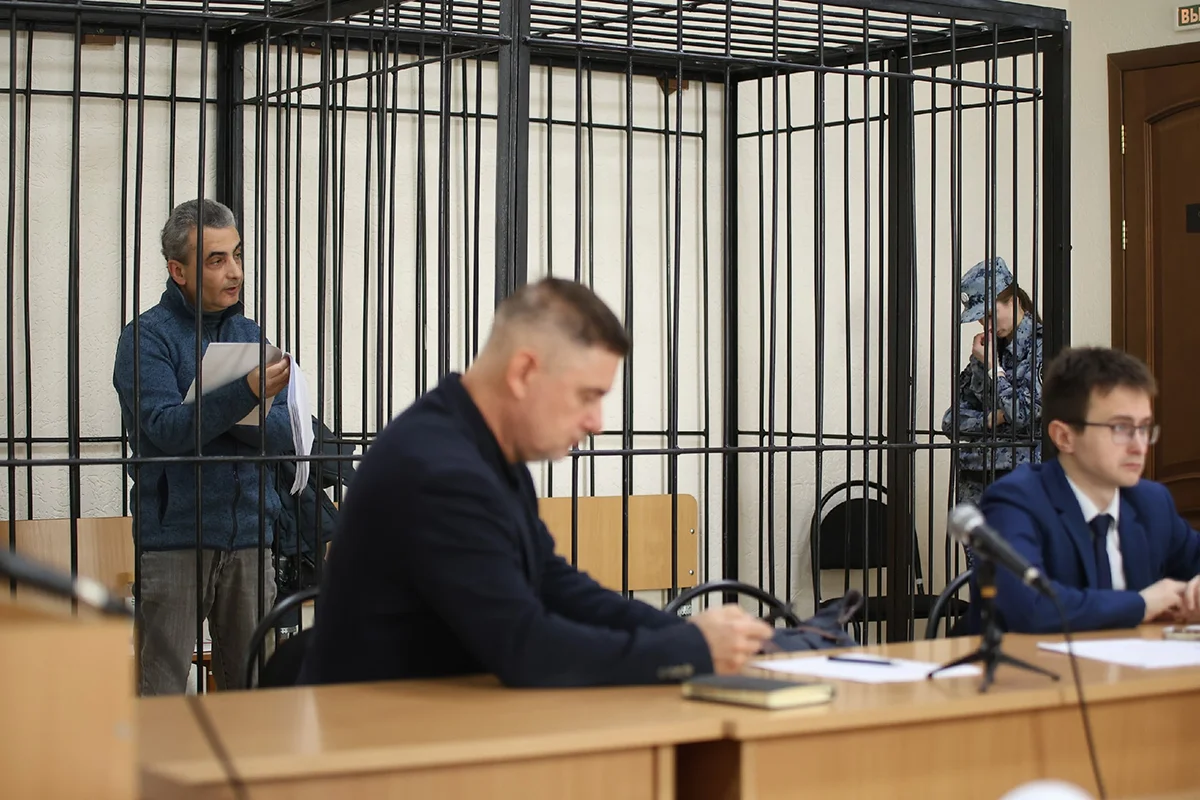
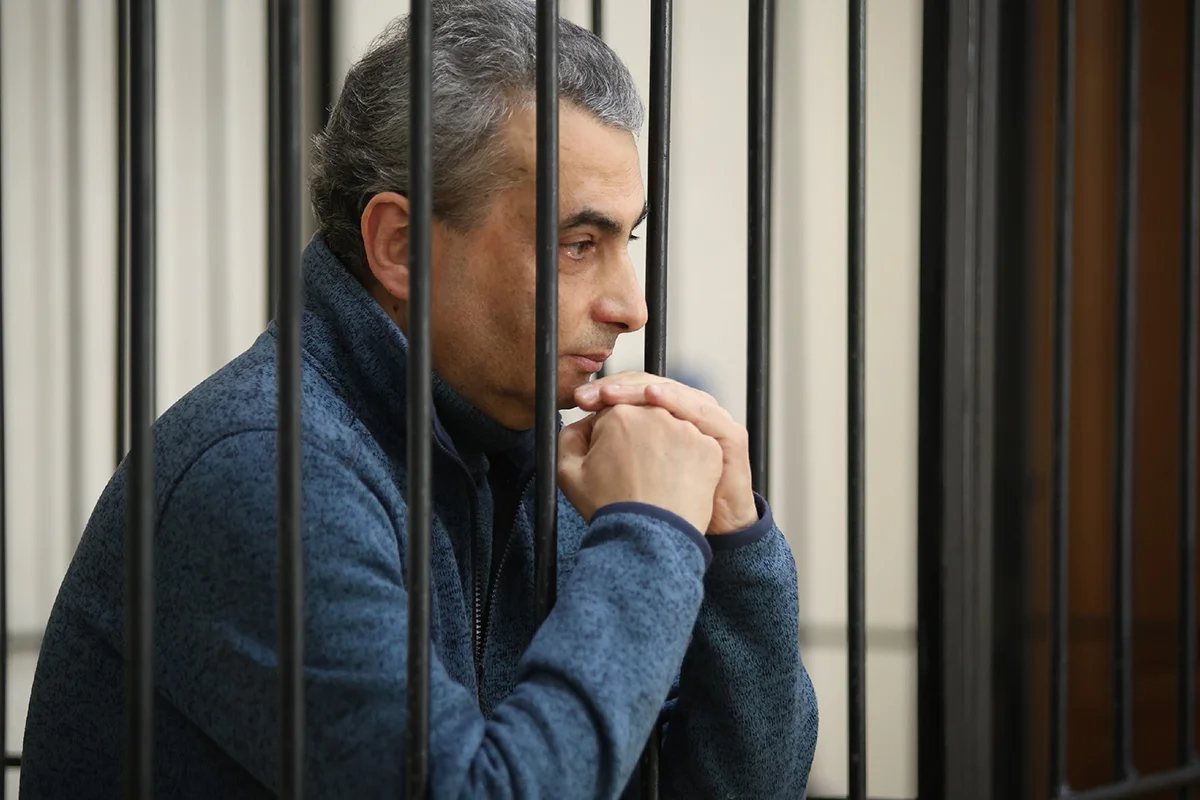
I am brought from prison to the hearing of the appellate court to consider my and my defenders’ appeal against a non-custodial sentence.
On December 5, 2025, I was taken into custody in another criminal case, in which there is no crime, and the case itself was initiated by an authority not authorized by law. Justifying the need for my detention (without evidence of guilt, until a verdict is passed), the investigation asked the court to choose the most severe preventive measure, since allegedly I could hide from the investigation and court, because “Shlosberg L.M. included in the register of “foreign agents”; According to the investigation, he has connections abroad and is under foreign influence from foreign sources.”
My defenders informed me that this is the first case in the Russian Federation when the forcibly assigned status of “foreign agent” is included by the courts in justifying the need to keep an unconvicted person in prison - until guilt is established, until a sentence is passed, and on charges of a crime of a non-violent nature.
Such a basis for detention and extension of the period of detention is absent in the Criminal Procedure Code of the Russian Federation; before my case, it was absent in Russian judicial practice.
The status of a “foreign agent” is not an aggravating circumstance in accordance with the Criminal Code of the Russian Federation, but starting from December 5, 2025, judges of the Pskov City Court three times, judges of the criminal appellate instance of the Pskov Regional Court also three times, and judges of the Third Cassation Court of General Jurisdiction twice included it in their decisions.
Where the first case of lawlessness occurs, there will certainly be a second, and a third, and a thousandth. It is lawlessness that spreads through the air. And then the plague of lawlessness begins.
President Vladimir Putin told Alexander Sokurov that “we, in fact, have one most important thing - show us the sources of funding. Well, what’s especially scary here?” But starting from 2022, according to the current law, foreign funding is not required to include a person in the “register of “foreign agents”.
In the documents from the Ministry of Justice provided to the court in 2023, there is a document stating that I have no foreign funding in any form. This did not stop the Ministry of Justice from adding me to the register.
As part of the new criminal cases, Rosfinmonitoring checked all my sources of property and income and established the absence of foreign funding. What impact did this have? No matter what.
The Law “On Foreign Influence” from a law to combat foreign financing of political and public activities over 10 years, from 2012 to 2022, became a law to combat citizens openly using their constitutional right to freedom of thought and speech, expression of their opinions and beliefs.
As a result of being included in the “register of “foreign agents””, a person is deprived of almost 20 fundamental constitutional rights and freedoms:
the right to a state guarantee of equality from the law and the court (Article 19 of the Constitution);
the right to protection of personal dignity (Article 21 of the Constitution);
rights to privacy (Article 23 of the Constitution);
the right to defend one’s honor and good name (Article 23 of the Constitution);
the right to independently choose one’s beliefs (Article 28 of the Constitution);
the right to act in accordance with one's convictions (Article 28 of the Constitution);
the right to freely produce, transmit and disseminate information (Article 29 of the Constitution);
the right to freely associate with citizens (Article 30 of the Constitution);
the right to freedom of participation in peaceful assemblies (Article 31 of the Constitution);
the right to elect and be elected, to participate in the preparation and conduct of elections and referendums (Article 32 of the Constitution);
the right to equal access to public service (Article 32 of the Constitution);
the right to participate in the management of state affairs (Article 32 of the Constitution);
the right to freely use one’s abilities and property for entrepreneurial and other economic activities not prohibited by law (Article 34 of the Constitution);
the right to protection of private property by law (Article 35 of the Constitution);
the right to freely use one’s ability to work, choose one’s type of activity and profession (Article 37 of the Constitution);
the right to receive state support (Article 39 of the Constitution);
the right to freedom of literary, artistic, scientific, technical and other types of creativity, teaching (Article 44 of the Constitution).
Essentially, the Law “On Foreign Influence” has become an instrument for the extrajudicial deprivation of Russian citizens of the citizenship of the Russian Federation.
In accordance with Part 2 of Article 17 of the Constitution, fundamental human rights and freedoms are inalienable and belong to everyone from birth. But the Law “On Foreign Influence” alienates the basic rights of a person and a citizen.
In accordance with Part 2 of Article 55 of the Constitution, no laws should be issued in the Russian Federation that abolish or diminish the rights and freedoms of man and citizen. But the “foreign influence law” abolishes and diminishes the rights and freedoms of humans and citizens.
In accordance with Part 3 of Article 56 of the Constitution, even in a state of emergency, to ensure the safety of citizens and protect the constitutional order, the rights and freedoms provided for in Articles 20, 21, 23 (Part 1), 24, 28, 34 (Part 1), 40 (Part 1), 46–54 of the Constitution cannot be limited. Almost half of the rights provided for in these articles are not only limited, but also repealed by the Law “On Foreign Influence.”
As a result of the application of this law, a person ceases to exist as a subject of law.
Essentially, a person included in the “register of “foreign agents” is left with only the right to life. Which, obviously, in the opinion of the authors and users of this law, should take place in the absence of rights, with humiliation of the dignity of the individual, with the impossibility of defending one’s honor and good name in court, freely realizing one’s abilities and following one’s convictions.
The very idea of the law “On Foreign Influence” is outside the boundaries of the Russian Constitution.
The Constitutional Court of the Russian Federation could and should have protected Russian citizens from attacks on their rights and freedoms. On November 6, 2025, having exhausted all previous judicial remedies, Boris Vishnevsky* and I filed a complaint with the Constitutional Court about the violation of the constitutional rights and freedoms of Russian citizens by the Law “On Foreign Influence”. The author of our complaint was my defender Vitaly Isakov.
On December 25, 2025, the Constitutional Court of Russia refused to accept the complaint for consideration, issuing a short ruling of less than five pages, in which, without answering any of the questions posed to the high court on 27 pages, it said that, in the opinion of the court, “the federal legislator is not deprived of the opportunity to resort to evaluative or generally accepted concepts, if the meaning of such concepts is accessible to perception and understanding by the subjects of the relevant legal relations.”
From the Russian history of the twentieth century, we know well: this is an “evaluative or generally accepted concept” - “enemy of the people.” It is precisely his dark shadow that looms behind the phrase “foreign agent.” Both the authors and users of this law understand this very well. That's how it was intended.
Foreign - alien, dangerous, hostile, fraught with a threat, subject to squeezing out of the country and, at a minimum, political liquidation.
Article 18 of the Russian Constitution - “Rights and freedoms of man and citizen.” According to it, these rights and freedoms are directly applicable. They determine the meaning, content and application of laws, the activities of the legislative and executive powers, local self-government and are ensured by justice. This article also fell victim to the Foreign Influence Act.
If today, in the third decade of the 21st century, Osip Mandelstam (1891–1938), Isaac Babel (1894–1940), Boris Pilnyak (1894–1938), Daniil Kharms (1905–1942), Nikolai Gumilyov (1886–1921), Anna Akhmatova (1889–1966) lived in Russia, Mikhail Zoshchenko (1894–1958), Alexander Solzhenitsyn (1918–2008), Varlam Shalamov (1907–1982), Lev Gumilev (1912–1992), Evgenia Ginzburg (1904–1977), Lev Razgon (1908–1999), Oleg Volkov (1900–1996), Yuri Dombrovsky (1909–1978), Sergei Dovlatov (1941–1990), Nikolai Zabolotsky (1903–1958), Boris Pasternak (1890–1960), Joseph Brodsky (1940–1996), Nikolai Zhilyaev (1881–1938), Vsevolod Zaderatsky (1891–1953), Alexander Mosolov (1900–1973), Dmitry Shostakovich (1906–1975), Solomon Mikhoels (1890–1948), Nikolai Vavilov (1887–1943), Pavel Florensky (1882–1937), Nikolai Kondratyev (1892–1938), Lev Karsavin (1882–1952), Matvey Bronstein (1906–1938), Sergei Korolev (1907–1966), Andrei Tupolev (1888–1972), Dmitry Likhachev (1906–1999), Alexey Losev (1893–1988), Lev Landau (1908–1968), Metropolitan Veniamin (Kazan) (1873–1922), Metropolitan Peter (Polyansky) (1862–1937), Archbishop Hilarion (Troitsky) (1886–1929), Metropolitan Kirill (Smirnov) (1863–1937), Archbishop Luka (Voino-Yasenetsky) (1877–1961), Archbishop Afanasy (Sakharov) (1887–1962), Valentin Sventitsky (1881–1931), Anatoly Marchenko (1938–1986), Yuri Galanskov (1939–1972), Andrei Sakharov (1921–1989), Elena Bonner (1923–2011), Yuri Orlov (1924–2020), Nathan Sharansky (b. 1948), Sergei Kovalev (1930–2021), Natalya Gorbanevskaya (1936–2013), Vadim Delone (1947–1983), Konstantin Babitsky (1929–1993), Tatyana Baeva (1947–2025), Larisa Bogoraz (1929–2004), Vladimir Dremlyuga (1940–2015), Pavel Litvinov (b. 1940), Viktor Fainberg (1931–2023), thousands and thousands of people who fell under political repression, they would be included in the “register of “foreign agents.”
“We’re not shooting you, like in 1937, we’re only depriving you of your rights,” supporters of the Foreign Influence Law tell us.
Obviously, the gentlemen assume that we should thank them for this. These are now the state’s ideas about the fate of man in Russia.
Not a single court decision on “foreign agents” identifies the foreign state in whose interests the “foreign agent” acts. There were no such people among the 193 UN member states. How can this be: there is a “foreign agent”, but there is no foreign state? Then in whose interests is the “foreign agent” acting?
We understand what foreign state was in mind when the Foreign Influence Law was invented. This state is FREEDOM. Freedom of thought. Freedom of speech. Freedom of opinion. Freedom of action. Freedom of choice. This is what they want to present as foreign influence in our country - freedom.
They want to convince Russian society that freedom is alien and undesirable, dangerous and unacceptable for Russia.
This intention denies the entire history of Russian free-thinking, starting from the early Middle Ages. This intention denies the entire Russian culture with its desire for freedom, compassion for man and respect for human dignity.
This intention is denied by the veche Pskov and the veche Novgorod with a republican form of government, the church of non-covetous people, Archpriest Avvakum (1620–1682), the reforms of Peter the Great (1672–1725) and Catherine the Second (1729–1796). This intention denies the thoughts and works of Alexei Kurbatov (1663–1721), Ivan Pososhkov (1652–1726), Dmitry Golitsyn (1665–1737), Heinrich Fick (c. 1670–1750).
This intention denies the plans of Alexander the First (1777–1825) and his associates Viktor Kochubey (1768–1834), Nikolai Novosiltsev (1761–1838), Adam Jerzy Czargoryski (1770–1861), Pavel Stroganov (1774–1817), Mikhail Speransky (1772–1839). Even under Nicholas the First, Pavel Kiselev (1788–1872) and Yegor Kankrin (1774–1845) worked, and Mikhail Speransky continued his work.
The intention to present freedom to an alien and hostile Russia is refuted by Alexander II (1818–1881) and his Great Reforms, during which the zemstvo and judicial reforms, university reform, city reform, military reform and, of course, the first in this series, the abolition of serfdom, took place.
These reforms, under Alexander the Second as the supreme initiator and political guarantor of all reforms, were developed by Nikolai Milyutin (1818–1872), Grand Duke Konstantin Nikolaevich (1827–1892), Dmitry Milyutin (1816–1912), Mikhail Reutern (1820–1890), Alexander Golovnin (1821–1886), Yakov Rostovtsev (1803–1860), Konstantin Kavelin (1818–1885), Boris Chicherin (1828–1904), Mikhail Loris-Melikov (1824–1888).
The pinnacle of the Great Reforms of Alexander II was to be the reform of the supreme power, known as the “Loris-Melikov Constitution”. His “Report on the involvement of representatives of the population in legislative activities” was approved by Alexander II in February 1881, but was not implemented due to the assassination of the emperor on March 1, 1881.
The terrorists who killed Alexander II were later raised on their shield by the Bolsheviks. If the Great Reforms had been carried out on a full scale and completed, the Bolsheviks would not have come to power in Russia and the all-Russian tragedy of 1917 would not have occurred. The entire twentieth century in our country could have turned out differently. Millions of people would still be alive.
Under Nicholas II, several attempts were made to liberalize and modernize Russia, most notably the reforms of Sergei Witte (1849–1915) and Pyotr Stolypin (1862–1911), who tried to pull Russia out of the vortex of the approaching revolution, but failed: the failure to carry out the most important political, economic and administrative reforms on time, as well as Russia’s participation in the First World War, opened the way to a state disaster.
It was the Bolsheviks, who came to power through the blood of the First World War, who carried out a coup, started the Civil War in the country and divided society into friends and foes, servants of the regime and “enemies of the people.”
It was in those fateful 1920s and 1930s that the larva of the Foreign Influence Law was born, when criminal cases against English, German, and Polish “spies” appeared. And then it turned out that there were no spies. There was a fanatical, almost schizophrenic, hatred of people of other beliefs.
Everyone chooses for themselves whose political heir to be.
The Foreign Influence Act is a demonstrative contempt of court. Contempt of court is inherent in the concept of this law.
The entry of a person into the “register of “foreign agents” occurs secretly, out of court. We are deprived of two dozen inalienable constitutional rights and freedoms by the decisions of officials of the executive branch, who prepare secretly, behind our backs, at their own arbitrary discretion.
Adding a person to the “register of “foreign agents” is intended as an arbitrariness and is carried out as an arbitrariness.
To be recognized as a “foreign agent”, a person does not need to commit any act. The reason for loss of rights is the purely ideological discretion of an executive official. This violates the general legal requirement - not to hold a person accountable in the absence of a specific act, without guilt and without evidence. The provisions of the Law “On Foreign Influence” represent an open-ended offense, but with the most severe sanction in the form of complete loss of personal, political, economic and cultural rights for an indefinite period.
Deliberately fictitious “foreign influence” is determined at the discretion of ministry officials whose names are hidden behind the signature of the Deputy Minister of Justice. The Foreign Influence Act turned the Department of Justice (the Ministry of Justice) into the Ministry of Injustice.
The provisions of the Law “On Foreign Influence” and the actions of officials based on it in relation to citizens who have become objects of such influence extrajudicially cancel the effect of the second chapter of the Constitution of the Russian Federation.
Who can stop lawlessness, arbitrariness and lawlessness?
Only the court.
In accordance with the Constitution, judges are independent and are subject only to the Constitution of the Russian Federation and the Federal Law (Part 1 of Article 120).
Judges are irremovable (Part 1 of Article 121).
Judges are inviolable (Part 1 of Article 122).
The judiciary is the highest authority. The state may have complete paralysis of the institutions of executive and legislative power, the rights and freedoms of man and citizen hidden underground, and a society frozen in fear.
Judgment can revive everything.
The court can make parliament a parliament, the government a government, the prosecutor's office a prosecutor's office.
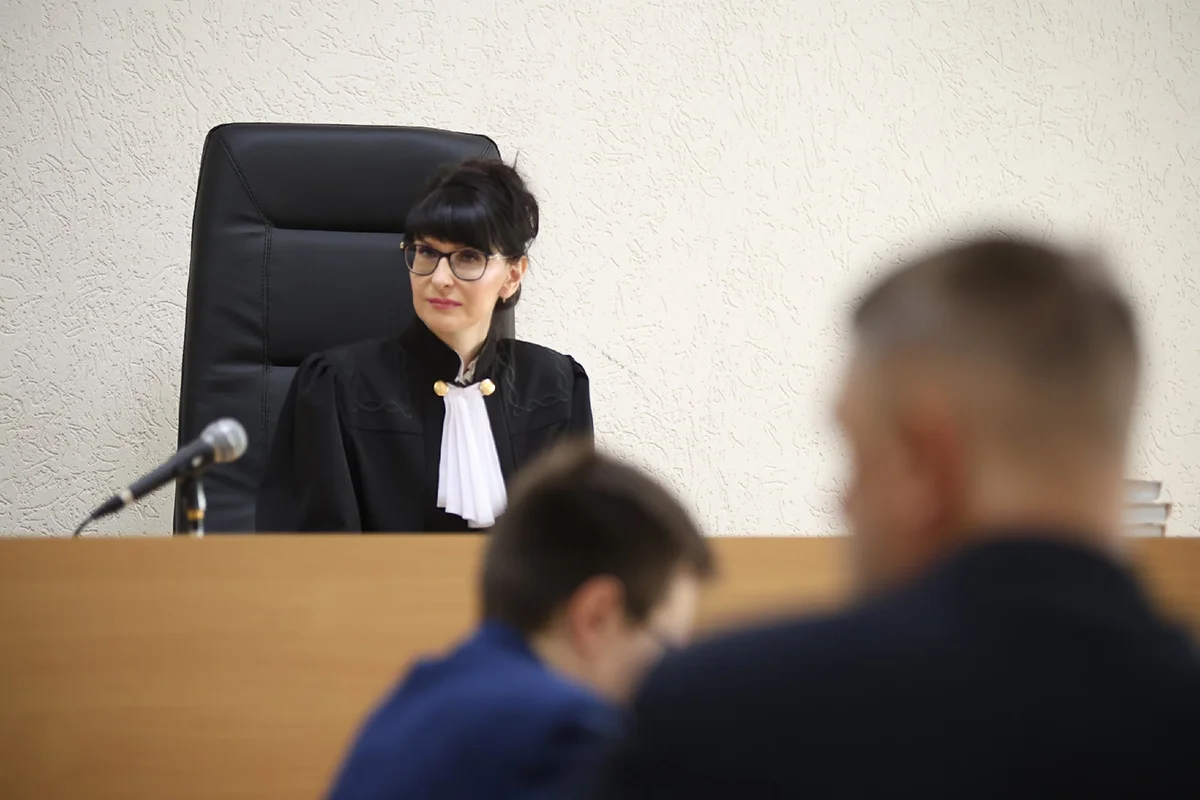
The court is capable of reviving and protecting human rights and freedoms, giving a second wind to the tired, inspiring the disappointed, returning meaning to fundamental concepts, and restoring the validity of the Russian Constitution for all Russian citizens. Any arbitrariness, any lack of rights and lawlessness ends where a fair trial begins.
All carriers of lawlessness and lawlessness became so not only because of their innate or acquired qualities, but also because the courts allowed them to become so.
Only in the absence of justice does a person participating in a trial not understand who makes decisions in the name of the Russian Federation - a man in a black robe or a man in a blue uniform. Or a person who is not in the courtroom at all. The destruction of the court is equal to the destruction of the state.
To return human rights and freedoms to the country, the judicial power is sufficient. Everyone will see that rights and freedoms operate because there is a court.
The court is the last bastion for the protection of human rights and freedoms and the first step towards the restoration of rights and freedoms.
The path from unfreedom to freedom lies through the revival of the judiciary.
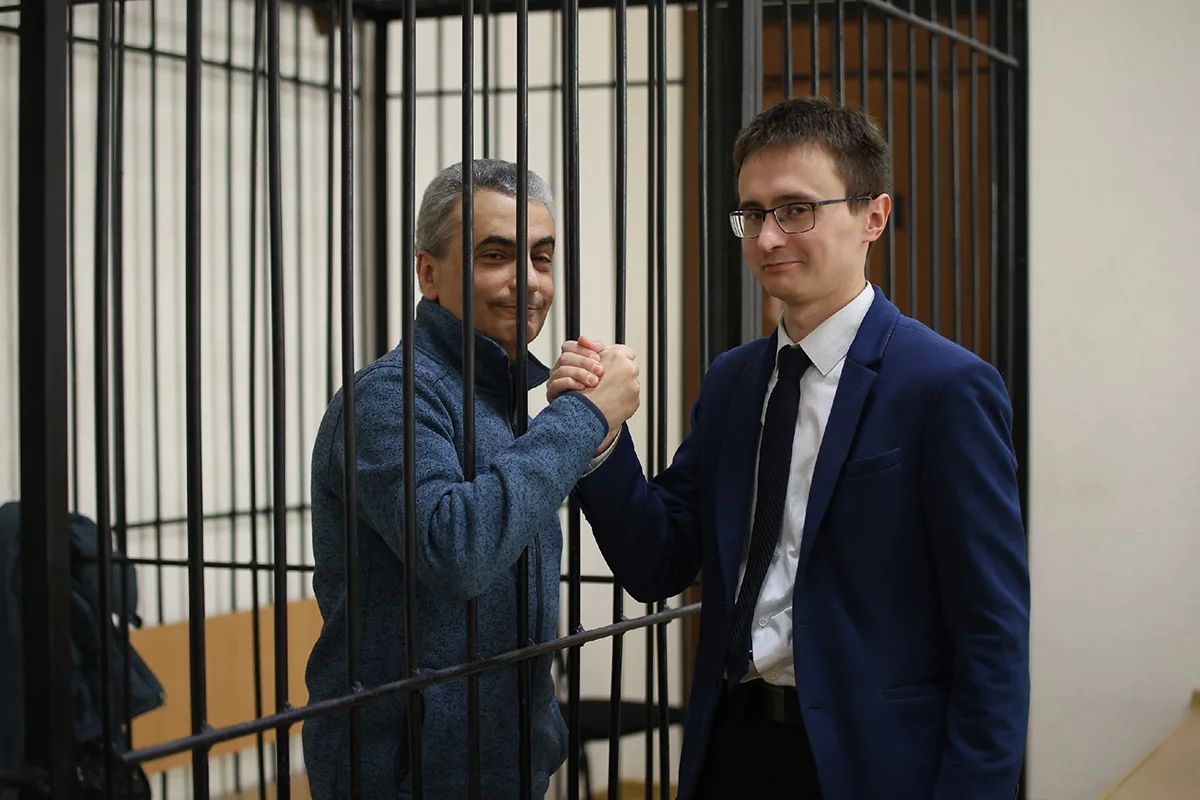
Over the course of dozens of hearings in the court of first instance and the court of appeal, the state prosecutor tried to present that the prosecution was defending the Russian state and its interests in this process. No. These are my valiant defenders and I are defending in this process the Russian state and its interests - those that are established by the Constitution of Russia, embedded in its letter and its spirit.
This has already happened in history, when the accused, the defendant and the convicted defend the right. And the accusers are destroying it. This is not new, unfortunately, for our country. This means that the time has come to repeat the lessons - historical, legal, political.
Your Honor!
You are considering a case, the essence of which is the issue of human rights and freedoms. Not just mine.
I am one of hundreds of citizens who have been deprived of many rights and freedoms by people who do not respect rights and freedoms, who consider them to be a foreign influence in our country. And we believe that respect for the rights and freedoms of man and citizen should be the essence and meaning of all state policy.
For this to happen in our country, justice must be done. To begin with, in one specific case. Let me remind everyone that Pskov is a city of Russian freedom. It would be right if the revival of justice in Russia begins in Pskov.
We all know how times of unfreedom end. Freedom.
The establishment of institutions of human and civil rights and freedoms in our country is not only a matter of state protection of human dignity. This is a question of preserving Russia as a state. In the absence of freedom, a country will not survive, just as a person cannot survive in the absence of oxygen.
Today's denial, belittlement, restriction and abolition of human rights and freedoms, attempts to strangle freedom as such is the strangulation of the future of tens of millions of people, the destruction of tens of millions of destinies that would have turned out differently in conditions of freedom than in conditions of unfreedom. The establishment of freedom is a matter of life and death for both living and unborn people.
When freedom becomes a “foreign agent,” then the country loses ground under its feet, and the activities of the state lose its main meaning - serving people, creating conditions for the realization of their rights and freedoms. When freedom becomes a “foreign agent,” a country becomes a stranger to its citizens. Not even a stepmother, but a warden.
History has repeatedly shown and proven, and not only in Russia, that freedom is inevitable. But the question always arises about the price of freedom. Question about dead people. The question of ruined destinies. The question of illegally deprived of liberty. The question of distorted and interrupted life lines.
The price of freedom is never abstract. It is always measured in human lives. One human life is one absolute unit of freedom.
This is a necessary and sufficient condition for defending, defending and cultivating freedom.
In order to achieve freedom, one must pass the test of unfreedom. It is impossible to avoid it. We go through this test every day. Each of us.
It is very painful to see how they are trying to uproot freedom from people. And it is very clear to understand that freedom is not uprooted. There will always be 300 Spartans who will not give up freedom. Even if they are labeled as “foreign agents.”
What is our hope today?
The fact is that freedom is indestructible.
The fact is that we cannot kill the light.
The fact is that good wins even when it dies, because according to the law of conservation of good, it will certainly find someone to settle in.
The word of freedom is never the last.
L.M. Schlosberg
April 22, 2026