
Translated material
The last ones on the shore.
The last ones on the shore. How the port and drone attacks on Ust-Luga change the life of the Vodi and Izhora - the indigenous peoples of the Leningrad region. Report "Paper"
The Leningrad region is now a “front-line region,” said Governor Alexander Drozdenko. After the largest drone attack on the ports in Ust-Luga and Primorsk, he called on reservists to fight the drones.
Since the beginning of its construction, the port in Ust-Luga has caused protests among local residents, many of them are Vozhans and Izhorians, representatives of indigenous peoples. Officially, there are just over 300 of them left. First they were deprived of access to the bay, then the forest was cut down, and now a physical threat hangs over the people.
And although the column of black smoke no longer hangs over the villages, the situation near the port is alarming. Bamaga correspondents traveled to national villages and to Ust-Luga itself. We tell you how the port has changed the life of their residents and what they are talking about now.
Prologue. "We're being bombed here"
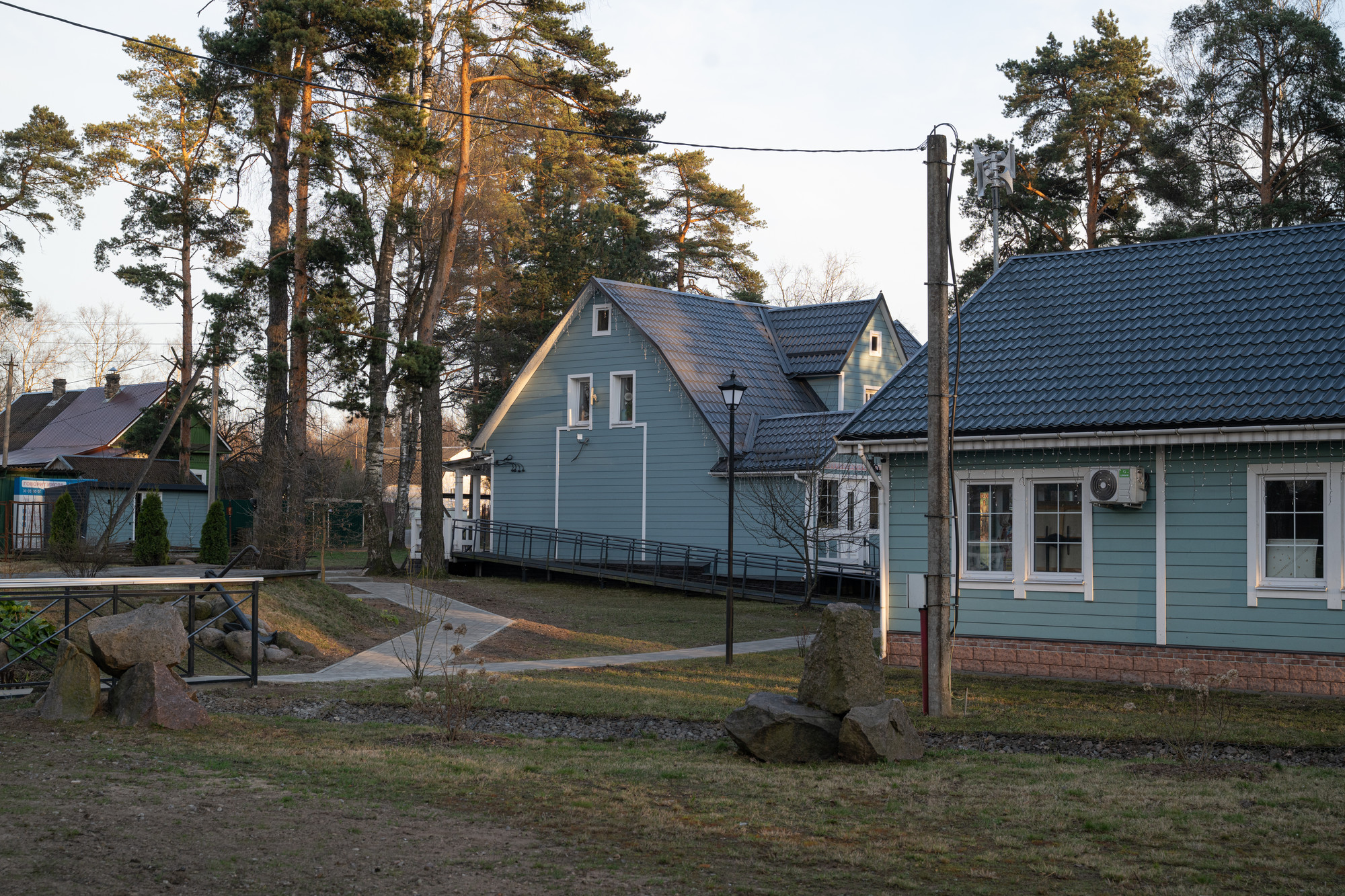
Two blue wooden houses - an Izhora museum and a cultural center with national crafts - stand as a dominant feature in the village of Vistino. They are sandwiched between the road, hotel complexes, chain stores and cafes. Groups of men in overalls scurry along the highway and stand thoughtfully in lines for pies - lunch break. The noise from the colossus of the port echoes through the village. The air smells of metal and chemicals, something industrial.
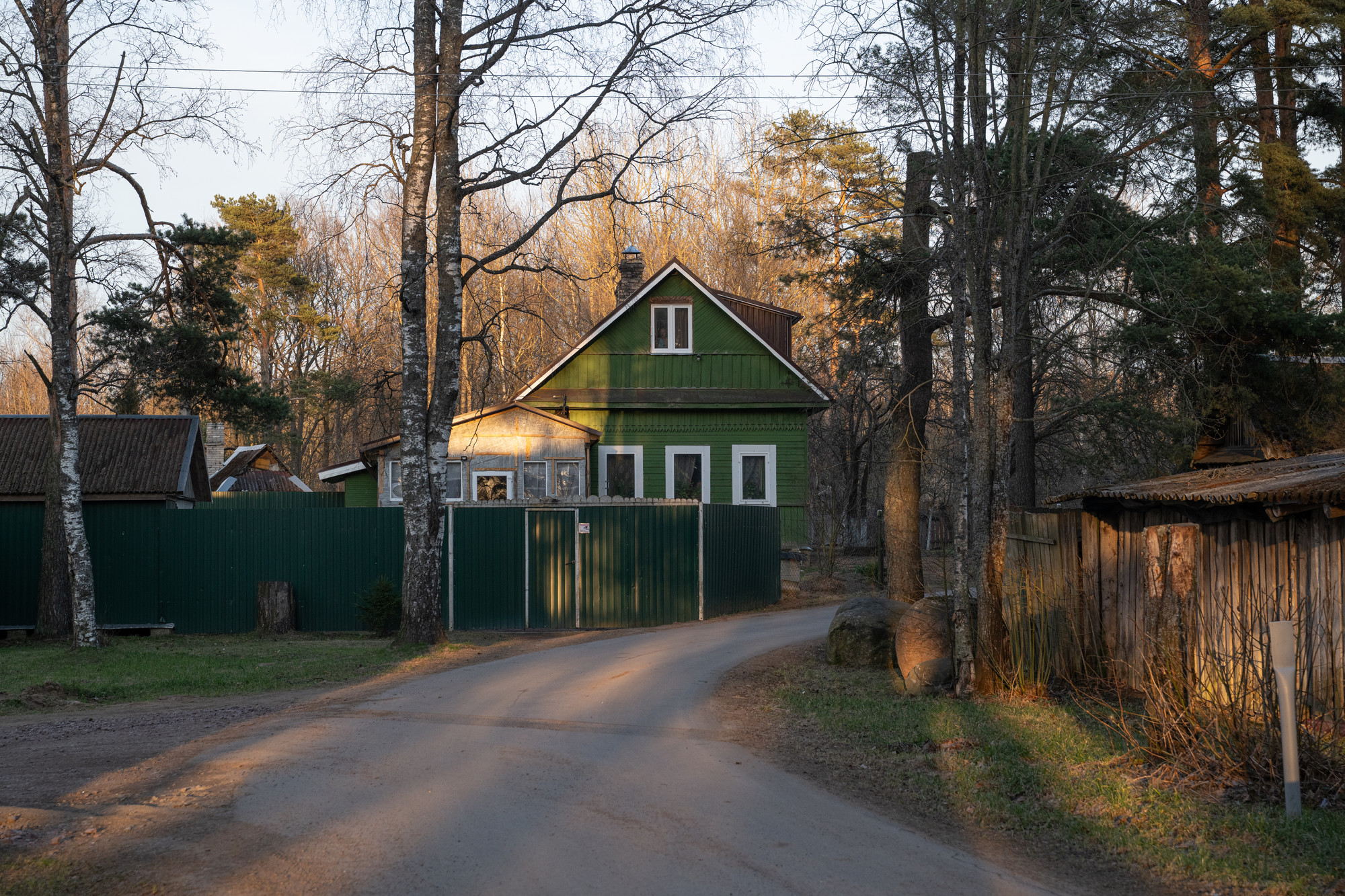
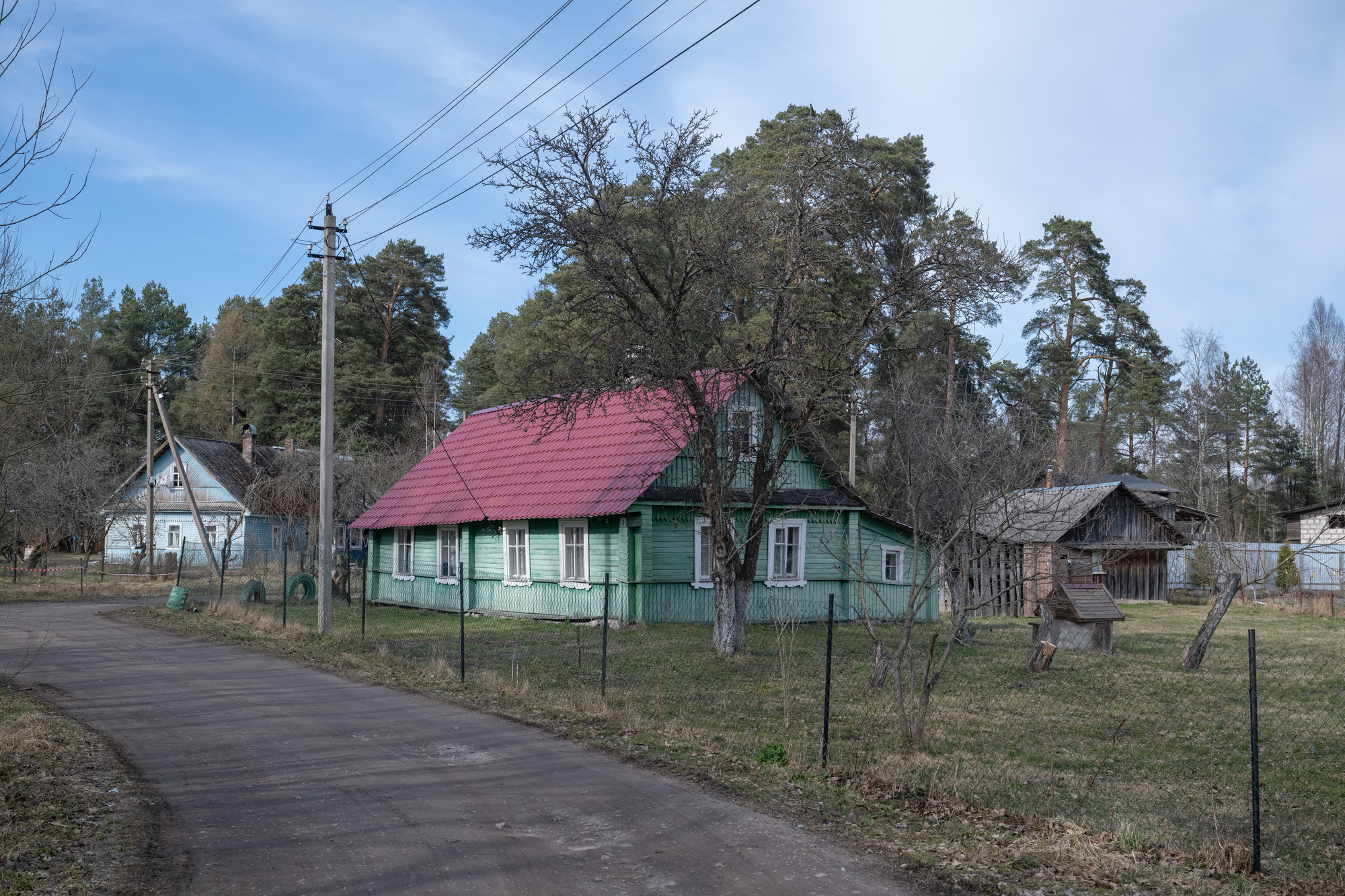
Near the museum there are several old houses reminiscent of Komarov and Sestroretsk dachas. Behind the fence of a green hut, a gray-haired man with a Soviet diplomat briefcase is looking at the phone. He looks about 50 years old. Schoolchildren passing by say hello to him. Seeing us, he comes out through the gate and talks about the sights:
- You know, there is no one in the museum today. There is no way out to the bay. And we don’t have much else to do. You can see for yourself: there are only workers all around.
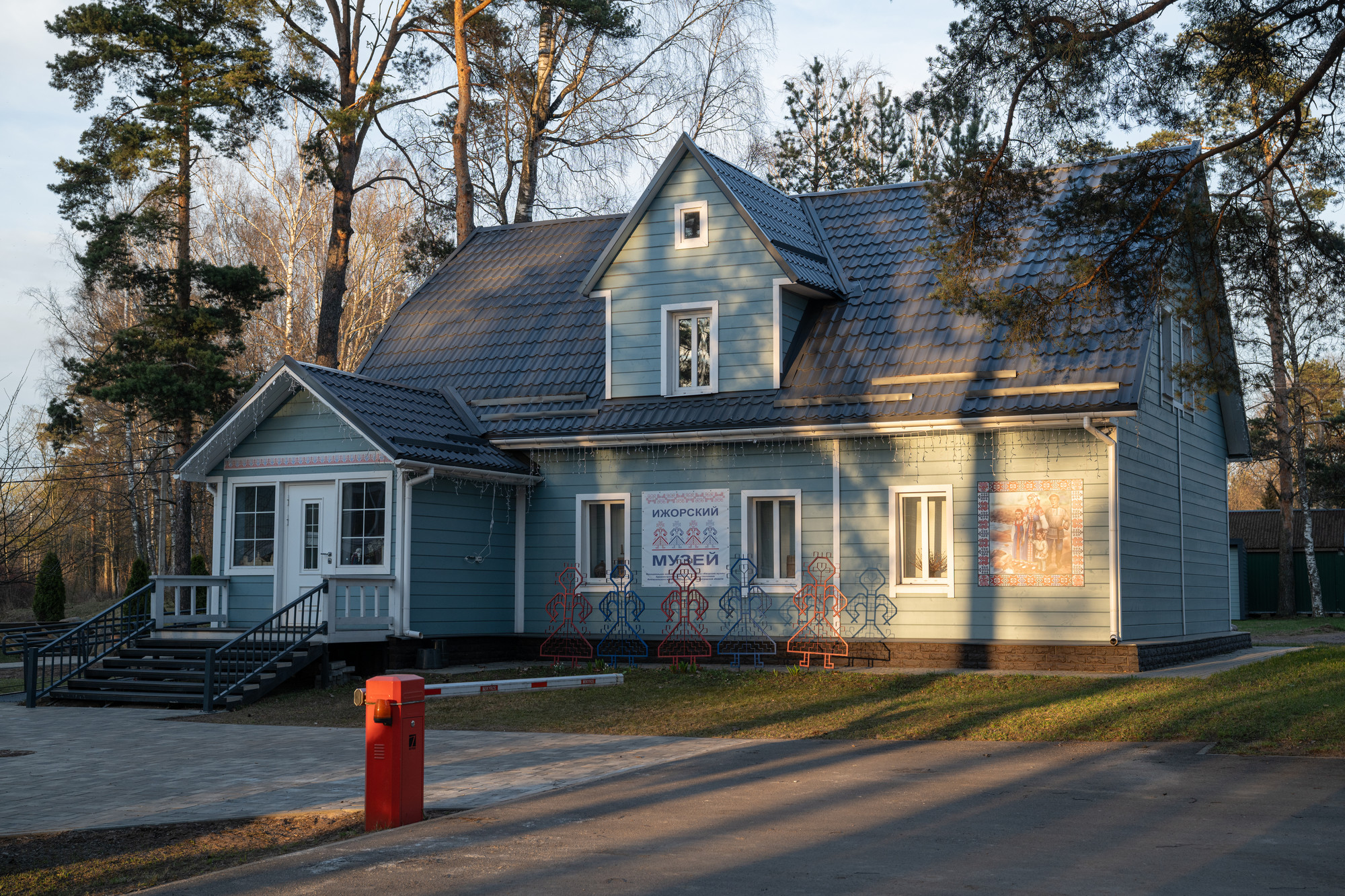
The man introduces himself as Alexey. He has lived here since childhood, now works in the port and, trying to entertain guests, remembers: there used to be a “ real Izhora region ” in Vistina, whose entire life was tied to fishing in the Gulf of Finland . 20–30 years ago there was so much fish that his neighbor Uncle Grisha attached three trailers to a tractor, which were loaded to the top with containers with catch.
In his youth, Alexey himself worked at the “ Baltika” fishing collective farm , which made sprats. “We had them better than in Estonia and Latvia! We caught herring, smoked it ourselves on alder, and brought us Ukrainian sunflower oil,” the man says nostalgically. The secret of production was that canned food was usually made from fresh fish thanks to its own fleet. Local residents can still tell whether herring in sprats is frozen or chilled.
In the 2000s, Baltika closed, and a port and industrial zone were built on the shores of the Gulf of Finland - now you can only access the water in a few places. Izhors catch fish away from enterprises and smoke it at home. Having learned that the guests have never tried Vistin sprats, Alexey takes out his phone, makes an appointment with a friend in a minute and jumps into the car.
— The Izhorians are kind and sympathetic, but calculating. If he prepared ten cans of sprats for the season, then he thought of everything: he could give two, eight for himself. We’ll settle accounts with him later,” Alexey says on the way.
We stop on a country road. Huge white hemispheres rise above the once coastal houses - the warehouses of Ultramar, a mineral fertilizer transshipment company. The Ust-Luga port begins here. From here, numerous terminals and complexes stretch along the coast: coal, sulfur, forestry, oil loading and storage, gas chemical . All this occupies more than 1,150 hectares - an area comparable to the Vyborg district of St. Petersburg, the third largest in the city. This is the largest port in the Baltic and the second largest in the country after Novorossiysk.
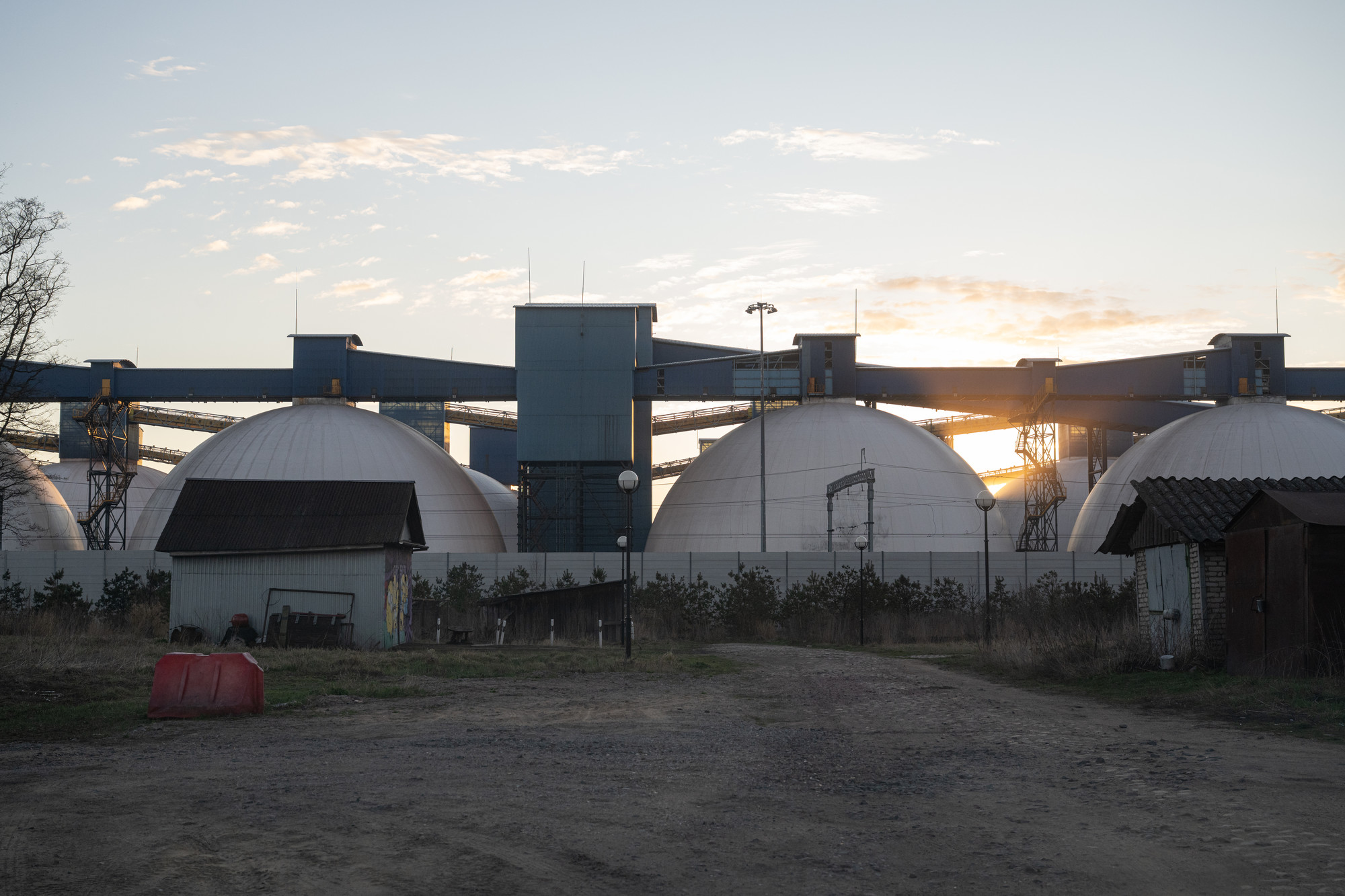
A thin man with a package comes out onto the porch of a small house, he leans on the door and waits for our guide. Both refuse money. Alexey and I return to the highway, along which workers are still scurrying about.
— Once the port was built, many left. We don’t seem to mind that port workers live next to us, but nature suffers. In the evening the workers return and different things happen. It’s noisy, all the locals go to the shops until 12 in the morning, and at lunchtime you won’t see us on the street,” Alexey sighs after talking. - And now the Internet is being jammed. We're being bombed here.
The man ignores other questions about UAV attacks. After a trip for sprats, he hastily says goodbye and advises them to come in July - for Fisherman’s Day and the “Hospitable This Land” festival, which are usually held a week apart.
Izhora. “The places were resorts”
The path from St. Petersburg to the national villages goes through Sosnovy Bor and the Leningrad Nuclear Power Plant, then along forests and rocky beaches. In one moment, the car window is covered with dust, and the natural landscape decorated with trees gives way to views of dug up earth dotted with trucks, excavators and outhouses. These are the historical lands of the Izhorians and Vodi - two of the five indigenous Finno-Ugric peoples of the Leningrad region. And for the last 20 years they have been living near a constant construction site.
Which companies are involved in the construction and development of the port? And what amounts are we talking about?It is difficult to estimate exactly how much money was invested in the construction of the port in Ust-Luga. Now there are more than ten terminals that accept different types of raw materials for export. The cargo turnover of the port of Ust-Luga at the end of 2025 is 130.5 million tons. For comparison, the largest Russian port in Novorossiysk handled 168 million tons during the same period .
At the same time, the port continues to be built. It is clear that trillions of rubles have been invested in the projects, and the turnover of many operating companies that handle loading at the port amounts to billions of rubles a year.
Here are some of the port's most famous companies:
- The Novatek-Ust-Luga complex was launched in 2013; it processes stable gas condensate into kerosene, diesel fraction and fuel oil. In 2022, for example, the complex’s revenue was estimated at 367 billion rubles, and profit at 28 billion.
- Ust -Luga Oil transships petroleum products from railway transport to sea tankers . The complex is controlled by Transneft structures . In 2025, the company's revenue was estimated at 47 billion rubles, and profit at 37 billion.
- The fertilizer transportation and storage company Ultramar is owned by billionaires Andrei Bonch-Bruevich and Maxim Vorobyov. The latter, according to media reports, is close to the governor of the Leningrad region, Alexander Drozdenko. In 2025, Ultramar's revenue in Ust-Luga was estimated at 31 billion rubles, and profit at 7.7 billion.
- The Portenergo oil products terminal was built by Sibur. In 2025, the terminal's revenue was estimated at 7.8 billion rubles, and profit at 4.4 billion.
The operators established by Gazprom and Rusgazdobycha are now also creating gas processing and gas chemical clusters. Investments in them, according to media reports, amounted to more than 4.9 trillion rubles. It was planned to allocate about 900 billion from the National Welfare Fund.
The village of Vistino is the largest Izhora settlement, where about a thousand people live. There we met Alexey. In the area you can find a dozen more national villages, but they are several times smaller. According to the 2021 census, there are 210 Izhoras and 105 Vozhans left in Russia. But these are only those who officially indicated their belonging to an indigenous people in the “nationality” column.
“The places were resorts,” says Andrei, who grew up in one of the villages (the name has been changed at the request of the hero). — In the Soviet years, they wanted to develop this tourist destination. But not fate.
In sunny weather, children used to swim in the bay, and then take “ kopchushka ” (the so-called sprat and herring for sprat) from the fishery factory. When it was cool, locals went into the forest to pick berries.
“In the 2000s, for the last call, we rented an entire fishing boat for the cost of diesel fuel, and the whole class rode along Luga Bay,” Andrey recalls. “And at that time, in the villages around Vistin, it was customary to lean a broom or stick against the door when leaving home. The door did not lock.
Andrey himself is from an Izhora family. His mother is a native inhabitant of the Soykinsky Peninsula, where Finno-Ugric peoples have lived since ancient times, but he does not know his father. Grandmothers in the villages, according to him, spoke Izhorian, but children were forbidden to repeat after them. They made excuses: “ This is adult language, don’t listen .”
- Do you know Izhorian?
- No, just a couple of phrases. Rather, I can understand something from Estonian; as a child I had to watch Tallinn TV, but I couldn’t catch Russian TV.
During Soviet times, Izhora culture first developed thanks to a temporary policy of indigenization, and then suffered greatly. Until the 1930s, many residents of the Soykin Peninsula spoke the language, but during the Great Terror, teaching the national language in schools was banned , and Izhora teachers were repressed. During the Second World War, many representatives of the indigenous people from the German occupation were brought to their home by the Finns. The Soviet authorities allowed the Izhorians to return to their historical homeland only in the mid-1950s. The revival began already in the 1990s. The Vistina Museum, which had previously been created as a collective farm museum, began to talk about Izhora culture. National activists popularized the language and traditional crafts: pottery and fishing.
“Even Finns started coming to the museum in big white buses and handing out sweets to children,” Andrey recalls.
In recent years, there have been fewer international connections, but plays are staged in the Izhorian language , “Total Dictation” is conducted, and textbooks, fairy tales and song collections are published. Port enterprises support this: Ultramar regularlyreports on helping the residents of Vistin, and the pottery workshop and installations near the museum indicate that they were created “with the support of the Nord Stream 2 gas pipeline.” True, from these same enterprises Vistino is regularly covered with black coal dust: it settles on benches, on playgrounds, on school windowsills, everywhere.
The world's only Soykin Izhora community, Shoikula, does not currently communicate with journalists (its representatives refused an interview with Bamaga , and some speakers ignored the messages). In November - December 2025, telegram channels and Nikita Mikhalkov attacked the indigenous people and the head of the organization with angry speeches in his author’s program “ Besogon ” . He accused the Izhorians of Russophobia and separatism - the reason was just information signs with the names of villages in the Izhorian language, the Russian translation on them was duplicated in a smaller font . The signs had to be removed. Only the pillars on which they hung remained.
— If the process of reviving Izhora culture had begun ten years earlier, it would have been easier. I'm afraid they'll cover everything up now. Have you heard the story about the signs? It turns out that we have them for NATO soldiers. Mikhalkov brought extremists from “ Free Ingria ” to us (the presenter mentioned the Forum of Free Peoples of Russia, which has now been declared terrorist - note by “Papers” ), although they are not Izhorians at all. Mikhalkov’s plot says that there are only 70 of us (this is a lie, there are so many native speakers) and that we (apparently all 70 people) want to disconnect somewhere. “We’ll just get on the same bus and disconnect,” Andrei says, ironically, indignantly.
Vod. “There is no one to cry for us”
Luzhitsy is the only surviving village of the Vod people. In the 2000s, activists wanted to make a cultural reserve in its place, recalls leader Ekaterina Kuznetsova - now she is a member of the platform of Russian democratic forces of the Parliamentary Assembly of the Council of Europe (PACE), and has lived in Estonia for about ten years.
In the mid-2000s, Ekaterina Kuznetsova went to the shore of the bay to photograph the historic stone pier. But on the spot I saw an iron fence. Trying to find out what was going on, Kuznetsova learned about the construction of a port.
Both the Vozhans and the Izhorians tried to move the port away from the national villages. In order to officially communicate with authorities, activists collected documents and scientific research in archives to prove that Vod exists, and created a legal entity of a national community. It was previously believed that the Vozhans disappeared in the 1930s.
— In 2008, we were included in the list of indigenous peoples of Russia. And we wrote all the time about the fact that we are indigenous peoples who are subject to protection by law. It turned out that there is a separate list of territories of settlement of peoples that are actually protected. But we were directly told at a round table with the regional administration and the port: “We will not include your territories in this list, because then it will be impossible to build,” recalls Ekaterina Kuznetsova.
According to her, the region told the Vozhans and Izhoras that now Luzhitsy and Vistino are a place of state construction and it is not subject to discussion. In return, activists were offered to support the culture of indigenous peoples.
“Everything gradually faded away. Every year the same story repeated itself. The industrial zone was coming closer and closer to the villages. Each time we filed protests with the administration, the port, and the federal authorities. We were told: we will take note. But nothing changed. At one point, the trucks were already being washed at our cemetery. The workers shouted: “Foreigners.” This is completely unthinkable,” says the activist.
The ancient cemetery and the Vodsk Museum are the two remaining memorial sites of the leaders. They are located opposite each other, separated by a highway along which heavy trucks rush. After many requests, noise-reducing shields were installed on the side of the road, and a cafe with shawarma and tobacco was opened for the workers.
The museum in Lusatia stands out against the backdrop of dilapidated houses. This is a new log building, decorated with stonework on the facade. It was built from scratch; the previous two museums burned down. There are rumors among the leaders that they set the fire on purpose. What actually happened is unknown.
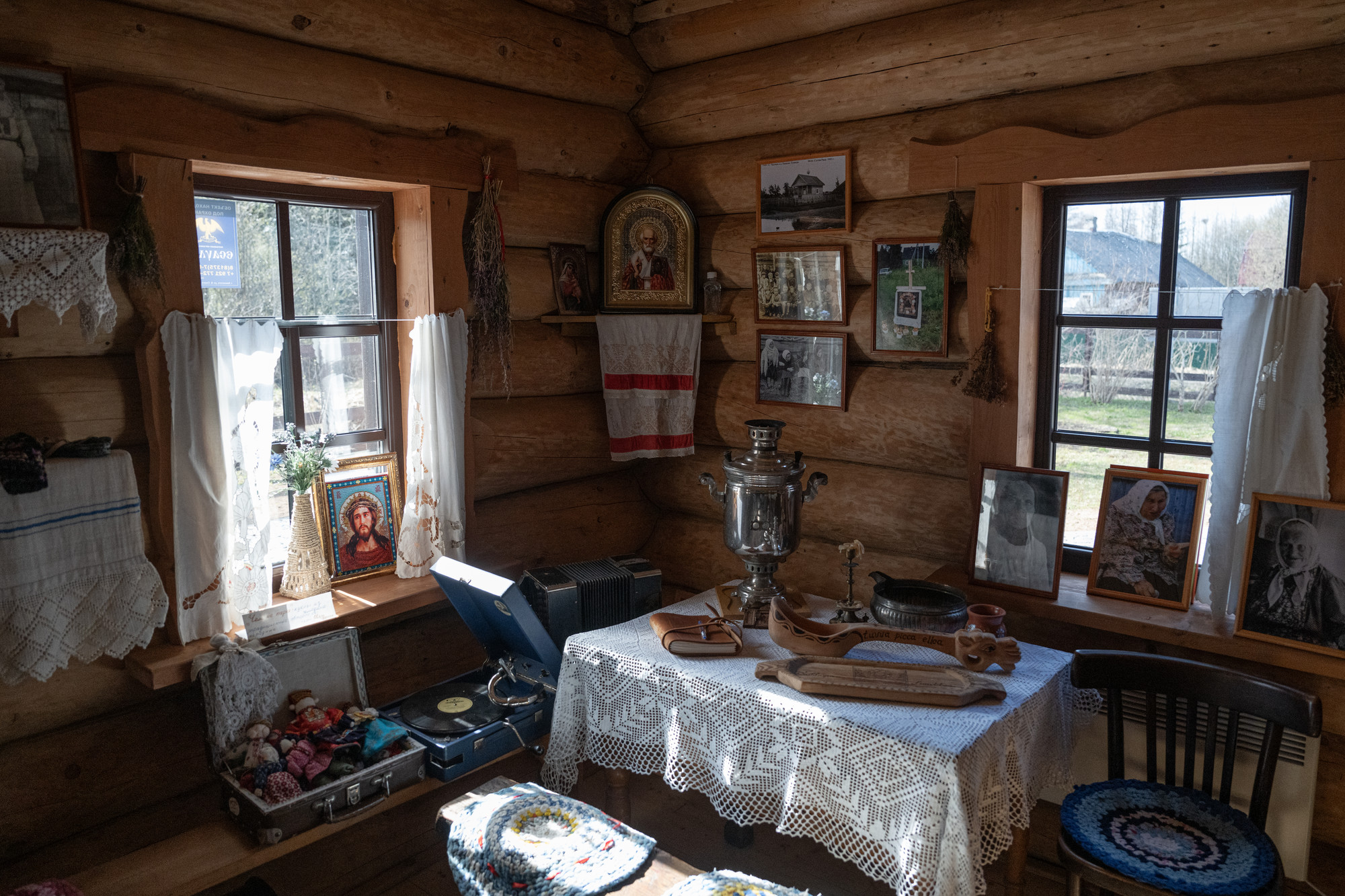
Marina Ilyina is bustling at the entrance - a fair-haired and stocky woman in an open down jacket, the curator of the Vody Museum, who worked for many years in the Ministry of Emergency Situations (she refused Bamaga an interview). She hosts repairmen and decides to give them a tour at the same time.
- Come on, come on, you should know who you will be doing the work for. Six people now speak the Votic language. Grandmothers and me,” she insists.
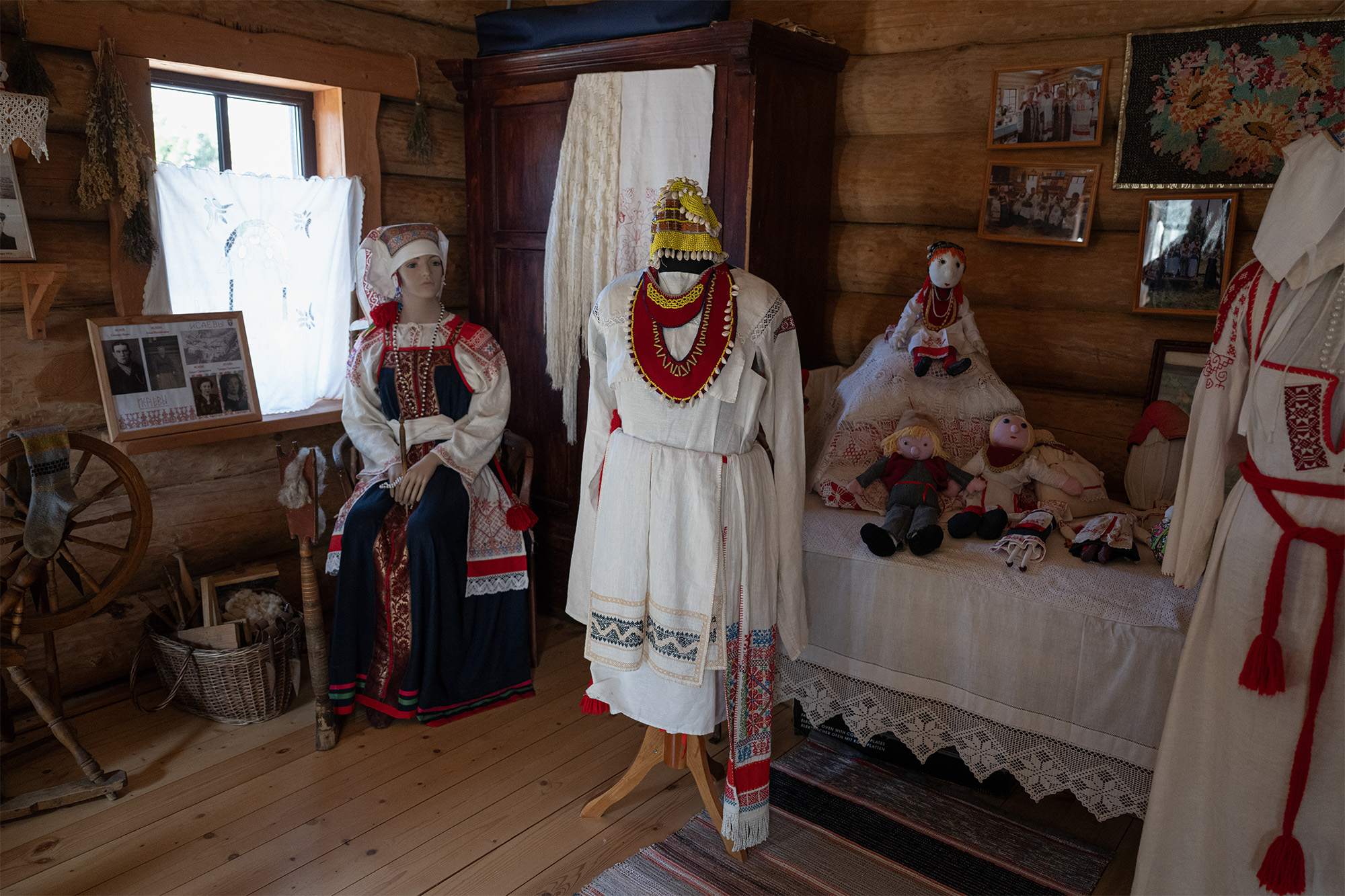
From the inside, the museum is designed like a lived-in Votic house. The exhibits were collected by the entire village: residents brought family artifacts, agricultural utensils and other household items. The main occupation of the Vod, like the Izhors, was fishing, and their favorite fish was the lamprey, which is found in the Luga River. In Votic cuisine there is even cabbage soup with fresh cabbage and lamprey.
— The national costume is decorated with cowrie shells - among the Finno-Ugric peoples they served as money. You could break off one shell and pay at the market. Shoes were worn with blunt toes so as not to injure the ground when walking. Decorations are required; they ring when you move. They believed that it scared away evil spirits,” Ilyina shows.
Each Votic clan has its own sign - “talomerka”, a symbol of belonging. Such signs are applied to some of the exhibits.
— Can I come to your events?
- No, they are now only for locals. Journalists and television are constantly contacting us, we are tired. Active popularization does nothing to preserve our people,” complains the museum curator, simultaneously talking about language courses for Votic grandmothers on Thursdays, about master classes on knitting mittens with national ornaments, and about festivals. — Physical security needs to be ensured. We need preferences [for small people]. This is how it works.
Leader Elena (name changed) agrees with her. Her father's family lived in Lusatia for several generations. In 1941, when Hitler’s troops occupied the area, my father was taken in by Germany’s ally, Finland, where he worked “for some masters.” After the leader returned to the USSR, he was considered unreliable and was deported to the Yaroslavl region for ten years. “They were repressed. They were checked,” says Elena. Already in the 1990s, scientists from Tallinn came to her father to study the Votic language and culture.
Elena herself was born in Lusatia, but now lives in the region only in the summer. According to her, only the elderly remain in the village permanently. For example, her 88-year-old neighbor with a disability speaks Votic, Finnish and Estonian.
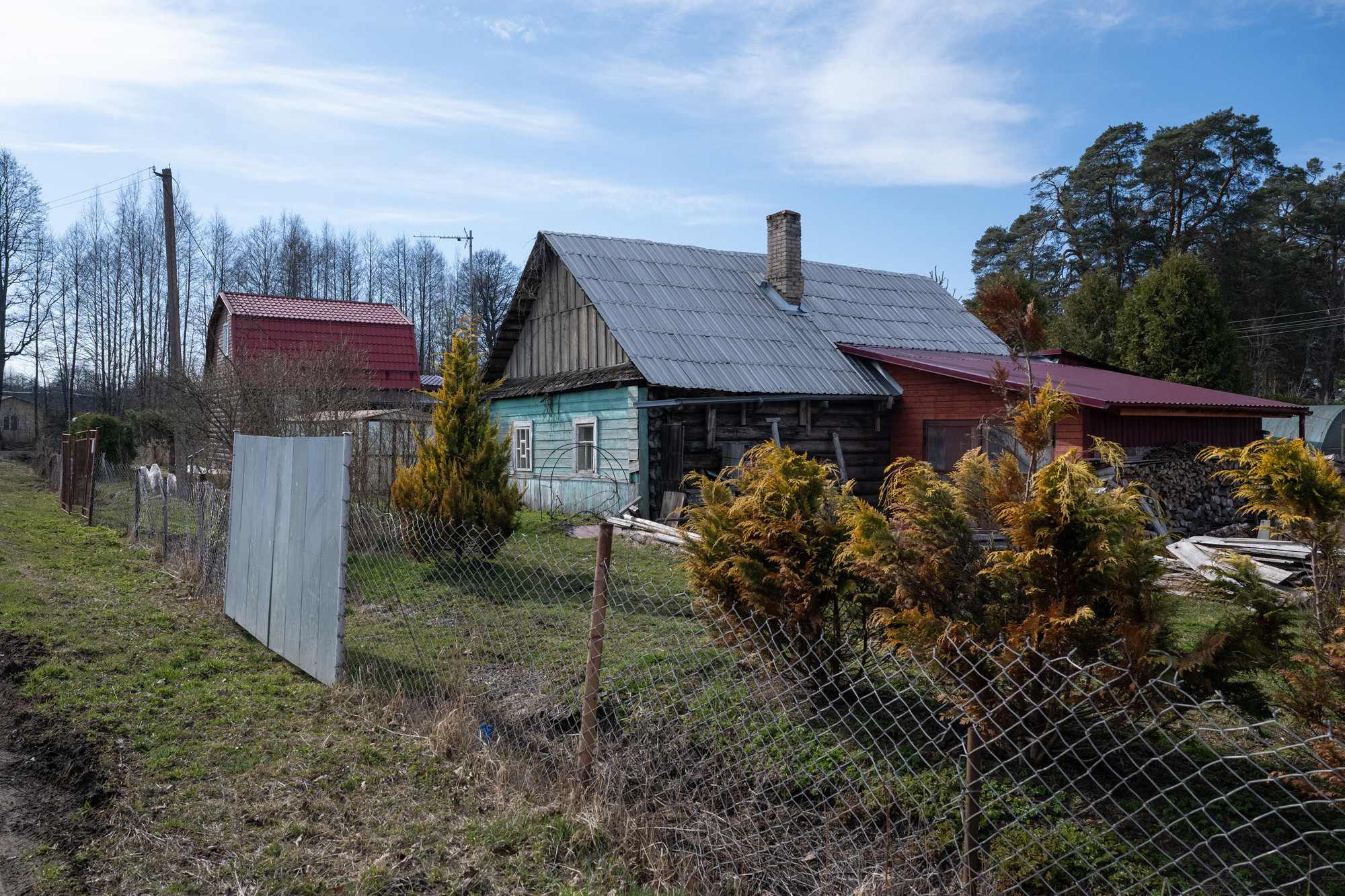
— Almost all our forests were cut down. Previously, you could go for mushrooms and berries - now this is not the case. The shift workers behave disgracefully, and they organize gatherings near the cemetery. They do not put their garbage in any bags. Gazprom is being built next to us, but we have no gas. Only imported. Basically, everything is heated with wood, which also needs to be purchased. We don't have drinking water. At all. We even wrote to Putin’s direct line so that the region would solve the problem. No washing, no drinking, no washing. I’m already 73 years old, we used to draw from wells, but now the water there is also unusable,” Elena complains.
When coal and chemicals are poured from wagons into the holds at the port, a suspension rises into the air. In winter, the snow becomes covered with black dust, and in summer, sulfur destroys the plantings.
— It is impossible to live permanently in Lusatia. We were thinking about selling the plot. But who will buy now? The port and industrial zone surrounded us on all sides. They're probably waiting for us to die out so they can build up the entire coastline. There is no one to cry for us. Now the Internet is being jammed, there’s nothing you can do about it,” says the leader. — The governor said that we are now a front-line zone. UAVs are flying. But it’s a shame to quit. My father was born there. And his parents lived there, and his brothers...
Port workers and residents of Ust-Luga. “We have a hole in the hole”
In the center of the village of Ust-Luga, whose name was given to the huge port, there is a children’s playground with swings and an installation with a lighthouse. While the children are playing, their fathers are sitting on the sidelines. The men glance towards the children, nibble sunflower seeds and drink beer. Some are squatting, others are located on wooden benches under a canopy.
— Do you have any monuments at all?
“They haven’t installed it yet,” one laughs.
“They’ll give it to us personally,” another interrupts him.
By the end of 2025, Ust-Luga and the surrounding area increased the population two and a half times - to almost 9 thousand people. Most likely, almost all the new residents are port workers. On one of the streets of the village, a modern Port residential complex with five-story buildings was built for them, but around it there are still stone houses and wooden huts. Almost all the people on the street are men in overalls with company logos. It seems as if there are ten workers for every local resident. Three years ago there were much fewer of them.
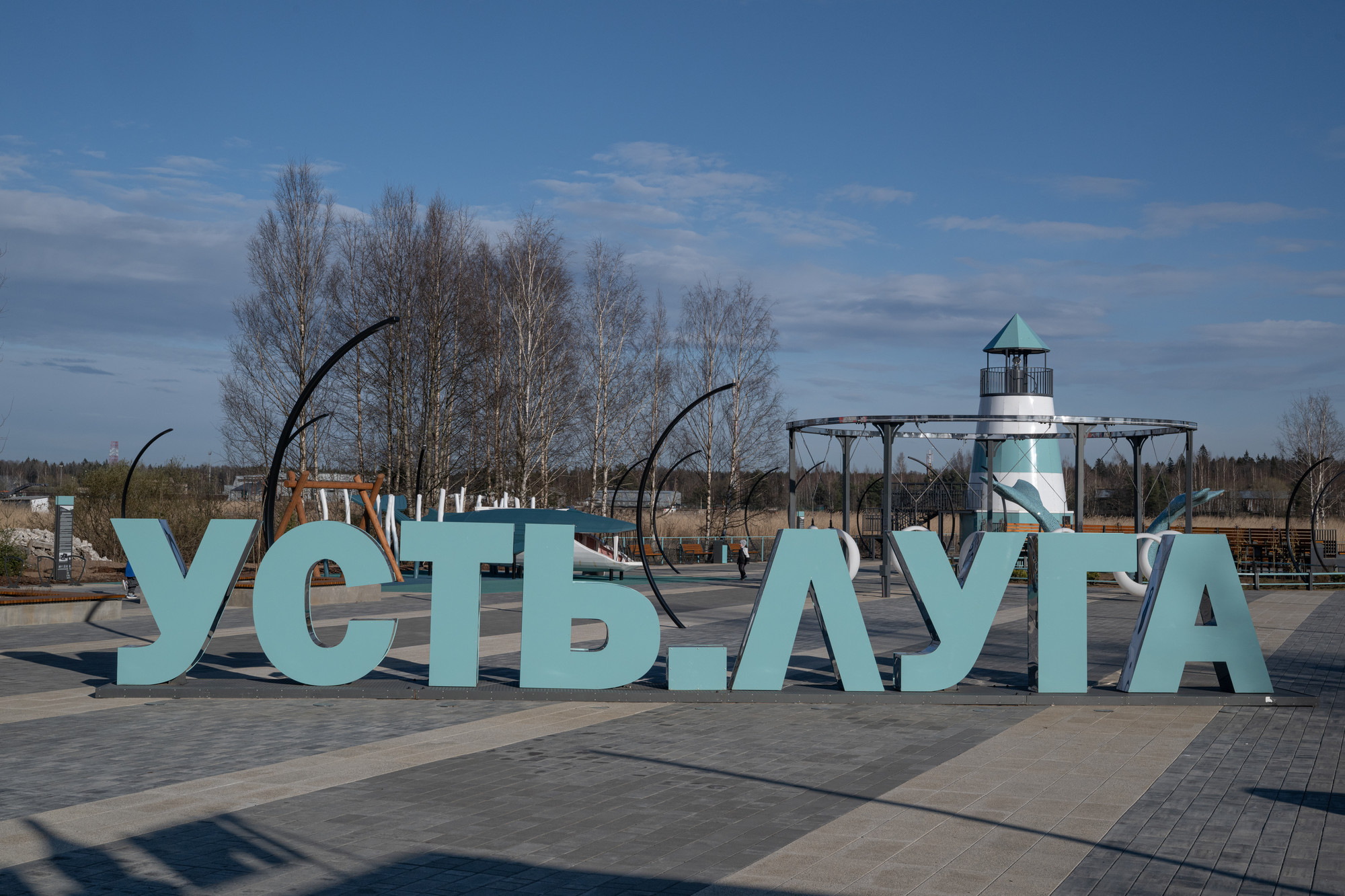
“I came to work, but there’s no Internet here,” the six-foot-tall port worker says indignantly while talking on the phone.
However, there are no more problems with mobile Internet in Ust-Luga than in St. Petersburg: during UAV attacks, usually only sites from the “white lists” are opened, the rest of the time - everything except blocked ones.
Shift workers often work in the port and at construction sites of enterprises. They come to Ust-Luga, the villages of Luzhitsy and Vistino from all over Russia, as well as from Belarus, India, and Central Asia. According to a man who worked there as a rotation worker at the beginning of the war, by 2023 the rules for evacuation in the event of attacks on Ust-Luga had already been worked out: there were collection points and drills were carried out.
“We almost didn’t interact with the locals,” says Paper’s interlocutor . — A resident worked at my site who remembered the situation before the large-scale construction. At the same time, she did not express negativity about the changes. There was no aggression from other locals either, but there was no close communication either. Everyone lived their own lives.
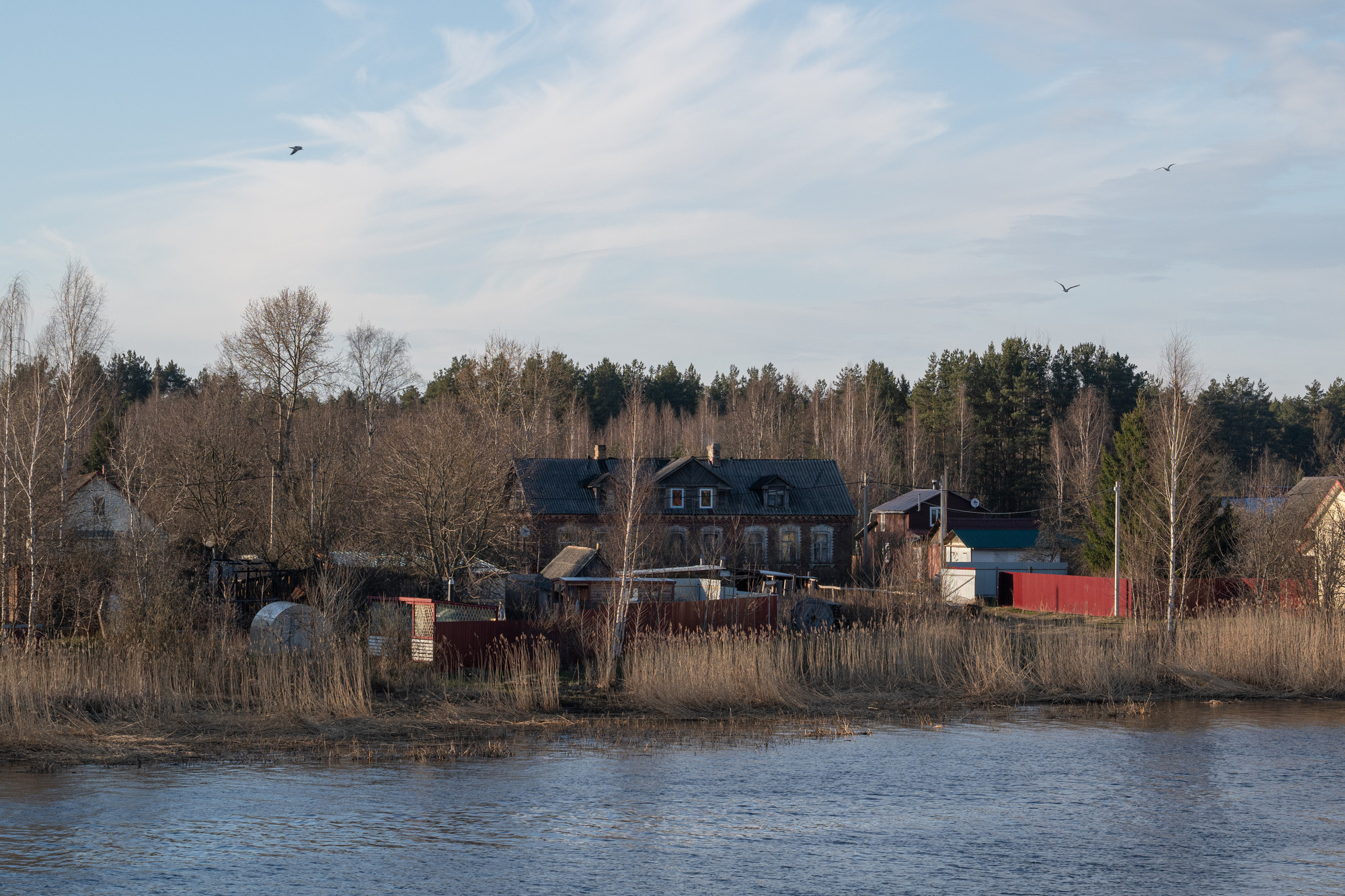
A smiling, short, middle-aged woman is busy in the garden near a brick two-story building in Ust-Luga.
“We have a hole,” the gardener responds. — Only port workers for every taste: Russians, Indians, and many others. All women also work either at the port or in shops.
After asking questions about the situation and recent UAV attacks, she looks at us with disbelief and begins to move towards the door.
— They’ve been bombing the port for two weeks, and they haven’t stopped (at the time of publication of the material, drone attacks have become less frequent - note from “ Papers ”) . But the port is far away. “We’re glad that we’re far away,” she still answers before entering the entrance. From here to the port is less than ten kilometers.
Environmentalists and volunteers. “We don’t know how much fuel oil is still in the water.”
The first UAV attacks on the Leningrad region were recorded at the beginning of 2024 - and the port near Ust-Luga immediately became the target. On the night of January 21, drones likely hit the Novatek chemical terminal. One of the gas tanks exploded. A fire started and the employees had to be evacuated. On August 24, 2025, the raid was repeated ; due to the debris of the drones, a fire broke out again at the Novatek terminal.
Until the spring of 2026, attacks were sporadic, until they sharply increased in frequency from March 25 to 31. During the week, Ukrainian UAVs hit the Ust-Luga port three times. After the attacks, a fire broke out, which temporarily slowed down the work and was extinguished for about a week - until April 3. According to satellite images and media sources , tanks with fuel oil and gas condensate were on fire, berths and oil tankers were damaged. The smog stretched for hundreds of kilometers - a dark haze was noticed both in the Estonian Narva and in St. Petersburg.
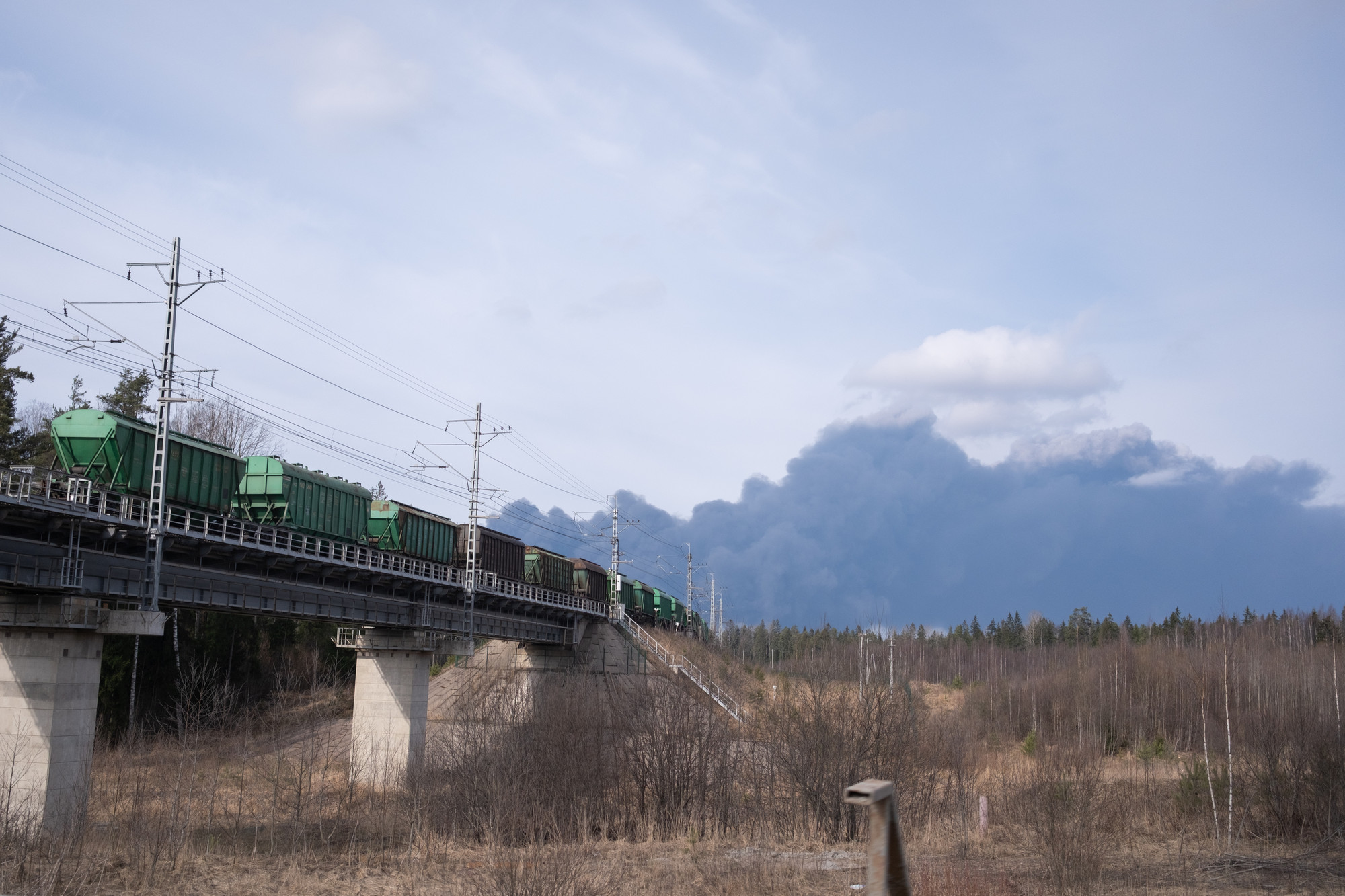
By April 1, on the shore of the Gulf of Finland, residents of Sosnovy Bor noticed a black mass and gray foam - 50 kilometers from the port. In response, the Environmental Control Committee considered the posted photographs to be “fake.”
After this, Sosnovy Bor deputy from the Communist Party of the Russian Federation Ivan Apostolevsky began inspecting the beaches and contacting the government of the Leningrad region: on his social networks he posted photographs of an oily film and dark spots that resembled tar and smelled of diesel fuel. By April 4, volunteers noticed pollution near the village of Logi, not far from Vistina; a week later, black oily inclusions were found on the shore of the Kurgalsky nature reserve - this is a protected area where rare birds nest and Baltic seals live. The reserve is the pride of the residents of Ust-Luga. If you ask any local about the sights, he will probably advise you to walk along eco-trails among wild forests and swamps, and then sit on the sandy shore of the bay.
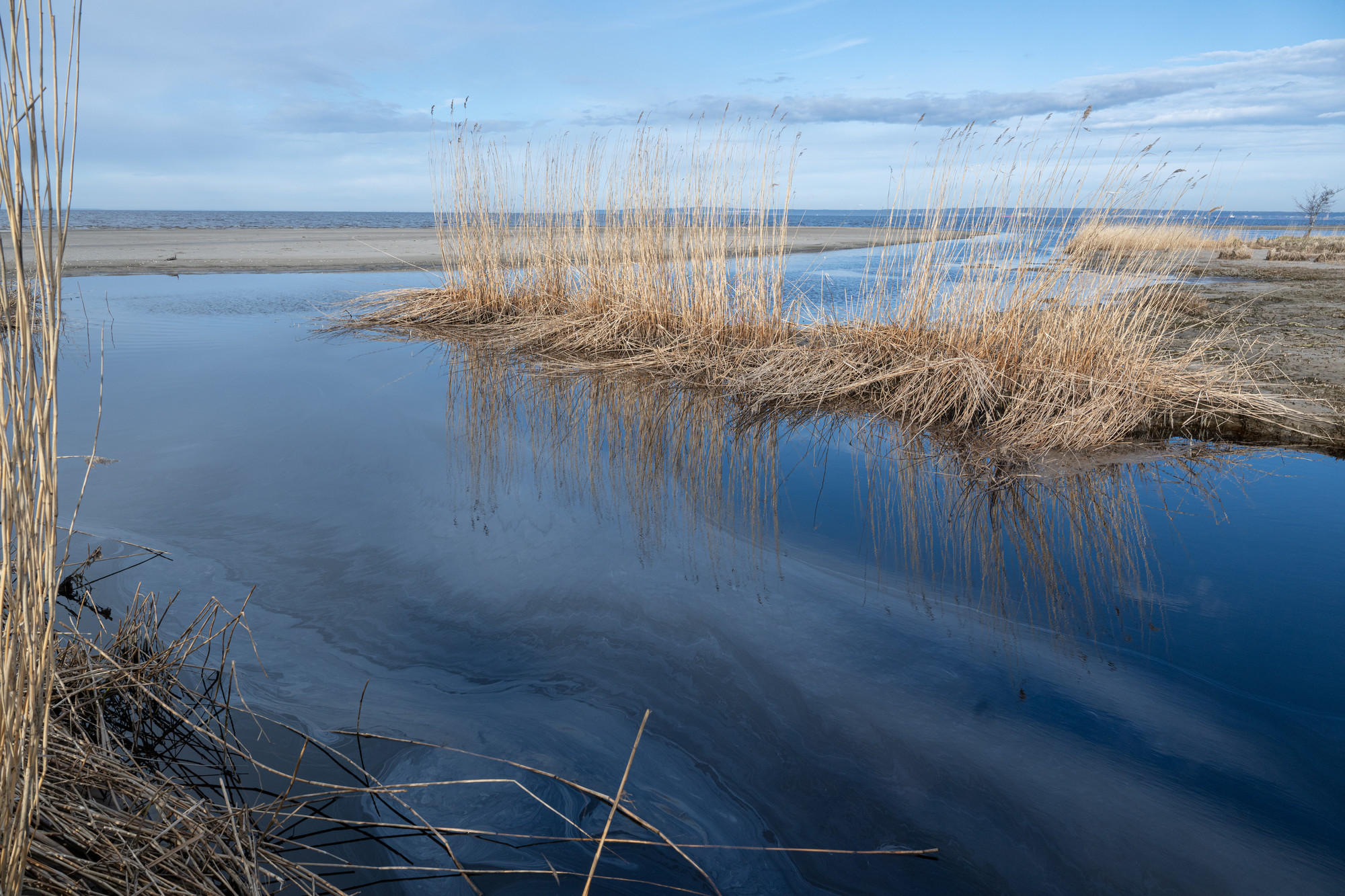
In the end, the governor of the Leningrad region, Alexander Drozdenko, acknowledged the release of oil products in Logi and the reserve, describing them as “ cow pats ” - according to him, officials of the Kingisepp district cleaned up the coast. True, clots of fuel oil are still found in the bay. They hide in reeds, envelop branches and lie among stones.
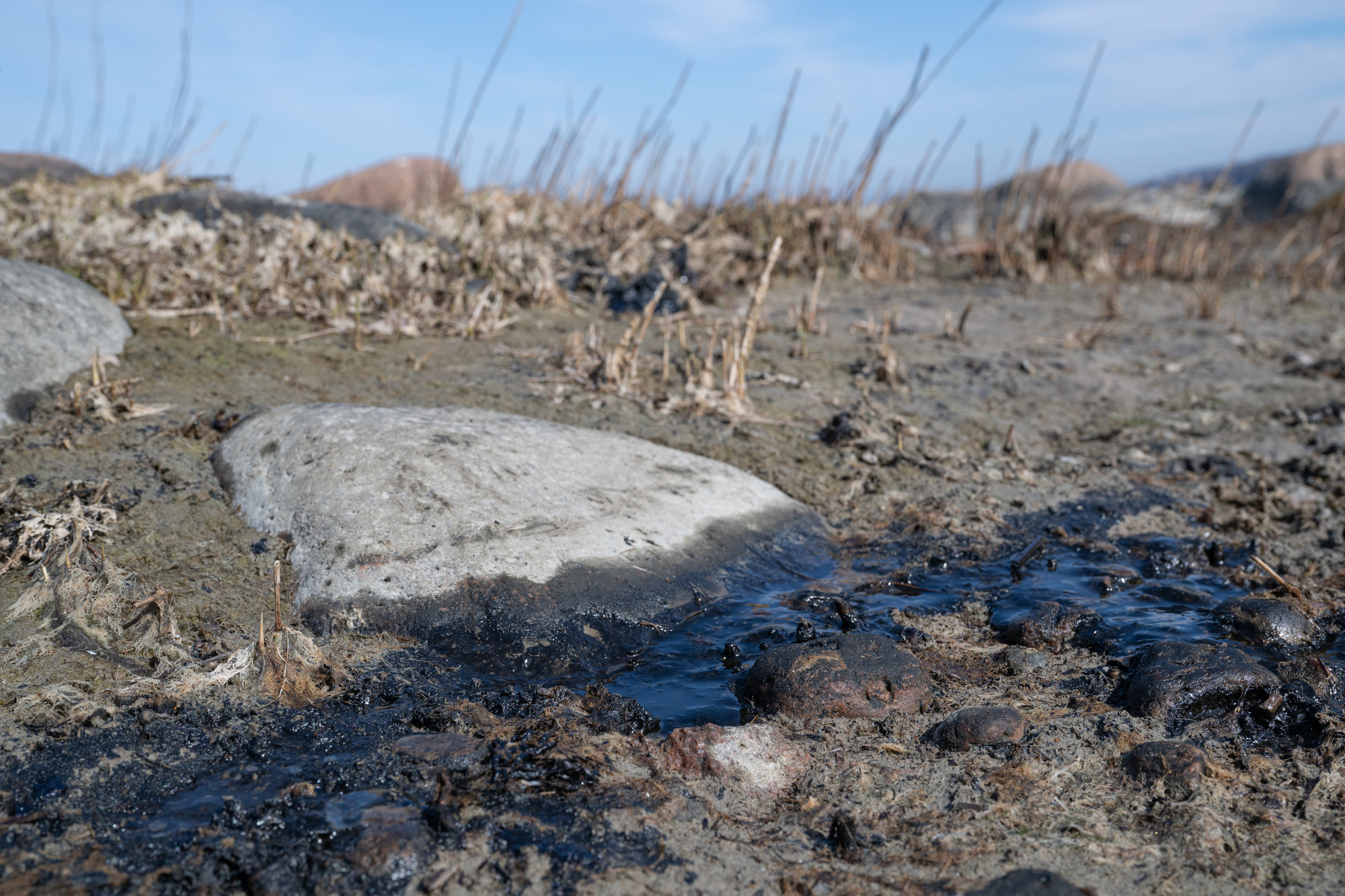
— Local residents, of course, are concerned about the state of the bay. And there is a reason: we don’t know how much fuel oil is still in the water. But in areas closer to the port, people are intimidated. At first, in response to photographs of the spill, they began to say that they were fakes and threatened with “competent authorities.” As a result, many are afraid to complain. Plus, in Ust-Luga there are many migrant workers, but few native workers. People actually live in an industrial zone,” says a volunteer who, together with environmental supervision, cleaned up oil products in the Kurgalsky nature reserve.
According to ecologist Igor Shkradyuk, the black substance will likely continue to float ashore. Heavy fractions of oil - fuel oil, tar, bitumen and oils - usually settle at the bottom, and storms can wash them ashore for weeks. Soot particles from the fire could be carried across the bay by the current, which is why the pollution could drift both towards Estonia and Finland, and towards St. Petersburg.
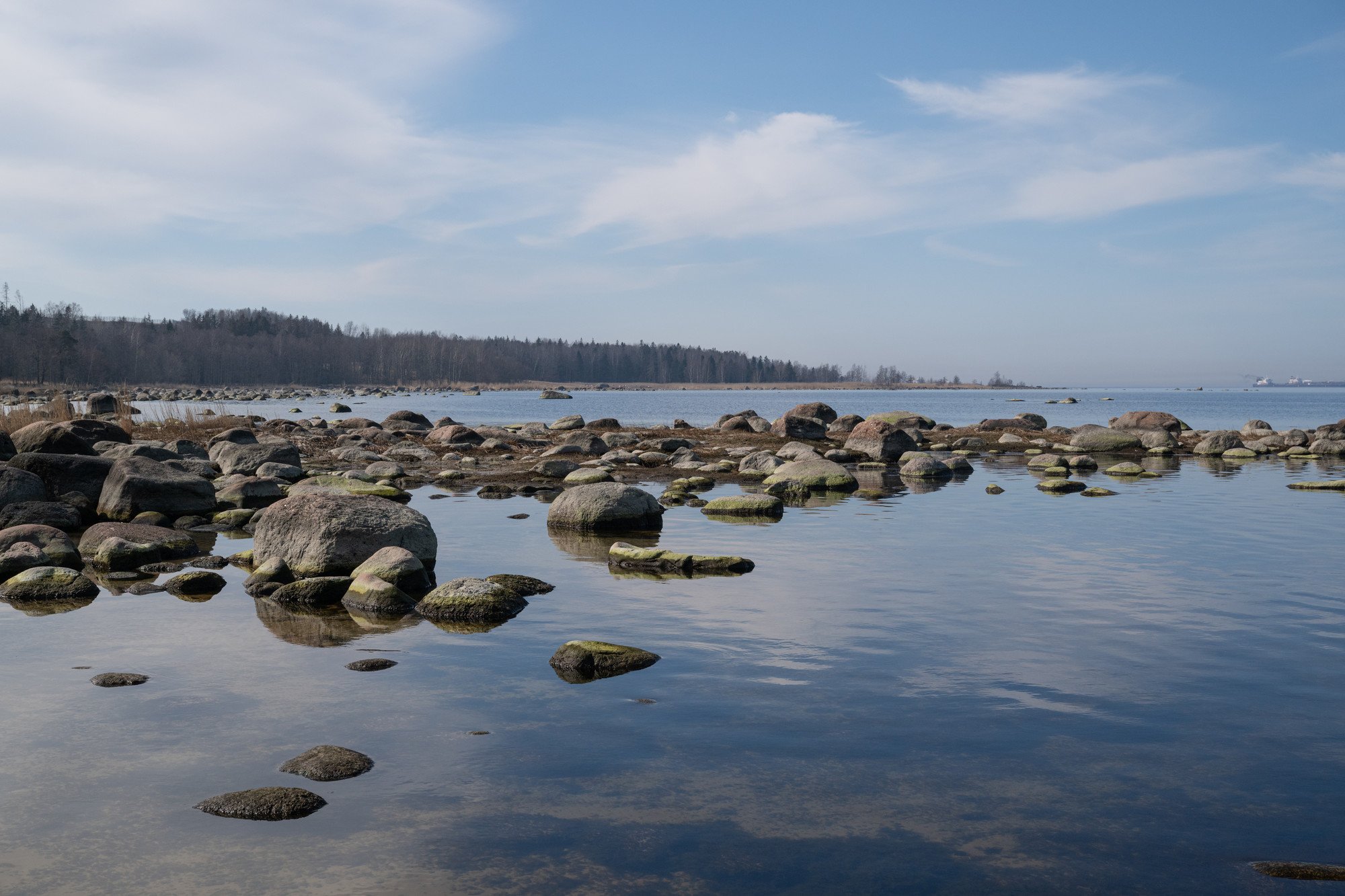
— Birds are the most vulnerable: the oil film disrupts the thermal insulation of the plumage, which can cause them to die. When birds try to clean their feathers with their beaks, they ingest oil, which leads to poisoning. Toxic components of oil dissolve in water, which can disrupt the development of eggs and larvae of smelt, salmon, and eel. It is dangerous for seals to get oil on their fur; trying to clean it can lead to death, says Igor Shkradyuk.
Due to shallow waters and poor water exchange with the Baltic Sea, the Gulf of Finland can self-clean for years, and on sandy beaches oil can be absorbed into the ground. Therefore, it is important to regularly walk around the coastline, remove oil products, and take samples of water and bottom sediments.
— In conditions of attacks and accumulation of 30-40 tankers of the “shadow fleet”, the risk of new fires and spills is high. However, none of the Russian government agencies publicly conducts full-fledged environmental monitoring with mandatory water and bottom samples in the Ust-Luga region, the ecologist complains.
Epilogue. "The Lord disposes"
A well-groomed elderly lady stops in the center of Ust-Luga; when asked for a conversation, she strictly introduces herself as a member of the local veterans’ council.
- They're shooting at us. The port suffers, the terminals suffer. We think that it is flying towards us from the Baltic states. They specifically target industrial infrastructure. They are afraid to hit the defense industry, because it can answer for itself,” she says.
The pro-Kremlin telegram channel Mash was the first to write about the opening of the skies by the Baltic countries to Ukrainian drones ; assumptions about the participation of Estonia, Lithuania, Latvia and Finland in the attacks were also expressed by officials, for example, Foreign Minister Sergei Lavrov and ex-Secretary of the Security Council, presidential aide Nikolai Patrushev . However, the Baltic countries themselves denied the accusations and stated that they did not allow Ukraine to use their airspace for UAV strikes.
A participant in the veterans' council says that in Ust-Luga itself it is relatively calm. Only “ once a drone hit the garage two years ago ” - the woman points to the damaged building. Nothing special. The damage has already been repaired.
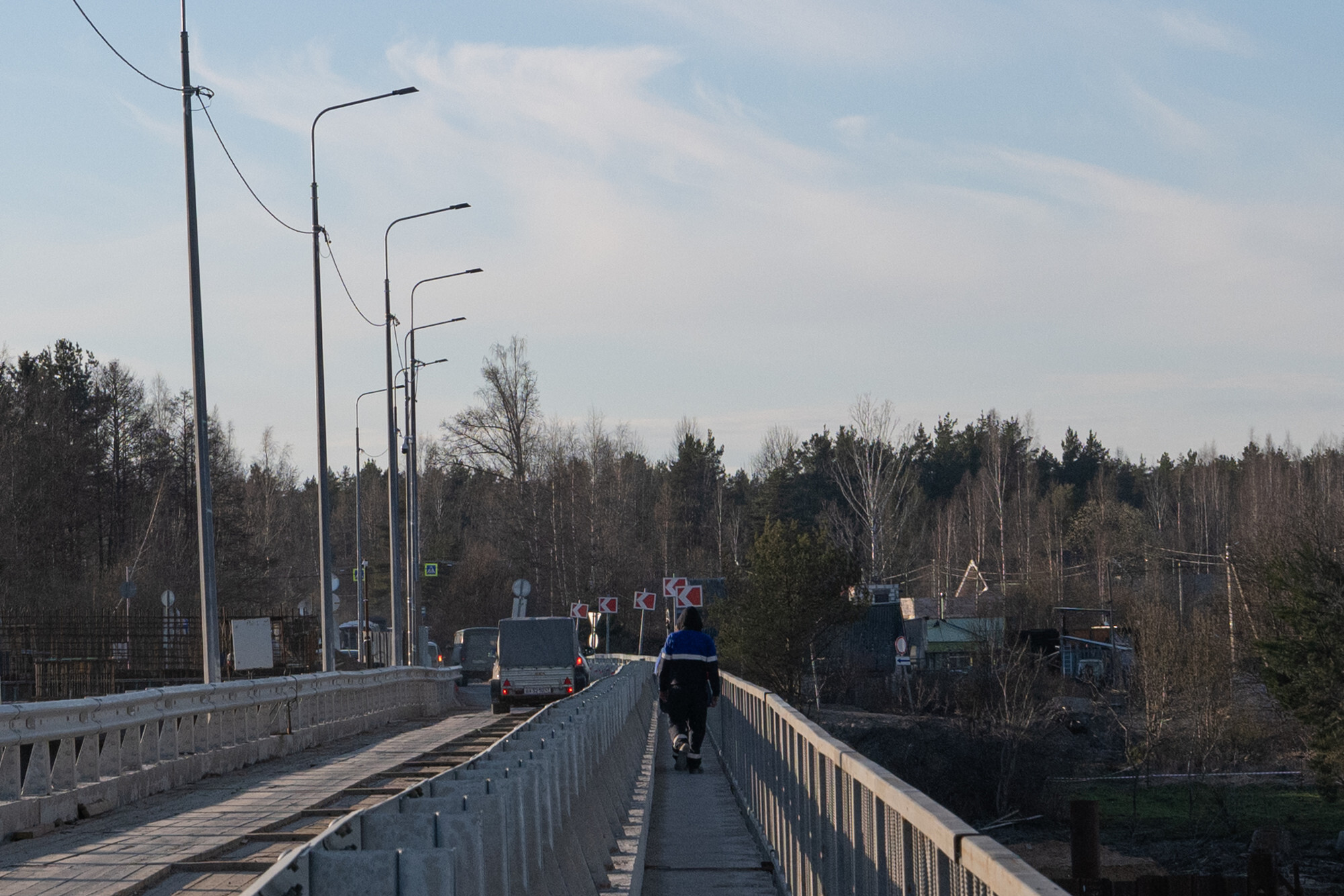
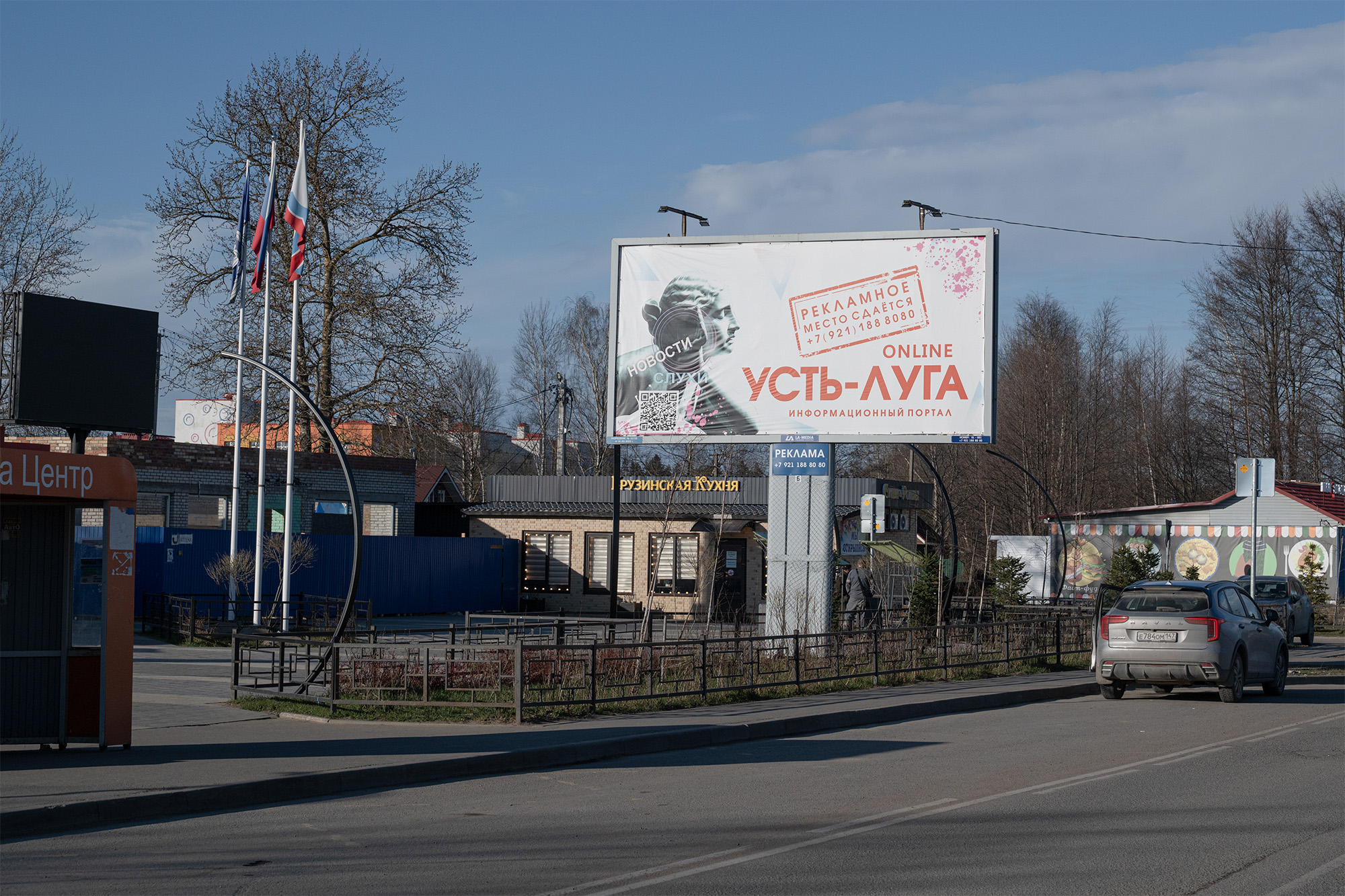
The port first took away the silence and the bay from the residents of the national villages, then the fisheries, fresh air and forest, and now drones are flying into it. But the Vozhans and Izhorians do not agree that without the industrial zone and new jobs, their villages would die out (like many others in Russia).
— People would buy houses because there are buildings that can be restored. And there are still territories that can be developed. It would be civilized. Previously, this was a resort place,” says leader Elena.
“We lived in a traditional way,” echoes Ekaterina Kuznetsova. — It would be possible to provide normal infrastructure, we are not far from St. Petersburg, 150 kilometers away. It was the authorities who began to say that they were developing a depressed region thanks to the port. On the contrary, the land is being transformed into a raw material appendage. There is nothing anymore. In the last swamps we raced with bears to collect berries. When they left the villages, they knocked on pots.
Izhora villages were only 10 kilometers from the port when oil products burned there during drone attacks. In those days, the sky on the Soykin Peninsula was covered with black clouds of smoke, which is why even in sunny weather it seemed like it was twilight in Vistina.
— There was a smell [of burning and gasoline]. But everyone was lucky that there was no precipitation and the bulk of the combustion products went into the clouds, stretching to St. Petersburg,” Andrey describes.
Now Andrey’s mother, a native Izhora, is thinking about moving. “ He says it was like they were under bombing there. But she wants it within the region, just away from such objects ,” the man adds.
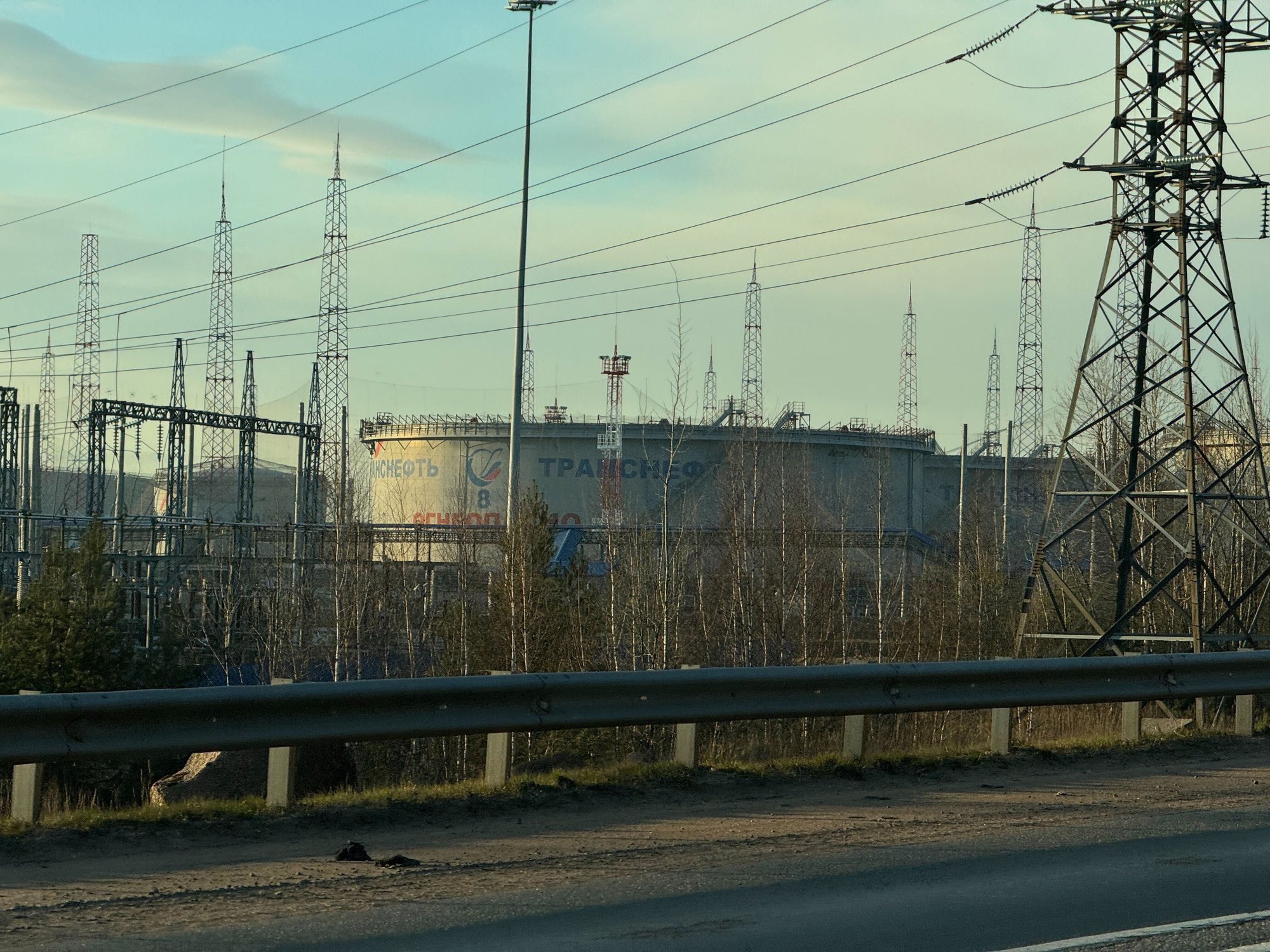
Vodian villages were even closer to the oil terminals.
“I called my neighbor, she says that the windows were rattling so much that the floorboards were moving around the house.” It’s creepy and scary, especially since she’s left there alone in the winter. The brick flies out of the stove. What will one woman do about this? No one around. They probably didn’t care about us in this regard,” says Elena from the village of Luzhitsy. She was in St. Petersburg during the attacks.
The leader sadly talks about how her children and grandchildren are afraid to go to Lusatia. But she herself cannot live without a village: she is cramped in the city, she can’t walk in the parks, and next to the vegetable garden and the Vodka grandmothers she is always on the move.
— Of course, drones are not aimed at our houses. But anything can happen. “I have a cellar,” Elena emphasizes, laughing for some reason. - We have to keep it open. As soon as you hear something, it’s better to immediately [go underground]...
The pensioner has already prepared seedlings and flowers, she will soon take them to Lusatia - she wants to “ arrange beauty ” :
- The Lord disposes. As it will be, so it will be, there are no alternatives. I can't help but come there. Of course, you can run. But where should the majority go? I never imagined that war would return to our generation. Nobody expected it. Even one resident from our village died in the Northern Military District. And now it’s even worse.
How to survive difficult times? Together 💪
Support our work - and we will help you look for solutions where it seems there are none
What else to read:
- “We said that we were a vodka, but they answered us that there was no vodka anymore.” Member of the PACE platform Ekaterina Kuznetsova - about the struggle for recognition of her people and the split among the Ingrians
- “We were branded as separatists”: why Ingrian Finns and regionalists from “Free Ingria” are not the same people.