
Translated material
Sarov: how is the most closed city in Russia changing?
For some, Sarov is associated with the Soviet nuclear project, for others - with the monastery of Seraphim of Sarov. But there are people for whom Sarov is simply a favorite city that they want to do better. And while the authorities are busy developing virtual tourism, they are implementing real projects that they and other citizens need. In the closed and ideologically divided Sarov, how is a new generation of residents trying to restore its integrity and living urban environment? “In the Woods” and the media “ Field of Vision ” are told in a joint text.
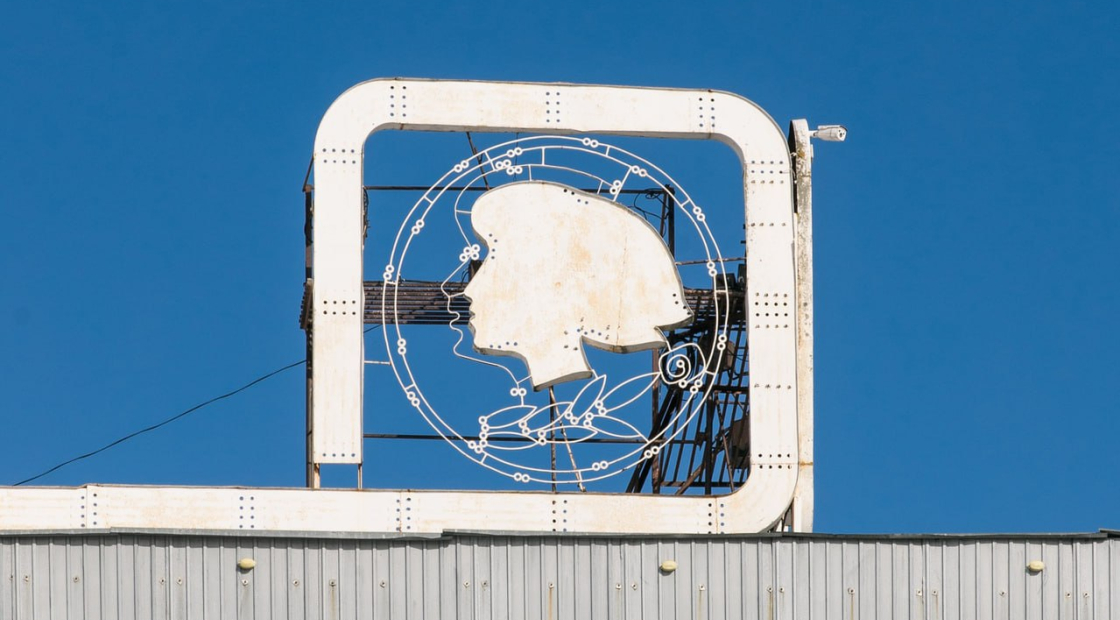
Part of the sign on the House of Youth, which was under threat of destruction © Sarov_walks
Sarov in the Nizhny Novgorod region is unique: the only one of all closed cities, it was built near the walls of an ancient monastery - in the place of life and veneration of St. Seraphim of Sarov. In 1946, the former monastery was surrounded by barbed wire and turned into a top-secret facility where scientists were to create an atomic bomb.
As soon as the decree on the creation of a nuclear center was issued, work began to boil in Sarov - the small village had to be turned into a science city with all the necessary infrastructure in record time. There was no time to build from scratch, so the design bureau occupied the workshops of the existing plant No. 550, and the administrative building of the enterprise, known as the “Red House”, took over one of the former pilgrimage hotels.
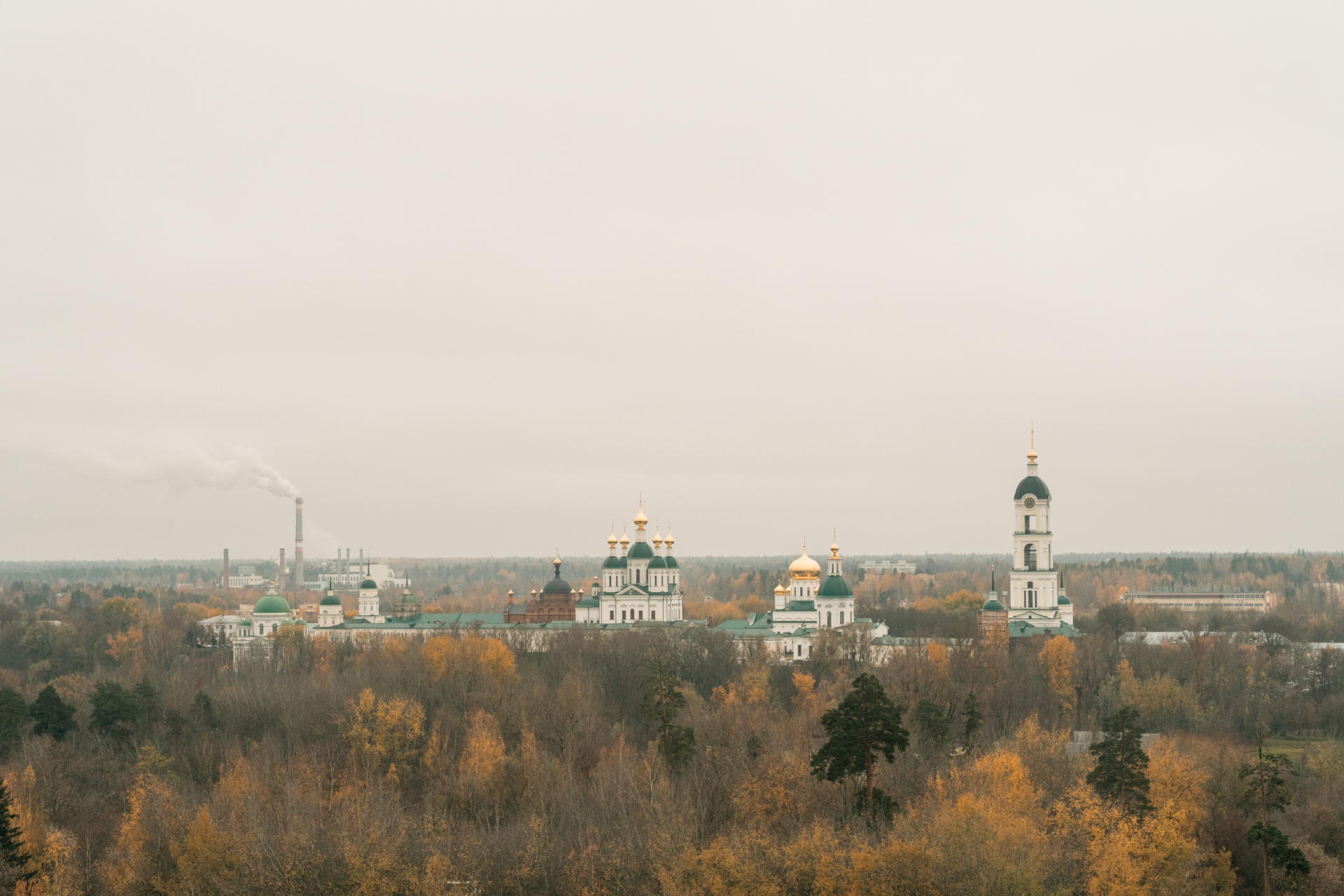
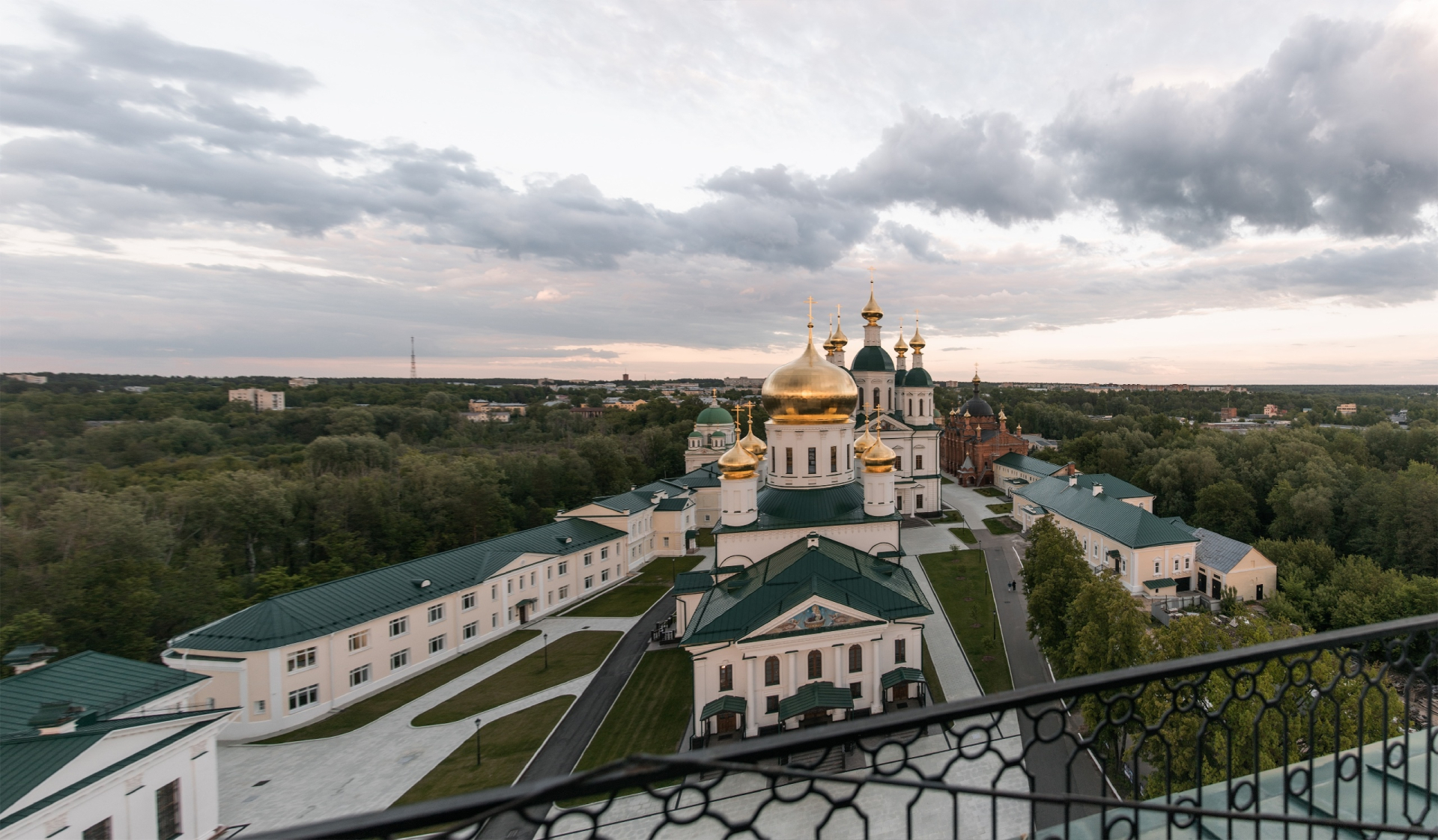
View of the Holy Dormition Sarov Hermitage © Daria Latysheva
Other monastery buildings were gradually adapted for “secular” needs: a museum, prosecutor’s office, art workshops and offices moved into outbuildings. A theater was located in the Church of Seraphim of Sarov, the bell tower became a television tower, and a public garden was built on the site of the demolished churches, in the center of the monastery square.
The revival of the monastery, which began after the collapse of the USSR, proceeded gradually. In 1992, the first priest arrived in the city, five years later bells were installed on the belfry, and five years later, the theater moved out of the Church of St. Seraphim of Sarov. They began to restore the domes and paint the iconostases. And on the 300th anniversary of the desert in 2006, the resumption of monastic life was announced. At the same time, many “secular” institutions continued to work within the walls of the monastery, and they still ate ice cream in the park between the churches.
Everything changed in 2018. Then a pilgrimage and tourism cluster was created, uniting Sarov, the nearby village of Diveevo with a convent and the ancient city of Arzamas. The project, blessed personally by Putin and Patriarch Kirill, received multibillion-dollar budgets - and the pace of restoration of the Sarov Desert has increased noticeably. In eight years, the blown-up Assumption Cathedral was rebuilt from scratch, cells, former hotels for pilgrims and churches “beheaded” during the Soviet years were restored.
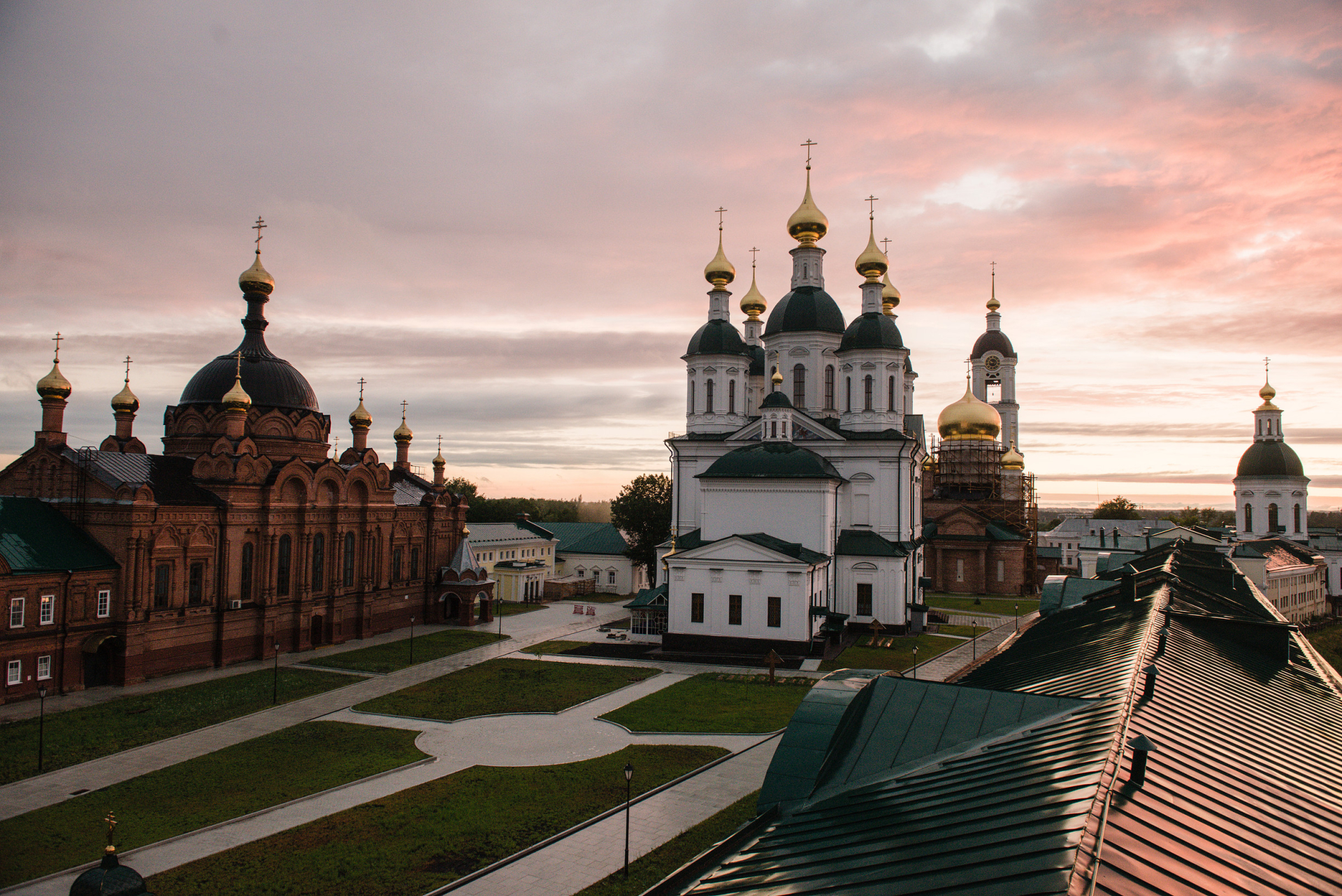
Monastery Square during renovation. On the left is the Church of Seraphim of Sarov, where there was a theater, in the center is the Assumption Cathedral © architects.rf
The perimeter of the monastery was surrounded by a wall and blocked off to car traffic. And the square was replaced by an area with a lawn, where there is no place even to read a book - benches are not provided in the new landscaping. Almost all civil services have left the territory of the monastery, some of them - museums, the prosecutor's office, the building of the nuclear center - continue to work in the monastery buildings behind the wall. Most recently, a children's clinic left the territory. In the summer, on the site of its demolished building in 1961, work began on recreating the historical building of the baths - it will house an Orthodox cultural center.
“The monastery stands apart, and now the gates are closed at night. Something is clearly not working correctly here. Historical city centers should come to life from such improvement projects, and not freeze, says architect-urbanist Alexander Ablesimov.
He, however, notices that there are slightly more people in the monastery square than a couple of years ago. People still go through the monastery to work. Some people listen to the service from speakers along the way, some visit churches, others ride past on a bicycle. There are many church-going Sarovites, and on holidays the area is especially in demand. The monastery is first shown to a few guests of the city - mostly business travelers, adds photographer Daria Latysheva. She had never seen an actual tourist or pilgrimage group.
— Sarov is the most closed of all the closed cities; it is the most difficult to get here. I have lived here for 11 years and all this time I have been hearing that buses are about to come here. But no one is coming. And for some reason it seems to me that this will not change for another ten years. Perhaps the restoration of the monastery is a foundation for the future, but the authorities are not keeping the townspeople informed.
© Daria Latysheva
In recent years, the discussion about the opening of the city has completely died down: after all, the main institution of Sarov is the Institute of Nuclear Physics. At a recent meeting with journalists, Metropolitan Georgy of Nizhny Novgorod and Arzamas confirmed that for security reasons the shrine is not yet planned to be opened for free visits by pilgrims: “Sarov is working very hard on various technologies, and in this sense the diocese supports the state.”
So those who wish can only admire the monastery ensemble on a virtual tour . All this clearly does not correspond to the level of ambitions declared on the official website of the seraphim.rf cluster: they call Sarov “the basis and starting point” of the project and report that almost two million people visited the objects in a year. How many of them are in the “nuclear” city is not specified.
It turned out that they “invested seriously in the monastery,” comments Alexander, but for the rest of the city, joining the tourist cluster is “neither hot nor cold.” Tourists and pilgrims never came here, and restoration work bypassed even some of the former monastic buildings - let alone other city monuments.
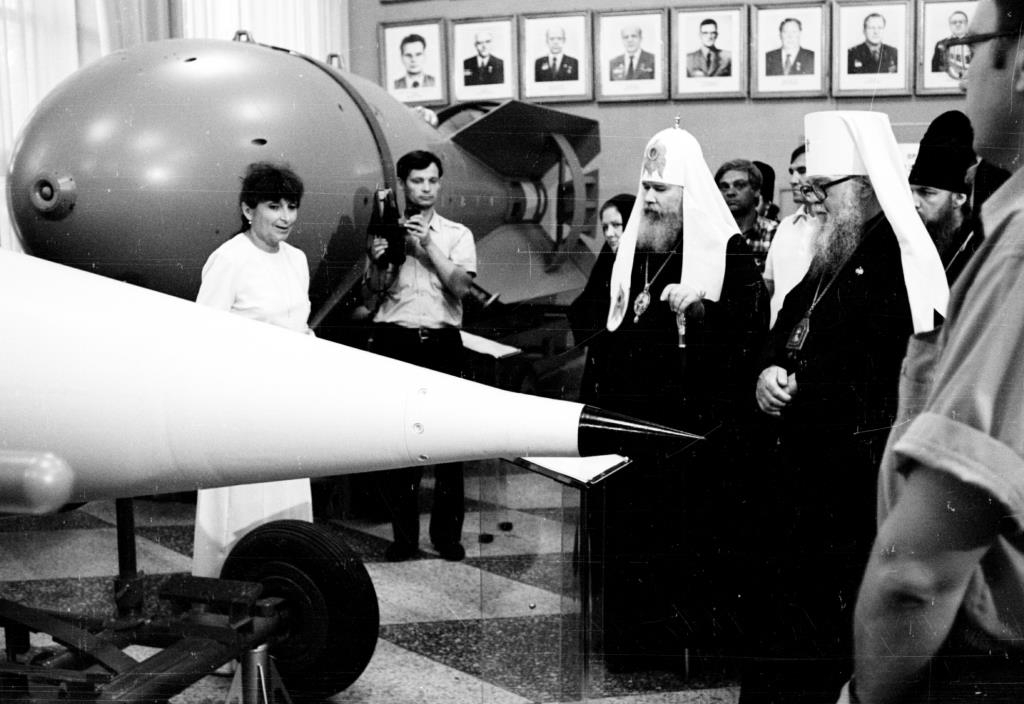
Patriarch Alexy II and Metropolitan Nicholas of Nizhny Novgorod and Arzamas at the nuclear weapons museum in Sarov, 1991 © Blagovest Info
Through the eyes of an urbanist
Sarov's heritage is significant and varied. In addition to the monastery, there is a medieval Mordovian settlement, the outlines of which can still be discerned in the landscape, and fragments of buildings from the early 19th century, and architecture of the Soviet period: wooden cottages and apartment buildings for scientists, ceremonial Stalinist ensembles and the modernist microdistricts that replaced them. Alexander Ablesimov talks about all this on walks.
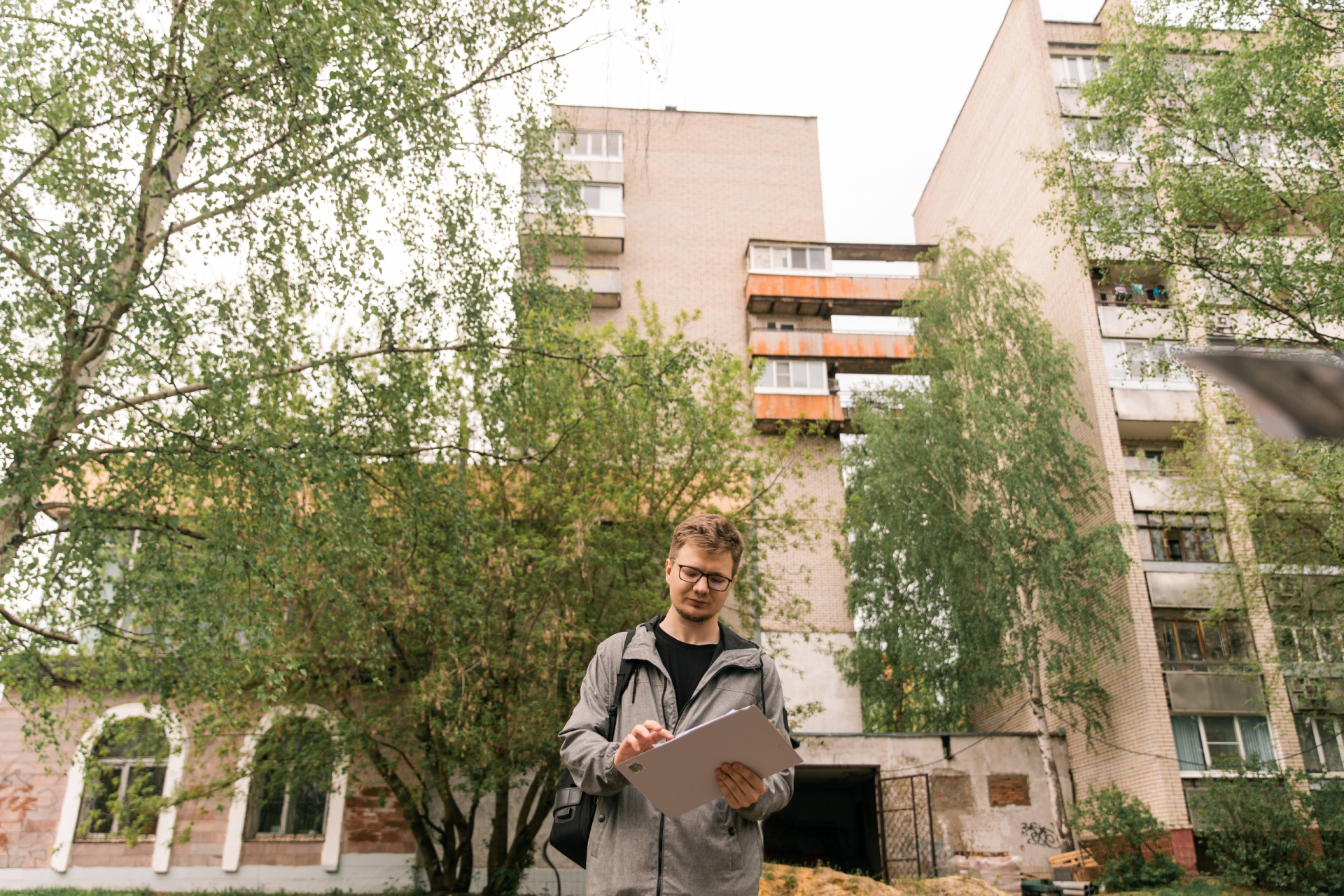
Alexander on one of his excursions © Sarov_walks
He became interested in the history of his native city during his student years, while studying at the Faculty of Architecture. Then I looked at Sarov with “new eyes”, began to read articles by local historians and predecessors, and research archival documents and plans. In the midst of the coronavirus year 2020, I created a series of posts with a tour and posted it on my page. Then I thought it was for non-Sarov friends and acquaintances, but local public pages started reposting the route, and Alexander realized: the most interesting thing about all this is the Sarov residents themselves. Two years of research and thought - and in May 2022 he took his first walk around the city.
Now Alexander conducts excursions regularly, during the warm season. To do this, he comes on weekends from Nizhny Novgorod, where he now lives and works at the Institute for Urban Environment Development. In the winter months he is engaged in the “theoretical part”: he writes on the blog “ Sarov Walks ”, plans new routes.
“I would like as many people as possible to see the beauty in familiar places and to appreciate more the heritage that they have,” says the guide.
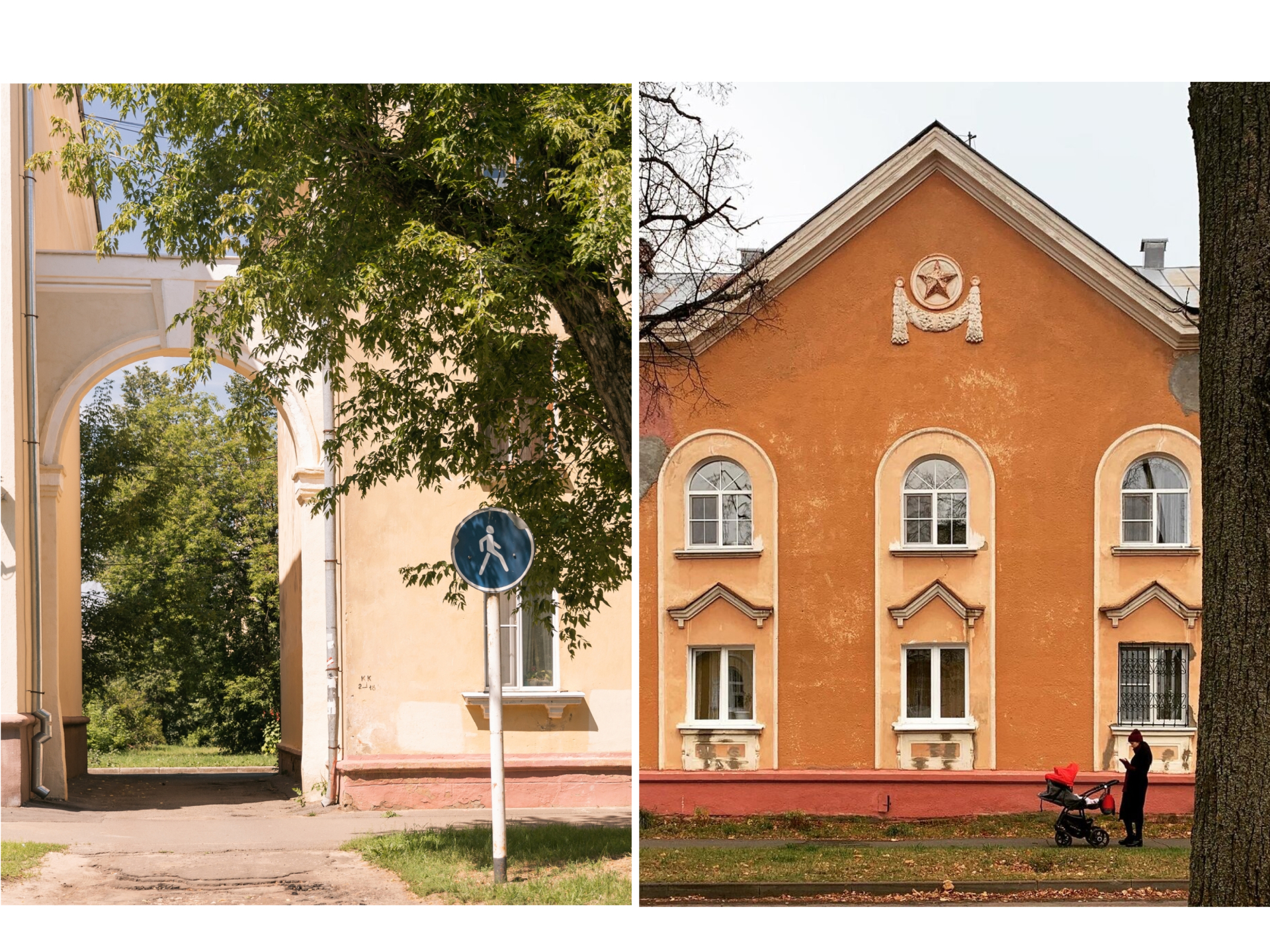
Development of Sarov in the 1950s © Daria Latysheva, Sarov_walks
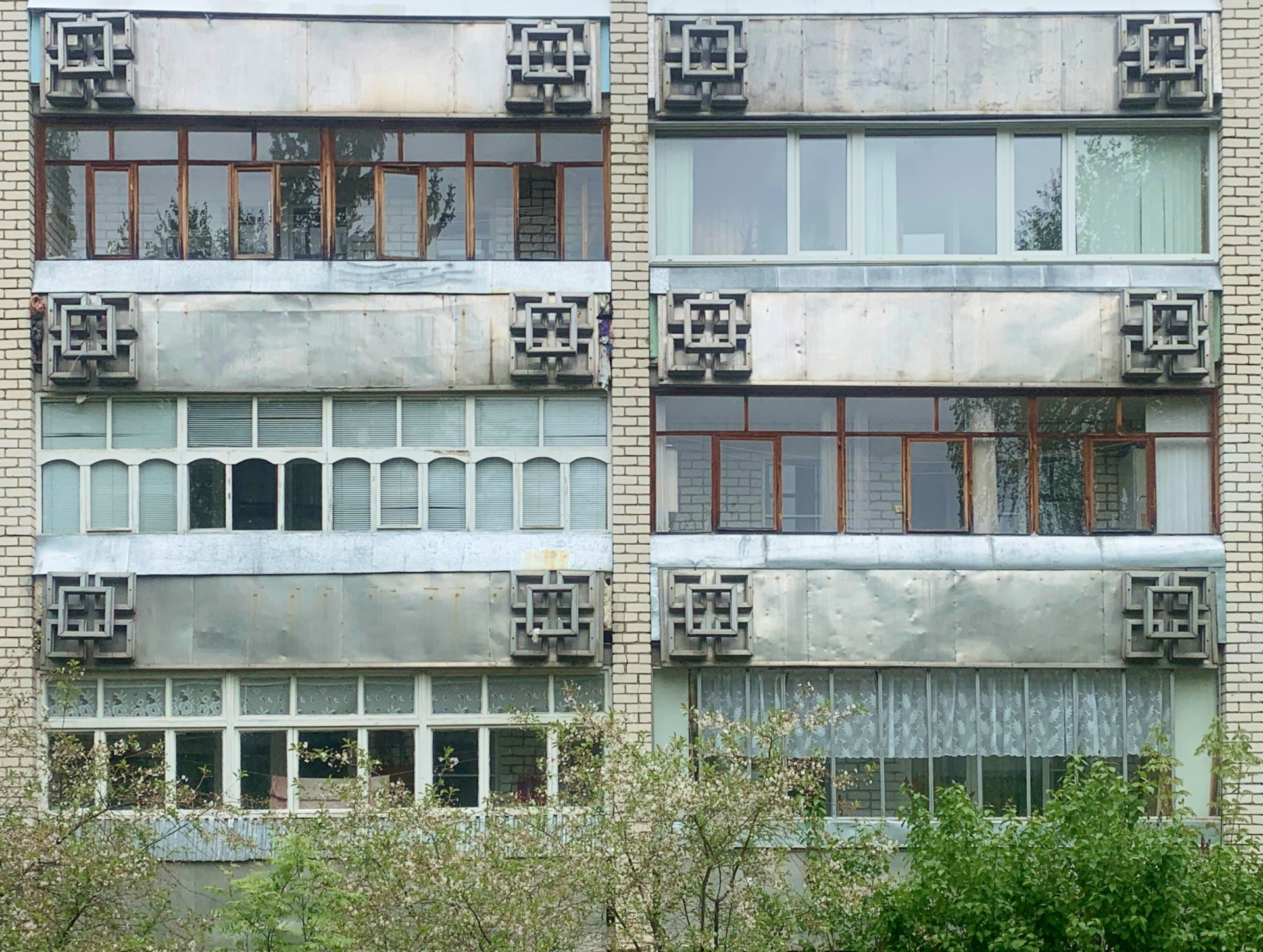
Alexander tries to show that even standard high-rise buildings can be worthy of attention. Over the course of three years, he managed to convince many of this, “from schoolchildren to pensioners.” But the majority of townspeople still do not see the value in anything outside the monastery wall, especially in the Soviet Union, the architect admits with regret.
— For those who saw the city being built, the legacy of the 1940s is rubble, and the legacy of the 1980s is still new buildings. They have a very everyday view of all this architecture,” explains Alexander. “I think the problem is that only the younger generation can truly grasp its value.” We feel that all this is already history, we have respect for it. I would like to see someone from the gray house on Lenin Square [the city administration] on my walks - maybe I could open someone’s eyes.
© Sarov_walks
In the meantime, Sarov continues to lose its heritage. There is no city protection movement here, there are very few monuments with status: a monastery, its outbuildings and several pre-revolutionary hotels for pilgrims. The only Soviet building on this list is the house where the leaders of the nuclear project lived with their families. But it burned down in the early 2000s and remains in ruins. Preserving buildings through commercialization is also not an option for Sarov. This historical building in an open city can be converted into a hotel or souvenir shop, but in the closed city there is no one to do this for.
There is only one memorial museum of the scientist in the city - Yuli Khariton. It is located in a village surrounded by forest for engineering and technical workers and is supported by enthusiasts. On the building next door, where physicist, human rights activist and dissident Andrei Sakharov lived, there is only a sign; it does not guarantee any protection. The village's wooden cottages are now being actively rebuilt, and apartment buildings are awaiting renovation. On New Year's Eve it became known that a 14-story building would appear in the center of the “garden city.”
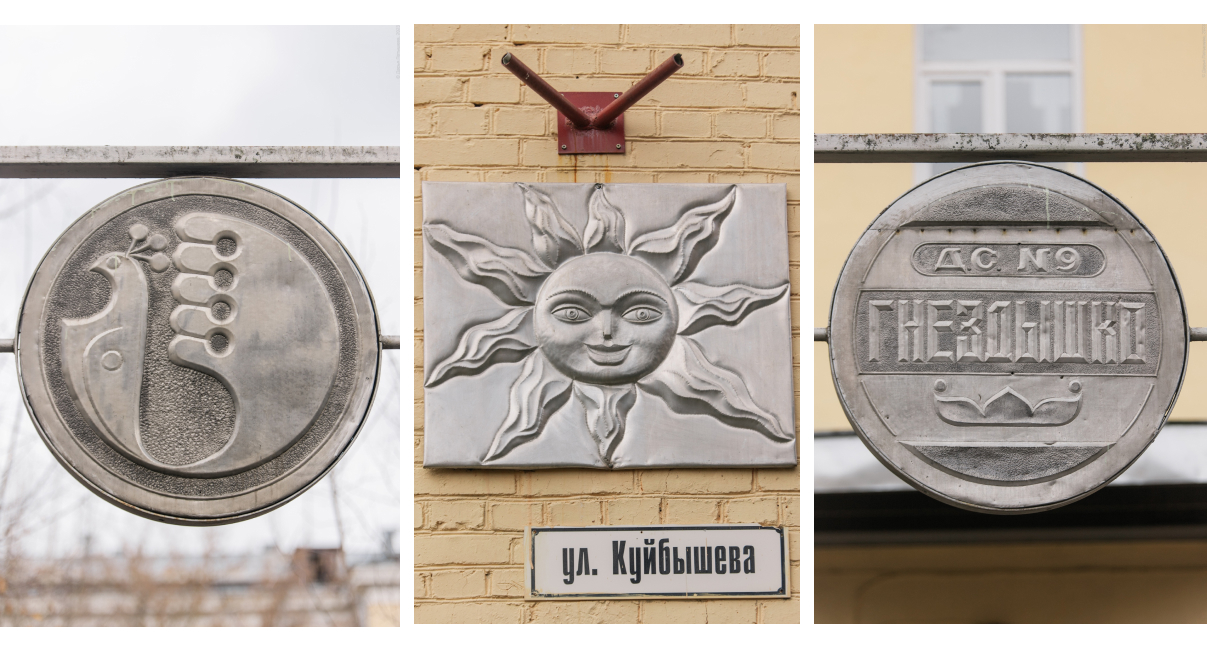
Embossed tablets © Daria Latysheva
“Just last year, the first kindergarten was demolished and the old registry office building was rebuilt,” says Alexander. — The remains of the Novofinsky village, which was built in the 1940s according to German and Finnish projects received as reparations after the victory in the Great Patriotic War, are being cleared for new buildings. Perhaps we will soon lose the usual appearance of the Youth House... I am very sorry that signs and embossing are disappearing from the facades of shops and public buildings, because in principle there are few of them left and because it cost almost nothing to preserve them.
But the main loss, the urbanist believes, is Mira Avenue.
The smallest Stalinka
When Sarov turned into a secret science city in 1946, it was Mira Avenue that became its main artery. Stretching across the monastery square, it connected the historical part of the city with the new one. Along the avenue, the Borovoy settlement was built - the first non-wooden district of the city with two-story houses in the Stalinist Empire style. New public buildings appeared: a clinic, a library, the main post office and the CPSU city hall with a mosaic coat of arms on the pediment.
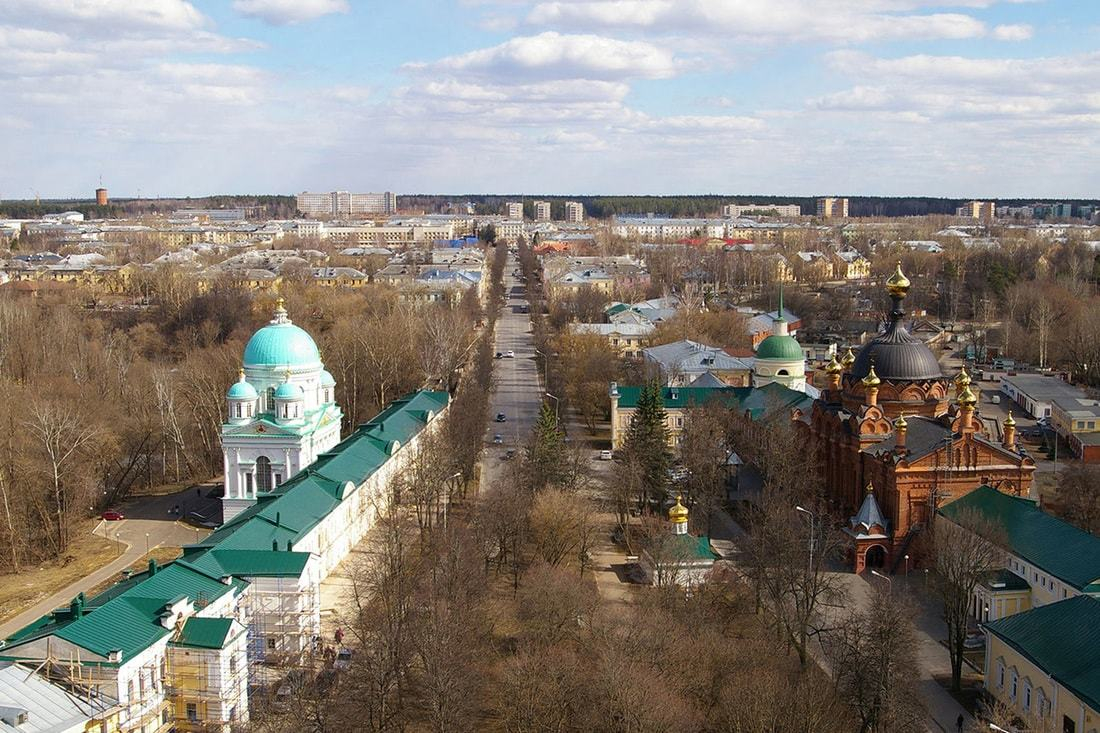
With the revival of the monastery, the avenue began to lose its significance. The culmination was the cutting down of the park and the restriction of through traffic through the monastery. Sarov residents chose the street for walks less and less, and shops gradually moved out.
- This has become a dead end for the World. Active public life on the avenue ceased. People continue to walk along it to work, but it’s completely different,” says Sarov resident Maria Zimina, founder of the Mera Makers bureau.
She wanted to draw attention to Mira Avenue and see if “tactical urbanism” could be used to breathe new life into the space. In 2022, together with Alexander Ablesimov and artist Ekaterina Ryblova, as well as her husband and colleague Alexei Merkushev, she came up with the “Museum of Place” project, timed to coincide with the May “Night of Museums” event: bright cardboard booths, similar to beach cabanas, rose along the avenue.
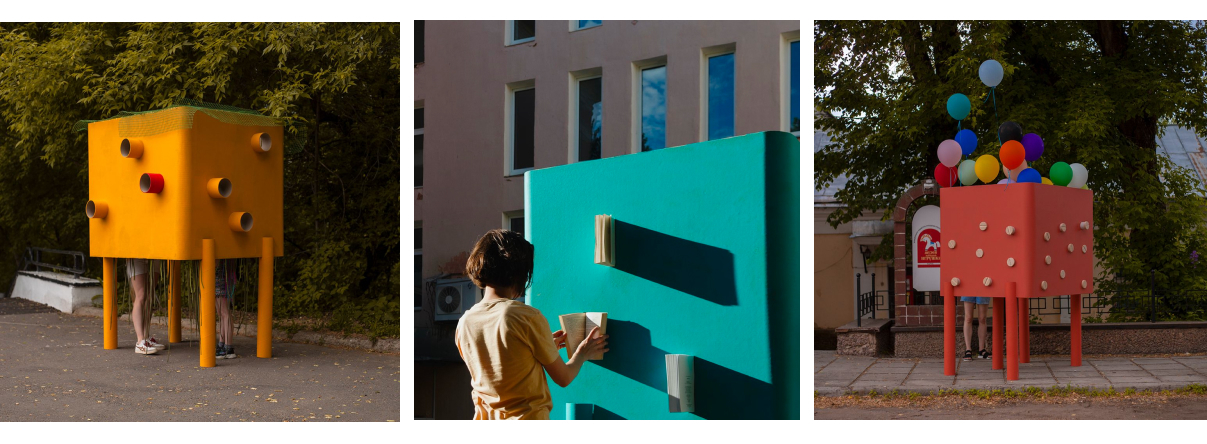
Booths of the “Museum of Place” project © mera makers
Each booth was connected to one of the institutions located on the street. For example, in a booth near the library, Sarov residents could tell fortunes on books, at the art gallery they could weave a “city carpet” from threads, and at the administration they could leave a wish for the city. Part of the project included a workshop for children and an excursion about the evolution of Mira Avenue, led by Alexander - this was his first walk.
Hundreds of citizens took part in the action, says Maria. And they all interacted with the booths in different ways: some followed the “prescribed” scenarios, while others came up with their own. Success left the organizers no choice: they wanted to continue experimenting.
In the summer, the booths were moved to the park, and in the fall, the designers dismantled them and built a sofa out of the tubes. It was installed on the Zalivny Meadow adjacent to the avenue, where previously there were monastery gardens, and in Soviet times they played football and burned an effigy on Maslenitsa.
In the makeshift “living room” people listened to a lecture about the history of the place, talked about the city and drank coffee brewed on camp gas stoves.
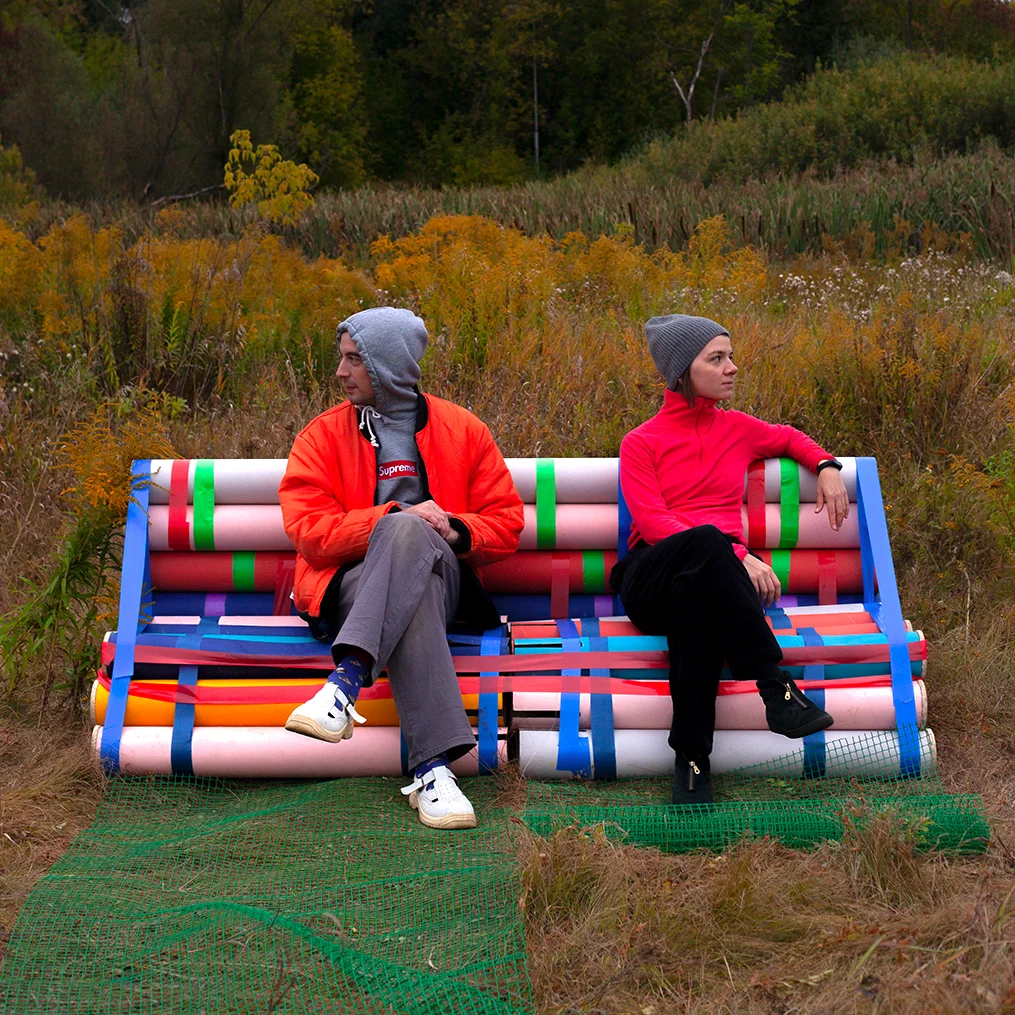
Alexey Merkushev and Maria Zimina on the sofa in the meadow living room © mera makers
Maria says that initially there was no goal to gather the community. The driving force was personal curiosity—after studying in St. Petersburg, she was interested in working in her hometown and “unlocking its potential.”
“You live here and, it turns out, you do it for yourself.” Sarov is as comfortable as possible for our activities. It’s like a residence, where you are focused on business, you don’t have distractions, like in a big city, where there’s a lot of information noise. This atmosphere has remained here since the scientists arrived here.
The space that the mera makers designers first made into their workshop also did not last long as a purely working space. Maria and Alexey chose an unusual room - a basement in a former stable building from the early 19th century on Mira Avenue. We were attracted by the vaulted ceilings, antique tiles on the floor and the imprint of a horseshoe above the door. And it was in this building that Maria’s grandmother, who came with her family to Sarov in 1948, first lived.
Almost immediately after the renovation, the workshop held an apartment show, then an exhibition. Today, “The Vaults,” as they are called in the city, have a constant program of events: a children’s architecture club, master classes, watercolor sketching. Some announcements are no longer even published - places are scattered among the regulars.
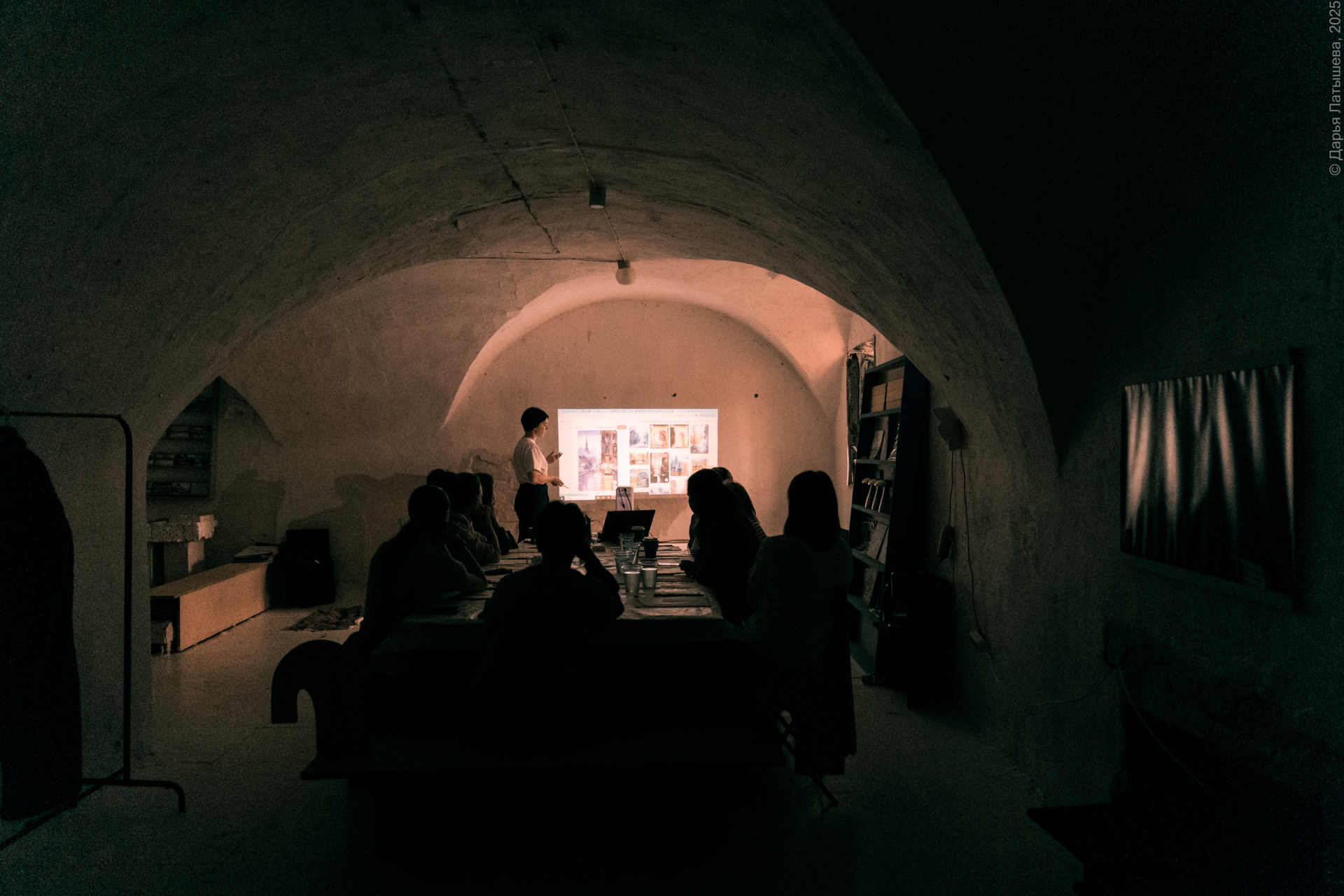
Watercolor sketching in “Vaults” © Daria Latysheva
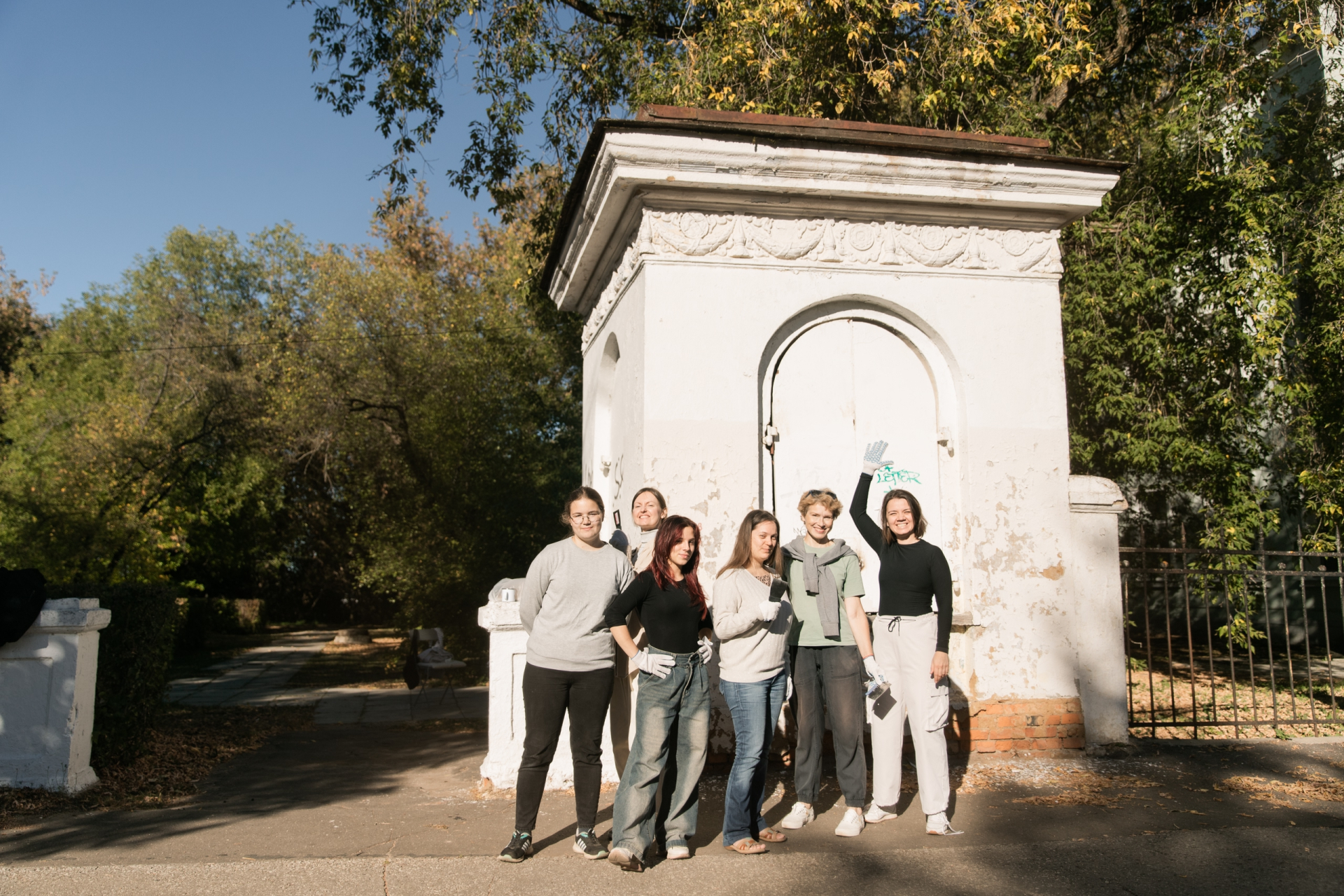
The designers didn’t stop there - they began to take a closer look at the building opposite the workshop, which was nicknamed “Sarov’s smallest Stalinist building.” In fact, this is the Slovo pavilion from 1954, where newspapers were sold. Several similar kiosks used to be located on Lenin Square, but only one survived. For many years it stood abandoned, collapsing before our eyes, then it was bought by the founders of Mera Makers.
The building, although unique for the city, is not a cultural heritage site, Maria notes. It was not necessary to carry out restoration, but she and her husband became interested in trying their hand at a new business.
“Everything that could be saved was preserved.” We restored the stucco and original standing seam roofing. Today no one makes this anymore, everyone puts metal tiles, but we managed to find a master - one of the few remaining. We also kept the windows with wooden frames and metal shutters and did not replace them with double-glazed windows. Of course, in winter this makes itself felt, but everything is done for the sake of beauty and the preservation of history, so this does not bother me at all.
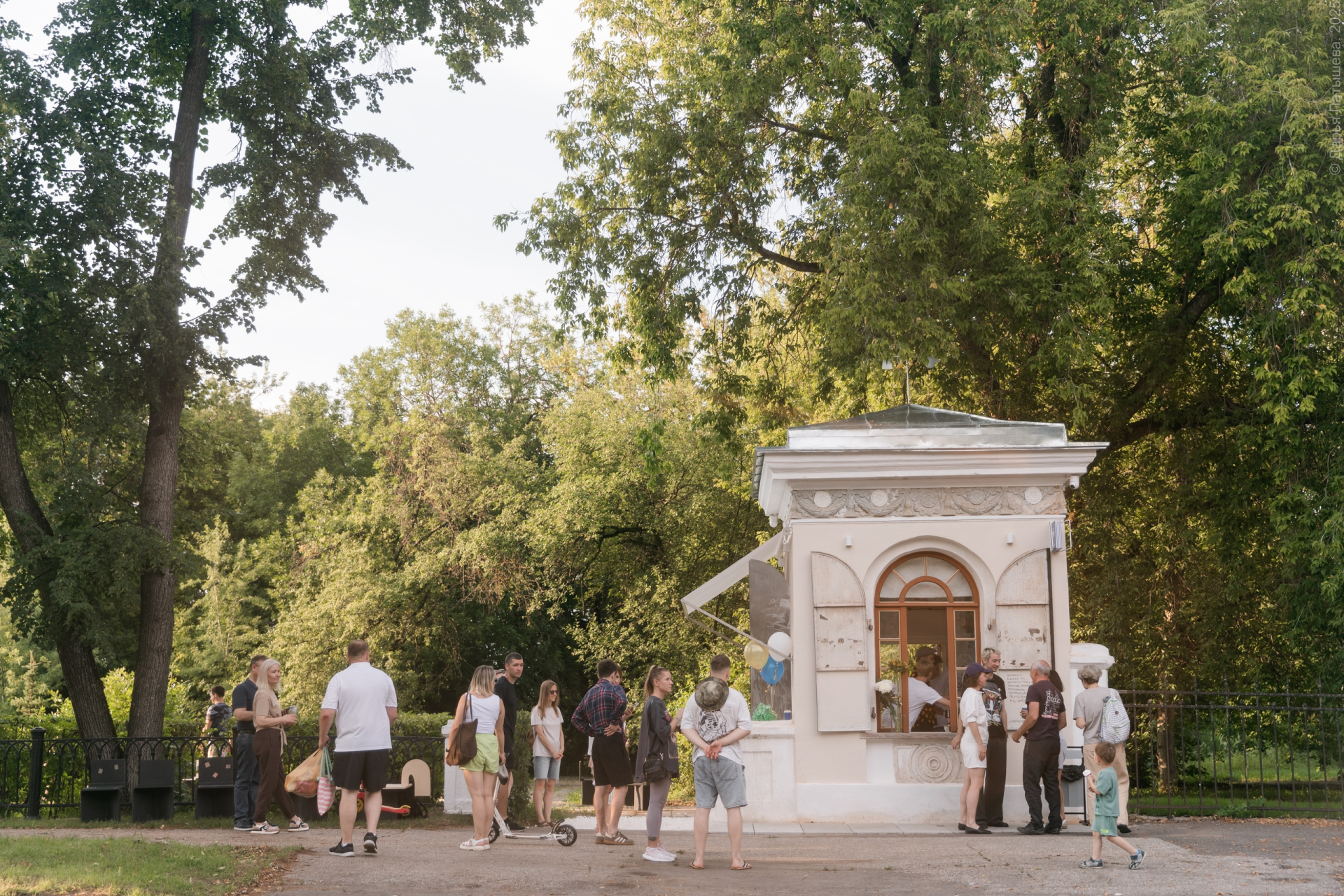
After a year of painstaking work, the kiosk opened in the summer of 2025. Inside, a coffee shop with the witty name “Ex-press” opened its doors. According to Maria’s observations, townspeople going about their business finally began to “linger” in this part of the avenue: the place “ceased to be a transit place, people began to attract themselves, take coffee, enjoy the moment.” This is how the story of the revival of the dead end of the World, launched four years ago on the “Night of Museums,” came into a peculiar loop.
In August, the coffee shop hosted the Expression festival, with lectures, plein air, musical performances, play readings and film screenings. All that remains is to wait until this summer and repeat it, Maria smiles.
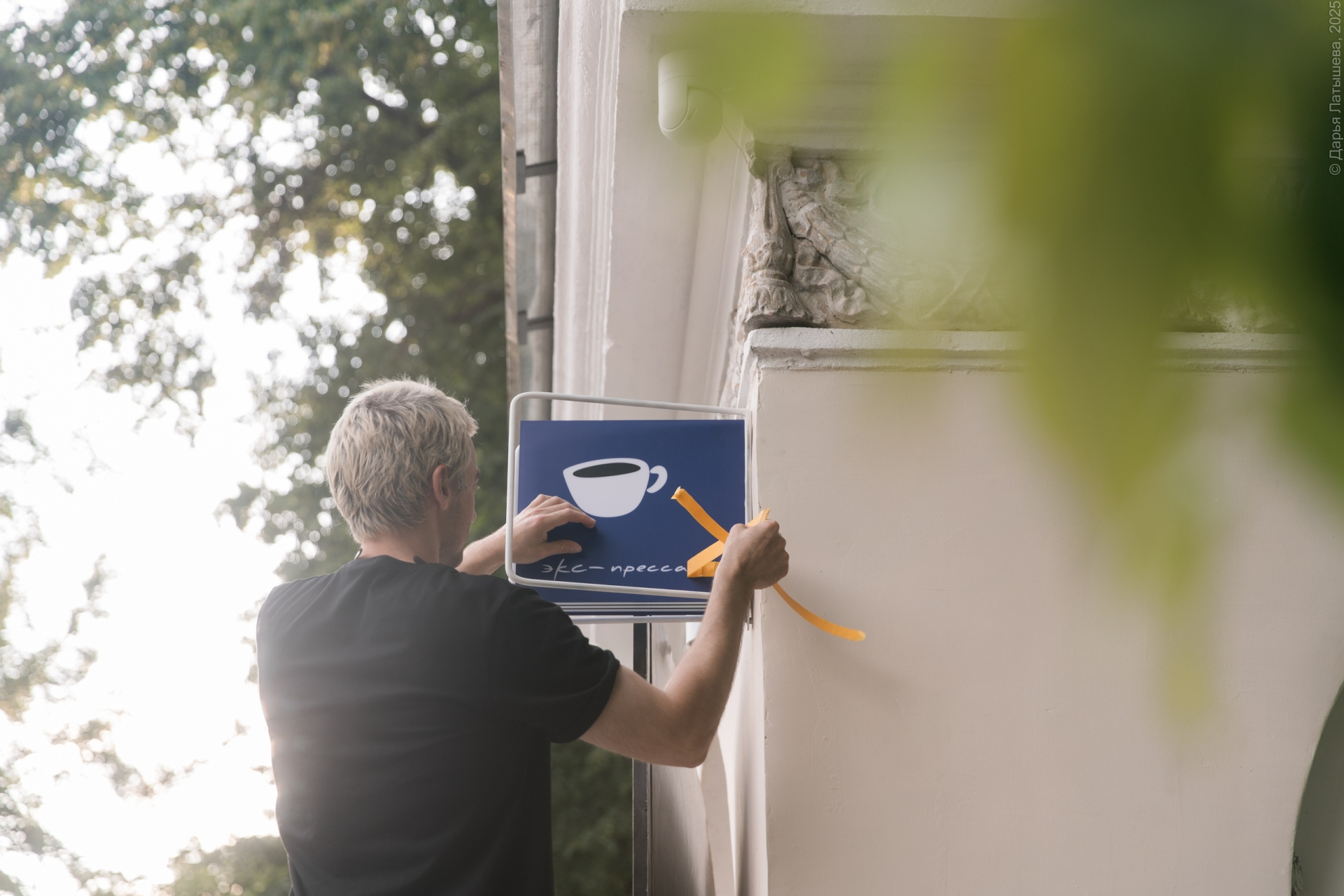
Pavilion “The Word” after restoration © Daria Latysheva
Time to scatter the pebbles
This year there will be “an even bigger, cool story,” says Expression co-organizer, photographer and cover performer Daria Latysheva optimistically. Unlike other activists, she is not local. I also grew up in a closed city - Seversk, Tomsk region. She moved to Sarov 11 years ago, when her husband got a job at VNIIEF. She quickly became involved in the creative life of the city, began to participate in apartment buildings and other events, and after a couple of years she was already organizing her own “hodgepodges.”
At the same time, she developed her photography career - she worked in the studio, but also took a lot of photographs of the city itself, its architecture, interesting events and the people who invented them. From the shots taken by Daria, a separate public grew up, and the hashtag #whyIlovesarov appeared.
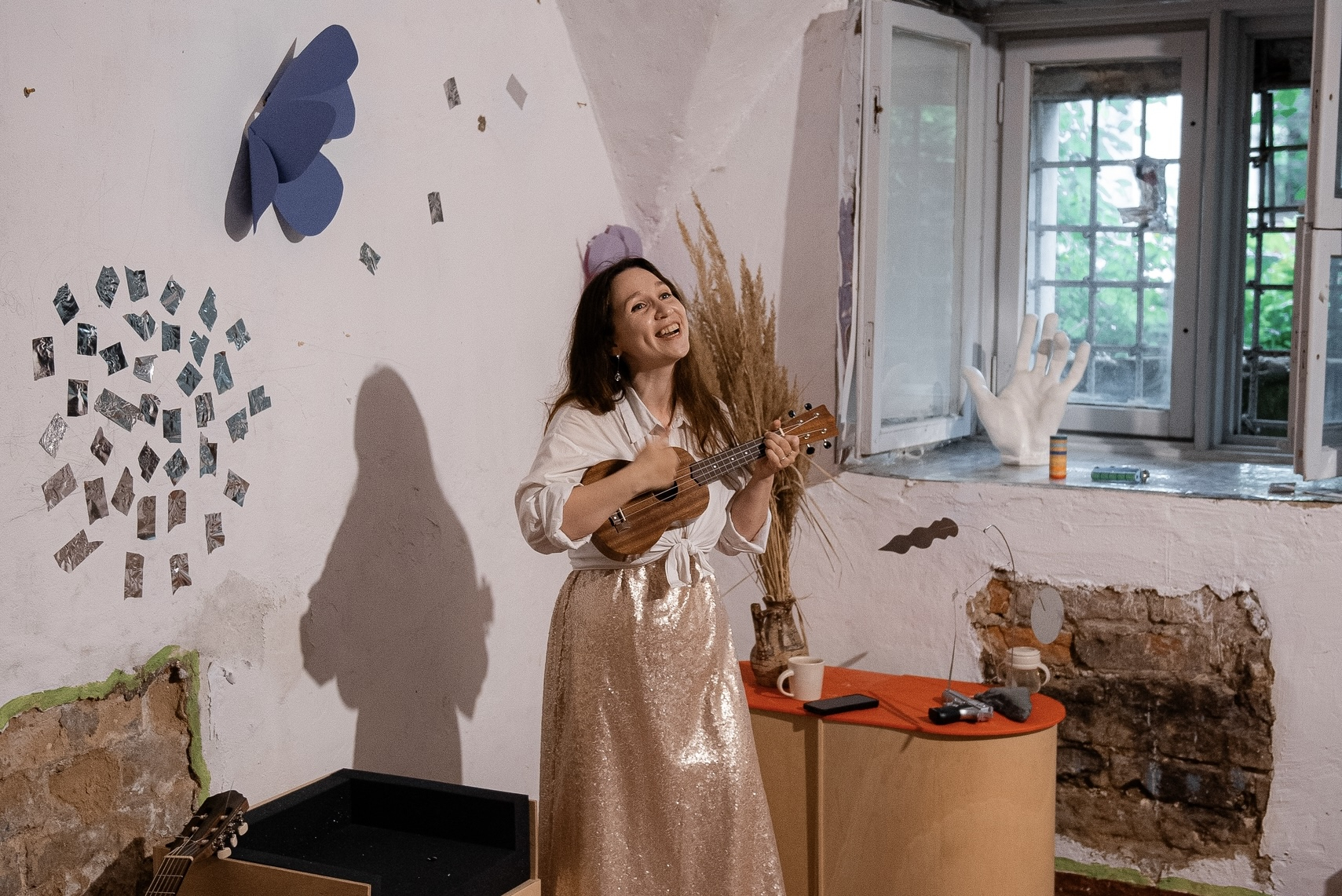
Daria's performance at one of the apartment buildings © Anastasia Baranova
The photographer couldn’t miss the “Museum of Place” and the meadow living room, organized by Alexander Ablesimov and mera makers.
“I thought: wow, new people have sparked up, they are doing something very interesting, unlike anything else, this is close to me.” And I came, we met. I remember that no one in the “living room” wanted to leave. Everyone talked and talked and talked... The guys and I looked at all this and decided that next year we definitely need to do something together in the meadow, because it was clear how painful this point was.
Painful because the Sarov meadow - a natural monument located in the center of the city - is essentially excluded from his life. It is not landscaped: there are no paths, there are literally two streetlights, and invasive weeds grow. Almost exclusively dog walkers walk in the meadow; sometimes artists also paint; others use it for transit, moving between areas: on one side of the meadow there is a path with a suspension bridge.
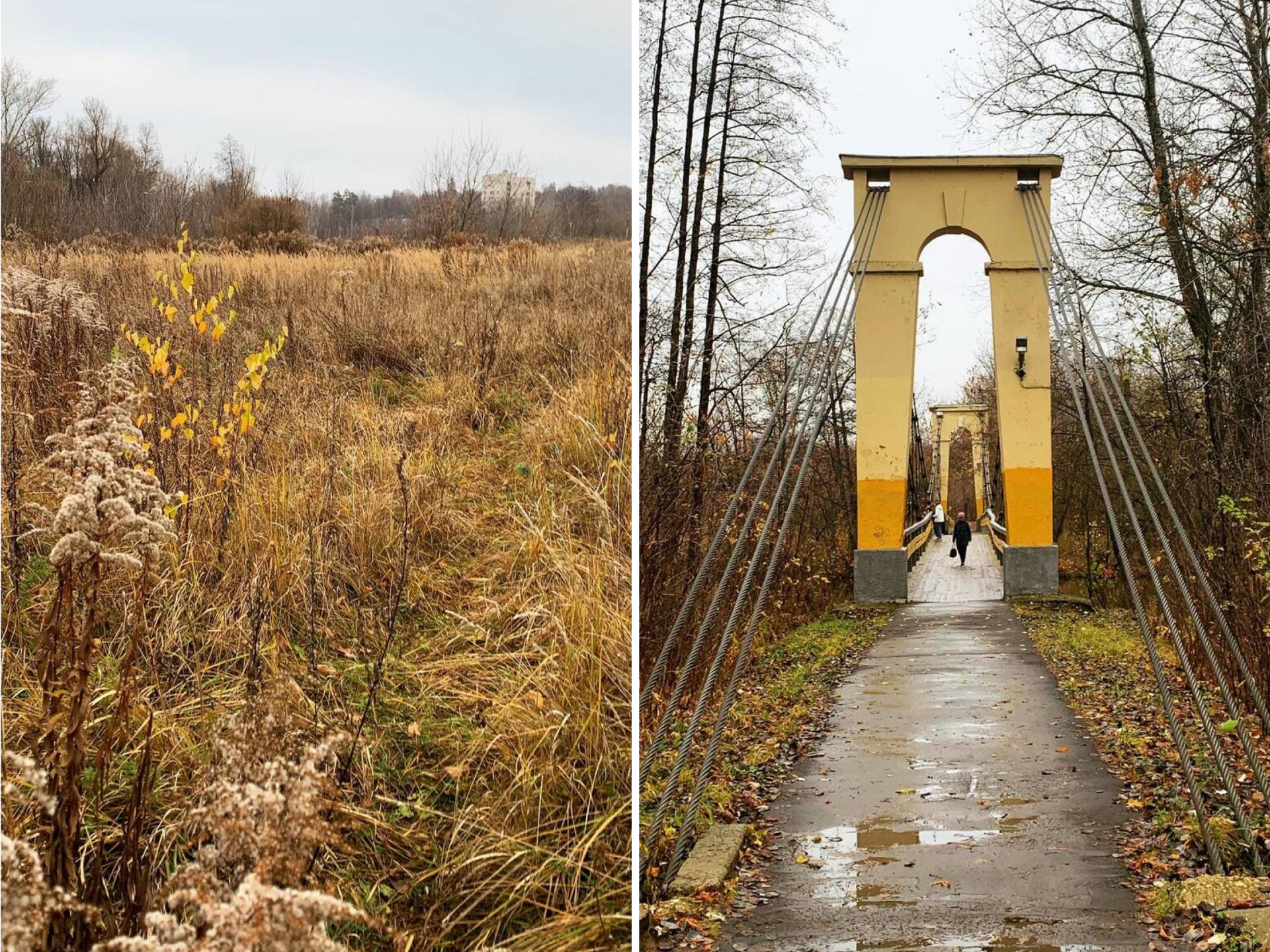
Flood meadow and hanging bridge over the Satis River © Sarov_walks
At that time, in 2022, the attention of the church was focused on the territory; it wanted to take it into use and improve it. A reconstruction project appeared on the Internet, and there, Daria recalls, “fan paths, monograms, in general, such a Versailles.” This alarmed the residents. The activists decided to “appropriate” the meadow at least for a day and think about what the future of this place might have. Thus was born the Etolug Festival, which took place in the summer of 2023.
Alexander then conducted several excursions, Maria and Alexey created the design, and Daria arranged performances by musicians, poets and actors from the Sarov Drama Theater - regular participants in her apartments. Hundreds of citizens took part in the event - not only friends and acquaintances, but completely new people: pensioners and young people, local residents and those who came to visit their relatives and accidentally saw the announcement. According to Daria, the response to the festival was “unimaginable.”
“It’s like a thrown pebble that made waves.” We cannot yet fully see what exactly they are, but there was a positive effect, one hundred percent. For example, someone started doing yoga in the meadow. But the funniest thing for me is that people continue to subscribe to the festival public page that we created before the event. We left it as a monument to this day, because it will never happen again, but people still come.
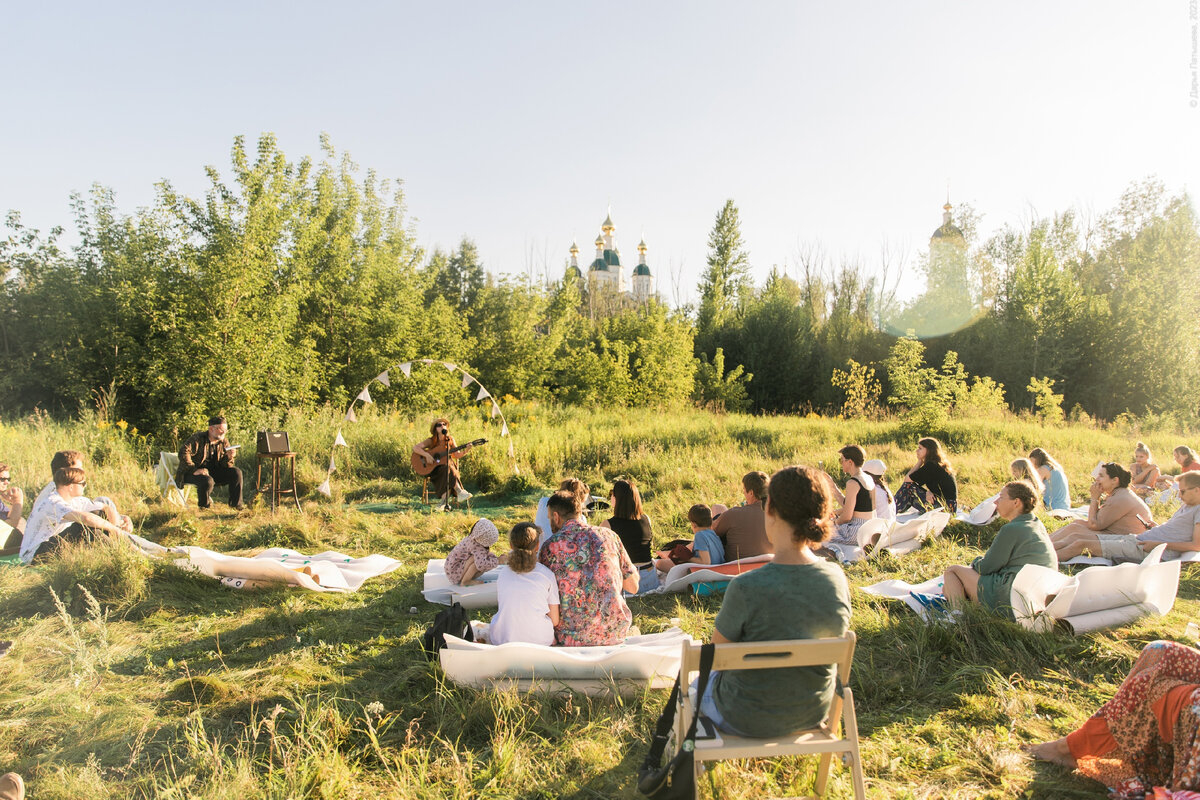
Etolug Festival © Daria Latysheva
The fate of the meadow has not yet been decided - there is no news from the church on its improvement project. But the “pebbles”, it seems, were really not thrown in vain. According to Daria’s observations, there are more events and points of attraction in Sarov: over the past couple of years, several coffee shops have opened, master classes, fairs, garage sales are held, and stand-up comedy has begun to be brought in. At the end of last year, she herself organized an exhibition, presenting solarograms of the city in “Vaults” - photographs of the sun moving across the sky, taken for many days.
Daria recently became interested in technology. I accidentally saw a one-minute video on Instagram, that same day I ordered photo paper, made a camera obscura from a can, and placed it on the window. She got a good shot on the first try, which spurred interest: in the summer of 2024, the enthusiast made 35 solarograms, and in 2025 - another 50.
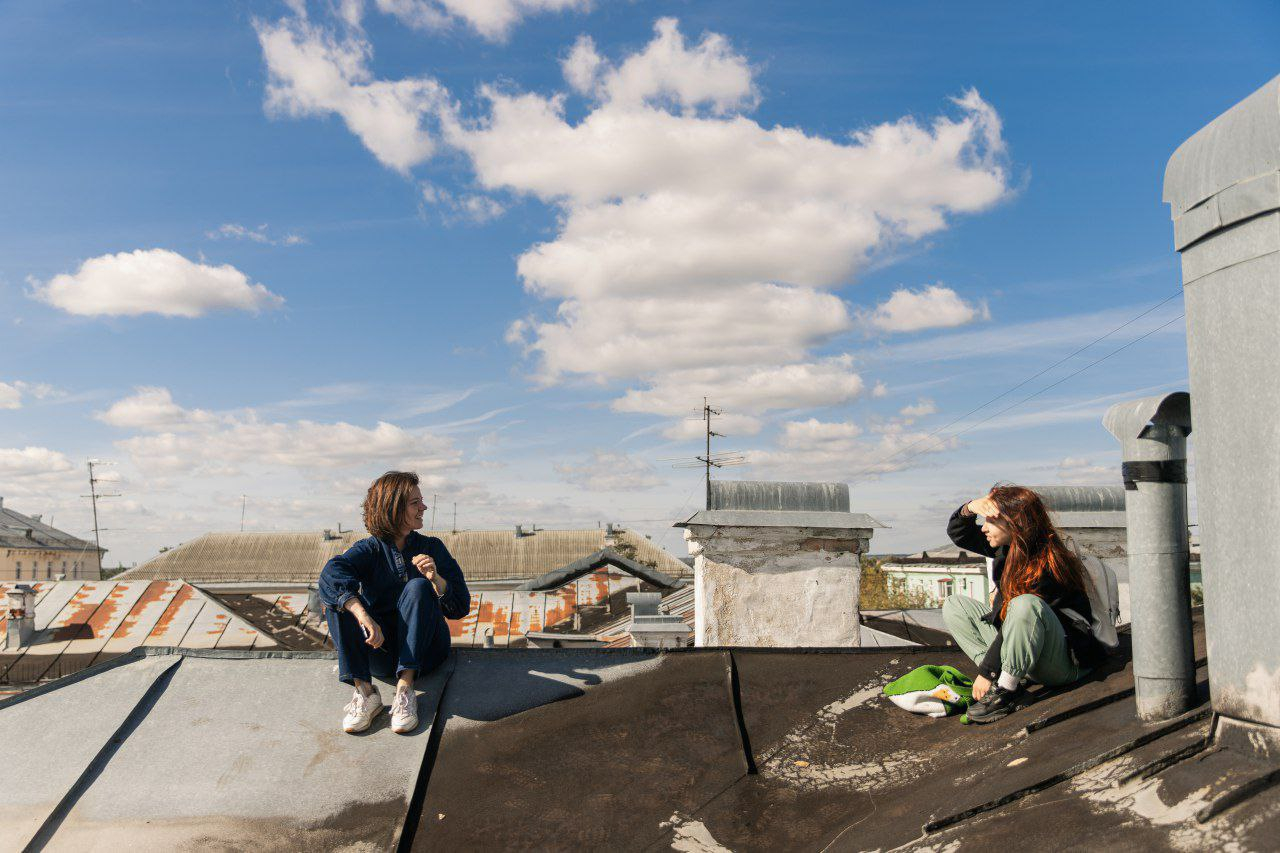
Daria and Maria install a solar chamber on one of the roofs of Sarov © Alexey Merkushev
— Just placing cans in fields and forests is, of course, cool, but the chance of getting a good result is higher where someone is watching the can. Therefore, before the start of the second series, I made an announcement, wrote: they say, I need southern balconies, I will bring chocolate, cake, whatever, just let me in, please.
And Daria was allowed in. Including where she had long dreamed of visiting - both to the mysterious attic, which is visible from the window of her apartment, and to one of the “cubes” of the new Riviera microdistrict, which reminds her of the city from “The Truman Show”. This required a lot of effort: to write to everyone, come to an agreement, infect them with an idea, explain how to look after the jar... But it gave us a lot of “new people, places, impressions.”
“I was once again convinced that the world is open and kind, people are sympathetic, and Sarov is just a super place. Of course, many problems have accumulated here, but I look at things positively. Since I live here, I will do everything I can to make it fun and cool for me and my friends. And I'm not alone. It’s as if a generation has grown up that has the resources to create. People communicate, come up with something, bring ideas from the mainland to their small towns.
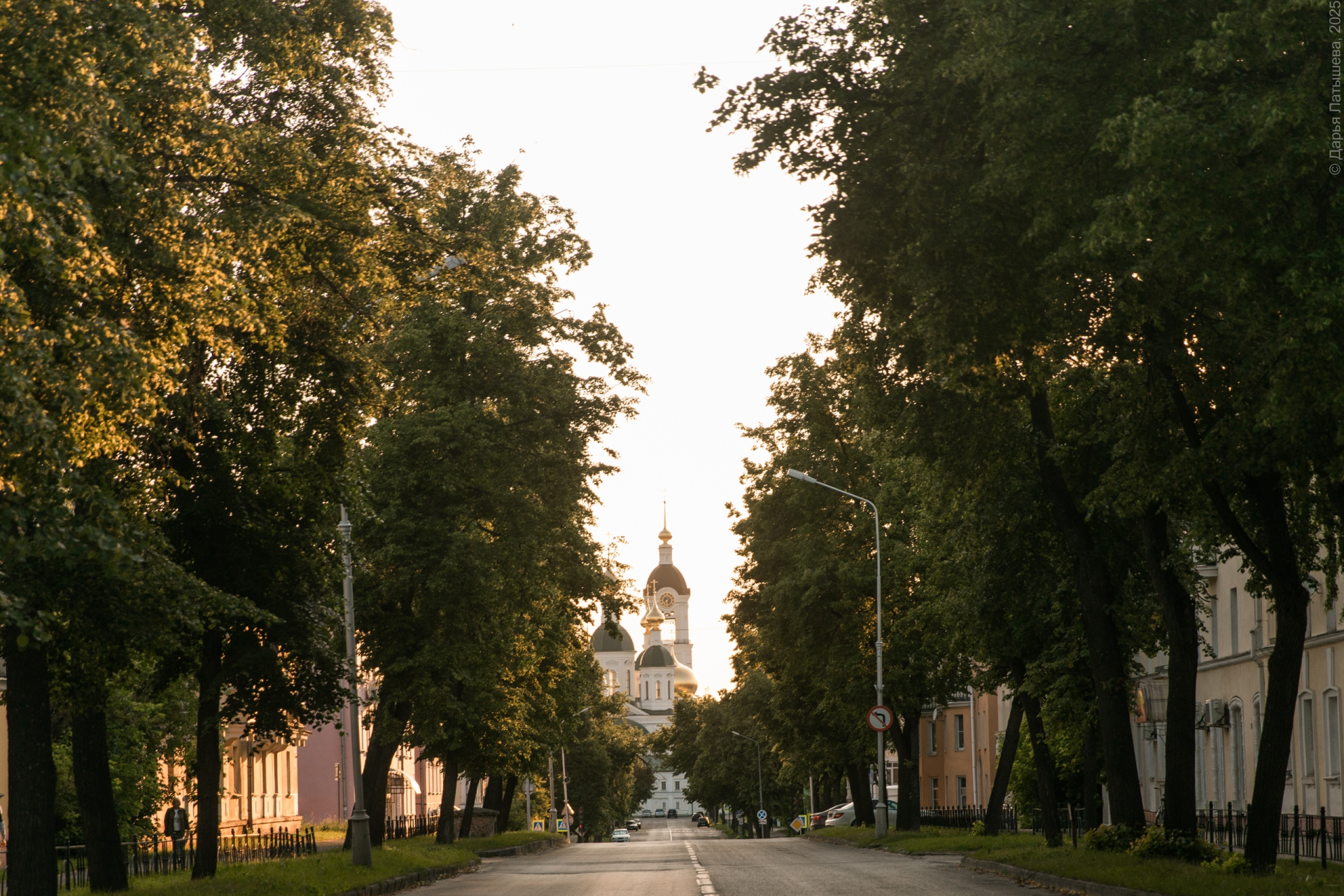
© Daria Latysheva