
Translated material
In India, tourists are banned from using phones during safari: they scare tigers and fall out of cars while taking selfies
Other countries are also considering the same radical measure.
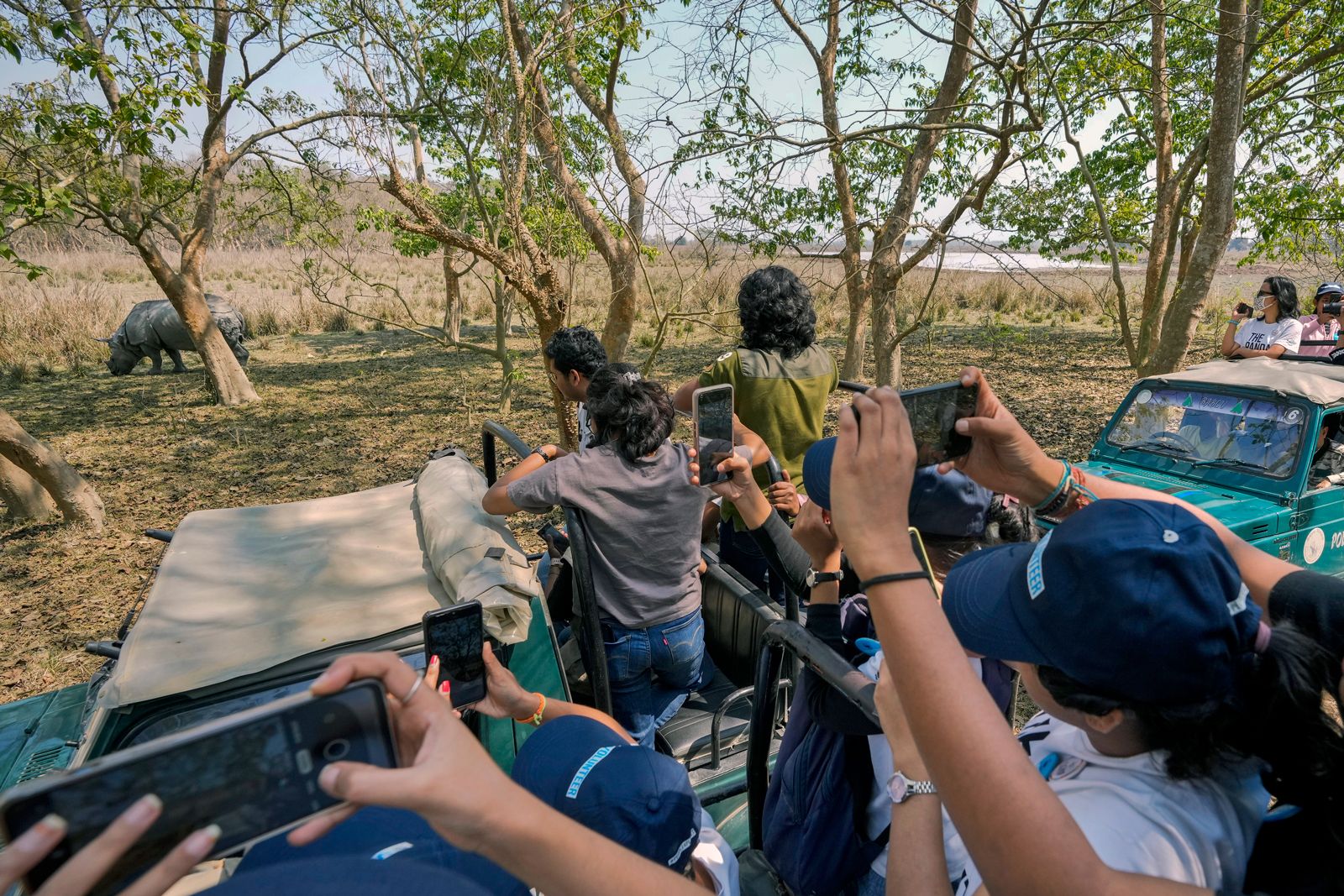
In November 2025, the Supreme Court of India passed a ruling that prohibits tourists from using phones in tiger reserves while on safari. The fact is that in trying to photograph the animals, vacationers endanger both themselves and their guides - not to mention the fact that they cause the animals to experience stress. New safari standards are also being developed in Kenya, where tourists disrupted the wildebeest migration last year. Also, animal monitoring rules are being tightened in Svalbard and Sri Lanka. The BBC describes this process in detail in its material, and Meduza retells this text.
In November 2025, the Supreme Court of India ordered a ban on mobile phones in the main tourist areas of some tiger reserves. The behavior of tourists with phones was recognized as too dangerous for both people and animals.
In February 2026, a video appeared on the Internet in which a tiger in Ranthambore Park, Rajasthan, was surrounded by several safari cars - the animal did not know how to get between the cars, in which tourists were screaming and taking photographs. The tiger in the video looks scared and cornered. In India, such “safari traffic jams” have become commonplace.
Now, according to the decree, tourists are required to leave their phones in a box before entering the reserve. Or switch them to silent mode and not take them out while visiting the park. Night safaris were also banned.
Indian journalist Charukesi Ramadurai describes the reasons for this decision as follows:
People act recklessly when trying to take photos with animals. There were cases when the phone fell and the guides had to jump out of the jeep to pick it up. There was a case where a child fell out of a jeep because the mother was taking a selfie and the child was pushed out. The guide had to jump and pick up the child - the tiger was a few steps away.
The Bengal tiger remains an endangered species despite the population doubling between 2010 and 2022, thanks to conservation work in India. Today there are more than 3,600 wild Bengal tigers in the country, about 75% of the world population. Most of them live in official tiger reserves, including Ranthambore Park in Rajasthan and Jim Corbett National Park in Uttarakhand.
But as the population grew, so did the popularity of safaris. In the last five years, 418 people have been accidentally killed by tigers in India (the BBC report does not indicate whether these cases are directly related to safari).
The CEO of the travel company Nature Safari India, Sharad Kumar Vats, says that it is not only tourists’ selfies that are dangerous. Drivers correspond via WhatsApp and inform each other about places where tigers gather, which provokes safari traffic jams. Posts on social networks with geotags work the same way - for example, people put tags at the watering places of tigresses and their cubs. “If we are not sensitive to tigers, they will disappear. And when there is no tiger, there will be no tiger tourism,” concludes Vats.
The new regulation also prioritizes the development of guest houses over large hotels that encourage mass tourism. Tour operators were given three to six months to introduce new measures. Whether there will be an effect will be assessed later, when the reserves open after the monsoon season.
India is not the only country where animal monitoring regulations are being tightened. Last year, videos from Kenya also appeared on the Internet showing tourists interfering with wildebeest migration by blocking their path. Following this, the Ministry of Tourism and Wildlife changed the standards for tour operators. In turn, Kenyan private guide Zarek Kokkar believes that the problem is not only in phones:
Photographers with large lenses who are eager to get out of the Jeep for a better angle can be a much worse offender than a person quietly taking a photo with a phone.
The deeper problem is often that expectations are not set correctly from the start. If guests arrive believing that the point of a wildlife encounter is to get up close or get a dramatic shot at any cost, the guide is under enormous pressure.
Even new rules came into force last year in Svalbard - now tourists must keep a distance of 300 to 500 meters from bears, depending on the season. Tour operators in Sri Lanka, in turn, asked the state to intervene in regulation - there were too many tourists in national parks.