
Translated material
Ninety thousand lost in the war
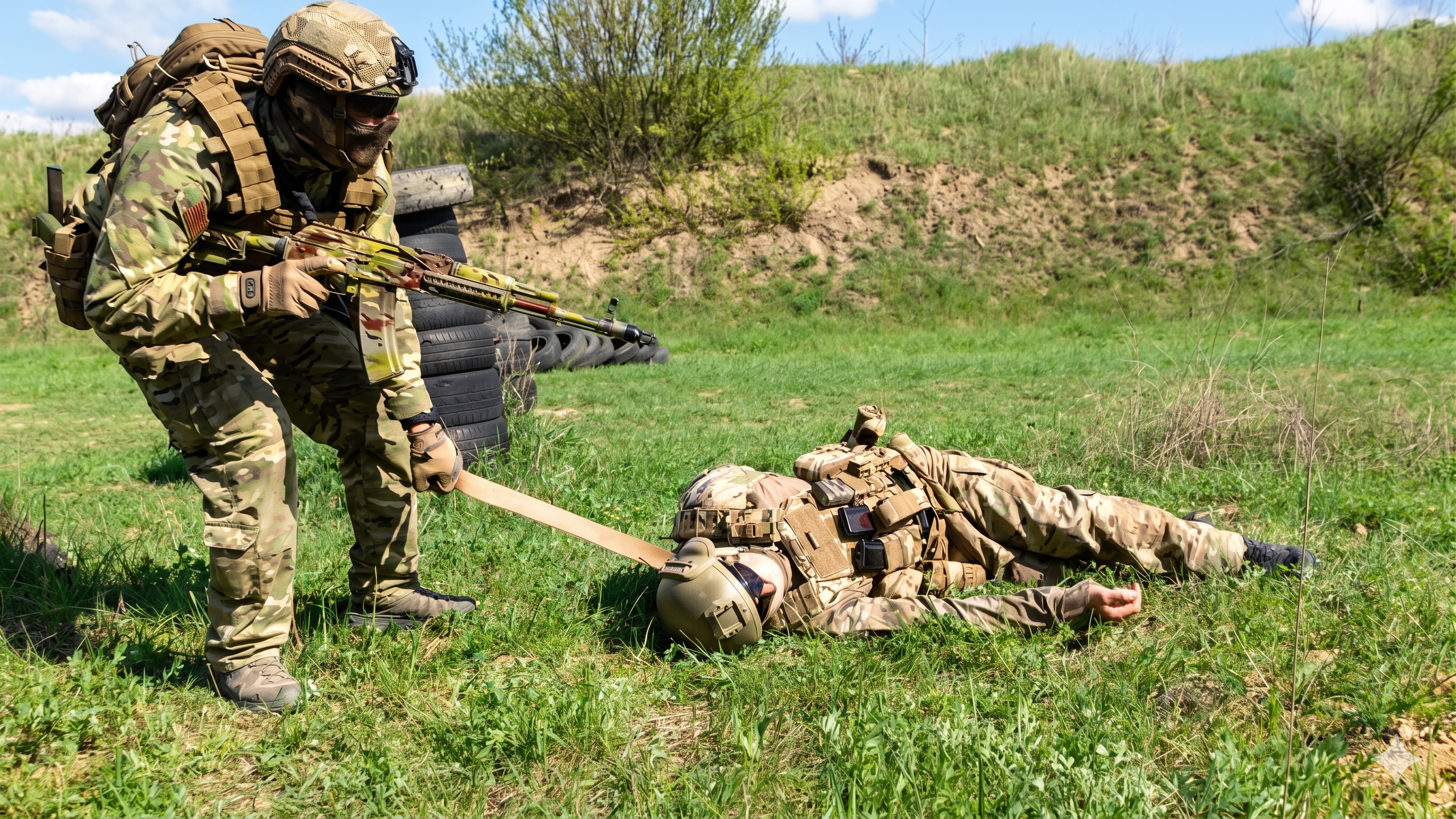
The Russians themselves are looking for the bodies of their relatives on the battlefield, and the authorities are preventing them
Those missing in action in war are no longer private stories, but a mass reality that people prefer to remain silent about. Relatives themselves are looking for bodies and information, while official structures are playing for time and avoiding exact figures. Independent investigations show that the scale of losses may be significantly higher than announced. Why does the system fail, and how much do soldiers’ lives really cost?
Edges of time. Mumin Shakirov sums up the results of the 17th week with the editor of “Mediazona” Dmitry Treshchanin , the author of the project “A Farewell to Arms!” Alexey Alshansky , head of the human rights group "Citizen. Army. Right" Sergei Krivenko and board member of International Memorial Alexander Cherkasov.
Social networks today look like spontaneous memorials. Lists, faces, names are updated almost daily. People who went to war and seemed to disappear without confirmed death, without status, without an answer. Then there is silence. And a long corridor of uncertainty: captivity? death? desertion? Formally, “missing in action.” Essentially, a person whom the system cannot or does not want to find. Wives go to the authorities, but most often mothers who do not want to believe that their son died.
Editor of "Mediazona" Dmitry Treshchanin, together with the Russian Air Force Service, is conducting a count of the dead Russian military personnel: based on obituaries, government reports and data from cemeteries. As of April 17, 2026, the names of more than 212 thousand people have been identified. And this is only the part that was confirmed. 57% of the dead were volunteers, mobilized and prisoners sent to the front from the colonies. That is, people who at the start of the war had no relation to the army.
“When a case comes to court, a card is created. This does not even mean that a trial has begun, it means that the court has put some case on its plan. And this card has a life, until the case is considered, a decision is made, sometimes the decision is published, not published, then it goes into the archive, but on the court’s website it always remains. We started collecting these cards when the war was just unfolding, and we expected that people would begin to be recognized as dead through the courts, but for a very long time this did not happen. happened until the head of the Ministry of Defense was changed, when Belousov replaced Shoigu, and Belousov gave the order to figure out what we have with missing persons. Since Belousov’s arrival at the Ministry of Defense, we have seen not just a progressive increase, but a rise in the number of cases in the Russian judicial system on recognition of missing persons as dead. At the beginning of December 2025, there were 90 thousand such cards.”
Defense Minister Andrei Belousov said in December 2025 that every second person, or 48% of the missing, was found. If the head of the department believes that ninety thousand is half, then there may be a total of one hundred and eighty thousand names.
Unlike the first Chechen campaign, there is now a complete lack of communication between the Ministry of Defense and relatives. Family members feel abandoned. The state not only does not help, it interferes with the search for the missing. On April 9, the Central District Court of Chita, at the request of the military prosecutor’s office, declared a group of wives and mothers of the 74th motorized rifle brigade from Yurga on Odnoklassniki “prohibited material.” There they searched for missing people, wrote about prisoners, and published obituaries. The group was blocked, and posts about the dead were considered prohibited information. To learn how relatives of the victims unite in volunteer organizations to search for those killed on the battlefield, see our story.
The Russians themselves are looking for the bodies of their relatives on the battlefield, and the authorities are preventing them
by Radio Liberty Text copied width px height px The URL has been copied to your clipboard
No media source currently available
Why has the category of “missing people” grown so dramatically? We speak with the author of the project “Farewell to Arms” Alexey Alshansky .
– Why did the Ministry of Defense under Belousov first actively recognize the missing as dead, and then actually curtail this practice?
– During the war, under Shoigu’s leadership, a huge number of missing people accumulated. At the same time, the legal basis for recognizing these missing persons as dead has already been adopted. This was not done under Shoigu. When Belousov arrived, he began to solve this problem firmly and clearly. But when they realized the scale, they abruptly stopped it.
– If life can be bought at the front and not become cannon fodder, is there salvation, a chance to return home alive?
– Considering the criminal nature of the war and the methods that the command uses, corruption turns out to be beneficial. There is not a single norm that cannot be broken in order to leave the front. According to our project, everything you can do to leave the occupied territory so that the commanders will let you go, this is what you must do. If you need to give a bribe, give a bribe.
– Where can wives and mothers of missing persons actually turn to today? Which channels work and which exist only formally?
– This is a question that directly depends on the military unit where the serviceman serves. Everything always depends on the commander of the military unit. Around every regiment, every brigade, every division there are horizontal initiatives to search for the missing. These are those whose relatives died, military personnel, who organize groups in the same Telegram, and they exchange information. But these are all horizontal initiatives, with which if military units begin to cooperate, this happens in an unofficial process. These are personal relationships between conditional group administrators and representatives of military units.
– Is a Russian soldier returning from captivity cannon fodder again?
- Yes, sure. And again and again until he dies. For one simple reason: Russia does not comply with international law. Russia didn’t care about the rules of war and the right of a prisoner of war not to take further part in hostilities after the exchange; it is not systematically enforced. Upon returning to the Russian Federation, prisoners of war undergo filtering by the FSB, which is quite strict. In our practice, there is a deserter whose leg was broken while he was being filtered by the FSB after returning from captivity. After which they are returned to the military unit. The usual practice is that these military personnel are in a barracks situation, they are not allowed to go home, there are no vacations, this is life in the barracks. And then the command sends you to the front. Again, this is all done with accompaniment, supervision and supervision. Open sources are full of such stories.
Ninety thousand lost in the war