Translated material
What's wrong with the "holiday" International Mother Earth Day
Let's talk to guest author Bulyash Todaeva

Photo collage: Foundation for Support of Indigenous Peoples of Latin America
April 22 is International Mother Earth Day
This holiday was established by the UN General Assembly in 2009 (UN resolution A/RES/63/278) . According to the UN, the purpose of the holiday is to remind people to move towards a more sustainable economy that benefits both people and the planet. Previously, Earth Day, a secular holiday of American origin, invented in 1970, was dedicated to the date.
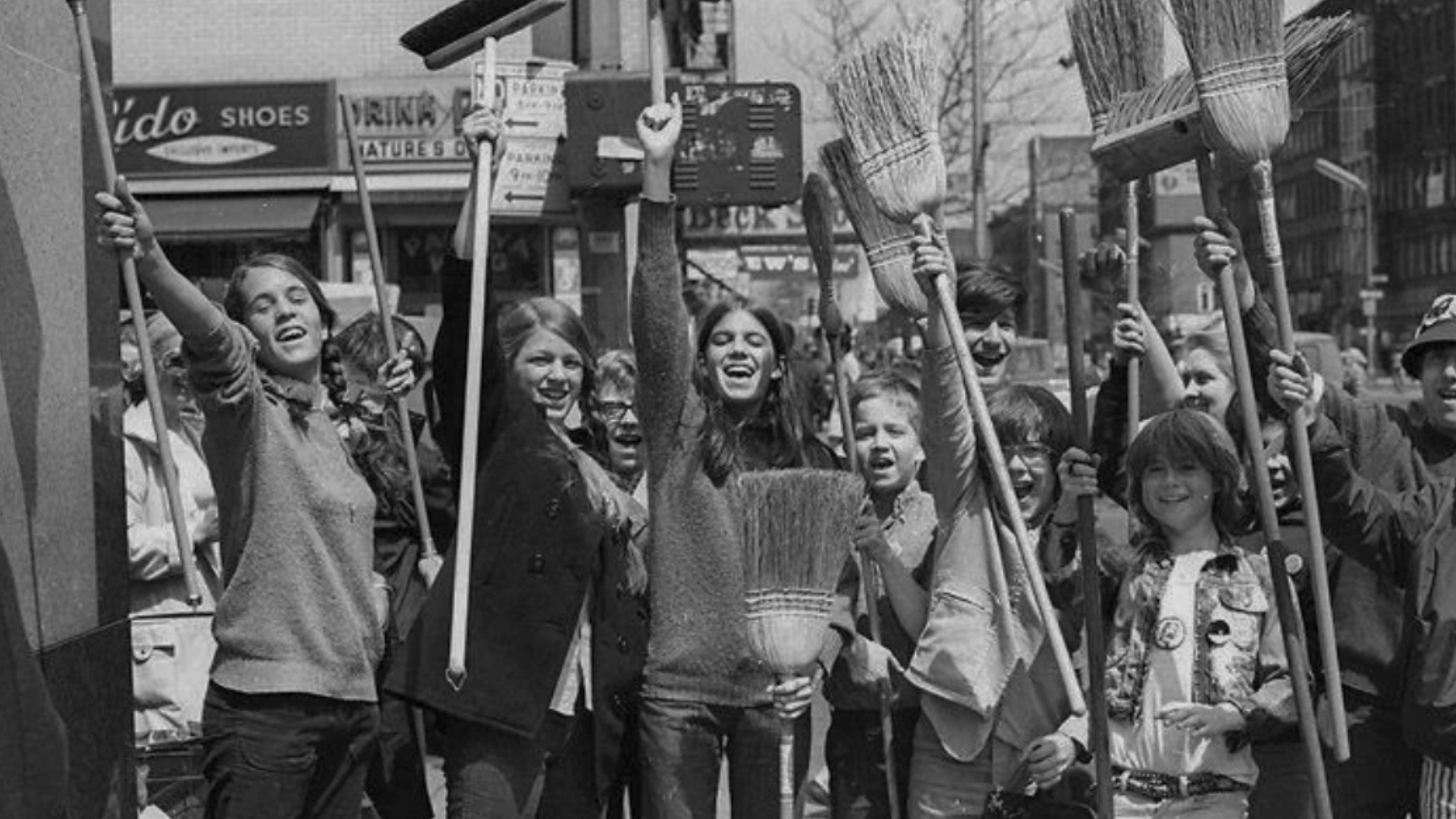
April 22, 1970 in the USA: marches and demonstrations
The new name came from a Bolivian initiative: in 2009, Bolivia promoted UN resolution A/RES/63/278 . A year later, in 2010, Bolivia passed its own “Law on the Rights of Mother Earth” (“Ley de Derechos de La Madre Tierra”), a law recognizing the earth as a living system with legally enforceable rights.
The law was influenced by the Andean spiritual worldview, which places the environment and the Earth deity known as Pachamama at the center of all life. According to the philosophy of Pachamama, about the Earth it is said:

“She is sacred, fertile and the source of life, nourishing and caring for all living beings in her womb. She is in constant balance, harmony and communication with the cosmos. It includes all ecosystems and living beings, as well as their self-organization.”
Photo: Pachamama. Pachamama Museum - Amaicha Del Valle
The adoption of the Mother Earth Law in Bolivia established 11 new rights for nature:
the right to preserve the integrity of life systems and natural processes;
the right to preserve the diversity of creatures;
the right to maintain water quality;
the right to maintain air quality;
right to maintenance or restoration;
the right to preserve Mother Earth and any of its components in relation to toxic and radioactive waste;
and others.
By enshrining natural rights, Bolivia has created a legal system to protect the interests of the Earth and nature. This is a specific legal mechanism, and not “love of nature” in the European romantic sense. In Bolivia, the Earth is a separate subject of law whose rights and interests can and should be protected.
When we define “Mother Earth” as “our common planet,” the well-being of which is allegedly equally influenced by both individuals and corporations, this allows the latter to join in the “festivities” with a narrative that suits them, without being held accountable for the truth of their statements.
Renaming Earth Day ➔ International Mother Earth Day was an example of how a bold concept was reformatted into a neutral brand. On the one hand, international organizations show concern for environmental issues and mention “Mother Earth” in press releases. On the other hand, member states of these organizations continue to subsidize fossil fuels, authorize mining in indigenous territories and finance wars, the environmental consequences of which are not included in any climate report.
Exploitation of indigenous lands in Russia
The resource economy of the Russian Empire, and then the USSR and Russia, was built on the principle that the territories of indigenous peoples are “undeveloped,” that is, available for industrial development without the consent of those who live on them
More than 90% of all Russian diamonds are from the Republic of Sakha (Yakutia), this is every 3rd diamond in the world;
About 40% of Russian oil is produced in the Khanty-Mansiysk Autonomous Okrug;
The Yamalo-Nenets Autonomous Okrug produces 91% of all natural gas in the country, and 23.7% of world production, and more than 14% of Russian oil and gas condensate;
in Khakassia and Tyva, non-ferrous and rare metals are mined, including gold, cobalt and lithium.
Russian legislation does not regulate, does not establish the principle of consent and does not recognize the property rights of indigenous peoples.
“The earth is our common home” - a statement with which everyone agrees, including those who destroy this house
Neutralizing the political content of the holiday concept ignores specific colonial mechanisms:
the “conservation” model, developed during the colonization of the African continent, involved the creation of reserves by eviction of the indigenous population;
green exports through international supply chains that shift environmental costs to Global South producers and indigenous communities while preserving Global North consumer patterns;
carbon markets that allow corporations to “offset” emissions by financing projects in areas that are taken from local people.
A small group of individuals who control the main means of production and make key decisions in this area are directly linked to the negative impact. This is what the term “Capitalocene” , coined by climate historian and political economist Jason Moore, captures. This term clarifies the term "Anthropocene" , which denotes the most recent geological epoch with a high level of human impact on nature.
In one of his interviews, Jason Moore states that the words “man is to blame” clarify the meaning as much as they obscure it.
“There is a political chasm between the phrase ‘man is to blame’ and the phrase ‘some people are to blame’.”
Meanwhile, scientific data names “certain people guilty” with reasonable accuracy:
“The richest 10% of the world's population contributed almost half of global emissions in 2019 through personal consumption and investment, while the poorest 50% accounted for only one tenth. The average global temperature in 2020 is 0.61°C higher than in 1990.
It has been found that about 65% of this growth comes from the richest 10%, about 20% from the richest 1%, and about 8% from the richest 0.1%.”
This means that they not only produce more emissions, but that their consumption and investment are physically responsible for most of the extra degrees the planet has gained over the past 30 years.
Personal consumption—flying on private jets or yachts—is certainly an important factor, but a significant portion of these emissions arise through investment: when a wealthy person invests in an oil company, a coal mine, or a cement plant, he is financing their operation and therefore bears some responsibility for their emissions.
These emissions have specific geographic consequences: emissions from the richest 10% of the United States and China have led to a 2- to 3-fold increase in the frequency of extreme heat in the Amazon, Southeast Asia, and Southeast Africa—regions that themselves produce the fewest emissions and have the fewest resources to adapt. In other words: those who contributed least to the problem pay the greatest price for it.
If it is possible to measure how much of a particular drought or heat wave is due to the emissions of a particular group of people—and this is technically possible today—then questions of legal, financial and political responsibility arise. The Carbon Majors database, which records historical emissions from the 178 largest fossil fuel producers, has been used in climate lawsuits in the US, Philippines and Germany. Based on the Carbon Majors database, in 2024, just 32 companies were responsible for more than half of global CO₂ emissions from fossil fuels and cement.
The top 10 companies by emissions in 2024 are all wholly or majority owned by the state, this list includes Russian companies Gazprom and Rosneft:
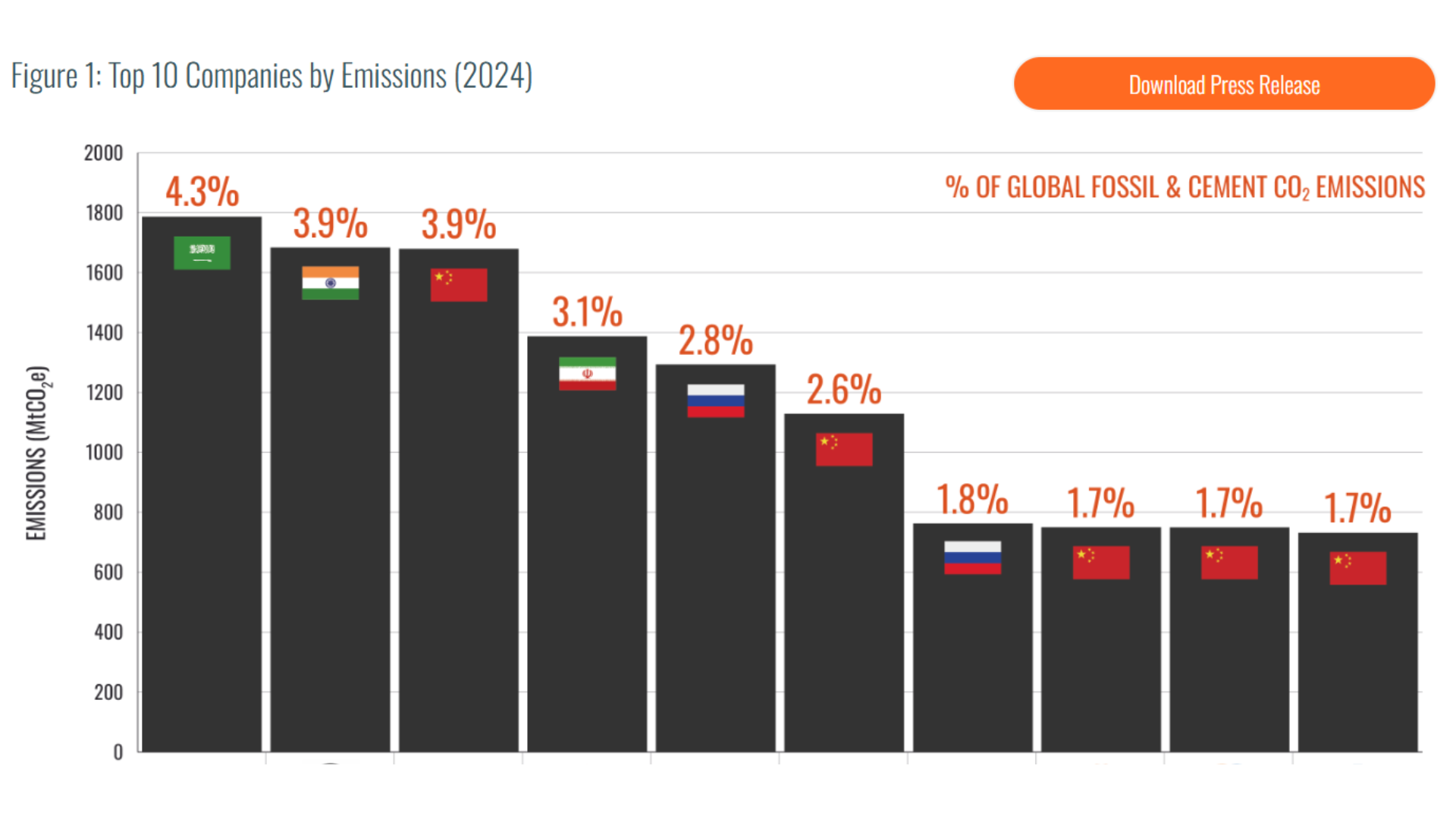
Source: influencemap.org/briefing/Carbon-Majors-2024-Data-Update-35466
The most documented type of corporate pollution is plastic pollution
It is also considered "garbage colonialism" - a phenomenon in which waste is sold supposedly for recycling to Asian and African countries, where it actually ends up in landfills or incinerated. Representatives of many indigenous peoples in the negotiations for a global plastics treaty insist that the solution is not in waste management, but in reducing production.
56 companies are responsible for 50% of global plastic pollution between 2018 and 2022 in 84 countries. Top 5 companies:
Coca-Cola (11%);
PepsiCo (5%);
Nestlé (3%);
Danone (3%);
Altria-Philip Morris International (2%).
There is a practice of “compensation payments” to indigenous communities, but such a model presupposes damage and cannot be considered a long-term strategy.
An alternative model is based on the “benefit-sharing” principle
This is a share in the income from any project - a documented and legally protected percentage of the profits, which does not go to the state budget, but directly to an independent community fund.
Sovereign resources can be used for education, legal protection of the territory, restoration of ecosystems and other projects that can be initiated in indigenous communities.
Without independent control, this format still reproduces the practice of “compensation payments”, so any activity on the territories of indigenous peoples must be accompanied by an independent life cycle assessment “Life Cycle Sustainability Assessment”, LCSA. And be part of the continuous monitoring of environmental and social risks throughout the life of the project and after its completion. And the right to conduct such an assessment and access to its results should belong to indigenous public organizations.
The annual reminder that the Earth matters is politically neutral precisely because it is universal: addressed to everyone at once, it does not name those responsible or make demands on anyone in particular.
By creating a sense of collective responsibility, such a narrative dissolves corporate and state responsibility in this, and does not make claims to specific individuals.