
Translated material
Hello from Pandora
The confiscation of the property of the ex-chairman of the Krasnodar Regional Court continues. But nothing has been heard about the criminal case
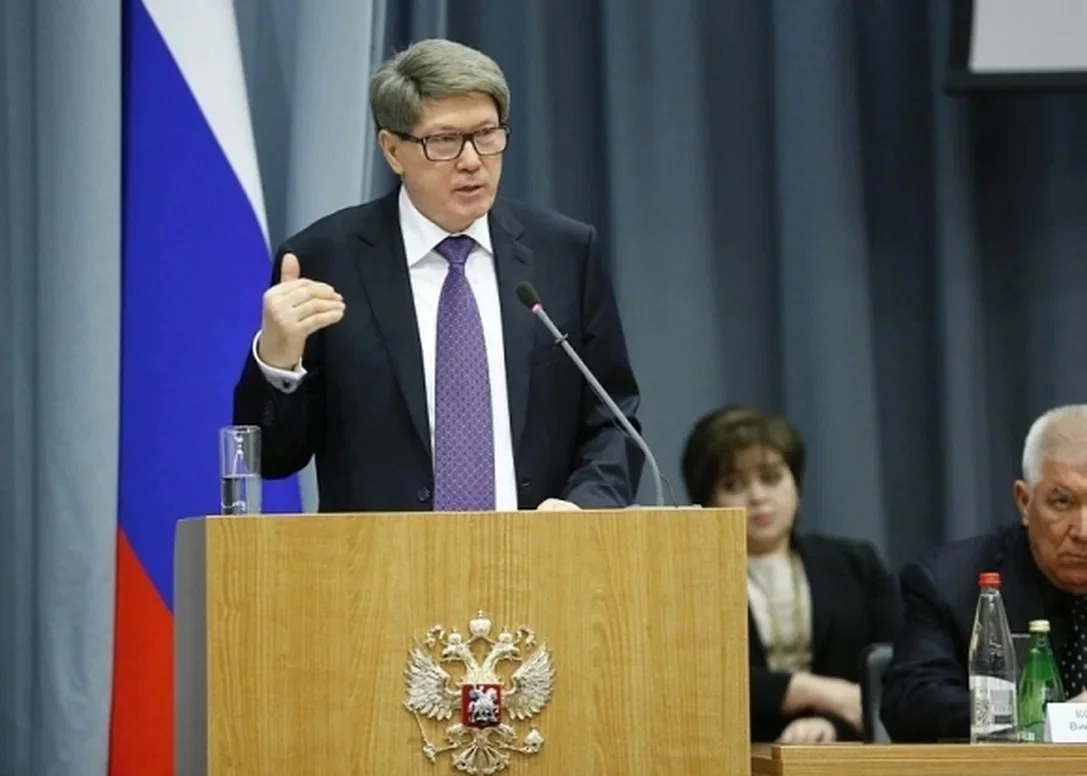
According to news agencies, the Oktyabrsky District Court of Krasnodar, in addition to the property worth 13 billion rubles, turned into state income according to the decision of the Krasnogorsk Court of the Moscow Region last August, seized from the property of the former chairman of the Krasnodar Regional Court Alexander Chernov the remains of this property worth another 900 million rubles, including “36 kilograms of gold.”
It’s not that we felt very sorry for Mr. Chernov, with whom all the journalists who were constantly involved in judicial topics were familiar. Rumors about his wealth have been circulating for a long time, but now that they have been confirmed during the consideration of prosecutorial claims in the courts, questions arise for the plaintiffs themselves.
The thing is that 36 kilos of gold were unlikely to be in Mr. Chernov’s desk drawers, and the drawers also cannot be entered without a warrant, and a warrant can only be issued as part of a criminal case. Anti-corruption legislation (laws of December 25, 2008 “On Combating Corruption” and of December 3, 2012 No. 230-FZ “On control over the compliance of expenses of persons holding public positions and other persons with their income”) does not provide for such a procedure as a search.
In accordance with Art. 17 FZ-230, an “anti-corruption” claim is considered according to the rules of the Civil Procedure (and not the Criminal Procedure) Code. This law describes in detail the procedure for checking the compliance of expenses with income, but says nothing about the judicial procedure for turning property into state income. Meanwhile, the “anti-corruption lawsuit” by its nature is more administrative than civil; it is a complex institution in which elements of administrative, criminal and civil law and process intersect.
To date, the nature of “anti-corruption claims” has not been determined. This is probably a topic for a dissertation, but for now, in any case, a search is only possible within the framework of a criminal case. The fact that Chernov is not in Russia is not an insurmountable obstacle: the case can be investigated and even tried in court in absentia, as is widely practiced in relation to critics of the regime who have gone abroad.
But such a criminal case, most likely, was not initiated - it would hardly have been possible to hide its investigation, which would have required the arrival of an entire investigative team from the center to Krasnodar.
As part of the “anti-corruption lawsuit,” it turned out that Chernov was helped to hide illegally acquired property by his ex-wife, the chairman of the regional notary chamber, and their daughter: another notary and arbitration judge. But among the judges subordinate to Chernov, as well as among the “deciders” flashing next to him, there were undoubtedly accomplices, and perhaps also those who covered for him and with whom he shared.
Chernov headed the regional court for a quarter of a century (until 2019) - just to imagine the volume of such a criminal case.
The ambush is that within its framework, specific unjust court decisions could emerge (including in disputes concerning agricultural and resort land plots), and they would have to be revised.
Pandora's box was opened by the former Prosecutor General, and now the Chairman of the Supreme Court, Igor Krasnov. Of course, he understood and understands all the risks. But having said A, you must also say B.