
Translated material
“I like to tease geese”
How a barbecue lawyer from the Kabardino-Balkarian Republic single-handedly fights the revival of the personality cult of Joseph Stalin

Photo: Vitaly Smolnikov / Kommersant
18+. THIS MATERIAL (INFORMATION) WAS PRODUCED, DISTRIBUTED AND (OR) SENT BY FOREIGN AGENT AZAR ILYA VILYAMOVICH OR CONCERNES THE ACTIVITIES OF FOREIGN AGENT AZAR ILYA VILYAMOVICH.
Former lawyer from Kabardino-Balkaria Oleg Kelemetov, who now calls himself a “shashlik man,” has been trying for two years to bring Joseph Stalin and other Soviet figures personally to justice for the deportations of the peoples of the Caucasus. In 2024, he submitted a corresponding request to the Investigative Committee, but so far has not received a substantive answer. Nevertheless, Kelemetov, with whom journalist Ilya Azar* spoke, hopes to make it difficult to install monuments to Stalin in Russia and cause at least some harm to the positive memory of him.
***
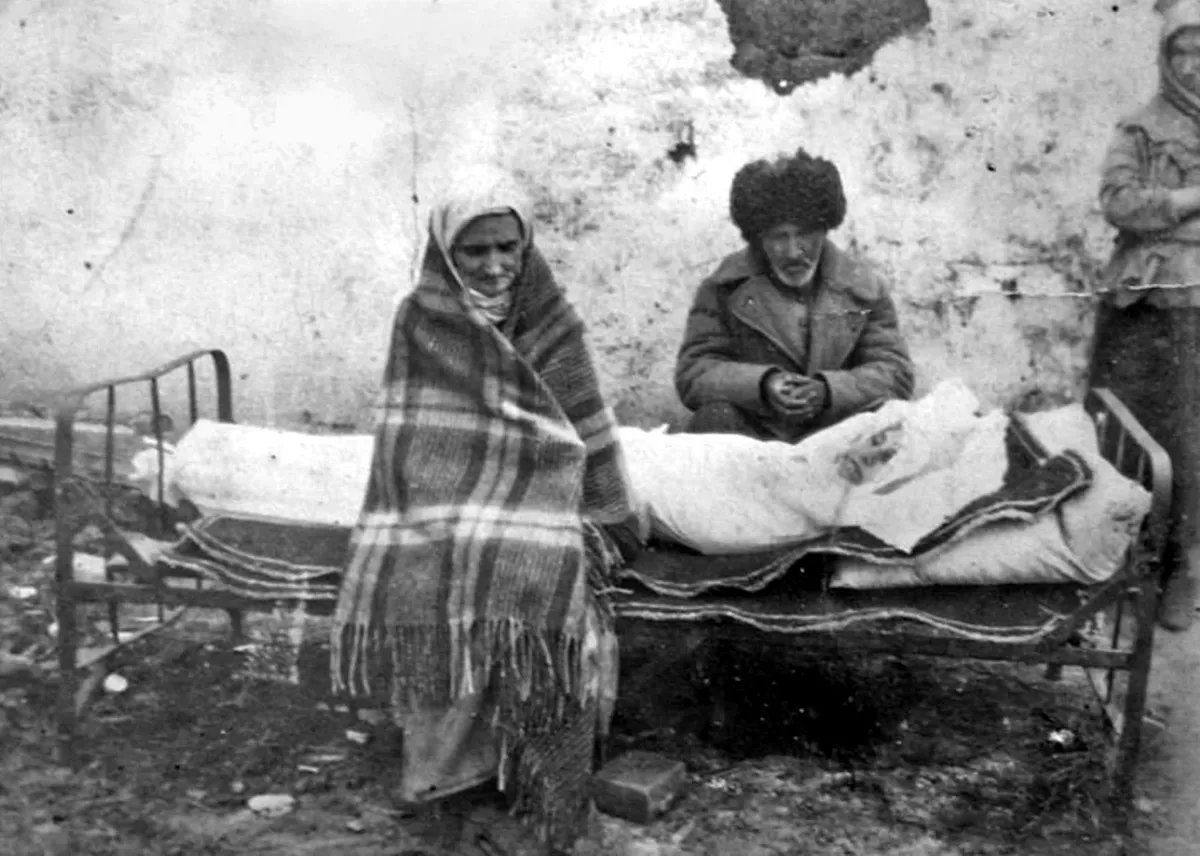
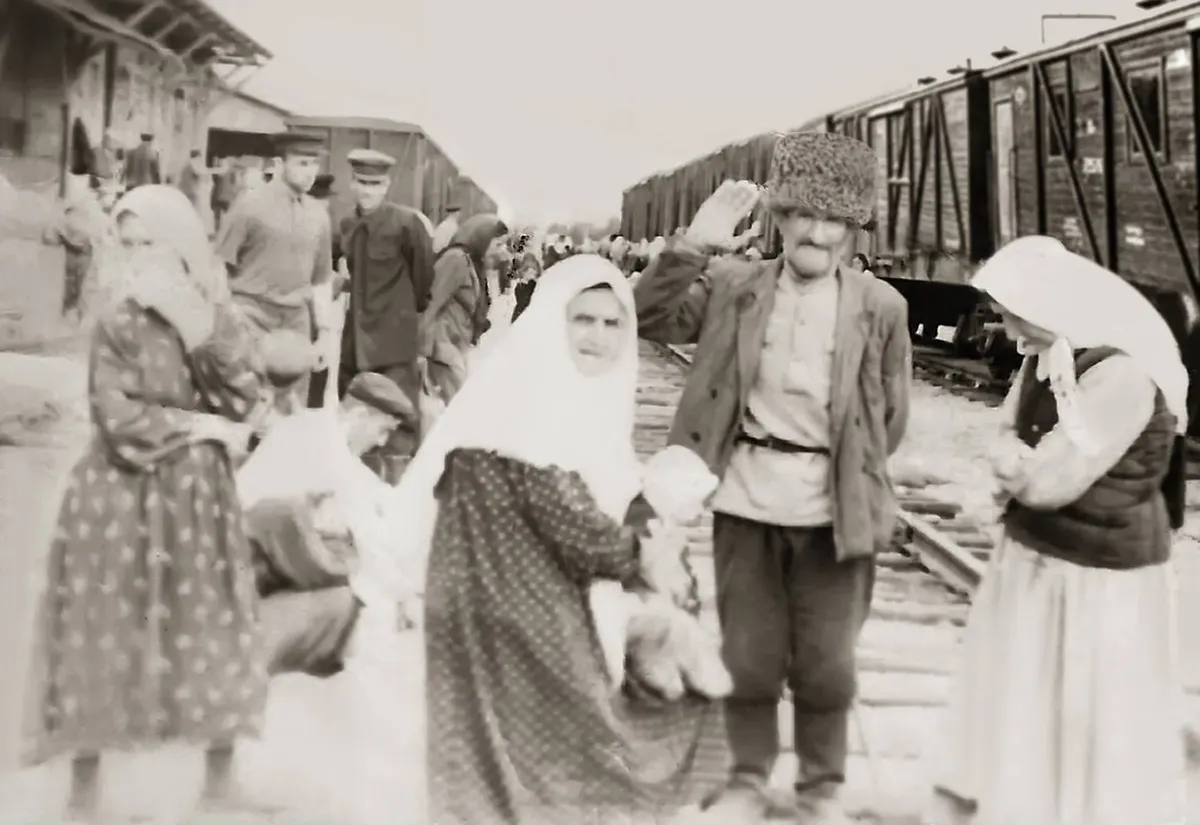
In February 2024, Kelemetov sent a statement to the Investigative Committee of the Russian Federation with a request to verify the decision of the State Defense Committee (GKO) of the USSR on mass deportations based on nationality. On its basis, in 1944, more than 6 million people were deported to Central Asia, including all Chechens, Ingush, Balkars and Karachais. From 20% to 30% of the “special settlers” died either on the road or at their new place of residence.
Kelemetov hoped that the Investigative Committee would establish the fact of the crime (excess of power under Article 110 of the Criminal Code of the RSFSR) and the involvement of members of the State Defense Committee - Joseph Stalin, Lavrenty Beria, Vyacheslav Molotov and others.

After submitting the application, Kelemetov said : “My main goal is to achieve a substantive answer. The authorities are required by law to do this. If they believe that deportation is not a crime, let them answer that way.”
Over the past two-plus years, he has not received a substantive answer - only a decision to refuse to initiate a criminal case and a subsequent decision to cancel this refusal.
“There is profanation and delay,” Kelemetov complains and explains: “It is impossible to make a decision to refuse to initiate a criminal case based on my application, because there is an obvious corpus delicti.”
The Soviet Constitution of 1937, according to Kelemetov, provides for criminal prosecution for humiliation of human dignity in any form, including based on a person’s nationality. “And the decrees of the State Defense Committee limited the rights of people, evicted them, and deprived them of the opportunity to return home precisely because of their nationality,” he explains.
During the conversation, Kelemetov briefly disappears several times. The first time he blames this on unstable communications: “We often have jamming – sometimes it’s unmanned, sometimes it’s piloted, sometimes it’s a hopeless danger.”
The second is because of a short call. “We are barbecuers, butchers, working people,” he jokes when he returns. Now he actually cooks barbecue in his family cafe in Nalchik, although he recently worked as a lawyer - in particular, at the high-profile trial “Case of the 58” over the militants who attacked the capital of the Kabardino-Balkarian Republic in 2005.
Although Kelemetov initially promised to go to court if there was no response from the Investigative Committee, he has not yet done so.
“I’m waiting for the moment in the socio-political mood when it will be convenient,” Kelemetov explains. - [For example], when Ramzan Akhmatovich says something. And at this moment give up.
- Why didn’t you take up this issue earlier? - I ask Kelemetov.
“This is such an emotional reaction: “Let’s answer” to the fact that, despite the rehabilitation of the deported peoples, this “recultivation”, the revival of the cult of Joseph Vissarionovich, began,” answers the former lawyer.
Kelemetov does not count on a public trial of Stalin, realizing that this is impossible, but still faces puzzling questions: “What do you want from a dead man?”
“But I don’t want anything from a dead person, I want from living people,” says Kelemetov. - Despite the fact that people [Stalin and his colleagues] died, if there is an obvious fact of a crime committed, it must be given a historical, moral, and legal assessment. If the persons whose actions constitute a crime die, then a decision is made to terminate the criminal case due to death,” Kelemetov explains to me.
After that, says the ex-lawyer,
relatives of those repressed will be able to “demand a trial and seek recognition of guilt even for those who have already died.”
Kelemetov is himself the son of a repressed person, but he submitted an application to the Investigative Committee as a citizen who wanted to establish those responsible for illegal actions.
— They told me as an answer that there was no evidence that I was a victim. Complete nonsense! Anyone can contact law enforcement; they do not have to be a victim. Even information in the media can be the basis for verification and subsequent initiation of a criminal case or refusal to do so, he reminds.
Oleg does not see any “necessity” in submitting an application specifically as a relative of the repressed.
“Stalin—his regime, I mean—shot all my ancestors and put them in concentration camps even before the deportation. They [law enforcement agencies] want to reduce everything to the fact that some person was directly harmed. I suspect that they want the statement to say that my grandmother was deported with her two young sons, and that only her eight relatives—first and second cousins—didn’t make it,” says Kelemetov.
— To tell the story of how women in a common cattle car could not relieve themselves for 15 days from embarrassment, and they died because their bladder burst. Can I prove this? No. That's what I don't do.
I ask what he hopes to achieve in an ideal scenario.
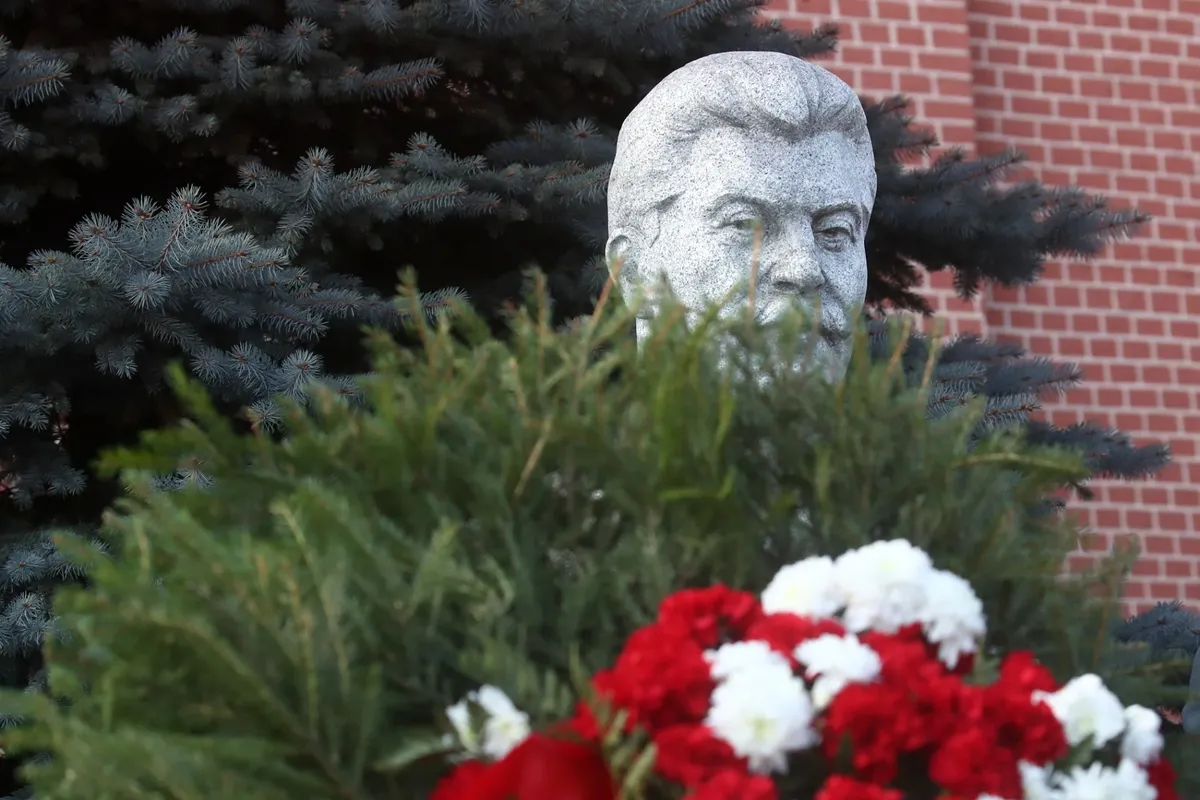
“If it is proven that the deportation was not carried out by some “Anglo-Saxons” or “that it was bad, of course, but this is how it happened,” but that specific people [from the Soviet leadership] did it, then it will be very difficult to name cities, streets, etc., etc., by the names of these people,” replies Kelemetov.
He reminds that in Nalchik there is Voroshilov Street, who was a member of the State Defense Committee and signed that very decree, and there is Kalinin Street.
“It’s difficult to heroize people and call them after squares and cities if it is established that they committed a particularly serious crime. Plus, petitions or appeals from people on this matter will now be supported by documents,” says Kelemetov. — It will be possible to enter into discussions more reasonedly if some platforms for discussion still remain.
After thinking a little, the ex-lawyer adds with a grin: “And by virtue of my own nature, I sometimes like to tease geese. Or maybe I’m just playing around, I’m a kebab cook now.”
***
Kelemetov's second appeal to the authorities, which appeared in the media , concerned monuments to Stalin. Together with seven people who personally experienced deportation, he asked the parliaments of the republics whose titular peoples were deported to “appeal to other regions and the State Duma with a proposal to ban the erection of monuments to Joseph Vissarionovich.”
The statement stated that over the past ten years, 48 monuments to Stalin have been erected in Russia, so the applicants fear that the country “is reviving the cult of those directly responsible for deaths, humiliation and loss of rights.”
So far, statues of Stalin in Russia are being installed on private property, and officials are pretending that nothing special is happening. The only exception is the monument in Vologda, where Governor Georgy Filimonov, according to Kelemetov, “showed carelessness and made a private initiative semi-public.”
By the way, in Vologda, Kelemetov almost succeeded: “I wrote to the prosecutor’s office with a request to issue a warning regarding the erection of a monument to Joseph Vissarionovich, and the prosecutor’s office in Vologda went to court, although not on the essence of my appeal.
The court decided that the monument should have been dismantled as it was installed illegally.” However, apparently, despite the court’s decision, the monument will not be demolished.
Regional parliaments largely ignored Kelemetov’s request.
— The parliament of Ingushetia responded very positively, but at the same time said that while completely sharing, supporting, etc., it will not go anywhere, although this is correct, and you write - the flag is in your hands. Everyone else sent unsubscribes, but the Chechen parliament, by the way, sent nothing at all,” says Kelemetov.
When talking to me, he tries to avoid emotions. Only once - when he talks about the argument of his opponents: “There was a war, everyone did it, but the Americans resettled the Japanese,” - he can’t stand it.
— I received a decree from 1948 with Stalin’s signature that he had received information about some special settlers who allowed themselves to travel to the Crimea or the North Caucasus to fix the monument or simply visit their native land. The document says that the resettlement of Chechens, Karachais, and Balkars to remote areas of the Soviet Union has been carried out forever, without the right to return to their former places, and for those who come back, the punishment will be 20 years of hard labor,” says Kelemetov and suddenly raises his voice. — And in 1948 [that is, after the war] Joseph Vissarionovich did not forget us! And we should name cities and streets after these people? I disagree!
***
Attitudes towards Stalin in general and towards Kelemetov’s initiatives in particular in the Caucasus republics are different. In Chechnya and Ingushetia it is difficult to find a person who sympathizes with Stalin; in North Ossetia, on the contrary, he is almost idolized. In the Kabardino-Balkaria, the situation is more complicated, if only because there are many Kabardians who were not affected by the deportations, and Russians.
— It’s difficult to determine, because you hang around in some kind of society and think that this is how it is throughout the republic. But the Balkars are against Joseph Vissarionovich. Although some believe, for example, that Beria did everything by deceiving Comrade Stalin. Some part believes in this nonsense! - says Kelemetev.
Balkars, according to Kelemetov, pass on the memory of the deportation from generation to generation.
“This is not only a matter of tragedy, it is a matter of humiliation suffered. Most of [our] men fought [on the side of the Red Army], but then, when everyone else was celebrating the victory, our grandfathers lived in dugouts as slaves, and up to 30–40% of the population died in this humiliation.
This humiliation was not offset by the fact that they were later forgiven and rehabilitated,” Kelemetov explains. “The spoons were found, but the sediment remained.”
In his opinion, the memory of those events is gradually weakening, and various conspiracy theories are gaining strength. “Recently, one young girl told me that during the deportation the evil guards were Jews, and the good guards were Russians. This is absurd,” he gives an example.
Kelemetov believes that the educated urban population is more susceptible to conspiracy theories. “They believe in all kinds of nonsense, but ordinary people, villagers who live by their own labor, who think about how to build a fence or move stones, have a clearer mind, not littered with garbage,” says the former lawyer.
He says that in the village of Upper Balkaria every year they organize an event near the memorial dedicated to the Cherek tragedy (“then a detachment of [NKVD captain] Nakin drove into the gorge, shot and burned two villages together with the children”).
“For forty years the butcher’s father was silent in our cafe, but before his death it became unbearable for him, because he was constantly experiencing that tragedy, and he organized a memorial for the innocent people killed and deported. Until now, for about 20 years, they have been held annually,” says Kelemetov. He does not attend official funeral events, but not out of indifference:
“They all went to the garden. Because at the head of these national movements, the system puts former cops or other absolutely controlled people who smooth out and level out this agenda.”
***
— The population does not tolerate negativity towards the current authorities? - I ask Kelemetov. “ After all, they, too, have now begun repressions, albeit not on such a massive scale. And the revival of the cult of Stalin is underway, as you yourself say.
“This will already be clear at the Last Judgment: whether it will be transferred or not,” Kelemetov jokes and with his characteristic self-irony continues: “I am a former lawyer, although maybe a useless one (although in the republic he was known as one of the best at that time - author’s note), and I communicate with different people.” I remember the position of many, what they were like, their worldview, their beliefs, and so on. I see that now, due to what is happening, they are deceiving themselves, convincing themselves that these are their views in order to feel like people.
According to Kelemetov, in informal conversations “everyone understands everything, but they articulate—and, probably, do the right thing—what needs to be articulated.”
The former lawyer several times in conversation mentions the head of Chechnya, Ramzan Kadyrov, calling him exclusively by his first name and patronymic. Despite the fact that Kelemetov is clearly interested in the topic of memory of deportation, he allegedly learns from me about how Kadyrov introduced an unofficial ban on holding mourning events in the republic on the anniversary of the deportations.
Nevertheless, Kelemetov has not yet begun to contact the President of Chechnya, although he admits that his project would “better move forward” in this case. Unlike the heads of the other Caucasian republics, Kadyrov directly mentions Stalin’s role in the deportations in his telegram channel and calls him “damned.”
— Why doesn’t Kadyrov himself follow your path?
- Yes, no one goes this way at all. I came up with this. But he sometimes speaks out, such good films are made both in Chechnya and everywhere regarding deportations. And my legal path, even in publications in Kommersant - it was unpleasant for me - human rights activists somehow hated it, although it is absolutely impeccable from a legal point of view, says Kelemetov.
Nevertheless
It is the Caucasian republics, after strong pressure on all dissidents, that remain the last outpost of resistance to the “reclamation of Stalin.” I tell Kelemetov that the struggle of the Caucasian peoples to remember Stalin's repressions is clearly not of interest to most Russians.
“We must, of course, take them for 40 years to some hard-to-reach places,” Kelemetov jokes and himself recalls that Stalin almost won the “Name of Russia” competition “in relatively free times.” - What are you going to do about it? Do what you must, or what you want, and what will happen will happen.
— What is the point of your activities then, if people in Russia do not perceive all this? - I ask.
— The point is to cause some harm to the memory of Stalin and his regime. People were persecuted not only on ethnic grounds, but also on class, political, and faith grounds, right? When you say something reasonable in this part, you harm your opponents. The point is in the struggle,” Kelemetov replies.
- Well, aren’t you sad to do all this almost alone?
- Why be sad? I don’t live only for this. Sometimes I sit with friends and have a drink. And what do I care about their painful and stupid, insignificant reaction? When you have an inner sense of your own rightness, then they cannot run over you.
In modern Russia, any public departure from the general party line seems to quickly lead to problems. Kelemetov has not yet been touched, for which the former lawyer has his own explanation.
— I do not enter into direct confrontation and refer, among other things, to the law on rehabilitated peoples and to the decree of Vladimir Vladimirovich on the rehabilitation of the Crimean Tatar people of 2014. It is within the framework of this position that I act. And the fact that there is a legal basis for this gives hope for safety, he says.
I tell Kelemetov about the recent closure of the Gulag Museum. I admit that this made a great impression on me, and the ex-lawyer, it turns out, had not heard about it, but he does not show surprise.
- If they renamed this museum, did they not say at the same time that everything that was done in those days was correct? The year 1937 and the deportation of repressed peoples are still condemned. Is it condemned? Condemned,” Kelemetov argues. — Yes, they shift the emphasis, but they do not directly disavow them.