
Translated material
A hundred a barrel. Is a global oil shock coming?
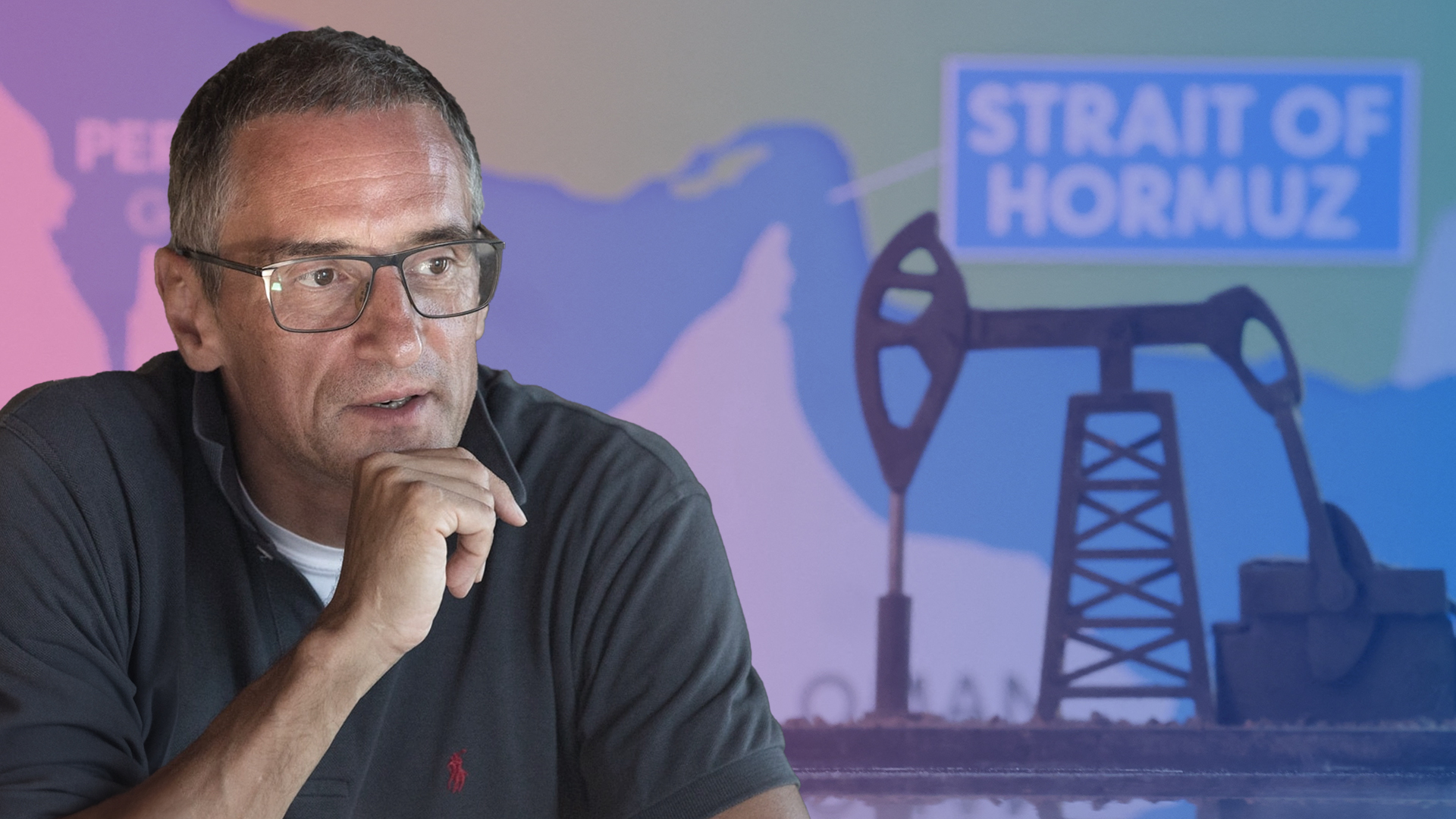
Sergei Medvedev talks with experts Sergei Vakulenko and Tatyana Lanshina
In the 2000s, Russian oil workers had the expression “one hundred per barrel.” "How are you?" - they asked. The answer was: “one hundred per barrel.” Today oil is again at a hundred per barrel. In less than two months of the war in the Persian Gulf and with the blockade of the Strait of Hormuz, oil prices have doubled: from 60 to 120 dollars per barrel, now fluctuating around a hundred. Should we expect prices of 150 or 200 per barrel? Has the global oil crisis started like in the 1970s? Will this help Russia continue the war? Sergei Medvedev discusses these issues with senior fellow at the Carnegie Center Sergei Vakulenko and with independent expert in the field of ecology and renewable energy Tatyana Lanshina .
Sergei Medvedev: Can the situation be compared with 1973, 1974 or 1979? Then, in my opinion, oil quadrupled, then tripled again.
Sergey Vakulenko: Not yet. What happened in 1973? In 1973, Arab countries, not all of them, imposed an oil embargo on some countries. USA, Netherlands, Portugal, UK. Not all of them. Prices jumped very sharply. And it turned out that the legend that had persisted for decades that there is a lot of oil in the world, and that market power lies with the oil-buying countries, and not with the supplying countries, turned out to be a myth. Oil-supplying countries have discovered that they can dictate the price. This fundamentally changed the situation for the next decade and a half. This, and not several months of reduced oil supplies to some countries. After this, prices jumped up sharply.
Sergei Medvedev: Is this now a supplier’s market or a buyer’s market?
Sergey Vakulenko: Now this is a supplier’s market, but precisely in these 6 weeks. And then there is the idea that sooner or later it will end, somehow return to normal with Hormuz. Either they will finally defeat Iran, and it will be possible to travel through Hormuz for free. Either Iran will still charge a dollar per barrel for passage, which is quite a bit.
If blocking Hormuz turned out to be unthinkable and impossible for decades, now it is quite possible
The war will somehow end, either with a US victory or some vague peace. But everything will come back, and there will be a balance of supply and demand. Obviously, the price will be higher than in January 26. For a number of reasons. There will be no feeling that oil will flow smoothly from the Persian Gulf. It’s like a teenage action: it’s scary to do it the first time, but once you’ve done it and made sure that nothing terrible has happened, you can calmly repeat it. If closing Hormuz turned out to be unthinkable and impossible for decades, now it is quite possible. And even if Iran does not abuse this action, all market participants will retain this memory. This will always be taken into account. Accordingly, the confidence that Saudi Arabia and the United Arab Emirates will cover the market deficit with their unused capacities will be weaker. And if so, there will be some kind of additional uncertainty premium on the world market. The market will want to keep more oil in reserve just in case, and this may add an extra $5-10 to the price that would have been different.
Sergei Medvedev: Could it be that there will now be some kind of “Hormuz premium”, because everyone has realized that Iran is holding the Strait of Hormuz by the throat? And gradually we are entering a new period of high oil prices, as was the case in the 70s.
Sergey Vakulenko: This award will be available for some time. When all this is over, the world will find that its commercial oil reserves, which were, have at least halved. We kept more or less 2 billion barrels of oil in reserve, and we will finish everything if it lasts too long.
Sergei Medvedev: What if it lasts? Aviation fuel is reportedly running low. Airlines say they will have to raise prices sharply in May because of this. Inventory cannot be quickly transferred to market. Will the price creep up uncontrollably?
Sergey Vakulenko: If the crisis is not resolved in a reasonable way, if nothing happens for about a month, and the world goes into a state where this could last for a long time, then what is called demand destruction will occur.
the world consumes about the same amount of oil and petroleum products as before
Now this destruction of demand has not happened. The price has risen, but the world consumes about the same amount of oil and petroleum products as before.
Sergei Medvedev: The destruction of demand means that people will buy less. And we will see pictures like in the 70s, when the Germans went for walks on the autobahns because they stopped refueling their cars.
Sergey Vakulenko: Why remember the 70s, we remember the recent time when the consumption of petroleum products fell by 30 million barrels per day. Then they consumed about a hundred, now it’s already 105, and they began to consume 70, approximately million barrels a day, and this lasted about two months.
Sergei Medvedev: This is the beginning of 2020.
Sergey Vakulenko : Absolutely right. This is what it looks like when demand is being destroyed.
Sergei Medvedev: And the price also increased to 120?
Sergei Vakulenko: No, but it didn’t fall lower because there were people who decided that this would not last very long, and therefore they could now buy this oil cheaply for storage. But is it possible to destroy demand to such a state? Can.
Sergei Medvedev: We hear that the market has become more flexible, diversified, and shale oil has appeared. If necessary, the market can be filled with it. If oil is too low, then these shale are closed. The loss of the Persian Gulf cannot be compensated?
Sergey Vakulenko: Shales are noticeably smaller than the Persian Gulf. 90 percent of shale comes from America, about 7-8 million barrels per day. The way it works there is that you can drill a well in a couple of weeks, organize everything in another 3-4 weeks, and get a loan from the bank.
90 percent of shale is American
In America, you can organize production from scratch in 2-3 months. Find a farmer, negotiate with him to rent a plot, call contractors. There will be a well, it will be designed. This is not the cheapest well with a relatively high payback price. But as soon as prices go up, many such wells are drilled. America has a huge fleet of drilling rigs, a hydraulic fracturing fleet, without which these wells do not work. As soon as prices go down, people stop doing this; they simply cannot take out a loan.
Sergei Medvedev: Relatively speaking, where is the limit of shale profitability? 100 dollars?
Sergey Vakulenko: Not so. At $60 a barrel a year ago, shale production was thought to have more or less plateaued. And for every $10 per barrel move up or down, shale production would gain or lose about 1 million barrels per day of production. If everyone believes that the next sustainable price is $70 per barrel, America has added a million barrels per day of production.
Sergei Medvedev: And if 100, shale will add 4 million barrels?
Sergei Vakulenko: It won’t increase, because 4 million barrels are no longer produced so quickly. You run into natural limitations, how many not only drilling rigs are needed, but also workers, planners, engineers, and so on. Secondly, everyone needs to believe that it will be 100 times the debt, that it may take 80 noticeable years for this well to pay off. This is one and a half to two years. If there is a financial forward market where you see these same 100, you go to fix this price in advance using financial instruments. You don't care how much it actually is.
This is not a situation like in Saudi Arabia
You bought this hedge, and then you go and drill. Now, if this can be done for 100, then yes, there will be a boom, but there are no futures for 100. 80 maybe. But there are categories of shale reserves. And the first category has already been more or less chosen, now we need to go to the second, where the reserves are poorer. If the reserves are poorer, this means that it costs the same to drill a well, but it will produce less. Or drill a well that will produce the same amount, but the well will be more expensive, and the specific cost of the well for the amount of oil it produces will be higher. What previously paid off at $60 per barrel, now these marginal barrels pay off, relatively speaking, at $70. But this is done in a few months. This is not a situation like in Saudi Arabia, where the wells are ready, press a button, the valves will open, and oil will gush out.
Sergei Medvedev: Let's imagine a bad scenario that there is no peace in the Gulf for a month. Even worse, America is trashing Iran's Kharg Island. Iran, in response, begins to attack fields and oil storage facilities in the Gulf. Let's say the Houthis join in to block the strait. What will happen then? Will this lead to a slowdown in the global economy?
Sergei Vakulenko: Almost all banking houses were considering something similar, the protracted conflict in the Persian Gulf. And the number 200 sounds quite good there. For the global economy, a figure of 200 is a recession, but not so powerful. In today's economy, the share of fuel is less. On the one hand, we seem to be dependent on transportation.
The role of fuel and energy in the modern economy is lower. But there will be a recession.
In the 70s, sneakers and pants were made in America. And now, not even in China, but in Vietnam, it is delivered by container ships. But delivery by container ship is a very cheap thing, even if naval fuel oil is expensive, it won’t add much to the price of sneakers and pants. On the other hand, in the modern economy there are many more digital goods, and a modern aircraft consumes three times less fuel per person-mile flown. Cars are completely different these days. The role of fuel and energy in the modern economy is lower. But there will be a recession. We look at the European economy in 23 and see what happened to it after the jump in prices for energy, electricity, and gas. That's about the same thing it could be. Again, the Persian Gulf is not only oil, but also gas. And this is electricity, this is domestic use, mainly heating, and not a kitchen burner. Production of goods that require high temperatures: glass, ceramics, metallurgy. In Germany, cement, glass, and ceramic production has greatly contracted.
Sergei Medvedev: Are there political consequences of this scenario for Donald Trump and for the elections in November?
Sergey Vakulenko: Oh, yes. War is extremely unpopular. American public opinion simply does not understand why America got involved in this, what benefits it can get, and why all this is needed. And the flip side, the unpleasant side, is quite foreseeable.
America is winning in amazing ways.
A lot of observers, like CNN and Tucker Carlson, are ready to explain to the voter that the movements of aircraft carrier groups are at his expense, and the rise in gasoline prices is at his expense, and so on. Although America is winning in amazing ways. All energy-intensive production from Europe moved to America to a large extent. America is a major exporter of liquid natural gas. But the American economy is structured in such a way that the oil industry and aluminum and steel producers benefit from this; this does not really apply to the rest of the economy. While this may increase the votes of Pittsburgh steelworkers and Oklahoma oil workers for Trump, the votes of many ordinary people will be subtracted. Trump's visit to China is approaching. Going to China with such a global conflict that has not been resolved is not the best negotiation baggage.
Sergei Medvedev: Trump is interfering in the main oil-bearing regions of the world: Venezuela, now the Gulf. Does the Trump administration have a long-term strategy as they enter this area? Maybe establish tighter control over the main routes and points of oil supply?
Sergei Vakulenko: From the articles that are now being published, it is clear that this was a situational decision, that the administration did not have a clear strategy on what to do with Iran, how to get there, how to get out, if anything. This is from the “let’s get involved and then we’ll see” series.
it was a situational decision
With Venezuela there is no need to put different situations under a common denominator. Venezuela meant almost nothing for the world oil market, exporting less than a million barrels. And the Gulf is twenty. Another thing is that some of these twenty are derived in other ways. The Yanbu Trans-Arabian Pipeline goes to the Red Sea, although the Houthis are there. Some can be pulled out through the Suez Canal, but if exported to Asia, which was the largest buyer of Persian Gulf oil, then from the Persian Gulf coast, first through a pipe to the Red Sea, then from there through the Suez Canal to the Mediterranean, then around Africa, and only after that to India and China.
Sergei Medvedev: Will a solution be found within the next month, or will Iran understand that it can wait and win?
Sergei Vakulenko: I think there will be some kind of solution. Iran does not give the impression of being an inadequate negotiator. Yes, Iran categorically does not agree to US demands. They put forward some demands that look like a maximalist position with a request.
Iran does not give the impression of being an inadequate negotiator
This is more of a negotiating position, but apparently Iran really agrees to “leave us alone, lift the sanctions, pay for passage through Hormuz to compensate for all the losses we suffered,” and that’s about it. So far there has been no major increase in oil prices. Iran is waiting for them to start growing more noticeably so that the world gets scared and Trump wants to step aside. There are chances to think that he can do this. And this will be a slightly better situation for Iran than what was the result of the deal with Obama.
Sergei Medvedev: Does Iran now have better cards than Trump?
Sergey Vakulenko: Iran has two cards. One is the possibility of blocking the Strait of Hormuz, which is not very clear what can be countered. This could have been guessed when we saw that the Houthis are able to effectively close the Bab al-Mandeb Strait and the Red Sea. Now, if the Houthis were able to do this with the Red Sea, then, probably, a 90-million-strong, quite rich, technologically advanced Iran with a significant army and navy will be able to do something with the Strait of Hormuz. And the second powerful card of Iran is its extremely high pain threshold, much higher than that of its neighbors in the region, Dubai, Saudi Arabia, and so on.
Iran is ready to withstand a lot
Or compare with Russia and Ukraine. In Russia and Ukraine, if drones fly into their cities, power plants, factories, and terminals burn - these are the so-called acceptable losses. For the rich, accustomed to the comfort of the Gulf countries, this is categorically unacceptable; they are ready to make various deals to prevent this from happening. And Iran is ready to withstand a lot. The third map of Iran: it cannot particularly reach the USA and Israel, but it can reach its southern neighbors, explaining to them that it is nothing personal, but we need you to influence the USA. Well, in much the same way as they impose sanctions on Russian oligarchs so that they influence Putin, it doesn’t work out very well. But there seems to be something with the influence of Arab countries on the United States.
Sergei Medvedev: What is happening with global energy? Is humanity's renunciation of oil being reversed? What's happening on the environmental front? Against the background of the Russian-Ukrainian war and the wars of the last year, the environmental agenda fades into the background. Oil is being discussed in connection with the Strait of Hormuz. Is the current security environment delaying the green transition?
Tatyana Lanshina: I agree that the environmental agenda is temporarily not so relevant, but I would not say that the energy transition is being canceled or that the environmental agenda is going away, and I would suggest separating the short-term effect of the Iranian war and the long-term one. In the short term, states are faced with an acute shortage of oil and gas, because about 20% of all oil consumed in the world and about 20 percent of LNG pass through the Strait of Hormuz.
oil, gas and coal prices are subject to rapid and unpredictable changes.
In the short term, their priority is to provide themselves with supplies of oil and gas, or to replace supplies that cannot be provided with coal, where possible, in the electric power industry, for example. But in the long term, or even the medium term, this war once again shows that oil, gas and coal prices are subject to rapid and unpredictable changes. Accordingly, dependence on fossil fuels leads to the fact that energy security suffers and the economies of countries suffer. There is only one thing that can be done: switch to renewable energy sources, which do not require the constant purchase of fossil fuels.
Sergei Medvedev: In recent years it has been said that coal is the dirtiest production and is being completely taken out of circulation. And now the mines are being reopened due to threats to energy security.
Tatyana Lanshina: Yes, temporarily. Some countries may increase coal production and consumption. Sometimes coal can be used to replace gas, for example, in the electric power industry. Some European countries may slow down their move away from coal. For example, Italy announced that the final phaseout of coal will not happen now, as planned, but before 2038. But Italy produces only about one and a half percent of all electricity from coal, which is not so significant in a global context.
This has to do with the economy, not the environment.
Germany plans to phase out coal by 2038, and it uses coal much more in the electricity sector; about 20 percent of all generation now comes from coal. German Chancellor Friedrich Merz has stated that Germany may have to delay this final withdrawal. But in Europe, the policy towards abandoning coal remains the same. As for other countries, especially Asia, they are not going to completely abandon coal. But in these countries the pace of development of renewable energy is growing rapidly. This has to do with the economy, not the environment. It's just very cheap now.
Sergei Medvedev: It was said that the peak of oil consumption would soon come, oil and hydrocarbons would be replaced by renewable energy sources. Этот пик нефти не откладывается, не съезжает вперед?
Татьяна Ланьшина: Может быть, немного съезжает. Его в последнее время ожидают с года на год. Я была на конференции в Чили, и в Сантьяго где-то 70 процентов всех автобусов - это электробусы. Коллеги показывали статьи с оценками, сколько каждый электробус тысяч долларов в год экономит за счет того, что ему не нужно топливо. Экономический фактор будет сильно продвигать эту тему, и отказ от нефти будет происходить именно по этой причине, а не по экологической или по какой-либо другой.
Сергей Медведев: То есть экономика голосует за возобновляемые источники энергии?
Татьяна Ланьшина: И экономика, и сейчас, в связи с ситуацией в Иране, еще и энергобезопасность. Например, страны Азии оказались в такой ситуации, что у них есть запасы топлива в лучшем случае на два-три месяца, и я думаю, многим из них не хотелось бы больше оказываться в такой ситуации.
A hundred a barrel. Is a global oil shock coming?
Share
Share
-


Sergey Medvedev
Presenter of the "Archaeology" program, head of the "Archaeology" project