
Translated material
Despite sanctions: how goods from the EU continue to reach Russia. Baltic countries. Part I
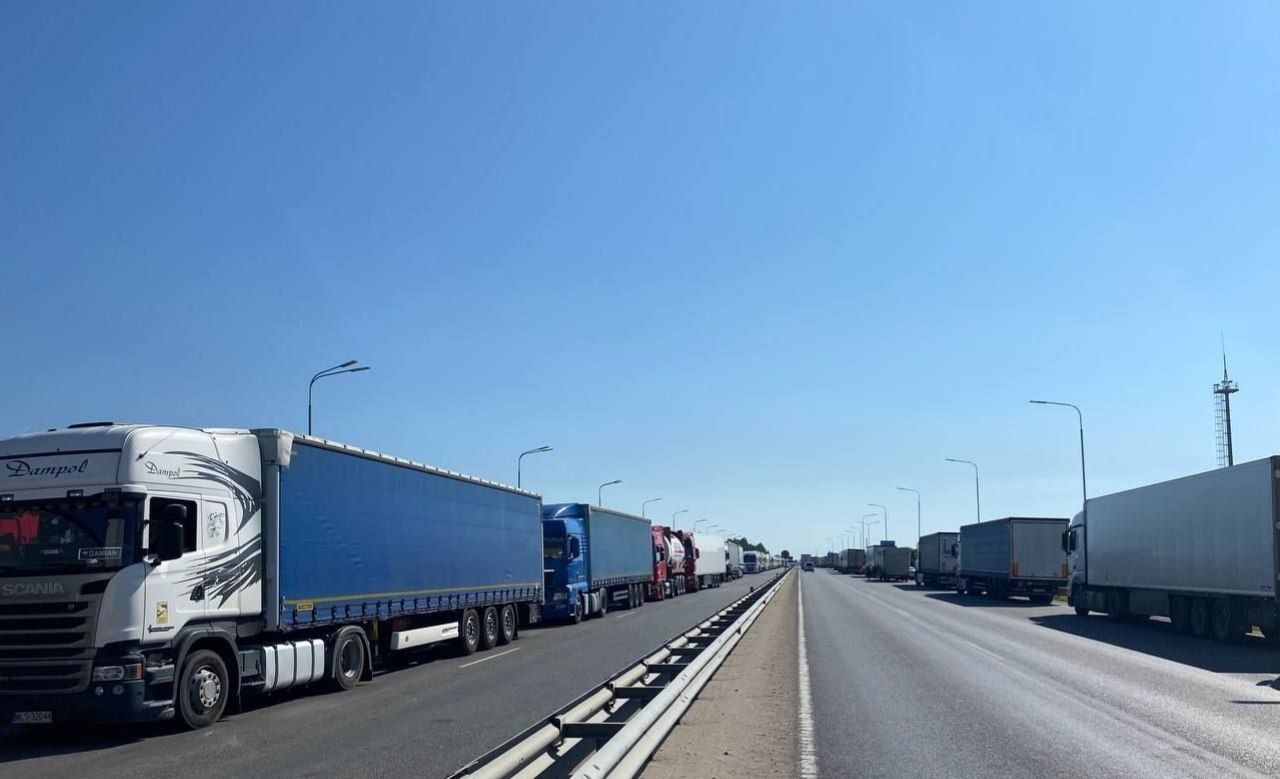
Since the start of Russia's full-scale invasion of Ukraine, the Eastern European countries of Lithuania, Latvia and Estonia have advocated for the toughest EU sanctions on Russia. They were no less active in advocating for the introduction of restrictions (albeit not as stringent as those against Russia) in relations with the Kremlin’s main ally in the region, Belarus.
We are talking, in particular, about a complete ban on the issuance of tourist visas for citizens of Russia and Belarus, which was not supported by other EU countries. The Baltic countries have also tightened the issuance of residence permits, limited transport links with Russia and Belarus, and introduced restrictions on the purchase of real estate.
At the same time, despite the harsh rhetoric of the governments of the Baltic states, the business of these countries behaved more cautiously and did not support the immediate abandonment of business and trade relations with Russia and Belarus.
When the supply of many goods to Russia became illegal, export flows were redirected to the post-Soviet countries of Central Asia and the Caucasus. Of these, economists and experts are confident that these goods were massively re-exported to Russian territory.
"Drone" studied in detail the statistics of foreign trade in the Baltic countries, talked with officials and experts in these countries to understand how export flows changed over the four years of war.
Thousands of sanctions violations
According to the Estonian Tax and Customs Department, almost 3,900 sanctions violations were detected when leaving the country in 2025. True, most of them were committed by private individuals and were insignificant - usually we are talking about the export of large amounts of cash European currency .
Some of the cases of violations reported by customs in recent months can be considered comical.
Someone tried to smuggle two expensive horse saddles into Russia. Someone tried to smuggle skates for skating, which fall under the concept of “luxury goods.” Moreover, two cases of illegal transportation of skates have been registered in recent months. The last one happened in March of this year - the violator was fined and the skates were confiscated .
Cases where violations are detected during exports by companies are not that common. But when they are recorded, we are talking about amounts worth millions of euros.
In March of this year, Estonian law enforcement agencies reported that for several years, a citizen of this country acted through “various companies”, supplying luxury cars from the EU to Russia and Belarus. The investigation believes that more than 200 cars worth a total of 25 million euros were imported bypassing sanctions.
“This was a large-scale and well-thought-out scheme, the purpose of which was to make a profit and evade sanctions,” said State Prosecutor Eneli Laurits.
The Estonian Tax and Customs Board in its report for 2025 indicates that in the case of legal entities, the largest number of violations was observed in the following product groups:
- wood and wood products, charcoal;
- vehicles and their parts and accessories;
- machinery and mechanical equipment;
- electrical machines and equipment;
- iron and steel products.
At the same time, the department directly states that in the case of transporting goods by rail, it is necessary to pay special attention to the supply of goods to Belarus, the countries of Central Asia and the Caucasus.
“Although EU sanctions limit the import and export of goods with Russia, transit through Russia of all goods subject to sanctions is not prohibited. Entrepreneurs should take into account the high risk of such transit, since delivery of goods to the destination country is not always guaranteed,” the report says.
Anomalous statistics
The department, in particular, emphasizes that the problem in 2025 remained “attempts to circumvent sanctions when exporting cars to Russia using third countries through which cars enter Russia.”
Indeed, since the beginning of the full-scale invasion of Ukraine, the trade statistics of Estonia, as well as the other two Baltic countries, have seen an anomalous surge in the volume of deliveries of many groups of goods to Kazakhstan, Kyrgyzstan and Armenia.
For example, exports to Kazakhstan increased sevenfold in the first year of the war in Ukraine. Exports to Kyrgyzstan, which before the war were at an insignificant level - in 2021 goods worth 283 thousand euros were exported from Estonia - increased to 15.5 million euros in 2022.
An identical abnormal increase in the export of goods, many of which are prohibited for direct export to Russia, was observed in other Baltic countries - Latvia and Lithuania.
Export of goods from Estonia (2021-2025, euro)
2021 | 2022 | 2023 | 2024 | 2025 | |
Kazakhstan | 11,018,390 | 77,793,284 | 106,455,214 | 41,698,381 | 46,288,313 |
Kyrgyzstan | 282,689 | 15,446,994 | 69,514,418 | 48,835,169 | 31,921,618 |
Armenia | 1,410,115 | 27,329,001 | 20,564,058 | 27,967,329 | 18,315,531 |
Source: Statistics Estonia
“This was partly due to the need to find new trading partners, as Russia had become a high-risk area for transport operators, and partly due to the fact that some companies operating in the EU tried to circumvent sanctions,” Ursula Riimaa, Deputy Director General for Customs at the Estonian Tax and Customs Department, said in an interview with Dron.
According to her, as soon as the first signs of mass circumvention of sanctions appeared, the country's authorities reacted quickly. “We have mapped high-risk goods and companies and agreed on joint sanctions controls with neighboring countries to prevent potential violations. These steps have been effective, as reflected in a significant decrease in trade with high-risk countries,” adds Ursula Riimaa.
Cars, spare parts, rolled metal
The conclusions of the Estonian authorities about attempts to circumvent sanctions through the countries of Central Asia and the Caucasus are confirmed by Paulis Iljenkovs, deputy head of the Latvian Financial Intelligence Service (FDI). Since 2024, this department has become a single government body responsible for investigating possible cases of violation of sanctions against Russia when exporting goods from Latvia.
According to him, abnormal export figures indicate attempts by businesses to circumvent sanctions. On the other hand, exports to these countries are not prohibited, so the authorities of the Baltic countries can only strengthen control and bring violators to justice.
“If a car, which was sent according to documents to Kazakhstan, is found on Russian territory, the money for it will be confiscated [from the exporting company],” Paulis Ilenkovs says in an interview with Dron.
In 2024-2025, statistics from the Baltic countries show a significant decrease in export volumes to post-Soviet states, from which sanctioned goods may be re-exported to Russia. True, exports for many groups of goods still remain abnormally high compared to pre-war levels.
Export from Estonia of vehicles other than railway or tram rolling stock, as well as their parts and accessories (2021-2025, euro)
2021 | 2022 | 2023 | 2024 | 2025 | |
Kazakhstan | 280,588 | 8,441,837 | 10,295,563 | 5,022,771 | 4,844,553 |
Kyrgyzstan | 33,900 | 2,032,752 | 18,769,285 | 17,906,588 | 6,445,630 |
Armenia | 37,450 | 3,336,019 | 3,315,700 | 5,422,661 | 1,168,402 |
Source: Statistics Estonia
In particular, Estonia's exports to Central Asian countries have fallen by approximately 30% compared to 2023. The largest declines were recorded in categories such as automobile parts, wood and wood products, as well as rolled metal. It was in these categories that Estonian customs authorities suspected massive sanctions evasion.
Exports to Armenia today account for approximately 1.25% of Estonia's total exports, and have declined in recent years, mainly due to a decline in exports of automobiles and their spare parts.
Currently, when exporting vehicles, Estonian authorities carry out post-customs checks, and if it becomes clear that the vehicles were subsequently re-exported to Russia, they suspend further exports by that company until the exporter “can demonstrate sufficient diligence to prevent such re-export in the future,” says Ursula Riimaa.
Brussels losing patience?
According to Paulis Ilenkovs, both the strengthening of control measures in the Baltic countries and the persistent exhortations of the European Commission to post-Soviet countries to take control of the situation with re-exports played a major role in the decline in export volumes.
Indeed, officials from Brussels have been negotiating with the countries of Central Asia and the Caucasus for a long time, trying to convince them to do something about the flows of re-exports to Russia. True, the European Commission has always stated that it is trying to act only through diplomatic pressure and persuasion, without threats of introducing harsh sanctions against these countries.
But it seems that Brussels has been losing patience with the countries of Central Asia and the Caucasus in recent months, since the situation with some categories of goods is far from improving - they are still being re-exported en masse to Russia. However, some of these categories can be used in the military industry.
In April, for the first time in history, the EU activated a “tool for combating sanctions evasion” against Kyrgyzstan due to the re-export of a number of sanctioned goods from this country to Russia, the European Council said in a statement . Brussels has banned the export of computer numerical control (CNC) machines to Kyrgyzstan, as well as telecommunications equipment, including routers and switching equipment.
“This decision follows a thorough analysis of trade data showing a significant increase in re-exports of priority goods through Kyrgyzstan to Russia,” the statement said.
According to Brussels, in January-October 2025, the import of these goods from the European Union to Kyrgyzstan was almost 800% higher than the pre-war level, and the export of the same goods from Kyrgyzstan to Russia was 1,200% higher. The message does not indicate which EU countries these goods primarily come from to Kyrgyzstan.
At the same time, Deputy Prime Minister of Kyrgyzstan Daniyar Amangeldiev, in an interview with Western journalists, said that Kyrgyzstan’s contribution to the total volume of re-exports of many sanctioned goods to Russia is extremely insignificant.
“Some goods were not supplied at all before [before the war], but now, if, for example, only 100 units were imported, this is immediately assessed as a 100-fold increase in imports,” the Deputy Prime Minister complained.
At the same time, according to him, “not a single European state” has made direct claims to Kyrgyzstan regarding re-exports to Russia.
Tighter controls vs new routes
Ursula Riimaa says in an interview with Dron that the decrease in export volumes from Estonia to the countries of Central Asia and the Caucasus in 2024-2025 is due, among other things, to increased control measures.
“In August 2024, full customs exit controls were introduced at the eastern border of Estonia - no goods, travelers, or vehicles are allowed to cross the border without inspection. In addition, vehicle movement and night crossings were suspended at the Narva checkpoint, and similar restrictions were also introduced at the Luhamaa and Koidula checkpoints,” she says.
Paulis Iljenkovs adds that at the beginning of 2024, the Baltic countries also concluded an agreement on the harmonization of customs control, which allowed for a unified approach to customs control in the region.
Ursula Riimaa adds that legislative changes that came into force in April 2025 gave the Estonian Tax and Customs Department the power to treat minor violations of sanctions as offenses, and to initiate criminal proceedings in cases of more serious or repeated violations related to the import and export of goods.
“This important additional tool has helped reduce re-offending and make criminal proceedings more efficient and faster,” she said.
Export from Lithuania of vehicles other than railway or tram rolling stock, as well as their parts and accessories (2021-2025, thousand euros)
2021 | 2022 | 2023 | 2024 | 2025 | |
Kazakhstan | 43,737.6 | 125,664.1 | 143,388.9 | 48,394.8 | 31,078.0 |
Kyrgyzstan | 13,104.2 | 84,777.8 | 132,032.6 | 29,349.8 | 22,152.8 |
Armenia | 488.9 | 43,822.5 | 36,309.4 | 1,833.6 | 1,314.0 |
Source: State Statistics Agency of Lithuania
Exports of cocoa and cocoa products from Lithuania (2021-2025, you euro)
2021 | 2022 | 2023 | 2024 | 2025 | |
Kazakhstan | 443.4 | 931.7 | 1,263.3 | 1,204.9 | 1,014.5 |
Kyrgyzstan | 139.0 | 281.1 | 597.6 | 830.5 | 541.9 |
Armenia | 16.8 | 2,655.1 | 3,844.3 | 18.7 | 3.7 |
Source: State Statistics Agency of Lithuania
At the same time, Russian logistics companies that analyze the market for services for the delivery of sanctioned goods to the country argue that the authorities of Kazakhstan and, to some extent, Kyrgyzstan, have indeed tightened their approach to re-export.
“Kazakhstan and Kyrgyzstan, which have long served as the main transit points, have faced severe pressure from the United States and the EU. Banks in these countries are massively refusing transactions with Russian counterparties, and customs carefully checks “dual-use” cargo. In response, logistics companies have reoriented to less visible routes, for example, through Uzbekistan and Tajikistan, where controls are still weaker,” states the Russian company Sky Cargo Service.
The company adds that Vietnam, Malaysia, Indonesia and Singapore are now also becoming new “transshipment” centers for goods going to Russia.
"Fragmentation and decentralization"
The State Tax Service of Latvia, commenting on the situation with attempts to circumvent sanctions against Russia, says that this is “a complex and constantly evolving process due to the international nature of trade and sophisticated circumvention schemes.”
“There are various problems, such as fraud with the provision of false codes of the combined nomenclature, false information about the country of destination of goods and forgery of documents,” a senior official of the service says in an interview with Dron.
According to him, Latvian customs is currently focusing on effective international cooperation, information exchange and coordinated control measures within the EU. “Latvia is actively involved in this cooperation and has significantly strengthened both its legal framework and operational capabilities in recent years,” he said.
At the same time, Paulis Ilyenkovs argues that the main problem is the “fragmentation and decentralization” of the fight against sanctions evasion in the EU. “I believe that we managed to create a system, and it works well. But if in Latvia 700 investigations of possible sanctions evasion were registered, then in some other EU countries there were none,” he says.
The official adds that the biggest problem for the country's regulatory structures is the transit of goods produced in other EU countries. “80 percent of sanctions violations that are recorded are related to companies from other EU countries,” he says in an interview.
According to Swedbank economists, exports of goods produced in the Baltic countries to Russia at the beginning of 2022 were relatively small - their volume amounted to about 2% of total exports. At the same time, re-exports of goods produced in other countries were significantly large, especially in Lithuania (more than 10% of total exports) and Latvia (approximately 7.5%).
Sanctions against Russia led to the loss of a significant part of Latvian exports to these countries, which affected the slowdown in economic growth, especially in 2022. Among the economic sectors of the Baltic countries, the greatest damage was caused to the logistics sector.
In addition, the Baltic countries were vulnerable due to the loss of some import flows from Russia and Belarus (especially Lithuania, where imports from Russia accounted for approximately 12.5% of total imports). At the beginning of 2022, the Baltic countries imported significant volumes of oil, natural gas, timber, metals and fertilizers. Some companies in Lithuania, Latvia and Estonia experienced short-term supply disruptions for these and other goods while they sought new suppliers.
Initial uncertainty over the war in Ukraine also delayed some private investment in the region, economists say.
Liva Sorgenfreja, chief economist at Swedbank in Latvia, explains to Dron that the greatest growth in recent years has been observed in the export of food products, chemical products, machinery and transport equipment to other post-Soviet countries.
At the same time, the significant increase in the share of food exports from Latvia is partly explained by the fact that Russia itself previously introduced a ban on direct imports of food products from the EU. This was done by Moscow long before the full-scale invasion of Ukraine in an attempt to “punish” producers in EU countries for European sanctions against the Kremlin that were introduced after 2014.
Belarusian transit
Significantly fewer categories of goods are prohibited for export from the EU to Belarus than for export to Russia. And this also creates a problem for monitoring sanctions circumvention, especially for Lithuania and Latvia, which share a border with this country.
Export of meat and meat products from Lithuania to Belarus (2021-2025, thousand euros)
2021 | 2022 | 2023 | 2024 | 2025 |
2,192.0 | 8,343.4 | 12,858.4 | 10,461.2 | 7,428.5 |
Source: State Statistics Agency of Lithuania
Export of cocoa and cocoa products from Lithuania to Belarus (2021-2025, thousand euros)
2021 | 2022 | 2023 | 2024 | 2025 |
4,472.4 | 4,251.2 | 13,415.1 | 8,420.8 | 11,209.4 |
Source: State Statistics Agency of Lithuania
In particular, economists have serious concerns that in 2022-early 2024 Belarus has become a transshipment base for cars that were banned from import into Russia after the outbreak of the war in Ukraine.
Only in June 2024 did the Lithuanian authorities begin to apply stricter control measures regarding passenger cars under five years old exported or transited to Belarus from the EU.
The export of a passenger car is now permitted (if it was purchased by an individual) only by the owner of the vehicle, and not by his close relatives or persons who have received a power of attorney from him.
In addition, to export these cars, you now need to provide a number of additional documents, in particular, confirmation from the exporter and recipient of the goods that it is not intended for Russia, and the car will not be sold or otherwise transferred for use in this country.
There are justified concerns that other goods supplied from the Baltic countries to Belarus may be re-exported en masse to Russia. At the same time, it is no longer possible to track this re-export using state statistics in Belarus. After the EU began to impose trade sanctions against this country, the authorities in Minsk stopped publishing detailed statistics on exports and imports, not wanting to give "trump cards" to Western countries when preparing new sanctions.
In addition to this problem, the Baltic countries do not have the same channels of communication with the authorities of Belarus as with the authorities of the countries of Central Asia and the Caucasus. The reason is that after the presidential elections in Belarus in 2020, which the EU recognized as fraudulent, Lithuania, Latvia and Estonia almost completely stopped communication with official Minsk.
At the same time, in November 2025, the Lithuanian government announced that it was ready to go even further and denounce the agreement with Belarus on legal assistance, which is a fundamental document for cooperation between law enforcement agencies of the two countries. Previously, Lithuania denounced the treaty with Belarus on the avoidance of double taxation.
"Help" for re-export
In the Baltic countries, immediately after the outbreak of the war in Ukraine, not only anomalies in trade statistics were recorded, but also a market for services began to emerge for assistance in completing documentation for exports, which could potentially end up in Russia in the future, regulatory authorities say.
“There are many entrepreneurs who loudly express support for Ukraine, but at the same time, when it comes to a specific business, a specific wallet, they are looking for ways, cracks into which they are trying to squeeze,” Santa Purgaile, head of the Latvian Financial and Capital Market Commission, previously said .
Ursula Riimaa confirms that in neighboring Estonia these consulting and service offers “were actually observed at the beginning of the war.” “The Estonian Tax and Customs Department has not encountered them recently, but this does not mean that they no longer exist,” she adds.
At the same time, according to some economists, the problem of circumventing sanctions against Russia is more relevant for the Baltic countries than for other EU states, since businessmen in these countries have always had closer contacts with Russia and Belarus due to geographical proximity, long-term personal connections, and the use of the Russian language for communication).
This is indirectly confirmed in an interview by Ursula Riimaa. According to her, many exporters are not ready to give up trade with Russia and Belarus in goods that are not subject to sanctions, despite the fact that many radical politicians in the Baltic countries have repeatedly called for a complete cessation of business contacts.
In reverse
At the same time, the problem of circumventing sanctions in the Baltic countries exists not only when exporting, but also when importing goods of Russian origin through third countries into the EU.
Ursula Riimaa says that last year Estonia recorded an abnormal increase in birch plywood imports from Kazakhstan, China and Georgia. “Checks showed that the actual origin of the plywood was Russia or Belarus, and therefore we blocked the import of several shipments on suspicion of violating sanctions,” she said in an interview.
In 2025, the Estonian Tax and Customs Service carried out a total of 618 inspections of timber supplies.
These checks revealed 23 violations, and another 79 shipments were immediately returned to the sender at the border. Later, another 39 shipments of wood that were allowed to be imported into Estonia were returned after additional checks.