Date
Author
Материал Роза Люкс; Максим Слав иллюстрации София Хананашвили
Source
Preserved copy
Translated material
“86% of Russians believe this and that.” Do polls say anything about us?
Since the beginning of the year, the level of trust in the Russian President has fallen by ten percentage points, showing the lowest values since the beginning of the war. This news caused a stir, although the government's rating is still at extremely high levels. Interest in such indices is often accompanied by harsh criticism: the media regularly criticize public opinion polls, for example, for unreliable data, incorrect reflection of reality, or manipulation of question wording. The demagogue asked the remaining sociologist Rosa Lux and the emigrated sociologist Maxim Slav to figure out whether the polls describe the real picture when headlines like “More than half of Russians are against the war” or “Russians are losing trust in Putin” appear in the media? Does “public opinion” even exist? And is it possible to calculate it?
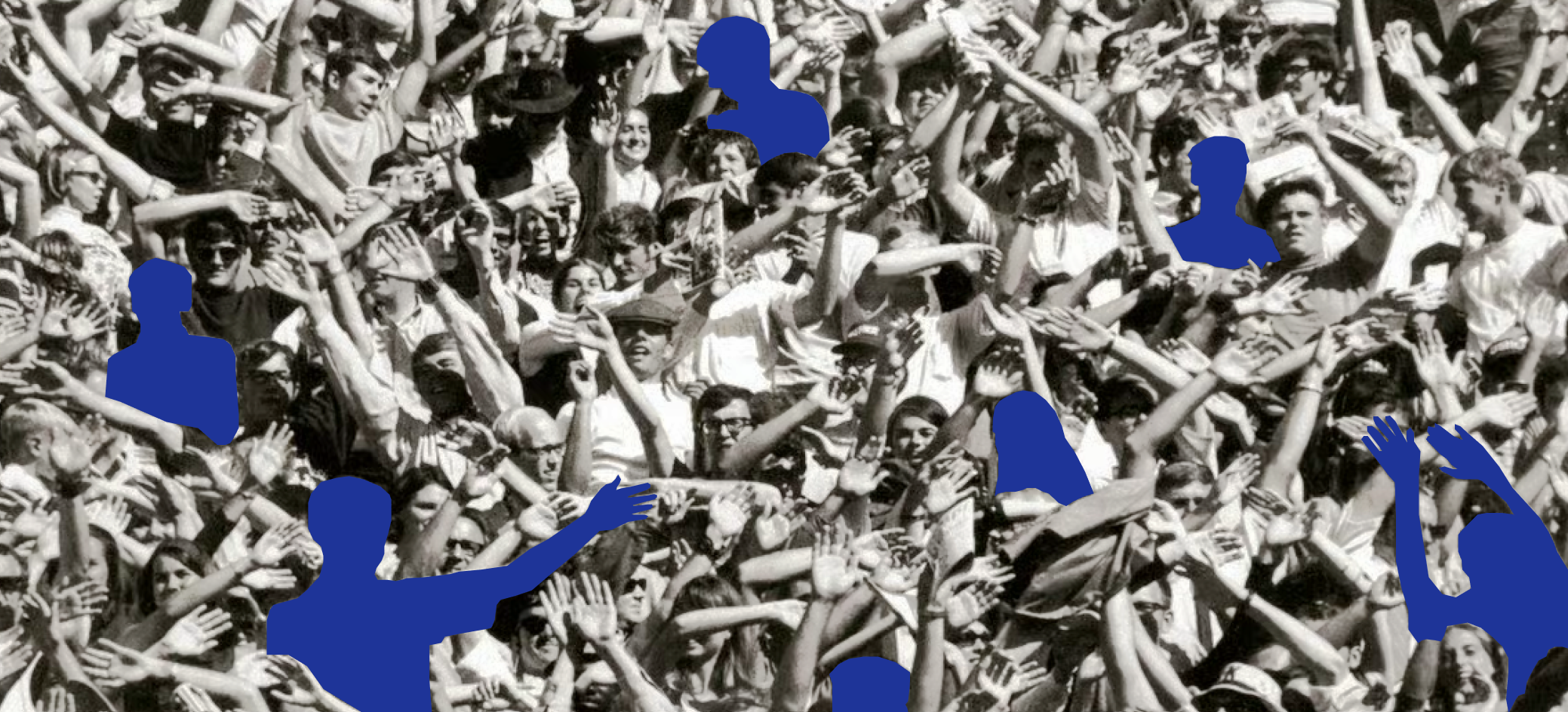
There is no single definition of public opinion. Most often, in a discussion, they first understand what “opinion” is, then what “public” is, and at the end they try to combine these concepts. But it can be described this way: public opinion is a public statement regarding a topic.
This is not a consensus at the level of a country or group, not a division of the sum of people’s opinions on some issue, but a public opinion. As soon as a person shares his thoughts, he starts a series of reasonings out loud and to himself - the parties to the discussion are determined by their opinions. It’s not about the popularity of an opinion, not about compliance with the mainstream, not about individuality and uniqueness (no one may support it). The issue being discussed may or may not concern the person. Only by being known to others does an opinion become public.
What shapes public opinion?
One of the first to study public opinion was the French sociologist and criminologist Gabriel Tarde . For him, this is a short-term and more or less logical group of judgments, which are held by many people in the same society, that is, in the same country in the same period of time. What is important is how people understand what they themselves think and what others think on the same issue.
Tarde studied public opinion as the opinion of the public, that is, people who are not in the same space, but have similar information, which they receive primarily from the media. In this coordinate system, it is the differences in the information published in different publications and in the way it is presented that become a factor in forming opinions among readers. For example, we know that information in Meduza differs from information in Rossiya Segodnya - not only because they cover different events, but also because their authors have different values and beliefs on the same issue. We call such authors public opinion leaders. As a result, the opinions of people reading Meduza and Rossiya Segodnya on the same issue will differ. And this connection - from Meduza, Lavrov or Kanye West to the public - is very important for Tarde.
But if there are many opinion leaders, can we still say that “all Russians believe this and that”? Tarde's audience would, indeed, be divided at least into Medusists and Russia-todayists. But not all authors agreed with this. In an article by contemporary sociologist Jiri Šubrt, this is called the debate between monists and pluralists. Monists emphasize the importance of some single opinion that prevails in society. Pluralists, on the contrary, pay attention to the differences of opinion among different groups. Moreover, supporters of the second approach speak not only about the plurality of existing opinions, but also about the plurality of the publics themselves in which these opinions are formed. That is, we cannot add up all Russians and talk about their attitude to something; this group will be too heterogeneous. And if there are several publics, each can have its own “public opinion.”
The pluralistic approach seems more adequate to describe reality. But if you stick to it, the question arises: Okay, there are many Russians, and they are different, but can we add up their “public opinions” (or the public opinions of 86% of Russians) and get some kind of “one general public opinion”? Strictly speaking, there is some kind of consensus: murder is bad; incest too; You can’t eat children... In general, Tarde seems to suggest that if the entire society is wrapped in one net of state propaganda, then there will be some other points of consensus. But not only is it phenomenally difficult to wrap a net around society, propaganda always runs into people’s personal experiences, their opinions and aspirations. When this experience is absent, people more easily adopt the mainstream point of view.
Philosopher and sociologist Pierre Bourdieu writes about this in his article “Public opinion does not exist.” Firstly, as the author notes, opinion is determined by personal predispositions and membership in social groups. And, accordingly, the very existence of an opinion about something depends on what the members of the group in question are faced with. Not everyone has an opinion on any particular topic. Secondly, not all opinions are actually meaningful, even if they are optimal . Public opinion is formed not from specific issues, but from a set of circulating (primarily in the media) news, comments and statements that imply a limited number of judgment options already chosen by someone. And thirdly, there is in fact no public consensus, which presupposes the question itself on any problem (this is again determined by social groups, classes and the degree of mobilization of such opinion), although sometimes the opposite feeling may develop.
For example, in 1968, a series of strikes, rallies and public protests broke out in France, which came from different movements: one - students (and academia), the other - workers. These movements came together because they saw one problem - capitalism. But these movements had completely different types of criticism of this capitalism: one by famous sociologists Eve Chiapello and Luc Boltanski is described as artistic (i.e. aimed at greater freedom), and the second as social (i.e. aimed at social security). Artistic criticism came, respectively, from students, and social criticism from workers and trade unions. Here the difference in the social conditions that determine the opinion of a group, as Bourdieu writes, is very clearly visible. Students who are not included in the labor market, or young professionals who have just entered the market from those same universities, have a completely different experience and, as a result, viewpoint than workers who have worked for twenty years in a factory.
And is it possible to add up their opinions? Yes and no. Yes - because they united into a single movement. No - because their criticism of the state and capitalism were of completely different kinds.
Is there a place for the state in this scheme?
Yes. Firstly, any government also contains a certain number of leaders of public opinion. To some extent, greater powers and the aura of state authority themselves provide a platform. Secondly, governments - democratic or not - have their own information policies. Thirdly, law (the adoption of laws and enforcement of them) creates the framework of the legal: and this itself gives an idea of what is the status quo (and the status quo is easier to maintain) and what is not.
Here it is worth mentioning the theory of the “spiral of silence” by Elisabeth Noel-Neumann. The point is that when we see certain ideas being more popular and supported by more people, we are less likely to share them if we have an opposing opinion. Or we don’t share at all. This is very well demonstrated by the current situation in Russia: on every corner there are posters with an offer to join the ranks of the Russian army, and people are imprisoned for having a different opinion. Will a person, at his own peril and risk, express his opposite opinion to the official one proclaimed on every pillar? Even if it does happen, it will most likely be in the kitchen with friends.
For this effect to exist, it is not necessary to persecute an opposing opinion. A person becomes silent, not seeing support around him, assuming that everyone thinks differently, even if the actual balance of opinions is equal.
Why don't opinion polls measure public opinion?
What is usually presented to us as public opinion on any issue (for example, “Russians do not consider higher education a prerequisite for successful employment”) is in fact the result of public opinion polls. The difference is primarily that public opinion polls are constructed by researchers. And here many different methodological and methodological problems may arise related to, firstly, who and, secondly, how these researchers will interview.
In the first case, we are saying that some selection of respondents (the so-called sampling bias) will occur in any case. Not everyone has phones. Not everyone has access to the internet, and even if they do, not everyone will see your Google Form. The choice of survey method (personal survey, telephone, Internet) will also influence the results of the survey simply because people think differently under different survey formats. These differences can be significant.
In the second case, it matters what question you ask. For example, if you are collecting opinions about the education system, you can ask what respondents are dissatisfied with, or you can reformulate: do people approve of the school principal or the existence of the national project “Education”. At the same time, perhaps someone is not satisfied with the way the director dresses, so they will not approve of him, but everyone will approve of the national project, because by association with the federal government it has an aura of authority. Behind the discrepancies between formulations there are always differences in social groups and media. And the results - these artificial differences and convergences of opinion - can be used to mobilize (or demobilize) certain groups.
The above does not mean the absence of public opinion as such, that is, it does not mean the existence of publicly expressed judgments. However, opinion, as questionnaires suggest it (i.e., opinion as a clear and stable vision of the situation, ideally described by the answer to the question), does not exist. For example, the further you are from the education system, the less you know about internal problems, the less interested you are, the less formed your own opinion and the more you rely on the mainstream, which is formed, among other things, by public opinion polls. But, of course, what surveys record may formally coincide with the real balance of judgments presented in society.
How are Russians selected?
One can hear from critics of public opinion polls in Russia that no polls work today, hinting, among other things, at a “spiral of silence.” At the same time, few things cause as much excitement as a decline in the president's ratings. We do know that, for example, after the outbreak of war, the proportion of people agreeing to take surveys fell from the natural twenty to five percent. Can we assume from this that these five percent of respondents are the bravest or, conversely, the people most in line with the state?
In reality, the question “Who is being interviewed?” arises not only in Russia and not only in wartime. In the West, they also wonder about the representation of various groups in the sample: because the weight of people with a certain position ultimately greatly influences the results obtained. This is most acutely felt in the situation of predicting election results. Today's polling industry is the result of an evolution in which those who accurately predict elections win. For some time in the United States, they simply surveyed newspaper readers who also happened to be active voters. This stopped working when the main electorate shifted to other groups of the population. Later, American sociologist Paul Lazarsfeld found that public groups with different issues that concern them also vote differently. More recent variations include elections involving Trump and discussions about who is silent more - redneck husbands or their wives.
And the question is not always how many people we interview. For example, in 1936 in America, before the presidential election, the weekly magazine Literary Digest conducted a survey in which more than two million respondents took part. It seemed that the more respondents, the more reliable, but in the end the actual election results did not coincide at all with their predictions, but they coincided with the predictions of George Gallup, who polled only fifty thousand. Here the question is more methodologically complex , because the result depends on the sample size, the method of its construction, and the survey method itself.
For example, now in Russia it will be increasingly difficult to organize an online survey, because in many regions there is simply no Internet. And VTsIOM, which quite actively used telephone surveys, decided to switch back to face-to-face interviews: survey calls are marked as spam and blocked by the operator. And in the United States, the method of robotic telephone interviews was very actively used - one can imagine what kind of reaction a monotonous non-human voice at the other end of the tube evokes in respondents today. Unrealistic data may also appear when analyzing publications on social networks, which changes not only depending on the social network, but also on time: VKontakte posts ten years ago and today have completely different contexts, which previously could more accurately predict the results of mayoral elections (Navalny vs. Sobyanin), but are now teeming with paid pro-government posts.
Can we say that the people who ultimately make it into the final sample will be the ones most aligned with the government’s position? No, either, because the group that most agrees with the state’s opinion, in principle, does not participate in surveys.
When we talk about public opinion polls, we always mean averages. We operate with the same concepts when interpreting. At the same time, the interpretation does not always capture the opinions of different groups; it also averages them, so that in the end the statement is obtained: “86% of Russians believe so-and-so.” Although real groups can be well represented in the sample, relying on the criterion of similarity of opinions of people in a similar social and class situation. Sampling always implies some probability of discrepancy between survey results and “real opinions”; the only question is how high they will be. And we can find out this, for example, by comparing different methods.
Or it may happen that some people simply do not have an opinion on a certain issue. And in this case, non-answers will be tantamount to “difficult to answer.”
Russians are against war and Putin?
And so it turns out that the statement “Russians are against the war with Ukraine” (as well as the opposite “Russians are for the war with Ukraine”) has many problems. Firstly, it’s worth talking about which Russians were affected by the war and in what way. Are these members of the SVO or their relatives? Are these people living under shelling? Or are they Muscovites who are confused due to a mobile Internet shutdown? Each of these questions makes it possible to identify its own social groups, affected to varying degrees by the war and its consequences. People who are not directly exposed to hostilities are often not concerned about the war, but about the prices of cucumbers in stores.
Of course, further chains of logical judgments may lead to the conclusion that prices are rising due to military actions, subsequent sanctions, bombing of oil refineries, etc. Or they may not. Likewise, value beliefs can lead people to opposite conclusions about who is actually to blame for these rising prices and network outages, whether it is possible to influence this and what to do.
The wording matters too. Different terms evoke certain associations, and in the absence of a clear opinion, they can incline respondents to certain answers. Are Russians against murder, against war, against the war with Ukraine or against the North Military District? Of course, killing is bad, this is the social consensus. What if they say “special military operation”? And if they ask: “Do you support or do not support the decision of Russian President Vladimir Putin...” ? The back straightens itself. At the same time, we have long seen that of all Russians , about a third support the war, about a third do not support it (ten percent do not openly support it), and about a third have no opinion. If you wish, you can gather both two-thirds against the war and two-thirds for it.
With the approval of the president, the situation is even more complicated, because the president himself is too distant, abstract and unattainable an idea. At the same time, ask people how they feel about the actions of local officials, the picture will be completely different. Why? Because these officials are a real expression of the problems or, conversely, improvements in which we live and which we face every day. Anthropology says that the construction “good king - bad boyars” is common in any hierarchical society, but it is believed in it primarily by those dissatisfied who generally agree with the social contract.
What makes the polls even more sensitive is the fact that, according to our respected colleagues , Russia is an acclamation democracy. In other words, it is from the results of polls, elections and referendums that the legitimacy of the ruling regime comes. Falling ratings, accordingly, mean a loss of regime strength. In this regard, the publication of negative polls is not only a reflection of the responses of real-life people, but also an action that has political consequences (and therefore something that can be manipulated in the apparatus struggle, as Elena Koneva and Konstantin Gaase suggest).