
Translated material
The Reds are back. Russian youth are looking for an alternative to war in the ideas of communism
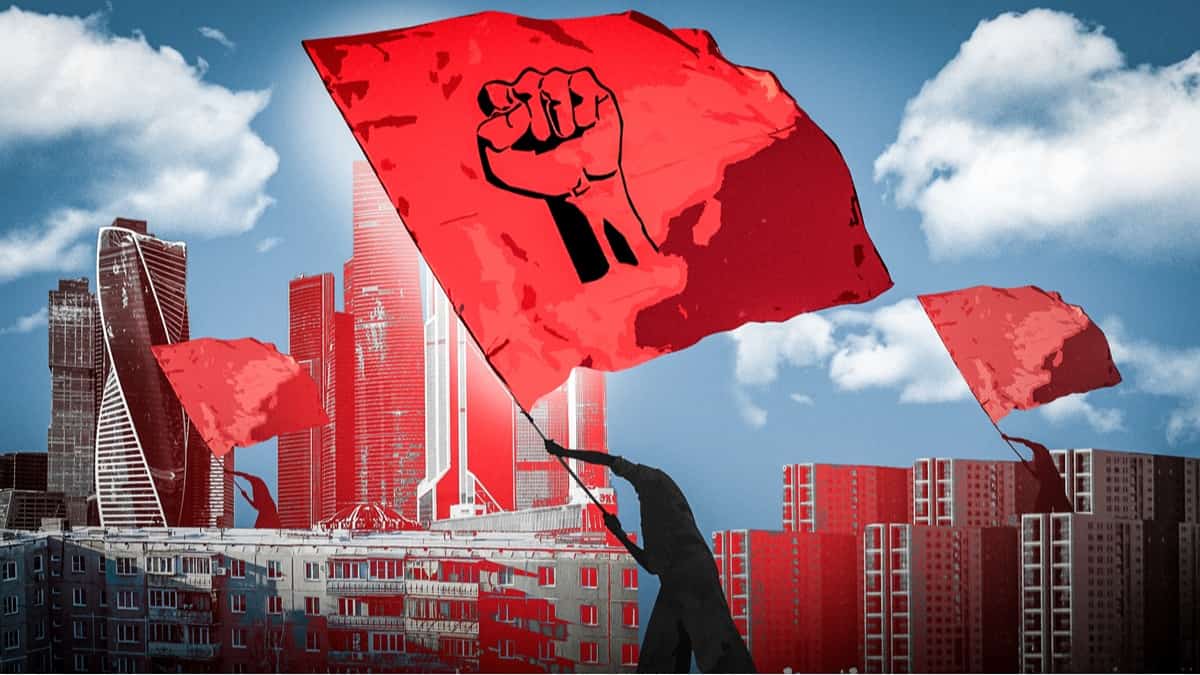
Russian youth are looking for an alternative to war in the ideas of communism
“If you do not urgently take financial, economic and other measures, then in the fall what happened in 1917 will await us. We have no right to repeat this!” - said the leader of the Communist Party of the Russian Federation Gennady Zyuganov at a State Duma meeting on April 22, Vladimir Lenin’s birthday. Then the party clarified that Zyuganov did not mean the October Revolution at all, but the February Revolution. But it is obvious that by 2026 the Communist Party of the Russian Federation has become an integral part of the state system, and a real revolution is the last thing the party leadership wants. At the same time, in conditions of war and the deepening economic crisis in Russia, the demand for real left-wing politics is growing at a rapid pace. Leftist bloggers like Andrei Rudoy are gaining millions of views on blocked YouTube, leftist zoomers are organizing campaigns for the introduction of a luxury tax on the super-rich, and small radical groups of Marxist-Leninists, Trotskyists and Maoists are among the main active fighters for a free Internet. “New Europe” understands how this environment works in Russia.
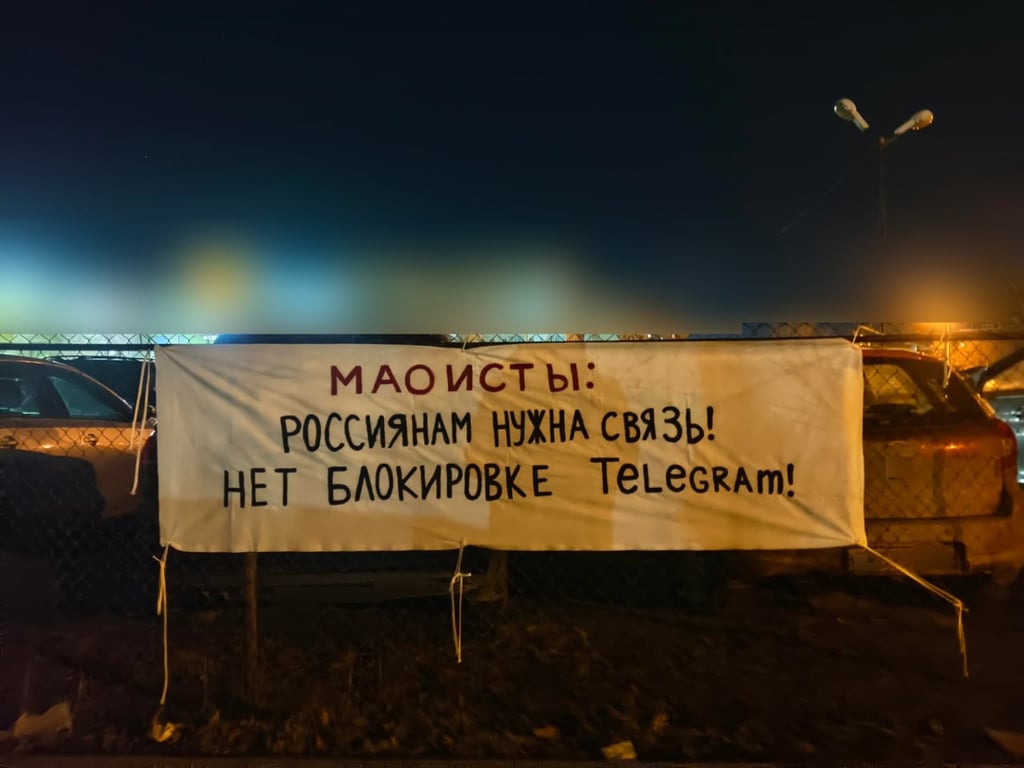
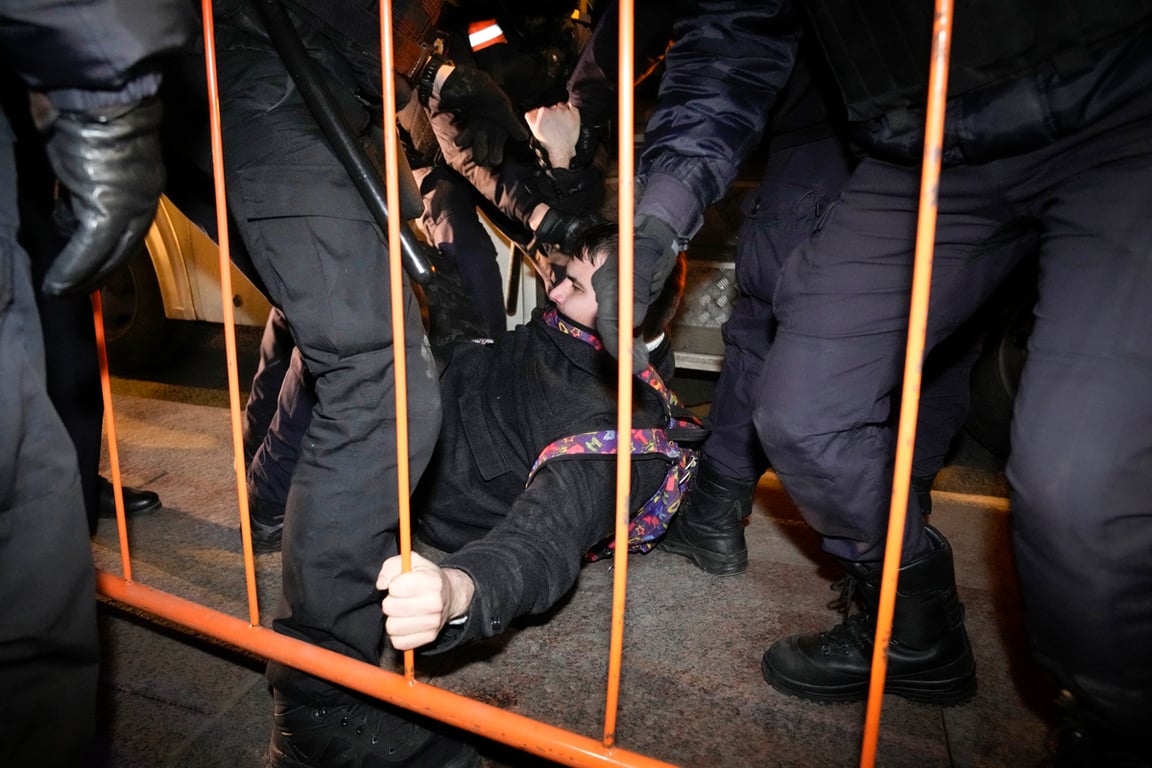
“Maoists: Russians need communication! No to Telegram blocking,” this is the banner hung on one of the streets in Chelyabinsk by activists of the Union of Maoists of the Urals at the end of March. This did not go unnoticed by local security forces: at the time of writing, two people had already been detained . According to unconfirmed reports, police allegedly seized explosives from one of them.
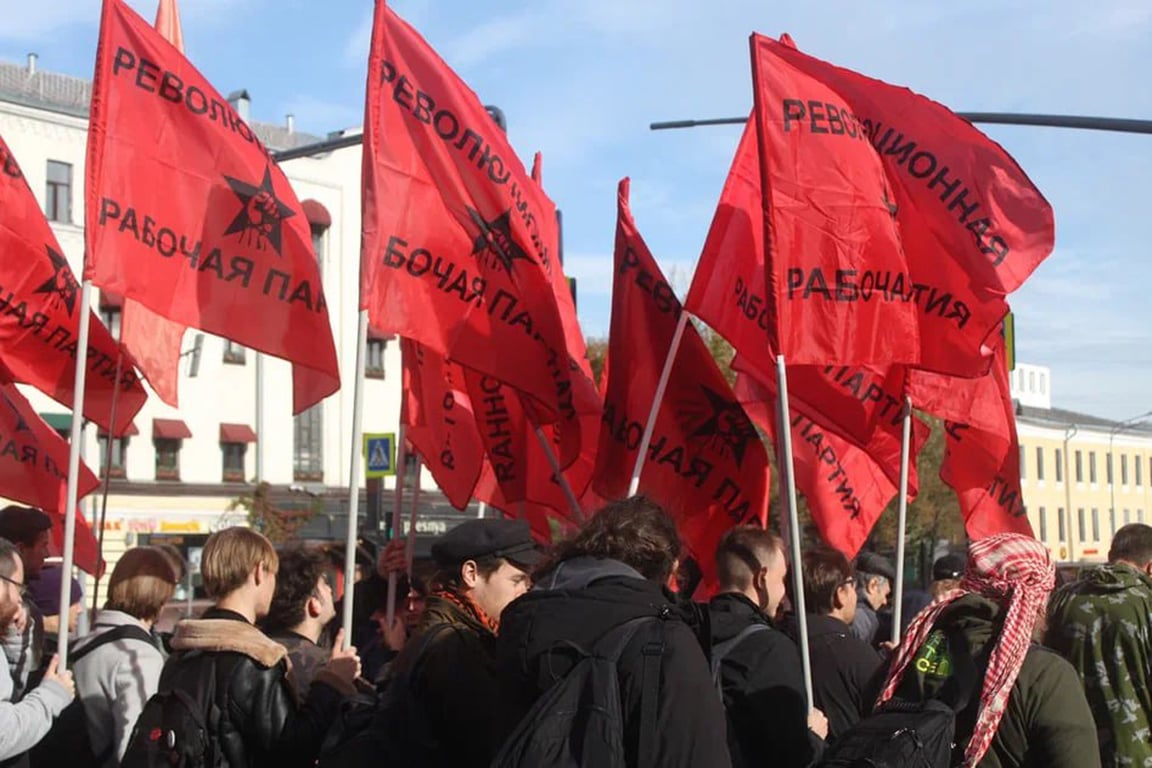
The Trotskyist Revolutionary Workers' Party puts up leaflets against being forced to use the Max messenger and distributes party press in front of the entrance gates of factories near Moscow. “Lenin did it, so can you!” - this is the call they convey to the workers in their propaganda materials.
The Russian Communist Party (Internationalists) became the proponent of a rally in Novosibirsk against cattle slaughter, and it was also among the main proponents of rallies and pickets in different cities against Internet restrictions. Operating in Russia, the RKP(I) manages to criticize the SVO: the VKontakte group was recently blocked for this.
Anarchists from Autonomous Action offer to download (this requires a VPN) and, taking precautions, distribute propaganda materials against the war with Ukraine. They regularly publish photographs of such posters from different cities.
— Whether in Russia or anywhere else, young people come to radical left groups because they strive to find the truth. Radical politics, especially left-wing politics, makes it possible to be in non-stop mode of truth production: to create a huge number of texts, statements, and take public actions, says Novaya Gazeta Europe’s interlocutor, a programmer from Moscow who previously participated in the activities of similar left-wing radical groups .
He notes that radical thinking is not too interested in achieving goals, more in the process itself, so it is pointless to talk about what these radical groups are able to achieve in modern Russia - according to the interlocutor, they achieve something “in spite of, rather than thanks to.” For such activists, references to historical figures - Trotsky, Kropotkin, Mao, Che Guevara or Stalin - are more likely a subcultural or even religious tradition, with the help of which it is easier to build a narrative.
— Why did I become a communist in high school, and not a Tolkienist or a punk? I don’t have an answer, I probably had a desire to find a medium for intellectual communication. I went to meetings, pickets, and was a member of organizations. There were very few of us, everyone knew each other. We were very disconnected from society and its problems,” the programmer recalls.
However, such movements should not be discounted, the source notes.
— When and if political opportunities open up in Russia, everything that happened will matter. Some people from leftist groups will certainly take part in the new politics.
Organizations change quickly, it is more likely that there will be some new ones. If we compare it with perestroika: the “Democratic Union” itself did not achieve anything, but people from there participated in many places, notes the former activist.
The demand for left-wing politics in Russia is now indeed much wider than the supply of small semi-subcultural Marxist and anarchist circles.
“In a situation of war fatigue in Russian society, an increase in direct military losses, mass layoffs, economic recession, tax increases, insane actions of the authorities such as slaughter of livestock without explanation or compensation, in such a context, any social demands, any criticism of the authorities from the left have great potential,” notes publicist Ilya Budraitskis in a conversation with Novaya-Europa.
VTsIOM, which is loyal to the authorities, has recorded a not yet catastrophic, but a stable decline in the ratings of United Russia and President Vladimir Putin personally. Also, according to VTsIOM, in addition to SVO, rising prices and the situation in medicine are the main problems of concern to Russians.
— I am convinced that in a future, democratic Russia, the left will occupy the majority in parliament. Maybe it will be several parties, says former deputy of the Moscow City Duma and member of the Communist Party of the Russian Federation Evgeny Stupin . “There are already many left-wing structures and people who are waiting for the opportunity to be included in the legal struggle.
Russians have a great demand for social justice, that is, for a left turn. And, unfortunately, there is a big demand for nationalism: due to the fact that migration policy has completely failed, and also because there are now many military men in Russia, and they are mostly right-wing.
The liberals will have the hardest time in this situation, Stupin believes. After all, the middle class, which traditionally supported Alexei Navalny and other liberal movements, is slowly disappearing - someone left Russia, became impoverished, or, on the contrary, joined the elite, Stupin is sure.
Stupin himself was forced to leave Russia in 2023 due to the threat of criminal prosecution. But his total audience on Telegram and Youtube is almost a million people. He uploads videos and posts dedicated to social conflicts in Russia.
In the conditions of an almost complete ban on rallies, pressure on the media and the lack of competition in elections, it is difficult to assess the demand for certain political ideas. A number of Russian left-wing media have tens of thousands of subscribers on Telegram and hundreds of thousands on YouTube. Less than many liberals or nationalists, but the left is gradually catching up with its competitors.
There are few public figures among the far left, partly due to the risk of persecution. School teacher and independent trade union activist Andrei Rudoy is one of the most popular left-wing bloggers, he has more than 350 thousand subscribers on Telegram and YouTube. He also managed to leave Russia and avoid arrest. Another popular left-wing publicist, Boris Kagarlitsky, stated that he would not leave Russia on principle, and is now serving a five-year sentence - allegedly for “justifying terrorism.”
In general, social topics are very popular now, in an election year, says an interlocutor of Novaya Gazeta Europe , close to the Just Russia election campaign.
— Patriotism is a niche story for military telegram channels, which is already boring everyone.
And the social sphere is very important: initiatives affecting real estate issues, pensions, and bankruptcy problems are spreading well. Rules for selling real estate, prices, mortgages are a very hot topic.
Prices for housing and communal services, of course. Car loans and recycling fees also worry people,” says the political strategist.
Perhaps this is why the recently emerged popular opposition movement Dawn associates itself more with social democratic ideas than with purely liberal ones. Among the topics raised by Rassvet is the right of Russians to natural rent from their country’s mineral resources.
Charles University employee Dmitry Dubrovsky is also confident that an independent left party in Russia may have serious potential in the future.
— A generation has grown up in Russia for which the Soviet experience is not significant. The generation that grew up in the 2000s associates the current regime with capitalism: with injustice, the lack of social elevators, a growing system of inequality, with [the state] protecting only the rich,” notes Dubrovsky.
Mikhail Lobanov, a politician and mathematics teacher who left Russia, in a conversation with Novaya-Europa, notes that since the major protests of 2011–2012, the leftist environment in the broad sense “has grown many times over.”
— Political socialization through leftist views is now statistically one of the most popular among young people. And this colossal growth over 20 years was not accompanied by any comparable growth of left-wing structures and organizations. These small groups, which change names, never exceed 200 members at their peak, he says.
This is a traditional format in which the left has existed since perestroika. Although it significantly reduces their possible political influence, it ensures a fairly high degree of survival in the conditions of the clearing of the political space. These circles have long worked out ways of existing without mass structures and large cash injections. They adapted to working without paid functionaries, holding meetings in apartments or eateries, and printing leaflets with modest contributions from small salaries.
Another source of renewal in the composition of left-wing movements was the rise of the ultra-right - and the undeniable fascisation of the state as a whole. Thus, the Student Anti-Fascist Front, which is legally operating in Russia - it organized protests against the Ivan Ilyin School at the Russian State University for the Humanities, which ended with the resignation of the university rector - publishes critical materials about the recruitment of students into unmanned troops. He also launched a campaign to introduce a luxury tax to fund housing subsidies for young people.
Mikhail Lobanov notes that new activists often come to anti-fascist groups after encountering manifestations of fascism and Nazism and independently searching for information, and not as a result of campaigning.
“We see that young people, even without direct connection with older, more experienced comrades, find out that there was once an organized street antifa movement, that there was such a Stas Markelov, information about protests in the past,” says Lobanov.
Young left-wing radicals make up a significant part of the participants in the commemorative events on January 19, the anniversary of the murder of lawyer Stanislav Markelov and Novaya Gazeta journalist Anastasia Baburova by the Nazis.
Young leftists still often fight Nazis on the streets of Russian cities. Many cities have Food Not Bombs groups, an initiative that distributes food to those in need.
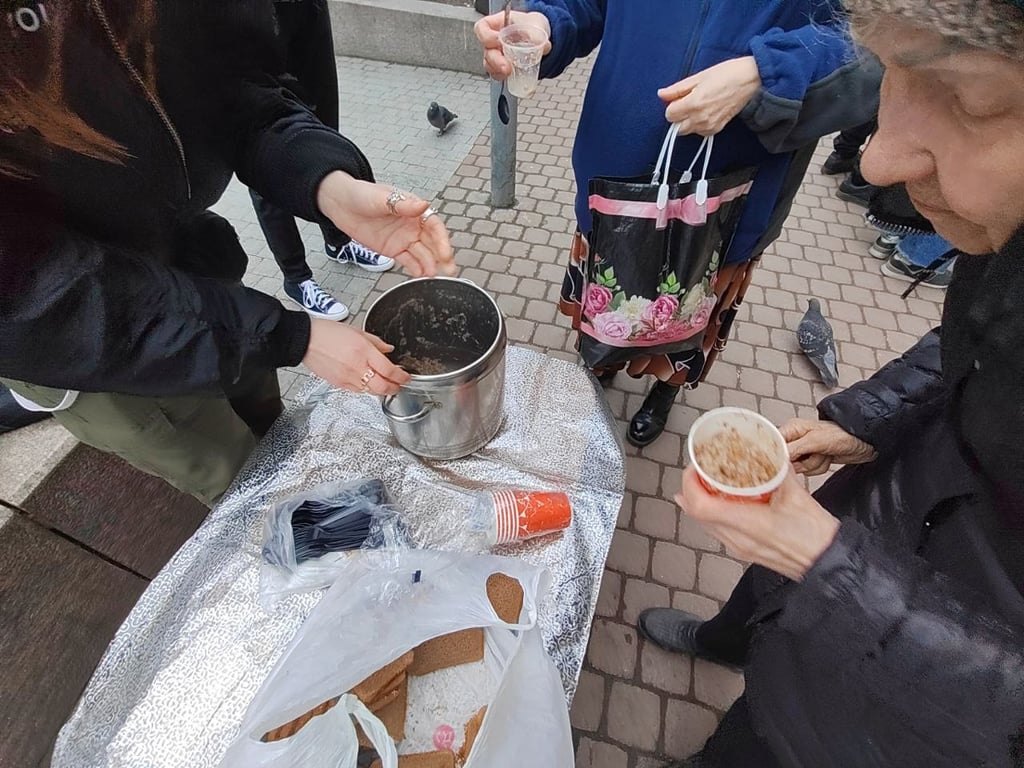
People of the same anarchic-anti-fascist political vector still support Antijob.net , a service with 140 thousand reviews about working conditions in Russian companies. Left groups are a traditional source of personnel for Russian independent trade unions. There is often not much distance between reading the works of Kropotkin or Trotsky and practical assistance in labor conflicts to teachers or doctors.
This activity attracts the attention of security forces: recently a series of searches were carried out in the offices of the remaining independent trade unions in Russia as part of a criminal case about the alleged embezzlement of money collected by union members. At the same time, pro-government telegram channels showed a video excerpt from the search, which showed the seizure of brochures printed in partnership with foreign foundations.
— There is a broad left-wing youth circle, groups are emerging that want radical forms of struggle. But recently, inside Russia, we are increasingly learning about the activities of left-wing radicals from criminal cases,” says an interlocutor of Novaya Gazeta Europe, who lives in Russia and previously actively participated in one of the Trotskyist organizations.
Among the recent high-profile criminal trials is the case of the youth group Antifa Untied, the convicts received long sentences in February for fights with the far right and posts on social networks. The alleged leader of the group, Bogdan Yakimenko, received 9 years: other defendants in the case were forced to testify against him.
Young activist Harry Azaryan from the Workers' Power group received two years in a settlement colony for radical calls at a meeting of the organization. The leader of the Organization of Voronezh Marxists - she spoke critically about the "SVO" and protested against Internet restrictions - announced the cessation of activities due to pressure from the security forces.
Anarchists support more than 20 of their comrades behind bars in Russia. Among them are five defendants in the Tyumen case , which emerged when police in Tyumen detained young people who tried to test a homemade firecracker. They are accused of terrorism and have repeatedly alleged torture.
In the case of the Ufa Marxist circle, five activists who did not commit any violent actions received sentences from 16 to 22 years in prison. The FSB became interested in the Ufa Marxists when two Donbass veterans joined them and began conducting airsoft classes with them. Subsequently, one of them testified that the group was allegedly preparing an armed uprising.
How Russian anarchists are resisting the invasion of Ukraine
How Russian anarchists are resisting the invasion of Ukraine
Many antifa, anarchist and leftist associations are recognized in Russia as extremist, terrorist or undesirable organizations.
— The Russian socialist movement made a joint statement with Ukrainian socialists and condemned the invasion. Soon he was recognized as a “foreign agent” precisely for this statement. A number of Communist Party deputies from various government bodies paid the price for anti-war statements. A similar story happened with Oleg Shein, a former State Duma deputy of three convocations, co-chairman of the independent trade union Confederation of Labor of Russia - he was also declared a “foreign agent,” says Ilya Budraitskis.
Due to persecution, many Russian left-wing activists are now abroad. They interact with comrades who remain in the country and make presentations on the situation in Russia for local leftists, but they also participate in the life of the countries in which they find themselves.
Thus, a group of Russian emigrants appeared within the German party Die Linke. And the young people who left because of the invasion of Ukraine were among the founders of the Israeli group “Compass” : one of the most visible associations currently fighting discrimination against Palestinians.
Two organizations, “Post-Soviet Left” and “Radical Democracy,” claim to unite left-wing relocants and conduct projects both in European countries and for Russians.
Disagreements between the organizations revolve around attitudes toward the war and the warring parties: Radical Democracy more explicitly supports Ukraine, while the Post-Soviet Left criticizes both sides.
Since the 1990s, the left has periodically been nominated in various elections from the Communist Party of the Russian Federation, but has always perceived the Communist Party of Gennady Zyuganov as compromisers controlled by the authorities. In addition, leftist views are not always based on nostalgia for the USSR: many Russian activists are interested in other socialist traditions.
Despite the complete loyalty of the parliamentary parties, which they have demonstrated to the Kremlin throughout the current convocation of the State Duma, the authorities still perceive Zyuganov’s Communist Party as a potential source of trouble in the Duma elections in September.
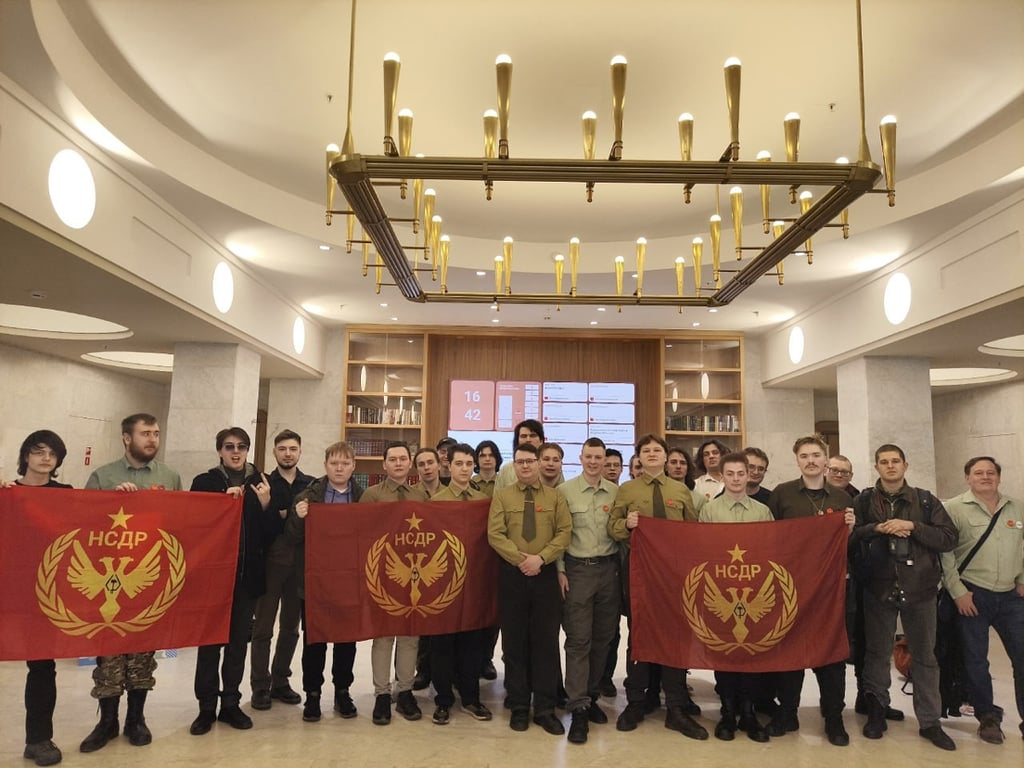
At the same time, perhaps the Communist Party of the Russian Federation will have a new left-conservative competitor (in addition to the old openly spoiler “Communists of Russia”). At the end of March, a number of small communist groups loyal to the SVO held a congress to register a new political party, Labor Russia, with the same name as Viktor Anpilov’s popular leftist opposition movement from the 90s.
The registration of “Labor Russia” is carried out by the “Left Front”, which became widely known during the mass protests of 2011–2012, as well as the United Communist Party, the Russian Communist Workers’ Party and others. Ilya Budraitskis believes that the authorities can give this structure a chance - as a spoiler of the Communist Party of the Russian Federation, this is especially relevant against the background of the deteriorating economic situation.
However, even the “Z-leftists,” despite being fully included in the pro-war consensus, face persecution. A significant precedent is the sentence of six years in prison for posts on social networks, which the leader of the Left Front, Sergei Udaltsov, the most prominent politician of this spectrum, received at the end of 2025.
Overall, the full-scale invasion of Ukraine has not significantly split the Russian left, as this split was fully formed back in 2014, after the annexation of Crimea and the war in Donbass.
— Aggression against Ukraine has exacerbated the division that existed before. It is rather connected with the relationship between statism and democracy. Those on the left who were prone to resentment for a strong USSR naturally supported the war. Those who were deprived of Soviet nostalgia in its imperial format did not support the invasion, notes Antijob.net administrator Andrei Savelyev .
Another activist based in Russia notes that left-wing radicals who oppose the invasion of Ukraine are, to a greater extent than liberals, open to agitation among the Russian military, mobilized and potential contract soldiers. For the authorities, this is an extremely dangerous plot, because even now war veterans sometimes sharply criticize the authorities on social issues. And it is obvious that such activity will be met with the most severe forceful response.