
Translated material
Thirty-eight years on the air. Over the Barriers with Ivan Tolstoy
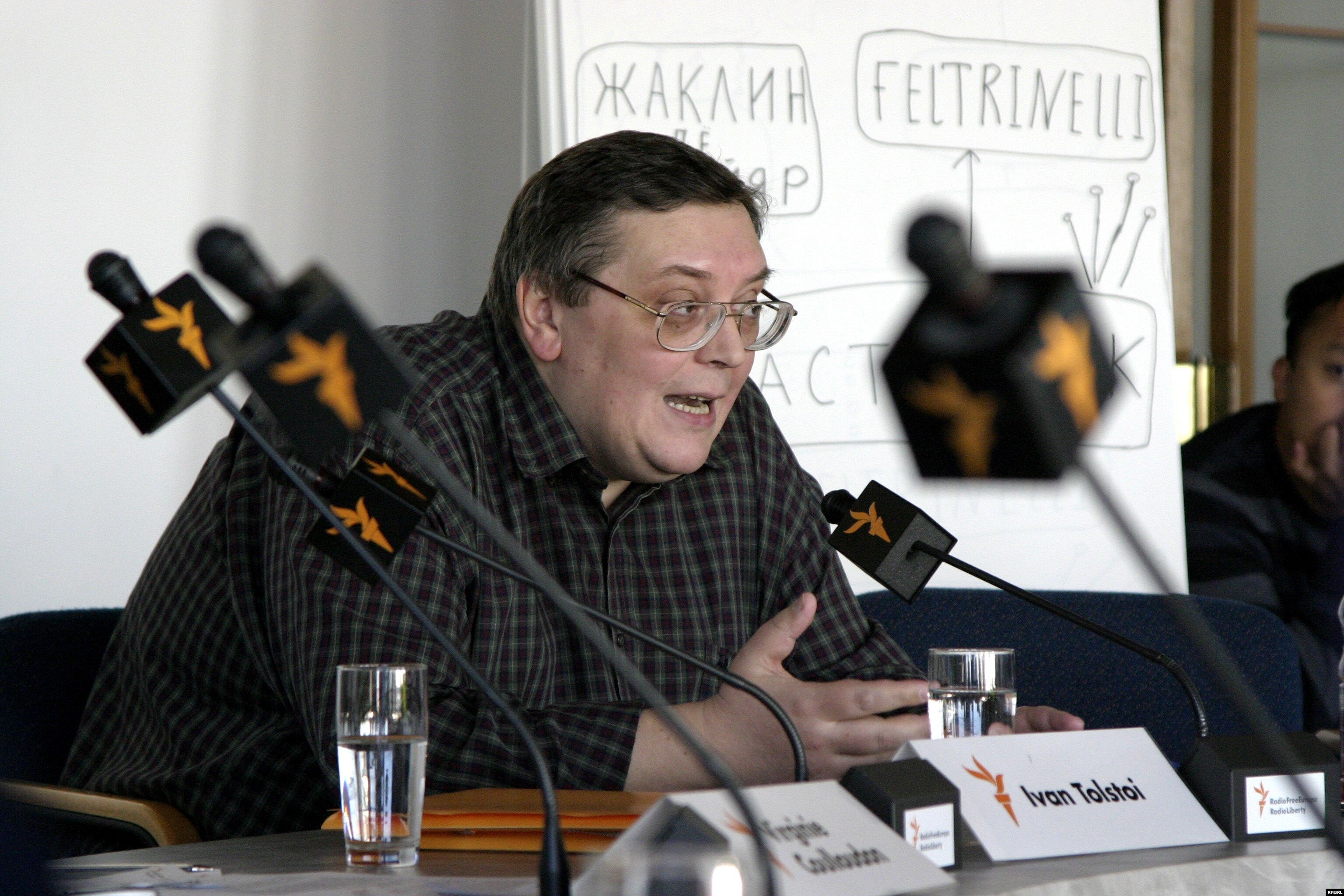
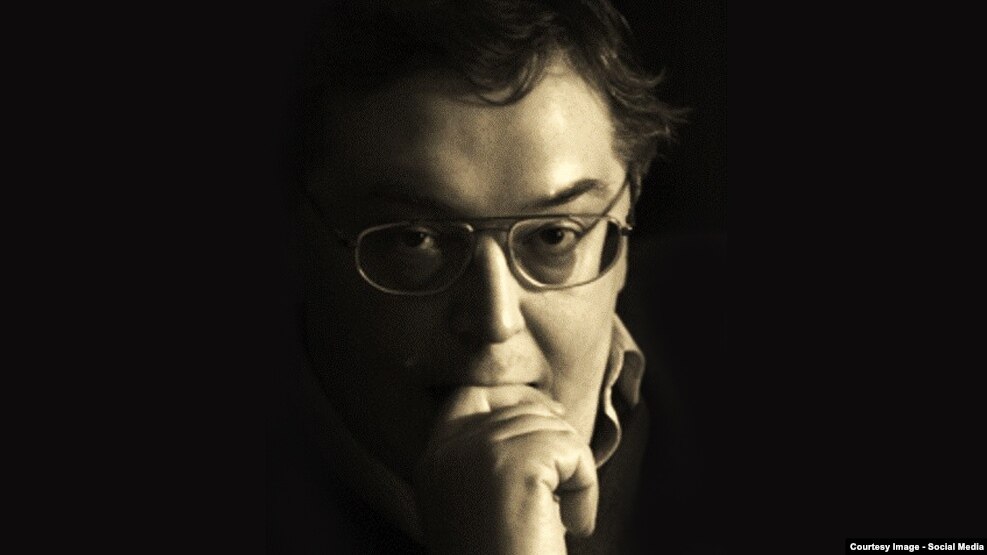
Philologist and historian Ivan Tolstoy began collaborating with the Russian Service of Radio Liberty 38 years ago, in 1988, from Paris. Over almost four decades, thousands of materials prepared by Ivan have been broadcast and posted on the Svoboda website - radio programs and cycles of radio programs, interviews, reports, and opinion columns. He is the author and editor of many literary and historical-cultural cycles that are considered the trademarks of Svoboda, in particular, the radio program “Above Barriers” , the projects “Heroes of Ivan Tolstoy” , “Alphabet of Dissent” , a series of archival releases “Radio Svoboda This Week 20 Years Ago” and “Svoboda’s Gold Reserve” .
Tolstoy is the author of a dozen literary books and hundreds of publications, a book publisher and TV presenter, his sphere of interests extends to the history of Russian culture, Russian emigration, and the Cold War. For many years he has been studying the past of the Russian Service of Liberty and the Radio Free Europe/Radio Liberty corporation.
– Ivan, a simple check in the search engine of the Radio Liberty website gives about seven and a half thousand indications of your name, as an author or participant in programs, as an interview host, and, on the contrary, as a person who himself gives an interview to one of his colleagues. The oldest link dates back to January 1998. The full history of your collaboration with Svoboda is another decade longer; it began long before the Russian Service had a website, but the electronic memory still preserved and retained the main part of your Svoboda creative heritage. In your opinion, what is the most interesting thing in this huge amount of information?
– Of course, this is a huge series of 50 programs dedicated to the history of Radio Liberty from 1953 to 2003. 50 programs of 50 minutes each, dedicated to each year of the existence of our radio station. They were built on the same principle: I talked about the main events of the year, so to speak, outside the radio, behind the walls of the radio, and about the most important thing that happened inside the station, primarily in the production of programs, of course.
This was probably my best time on radio: I spent several years preparing for this cycle, and then every Wednesday in 2002 and 2003 these 50 programs were broadcast. At the same time, no one relieved me of my main responsibilities and workload, that is, I had to do much more, but these were weeks and months of professional happiness.
IVAN TOLSTOY IN "FREEDOM" AND OUTSIDE OF IT
Ivan Tolstoy was born in Leningrad in 1958. Grandson of the writer Alexei Tolstoy (on his father’s side) and the poet-translator Mikhail Lozinsky (on his mother’s side). He received a philological and historical education, worked as a guide in the Pushkin Nature Reserve, and taught in secondary and high schools.
Published mainly on cultural and historical topics since 1985. In the 2010s, he hosted his own program on the Russian TV channel “Culture”. Since 1995, he has been on the staff of the Russian Service of Radio Liberty, a cultural observer, and the author of dozens of radio broadcasts. Editor and compiler of many books, primarily literary studies, and organizer of exhibitions. Author of a dozen books, including “Italics of the Epoch: Literary Notes” (1993), “Pasternak’s Washed Novel: “Doctor Zhivago” between the KGB and the CIA” (2009), “Bedlam Like Bethlehem: Conversations of Lovers of the Russian Word” (2016, co-authored with Boris Paramonov), “Chimeras and Tragedy: Five Essays on Alexei Tolstoy” (2021).
In April 2026, he was recognized by the Ministry of Justice of the Russian Federation as a foreign agent with the wording “disseminated false information about the decisions taken by public authorities of the Russian Federation and the policies they pursued, and opposed a special military operation in Ukraine.”
– By the way, for the 50th anniversary of “Freedom”, they released a CD with a recording of all the programs of the cycle, and a CD+ROM.
– Yes, yes, very beautiful, cute, but he quickly went down into history as a historical landslide, because devices on which one could listen and read began to disappear, and programming was then somewhat backward. So now it’s just some kind of artifact, like a picture that can be framed and hung on the wall. But the entire series is still on the Radio Liberty website . By the way, according to this cycle, in some American universities (I won’t say that in all, but in some, there are about a dozen of them) they teach the history of the Cold War.
– "Produced by Ivan Tolstoi"?
– I don’t know if they mention my name; first of all they call Radio Liberty. But it’s terribly nice that they took the cycle about our history as the basis for teaching. We have worked for half a century not in vain!
– The Russian service celebrated its 50th anniversary in 2003, since then two more large creative campaigns have taken place, associated with new anniversaries, the 60th and 70th anniversary of the editorial office. You coordinated and actually led both campaigns. Let's remember what happened in 2013 and 2023.
– Well, in 2013, we recalled what happened in the history of the service, aired a cycle again for the 50th anniversary and talked about the dramatic events that occurred from 2003 to the beginning of 2013. Now, looking back, of course, we can say: it was a fairly calm decade, with a minimum of wars. Yes, there was Georgia, but everything happened before the Ukrainian Maidan, before the seizure of Crimea, before the new terrible war. In those years, inspired by the success of the series about our 50th anniversary, I began to make more historical programs using Svoboda archives; they are still broadcast. And the 70th anniversary was in 2023 , passions were running high... There was already Crimea, and terrible consequences in Russian politics, in Ukraine, and so on. Whatever the program is, it’s blood.

by Radio Liberty Text copied width px height px The URL has been copied to your clipboard
No media source currently available
0:00 0:24:34 Download media file
Interview with Ivan Tolstoy, side project of the documentary film "For Our Freedom" (2025)
REACHING TEENS
– “On the occasion of the 70th anniversary” of the Russian Service, the Kremlin ousted the Svoboda Bureau from Moscow in 2022, immediately after the start of Russia’s aggression against Ukraine, and Svoboda became a “foreign agent” precisely during this seventh decade of its existence, in 2017. Repressions against our journalists have intensified; dozens of them have since been declared “foreign agents,” including, by the way, my interlocutor today . Ivan, why does the history of Radio Liberty occupy such a prominent place in the spectrum of your professional interests?
– First of all, because this is the largest institution that arose in emigration, and it arose at the intersection of two interests. The first is the desire of emigration to serve their Fatherland, to speak out, to somehow share experiences, worries, doubts, tears and joys, to talk about how the world works. And the second line is American interests, American attempts (and very often successful) to reach the then Soviet audience and show that they are not alone, that they are heard and listened to. They want to tell them how the world works, what democracy is, what liberalism is, what parliamentarism is. At the intersection of these interests, the idea arose to create Radio Liberty, then called “Liberation”.
“Svoboda” returns to the tasks that faced it in the 1950s: to explain to the population that the West is not the enemy
This was not the first such initiative; a few years earlier, Radio Free Europe had appeared, which broadcast to the countries of Central and Eastern Europe; Voice of America and the BBC had appeared even earlier. That is, Western diplomacy had experience, and it was necessary to show Soviet listeners that no one was going to drop an atomic or, God forbid, a hydrogen bomb on the Soviet Union. This was the main task, and it was solved over many decades, during the Cold War, then during the years of détente, then during perestroika, and so on. Radio served precisely this purpose.
And here is an amazing historical phenomenon: it turned out that the most viable formula is “surrogate radio,” as it was once called (this means radio created not in Russian conditions, but outside Russia), but one that the listener dreams of, as if it were in the Soviet Union, if the Soviet Union were free. This successful formula has survived to this day.
Now, in essence, Svoboda is returning to the tasks that faced it in the early 1950s: it is necessary to again explain to the population that the West is not the enemy. All these decades, the West has not declared war on the Soviet Union and Russia; rather, Russia has been attacking other countries. And the population is easily zombified; the mass consciousness is characterized by adolescence, teenage credulity in state propaganda. We need to work for a long time, this bread needs to be buttered many, many times.
HOW A HOBBY GROWED INTO A PROFESSION
– Much of what journalists do in their daily work is fulfilling editorial assignments: whether you like it or not, you do it. That’s right: 23 years ago, when you were preparing a series for the 50th anniversary of the Russian Service, no one relieved you of your main responsibilities. However, each journalist has special areas of his own interest, which he studies not only as a duty, but also with pleasure. Please name two or three areas of your personal creative interest.
– It so happened that in the late 1970s I was invited to the Pushkin House because I attended a guide course in Leningrad. At that time, an absolutely brilliant person, Vadim Erazmovich Vatsuro, a Lermontov scholar and Pushkin scholar, worked at the Pushkin House. He saw my interest; We talked to him on the way from the courses to the bus on winter evenings. He asked me if I would like to come and talk seriously at the Pushkin House about piece work. He offered me the following agreement: in a book about Pushkin’s Petersburg, it was necessary to check the finished text. The author was Nikolai Fokin , a large book of 600 typewritten pages. It was necessary to check everything, check the bibliography, and most importantly, check the quotes that the author took from the books. And so I sat down and spent three years “digging,” in fact, for materials around this book, this is what I grew up with.
Pushkin studies did not become my profession, but it became my hobby. I worked, in particular, in the Pushkin office of the Pushkin House, this is the holy of holies, where no one is simply allowed in, all the books about Pushkin are collected there, including prohibited ones, for example, emigrant books. There I became acquainted with Vladimir Nabokov’s commentary on “Eugene Onegin”, this is an English-language commentary, and out of such incredible trust they allowed me to even take this commentary home and read it at home. I even started translating some things.
Then I entered the philology department. In general, I was supposed to be a doctor by training, studied for several years at a medical institute, then worked as a tour guide. Only at the age of 22 did I decide to go to the philology department, but when I was finishing the philology department, I decided to combine Pushkin studies and my love for Nabokov. My diploma was called “Comments by Vladimir Nabokov to the novel in verse by Alexander Pushkin “Eugene Onegin.” When I laid the “fish” of the diploma in front of my supervisor, the famous literary critic Georgy Makogonenko , the year was 1985. He told me: “Vanya, you are crazy, such a diploma cannot be defended. What kind of title is this?" I said that I don’t want to defend another one, but he said - no, it’s impossible. I took the “fish”, wrote a diploma and brought it back a year later. Makogonenko read the title: “Well, I told you that it’s impossible!” Two months later, Nabokov was allowed in the Soviet Union, in the magazine “64” Nabokov’s first publication appeared - a chess problem - and a piece from “Luzhin’s Defense”. Hurray, but again I had to lose a year, and I finally polished my diploma. By 1987, Makogonenko died, I had a new supervisor, and only then did I defend my diploma.
I speak on Svoboda, and it turns out I can tell you something that the listeners don’t know.
By this time I was an adult, I had turned thirty, that is, I felt completely independent and independent. I decided that I needed to somehow think about my destiny, choose a path, and so on. And so I defended my diploma, another month or a month and a half passed, suddenly my mother said to me: all your life you’ve wanted to go abroad, and you know that the Soviet Union is canceling exit visas? That is, you can now simply get a foreign passport and go anywhere, as long as you receive an invitation. I received an invitation and flew to Paris in the second half of 1988.
I didn’t think about Radio Liberty then, of course. On the very first evening I was offered to write for Russian Thought. The next day, when I came to the editorial office, they already knew that a certain Ivan Tolstoy had arrived from Leningrad with some kind of article in preparation, and now he was sitting and drumming on a typewriter; there were no computers. And suddenly there was a call from Svoboda, they suggested that I try to write a text, Irina Kanevskaya (Khenkina) called. We made a test recording. I then lived in Efim Etkind’s apartment, I remember I locked his dog in the next room so that it wouldn’t bark, and I made the first recording. After some time, she went on air in the “Aspects” program.
And at that moment I realized that this was terribly interesting: I’m speaking on Svoboda, and it turns out I can tell something that the listeners don’t know. The plot was simple: how emigrant magazines are read in the Soviet Union. And I’ve been reading them for 10 years, because tamizdat was going from hand to hand in Leningrad. This is how Radio Liberty became another hobby of mine, this hobby grew into a profession, and I get paid for my hobby.
"Aspects", broadcast on January 19, 1991: Mikhail Gorbachev and the end of his era
– Ivan, we have known each other for 30 years, but I imagined the list of your creative priorities a little differently. You mentioned Nabokov, but it seemed to me that Nabokov and Boris Pasternak were ahead of you in terms of rank. Did you start with Pushkin, because this is “our everything”?
– No, because chronologically it was so, and Pushkin is my first love. Until now, I constantly read Pushkin, and commentaries on him, and works on Pushkin studies, and subscribe to special books on Pushkin studies. Moreover, I can even admit that I am preparing a book, which will not be published soon, probably, since I need to write a lot of different things in the coming years. I am preparing, relatively speaking, a book about Pushkin in exile, that is, on the basis of unpublished emigrant materials about Pushkin.
COLLEAGUES AND TEACHERS
– I will now use the creative technique of one of your radio cycles, which is still heard on the air of Svoboda. Who would you, Ivan Nikitich Tolstoy, call your teachers - at Svoboda and not at Svoboda?
– First of all, Andrei Yuryevich Ariev , a wonderful Leningrad and St. Petersburg critic and writer. He, together with Yakov Gordin, is the co-editor of the St. Petersburg magazine “Zvezda”; this is an absolutely incredible collaboration that has lasted for many decades. Andrey Yurievich influenced me morally, professionally, ethically, and in how one should behave in certain life situations. This is the best teacher you can imagine. Of course, there were other people, but I don’t forget Andrei Yuryevich for a single day.
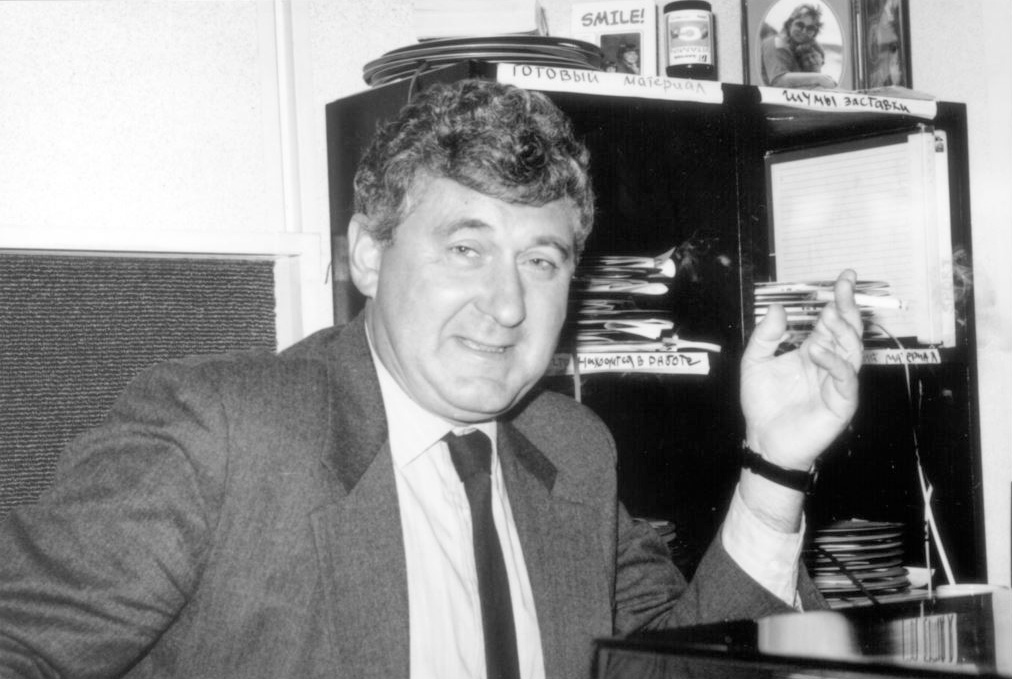
As for “Svoboda,” this, oddly enough, is a person who did not make radio programs himself. Yuri Gendler hired me in 1995, for which I am very grateful to him. But the most important thing is not this, but his attitude to life. You know, this is how a sailing ship sails against the wind, it tacks, catching the side wind, because a direct gust should push it away. And so the ship moves on tacks, but - forward! Yuri Lvovich Gendler is an absolutely amazing person who, I must say, did not like me, but this does not prevent me from remembering him with the greatest gratitude, some of his, well, I would say, philosophical lessons. He was not a theoretical philosopher at all, he was a philosopher of life. He understood what the feeling of radio was, what empathy was in the work of a journalist, what understanding of the material and its texture was. And with this texture you need to go to the microphone, and if you don’t have this texture, then you won’t be a radio host.
– And Yuri Lvovich Gendler hired me to work in the Russian Service, and I am also grateful for that, may he rest in heaven. But this figure, both in the editorial office and outside it, evokes, as you know, different assessments, as, indeed, many prominent figures evoke different assessments. You interestingly described the reason why Gendler is interesting to you, and yet he was not even a professional journalist.
At Radio Liberty no one bothers anyone to work hard and well
– Absolutely right, he was a lawyer. Moreover, he was a lawyer at a distillery, that is, this is just like an episode from “Operation Y...” Well, yes, this is nature - deep, feeling, experiencing humanity. This is where it all comes from: he was a romantic, he was in love with his work on the radio. One could learn a lot of things in life from him: attitude towards profession, towards talent, towards wit (he madly loved witty people), towards people who do not require any whip to do their job. In his New York bureau, which he headed in the 1980s, and in Munich and Prague later, a kind of communism essentially reigned. All the employees knew what needed to be done, everyone worked, but he just chuckled and liked to say, gruffly: “At Radio Liberty, no one bothers anyone to work hard and well.”
SOUND AS TEXT
– Ivan, what do you choose: sound or text?
– Text, although for the last 30 years I have been increasingly occupied with sound and yearn for text. However, it quickly became clear to me that the sound that you yourself like is checked by light text. You can’t speak in florid phrases on the radio, I thought about this many times while listening to our archive of the 1960s, 1970s, and even the 1980s. People then spoke in written language, subordinate clauses, participial phrases. Well, it’s impossible to understand! I urgently want to wash down this dry shortbread. You need to speak like Dovlatov!
- It's easy to say!
– The secret is in simplicity: no need for pretentiousness, just tell the story. Somewhere in my cerebellum, of course, there is a text, and I think that I will spend the rest of my days writing texts, but if there is an opportunity to also voice them at the microphone, then I will be doubly happy.
– In our editorial office there is one recognized master of sound who will answer a similar question differently than you – Igor Pomerantsev , he bases his creativity on sound. Do you have anything to object to him?
- No, no, just the opposite, I am very pleased that I met such a person and sat diagonally across the table with him for many years. Together we made two large series of podcasts: one dedicated to Ukrainian refugees , the other about the newest wave of emigration from Russia. Both cycles, by the way, have been translated into text, but for the book versions it was necessary to edit a lot, cut sound, cut speech, because it is not suitable for mechanical reproduction on paper. Respecting Igor, nevertheless, I remain “with the text”; I am based on the text, but I read it out loud with pleasure. In general, I enjoy reading other people’s texts out loud. I have been everything at the microphone during my 38 years of cooperation with Svoboda: the president of anything, an investigator, a criminal, an athlete, a politician, a writer, a poet, and so on. I especially love reading poetry on air.
– Once upon a time, many years ago, in May 2000, I did a program about the Balkans , on the 20th anniversary of the death of Josip Broz Tito. There were excerpts from the propaganda book of Stalinist laureate Orest Maltsev, “The Yugoslav Tragedy.” You sounded so similar to the residents of Western intelligence services that I still remember...
I also remember one conversation we had with you at the beginning of the 2000s. You and I sat in the editorial dining room and talked about general literary topics. I asked what of what you yourself have written is of particular value to you? Do you know what you told me? “The main thing, the best thing, I haven’t written yet.” A quarter of a century has passed. How will you answer this question now: have you written or still not?
- Exactly the same: I didn’t write. I mean the book about Nabokov. In the 40 years since this book was conceived, I still have not published it. And it’s good, because it would not be the book that I see in my thoughts now. If I have more time in the near future, then I will certainly finish this book, because it is 70, almost 80 percent ready, all that remains is to sew the seams, so to speak, to look at something from the latest literature on Nabokov, to refer to something, to find confirmation or refutation of my theses. This book does not just present the biography of Nabokov, this book is problematic, it is based on several concepts at once. Here you need to know exactly where science is moving, and when you go to work every day, you miss a lot of scientific things. I will need to sit longer and think, but I’m in no hurry. I'll probably be unhappy with this book even when it comes out. Well, that means I’ll think about the second edition.
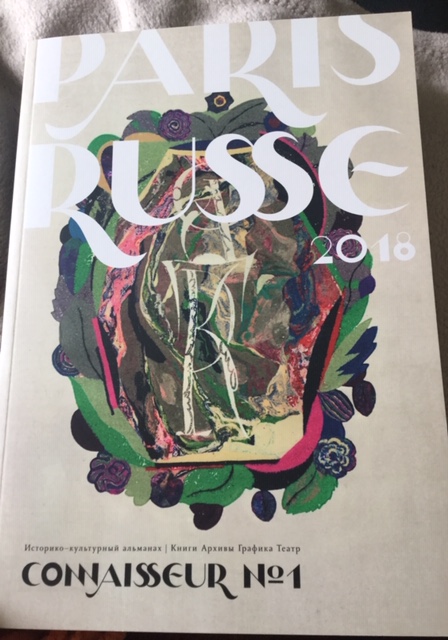
I have accomplished some things over the past decades. I wanted to publish a magazine, but the magazine didn’t quite work out. It was called "Experiments", in 1994 only one volume was published. Many years later, I returned to the idea, published three editions of the almanac Connaisseur ("Connoisseur", "Specialist"), in four books. This is a historical and cultural almanac, thoroughly illustrated. One volume is dedicated to Russian Paris, another - to illustrators and authors of children's books of the twentieth century, another - to the Leningrad period of St. Petersburg history. The Connaisseur almanac has a book appendix: one of the books is dedicated to the book series “Literary Heritage.” I have a book about Boris Pasternak - “Pasternak’s washed-out novel. “Doctor Zhivago” between the CIA and the KGB,” this book will have a new edition when I find time to take it on, because a lot of new materials have been found. There are a certain number of ideas. There are new books - some completely unwritten, some already in the works.
SPARKS OF "FREEDOM"
– Are there any plans for a book about Radio Liberty?
– Yes, and I hope it won’t be just one book. I conceived the project in several parts; I cannot judge the thickness, but the stages of the narrative are completely clear. There is a huge, most interesting topic that has not been properly and completely described by any author, although many have touched on it - this is the prehistory of Radio Liberty. I have already said a few words about the connection of two lines: the desire of Soviet emigrants to broadcast to their homeland and the American desire to support radio listeners behind the Iron Curtain. This is a separate, independent topic, chronologically from 1945 to March 1, 1953. The other part is dedicated to the 1950s, the period when the radio station was called “Liberation”, when there was an idea to free Soviet people from the yoke of communism, from the power of totalitarian rulers. In 1959, the radio station changed its name.
Soon a new topic opened, for me it is called “Samizdat”. The Freedom veterans who moved to Munich in the 1960s and 1970s, the third wave of emigration, are still alive. I often talk to them, record interviews, and they help me collect this part of the story.
And then we'll see. Yes, this is a vast project, I have been accumulating documents, both internal and external, and memories and interviews for many years, dedicated to the history of my favorite radio station.
– Are you interested in the recent history of Svoboda to some extent?
– I wouldn’t like to make any guesses here. These are completely different things: talking about someone else’s story and talking about your own life. Research in which you are dispassionate is one thing. Of course, you have some preferences, but you try your best to stand aside. Another thing is your own biography. This is more likely for memoirs, but I hope there is still a long way to go before memoirs.
– Whose pen do you think belongs to the best book so far written about “Freedom”?
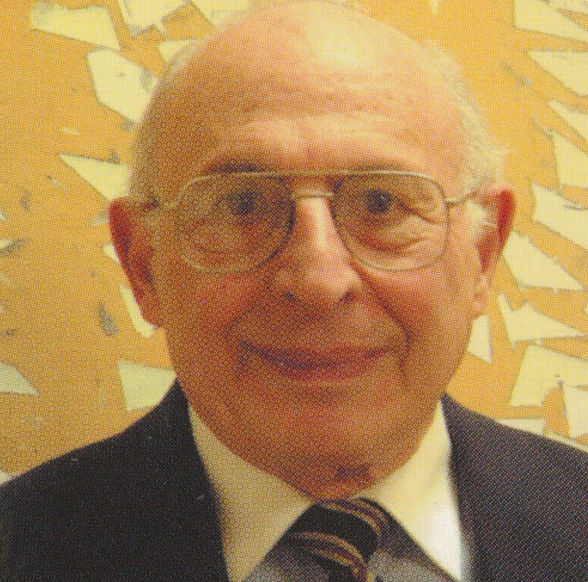
– If we take the finished book, then, I think, these are the memoirs of Gene Sosin “ Sparks of Freedom ,” which I, together with my wife, had the honor of translating, editing, checking the facts and titles. I worked for several months on a grant at the Hoover Archives in California, ended up in the newspaper department and checked all the quotes from Sosin, so his book is also reliable from this point of view. But most importantly, this is a book written by a man who loved radio and loved freedom. Sosin worked in our company in a variety of positions, knew the Russian language perfectly, quoted the first chapter of Onegin from memory, I remember this scene in a New York cafe, how Pushkin sounds in his mouth... At one time, he studied at Harvard University, graduated from various colleges, went to work with displaced persons in Munich after the war, then headed the New York bureau, for some time was the deputy director of the entire radio, worked both in Munich and in New York. Sosin collected a library for the New York bureau, collected tape recordings, collected Galich's anecdotes. Each chapter of his memoirs begins with some small anecdote. My wife and I made two editions of this book.
Other books have been published about “Freedom,” a lot of interesting books, but they are mainly devoted to the history of the American administration and American foreign policy. Sosin's work is devoted mainly to the history of the Russian Service, to how the Russian Service, with the help of the American administration, defended its interests. My book will be devoted 95 percent to the history of the Russian service. No one has yet, for example, written a biography of Radio Liberty employees, and there have been more than a thousand of them over seven and a half decades.
MAN ORCHESTRA
– In May, a fair of independent Russian-language literature was held in Berlin, where you presented an interesting topic , something like this: “Ivan Tolstoy is a man-orchestra.” Tell me, how do you manage to carry out complex cultural projects alone? You are the author, editor, compiler, and publisher of books. Share your know-how, please!
– I called my speech in Berlin “The Life of a Single Publisher.” I'm generally not a very team person. That is, I work in the Russian Service with pleasure, but in principle (I speak by analogy with Vladimov, his Ruslan was “an excellent student of anger and distrust,” that’s how the dog was trained) I am an excellent student of distrust. I like to do everything myself, I am characterized by hypercontrol, I understand that this may be a disadvantage from an organizational point of view. But here you are in the work process turning to someone, and people do not understand why or how to do what is needed. It's easier to do it yourself. I had to learn, for example, such a generally not very difficult skill as book design - I learned to place pictures in relation to the text, now I understand what should look to the left and what to the right in a photo.
I really like making books. At the age of 14, already being an avid visitor to used bookstores, I realized that I wanted to become the director of such a store. When I told my father about this, he grinned and said: “I knew a man who wanted to be the owner of a second-hand bookstore, I essentially grew up on his lap.” In the 1920s, Pavel Shchegolev , being a passionate bibliophile, opened a store called “Byloye” (that was the name of the magazine he published), and he was given books for sale. Shchegolev bought almost everything and bought it for himself, so he went broke very quickly. He played cards professionally, won, as he himself said, a damn ton of money, but spent it all on books. The father says: “This will happen to you too, so don’t try it!” And I didn’t go to second-hand bookstores, but my love for books, for making books, remained forever.
I make all my books with my own hands, sometimes with the help of my wife, but lately I’ve just been making them myself, it’s a delightful activity. You turn on Radio Liberty in the speaker, take sheets of paper, paste pictures, write something, print out some text, paste it, measure it, contact the authors. You don't need anyone, leave me alone! You know, there are people who love to wash dishes. This is soothing for some, others like to pet, and still others like to fold books. I have been practicing this kind of pre-Gutenberg craft for the last few years.
The situation on the book market, and even outside Russia, is changing due to politics and new technologies. Yes, of course, the book has become a short-circulation book, and I am ready to publish short-circulation books for various reasons. Firstly, because if you like the book, you can always reprint it. You are the master of this process, you don’t need to go anywhere if you saved up a little from your salary, put aside some money, and printed a few dozen more copies.
There are other new features as well. Make a beautiful book and send it to an e-book publisher for scanning, it will sell out. Yes, you won’t get a single penny, but you will have tens, hundreds, thousands of readers, and this is unattainable if you only make a paper book. You know, in the time of Jules Verne, at the end of the 19th century, one of the biggest environmental and social problems was considered to be the overflow of city streets with horse manure. No one thought then that the problem would soon disappear due to the invention of the automobile. This is how it is now: you see a dead end in the book business - no one needs a large circulation - but scanning appears, an electronic book, which people download and read in one click.
NEITHER IN EXILE NOR IN MESSAGE
– I’ll ask you about the new reality, about the political, social and ever-growing division of what I will call politically incorrectly “the common Russian world.” You spent half your life outside of Russia, but for the time being you hardly felt like an emigrant. Now the homeland is closed. Are you in exile or in exile, how does it feel?
Petersburg was built as a copy city, but it was not perceived as a copy
- Not there, not there. Sometimes, of course, it seems - in a message, since it is now impossible to do in Moscow or St. Petersburg, where I was born and lived my first 30 years, what I do. Five years ago it was possible, and I did some things, but now it’s impossible. In this sense, yes, it’s a message, but it’s ridiculous to use pompous words in relation to oneself, or indeed to anyone else. I continue to do what I do. I am a Russian citizen, my interests, my heart are all there, in Russia, with my friends, colleagues in scientific and cultural interests. But we are divided, some barriers have arisen, which are becoming more and more difficult to overcome. So I just keep doing what I'm doing. This is a normal thing that I would always do, under any political regime in Russia. And thank God that now I am not in Russia, but where I can still, I hope, implement my private, personal narrow program. It seems to me that I was on the right side of history, I was lucky in this sense.
– I know that there are cities in the world that have system-forming importance for you. First of all, these are probably St. Petersburg and Prague. I read your almanac about St. Petersburg, I remember your wonderful preface to Angelo Ripellino’s book “ Magical Prague” , it was in these cities that you lived most, and I leave Paris out of the equation. Do these cities somehow fit together within you or not?
– Prague in some of its districts reminds me of Vasilyevsky Island, the Petrogradskaya Side, the Liteiny or Peski district, where it is closer to Smolny. Yes, these two cities have something in common, although they are completely different. And it is precisely this difference that immediately shows that I am not at home, that I am not in St. Petersburg, because there are no such elaborate facades, such baroque and such modernism as in Prague, in St. Petersburg. In this sense, Riga is rather closer to St. Petersburg; it has northern modernity. Prague is charming with its open spaces, its “width”. When you come to the banks of the Vltava, you understand that this is some kind of roll call of rivers, a distant greeting to the Neva. Here everything is framed by architecture that belongs more or less to one school; when we look at photographs of Madrid, Buenos Aires, Budapest, even Geneva, we see this affinity, this fin de siècle , this eclecticism. Here you can feel the kinship of so many cities in the world. But you shouldn’t have taken Paris out of my formula; for me it’s the “three pe” - St. Petersburg, Paris, Prague, three cities.
– Is this a reservation or not: are you still not at home in Prague?
– Psychologically, I’m at home – visually, to a large extent – but I don’t have dreams about Prague. And about Kamennoostrovsky Prospekt (Kirovsky Prospekt in front of me) I dream about how I rustle with autumn leaves and go to the islands, how I walk through my beloved St. Petersburg, along the branching Moika River or the Griboyedov Canal. That’s where I’m at home, I have a memory of being at home there, but psychologically - yes, I feel calm in Prague, it’s not an aggressive city, I’ll have to look for people like that...
– How do you, being such a fierce patriot of St. Petersburg, feel about the theory that this is a copy city, albeit a good one, but a copy?
In Versailles there was no aristocratic Russian impudence to allow yourself like this!
– St. Petersburg was built as a copy city, but it was not perceived as a copy. Most people - 99 percent of those born in St. Petersburg and who fell in love with St. Petersburg - do not perceive it as a copy. They think it's the original. When they go abroad, they see the originals from which St. Petersburg was copied, but they perceive them as copies. So you come to Versailles, and it’s a disappointment compared to Tsarskoe Selo, Pavlovsk, Peterhof or the Winter Palace. In Versailles there was no such pomp, there was no such money, there was no aristocratic Russian impudence to afford oneself like that! Allow this kind of fuss: invite the most prominent architects, all the rastrelli and quarengi, so that they can build on the grandest scale. In this sense, St. Petersburg for me is by no means a copy, and if a copy, then such a learned copy. Brodsky said that St. Petersburg taught him about Europe before he came to Europe. When you cross the St. Petersburg bridges, look at the receding river, at the canals, at the avenues, at the breadth of the Neva, at the spiers... Well, what kind of copy? In combination, all this is absolutely original and unique, but separately - yes, none of the St. Petersburg monuments is a creation in its uniqueness, it is certainly a repetition of something. So what? And in terms of its ensemble, the city is absolutely incomparable. I love my city not for its “precision”, but for its “ensembleness”.
CULTURE IS DESIGNED FOR THE FEW
– Events around us, especially in recent years, call into question many seemingly firmly established ideas about the world order. Among these ideas is a new assessment of Russian culture in general and classical Russian culture in particular. To what extent, in your opinion – I will ask, as a Pushkin scholar – do these old ideas need to be revised?
– Ну, кто хочет – пусть пересматривает, тут никому типун на язык не наложишь, но меня всегда смущали разговоры о пересмотре русской культуры в контексте ответственности русской культуры. Мне уже не раз приходилось говорить об этом: культура ни за что не ответственна, культура, как известно, есть набор неких констант, неких правил, неких требований, которые объединены качеством своего создания, духовностью своего содержания и своей самодостаточностью.
– Михаил Бахтин определял культуру как систему запретов.
Любая культура оказывает влияние на какие-то пять или 10 процентов населения, и в этом ее слабость
– Культура это то, что передаётся как некая ценность, как священное писание, из поколения в поколение, от мыслящего и чувствующего человека к другому мыслящему и чувствующему. Это очень важно: к мыслящему и чувствующему. Культура предназначена для немногих. Когда Василий Жуковский выпускал поэтические сборники с эпиграфом "Для немногих" – это был плеоназм, лишние слова. Пушкинские стихи, между прочим, в середине 1830-х годов выходили тиражами меньше, чем стихи Владимира Бенедиктова, которого никто нынче не читает. Культуру способны потреблять те люди, у которых есть некий загадочный механизм в душах и в головах, которые способны услышать, переварить, сделать выводы. Увы, таких людей очень мало. Во всём мире безумно мало, поэтому культура вообще для немногих, она не несёт ни за что ответственность, она никого не исправила из тех, кто взял ружье и пошел в Бучу. Они если бы и прочли что-то, то не восприняли бы. Вот говорят: русская культура не смогла оказать влияние. Любая культура оказывает влияние на какие-то пять или десять процентов населения, и всё, и в этом слабость культуры мировой. Что, Гитлера остановили сочинения Гёте или Шиллера?
– Немножко элитаристской выглядит ваша позиция, сверху по отношению к широкой публике.
– Культура сама по себе, по определению элитарна, потому что культура – это результат сложнейшего, мучительного творчества, борения с самим собою. Это высшее достижение человеческого разума и души. Конечно, есть культура достаточно простая – что, "Евгений Онегин" элитарен? Да проще некуда! Что, военные сцены "Войны и мира" элитарны? Да Господь с вами! Один Леонтьев, может, элитарен, да еще Тютчев!
Гоголевский Акакий Акакиевич способен научить сочувствию, жалости, милосердию, человечности – но способен тех научить, кого можно научить. Вот тут проходит принципиальная граница! Мы слышим крики отчаявшихся людей под бомбами "Да что же это ваша чертова культура на вас не произвела впечатления!" – увы, она не могла на 90 процентов людей повлиять, не могла! Люди – манкурты.
– То есть вы против "отмены русской культуры"?
– Русскую культуру нужно расширять, нужно внедрять как картошку при Екатерине, потому что, если люди хотят питаться русской культурой, восхищаться ею и нравственно расти над самими собой, то надо дать им эту возможность. Чайковский, что ли, зовет на бой, или Глинка, или Пушкин? Русскую культуру нужно как можно шире распространять по миру, но русскую культуру, а не воинственные произведения "зетников".
– Ну вот вы перечислили имена ярких представители российской имперской колониальной культуры.
– Ну конечно, потому что весь XIX век, да и весь XX век прогресс был вписан в рамки колониальной культуры и колониального сознания, но, находясь внутри бури, ты не ощущаешь самой бури. Когда ты находишься в эпицентре, то не понимаешь, что ты колониалист. Понятны неприязненные чувства ко всему русскому у жителей Украины, которым я невероятно сочувствую, но давайте вспомним свою юность и свое детство. В России всегда смеялись над украинцами, в России смеялись над жителями Средней Азии, над кавказцами, а на Кавказе смеялись над кем-то ещё и так далее, французы посмеивались над бельгийцами, американцы над поляками… Все народы друг над другом посмеиваются, но есть же дистанция между зубоскальскими шуточками, анекдотами, даже грязными, и расчехлением пушек? Русская культура – это то, что способно примирить, а не обострить. Да, попробуйте, скажите такое сейчас украинцу, и он возмутится, и будет абсолютно прав в своем гневе, но все остальные, как мне кажется, должны способствовать примирению. Оно неизбежно. Я категорически прошу меня правильно понять: нужно не прощение русским убийцам совершённого ими, а примирение на небесах.
– А стоит ли давать новые оценки по крайней мере отдельным произведениям Пушкина, Лермонтова, Бродского?
– Нужно, неизбежно нужно. Понятно, что стихотворение Бродского "На независимость Украины" совершенно омерзительно звучит. Бродский был имперцем в этом смысле. Супруги Карл и Эллендея Профферы (переводчики, сыгравшие ключевую роль в судьбе Бродского в Америке) писали в своих воспоминаниях о том, в каком они пребывали ужасе от рассуждений Бродского о войне во Вьетнаме. Он считал, что американцы должны раздавить и растоптать Вьетнам, потому что там был рассадник коммунизма. Многие левые не видели, что на самом деле это советский гнойник, что за вьетнамцами стоит Советский Союз, и это, по существу, война двух сверхдержав. Американцы желали поражения своей Америке, а Бродский желал поражения Советскому Союзу! Профферы и Бродский не слышали, не понимали друг друга. Разговор о войне приводит к ожесточению и ссоре, а разговор о культуре приводит к примирению.
ТЕМА ДЛЯ ПЕСЕН
– В завершение беседы – еще один вопрос не о тексте, а о звуке. Мы работаем в режиме специальной радиопередачи, а поэт, как известно, волен сам выбирать темы для своих песен. Как мы будем звуковом образом оформлять эту программу, каков ваш выбор?
– Я когда-то нашел в архиве Радио Свобода мелодию, которую положил в оформление юбилейного цикла к 50-летию Русской службы. Это композиция ленинградского джазмена Аркадия Островского "Нет", – сказала она". Основу этой мелодии Островский через кого-то передал Бенни Гудмену, который в 1962 году приехал на гастроли в Советский Союз – то ли магнитофонную пленку, то ли ноты. Гудмен вернулся в Нью-Йорк, показал работу Островского своим знакомым джазменам. С ним познакомился и главный продюсер Нью-йоркского бюро Радио Свобода Джо Валерио. И сказал: "Ребята, как здорово, джаз из Советского Союза приехал! А давайте вы здесь сыграете, приходите в нашу студию, порепетируем и запишем". Группа Бенни Гудмена пришла, 8 человек, они сыграли несколько вещей, в том числе композицию Островского, и я взял ее для музыкального оформления своего цикла. Я люблю ее очень, использовал уже три юбилея, и надеюсь, что, когда дойдет дело до 80-летия "Свободы", вы вспомните об этой музыке. Вот давайте на ней и решим нашу программу.
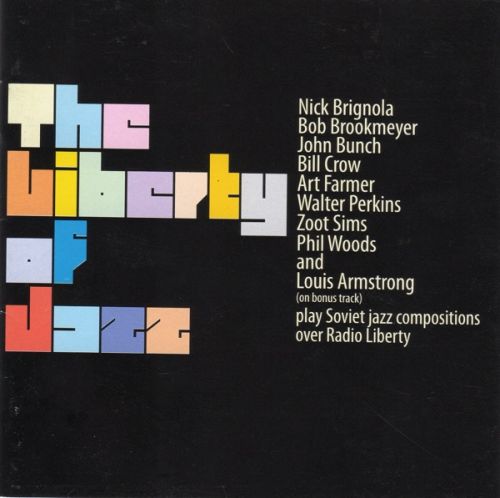
– Верно, я помню, что лет 15 назад вышел компакт-диск Liberty of Jazz, и там была и эта мелодия тоже?
– Была, конечно. Андрей Гаврилов, мой многолетний соавтор, историк джаза, разыскал массу материалов и снабдил проект фотографиями приезда Бенни Гудмена в СССР. Я привез в Лондон этот диск в подарок своему знакомому, который выступал в некоторых моих программах, Александру Шлепянову , искусствоведу и специалисту по аукционным продажам. Показал ему компакт-диск и стал рассказывать историю с приездом Гудмена, с этим джазом и так далее. Шлепянов – человек редчайшего остроумия, внимательно меня выслушал, ни один мускул на лице его не дрогнул. Я дорассказал до конца, и он говорит: "А вы знаете, Иван, кажется, был фильм "Бенни Гудман. Поездка в СССР", его можно найти на ютубе. Знал бы я раньше! Конечно, вернувшись в Прагу, я немедленно полез в ютуб, стал искать этот фильм, тут же его нашел. Смотрю: автор сценария – Александр Шлепянов. Вот это воля, вот это умение владеть чувствами!
– Ну что ж, а теперь – весь этот джаз Ивана Толстого на волнах и на сайте Радио Свобода!
38 лет в эфире. Over the Barriers with Ivan Tolstoy