
Translated material
How much is this in English?
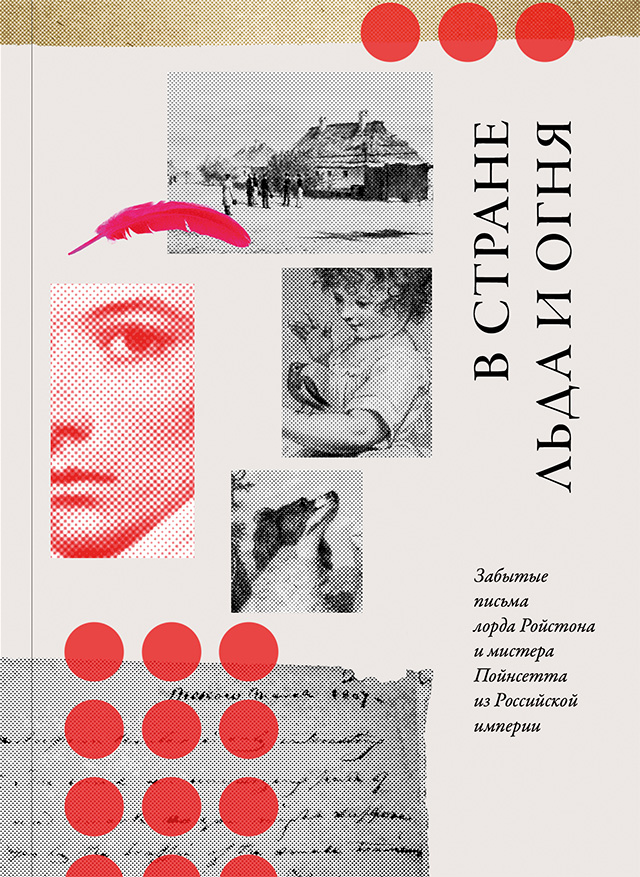
About the book “In the Land of Ice and Fire. Forgotten Letters of Lord Royston and Mr. Poinsett from the Russian Empire"
“In Russia, people are not burdened with the obligation to think with their own heads, and power is divided between the Emperor, the Whip, the Bayonet and the Stick,” wrote one bored English lord, who at the beginning of the 19th century went to get acquainted with the distant northern country. Recently, his letters with similar observations were translated into Russian, supplemented by notes from his companion, an American traveler, and published under the title “In the Land of Ice and Fire. Forgotten Letters of Lord Royston and Mr. Poinsett from the Russian Empire." Read about this publication in the material by Ivan Davydov.
All of us, since February 24, 2022, have found ourselves in the face of advancing barbarity, violence and lies. In this situation, it is extremely important to preserve at least the remnants of culture and support the values of humanism - including for the sake of the future of Russia. Therefore, the editors of Gorky will continue to talk about books, reminding our readers that there is still a place for thought and fiction in the world.
In the land of ice and fire. Forgotten Letters of Lord Royston and Mr. Poinsett from the Russian Empire. St. Petersburg: Find a lumberjack, 2025. Translation from English by Denis Zakharov and Arkady Shatalov. Content
“The beginning of the Russian winter is extremely sad. This is exactly the type of weather - monotonous and full of darkness - that does not excite the spirit and does not give strength. Cold causes torment to the body and depresses the mind. The roads are lost in snowdrifts, the trees are shrouded in frost, and everywhere the snow is like a shroud covering the face of the country. In such conditions, the gloomy faces of the majority of Russians I met are not surprising.” This is what an American wrote about us at the beginning of the 19th century, about whom we’ll talk later, but for now let’s note that little has changed since then: an American should be surprised that Russians never smile. Well, of course, we are not accustomed to admiring their fake smiles.
Words are another matter. The words of a foreigner are important, although this was not always the case. Muscovy began to be described by British sailors who were looking for a northern route to China, and found Ivan the Terrible, who fell in love with England in absentia (and, in general, unrequitedly). The ambassadors of European monarchs who came to the kingdom of the kings continued. This is all entertaining reading - still entertaining - but neither the kings nor the power were particularly interested in what was told about them, and often made up.
But since imperial times, the word of a foreigner evokes a strange trepidation. Catherine the Second personally, albeit anonymously, responded to the French astronomer Chappe d'Otteroche, whose book about Russia she did not like very much. Herzen and other freethinkers sought bitter truths in the forbidden work of the Marquis de Custine. Leo Tolstoy was engrossed in Kennan’s articles, also banned by the way, from which the book “Siberia and Exile” was subsequently compiled. And so on, right up to our sad times, although instead of books now there are news feeds. Remember, for example, what happened to government agencies when Tucker Carlson visited Moscow. Messages about his glorious exploits came out almost every minute: “Tucker Carlson left the hotel!”, “Tucker Carlson ate a hamburger!”, “Tucker Carlson returned to the hotel!” Well, or remember the chair that was carefully placed at Easter in the Cathedral of Christ the Savior for Errol Musk.
Okay, of course, in fact, such interest is understandable. And it’s not even a matter of wanting to look decent in the eyes of someone else. All the same, it rarely works out, or even never. The point is precisely that someone else is looking at you and yours. He doesn't see it that way. He sees something amazing in what is familiar to you, in what you simply don’t pay attention to. And it allows you to see too. Perhaps he is cursing, perhaps slandering. Let’s endure it, it’s something like a law of the genre, that’s how they do it. Well, then, maybe not to slander.
I don’t know if this is a universal experience, but for me this is precisely the beauty of foreigners’ writings about Russia. From the ancient ones to the modern ones. The appropriate word, by the way, is “lovely.” Rich, precise. There is also demonic charm.
Old works are more interesting. We are history-centric people here (excuse the expression), and although the main, if not the only, Russian question now is a question for the present: “How did this happen?”, it is customary to look for the answer in the past. When did we take a wrong turn? In the fourteenth? In two thousand? In ninety-one? In nineteen seventeen? Under Peter? Under Gostomysl? There is no answer. Perhaps it’s good that no, otherwise what would we be arguing about, but in searching for an answer, the word of a foreigner, the gaze of a stranger, is a good help. And the more serious the book is, the stronger the thoughts that can be extracted from it.
And you always rejoice when you come across a new old book that an idle foreigner has written about his God-saved homeland.
The collection of letters from Lord Royston, who traveled around Russia in 1806–1808, is another reason to rejoice.
The young British aristocrat, the son of the Viceroy of Ireland, almost fled from his homeland - his father saw him as a politician, was going to push him into parliament, and he, apparently, considered himself a poet, managed to translate (or retell, it is possible that this is a more accurate word) a poem by one forgotten ancient Greek and convinced his strict parent that in order to develop his talents it was worth going on a trip to the continent. However, there was a war on the continent, Napoleon was crushing a coalition of great powers, and his goal was not Italy and France, where English tourists usually went, but Russia, which could be reached through Denmark and Sweden. The guest, in general, is almost random, but quite prepared: Lord Royston clearly studied both the books of his contemporaries and the notes of ancient ambassadors about wild, cold Muscovy even before the trip.
And already upon entering Russia, he set about reproducing proven maxims: “When crossing the border between the Russian part of Finland and the Russian possessions governed from St. Petersburg, the difference between the free peasantry professing the Lutheran religion and the nation of slaves mired in all the superstitions of the Greek Church is very noticeable.” Or here’s a completely timeless judgment: “In Russia, people are not burdened with the obligation to think with their own heads, and power is divided between the Emperor, the Whip, the Bayonet and the Stick.” It could easily pass for a quote from Custine. Or from Olearius, if there were emperors in Russia in his time.
Yes, an important disclaimer, Royston is not writing a book, Royston writes letters - to his father, his beloved uncle and a couple of friends left in England.
In 1806, the British Empire is an ally of the Russian Empire, the doors of the best houses in St. Petersburg are open to the English guest, but he is bored in St. Petersburg: the world is only interested in cards, even at balls men do not have gallant conversations with ladies, Russians have nothing worthy in literature. The lord had a talent for languages, he also quickly learned to chat in Russian tolerably, but, it seems, still not so much as to throw around such categorical judgments about our literature: Pushkin, of course, is still only seven, but Derzhavin has already written his main poems, and the ode “God,” for example, has been translated into all the major European languages.
(How to resist such remarks, how not to be offended by them? It’s impossible not to be offended. But this is in parentheses.)
And our bored Englishman begins to behave like an Englishman - that is, as the master of the world, whom even nature cannot resist and whose every whim must certainly be satisfied.
Here, too, it seems, little has changed over the centuries: I was once present during a conversation between two Russians who had achieved serious positions in English companies and visited London, perhaps, more often than Moscow (this, of course, all happened a long time ago, in boring and peaceful times, although I’m not sure whether such an explanation is required). “They seem like nice people, but all the same: he looks at you and you feel that a pith helmet is growing on his head,” said one successful Russian. “Exactly,” agreed another, “political correctness is political correctness, but they don’t let you forget that you’re a savage with a ring in your nose. Somehow it’s casual, easy, unobtrusive.”
In Royston’s time, pith helmets seemed to have not yet become fashionable, but behind his elegant irony one can almost always feel disgust, and not so elegant. But no political correctness bothered him. We didn’t have time to invent it.
He decides - just to see the real North - to go to Arkhangelsk. And he goes. And from Arkhangelsk - to the icy steppes, to the Samoyeds. Unwind. Again St. Petersburg, Moscow, Kazan, Astrakhan, through the lands of the unpeaceful Caucasian princes - to Baku and Tiflis, from there to Crimea, and again to St. Petersburg, but through Kyiv.
He observes, shares his impressions, attends religious services of Hindus, Buddhists and fire worshipers, is surprised that on one street one can meet representatives of a dozen different nationalities (and here it is time for the reader to wonder: isn’t it so in the largest of the then empires? - oh, yes, of course, not so, this is what distinguishes a maritime empire from a continental one). The plague is raging, wild mountaineers fight with the Cossacks and almost take the traveler prisoner, but what can stop a man from England? Nothing, because this is his planet. Several of his servants died on the road from illness, he himself became seriously ill and could not fully recover from the fever, but he still walked his path. Or almost passed.
The sea stopped. Shallow and small Baltic Sea. Returning to his homeland, Lord Royston died in a shipwreck. He was 23 years old. His letters were published in a tiny edition by his relatives, after which they were forgotten for many years, rediscovered relatively recently, and now, through the efforts of Denis Zakharov and Arkady Shatalov, they have returned to Russia.
Another reason to look at yourself from the outside before plunging into gloomy reflections on the main Russian question.
Or are we in too much of a hurry and shouldn’t close the book? While still in St. Petersburg, Royston met the American traveler Joel Ponsett, they became friends and traveled around Russia together. Fragments of Ponsett's letters and notes are also presented in the book; we began this conversation with a quote from his message, but still he is not the main character here. There was less causticity and self-confidence in him - the time when Americans would feel like masters of the world was still ahead. Tucker Carlson's star would rise later.
And as a postscript, a few words about the publication itself. The publication is exemplary. Certificates, notes, a detailed story - an investigation with an almost detective-like plot - about a fatal shipwreck, letters from noble relatives experiencing a bereavement, a biography of Ponsett (everything turned out great for him, he returned to his homeland and made a brilliant career) and even a separate chapter dedicated to Royston’s accidental companion on the last voyage, who also died.
It turns out that they still know how to make books in Russia. It's nice.