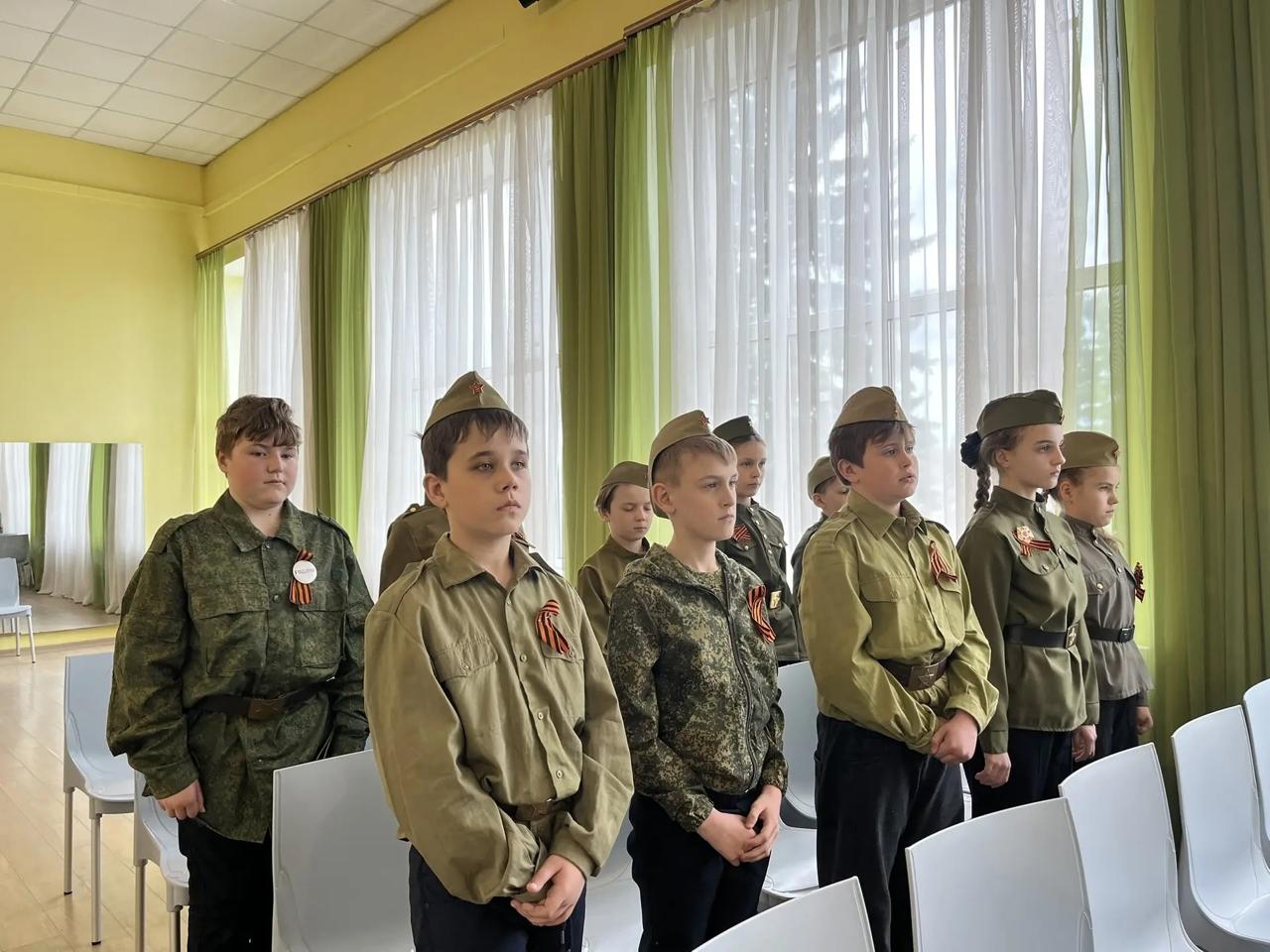
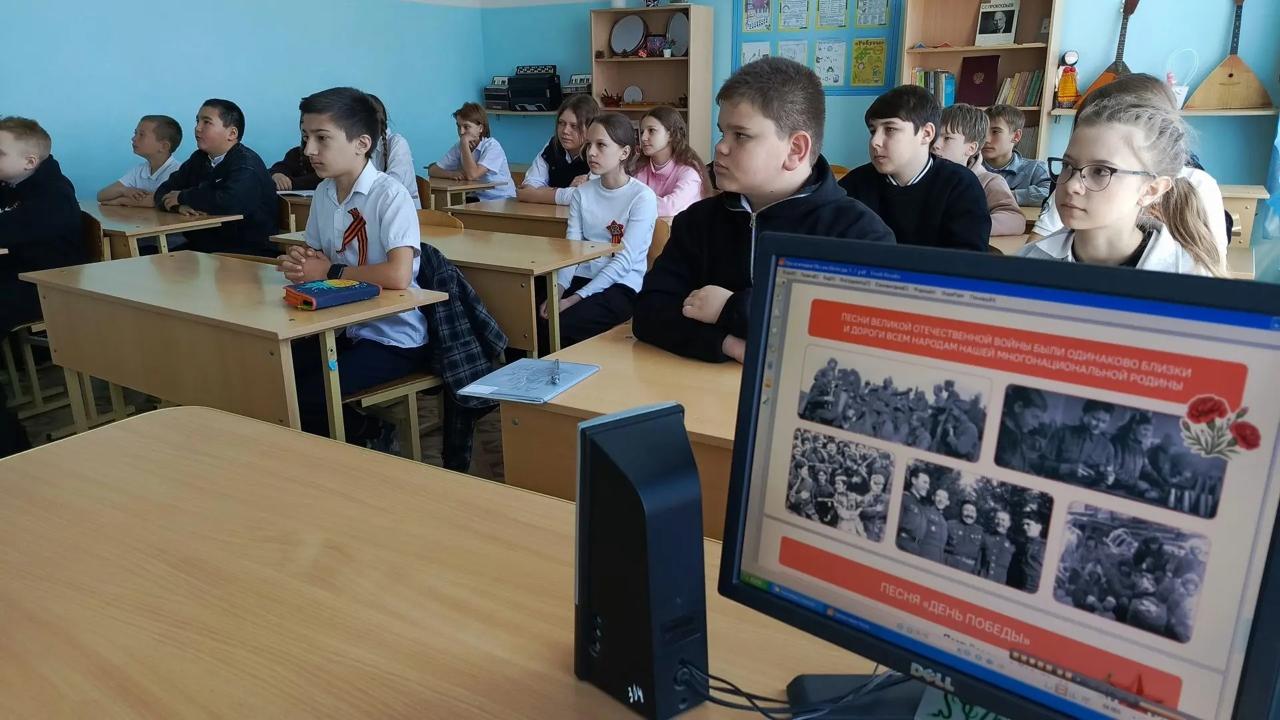
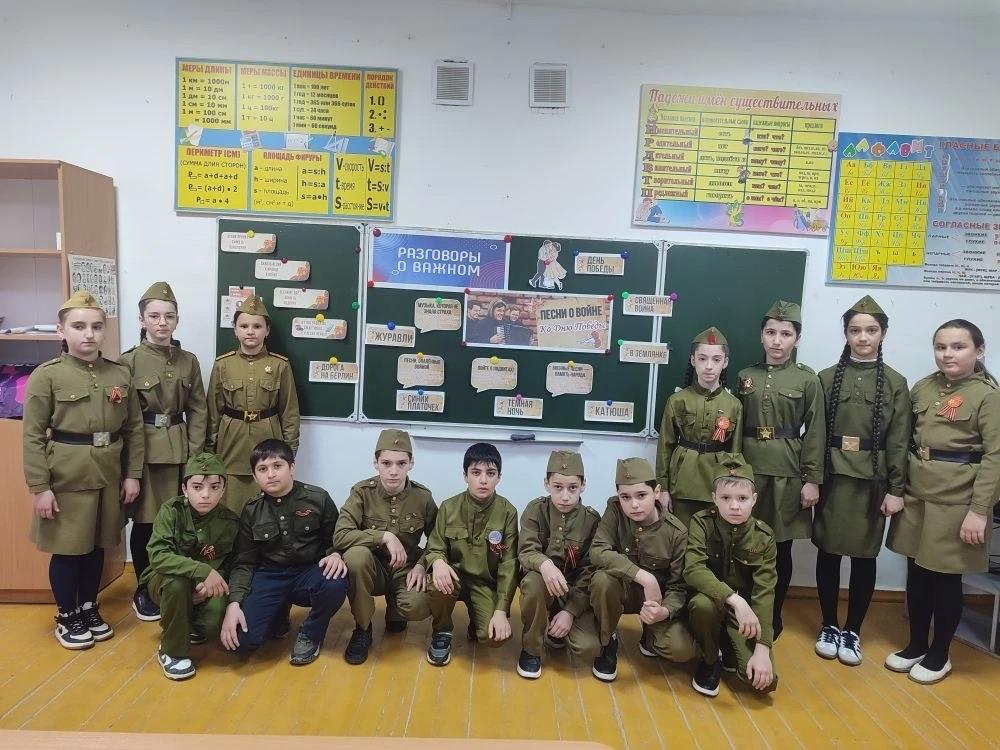
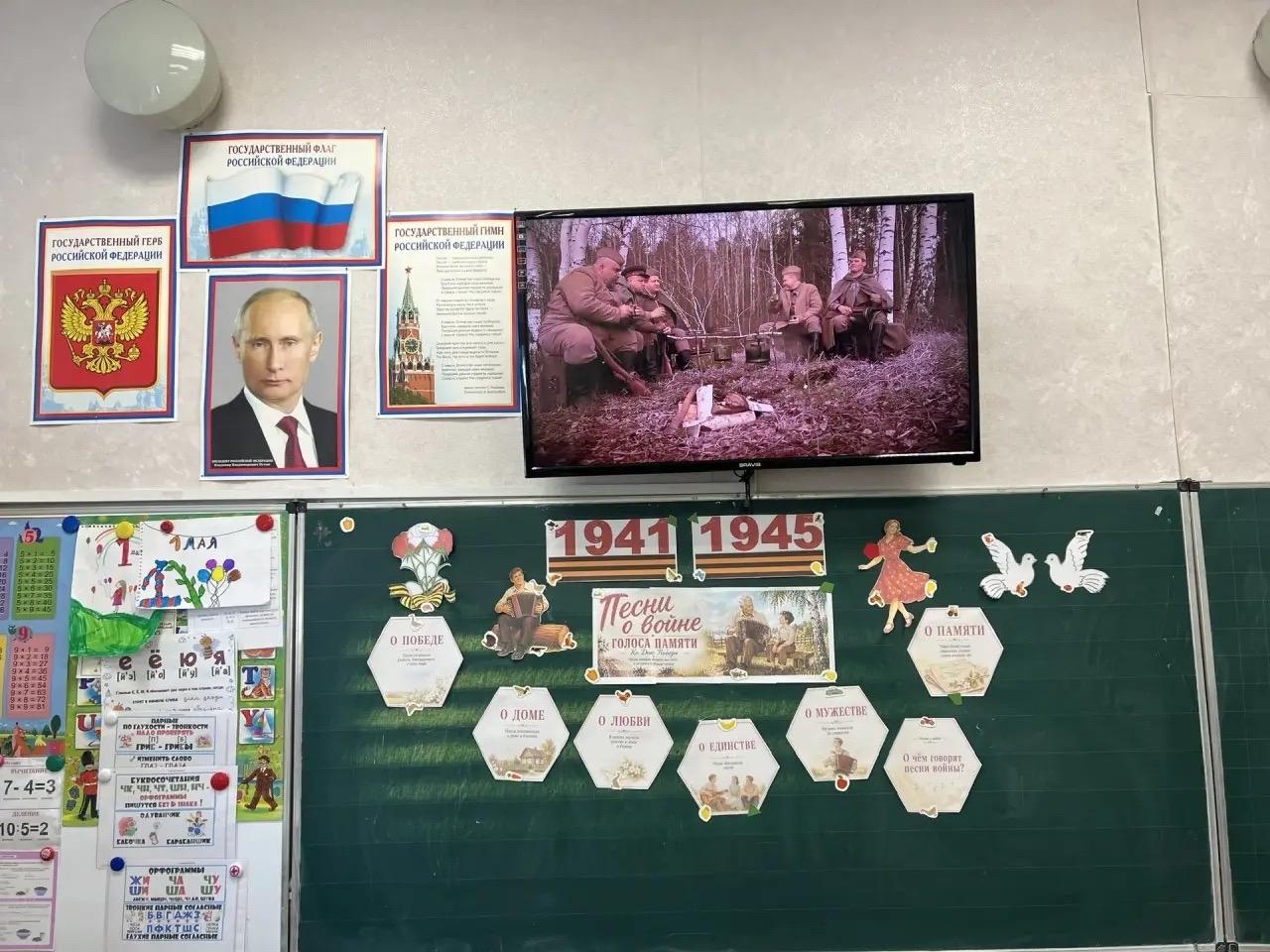
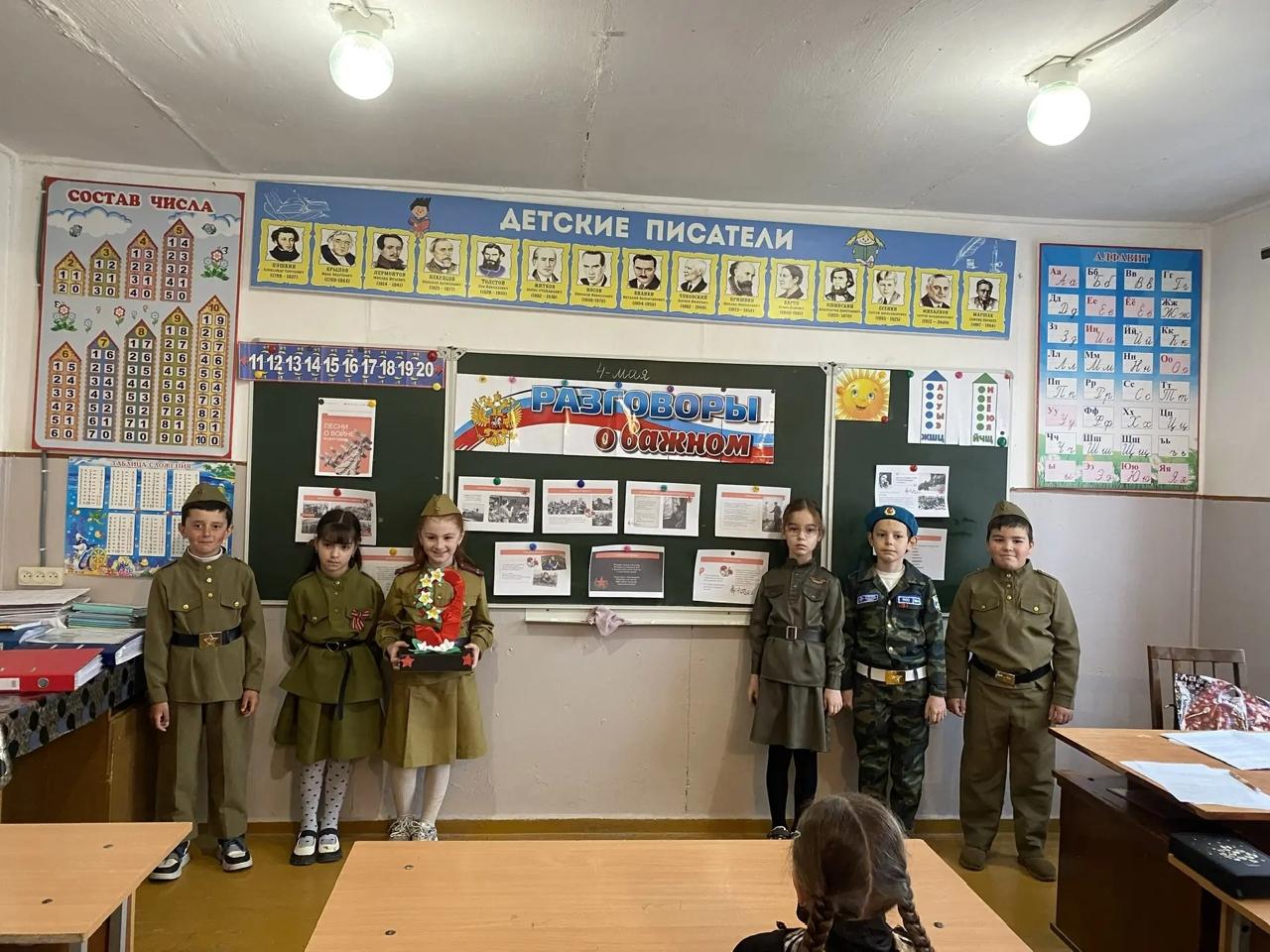
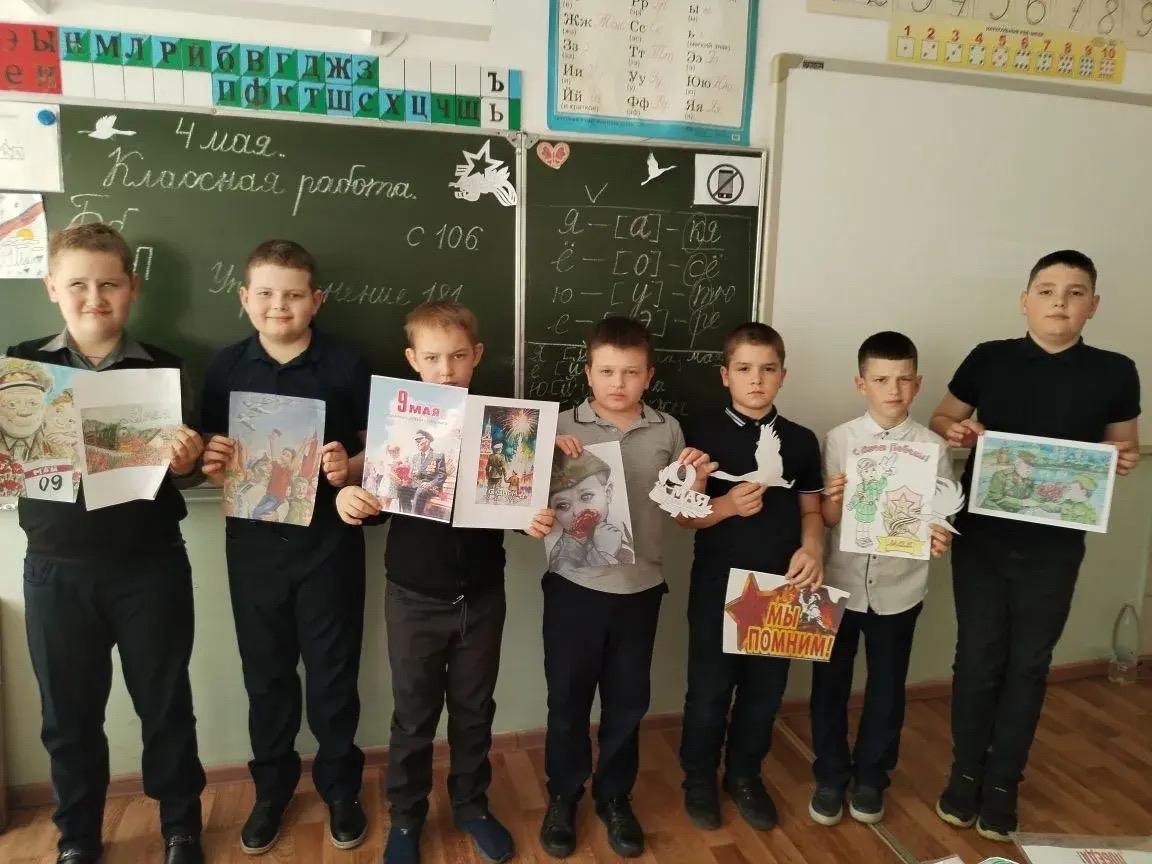
In Russian schools, a lesson “Talking about important things” was held , timed to coincide with Victory Day. Schoolchildren were told about the role of war songs - not as part of culture, but as one of the instruments that “helped to survive and preserve the spirit” during the war.
According to the scenario, teachers explained to the children that Victory Day is not just a date, but “proof of fortitude, unity and love for the Motherland,” and the memory of the war should be preserved through generations , including through songs. They were called “living evidence of history,” which conveys the feelings of people who went through the war.
The students were told that during the Great Patriotic War, songs “went to the front” almost immediately after their creation and became necessary for the soldiers “like air.” According to the teachers, they not only encouraged the fighters to attack, but also helped them survive.
“The song became a weapon, no less important than a rifle or a tank,” the teacher’s phrase according to the script.
During the lesson, schoolchildren were shown an interview with Great Patriotic War veteran Nina Demesheva, who talked about how she was transferred from the hospital to a military ensemble.
- You will dance in an ensemble! - the commander told her. - Nothing like that. Am I a deserter or something? Will I go and dance from the front line? - Demesheva answered.
Well-known compositions were analyzed as examples.
The story of the “Holy War” was presented as a symbol of the mobilization of the country: the song was performed before being sent to the front, and it immediately became one of the main ones. “In the Dugout” was called an example of personal lyrics, which, despite this, found “a response from millions.”
“Dark Night” was explained as a story about faith, love and the inner support of a person in war, and “Katyusha” was explained as an image connecting peaceful life and military duty.
“Why, in the context of this song, do we understand that the love between the heroes is mutual, but duty to the Motherland forces Katyusha’s beloved to devote himself completely to service?” asks the teacher.
A mandatory part of the lesson for high school students was watching a fragment of the BesogonTV program. In it, a little boy in military uniform sings the song “Holy War.” After the performance, Mikhalkov says that in the Tatar boy there lives a “winner gene,” which is necessary for any person living in Russia and wanting to defend it.
“I really hope that, seeing the parade, they will feel not only the power of weapons, not only the beauty of the formation, they will understand that they are part of this valor, they are followers of the winners, and only in this case will they be able to be worthy citizens of our country,” says Mikhalkov.