Translated material
“A landing of scientists is now needed in Tuapse”
How volunteers and authorities dealt with the consequences of a local environmental disaster and what damage was done to the health resort before the start of the holiday season. Eco-activist monologue

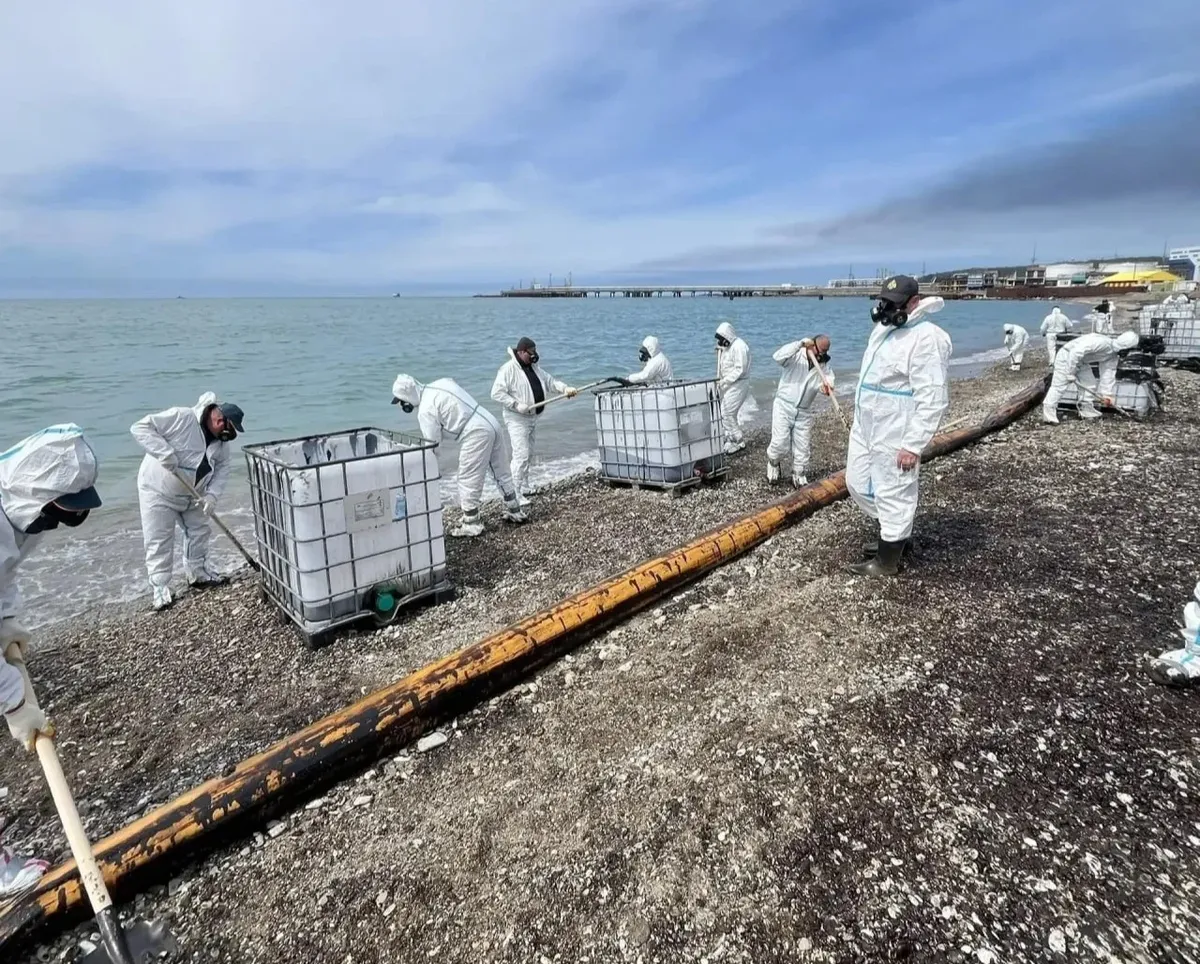
Elimination of an oil spill in Tuapse. Photo: Operational Headquarters of the Krasnodar Territory
Fires at the Tuapse refinery after a series of attacks by Ukrainian drones in March and April were completely extinguished. However, emergency services and volunteers will be working to eliminate the consequences for a long time. As an environmental activist who is in the city right now told Novaya Gazeta on condition of anonymity, there was a strong smell of “rubber” here even after the fire was extinguished, and there was also this smell from the water where the oil had spilled. Volunteers independently rescue birds, cats and dogs, unofficially help clean beaches and sign up for the reserve so that, if necessary, they can wash buildings and other social facilities from the effects of oil rain. Emergency services work in the most difficult areas, but despite the pollution, residents did not leave Tuapse en masse, and there were few people wearing respirators on the streets.
“After the fire was extinguished, when there was no more smoke, there was still the smell of rubber in the air. It is clear that if you determine this organoleptically, then the excess concentration is serious. In such cases, you need to wear a respirator, take vitamins to maintain immunity, and maintain water-salt balance. Children, pregnant women, and the elderly are primarily vulnerable in such situations. The windows should have been closed and people should not go outside again.
But there were few people wearing masks on the street. And there was no panic. People left the city, but this was not a mass phenomenon.
And the volunteers continue to work. On the basis of the youth center, officials form reserves of volunteers: people themselves sign up to clean social facilities. This is the first front of work for volunteers.
But volunteers are not officially recruited to clean up oil products on the shore and in the water. And yet they work there. There is a pebble beach near the village of Tyumensky. There, about 20–30 people collect pebbles into bags by hand.
The third area of work is helping animals. Everything here is independent, there are no installations “from above”. The authorities left this entirely to personal initiative. And today there are only two “promoted” centers for helping homeless animals - cats and dogs. One is in the village of Shepsi twenty kilometers south of Tuapse. The second is directly in the city. A group of volunteers launders dogs and cats at their own expense using products that are ordered on marketplaces. They are also trying to help the birds. But here, unlike Anapa, the birds were not so seriously affected.
Everything else is done by the Ministry of Emergency Situations, employees of Rosneft, and emergency rescue services. They are mainly involved in work on the city beach and at the mouth of the Tuapse River, through which the oil slick burst into the sea. Of course, there was also a very strong smell there. But in terms of area of distribution, this is not Anapa. There the spot was tens of kilometers long, with us it was within a kilometer.
They collect everything with shovels, by hand. The work is difficult, not for volunteers. Not only was it difficult to breathe there, it was difficult to even be near the mouth.
Governor Kondratyev and the head of the Ministry of Emergency Situations Kurenkov came. It was reported that the level of emergency has been raised - from municipal to regional, but the federal level is unlikely to be declared.
It is difficult to make an independent assessment of the volume of water pollution: I think this can only be done if the authorities officially say how much oil products are “lost” and how much gets into the air.
In addition to Tuapse, suburban resort sanatoriums were also damaged: the stain “dragged” 10–20 kilometers north towards Gelendzhik. Unlike sandy shores, pebble shores are very dynamic. Oil penetrates very deeply between the stones, tens of centimeters. And if the holiday season starts and there are high temperatures, evaporation may begin.
Technology, where it exists and can work, works. Graders simply remove the top part of the beach and remove the pebbles. But still something remains on the surface. It can be seen that the pebbles are dirty in places. In theory, it should be taken to landfills and then annealed. But this is not the best technology because the emissions end up in the atmosphere. There is another method: laundering.
But will they have time to collect it all?
Visually, there is no oppression for the plants yet. But we need to monitor it, because there was a lot of rain, and precipitation is still forecast. You need to look at the soil and monitor the plants. It is impossible to understand immediately whether trees are sick or not; these are slow processes.
I would say this: we need a landing party of scientists who would look at the soil and the state of the urban flora and fauna.
And, of course, we need to monitor people’s health, because visits to doctors, including with pulmonary problems, are statistics that can be compared with similar indicators for previous periods. I think this is the most obvious way to answer the question of how the situation affected all of this.
The experience of September 2010 (fires in the European part of Russia) showed that the effect on morbidity and mortality is delayed. This is a separate analytical work that requires technical specifications from a group of scientists. Are federal and regional authorities ready for such a study of the consequences? To be honest, I don’t know, I’m not sure. But it would not hurt to carry out such work.
I don’t remember “oil rains”. Now the products of combustion, oil, have spilled directly onto the big city. In recent history, something similar probably happened when the Persian Gulf burned. If analogies are needed: the smog in the central regions of the country, including Moscow, in 2010, it seems to me, can be compared, but then the smog lasted much longer, several weeks, and the consequences were very serious.
REFERENCE
RefineryTuapse belongs to Rosneft. Last week, an appeal to the company with a request to help the Pakhomov family appeared in a popular Tuapse public page .
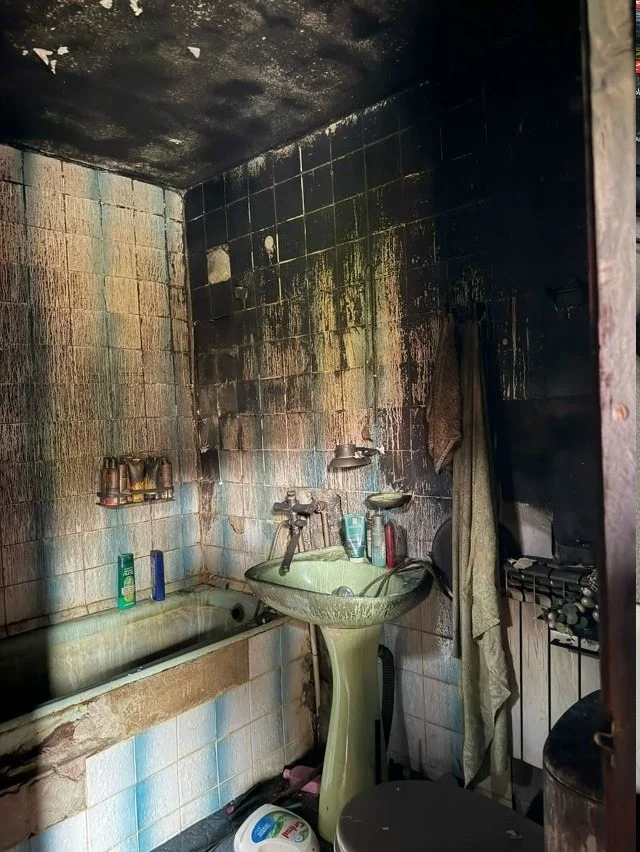
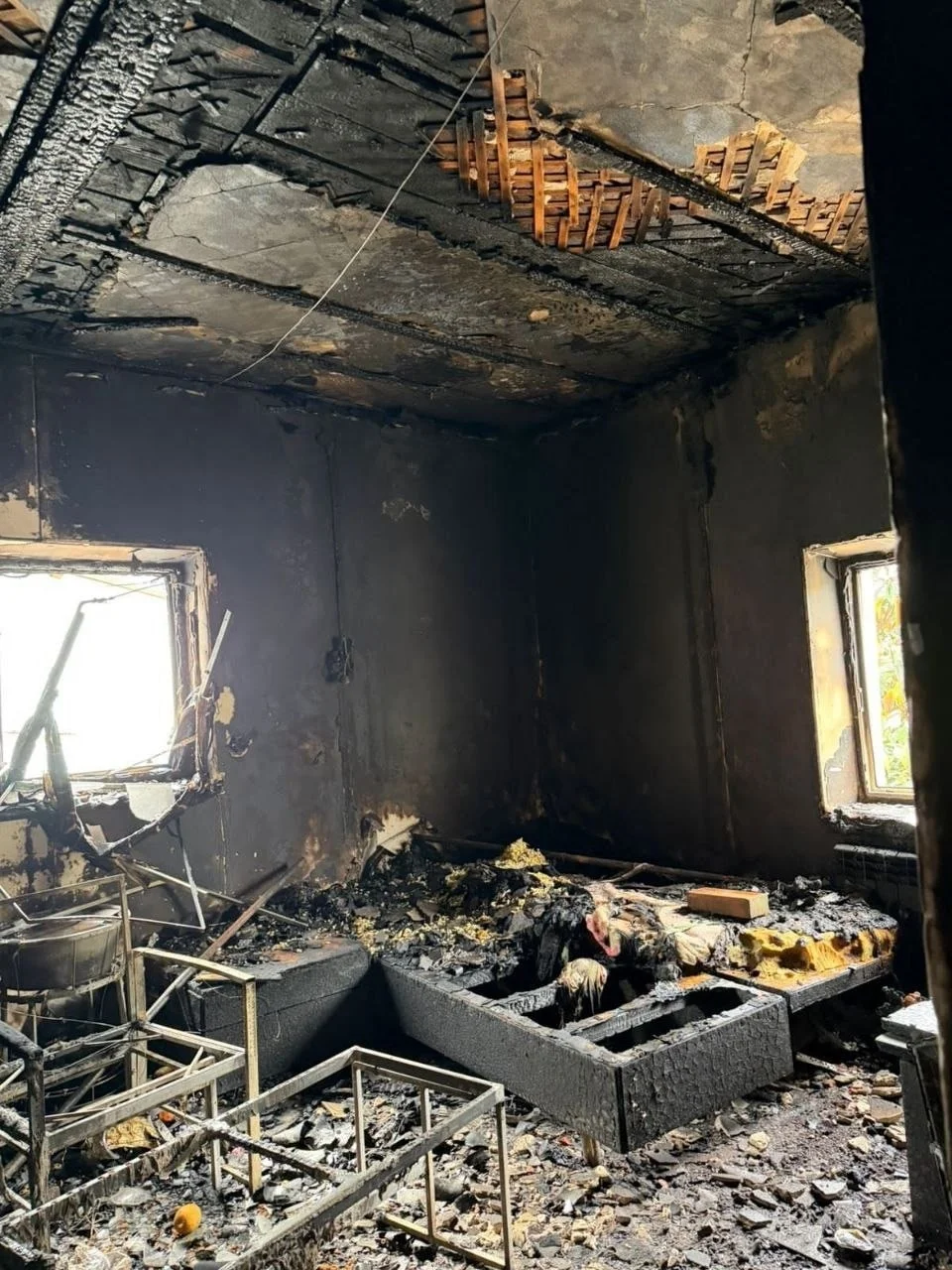
As stated in the appeal, the Pakhomovs’ house, located in Tuapse at Pushkina, 20, caught fire from an ejection from a flaming barrel on April 29 at night. A family of three (husband, wife, daughter) lost everything overnight, left in only their pajamas.
“Help them return to normal life!” - the Tuapse residents ask.
Rosneft has not yet responded to requests for help.
Earlier it became known about the large family of Anastasia Guchapsheva. The roof of her house burned down as a result of a fire at a refinery.
Officials of the Tuapse administration first demanded that a mother with three small children, the youngest of whom is one year old, move out of the hotel provided during the emergency in four days. After a public outcry, the mother of many children received a call from the Tuapse administration and was informed that the family could stay in the hotel. Meanwhile, the townspeople announced a fundraiser to repair the roof.